
All Topics  
Hookworm

 
Hookworm

   Email Print
   Bookmark   Link


Hookworm


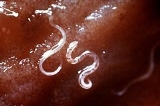
The hookworm is a parasitic
Parasitic worm

See also Parasitic worm Parasitic worms or helminths are a division of eukaroytic parasites that, unlike external parasites such as lice and fleas, live inside their host....
 nematode
Nematode

The "roundworms" or "nematodes" are the most diverse phylum of body cavity, and one of the most diverse of all animals. Nematode species are very difficult to distinguish; over 80,000 have been described, of which over 15,000 are parasite....
 worm that lives in the small intestine
Small intestine

In vertebrates, including mammals, reptiles, birds, and bony fish, the small intestine is the part of the gastrointestinal tract following the stomach, and is where the vast majority of digestion takes place....
 of its host, which may be a mammal
Mammal

Mammals are a class of vertebrate animals whose name is derived from their distinctive feature, mammary glands, with which they feed their young....
 such as a dog
Dog

The dog is a domesticated subspecies of the Gray Wolf, a member of the Canidae family of the order Carnivora. The term is used for both feral and pet varieties....
, cat
Cat

The cat , also known as the Domestication cat or house cat to distinguish it from other Felinae and Felidae, is a small predationy carnivore species of crepuscular mammal that is valued by humans for its companionship and its ability to hunt vermin, snakes, scorpions, and other unwanted household pests....
, or human
Human

A human being, also human or man, is a member of a species of bipedalism primates in the family Hominidae . Mitochondrial DNA evidence indicates that modern humans originated in east Africa about 200,000 years ago....
. Two species
Species

In biology, a species is one of the basic units of biological classification and a taxonomic rank. A species is often defined as a group of organisms capable of interbreeding and producing fertile offspring....
 of hookworms commonly infect humans, Ancylostoma duodenale and Necator americanus. Hookworms are also bilateral, meaning that if cut in half, the worm would be the exact same on each side. Necator americanus predominates in the Americas, Sub-Saharan Africa
Sub-Saharan Africa

Sub-Saharan Africa is a geographical term used to describe the area of the African continent which lies south of the Sahara, or those African countries which are fully or partially located south of the Sahara....
, Southeast Asia
Southeast Asia

Southeast Asia or Southeastern Asia is a subregion of Asia, consisting of the countries that are geographically south of China, east of India and north of Australia....
, China
China

China is a Culture of China, an ancient civilization, and, depending on perspective, a national or multinational entity extending over a large area in East Asia....
, and Indonesia
Indonesia

The Republic of Indonesia , is a transcontinental country in Southeast Asia and Oceania. Comprising Islands of Indonesia, it is the world's largest Archipelago state....
, while A.


Discussion
Ask a question about 'Hookworm'
Start a new discussion about 'Hookworm'
Answer questions from other users
Full Discussion Forum


Recent Posts


Encyclopedia


The hookworm is a parasitic
Parasitic worm

See also Parasitic worm Parasitic worms or helminths are a division of eukaroytic parasites that, unlike external parasites such as lice and fleas, live inside their host....
 nematode
Nematode

The "roundworms" or "nematodes" are the most diverse phylum of body cavity, and one of the most diverse of all animals. Nematode species are very difficult to distinguish; over 80,000 have been described, of which over 15,000 are parasite....
 worm that lives in the small intestine
Small intestine

In vertebrates, including mammals, reptiles, birds, and bony fish, the small intestine is the part of the gastrointestinal tract following the stomach, and is where the vast majority of digestion takes place....
 of its host, which may be a mammal
Mammal

Mammals are a class of vertebrate animals whose name is derived from their distinctive feature, mammary glands, with which they feed their young....
 such as a dog
Dog

The dog is a domesticated subspecies of the Gray Wolf, a member of the Canidae family of the order Carnivora. The term is used for both feral and pet varieties....
, cat
Cat

The cat , also known as the Domestication cat or house cat to distinguish it from other Felinae and Felidae, is a small predationy carnivore species of crepuscular mammal that is valued by humans for its companionship and its ability to hunt vermin, snakes, scorpions, and other unwanted household pests....
, or human
Human

A human being, also human or man, is a member of a species of bipedalism primates in the family Hominidae . Mitochondrial DNA evidence indicates that modern humans originated in east Africa about 200,000 years ago....
. Two species
Species

In biology, a species is one of the basic units of biological classification and a taxonomic rank. A species is often defined as a group of organisms capable of interbreeding and producing fertile offspring....
 of hookworms commonly infect humans, Ancylostoma duodenale and Necator americanus. Hookworms are also bilateral, meaning that if cut in half, the worm would be the exact same on each side. Necator americanus predominates in the Americas, Sub-Saharan Africa
Sub-Saharan Africa

Sub-Saharan Africa is a geographical term used to describe the area of the African continent which lies south of the Sahara, or those African countries which are fully or partially located south of the Sahara....
, Southeast Asia
Southeast Asia

Southeast Asia or Southeastern Asia is a subregion of Asia, consisting of the countries that are geographically south of China, east of India and north of Australia....
, China
China

China is a Culture of China, an ancient civilization, and, depending on perspective, a national or multinational entity extending over a large area in East Asia....
, and Indonesia
Indonesia

The Republic of Indonesia , is a transcontinental country in Southeast Asia and Oceania. Comprising Islands of Indonesia, it is the world's largest Archipelago state....
, while A. duodenale predominates in the Middle East
Middle East

File:GreaterMiddleEast1.pngThe Middle East is a region that spans southwestern Asia, western Asia, and northeastern Africa. It has no clear boundaries, often used as a synonym to Near East, in opposition to Far East....
, North Africa
North Africa

North Africa or Northern Africa is the northernmost region of the African continent, separated by the Sahara from Sub-Saharan Africa.Geopolitically, the United Nations subregion of Northern Africa includes the following seven countries or territories:...
, India
India

India, officially the Republic of India , is a country in South Asia. It is the List of countries and outlying territories by total area country by geographical area, the List of countries by population country, and the most populous liberal democracy in the world....
 and (formerly) in southern Europe
Europe

Europe is, conventionally, one of the world's seven continents. Comprising the westernmost peninsula of Eurasia, Europe is generally divided from Asia to its east by the water divide of the Ural Mountains, the Ural , the Caspian Sea, and by the Caucasus Mountains to the southeast....
. Hookworms are thought to infect 800 million people worldwide. The A. braziliense
Ancylostoma braziliense

Ancylostoma braziliense is a species of Ancylostoma.It can cause creeping eruption.References...
 and A. tubaeforme
Ancylostoma tubaeforme

Ancylostoma tubaeforme is a hookworm that infects cats. Infection can occur by penetration of the skin, eating other hosts such as birds, or by directly consuming the organism....
 species infect cats, while A. caninum
Ancylostoma caninum

Ancylostoma caninum, commonly Dog hookworm, is a nematode parasite that infects dogs. The larval stage penetrates the skin and makes it way through the circulatory system into the digestive tract, where adult forms lay eggs that are passed through the feces....
 infects dogs. Uncinaria stenocephala
Uncinaria stenocephala

Uncinaria stenocephala is one of the most common nematode parasites targeting dogs, cats, and foxes as well as humans.Common name: The Northern hookworm of dogs....
 infects both dogs and cats.

Hookworms are much smaller than the large roundworm, Ascaris lumbricoides
Ascaris lumbricoides

Ascaris lumbricoides is the member of the Ascaris family responsible for the disease Ascariasis.It can reach a length of up to 35 cm....
, and the complications of tissue migration and mechanical obstruction so frequently observed with roundworm infestation are less frequent in hookworm infestation. The most significant risk of hookworm infection is anemia
Anemia

Anemia or an?mia/anaemia is defined as a qualitative or quantitative deficiency of hemoglobin, a protein found inside red blood cells ....
, secondary to loss of iron (and protein
Protein

Proteins are organic compounds made of amino acids arranged in a linear chain and joined together by peptide bonds between the carboxyl and amino groups of adjacent amino acid Residue ....
) in the gut. The worms suck blood voraciously and damage the mucosa. However, the blood loss in the stools is occult blood loss
Fecal occult blood

Faecal occult blood is a term for blood present in the faeces that is not visibly apparent. In medicine, a faecal occult blood test is a check for hidden blood in the stool ....
 (not visibly apparent).

Ankylostomiasis, alternatively spelled anchylostomiasis and also called helminthiasis, "miners' anaemia", "tunnel disease", "brickmaker's anaemia" and "Egyptian chlorosis", is the disease caused by hookworms. It is caused when hookworms, present in large numbers, produce an iron deficiency anemia
Iron deficiency anemia

For a discussion of iron deficiency more broadly, see the Wikipedia article iron deficiency .Iron deficiency anemia is the most common type of anemia, and is also known as sideropenic anemia. It is the most common cause of microcytic anemia....
 by voraciously sucking blood from the host's intestinal walls. The name is derived from Greek ancylo "crooked, bent" and stoma "mouth."

Hookworm is a leading cause of maternal and child morbidity in the developing countries of the tropics and subtropics. In susceptible children hookworms cause intellectual, cognitive and growth retardation, intrauterine growth retardation, prematurity, and low birth weight among newborns born to infected mothers. Hookworm infection is rarely fatal, but anemia can be significant in the heavily infected individual

History

The symptoms now attributed to hookworm appear in papyrus papers of ancient Egypt
Egypt

Egypt is a country mainly in North Africa, with the Sinai Peninsula forming a land bridge in Western Asia. Covering an area of about , Egypt borders the Mediterranean Sea to the north, the Gaza Strip and Israel to the northeast, the Red Sea to the east, Sudan to the south and Libya to the west....
 (c. 1600 B.C.), described as a derangement characterized by anemia. Avicenna
Avicenna

, known as Abu Ali Sina Balkhi or Ibn Sina and commonly known in English by his Latinized name Avicenna , was a Persian people polymath and the foremost Islamic medicine and Early Islamic philosophy of his time....
, a Persian physician of the 11th century, discovered the worm in several of his patients and related it to their disease. In later times, the condition was noticeably prevalent in the mining industry in England
England

native_name =|conventional_long_name = England|common_name = England|image_flag = Flag of England.svg|image_coat = England COA.svg|symbol_type = Royal Coat of Arms...
, France
France

France , officially the French Republic , is a country whose Metropolitan France is located in Western Europe and that also comprises various Overseas departments and territories of France....
, Germany
Germany

Germany , officially the Federal Republic of Germany , is a country in Central Europe. It is bordered to the north by the North Sea, Denmark, and the Baltic Sea; to the east by Poland and the Czech Republic; to the south by Austria and Switzerland; and to the west by France, Luxembourg, Belgium, and the Netherlands....
, Belgium
Belgium

* A small German-speaking Community of Belgium exists in eastern Wallonia. Belgium's linguistic diversity and related political and cultural conflicts are reflected in the history of Belgium and a complex Communities and regions of Belgium....
, North Queensland
Cape York Peninsula

Cape York Peninsula is a large peninsula located in Far North Queensland Queensland, Australia. This remote peninsula is one of the last remaining wilderness areas on Earth....
 and elsewhere.

Italian physician Angelo Dubini
Angelo Dubini

Angelo Dubini was an Italian physician who earned his doctorate from the University of Pavia in 1837 and spent most of his professional career at the Ospedale Maggiore in Milan....
 was the modern-day discoverer of the worm in 1838 after an autopsy
Autopsy

An autopsy, also known as a post-mortem examination, necropsy , autopsia cadaverum, or obduction, is a medical procedure that consists of a thorough examination of a Dead body to determine the cause and manner of death and to evaluate any disease or injury that may be present....
 of a peasant woman. Dubini published details in 1843 and identified the species as A. duodenale. Working in the Egyptian medical system in 1852 German physician Theodor Bilharz
Theodor Bilharz

Theodor Maximilian Bilharz was a Germany physician and an important pioneer in the field of parasitology....
, drawing upon the work of colleague Wilhelm Griesinger
Wilhelm Griesinger

Wilhelm Griesinger was a German neurologist and psychiatrist. He studied under Johann Lukas Sch?nlein at the University of Zurich and physiologist Fran?ois Magendie in Paris....
, found these worms during autopsies and went a step further in linking them to local endemic occurrences of chlorosis
Chlorosis (medicine)

In medicine, chlorosis is a form of anemia named for the greenish tinge of the skin of a patient. Its symptoms included lack of energy, shortness of breath, dyspepsia, headaches, a capricious or scanty appetite and amenorrhoea....
, which would probably be called iron deficiency anemia
Iron deficiency anemia

For a discussion of iron deficiency more broadly, see the Wikipedia article iron deficiency .Iron deficiency anemia is the most common type of anemia, and is also known as sideropenic anemia. It is the most common cause of microcytic anemia....
 today.

A breakthrough came 25 years later following a diarrhea
Diarrhea

In medicine, diarrhea, also spelled diarrhoea , is characterized by frequent loose or liquid bowel movements. The spelling of "diarrhea" is an appropriation of the Greek "diarrhoia" meaning "a flowing through." ....
 and anemia
Anemia

Anemia or an?mia/anaemia is defined as a qualitative or quantitative deficiency of hemoglobin, a protein found inside red blood cells ....
 epidemic that took place among Italian
Italian people

The Italian people are a Southern European ethnic group located primarily in Italy and, by virtue of a wide-ranging Italian diaspora, throughout Western Europe, the Americas and Australia....
 workmen employed on the Gotthard Rail Tunnel
Gotthard Rail Tunnel

The Gotthard Rail Tunnel, is a 15-kilometre long railway tunnel and forms the summit of the Gotthardbahn in Switzerland. It connects G?schenen with Airolo and was the first tunnel through the St....
. In an 1880 paper, physicians Camillo Bozzolo
Camillo Bozzolo

Camillo Bozzolo was an Italian physician who was a native of Milan. in 1868 he received his medical doctorate from the University of Pavia, and afterwards continued his studies in Austria and Germany at the laboratories of Johann Ritter von Oppolzer , Ludwig Traube and Rudolf Virchow ....
, Edoardo Perroncito, and Luigi Pagliani correctly hypothesized that hookworm was linked to the fact that workers had to defecate inside the 15 km tunnel, and that many wore worn-out shoes. In 1897, it was established that the skin was the principal avenue of infection and the biological life cycle
Biological life cycle

A life cycle is a period involving one generation of an organism through means of reproduction, whether through asexual reproduction or sexual reproduction....
 of the hookworm was clarified. In 1899, American zoologist Charles Wardell Stiles
Charles Wardell Stiles

Charles Wardell Stiles was an American parasitology born in Spring Valley, New York, who studied medical zoology in Europe. He taught medical zoology at Johns Hopkins University and Georgetown University....
 brought this evidence to bear on health issues in the southeast United States, identifying "progressive pernicious anemia" seen in the southern United States was caused by A. duodenale and he also identified the other important hookworm species: U. Necator. Testing in the 1900s revealed very heavy infestations in schoolage children.

On October 26, 1909 the Rockefeller Sanitary Commission for the Eradication of Hookworm Disease was organized as a result of a gift of US$1 million from John D. Rockefeller
John D. Rockefeller

John Davison Rockefeller was an United States industrialist and philanthropist. Rockefeller revolutionized the petroleum industry and defined the structure of modern philanthropy....
, Sr. The five-year program was a remarkable success and a great contribution to United States public health, instilling public education, medication, field work and modern government health departments in eleven southern states. The hookworm exhibit was a prominent part of the 1910 Mississippi state fair. The program nearly eradicated hookworm and would flourish afterwards with new funding as the Rockefeller Foundation International Health Division.

In the 1920's, hookworm eradication reached the Caribbean and Latin America, where great mortality was reported among Black people in the West Indies towards the end of the 18th century, as well as through descriptions sent from Brazil
Brazil

Brazil , officially the Federative Republic of Brazil , is a country in South America. It is the List of countries and outlying territories by total area country by geographical area, occupying nearly half of South America, the List of countries by population country, and the fourth most populous democracy in the world....
 and various other tropical and sub-tropical regions.

Early treatment was with thymol
Thymol

Thymol also known as isopropylmethylphenol, is a monoterpene phenols derivative of cymene, C10H14OH, isomeric with carvacrol, found in oil of thyme, and Liquid-liquid extraction as a white crystalline substance of a pleasant aromatic odor and strong antiseptic properties....
 to kill the worms, followed by epsom salt to clear the body of the worms. Later on, tetrachloroethylene
Tetrachloroethylene

Tetrachloroethylene, also known under its systematic name tetrachloroethene and as perchloroethylene, perchloroethene, perc, and PCE, is a chlorocarbon with the formula Cl2C=CCl2....
 was the leading method. It was not until later in the mid-20th century when new organic drug compounds were developed.

Morphology

Adult A. duodenale worms are grayish white or pinkish with the head slightly bent in relation to the rest of the body. This bend forms a definitive hook shape at the anterior end for which hookworms are named. They possess well developed mouths with two pairs of teeth. While males measure approximately one centimeter by 0.5 millimeter, the females are often longer and stouter. Additionally, males can be distinguished from females based on the presence of a prominent posterior copulatory bursa.

N. americanus is very similar in morphology to A. duodenale. N. americanus is generally smaller than A. duodenale with males usually 5 to 9 mm long and females about 1 cm long. Whereas A. duodenale possess two pairs of teeth, N. americanus possesses a pair of cutting plates in the buccal capsule. Additionally, the hook shape is much more defined in Necator than in Ancylostoma.

Pathology

Hookworm infection is generally considered to be asymptomatic, but as Norman Stoll described in 1962, hookworm is an extremely dangerous infection because its damage is “silent and insidious.” There are general symptoms that an individual may experience soon after infection. Ground-itch, which is an allergic reaction at the site of parasitic penetration and entry, is common in patients infected with N. americanus. Additionally, cough and pneumonitis may result as the larvae begin to break into the alveoli and travel up the trachea. Then once the larvae reach the small intestine of the host and begin to mature, the infected individual will suffer from diarrhea and other gastrointestinal discomfort. However, the “silent and insidious” symptoms referred to by Stoll are really mainly related to chronic, heavy-intensity Hookworm infections. Major morbidity associated with Hookworm is caused by intestinal blood loss, iron deficiency anemia, and protein malnutrition. They result mainly from adult hookworms in the small intestine ingesting blood, rupturing erythrocytes, and degrading hemoglobin in the host. This long-term blood loss can manifest itself physically through facial and peripheral edema; eosinophilia and pica caused by iron deficiency anemia are also experienced by some Hookworm-infected patients. Recently, more attention has been given to other important outcomes of Hookworm infection that play a large role in public health. It is now widely accepted that children who suffer from chronic Hookworm infection can suffer from growth retardation as well as intellectual and cognitive impairments. Additionally, recent research has focused on the potential of adverse maternal-fetal outcomes when the mother is infected with Hookworm during pregnancy.

The disease was linked to nematode worms (Ankylostoma duodenalis) from one-third to half an inch long in the intestine chiefly through the labours of Theodor Bilharz
Theodor Bilharz

Theodor Maximilian Bilharz was a Germany physician and an important pioneer in the field of parasitology....
 and Griesinger in Egypt (1854).

The symptoms can be linked to inflammation in the gut stimulated by feeding hookworms, such as nausea, abdominal pain and intermittent diarrhea, and to progressive anemia in prolonged disease: capricious appetite, pica
Pica (disorder)

Pica is a medical disorder characterized by an appetite for substances largely non-nutritive or an abnormal appetite for some things that may be considered foods, such as food ingredients ....
 (or dirt-eating), obstinate constipation followed by diarrhea
Diarrhea

In medicine, diarrhea, also spelled diarrhoea , is characterized by frequent loose or liquid bowel movements. The spelling of "diarrhea" is an appropriation of the Greek "diarrhoia" meaning "a flowing through." ....
, palpitations, thready pulse, coldness of the skin, pallor of the mucous membranes, fatigue and weakness, shortness of breath and in cases running a fatal course, dysentery
Dysentery

Dysentery is a disorder of the digestive system that results in severe diarrhea containing mucus and/or blood in the feces. If untreated, Dysentery can be fatal....
, hemorrhages and edema
Edema

File:Oedema.jpgEdema or Oedema , formerly known as dropsy or hydropsy, is an abnormal accumulation of fluid beneath the skin, or in one or more cavities of the body....
.

Blood tests in early infection often show a rise in numbers of eosinophils, a type of white blood cell that is preferentially stimulated by worm infections in tissues (large numbers of eosinophils are also present in the local inflammatory response). Falling blood hemoglobin levels will be seen in cases of prolonged infection with anemia.

In contrast to most intestinal helminthiases, where the heaviest parasitic loads tend to occur in children, hookworm prevalence and intensity can be higher among adult males. The explanation for this is that hookworm infection tends to be occupational, so that plantation workers, coalminers and other groups maintain a high prevalence of infection among themselves by contaminating their work environment. However, in most endemic areas, adult women are the most severely affected by anemia, mainly because they have much higher physiological needs for iron (menstruation, repeated pregnancy), but also because customarily they have access to much poorer food than the men.

An interesting consequence of this in the case of Ancylostoma duodenale infection is translactational transmission of infection: the skin-invasive larvae of this species do not all immediately pass through the lungs and on into the gut, but spread around the body via the circulation, to become dormant inside muscle fibers. In a pregnant woman, after childbirth some or all of these larvae are stimulated to re-enter the circulation (presumably by sudden hormonal changes), then to pass into the mammary glands, so that the newborn baby can receive a large dose of infective larvae through its mother's milk. This accounts for otherwise inexplicable cases of very heavy, even fatal, hookworm infections in children a month or so of age, in places such as China, India and northern Australia. (An identical phenomenon is much more commonly seen with Ancylostoma caninum infections in dogs, where the newborn pups can even die of hemorrhaging from their intestines caused by massive numbers of feeding hookworms. This also reflects the close evolutionary link between the human and canine parasites, which probably have a common ancestor dating back to when humans and dogs first started living closely together.

Epidemiology


It is estimated that between 576-740 million individuals are infected with Hookworm today. Of these infected individuals, about 80 million are severely affected. The major etiology of Hookworm infection is N. Americanus which is found the Americas, sub-Saharan Africa, and Asia. A. duodenale is found in more scattered focal environments, namely Europe and the Mediterranean. Most infected individuals are concentrated in sub-Saharan Africa and East Asia/the Pacific Islands with each region having estimates of 198 million and 149 million infected individuals, respectively. Other affected regions include: South Asia (50 million), Latin America and the Caribbean (50 million), South Asia (59 million), Middle East/North Africa (10 million). A majority of these infected individuals live in poverty-stricken areas with poor sanitation. Hookworm infection is most concentrated among the world’s poorest who live on less than $2 a day.

Many of the numbers regarding the prevalence of Hookworm infection are estimates as there is no international surveillance mechanism currently in place to determine prevalence and global distribution.Some prevalence rates have been measured through survey data in endemic regions around the world. The following are some of the most recent findings on prevalence rates in regions endemic with Hookworm.

Darjeeling, Hooghly District, West Bengal, India (Pal et al. 2007)

• 42.8% infection rate of predominantly N. Americanus although with some A. Duodenale infection

• Both hookworm infection load and degree of anemia in the mild range

Xiulongkan Village, Hainan Province, China (Gandhi et al. 2001)

• 60% infection rate of predominantly N. Americanus

• Important trends noted were that prevalence increased with age (plateau of about 41 years) and women had higher prevalence rates than men

Hoa Binh, Northwest Vietnam (Verle et al. 2003)

• 52% of a total of 526 tested households infected

• Could not identify species, but previous studies in North Vietnam reported N. Americanus in more than 95% of hookworm larvae

Minas Gerais, Brazil (Fleming et al. 2006)

• 62.8% infection rate of predominantly N. Americanus

KwaZulu-Natal, South Africa (Mabaso et al. 2004)

• Inland areas had a prevalence rate of 9.3% of N. Americanus

• Coastal plain areas had a prevalence rate of 62.5% of N. Americanus

There have also been recent technological developments that will hopefully facilitate more accurate mapping of Hookworm prevalence. Some researchers have begun to use geographical information systems (GIS) and remote sensing (RS) to examine helminth ecology and epidemiology. Brooker et al. utilized this technology to create helminth distribution maps of sub-Saharan Africa. By relating satellite derived environmental data with prevalence data from school-based surveys, they were able to create detailed prevalence maps. The study focused on a wide range of helminths, but interesting conclusions about Hookworm specifically were found. As compared to other helminths, Hookworm is able to survive in much hotter conditions are were highly prevalent throughout the upper end of the thermal range. Hopefully this information along with more detailed prevalence maps can lead to more effective public health measures. Improved molecular diagnostic tools are another technological advancement that could help improve existing prevalence statistics. Recent research has focused on the development of DNA-based tool that can be used for diagnosis of infection, specific identification of hookworm, and analysis of genetic variability in hookworm populations . Again this can serve as a major tool for different public health measures against Hookworm infection. Most research regarding diagnostic tools is now focused on the creation of a rapid and cost-effective assay for the specific diagnosis of Hookworm infection. Many are hopeful that its development can be achieved within the next 5 years.

Hookworm in therapy

Moderate hookworm infections have been demonstrated to have beneficial effects on hosts suffering from diseases linked to overactive immune systems. This is possibly explained by the hygiene hypothesis
Hygiene hypothesis

In medicine, the hygiene hypothesis states that a lack of early childhood exposure to infectious agents, symbiotic microorganisms , and parasites increases susceptibility to allergy diseases by modulating immune system development....
. Research at the University of Nottingham
University of Nottingham

The University of Nottingham is a public, co-educational institution of higher learning in the city of Nottingham, England. Nottingham, which has campuses in the United Kingdom and Asia, is the fifth largest university in the UK , and is a member of the Russell Group, Universitas 21, the Association of Commonwealth Universities, and the Europ...
 conducted in Ethiopia has demonstrated that people with hookworm infections are half as likely to experience asthma
Asthma

Asthma is a common chronic obstructive pulmonary disease, in which the Lung constrict, become inflammation, and are lined with excessive amounts of thickened mucus, often in response to one or more triggers....
 or hay fever
Hay Fever

Hay Fever is a comic play written by No?l Coward in 1924 and first produced in 1925 with Marie Tempest as the first Judith Bliss. Best described as a cross between high farce and a comedy of manners, the play is set in an English country house in the 1920s, and deals with the four eccentric members of the Bliss family and their outlandish b...
. It may also help sufferers of multiple sclerosis
Multiple sclerosis

Multiple sclerosis is an autoimmune disease in which the immune system attacks the central nervous system, leading to demyelinating disease. Disease onset usually occurs in young adults, and it is more common in females....
, Crohn's Disease
Crohn's disease

Crohn's disease is an inflammatory disease which may affect any part of the gastrointestinal tract from mouth to anus, causing a wide variety of symptoms....
 and diabetes.

Hookworm therapy to treat a number of these diseases is currently in the trial stage at the University. Some people, including Dr. David Pritchard of the University of Nottingham, and Jasper Lawrence of Autoimmune Therapies, have independently infected themselves with hookworms and reported positive results.

Life cycle

Hookworm Lifecycle
See the image for the biological life cycle
Biological life cycle

A life cycle is a period involving one generation of an organism through means of reproduction, whether through asexual reproduction or sexual reproduction....
 of the hookworms where it thrives in warm earth where temperatures are over 18°C. They exist primarily in sand
Sand

Sand is a naturally occurring granular material composed of finely divided rock and mineral particles.As the term is used by geologists, sand particles range in diameter from 0.0625 to 2 millimeters....
y or loam
Loam

Loam is soil composed of sand, silt, and clay in relatively even concentration , considered ideal for gardening and agricultural uses. Loam soils generally contain more nutrients and humus than sandy soils, have better infiltration and drainage than silty soils, and are easier to tillage than clay soils....
y soil and cannot live in clay
Clay

Clay is a naturally occurring material composed primarily of fine-grained minerals, which show plasticity through a variable range of water content, and which can be hardened when dried and/or fired....
 or muck. Rainfall averages must be more than 1000 mm (40 inches) a year. Only if these conditions exist can the eggs hatch. Infective larvae of Necator americanus can survive at higher temperatures, whereas those of Ancylostoma duodenale are better adapted to cooler climates. Generally, they live for only a few weeks at most under natural conditions, and die almost immediately on exposure to direct sunlight or desiccation.

Infection of the host is by the larvae, not the eggs. While A. duodenale can be ingested, the usual method of infection is through the skin; this is commonly caused by walking barefoot through areas contaminated with fecal matter. The larvae are able to penetrate the skin of the foot, and once inside the body, they migrate through the vascular system to the lung
Lung

The lung is the essential respiration organ in air-breathing animals, including most tetrapods, a few fish and a few snails. In mammals and the more complex life forms, the two lungs are located in the chest on either side of the heart....
s, and from there up the trachea
Trachea

Trachea is a common term for 'Wind Pipe' an airway through which respiratory air passes in organisms. In vertebrates, it is held open by up to 20 C-shaped rings of cartilage....
, and are swallowed. They then pass down the esophagus
Esophagus

The esophagus or oesophagus , sometimes known as the gullet, is an Organ in vertebrates which consists of a Muscle tube through which food passes from the pharynx to the stomach....
 and enter the digestive system, finishing their journey in the intestine
Intestine

In anatomy, the intestine is the segment of the Gastrointestinal tract extending from the stomach to the anus and, in humans and other mammals, consists of two segments, the small intestine and the large intestine....
, where the larvae mature into adult worms.

Once in the host gut, Necator tends to cause a prolonged infection, generally 1–5 years (many die within a year or two of infecting), though some adult worms have been recorded to live for 15 years or more. On the other hand, Ancylostoma adults are short lived, surviving on average for only about 6 months. However, infection can be prolonged because dormant larvae can be "recruited" sequentially from tissue "stores" (see Pathology, above) over many years, to replace expired adult worms. This can give rise to seasonal fluctuations in infection prevalence and intensity (apart from normal seasonal variations in transmission).

Cps141privydigging
They mate inside the host, females laying up to 30,000 eggs per day and some 18 to 54 million eggs during their lifetime, which pass out in feces. Because it takes 5–7 weeks for adult worms to mature, mate and produce eggs, in the early stages of very heavy infection, acute symptoms might occur without any eggs being detected in the patient's feces. This can make diagnosis very difficult.

Summary of Biological Life Cycle

N. Americanus and A. duodenale eggs can be found in warm, moist soil where they will eventually hatch into first stage larvae, or L1. L1, the feeding non-infective rhabditoform stage, will feed on soil microbes and eventually molt into second stage larvae, L2. L2, which is also in the rhabditoform stage, will feed for approximately 7 days and then molt into the third stage larvae, or L3. L3 is the filariform stage of the parasite, that is, the non-feeding infective form of the larvae. The L3 larvae are extremely motile and will seek higher ground to increase their chances of penetrating the skin of a human host. The L3 larvae can survive up to 2 weeks without finding a host. It is important to note that while N. americanus larvae only infect through penetration of skin, A. duodenale can infect both through penetration as well as orally. After the L3 larvae have successfully entered the host, the larvae then travel through the subcutaneous venules and lymphatic vessels of the human host. Eventually, the L3 larvae enter the lungs through the pulmonary capillaries and break out into the alveoli. They will then travel up the trachea to be coughed and swallowed by the host. After being swallowed, the L3 larvae are then found in the small intestine where they molt into the L4, or adult worm stage. The entire process from skin penetration to adult development takes about 5-9 weeks. The female adult worms will release eggs (N. Americanus about 9,000-10,000 eggs/day and A. duodenale 25,000-30,000 eggs/day) which are passed in the feces of the human host. These eggs will hatch in the environment within several days and the cycle with start anew.

Incubation Period

The incubation period can vary between a few weeks to many months and is largely dependent on the number of Hookworm parasites an individual is infected with.

Prevention

The infective larvae develop and survive in an environment of damp dirt, particularly sandy and loamy soil. They cannot survive in clay or muck. The main lines of precaution are those dictated by sanitary science:
  • Do not defecate
    Defecation

    Defecation is the final act of digestion by which organisms eliminate solid, semisolid or liquid waste material from the digestive tract via the anus....
     outside latrines, toilets etc.
  • Do not use human excrement or raw sewage
    Sewage

    Sewage is the mainly liquid waste containing some solids produced by humans which typically consists of washing water, feces, urine, laundry waste and other material which goes down Plumbing fixture from households and industry....
     as manure/fertilizer in agriculture
  • Deworm pet dogs — canine and feline hookworms rarely develop to adulthood in humans (Ancylostoma caninum, the common dog hookworm, occasionally develops into an adult to cause eosinophilic enteritis
    Eosinophilic gastroenteritis

    Eosinophilic gastroenteritis is a rare and heterogeneous condition characterized by patchy or diffuse eosinophilic infiltration of gastrointestinal tissue, first described by Kaijser in 1937...
     in people), but their invasive larvae can cause an itchy rash called cutaneous larva migrans
    Cutaneous larva migrans

    Cutaneous larva migrans is a skin disease in humans, caused by the larvae of various nematode parasites, the most common of which is Ancylostoma braziliense....
    .


Moxidectin
Moxidectin

Moxidectin is a parasiticide used in treatments for prevention and control of heartworm and intestinal worms, and can be found in treatments prescribed for animals such as dogs, cats, horses, cattle and sheep....
 has been released in the United States as part of Advantage Multi (imidacloprid + moxidectin) Topical Solution for dogs and cats. It utilizes moxidectin for control and prevention of roundworms, hookworms, heartworms, and whipworms.

In the late 1800s and early 1900s, many Mississippians were plagued by hookworms. They did not have indoor plumbing or proper sanitation facilities. As a result, hookworms, spread by fecal contamination of the environment, were very prevalent (as well as other diseases caused by lack of sanitation).

Public Health

With an estimated 740 million individuals infected, hookworm is a major public health concern in our world today. While hookworm infection may not directly lead to mortality, its effects on morbidity demand immediate attention. When considering disability-adjusted-life-years (DALYs), neglected tropical diseases, including hookworm, rank among diarrheal diseases, ischemic heart disease, malaria, and tuberculosis as one of the most important health problems of the developing world. It has been estimated that as many as 22.1 million DALYs have been lost due to hookworm. Recently, there has been increasing interest to address the public health concerns associated with hookworm. For example, the Bill and Melinda Gate Foundation recently donated $34 million to fight Neglected Tropical Diseases including hookworm infection. Former President Clinton also announced a mega-commitment at the Clinton Global Initiative (CGI) 2008 Annual Meeting to de-worm 10 million children.

Most of these public health concerns have focused on children who are infected with hookworm. This focus on children is largely due to the large body of evidence that has demonstrated strong associations between hookworm infection and impaired learning, increased absences from school, and decreased future economic productivity. In 2001, the 54th World Health Assembly passed a resolution demanding member states to attain a minimum target of regular deworming of at least 75% of all at-risk school children by the year 2010. A 2008 World Health Organization publication reported on these efforts to treat at-risk school children. Some of the interesting statistics were as follows: 1) only 9 out of 130 endemic countries were able to reach the 75% target goal; and 2) less than 77 million school-aged children (of the total 878 million at risk) were reached which means that only 8.78% of at-risk children are being treated for hookworm infection. While there is progress being made, these numbers also remind us of how much work is still to be done.

School-based mass deworming programs have been the most popular strategy to address the issue of hookworm infection in children. School-based programs are extremely cost effective as schools already have an available, extensive, and sustained infrastructure with a skilled workforce that has a close relationship with the community. With little training from a local healthy system, teachers can easily administer the drugs which often cost less than $0.50 per child per year.

Recently, many people have begun to question if the school-based programs are necessarily the most effective approach. An important concern with school-based programs is that they often do not reach children who do not attend school, thus ignoring a large amount of at-risk children. A 2008 study by Massa et al. continued the debate regarding school-based programs. They examined the effects of community-directed treatments versus school-based treatments in the Tanga Region of Tanzania. A major conclusion was that the mean infection intensity of hookworm was significantly lower in the villages employing the community-directed treatment approach than the school-based approach. The community-directed treatment model used in this specific study allowed villagers to take control of the child’s treatment by having villagers select their own community drug distributors to administer the antihelminthic drugs. Additionally, villagers organized and implemented their own methods for distributing the drugs to all children. The positive results associated with this new model highlight the need for large-scale community involvement in deworming campaigns.

Many mass deworming programs also combine their efforts with a public health education. These health education programs often stress important preventative techniques such as: always wearing shoes, washing your hands before eating, and staying away from water/area contaminated by human feces. But while these may seem like simple tasks, they raise important public health challenges. The fact is that most infected populations are from poverty-stricken areas with very poor sanitation. Thus, it is most likely that at-risk children cannot afford shoes to wear, do not have access to clean water to wash their hands, and live in environments with no proper sanitation infrastructure. Health education, therefore, must address preventive measures in ways that are both feasible and sustainable in the context of resource-limited settings.

Evaluation of numerous public health interventions have generally shown that improvement in each individual component ordinarily attributed to poverty (for example, sanitation, health education, footwear, and underlying nutrition status) often have minimal impact on transmission. For example, one study found that the introduction of latrines into a resource-limited community only reduced the prevalence of hookworm by four percent. Another study in Salvador, Brazil found that improved drainage and sewerage had minimal impact of the prevalence and no impact at all on the intensity of hookworm. This seems to suggest that environmental control alone has minimal effect on the transmission of hookworm. It is imperative, therefore, that more research be performed to understand the efficacy and sustainability of integrate programs that combine numerous preventive methods including education, sanitation, and treatment.

Symptoms

There are no specific symptoms or signs of hookworm infection. As mentioned above, they arise from a combination of intestinal inflammation and progressive iron/protein-deficiency anemia. Larval invasion of the skin might give rise to intense, local itching, usually on the foot or lower leg, which can be followed by lesions that look like insect bites, can blister ("ground itch"), and last for a week or more. Animal hookworm larvae on penetrating humans may produce a creeping eruption called cutaneous larva migrans
Cutaneous larva migrans

Cutaneous larva migrans is a skin disease in humans, caused by the larvae of various nematode parasites, the most common of which is Ancylostoma braziliense....
. The larvae migrate in tortous tunnels in between stratum germinativum
Stratum germinativum

The Stratum germinativum is the deepest layer of the epidermis, a continuous layer of cells often described as one cell thick, though it may be two to three cells thick in glabrous skin and hyperproliferative epidermis....
 and stratum corneum
Stratum corneum

The stratum corneum is the outermost layer of the epidermis , composed of large, flat, polyhedral, plate-like envelopes filled with keratin which are the dead cells that have migrated up from the stratum granulosum....
 of the skin
Skin

The skin is the outer covering of the body, also known as the epidermis. It is the largest organ of the integumentary system made up of multiple layers of epithelial biological tissue, and guards the underlying muscles, bones, ligaments and organ s....
, causing serpigenous vesicular lesions. With advancing movement of the larvae, the rear portions of the lesions become dry and crusty. The lesions are typically intensely pruritic. Coughing, chest pain, wheezing, and fever will sometimes be experienced by people who have been exposed to very large numbers of larvae. Epigastric pains, indigestion, nausea vomiting
Vomiting

Vomiting is the forceful expulsion of the contents of one's stomach through the mouth and sometimes the nose. Undesired vomiting may result from many causes, ranging from gastritis or poisoning to brain tumors, or elevated intracranial pressure....
, constipation
Constipation

Constipation, costiveness, or irregularity, is a condition of the digestive system in which a person experiences hard feces that are difficult to expel....
, and diarrhea
Diarrhea

In medicine, diarrhea, also spelled diarrhoea , is characterized by frequent loose or liquid bowel movements. The spelling of "diarrhea" is an appropriation of the Greek "diarrhoia" meaning "a flowing through." ....
 can occur early or in later stages as well, although gastrointestional symptoms tend to improve with time. Signs of advanced severe infection are those of anemia
Anemia

Anemia or an?mia/anaemia is defined as a qualitative or quantitative deficiency of hemoglobin, a protein found inside red blood cells ....
 and protein deficiency, including emaciation
Emaciation

Emaciation occurs when a organism loses substantial amounts of much needed fat and often muscle tissue, making that organism look extremely thin....
, cardiac failure and abdominal distension with ascites
Ascites

In medicine , ascites is an accumulation of fluid in the peritoneal cavity. Although most commonly due to cirrhosis and severe liver disease, its presence can portend other significant medical problems....
.

Diagnosis

Diagnosis depends on finding characteristic worm eggs on microscopic examination of the stools, although this is not possible in early infection. The eggs are oval or elliptical, measuring 60µm by 40µm, colourless , not bile
Bile

Bile or gall is a bitter yellow or green fluid secreted by hepatocytes from the liver of most vertebrates. In many species, bile is stored in the gallbladder between meals and upon eating is discharged into the duodenum where the bile aids the process of digestion of lipids....
 stained and with a thin transparent hyaline
Hyaline

The term hyaline literally refers to a substance with a glass-like appearance.In common medical histopathology usage, hyaline is a substance with a glassy, pink appearance after haematoxylin and eosin staining?most often an acellular, proteinaceous material....
 shell membrane. When released by the worm in the intestine, the egg contains an unsegmented ovum
Ovum

An ovum is a haploid female reproductive cell or gamete. Both animals and embryophytes have ova. The term ovule is used for the young ovum of an animal, as well as the plant structure that carries the female gametophyte and egg cell and develops into a seed after fertilization....
. During its passage down the intestine, the ovum develops and thus the eggs passed in feces have a segmented ovum, usually with 4 to 8 blastomeres. As the eggs of both Ancylostoma and Necator (and most other hookworm species) are indistinguishable, to identify the genus, they must be cultured in the lab to allow larvae to hatch out. If the fecal sample is left for a day or more under tropical conditions, the larvae will have hatched out, so eggs might no longer be evident. In such a case, it is essential to distinguish hookworms from Strongyloides
Strongyloides stercoralis

Strongyloides stercoralis, also known as the threadworm, is the scientific name of a human parasitic roundworm causing the disease of strongyloidiasis....
 larvae, as infection with the latter has more serious implications and requires different management. The larvae of the two hookworm species can also be distinguished microscopically, although this would not be done routinely, but usually for research purposes. Adult worms are rarely seen (except via endoscopy, surgery or autopsy), but if found, would allow definitive identification of the species. Classification can be performed based on the length of the buccal cavity, the space between the oral opening and the esophagus: hookworm rhabditoform larvae have long buccal cavities whereas Strongyloides rhabditoform larvae have short buccal cavities.

Recent research has focused on the development of DNA-based tools for diagnosis of infection, specific identification of hookworm, and analysis of genetic variability within hookworm populations. Because hookworm eggs are often indistinguishable from other parasitic eggs, PCR assays could serve as a molecular approach for accurate diagnosis of hookworm in the feces.

Treatment

The hookworm can be treated with local cryotherapy
Cryotherapy

Cryotherapy is the local or general use of low temperatures in medical therapy or the removal of heat from a body part. Its goal is to decrease cellular metabolism, increase cellular survival, decrease inflammation, decrease pain and spasm, promote vasoconstriction, and when using extreme temperatures, to destroy cells by crystalizing the cy...
 when it is still in the skin.

Albendazole
Albendazole

Albendazole, marketed as Albenza, Eskazole, or Zentel, is a member of the benzimidazole compounds used as a medication indicated for the Pharmacotherapy of a variety of worm infestations....
 is effective both in the intestinal stage and during the stage the parasite is still migrating under the skin.

In case of anemia, iron
Iron

Iron is a chemical element with the symbol Fe and atomic number 26. Iron is a Group 8 element and period 4 element. Iron is lustrous and silvery in color....
 supplementation can cause relief symptoms of iron deficiency anemia
Iron deficiency anemia

For a discussion of iron deficiency more broadly, see the Wikipedia article iron deficiency .Iron deficiency anemia is the most common type of anemia, and is also known as sideropenic anemia. It is the most common cause of microcytic anemia....
. However, as red blood cell levels are restored, shortage of other essentials such as folic acid
Folic acid

Folic acid and Folate are forms of the water-soluble B vitamins. Vitamin B9 is essential to numerous bodily functions ranging from nucleotide synthesis to the remethylation of homocysteine....
 or vitamin B12
Vitamin B12

Vitamin B12 is a water soluble vitamin with a key role in the normal functioning of the brain and nervous system, and for the formation of blood....
 may develop, so this might also be supplemented.

The most common treatment for Hookworm are Benzimidazoles (BZAs), specifically albendazole and mebendazole. BZAs kill adult worms by binding to the nematode’s beta-tubulin and subsequently inhibiting microtubule polymerization within the parasite. In certain circumstances, levamisole and pyrantel pamoate may be used. The 2008 study by Keiser and Utzinger, Efficacy of Current Drugs Against Soil-Transmitted Helminth Infections: Systematic Review and Meta-analysis, examined the relative efficacies of different drug treatments. They found that the efficacy of single-dose treatments for Hookworm infections were as follows: 72% for albendazole, 15% for mebendazole, and 31% for pyrantel pamoate. This substantiates prior claims that albendazole is much more effective than mebendazole for Hookworm infections. Also of note is that the World Health Organization does recommend anthelmintic treatment in pregnant women after the first trimester. It is also recommended that if the patient also suffers from anemia that ferrous sulfate (200mg) be administered three times daily at the same time as anthelmintic treatment; this should be continued until hemoglobin values return to normal which could take up to 3 months.

Other important issues related to the treatment of hookworm are reinfection and drug resistance. It has been show that reinfection after treatment can be extremely high. Some studies even show that 80% of pretreatment hookworm infection rates can be seen in treated communities within 30-36 months. While reinfection may occur, it is still recommended that regular treatments be conducted as it will minimize the occurrence of chronic outcomes. There are also increasing concerns about the issue of drug resistance. Drug resistance has appeared in front-line anthelmintics used for livestock nematodes. Generally human nematodes are less likely to develop resistance due to longer reproducing times, less frequent treatment, and more targeted treatment. Nonetheless, the global community must be careful to maintain the effectiveness of current anthelmintic as no new anthelmintic drugs are in the late-stage development.

Vaccine Development

While annual or semi-annual mass antihelminthic administration is a critical aspect of any public health intervention, many have begun to realize how unsustainable it is due to aspects such as poverty, high rates of re-infection, and diminished efficacy of drugs with repeated use. Current research, therefore, has focused on the development of a vaccine that could be integrated into existing control programs. The goal of vaccine development is not necessarily to create a vaccine with sterilizing immunity or complete protection against immunity. A vaccine that reduces the likelihood of vaccinated individuals developing severe infections and thus reduced blood and nutrient levels could still have a significant impact on the high burden of disease throughout the world.

Current research focuses on targeting two stages in the development of the worm: the larval stage and the adult stage. Research on larval antigens has focused on proteins that are members of the pathogenesis-related protein superfamily, Ancylostoma Secreted Proteins. Although they were first described in Anyclostoma, these proteins have also been successfully isolated from the secreted product of N. americanus. N. americanus ASP-2 (Na-ASP-2) is currently the leading larval-stage hookworm vaccine candidate. A randomized, double-blind, placebo-controlled study has already been performed; 36 healthy adults without a history of hookworm infection were given three intramuscular injections of three different concentrations of Na-ASP-2 and observed for six months after the final vaccination. The vaccine induced significant anti-Na-ASP-2 IgG and cellular immune responses. In addition, it was safe and produced no debilitating side effects. The vaccine is now in a phase one trial; healthy adult volunteers with documented evidence of previous infection in Brazil are being given the same dose concentration on the same schedule used in the initial study. If this study is successful, the next step would be to conduct a phase two trial to assess the rate and intensity of hookworm infection among vaccinated persons. Because the Na-ASP-2 vaccine only targets the larval stage, it is critical that all subjects enrolled in the study be treated with antihelminthic drugs to eliminate adult worms prior to vaccination.

Adult hookworm antigens have also been identified as potential candidates for vaccines. When adult worms attach to the intestinal mucosa of the human host, erythrocytes are ruptured in the worm’s digestive tract which causes the release of free hemoglobin which is subsequently degraded by a proteolytic cascade. Several of these proteins that are responsible for this proteolytic cascade are also essential for the worm’s nutrition and survival. Therefore, a vaccine that could induce antibodies for these antigens could interfere with the hookworm’s digestive pathway and impair the worm’s survival. Three proteins have been identified: the aspartic protease-hemoglobinase APR-1, the cysteine protease-hemoglobinase CP-2, and a glutathione S-transferase. Vaccination with APR-1 and CP-2 led to reduced host blood loss and fecal egg counts in dogs. With APR-1, vaccination even led to reduced worm burden. Research is currently stymied at the development of at least one of these antigens as a recombinant protein for testing in clinical trials.

New Research


Hookworm-related Anemia in Pregnancy

Consider these statistics: a third of all pregnant women in developing countries are infected with Hookworm, 56% of all pregnant women in developing countries suffer from anemia, 20% of all maternal deaths are either directly or indirectly related to anemia . Numbers like this have led to an increased interest in the topic of Hookworm-related anemia during pregnancy. With the understanding that chronic Hookworm infection can often lead to anemia, many people are now questioning if the treatment of Hookworm could effect change in severe anemia rates and thus also on maternal and child health as well. Most evidence suggests that the contribution of Hookworm to maternal anemia merits that all women of child-bearing age living in endemic areas be subject to periodic anthelmintic treatment. The World Health Organization even recommends that infected pregnant women be treated after their first trimester. . Regardless of these suggestions, only Madagascar, Nepal and Sri Lanka have added deworming to their antenatal care programs.

This lack of deworming of pregnant women is explained by the fact that most individuals still fear that anthelmintic treatment will result in adverse birth outcomes. But a 2006 study by Gyorkos et al. should assuage these fears. They found that when comparing a group of pregnant women treated with mebendazole with a control placebo group, both illustrated rather similar rates in adverse birth outcomes. The treated group demonstrated 5.6% adverse birth outcomes, while the control group had 6.25% adverse birth outcomes. Furthermore, Larocque et al. illustrated that treatment for Hookworm infection actually led to positive health results in the infant. This study concluded that treatment with mebendazole plus iron supplements during antenatal care significantly reduced the proportion of very low birth weight infants when compared to a placebo control group. So far studies have validated recommendations to treat infected pregnant women for Hookworm infection during pregnancy.

Further research on the topic is definitely merited. The intensity of hookworm infection as well as the species of hookworm have yet to be studied as they relate to Hookworm-related anemia during pregnancy. Additionally, more research must be done in different regions of the world to see if trends noted in completed studies persist.

Hookworm and Malaria Co-infection

Co-infection with hookworm and Plasmodium falciparum is fairly ubiquitous throughout Africa due to spatial congruence. Although exact numbers are unknown, preliminary analyses estimate that as many as a quarter of African schoolchildren (17.8-32.1 million children aged 5-14 years) may be coincidentally at-risk for both P. falciparum and hookworm. While original hypotheses stated that co-infection with multiple parasites would impair the host’s immune response to a single parasite and increase susceptibility to clinical disease, studies have yielded contrasting results. For example, one study in Senegal showed that the risk of clinical malaria infection was increased in helminth-infected children in comparison to helminth-free children while other studies have failed to reproduce such results. Some hypotheses and studies even suggest that helminth infections may protect against cerebral malaria due to the possible modulation of pro-inflammatory and anti-inflammatory cytokines responses. Furthermore, the mechanisms underlying this supposed increased susceptibility to disease are unwknown. For example, it is known that helminth infections cause potent and highly polarized immune response characterized by increased T-helper cell type 2 (Th2) cytokine and Immunoglobulin(Ig)E production. However, the effect of such responses on the human immune response is unknown. Additionally, both malaria and helminth infection can cause anemia, but the effect of co-infection and possible enhancement of anemia is poorly understood. Hookworms and the Hygiene Hypothesis

The hygiene hypothesis states that infants and children who lack exposure to infectious agents are more susceptible to allergic diseases via modulation of immune system development. As Mary Ruebush writes in her book Why Dirt is Good, “what a child is doing when he puts things in his mouth is allowing his immune response to explore his environment. Not only does this allow for ‘practice’ of immune responses, which will be necessary for protection, but it also plays a critical role in teaching the immature immune response what is best ignored.” The theory was first proposed by David P. Strachan who noted that hay fever and eczema were less common in children who belonged to large families. Since then, some monumental studies have noted the effect of gastrointestinal worms on the development of allergies in the developing world. For example, a study in Gambia found that eradication of worms in some villages led to increased skin reactions to allergies among children.

Although the exact mechanism is unknown, scientists hypothesize that the helper T cells are key players. Allergic diseases, which are immunological responses to normally harmless antigens, are driven by a TH2-mediated immune response. Bacteria, viruses, and parasites, on the other hand, elicit a TH1-mediated immune response which inhibits or down-regulates the TH2 response. TH1 also inhibits the activity of TH17 which is heightened in numerous inflammatory diseases including multiple sclerosis and asthma. More research is currently being performed to better understand the possible mechanism for the hygiene hypothesis.

Quick Facts

Genus and Species Necator americanus Ancylostoma duodenale
Common Name New world hookworm, American murderer Old world hookworm
Etiologic Agent of: Necatoriasis, Uncinariasis Ancylostomiasis, Wakana disease
Infective stage Filariform larva Filariform larva
Definitive Host Man Man
Portal of Entry Usually via skin penetration rather than ingestion Usually via ingestion rather than skin penetration
Mode of Transmission Skin > Mouth Mouth > Skin
Habitat Small Intestine (jejunum, ileum) Small Intestine (duodenum
Duodenum

The duodenum is the first section of the small intestine in most higher vertebrates, including mammals, reptiles, and birds. In fish, the divisions of the small intestine are not as clear and the terms anterior intestine or proximal intestine may be used instead of duodenum....
, jejunum
Jejunum

The jejunum is the middle section of the small intestine in most higher vertebrates, including mammals, reptiles, and birds. In fish, the divisions of the small intestine are not as clear and the terms middle intestine or mid-gut may be used instead of jejunum....
)
Pathogenic Stage L3 Larva L3 Larva
Maturation time in host (days) 49-56 53
Mode of Attachment Oral attachment to mucosa by sucking Same
Mode of Nutrition Sucking and Ingesting of blood Same
Pathogenesis Larva – ground / dew itch, creeping eruption Adult – IDA Microcytic, Hypochromic Anemia
Anemia

Anemia or an?mia/anaemia is defined as a qualitative or quantitative deficiency of hemoglobin, a protein found inside red blood cells ....
Same
Laboratory diagnosis Concentration methods and Direct Fecal Smear Same
Treatment Albendazole
Albendazole

Albendazole, marketed as Albenza, Eskazole, or Zentel, is a member of the benzimidazole compounds used as a medication indicated for the Pharmacotherapy of a variety of worm infestations....
, Mebendazole
Mebendazole

Mebendazole or MBZ, marketed as Ovex, Vermox, Antiox, is a benzimidazole drug that is used to treat infestations by worms including pinworms, roundworms, tapeworms, hookworms, and whipworms....
, or Pyrantel Pamoate
Same
Length of adult hookworm (mm) 5-9 for males; 9-11 for females 8-11 for males; 10-13 for females
Shape Head curved opposite to curvature of body, giving a hooked appearance to anterior end Head continuous in same direction as the body
Egg output per female worm per day 5,000-10,000 10,000-25,000
Blood loss per worm per day (ml) 0.03 0.15-0.23
Temperature at which 90% of eggs hatch (C) 20-35 15-35
Diagnostic Feature - Adult Semi-lunar cutting plate; Bipartite dorsal ray Male – Tripartite dorsal ray
Diagnostic Feature - Egg In Morula
Morula

A morula is an embryo at an early stage of embryonic development, consisting of Cell in a solid ball contained within the zona pellucida....
Same


See also

  • Cutaneous larva migrans
    Cutaneous larva migrans

    Cutaneous larva migrans is a skin disease in humans, caused by the larvae of various nematode parasites, the most common of which is Ancylostoma braziliense....
     (creeping eruption)
  • List of parasites (human)
    List of parasites (human)

    EndoparasitesProtozoan organismsHelminths organisms Other organismsEctoparasites...


External links