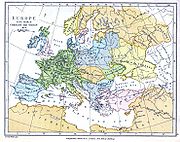
Finnic peoples (
Fennic) are a
linguisticLinguistics is the scientific study of natural language. Linguistics encompasses a number of sub-fields. An important topical division is between the study of language structure and the study of meaning...
group speaking
Finnic languagesFinnic languages may refer to:*Baltic-Finnic languages*Volga-Finnic languages*Finno-Volgaic languages, comprising the previous two groups and the Sami languages*Finno-Permic languages, comprising Finno-Volgaic and the Permic languages...
:
Baltic FinnsThe Baltic Finns are a linguistical group of peoples of northern Europe including the Finns proper, Karelians , Izhorians, Veps, Votes, Livonians and Estonians who speak Baltic-Finnic languages and have inhabited the Baltic Sea region for 3,000 years according to one theory, or up to ten thousand...
, who live near the
Baltic SeaThe Baltic Sea is a brackish inland sea located in Northern Europe, from 53°N to 66°N latitude and from 20°E to 26°E longitude. It is bounded by the Scandinavian Peninsula, the mainland of Europe, and the Danish islands. It drains into the Kattegat by way of the Øresund, the Great Belt and the...
,
Volga FinnsThe Volga Finns are a historical group of indigenous peoples of Russia whose descendants include the Mari people, the Erzya and the Moksha Mordvins , as well as extinct Merya, Muromian and Meshchera people....
, who live near the
Volga RiverThe Volga is the largest river in Europe in terms of length, discharge, and watershed. It flows through western Russia, and is widely viewed as the national river of Russia. Out of the twenty largest cities of Russia, eleven, including its capital Moscow, are situated in the Volga's drainage basin...
, the
PermiansThe Permians are a branch of Finno-Ugric peoples including Komis and Udmurts, speakers of Permic languages. Formerly also the name Bjarmians was used of them...
, who live in north-central
RussiaRussia , officially known as both Russia and the Russian Federation , is a country in northern Eurasia . It is a semi-presidential republic, comprising 83 federal subjects...
.
The term
Finnic has been formerly used to describe the speakers of Finno-Lappic languages, nowadays the
Sami peopleThe Sami people, also spelled Sámi, or Saami, are one of the indigenous people of northern Europe inhabiting Sápmi, which today encompasses parts of northern Sweden, Norway, Finland and the Kola Peninsula of Russia but also in the border area between south and middle Sweden...
, originally a non-Finno-Ugric people who adopted a Finnic language.
The Permians including Komis and Udmurts are sometimes thought to belong with the Volga Finns because according to some theories their ancient homeland lies in the northern part of the
Volga RiverThe Volga is the largest river in Europe in terms of length, discharge, and watershed. It flows through western Russia, and is widely viewed as the national river of Russia. Out of the twenty largest cities of Russia, eleven, including its capital Moscow, are situated in the Volga's drainage basin...
basin.
The major modern representatives of Baltic Finns who have maintained their languages are the Finns and
EstoniansEstonians are a Finnic people closely related to the Finns and inhabiting, primarily, the country of Estonia. The Estonians speak a Finno-Ugric language, known as Estonian...
.
Other groups include the
KareliansThe Karelians are a Baltic-Finnic ethnic group living mostly in the Republic of Karelia and in other north-western parts of the Russian Federation. The historic homeland of Karelians includes also parts of present-day Eastern Finland and the formerly Finnish territory of Ladoga Karelia...
, mainly living in
KareliaKarelia , the land of the Karelian peoples, is an area in Northern Europe of historical significance for Finland, Russia, and Sweden...
, in
FinlandFinland , officially the Republic of Finland
, is a Nordic country and democracy situated in the Fennoscandian region of northern Europe. It borders Sweden on the west, Russia on the east, and Norway on the north, while Estonia lies to its south across the Gulf of Finland...
and northwestern
RussiaRussia , officially known as both Russia and the Russian Federation , is a country in northern Eurasia . It is a semi-presidential republic, comprising 83 federal subjects...
, the
Ingrian FinnsThe Ingrian Finns are the Finnish population of Ingria descending from Lutheran Finnish immigrants introduced to the area in the 17th century, when Finland and Ingria were both part of the Swedish Empire...
,
VotesVotes are people of Votia in Ingria . Their own ethnic name is Vadjalain . The Finno-Ugric Votic language spoken by Votes is close to extinction...
, and Veps living around the
Gulf of FinlandThe Gulf of Finland is the easternmost arm of the Baltic Sea that extends between Finland and Estonia all the way to Saint Petersburg in Russia, where the river Neva drains into it. Other major cities around the gulf include Helsinki and Tallinn...
and Lakes
OnegaLake Onega is a lake in Russia.-Geography:...
and
LadogaLake Ladoga is a freshwater lake located in Republic of Karelia and Leningrad Oblast in northwestern Russia, not far from Saint Petersburg. It is the largest lake in Europe, and the 14th largest lake by area in the world.-Geography:The lake's area is 17,891 km²...
, and the
SetosSetos are an autochthonous ethnic and linguistic minority in south-eastern Estonia and north-western Russia. Setos are mostly Seto-speaking Orthodox Christians of Estonian nationality. Their dialect, that some consider an independent language - the Seto language belongs to the Balto-Finnic group...
and
VõrosVõros are inhabitants of historical Võrumaa , a region in Southeastern Estonia . The term is particularly used by proponents of a regional identity.About 70 000 people live in historical Võrumaa...
, who live in south-eastern
EstoniaEstonia , officially the Republic of Estonia , is a country in Northern Europe. It is bordered to the north by the Gulf of Finland, to the west by the Baltic Sea, to the south by Latvia , and to the east by the Russian Federation...
. In parts of northern
SwedenSweden , officially the Kingdom of Sweden , is a Nordic country on the Scandinavian Peninsula in Northern Europe...
, a Finnic language or a dialect (
MeänkieliMeänkieli is the name used in Sweden for Finnish dialects spoken in the most northern parts of the country, around the valley of the Torne River....
) has a considerable presence and a Finnic-speaking minority,
KvenKvens are a Norwegian ethnic minority descended from Finnish peasants and fishermen who emigrated from the northern parts of Finland and Sweden to Northern Norway in the 18th and 19th centuries...
s, live in Norway. The native speakers in the smaller groups are disappearing. In the 20th century both
LivonianLivonian can refer to one of the following.*Livonian people*Livonian language*Anything else pertaining to Livonia...
and Votic had fewer than 100 speakers left.
The modern representatives of
Volga FinnsThe Volga Finns are a historical group of indigenous peoples of Russia whose descendants include the Mari people, the Erzya and the Moksha Mordvins , as well as extinct Merya, Muromian and Meshchera people....
are the
MariThe Mari are a Volga-Finnic people who have traditionally lived along the Volga and Kama rivers in Russia. The majority of Maris today live in the Mari El Republic, with significant populations in the Tatarstan and Bashkortostan republics...
or Cheremis who live in
Mari El RepublicMari El Republic is a federal subject of Russia . The direct romanization of the republic's Russian and Mari names are Respublika Mariy El and Marii El Respublik, respectively. The republic is also sometimes called Mariy El or Marii El in English...
and the Mordvins (including the Moksha and the Erzya) from the
Republic of MordoviaRepublic of Mordovia or Mordvinia is a federal subject of Russia . The direct romanization of the republic's name is Respublika Mordoviya....
of the Russian Federation. Other Volga Finnic groups such as
MuromianThe Muromians were one of Finno-Ugric tribes who lived in the Oka River basin of what is now Russia. The tribe farmed, hunted, and traded. The Muromians paid tribute to the Rus princes and were likely assimilated by the Eastern Slavs in the 12th century into modern Russians....
s,
MeryaThe Merya people were an ancient Finno-Ugric people who lived in the regions of modern Russian cities of Rostov, Kostroma, Jaroslavl and Vladimir...
and
MeshcheraThe Meshchera were a Finno-Ugric tribe which lived in the territory between the Oka River and the Klyazma river. It was a land of forests, bogs and lakes. The area is still called the Meshchera Lowlands.-Records:...
of which there are records have long since disappeared.
Maternal DNA
The mtDNA studies have revealed that Baltic-Finns and Volga-Finns have the same genetic origins as the rest of Europeans who don't speak
Finno-Ugric languagesFinno-Ugric is a group of languages in the Uralic language family, comprising Finnish, Estonian, Hungarian and related languages.It comprises the Finno-Permic and Ugric language families.-Status:...
. At the same time the genetic studies have shown that for example the Sami who are linguistically related but genetically distinct from Baltic-Finns have the highest mtDNA haplogroup V frequency in Europe (40.9%), followed by
CataloniaCatalonia is an Autonomous Community in northeast Spain. The capital city is Barcelona.Catalonia covers an area of 32,114 km² and has an official population of 7,364,078. It borders France and Andorra to the north, Aragon to the west, the Valencian Community to the south, and the...
ns (26.7%) and
BasqueThe Basques are the native people of the Basque Country .The Basques as an ethnic group primarily inhabit an area traditionally known as the Basque Country, a region that is located around the western end of the Pyrenees on the coast of the Bay of Biscay and straddles parts of north-eastern Spain...
(20.0%), making the Sami a unique and ancient sub-group of Europeans.
According to year 2000 data the most common mtDNA
HaplogroupIn the study of molecular evolution, a haplogroup is a group of similar haplotypes that share a common ancestor with a single nucleotide polymorphism mutation. Because a haplogroup consists of similar haplotypes, this is what makes it possible to predict a haplogroup from haplotypes. An SNP...
Frequencies and the genetic diversity among Baltic Finns,
Volga FinnsThe Volga Finns are a historical group of indigenous peoples of Russia whose descendants include the Mari people, the Erzya and the Moksha Mordvins , as well as extinct Merya, Muromian and Meshchera people....
were following:
mtDNA HaplogroupIn the study of molecular evolution, a haplogroup is a group of similar haplotypes that share a common ancestor with a single nucleotide polymorphism mutation. Because a haplogroup consists of similar haplotypes, this is what makes it possible to predict a haplogroup from haplotypes. An SNP...
|
H In human mitochondrial genetics, Haplogroup H is a human mitochondrial DNA haplogroup.-Origin:Haplogroup H is a descendant of haplogroup HV. The Cambridge Reference Sequence , the human mitochondrial sequence to which all other sequences are compared, belongs to haplogroup H. Several independent...
|
I -Origin:Its ancestral haplogroup was N1. And its closest relative is N1e .-Distribution:Haplogroup I is found throughout Europe, Middle East and South Asia...
|
J In human mitochondrial genetics, Haplogroup J is a human mitochondrial DNA haplogroup.Haplogroup J derives from the haplogroup JT, which also gave rise to Haplogroup T. In his popular book The Seven Daughters of Eve, Bryan Sykes named the originator of this mtDNA haplogroup Jasmine...
|
K In human mitochondrial genetics, Haplogroup K is a human mitochondrial DNA haplogroup.-Origin:It is the most common subclade of haplogroup U8 and it has an estimated age in Europe of c. 12,000 years BP.-Distribution:...
|
T In human mitochondrial genetics, Haplogroup T is a human mitochondrial DNA haplogroup.-Origin:Haplogroup T derives from the haplogroup JT, which also gave rise to haplogroup J...
|
U3 In human mitochondrial genetics, Haplogroup U is a human mitochondrial DNA haplogroup.-Origin:Haplogroup U descends from a woman, in the Haplogroup R branch of the phylogenetic tree, who lived around 55,000 years ago...
|
U4 In human mitochondrial genetics, Haplogroup U is a human mitochondrial DNA haplogroup.-Origin:Haplogroup U descends from a woman, in the Haplogroup R branch of the phylogenetic tree, who lived around 55,000 years ago...
|
U5 In human mitochondrial genetics, Haplogroup U is a human mitochondrial DNA haplogroup.-Origin:Haplogroup U descends from a woman, in the Haplogroup R branch of the phylogenetic tree, who lived around 55,000 years ago...
|
V In human mitochondrial genetics, Haplogroup V is a human mitochondrial DNA haplogroup.-Origin:Haplogroup V is believed to have originated approximately 12,000 years before present, possibly in Iberia...
|
W -Distribution:Haplogroup W appears in Europe, West and South Asia.It is everywhere found as minority clade, with the highest concentration being in Northern Pakistan...
|
X In human mitochondrial genetics, Haplogroup X is a human mitochondrial DNA haplogroup.-Origin:The genetic sequences of haplogroup X diverged originally from haplogroup N, and subsequently further diverged about 20,000 to 30,000 years ago to give two sub-groups, X1 and X2.-Distribution:Overall...
|
Other |
IWX |
HV In human mitochondrial genetics, Haplogroup HV is a human mitochondrial DNA haplogroup.-Origin:Haplogroup HV derives from the Haplogroup R0...
|
KU |
JT In human mitochondrial genetics, Haplogroup JT is a human mitochondrial DNA haplogroup.-Origin:A descendant of the macro-haplogroup R, Haplogroup JT is the ancestral haplogroup to mitochondrial haplogroups J and T.-Tree:...
|
Genetic diversityGenetic diversity is a level of biodiversity that refers to the total number of genetic characteristics in the genetic makeup of a species. It is distinguished from genetic variability, which describes the tendency of genetic characteristics to vary....
|
| Baltic-Finnic |
|
|
|
|
|
|
|
|
|
|
|
|
|
|
|
|
|
| Finland |
.278 |
.063 |
.044 |
.051 |
.051 |
.000 |
.025 |
.139 |
.089 |
.076 |
.000 |
.127 |
.152 |
.367 |
.215 |
.139 |
.970 |
| Estonia |
.214 |
.000 |
.000 |
.000 |
.107 |
.000 |
.071 |
.179 |
.000 |
.071 |
.000 |
.250 |
.107 |
.214 |
.250 |
.179 |
.989 |
| Karelia |
.313 |
.024 |
.000 |
.024 |
.072 |
.000 |
.084 |
.181 |
.060 |
.036 |
.000 |
.120 |
.096 |
.373 |
.289 |
.120 |
.964 |
| Volga-Finnic |
.176 |
.029 |
.032 |
.029 |
.118 |
.000 |
.147 |
.118 |
.029 |
.000 |
.000 |
.176 |
.029 |
.206 |
.294 |
.294 |
.982 |
Haplogroup UIn human mitochondrial genetics, Haplogroup U is a human mitochondrial DNA haplogroup.-Origin:Haplogroup U descends from a woman, in the Haplogroup R branch of the phylogenetic tree, who lived around 55,000 years ago...
is a group of people who descend from a woman who lived around 50,000 years ago in the
Haplogroup RIn human mitochondrial genetics, Haplogroup R is a mitochondrial DNA macro-haplogroup.Haplogroup R is a descendant of macro-haplogroup N...
branch of the Genographic tree. Her descendants gave birth to several subgroups, some of which exhibit specific geographic homelands. For example a subgroup
U5 is restricted to
FinlandFinland , officially the Republic of Finland
, is a Nordic country and democracy situated in the Fennoscandian region of northern Europe. It borders Sweden on the west, Russia on the east, and Norway on the north, while Estonia lies to its south across the Gulf of Finland...
and its populations. This is likely the result of geographical,
linguisticIn the philosophy of language, a natural language is any language which arises in an unpremeditated fashion as the result of the innate facility for language possessed by the human intellect. A natural language is typically used for communication, and may be spoken, signed, or written...
and cultural isolation of the Finnish populations that has kept it fairly isolated genetically. Haplogroup
U5 that first evolved in Europe is a group of people who descend from a woman who lived around 52,000 years ago. U5 is found also in small frequencies and at much lower diversity in the Near East and parts of
AfricaAfrica is the world's second-largest and second most-populous continent, after Asia. At about 30.2 million km² including adjacent islands, it covers 6% of the Earth's total surface area and 20.4% of the total land area. With a billion people in 61 territories, it accounts for about 14.8% of the...
, suggesting back-migration of people from northern Europe to the south.
Paternal DNA
One of the men in a group of Eurasian Clan peoples who was probably born in Siberia within the last 10,000 years gave rise to the LLY22G marker which defines
haplogroup NIn human genetics, Haplogroup N is a Y-chromosome DNA haplogroup.-Origins:Haplogroup N is a descendant haplogroup of Haplogroup NO, and is believed to have first appeared in Southeast Asia approximately 15,000 to 20,000 years ago, during the Ice Age...
in the Genographic tree. Today his descendants effectively trace a migration of
Uralic-speakingThe Uralic languages constitute a language family of 39 languages spoken by approximately 25 million people. The healthiest Uralic languages in terms of the number of native speakers are Hungarian, Finnish, Estonian, Mari and Udmurt...
peoples during the last several thousands of years like the
Sami peopleThe Sami people, also spelled Sámi, or Saami, are one of the indigenous people of northern Europe inhabiting Sápmi, which today encompasses parts of northern Sweden, Norway, Finland and the Kola Peninsula of Russia but also in the border area between south and middle Sweden...
, the people of Northern Sweden, Norway, Finland and Russia. The Sami also have U5 lineages in their population indicating that it may have been introduced during their migration into these northern territories.
A genetic link between Sami and the Volga-Ural region of Russia has been found, indicative of a more recent contribution of people from the Volga-Ural region to the Sami population as recently as 2700 years ago.
The Y-chromosomal data has also revealed a common Finno-Ugric ancestry for the males of the neighboring Baltic peoples, speakers of the Indo-European
Baltic languagesThe Baltic languages are a group of related languages belonging to the Indo-European language family and spoken mainly in areas extending east and southeast of the Baltic Sea in Northern Europe...
. According to the studies, Baltic males are most closely related to the Finno-Ugric-speaking
Volga FinnsThe Volga Finns are a historical group of indigenous peoples of Russia whose descendants include the Mari people, the Erzya and the Moksha Mordvins , as well as extinct Merya, Muromian and Meshchera people....
such as the
MariThe Mari are a Volga-Finnic people who have traditionally lived along the Volga and Kama rivers in Russia. The majority of Maris today live in the Mari El Republic, with significant populations in the Tatarstan and Bashkortostan republics...
, rather than to Baltic Finns. The indicator of Finno-Ugric origin has been found to be more frequent in
LatviansLatvians , the indigenous Baltic people of Latvia, occasionally refer to themselves by the ancient name of Latvji, which may have originated from the word Latve which is a name of the river that presumably flowed through what is now eastern Latvia...
(42%) and
LithuaniansLithuanians are the Baltic ethnic group native to Lithuania, where they number slightly over 3 million people. Another million or more make up the Lithuanian diaspora, largely found in countries such as the United States, Brazil, Canada, Colombia, Russia, United Kingdom and Ireland...
(43%) than in Estonians (34%). The results suggest that the territories of Estonia, Latvia and Lithuania have been settled by
Finno-UgricFinno-Ugric can refer to:* Finno-Ugric languages* Finno-Ugric peoples...
-speaking tribes since the early Mesolithic period.
The Mesolithic Period
The region has been populated since the end of the last glacial era, about 10.000 B.C. The earliest traces of human settlement are connected with Suomusjärvi culture and
Kunda cultureKunda Culture, with its roots in Swiderian culture is a mesolithic hunter-gatherer communities of the Baltic forest zone extending eastwards through Latvia into northern Russia dating to the period 8000–5000 BC by calibrated radiocarbon dating...
. The Early
MesolithicThe Mesolithic or "Middle Stone Age" was a period in the development of human technology in between the Paleolithic or Old Stone Age and the Neolithic or New Stone Age. The term was introduced by John Lubbock in his work Pre-historic Times, published in 1865. The term was, however, not much used...
Pulli settlementPulli settlement, located on the right bank of the Pärnu River, is the oldest known human settlement in Estonia. It is located two kilometers from the town of Sindi, which is 14 kilometers from Pärnu...
is located by the
PärnuPärnu is a city in southwestern Estonia on the coast of Pärnu Bay, an inlet of the Gulf of Riga in the Baltic Sea. It is a popular summer vacation resort with many hotels, restaurants, and large beaches. The Pärnu River flows through the city...
River. It has been dated to the beginning of the 9th millennium BC. The Kunda Culture received its name from the
Lammasmäe settlement site in northern Estonia, which dates from earlier than 8500. Bone and stone artefacts similar to those found at Kunda have been discovered elsewhere in Estonia, as well as in
LatviaLatvia , officially the Republic of Latvia is a country in the Baltic region of Northern Europe. It is bordered to the north by Estonia , to the south by Lithuania , to the east by the Russian Federation , and to the southeast by Belarus . Across the Baltic Sea to the west lies Sweden...
, northern
LithuaniaLithuania , officially the Republic of Lithuania is a country in Northern Europe, the southernmost of the three Baltic states. Situated along the southeastern shore of the Baltic Sea, it shares borders with Latvia to the north, Belarus to the southeast, Poland, and the Russian exclave of...
and southern
FinlandFinland , officially the Republic of Finland
, is a Nordic country and democracy situated in the Fennoscandian region of northern Europe. It borders Sweden on the west, Russia on the east, and Norway on the north, while Estonia lies to its south across the Gulf of Finland...
.
The Neolithic Period
Around 5300 BCE pottery entered Finland. The earliest representatives belong to the Comb Ceramic Cultures, known for their distinctive decorating patterns. This marks the beginning of the Neolithic Period
Comb Ceramic Culture
Until the early 1980s the arrival of Finnic peoples, the ancestors of the Estonians, Finns, Livonians on the shores of the
Baltic seaThe Baltic Sea is a brackish inland sea located in Northern Europe, from 53°N to 66°N latitude and from 20°E to 26°E longitude. It is bounded by the Scandinavian Peninsula, the mainland of Europe, and the Danish islands. It drains into the Kattegat by way of the Øresund, the Great Belt and the...
around 3000 B.C. was associated with the Comb Ceramic Culture However , such a linking of archaeologically defined cultural entities with linguistic ones cannot be proven and it has been suggested that the increase of settlement finds in the period is more likely to have been associated with an economic boom related to the warming of climate. Some researchers have even argued that a form of
Uralic languagesThe Uralic languages constitute a language family of 39 languages spoken by approximately 25 million people. The healthiest Uralic languages in terms of the number of native speakers are Hungarian, Finnish, Estonian, Mari and Udmurt...
may have been spoken in Estonia and Finland since the end of the last glaciation.
Bronze Age
The beginning of the
Bronze AgeThe Bronze Age of a culture is the period when the most advanced metalworking in that culture utilised bronze. This could either have been based on the local smelting of copper and tin from ores, or trading for bronze from production areas elsewhere...
in Estonia is dated to approximately 1800 B.C. In present day Finland some time after 1500 BCE. The coastal regions of Finland were a part of the Nordic Bronze Culture, whereas in the inland regions the influences came from the bronze-using cultures of Northern Russia. The development of the borders between the Finnic peoples and the
BaltsThe Balts or Baltic peoples , defined as speakers of one of the Baltic languages, a branch of the Indo-European language family, are descended from a group of Indo-European tribes who settled the area between lower Vistula and upper Daugava and Dnieper rivers on the southeast shore of the Baltic Sea...
was under way. The first fortified settlements, Asva and Ridala on the island of
SaaremaaSaaremaa is the largest island belonging to Estonia, measuring 2,673 km². The main island of Saare County, it is located in the Baltic Sea, south of Hiiumaa island, and belongs to the West Estonian Archipelago...
and Iru in the Northern Estonia began to be built. The development of shipbuilding facilitated the spread of bronze. Changes took place in burial customs, a new type of burial ground spread from Germanic to Estonian areas, stone cist graves and cremation burials became increasingly common aside small number of boat-shaped stone graves.
The Iron Age
The
Pre-Roman Iron AgeThe Pre-Roman Iron Age of Northern Europe designates the earliest part of the Iron Age in Scandinavia, northern Germany, and the Netherlands north of the Rhine River. These regions feature many extensive archaeological excavation sites, which have yielded a wealth of artifacts...
began in about 500 B.C. and lasted until the middle of the 1.st century A.D. The oldest iron items were imported, although since the first century iron was smelted from local marsh and lake ore. Settlement sites were located mostly in places that offered natural protection. Fortresses were built, although used temporarily. The appearance of square
Celtic fieldsCeltic field is a popular name for the traces of early agricultural field systems found in North-West Europe, e.g. Belgium, Britain, Germany, Ireland and the Netherlands. The name was given by O.G.S. Crawford. They are sometimes preserved in areas were industrial farming has not been adopted and...
surrounded by enclosures in Estonia date from the Pre-Roman Iron Age. The majority of stones with man-made indents, which presumably were connected with magic designed to increase crop fertility, date from this period. A new type of grave, quadrangular burial mounds began to develop. Burial traditions show the clear beginning of social stratification.
The
Roman Iron AgeThe Roman Iron Age is the name that Swedish archaeologist Oscar Montelius gave to a part of the Iron Age in Scandinavia, Northern Germany and the Netherlands....
is roughly dated to between 50 and 450 A.D., the era that was affected by the influence of the
Roman EmpireThe Roman Empire was the post-Republican phase of the ancient Roman civilization, characterised by an autocratic form of government and large territorial holdings in Europe and around the Mediterranean. The term is used to describe the Roman state during and after the time of the first emperor,...
. In material culture this is reflected by few Roman coins, some
jewelleryJewellery or jewelry is an item of personal adornment, such as a necklace, ring, brooch or bracelet, that is worn by a person. It may be made from gemstones or precious metals, but may be from any other material, and may be appreciated because of geometric or other patterns, or meaningful symbols...
and artifacts. The abundance of iron artifacts in Southern Estonia speaks of closer mainland ties with southern areas while coastal Finland and the islands of western and northern Estonia communicated with their neighbors mainly by sea.
By the end of the period clearly defined tribal dialectical areas: (proper-)Finns, Tavastians,
KareliansThe Karelians are a Baltic-Finnic ethnic group living mostly in the Republic of Karelia and in other north-western parts of the Russian Federation. The historic homeland of Karelians includes also parts of present-day Eastern Finland and the formerly Finnish territory of Ladoga Karelia...
, Northern Estonias, Southern Estonias, and Western Estonias including the islands had emerged, the population of each having formed its own understanding of identity.
Finnic peoples in chronicles
The word
Finn is first mentioned in the form
fenni in the first century AD by
TacitusPublius Cornelius Tacitus was a senator and a historian of the Roman Empire. The surviving portions of his two major works—the Annals and the Histories—examine the reigns of the Roman Emperors Tiberius, Claudius, Nero and those who reigned in the Year of the Four Emperors...
, the Roman historian. However it is possible that he was referring to the people of northern Europe in general, particularly the Lappic or
Sami peopleThe Sami people, also spelled Sámi, or Saami, are one of the indigenous people of northern Europe inhabiting Sápmi, which today encompasses parts of northern Sweden, Norway, Finland and the Kola Peninsula of Russia but also in the border area between south and middle Sweden...
. After that the name finni is used by Claudius Ptolemaeus (170 AD) and the Gothic writer Jordanes in his Getica (551 AD). The first sure mention in the western sources referring to Finns is considered to be in the Anglo-Saxon epic
BeowulfBeowulf is an Old English heroic epic poem of unknown authorship, dating as recorded in the Nowell Codex manuscript from between the 8th and the early 11th century, set in Denmark and Sweden...
(800 AD). Information about Finnic tribes becomes much more numerous from the Viking era (800-1050). It was not until abut 1171 that the word Finni was employed to mean the Finns.
The term
Eesti, the name of the Estonians occurs first again by Tacitus, however, it might have indicated Baltic peoples. In Northern Sagas (9th century) the term started to be used to indicate the Estonians.
In a Norwegian text (11-12 century) the first mention of the name Kiriali referring to Karelians, as well as the term 'cornuti Finni, interpreted as referring to the Lapps or Sami people appears.
The Russian Primary Chronicle's opening chapter lists the following peoples living "in the share of
JaphethJapheth is one of the sons of Noah in the Bible. In Arabic citations, his name is normally given as Yafeth ibn Nuh ....
" among others:
ChudChud or Chude is a term historically applied in the early Russian annals to several Finno-Ugric peoples in the area of what is now Finland, Estonia and Northwestern Russia....
,
MeryaThe Merya people were an ancient Finno-Ugric people who lived in the regions of modern Russian cities of Rostov, Kostroma, Jaroslavl and Vladimir...
, Muroma,Ves, Mordvin (Moksha and
ErzyaThe Erzya language is spoken by about 500,000 people in the northern and eastern and north-western parts of the Republic of Mordovia and adjacent regions of Nizhniy Novgorod, Chuvashia, Penza, Samara, Saratov, Orenburg, Ulyanovsk, Tatarstan and Bashkortostan in Russia...
), Chud beyond the portages,
PermKomi peoples live in the Komi Republic, Perm Krai, Murmansk Oblast, Khanty-Mansi Autonomous Okrug, and Yamalo-Nenets Autonomous Okrug of Russia. Their northernmost subgroup is also known as the Komi-Izhemtsy or Iz'vataz...
,
PecheraSetos are an autochthonous ethnic and linguistic minority in south-eastern Estonia and north-western Russia. Setos are mostly Seto-speaking Orthodox Christians of Estonian nationality. Their dialect, that some consider an independent language - the Seto language belongs to the Balto-Finnic group...
, Yam, Ugra,
LivThe Livonians or Livs are the indigenous inhabitants of Livonia, a large part of what is today the northwestern Latvia and southwestern Estonia...
.
The name Sum
, that is Suomi (Finland in Finnish), is found in the oldest Russian, Nestor's Chronicle (1000-1100). The names of other Finnic tribes are also listed including Veps,
CheremisThe Mari are a Volga-Finnic people who have traditionally lived along the Volga and Kama rivers in Russia. The majority of Maris today live in the Mari El Republic, with significant populations in the Tatarstan and Bashkortostan republics...
, Mordvin (Moksha and
ErzyaThe Erzya language is spoken by about 500,000 people in the northern and eastern and north-western parts of the Republic of Mordovia and adjacent regions of Nizhniy Novgorod, Chuvashia, Penza, Samara, Saratov, Orenburg, Ulyanovsk, Tatarstan and Bashkortostan in Russia...
),
PermianKomi peoples live in the Komi Republic, Perm Krai, Murmansk Oblast, Khanty-Mansi Autonomous Okrug, and Yamalo-Nenets Autonomous Okrug of Russia. Their northernmost subgroup is also known as the Komi-Izhemtsy or Iz'vataz...
.
The Chudes as mentioned by a monk Nestor in the earliest Russian chronicles, were the Ests or Esthonians . According to the Russian
Primary ChronicleThe Primary Chronicle , or Russian Primary Chronicle, is a history of Kievan Rus' from about 850 to 1110, originally compiled in Kiev about 1113.- Three editions :The original compilation was long considered to be the...
Chuds bordered on the Varangian Sea (Baltic sea). In 1030
Yaroslav I the WiseYaroslav I the Wise was thrice Grand Prince of Novgorod and Kiev, uniting the two principalities for a time under his rule...
invaded the country of the Chuds and laid the foundations of Yuriev, (the historical Russian name of
TartuFor the French captain, see Jean-François TartuTartu is the second largest city of Estonia. In contrast to Estonia's political and financial capital Tallinn, Tartu is often considered the intellectual and cultural hub, especially since it is home to Estonia's oldest and most renowned university....
,
EstoniaEstonia , officially the Republic of Estonia , is a country in Northern Europe. It is bordered to the north by the Gulf of Finland, to the west by the Baltic Sea, to the south by Latvia , and to the east by the Russian Federation...
) they remained until 1061, when, according to chronicles, Yuryev was burned down by the Chudes. According to Old East Slavic chronicles the Chudes were one of the founders of the
Rus' stateThe Rus' Khaganate was a polity that flourished during a poorly documented period in the history of Eastern Europe...
.
The Northern (or eastern) Chudes were also a mythical people in folklore among Northern Russians and their neighbours.
In Komi mythology, the Northern Chudes represent the mythic ancestors of the
KomiKomi peoples live in the Komi Republic, Perm Krai, Murmansk Oblast, Khanty-Mansi Autonomous Okrug, and Yamalo-Nenets Autonomous Okrug of Russia. Their northernmost subgroup is also known as the Komi-Izhemtsy or Iz'vataz...
people
Middle Ages
In the 13th century the east Baltic world was transformed by military conquest: First the Livs and Estonians, then the Finns underwent defeat, baptism, military occupation and sometimes extermination by groups of Germans, Danes and Swedes.
Inter-Finnic cultural contacts
Finnic intercultural festivals, conferences, museums, and artistic, scholarly, and charity collaborations are present and active amongst many populations of speakers of
Finnic languagesFinnic languages may refer to:*Baltic-Finnic languages*Volga-Finnic languages*Finno-Volgaic languages, comprising the previous two groups and the Sami languages*Finno-Permic languages, comprising Finno-Volgaic and the Permic languages...
. In addition, artists and scholars from many Finnic peoples, such as Estonians, Finns, Udmurts, Mordvins (Erzya and Moksha), Maris, and others, are active in the Finno-Ugric peoples related Ethnofuturist art-based cultural and philosophical movement.
See also
- Ugric peoples
The term Ugric people is used to describe peoples speaking a Ugric language. Ugric is a linguistic concept, not an ethnic or cultural one.-People:Ugric people are:*Hungarians**Székely**Csángó*Khanty*Mansi...
- Finno-Ugric peoples
The Finno-Ugric peoples is a historic linguistic group of peoples in Europe who speak Finno-Ugric languages, such as the Finnic and the Ugric peoples...
- Fenni
The Fenni were an ancient hunter-gatherer people described by Cornelius Tacitus in Germania in 97 A.D.- Ancient accounts :The Fenni are first mentioned by Cornelius Tacitus in Germania in 97 A.D...
- Fenno-Scandinavia
- Greater Finland
Greater Finland was an idea which was born in some irredentist movements emphasizing pan-Finnicism and expressed a Finnish version of pre-World War II European nationalism. It was imagined to include Finland as well as territories inhabited by ethnically-related Finnic peoples: Finns, Karelians,...
- Finnic mythology
Finnic mythology is the mythologies of the Finnic peoples, such as the Volga Finns, Baltic Finns, Permians, and Sami.The mythologies of the Finno-Lappic speakers have some common aspects; the Sami people are deeply shamanistic and these traits are present also in Finnish-Karelian mythology...
External links