


Communist Party of Australia

Encyclopedia
The Communist Party of Australia was founded in 1920 and dissolved in 1991; it was succeeded by the Socialist Party of Australia, which then renamed itself, becoming the current Communist Party of Australia. The CPA achieved its greatest political strength in the 1940s and faced an attempted banning in 1951. Though it never presented a major challenge to the established order in Australia
, it did have significant influence on the trade unions, social movements, and the national culture.
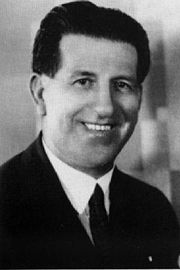
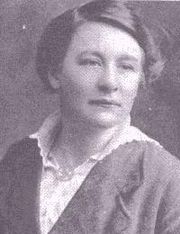 The Communist Party was founded in Sydney
in October 1920 by a group of socialists inspired by reports of the Russian Revolution
. Among the party's founders were a prominent Sydney trade unionist, John Garden
, Adela Pankhurst
(daughter of the British suffragist Emmeline Pankhurst
) and most of the then illegal Australian section of the Industrial Workers of the World
(IWW). The IWW rapidly left the Communist Party, with its original members, over disagreements with the direction of the Soviet Union and Bolshevism. In its early years, mainly through Garden's efforts, the party achieved some influence in the trade union movement in New South Wales
, but by the mid 1920s it had dwindled to an insignificant sect.
In the later 1920s the party was rebuilt by Jack Kavanagh
, an experienced Canadian Communist activist, and Esmonde Higgins, a talented Melbourne
journalist who was the nephew of a High Court judge, H.B. Higgins. But in 1929 the party leadership fell into disfavour with the Comintern
, which under orders from Joseph Stalin
had taken a turn to extreme revolutionary rhetoric (the so-called "Third Period
"), and an emissary, the American Communist Harry Wicks
, was sent to correct the party's perceived errors. Kavanagh was expelled and Higgins resigned.
A new party leadership, consisting of J.B. (Jack) Miles
, Lance Sharkey
and Richard Dixon, was imposed on the party by the Comintern, and remained in control for the next 30 years. During the 1930s the party experienced some growth, particularly after 1935 when the Comintern changed its policy in favour of a "united front against fascism
." The Movement Against War and Fascism
was founded to bring together all opponents of fascism under a communist controlled umbrella organization. The movement instigated the events which led to the attempted exclusion of Egon Kisch from Australia in late 1934 and early 1935.
The Communist party began to win positions in trade unions such as the Miners Federation and the Waterside Workers Federation, although its parliamentary candidates nearly always polled poorly at elections.
In 1939 Nazi Germany
and Stalin's Soviet Union
signed a Non-Aggression Treaty and, despite foundational antipathies between the dictatorships, they became co-belligerents
at the outbreak of World War II
(Australia declared war on Nazi Germany for invading Poland, but the USSR promptly invaded
and annexed East Poland as per an agreement with Adolf Hitler). Consequently the Communist Party of Australia opposed and sought to disrupt Australia's "imperialist" war effort against Nazism in the early stages of the War. Menzies banned the CPA after the fall of France in 1940, but by 1941 Stalin was forced to join the allied cause when Hitler reneged on the Pact and invaded the USSR. The USSR came to bear the brunt of the carnage of Hitler's war machine and the Communist Party in Australia lost its early war stigma as a result. Its membership rose to 20,000, it won control of a number of important trade unions, and a Communist candidate, Fred Paterson
, was elected to the Queensland parliament
. But the party remained marginal to the Australian political mainstream. The Australian Labor Party
remained the dominant party of the Australian working class, but it would split in the mid-50s over concerns among some members over Communist influence over certain Unions.
After 1945 and the onset of the Cold War
, the party entered a steady decline. Following the new line from Moscow, and believing that a new "imperialist war" and a new depression were imminent, and that the CPA should immediately contest for leadership of the working class with the Australian Labor Party, the CPA launched an industrial offensive in 1947, culminating in a prolonged strike
in the coalmines in 1949. The Chifley
Labor government saw this as a Communist challenge to its position in the labour movement, and used the army and strikebreaker
s to break the strike. The Communist Party never again held such a strong position in the union movement, nevertheless the issue remained potent and in 1955 the Democratic Labor Party
was formed by disaffected ALP members who were concerned over Communist influence in some Australian Unions.
In 1949 the USSR exploded its first atomic bomb
and Mao Zedong
won power in China
. A year later North Korea
invaded South Korea
and in 1951, during the Korean War
, the Liberal
government of Robert Menzies
tried to ban the Communist Party of Australia, first by legislation that was declared invalid by the High Court, then by referendum to try to overcome the constitutional obstacles to that legislation, but the referendum
was narrowly defeated. When Stalin died and Nikita Khrushchev
revealed his crimes in the Secret Speech, members began to leave. More left after the Soviet invasion of Hungary
in 1956. In 1961 the split between the Soviet Union and China
was mirrored in Australia, with a small pro-China
party being formed - the Communist Party of Australia (Marxist-Leninist)
.
By the 1960s the party's membership had fallen to around 5,000, but it continued to hold positions in a number of trade unions, and it was also influential in the various protest movements of the period, especially the movement against the Vietnam War
. In 1966, the party started their own magazine called Australian Left Review
. But the Soviet invasion of Czechoslovakia
in 1968 triggered another crisis. Sharkey's successor as party leader, Laurie Aarons
, denounced the invasion, causing a group of pro-Soviet hardliners to leave and form a new party, the Socialist Party of Australia.
Through the 1970s and 1980s the party continued to decline, despite adopting Eurocommunism
and democratising its internal structures so that it became a looser radical party rather than a classic Marxist-Leninist
one. By 1990 its membership had declined to less than a thousand.
In 1991 the Communist Party was dissolved and the New Left Party formed. The New Left Party was intended to be a broader party which would attract a wider range of members. This did not happen, and the New Left Party was disbanded in 1992. The Communist Party's assets were thereafter directed into a body called the SEARCH Foundation.
In 1996 the Socialist Party took up the now-unused name of Communist Party of Australia (see Communist Party of Australia (revived)). This party, along with a number of small Trotskyist groups, maintains the Communist tradition in Australia, but none of these groups is of any political significance.
, Judah Waten
, Frank Hardy
, Eric Lambert and Alan Marshall, the painter Noel Counihan
and the poet David Martin
.
In some ways the effects of negative reactions to the Communist Party were more important than anything the party itself did. Conservative politicians such as Stanley Bruce
in the 1920s and Robert Menzies
in the 1950s won elections, assisted by linking the Labor Party with Communism. In the early 1950s Catholics in the Labor Party were led by hatred of Communism to form "Industrial Groups" to combat Communist influence in the unions. This led in 1954 to a party split and the formation of the Democratic Labor Party, which used its power to influence voters' preferences
at elections to keep the ALP out of power.
The Communist Party and its members campaigned for many years for causes such as improved conditions for industrial workers, opposition to fascist and other dictatorships, equal rights for women and civil rights for the Aboriginal
people. It achieved some successes in these areas, and many of its positions were later taken up by the political mainstream. But the party never succeeded in garnering significant support for Communism. The party was an apologist for the Soviet Union for many years (although it became critical of the Soviet Union from the late 1960s). Disenchantment with the Soviet Union was a leading cause of the loss of membership.
, a membership later taken over by the Young Communist Movement.
Australia
Australia , officially the Commonwealth of Australia, is a country in the Southern Hemisphere comprising the mainland of the Australian continent, the island of Tasmania, and numerous smaller islands in the Indian and Pacific Oceans. It is the world's sixth-largest country by total area...
, it did have significant influence on the trade unions, social movements, and the national culture.
History
Sydney
Sydney is the most populous city in Australia and the state capital of New South Wales. Sydney is located on Australia's south-east coast of the Tasman Sea. As of June 2010, the greater metropolitan area had an approximate population of 4.6 million people...
in October 1920 by a group of socialists inspired by reports of the Russian Revolution
Russian Revolution of 1917
The Russian Revolution is the collective term for a series of revolutions in Russia in 1917, which destroyed the Tsarist autocracy and led to the creation of the Soviet Union. The Tsar was deposed and replaced by a provisional government in the first revolution of February 1917...
. Among the party's founders were a prominent Sydney trade unionist, John Garden
John Garden
John Smith "Jock" Garden , clergyman, Australian trade unionist and politician, was one of the founders of the Communist Party of Australia.-Early life:...
, Adela Pankhurst
Adela Pankhurst
Adela Constantia Mary Pankhurst Walsh was a British-Australian suffragette, political organizer, and co-founder of both the Communist Party of Australia and the Australia First Movement....
(daughter of the British suffragist Emmeline Pankhurst
Emmeline Pankhurst
Emmeline Pankhurst was a British political activist and leader of the British suffragette movement which helped women win the right to vote...
) and most of the then illegal Australian section of the Industrial Workers of the World
Industrial Workers of the World
The Industrial Workers of the World is an international union. At its peak in 1923, the organization claimed some 100,000 members in good standing, and could marshal the support of perhaps 300,000 workers. Its membership declined dramatically after a 1924 split brought on by internal conflict...
(IWW). The IWW rapidly left the Communist Party, with its original members, over disagreements with the direction of the Soviet Union and Bolshevism. In its early years, mainly through Garden's efforts, the party achieved some influence in the trade union movement in New South Wales
New South Wales
New South Wales is a state of :Australia, located in the east of the country. It is bordered by Queensland, Victoria and South Australia to the north, south and west respectively. To the east, the state is bordered by the Tasman Sea, which forms part of the Pacific Ocean. New South Wales...
, but by the mid 1920s it had dwindled to an insignificant sect.
In the later 1920s the party was rebuilt by Jack Kavanagh
Jack Kavanagh
Jack KavanaghHe moved to Australia in 1925, and was a central leader of the Communist Party of Australia until 1930, when the Stalinist Comintern removed him from the leadership. He was expelled from the party in January 1931, readmitted, and then expelled a second time in 1934 after being accused...
, an experienced Canadian Communist activist, and Esmonde Higgins, a talented Melbourne
Melbourne
Melbourne is the capital and most populous city in the state of Victoria, and the second most populous city in Australia. The Melbourne City Centre is the hub of the greater metropolitan area and the Census statistical division—of which "Melbourne" is the common name. As of June 2009, the greater...
journalist who was the nephew of a High Court judge, H.B. Higgins. But in 1929 the party leadership fell into disfavour with the Comintern
Comintern
The Communist International, abbreviated as Comintern, also known as the Third International, was an international communist organization initiated in Moscow during March 1919...
, which under orders from Joseph Stalin
Joseph Stalin
Joseph Vissarionovich Stalin was the Premier of the Soviet Union from 6 May 1941 to 5 March 1953. He was among the Bolshevik revolutionaries who brought about the October Revolution and had held the position of first General Secretary of the Communist Party of the Soviet Union's Central Committee...
had taken a turn to extreme revolutionary rhetoric (the so-called "Third Period
Third Period
The Third Period is a ideological concept adopted by the Communist International at its 6th World Congress, held in Moscow in the summer of 1928....
"), and an emissary, the American Communist Harry Wicks
Harry Wicks
Harry Wicks was a British socialist activist.-Biography:Born in Battersea, London, he went to work on the railways and joined the National Union of Railwaymen in 1919. He joined the Labour Party, but after Black Friday moved to the Communist Party of Great Britain . After studying with A. E. E...
, was sent to correct the party's perceived errors. Kavanagh was expelled and Higgins resigned.
A new party leadership, consisting of J.B. (Jack) Miles
Jack Miles (political activist)
John Bramwell "Jack" Miles , also known as J.B.M., was a Scottish-born Australian stonemason and communist leader....
, Lance Sharkey
Lance Sharkey
Lawrence Louis "Lance" Sharkey was a trade union activist, a radical journalist, and a Communist politician. From 1948 to 1965 Sharkey served as the Secretary-General of Communist Party of Australia...
and Richard Dixon, was imposed on the party by the Comintern, and remained in control for the next 30 years. During the 1930s the party experienced some growth, particularly after 1935 when the Comintern changed its policy in favour of a "united front against fascism
Fascism
Fascism is a radical authoritarian nationalist political ideology. Fascists seek to rejuvenate their nation based on commitment to the national community as an organic entity, in which individuals are bound together in national identity by suprapersonal connections of ancestry, culture, and blood...
." The Movement Against War and Fascism
Movement Against War and Fascism
The Movement Against War and Fascism was a Communist front organisation founded in Australia in 1933. MAWF organised political ralies, meetings and issues to promote the cause of Communism, recruit members, supporters and activists and promote wider community support.The MAWF was instigated by...
was founded to bring together all opponents of fascism under a communist controlled umbrella organization. The movement instigated the events which led to the attempted exclusion of Egon Kisch from Australia in late 1934 and early 1935.
The Communist party began to win positions in trade unions such as the Miners Federation and the Waterside Workers Federation, although its parliamentary candidates nearly always polled poorly at elections.
In 1939 Nazi Germany
Nazi Germany
Nazi Germany , also known as the Third Reich , but officially called German Reich from 1933 to 1943 and Greater German Reich from 26 June 1943 onward, is the name commonly used to refer to the state of Germany from 1933 to 1945, when it was a totalitarian dictatorship ruled by...
and Stalin's Soviet Union
Soviet Union
The Soviet Union , officially the Union of Soviet Socialist Republics , was a constitutionally socialist state that existed in Eurasia between 1922 and 1991....
signed a Non-Aggression Treaty and, despite foundational antipathies between the dictatorships, they became co-belligerents
Co-belligerence
Co-belligerence is the waging of a war in cooperation against a common enemy without a formal treaty of military alliance.Co-belligerence is a broader and less precise status of wartime partnership than a formal military alliance. Co-belligerents may support each other materially, exchange...
at the outbreak of World War II
World War II
World War II, or the Second World War , was a global conflict lasting from 1939 to 1945, involving most of the world's nations—including all of the great powers—eventually forming two opposing military alliances: the Allies and the Axis...
(Australia declared war on Nazi Germany for invading Poland, but the USSR promptly invaded
Soviet invasion of Poland
Soviet invasion of Poland can refer to:* the second phase of the Polish-Soviet War of 1920 when Soviet armies marched on Warsaw, Poland* Soviet invasion of Poland of 1939 when Soviet Union allied with Nazi Germany attacked Second Polish Republic...
and annexed East Poland as per an agreement with Adolf Hitler). Consequently the Communist Party of Australia opposed and sought to disrupt Australia's "imperialist" war effort against Nazism in the early stages of the War. Menzies banned the CPA after the fall of France in 1940, but by 1941 Stalin was forced to join the allied cause when Hitler reneged on the Pact and invaded the USSR. The USSR came to bear the brunt of the carnage of Hitler's war machine and the Communist Party in Australia lost its early war stigma as a result. Its membership rose to 20,000, it won control of a number of important trade unions, and a Communist candidate, Fred Paterson
Fred Paterson
Frederick Woolnough Paterson was an Australian politician, activist, unionist and lawyer. He was the only member of a Communist Party ever to be elected to a parliament anywhere in the Commonwealth of Australia....
, was elected to the Queensland parliament
Queensland Legislative Assembly
The Queensland Legislative Assembly is the unicameral chamber of the Parliament of Queensland. Elections are held approximately once every three years. Voting is by the Optional Preferential Voting form of the Alternative Vote system...
. But the party remained marginal to the Australian political mainstream. The Australian Labor Party
Australian Labor Party
The Australian Labor Party is an Australian political party. It has been the governing party of the Commonwealth of Australia since the 2007 federal election. Julia Gillard is the party's federal parliamentary leader and Prime Minister of Australia...
remained the dominant party of the Australian working class, but it would split in the mid-50s over concerns among some members over Communist influence over certain Unions.
After 1945 and the onset of the Cold War
Cold War
The Cold War was the continuing state from roughly 1946 to 1991 of political conflict, military tension, proxy wars, and economic competition between the Communist World—primarily the Soviet Union and its satellite states and allies—and the powers of the Western world, primarily the United States...
, the party entered a steady decline. Following the new line from Moscow, and believing that a new "imperialist war" and a new depression were imminent, and that the CPA should immediately contest for leadership of the working class with the Australian Labor Party, the CPA launched an industrial offensive in 1947, culminating in a prolonged strike
1949 Australian coal strike
The 1949 Australian coal strike is the first time that Australian military forces were used during peacetime to break a Trade union strike. The strike by 23,000 coal miners lasted for seven weeks, from 27 June 1949 to 15 August 1949, with troops being sent in by the Ben Chifley Federal Labor...
in the coalmines in 1949. The Chifley
Ben Chifley
Joseph Benedict Chifley , Australian politician, was the 16th Prime Minister of Australia. He took over the Australian Labor Party leadership and Prime Ministership after the death of John Curtin in 1945, and went on to retain government at the 1946 election, before being defeated at the 1949...
Labor government saw this as a Communist challenge to its position in the labour movement, and used the army and strikebreaker
Strikebreaker
A strikebreaker is a person who works despite an ongoing strike. Strikebreakers are usually individuals who are not employed by the company prior to the trade union dispute, but rather hired prior to or during the strike to keep the organisation running...
s to break the strike. The Communist Party never again held such a strong position in the union movement, nevertheless the issue remained potent and in 1955 the Democratic Labor Party
Democratic Labor Party (historical)
The Democratic Labor Party was an Australian political party that existed from 1955 until 1978.-History:The DLP was formed as a result of a split in the Australian Labor Party that began in 1954. The split was between the party's national leadership, under the then party leader Dr H.V...
was formed by disaffected ALP members who were concerned over Communist influence in some Australian Unions.
In 1949 the USSR exploded its first atomic bomb
Soviet atomic bomb project
The Soviet project to develop an atomic bomb , was a clandestine research and development program began during and post-World War II, in the wake of the Soviet Union's discovery of the United States' nuclear project...
and Mao Zedong
Mao Zedong
Mao Zedong, also transliterated as Mao Tse-tung , and commonly referred to as Chairman Mao , was a Chinese Communist revolutionary, guerrilla warfare strategist, Marxist political philosopher, and leader of the Chinese Revolution...
won power in China
China
Chinese civilization may refer to:* China for more general discussion of the country.* Chinese culture* Greater China, the transnational community of ethnic Chinese.* History of China* Sinosphere, the area historically affected by Chinese culture...
. A year later North Korea
North Korea
The Democratic People’s Republic of Korea , , is a country in East Asia, occupying the northern half of the Korean Peninsula. Its capital and largest city is Pyongyang. The Korean Demilitarized Zone serves as the buffer zone between North Korea and South Korea...
invaded South Korea
South Korea
The Republic of Korea , , is a sovereign state in East Asia, located on the southern portion of the Korean Peninsula. It is neighbored by the People's Republic of China to the west, Japan to the east, North Korea to the north, and the East China Sea and Republic of China to the south...
and in 1951, during the Korean War
Korean War
The Korean War was a conventional war between South Korea, supported by the United Nations, and North Korea, supported by the People's Republic of China , with military material aid from the Soviet Union...
, the Liberal
Liberal Party of Australia
The Liberal Party of Australia is an Australian political party.Founded a year after the 1943 federal election to replace the United Australia Party, the centre-right Liberal Party typically competes with the centre-left Australian Labor Party for political office...
government of Robert Menzies
Robert Menzies
Sir Robert Gordon Menzies, , Australian politician, was the 12th and longest-serving Prime Minister of Australia....
tried to ban the Communist Party of Australia, first by legislation that was declared invalid by the High Court, then by referendum to try to overcome the constitutional obstacles to that legislation, but the referendum
Australian referendum, 1951
The 1951 Australian Referendum was held on 22 September 1951 and sought approval for the federal government to ban the Communist Party of Australia. It was not carried.-Background:...
was narrowly defeated. When Stalin died and Nikita Khrushchev
Nikita Khrushchev
Nikita Sergeyevich Khrushchev led the Soviet Union during part of the Cold War. He served as First Secretary of the Communist Party of the Soviet Union from 1953 to 1964, and as Chairman of the Council of Ministers, or Premier, from 1958 to 1964...
revealed his crimes in the Secret Speech, members began to leave. More left after the Soviet invasion of Hungary
History of Hungary
Hungary is a country in central Europe. Its history under this name dates to the early Middle Ages, when the Pannonian Basin was colonized by the Magyars, a semi-nomadic people from what is now central-northern Russia...
in 1956. In 1961 the split between the Soviet Union and China
China
Chinese civilization may refer to:* China for more general discussion of the country.* Chinese culture* Greater China, the transnational community of ethnic Chinese.* History of China* Sinosphere, the area historically affected by Chinese culture...
was mirrored in Australia, with a small pro-China
Maoism
Maoism, also known as the Mao Zedong Thought , is claimed by Maoists as an anti-Revisionist form of Marxist communist theory, derived from the teachings of the Chinese political leader Mao Zedong . Developed during the 1950s and 1960s, it was widely applied as the political and military guiding...
party being formed - the Communist Party of Australia (Marxist-Leninist)
Communist Party of Australia (Marxist-Leninist)
The Communist Party of Australia is an Australian political party based on the writings of Karl Marx, Vladimir Lenin, Joseph Stalin and Mao Zedong...
.
By the 1960s the party's membership had fallen to around 5,000, but it continued to hold positions in a number of trade unions, and it was also influential in the various protest movements of the period, especially the movement against the Vietnam War
Vietnam War
The Vietnam War was a Cold War-era military conflict that occurred in Vietnam, Laos, and Cambodia from 1 November 1955 to the fall of Saigon on 30 April 1975. This war followed the First Indochina War and was fought between North Vietnam, supported by its communist allies, and the government of...
. In 1966, the party started their own magazine called Australian Left Review
Australian Left Review
Australian Left Review was a monthly journal of the Communist Party of Australia from 1966 to 1992. It was one of a number of left political journals founded in Australia in the post-war years, including Overland and Arena ....
. But the Soviet invasion of Czechoslovakia
Prague Spring
The Prague Spring was a period of political liberalization in Czechoslovakia during the era of its domination by the Soviet Union after World War II...
in 1968 triggered another crisis. Sharkey's successor as party leader, Laurie Aarons
Laurie Aarons
Laurence "Laurie" Aarons , Australian Communist leader, was National Secretary of the Communist Party of Australia from 1965 to 1976. He was born in Sydney, son of Sam Aarons, a leading member of the Communist Party and a veteran of the Spanish Civil War. The Aarons family was of German-Jewish...
, denounced the invasion, causing a group of pro-Soviet hardliners to leave and form a new party, the Socialist Party of Australia.
Through the 1970s and 1980s the party continued to decline, despite adopting Eurocommunism
Eurocommunism
Eurocommunism was a trend in the 1970s and 1980s within various Western European communist parties to develop a theory and practice of social transformation that was more relevant in a Western European democracy and less aligned to the influence or control of the Communist Party of the Soviet...
and democratising its internal structures so that it became a looser radical party rather than a classic Marxist-Leninist
Marxism-Leninism
Marxism–Leninism is a communist ideology, officially based upon the theories of Marxism and Vladimir Lenin, that promotes the development and creation of a international communist society through the leadership of a vanguard party over a revolutionary socialist state that represents a dictatorship...
one. By 1990 its membership had declined to less than a thousand.
In 1991 the Communist Party was dissolved and the New Left Party formed. The New Left Party was intended to be a broader party which would attract a wider range of members. This did not happen, and the New Left Party was disbanded in 1992. The Communist Party's assets were thereafter directed into a body called the SEARCH Foundation.
In 1996 the Socialist Party took up the now-unused name of Communist Party of Australia (see Communist Party of Australia (revived)). This party, along with a number of small Trotskyist groups, maintains the Communist tradition in Australia, but none of these groups is of any political significance.
Legacy
Despite its usually peripheral role in Australian politics and its ultimate failure, the Communist Party had an influence far beyond its numbers. From 1935 to the 1960s it occupied leadership positions in a number of important trade unions, and was at centre of many major industrial conflicts. Many of its members played leading roles in Australian cultural life, such as the novelists Katharine Susannah PrichardKatharine Susannah Prichard
Katharine Susannah Prichard was an Australian author and co-founding member of the Communist Party of Australia.-Biography:...
, Judah Waten
Judah Waten
Judah Leon Waten AM was an Australian novelist who was at one time seen as the voice of Australian migrant writing....
, Frank Hardy
Frank Hardy
Francis Joseph Hardy, or Frank, was an Australian left-wing novelist and writer best known for his controversial novel Power Without Glory. He also was a political activist bringing the plight of Aboriginal Australians to international attention with the publication of his book, The Unlucky...
, Eric Lambert and Alan Marshall, the painter Noel Counihan
Noel Counihan
Noel Counihan was an Australian social realist painter.Counihan was born in Albert Park, then a working-class suburb of Melbourne. He attended Caulfield Grammar School in 1928...
and the poet David Martin
David Martin (poet)
David Martin , known as an Australian poet, was born Lajos or Ludwig Detsinyi, into a Jewish family in Hungary . He used as well the names Louis Adam and Louis Destiny. He also wrote novels and short stories, and plays.He was brought up in Germany, where he first became a communist at age 17...
.
In some ways the effects of negative reactions to the Communist Party were more important than anything the party itself did. Conservative politicians such as Stanley Bruce
Stanley Bruce
Stanley Melbourne Bruce, 1st Viscount Bruce of Melbourne, CH, MC, FRS, PC , was an Australian politician and diplomat, and the eighth Prime Minister of Australia. He was the second Australian granted an hereditary peerage of the United Kingdom, but the first whose peerage was formally created...
in the 1920s and Robert Menzies
Robert Menzies
Sir Robert Gordon Menzies, , Australian politician, was the 12th and longest-serving Prime Minister of Australia....
in the 1950s won elections, assisted by linking the Labor Party with Communism. In the early 1950s Catholics in the Labor Party were led by hatred of Communism to form "Industrial Groups" to combat Communist influence in the unions. This led in 1954 to a party split and the formation of the Democratic Labor Party, which used its power to influence voters' preferences
Australian electoral system
The Australian electoral system has evolved over nearly 150 years of continuous democratic government, and has a number of distinctive features including compulsory voting, preferential voting and the use of proportional voting to elect the upper house, the Australian Senate.- Compulsory voting...
at elections to keep the ALP out of power.
The Communist Party and its members campaigned for many years for causes such as improved conditions for industrial workers, opposition to fascist and other dictatorships, equal rights for women and civil rights for the Aboriginal
Indigenous Australians
Indigenous Australians are the original inhabitants of the Australian continent and nearby islands. The Aboriginal Indigenous Australians migrated from the Indian continent around 75,000 to 100,000 years ago....
people. It achieved some successes in these areas, and many of its positions were later taken up by the political mainstream. But the party never succeeded in garnering significant support for Communism. The party was an apologist for the Soviet Union for many years (although it became critical of the Soviet Union from the late 1960s). Disenchantment with the Soviet Union was a leading cause of the loss of membership.
Youth movement
The youth wing of CPA worked under several different names in different periods, such as Young Communists, Eureka Youth League, Young Socialist League and Young Communist Movement of Australia. The Eureka Youth League was a founding member of the World Federation of Democratic YouthWorld Federation of Democratic Youth
The World Federation of Democratic Youth is a progressive youth organization, recognized by the United Nations as an international youth non-governmental organization. WFDY describes itself as an "anti-imperialist, left-wing" organisation...
, a membership later taken over by the Young Communist Movement.
Further reading
- Stuart MacintyreStuart MacintyreStuart Forbes Macintyre , Australian historian, academic and public intellectual, is a former Dean of the Faculty of Arts at the University of Melbourne. He has been voted one of Australia's most influential public intellectuals...
, The Reds, 1998, Allen and Unwin. 1st volume of a major history covering foundation to 1941. - Alastair Davidson, The Communist Party of Australia: A short history, 1969. Covers foundation to the late 1960s.
- Tom O'LincolnTom O'LincolnTom O'Lincoln is an American born Marxist historian, author and one of the founders of the International Socialist Tendency in Australia. He attended UC Berkeley in 1966 and joined the International Socialists who had participated in the Free Speech Movement two years earlier...
, Into the Mainstream: The Decline of Australian Communism, January, 1985. ISBN 0-9590486-1-8.