


Clan badge

Encyclopedia
.jpg)
Badge
A badge is a device or fashion accessory, often containing the insignia of an organization, which is presented or displayed to indicate some feat of service, a special accomplishment, a symbol of authority granted by taking an oath , a sign of legitimate employment or student status, or as a simple...
or emblem
Emblem
An emblem is a pictorial image, abstract or representational, that epitomizes a concept — e.g., a moral truth, or an allegory — or that represents a person, such as a king or saint.-Distinction: emblem and symbol:...
, usually a sprig of a specific plant, that is used to identify a member of a particular Scottish clan
Scottish clan
Scottish clans , give a sense of identity and shared descent to people in Scotland and to their relations throughout the world, with a formal structure of Clan Chiefs recognised by the court of the Lord Lyon, King of Arms which acts as an authority concerning matters of heraldry and Coat of Arms...
. They are usually worn in a bonnet
Bonnet (headgear)
Bonnets are a variety of headgear for both sexes, which have in common only the absence of a brim. Bonnet derives from the same word in French, where it originally indicated a type of material...
behind the Scottish crest badge
Scottish crest badge
A Scottish crest badge is a heraldic badge worn to show allegiance to an individual or membership in a specific Scottish clan. Crest badges are commonly called clan crests, but this is a misnomer; there is no such thing as a collective clan crest, just as there is no such thing as a clan coat of...
, or attached at the shoulder of a lady's tartan sash. According to popular lore clan badges were used by Scottish clans as a means of identification in battle. An authentic example of plants being used in this way (though not by a clan) were the sprigs of oats
OATS
OATS - Open Source Assistive Technology Software - is a source code repository or "forge" for assistive technology software. It was launched in 2006 with the goal to provide a one-stop “shop” for end users, clinicians and open-source developers to promote and develop open source assistive...
used by troops under the command of Montrose
James Graham, 1st Marquess of Montrose
James Graham, 1st Marquess of Montrose was a Scottish nobleman and soldier, who initially joined the Covenanters in the Wars of the Three Kingdoms, but subsequently supported King Charles I as the English Civil War developed...
during the sack of Aberdeen
Aberdeen
Aberdeen is Scotland's third most populous city, one of Scotland's 32 local government council areas and the United Kingdom's 25th most populous city, with an official population estimate of ....
. Similar items are known to have been used by military forces in Scotland, like paper, or the "White Cockade
Cockade
A cockade is a knot of ribbons, or other circular- or oval-shaped symbol of distinctive colors which is usually worn on a hat.-Eighteenth century:...
" (a bunch of white ribbon) of the Jacobites
Jacobitism
Jacobitism was the political movement in Britain dedicated to the restoration of the Stuart kings to the thrones of England, Scotland, later the Kingdom of Great Britain, and the Kingdom of Ireland...
.
Authenticity
Despite popular lore, many clan badges attributed to Scottish clans would be completely impractical for use as a means of identification. Many would be unsuitable, even for a modern clan gathering, let alone a raging clan battle. Also, a number of the plants (and flowers) attributed as clan badges are only available during certain times of year. Even though it is maintained that clan badges were used long before the Scottish crest badgeScottish crest badge
A Scottish crest badge is a heraldic badge worn to show allegiance to an individual or membership in a specific Scottish clan. Crest badges are commonly called clan crests, but this is a misnomer; there is no such thing as a collective clan crest, just as there is no such thing as a clan coat of...
s used today, according to a former Lord Lyon King of Arms
Lord Lyon King of Arms
The Lord Lyon King of Arms, the head of Lyon Court, is the most junior of the Great Officers of State in Scotland and is the Scottish official with responsibility for regulating heraldry in that country, issuing new grants of arms, and serving as the judge of the Court of the Lord Lyon, the oldest...
the oldest symbols used at gatherings were heraldic flag
Heraldic flag
In heraldry and vexillology, an heraldic flag is any of several types of flags, containing coats of arms, heraldic badges, or other devices, used for personal identification....
s such as the banner, standard and pinsel.
There is much confusion as to why some clans have been attributed more than one clan badge. Several 19th century writers variously attributed plants to clans, many times contradicting each other. It has been claimed by one writer that if a clan gained new lands it may have also acquired that district's "badge" and used it along with their own clan badge. It is clear however, that there are several large groups of clans which share badges and also share a historical connection. The Clan Donald
Clan Donald
Clan Donald is one of the largest Scottish clans. There are numerous branches to the clan. Several of these have chiefs recognised by the Lord Lyon King of Arms; these are: Clan Macdonald of Sleat, Clan Macdonald of Clanranald, Clan MacDonell of Glengarry, Clan MacDonald of Keppoch, and Clan...
group (clans Macdonald, Macdonald of Clanranald, Macdonell of Glengarry, MacDonald of Keppoch
Clan MacDonald of Keppoch
Clan MacDonald of Keppoch, also known as Clan Ranald of Lochaber, is a Scottish clan and a branch of Clan Donald.-History:The MacDonalds of Keppoch are descended from Alistair Carrach Macdonald who was a younger son of Good John of Islay, Lord of the Isles, 6th chief of Clan Donald and his second...
) and clans/septs
Sept (social)
A sept is an English word for a division of a family, especially a division of a clan. The word might have its origin from Latin saeptum "enclosure, fold", or it can be an alteration of sect.The term is found in both Ireland and Scotland...
which have been associated with Clan Donald (like certain MacIntyres and the Macqueens of Skye) all have common heath attributed as their badge. Another large group is the Clan Chattan group (clans Mackintosh
Clan MacKintosh
Clan Mackintosh is a Scottish clan from Inverness with strong Jacobite ties. The Mackintoshes were also chiefs of the Chattan Confederation.-Origins:...
, Macpherson
Clan Macpherson
Clan Macpherson is a Highland Scottish clan from Badenoch, on the River Spey. It is a leading member of the Chattan Confederation.-Origins:...
, Macgillivray
Clan Macgillivray
Clan Macgillivray is a Scottish clan. The clan does not currently have a chief therefore it is considered an Armigerous clan.-Origins of the clan:...
, Macqueen
Clan MacQueen
Clan Macqueen is a Scottish clan, formally known as MacSween, one of the ancient West Highland and Hebridean Warrior Kindreds. The clan does not have a chief recognised by the Lord Lyon King of Arms. Because of this, the clan is considered an armigerous clan, and as such Clan Macqueen has no...
, Macbain
Clan MacBain
-Origins of the clan:There are several possible Gaelic origins for this name but the most likely is ben or ban which means "higher ground" and to a lesser extent bheathain and the step form MacBain which means "life". This could also have been rendered as Mac ic Bheatha which means MacBeth, a name...
, Farquharson
Clan Farquharson
Clan Farquharson of Invercauld is a Highland Scottish clan. The clan hails from Aberdeenshire and is a member of the Chattan Confederation.-Origins:Farquhar - from the Gaelic 'fear' and 'char' meaning 'dear one'...
, Davidson
Clan Davidson
Clan Davidson is a Highland Scottish clan. The clan was also part of the Chattan Confederation.-History:When the power of the Comyns began to wane in Badenoch, David Dubh of Invernahaven, Chief of Davidsons, having married the daughter of Angus, 6th of MacKintosh, sought the protection of William,...
) which have been attributed red whortleberry
Vaccinium vitis-idaea
Vaccinium vitis-idaea is a short evergreen shrub in the heath family that bears edible sour fruit, native to boreal forest and Arctic tundra throughout the Northern Hemisphere from Eurasia to North America. In the past it was seldom cultivated, but fruit was commonly collected in the wild. ...
(sometimes called cranberry
Cranberry
Cranberries are a group of evergreen dwarf shrubs or trailing vines in the subgenus Oxycoccus of the genus Vaccinium. In some methods of classification, Oxycoccus is regarded as a genus in its own right...
in Scotland), or bearberry
Bearberry
Bearberries are three species of dwarf shrubs in the genus Arctostaphylos. Unlike the other species of Arctostaphylos , they are adapted to Arctic and sub-Arctic climates, and have a circumpolar distribution in northern North America, Asia and Europe, one with a small highly disjunctive population...
, or boxwood. The leaves of these three plants are very similar, and at least one writer has claimed that whatever plant which happened to be available was used. One group, the Siol Alpin
Siol Alpin
Siol Alpin, , is a family of seven Scottish clans that were thought to have been able to trace their descent from Alpin, supposed father of Cináed mac Ailpín, King of the Picts, of whom the Scots tradition considered the first King of Scots...
group, of clans are said to have claimed or are thought to share a common descent. The Siol Alpin clans (clans Grant
Clan Grant
-Origins:The Grants are one of the clans of Siol Alpin, and descend from the 9th century Kenneth MacAlpin, King of Scots; and also of Norse origin, from settlers who are the descents of Haakon inn Riki Sigurdarsson , Jarl of Hladr, Protector of Norway ,-Origins:The Grants are one of the clans of...
, Gregor, MacAulay
Clan MacAulay
Clan MacAulay is a Scottish clan. The clan was historically centred around the lands of Ardincaple, which are today consumed by the little village of Rhu and burgh of Helensburgh in Argyll and Bute. The MacAulays of Ardincaple were located mainly in the traditional county of Dunbartonshire, which...
, Macfie
Clan Macfie
Clan Macfie is a Scottish clan. Since 1981, the clan has been officially registered with the Court of the Lord Lyon, which is the heraldic authority of Scotland...
, Macnab
Clan MacNab
Clan Macnab is a Highland Scottish clan.-History:Clan Macnab is often said to have been a branch of the Clan Macdonald. However a bond of manrent exists to say that the Clan Macnab was an ally of the Clan Mackinnon and the Clan Gregor...
, Mackinnon
Clan MacKinnon
Clan Mackinnon or Clan Fingon is a Highland Scottish clan associated with the islands of Mull and Skye, in the Inner Hebrides.Popular tradition gives the clan a Dalriadic Gaelic origin. The 19th century historian W. F. Skene named the clan as one of the seven clans of Siol Alpin - who according to...
, Macquarrie
Clan MacQuarrie
Clan MacQuarrie is a Highland Scottish clan, associated with the islands of Ulva, Staffa and the Isle of Mull, which are all located in the Scottish Inner Hebrides. The last chief of Clan MacQuarrie died in 1818 and since the clan does not have a current Chief recognized by Lord Lyon it can be...
) are all attributed the clan badge of pine (Scots fir). In some cases, clan badges are derived from the heraldry of clan chiefs. For example, the Farquharsons
Clan Farquharson
Clan Farquharson of Invercauld is a Highland Scottish clan. The clan hails from Aberdeenshire and is a member of the Chattan Confederation.-Origins:Farquhar - from the Gaelic 'fear' and 'char' meaning 'dear one'...
have pine
Pine
Pines are trees in the genus Pinus ,in the family Pinaceae. They make up the monotypic subfamily Pinoideae. There are about 115 species of pine, although different authorities accept between 105 and 125 species.-Etymology:...
attributed as a clan badge of theirs (pine also appears on the uniforms of the Invercauld Highlanders). Pine was actually used in the Invercauld Arms
Coat of arms
A coat of arms is a unique heraldic design on a shield or escutcheon or on a surcoat or tabard used to cover and protect armour and to identify the wearer. Thus the term is often stated as "coat-armour", because it was anciently displayed on the front of a coat of cloth...
as a mark of cadencing to the basic Shaw-Mackintosh Arms.
Plants used as badges
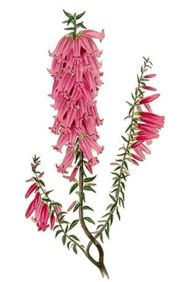
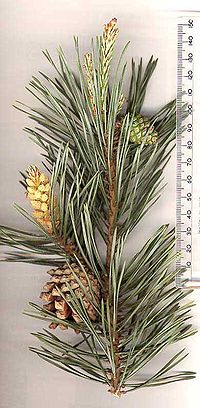
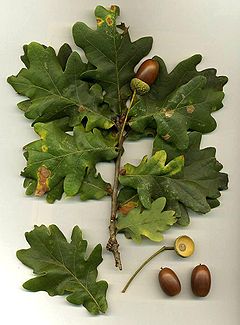
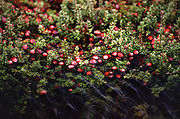
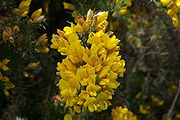
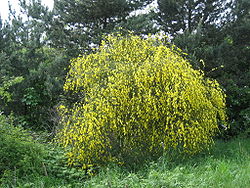
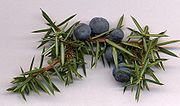
| Clan name | Clan badge attributed to the clan | Notes |
|---|---|---|
| Abercromby | ||
| Adam | ||
| Agnew Clan Agnew Clan Agnew is a Lowland Scottish clan from Wigtownshire and Galloway in the southwest of Scotland.-Origins:There are two theories as to the origins of the name Agnew. The most widely accepted is that the name is French and derives from the Barony d'Agneaux in Normandy. Emigrants from the region... |
||
| Anderson Clan Anderson Clan Anderson is a Scottish clan. The clan can be considered an armigerous clan because it does not a have a clan chief recognised by the Lord Lyon King of Arms.-Origins and history:... |
||
| Anstruther Clan Anstruther Clan Anstruther is a Scottish clan from Anstruther in Fife, in the east of Scotland.-Origin of name:From the town of Anstruther, which was adopted as a familial name.-Origins of the Clan:... |
||
| Arbuthnott Clan Arbuthnott Clan Arbuthnott is a Scottish clan or family from the area of Kincardineshire in the lowland northeast of Scotland.-Origin of name:From the place name Aberbothenoth, which lies on a narrow peninsula on the north side of the river Bervie... |
||
| Armstrong Clan Armstrong Clan Armstrong is an armigerous clan whose origins lie in Cumberland, south of the frontier between Scotland and England which was officially established in 1237.... |
||
| Arthur | wild myrtle | |
| fir club moss | ||
| Auchinleck | ||
| Baillie | ||
| Baird | ||
| Balfour | ||
| Bannatyne | ||
| Bannerman Clan Bannerman Clan Bannerman is a Scottish clan which has, for centuries, been the Scottish standard bearers.-Origins of name:The Bannerman name is said to have originated in the privilege of carrying the king's banner in wartime, an honour the Bannermans had from approximately the 11th through the 13th century... |
||
| Barclay Clan Barclay -Origins of the clan:Since the eighteenth century, Barclay historians, noted for their low level in medieval scholarship, have assumed the Scottish family Barclay is a branch of one of the Anglo-Norman Berkeley family of Berkeley in Gloucestershire... |
||
| Baxter | ||
| Bell | ||
| Bethune | ||
| Beveridge | ||
| Bisset | ||
| Blair | ||
| Borthwick Clan Borthwick -Origins of the Clan:The origins of the name "Borthwick" are territorial. The name seems likely to have been assumed from Borthwick Water in Roxburghshire.... |
||
| Boswell Clan Boswell Family Boswell is a Lowland Scottish family. As the Boswells are a family and a member of the aristocracy they do not have a chief. The family is represented by a Laird Scottish term for Lord.-Origins of the Family:... |
||
| Boyd Clan Boyd Clan Boyd is a Lowland Scottish clan from Kilmarnock in Ayrshire, Scotland.-Origins of the clan:The origin of the Boyd family name may be either from the Gaelic language or from the Normans, but in both cases translates as 'fair', 'blonde', 'yellow or fair,' etcetera... |
||
| Boyle Clan Boyle Clan Boyle is a Scottish clan from Ayrshire in Scotland. There is also an Irish sept of the O'Neill Clan of the name O'Boyle or in Irish Ó Baoighill. The O'Boyles are one of three clans who shared the leadership of the North West of Ireland, specifically Co... |
||
| Brodie Clan Brodie Clan Brodie is a Scottish clan whose origins are uncertain. The first known Brodie chiefs were the Thanes of Brodie and Dyke in Morayshire. The Brodies were present in several clan conflicts, and during the civil war were ardent covenanters... |
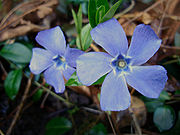
periwinkle Vinca Vinca is a genus of six species in the family Apocynaceae, native to Europe, northwest Africa and southwest Asia. The English name periwinkle is shared with the related genus Catharanthus .-Description:Vinca plants are subshrubs or herbaceous, and have slender trailing stems 1–2 m long... |
|
| Broun Clan Broun Clan Broun also known as Brown is a common Scottish clan name, it was located primarily in Lowland Scotland.-Origins of the Name:As well as the name being Scottish, Broun or Brown is also common name in Old English charters from an adjective meaning brown or dark red. It also occurs in Old High... |
||
| Bruce Clan Bruce Clan Bruce is a Scottish clan from Kincardine in Scotland. It was a Royal House in the 14th century, producing two kings of Scotland.-Origins of the Clan:... |
rosemary Rosemary Rosemary, , is a woody, perennial herb with fragrant, evergreen, needle-like leaves and white, pink, purple or blue flowers, native to the Mediterranean region. It is a member of the mint family Lamiaceae, which includes many other herbs, and is one of two species in the genus Rosmarinus... |
|
| Buchan Clan Buchan -Origins of the Clan:The Clan names derives from the district of Buchan. This in turn may have taken its name from ‘bwch’, a word meaning cow in the Brythonic language.... |
||
| Buchanan Clan Buchanan Clan Buchanan is an Armigerous Scottish clan whose origins are said to lie in the 1225 grant of lands on the eastern shore of Loch Lomond to clergyman Sir Absalon of Buchanan by the Earl of Lennox.-Origins:... |
billberry (blaeberry) | |
| oak Oak An oak is a tree or shrub in the genus Quercus , of which about 600 species exist. "Oak" may also appear in the names of species in related genera, notably Lithocarpus... |
||
| birch Birch Birch is a tree or shrub of the genus Betula , in the family Betulaceae, closely related to the beech/oak family, Fagaceae. The Betula genus contains 30–60 known taxa... |
||
| Burnett Clan Burnett Clan Burnett, also referred to as the House of Burnett, is a Lowland Scottish family.-Origins of the name:There is still debate over the origin of the name Burnett. The Saxon Burford family held lands in Bedfordshire prior to 1066. This name derives from the Saxon 'beornheard' meaning 'bear hand'... |
||
| Calder Clan Calder Clan Calder is a Highland Scottish clan. The clan does not currently have a chief therefore it is considered an Armigerous clan.-Origins of the Clan:... |
||
| Cameron Clan Cameron Clan Cameron is a West Highland Scottish clan, with one main branch Lochiel, and numerous cadet branches. The Clan Cameron lands are in Lochaber and within their lands is the mountain Ben Nevis which is the highest mountain in the British Isles. The chief of the clan is customarily referred to as... |
crowberry Crowberry Crowberry is a small genus of dwarf evergreen shrubs that bear edible fruit. They are commonly found in the northern hemisphere, from temperate to subarctic climates, and also in the Southern Andes of South America and on the South Atlantic islands of South Georgia, the Falklands and Tristan da... |
|
| oak | ||
| Campbell Clan Campbell Clan Campbell is a Highland Scottish clan. Historically one of the largest, most powerful and most successful of the Highland clans, their lands were in Argyll and the chief of the clan became the Earl and later Duke of Argyll.-Origins:... |
fir club moss | |
| wild myrtle (or bog myrtle) | Though abundant in Argyll, Bog Myrtle drops its leaves in winter. | |
| Campbell of Breadalbane | ||
| Campbell of Cawdor Clan Campbell of Cawdor Clan Campbell of Cawdor is a highland Scottish clan. While the clan is recognised by the Standing Council of Scottish Chiefs, the clan does not have a clan chief recognised by the Standing Council of Scottish Chiefs... |
||
| Campbell of Cawdor Clan Campbell of Cawdor Clan Campbell of Cawdor is a highland Scottish clan. While the clan is recognised by the Standing Council of Scottish Chiefs, the clan does not have a clan chief recognised by the Standing Council of Scottish Chiefs... |
||
| Carmichael Clan Carmichael -Origins of the clan:The name Carmichael originally comes from lands in Lanarkshire which were granted to Sir James Douglas of Clan Douglas in 1321, and let by his nephew William Douglas, 1st Earl of Douglas to Sir John Carmichael between 1374 and 1384.d... |
||
| Carnegie Clan Carnegie Clan Carnegie is a Lowland Scottish clan-Origins of the clan:The Carnegies took their name from the area around Carmyllie, Angus. The family who adopted this name however, were originally known under an earlier adopted placename of Balinhard which is also in Angus.The Balinhards can be found in... |
||
| Cathcart Clan Cathcart -Origins of the Clan:As well as being a surname Cathcart is a Scottish town just south of Glasgow. There is some speculation as to the origin of the name Cathcart. Some believe it is ancient Celtic meaning, "Fort on the River Cart", as that river flows right past the ancient castle. Others believe... |
||
| Chalmers | ||
| Charteris Clan Charteris -Origins of the Name:Chartres, the French city famed for its cathedral, is claimed as the origin of this name. William, a son of the Lord of Chartres, is said to have come to England with the Norman Conquest, and his son or grandson came north to Scotland with the retinue of David I... |
||
| Chattan | wild whortleberry | |
| Chisholm Clan Chisholm Clan Chisholm is a Scottish clan. The clan had its origin outside Scotland. The first Chisholm to appear in the records of Scotland was Alexander de Chesholme, who witnessed a charter in 1248/49.-Origins of the Clan:... |
fern Fern A fern is any one of a group of about 12,000 species of plants belonging to the botanical group known as Pteridophyta. Unlike mosses, they have xylem and phloem . They have stems, leaves, and roots like other vascular plants... |
|
| Clelland | ||
| Cochrane Clan Cochrane Clan Cochrane is a Lowland Scottish clan.-Origins:Traditionally the original ancestor of the Clan Cochrane in Scotland was a Scandinavian Viking who settled in what is now known as Renfrewshire. It is evident that the name is of territorial origin and that the Cochranes took the name of the lands... |
||
| Cockburn | ||
| Colquhoun Clan Colquhoun Clan Colquhoun is a Highland Scottish clan.The clan motto shown above in the crest best translates to "if I can."-Origins of the clan:In the 13th century Maol Domhnaich, Earl of Lennox granted the lands of Colquhoun, located in Dunbartonshire, to Humphry de Kilpatrick... |
hazel Hazel The hazels are a genus of deciduous trees and large shrubs native to the temperate northern hemisphere. The genus is usually placed in the birch family Betulaceae, though some botanists split the hazels into a separate family Corylaceae.They have simple, rounded leaves with double-serrate margins... |
|
| dogberry | ||
| Colville Clan Colville Clan Colville is a Lowland Scottish clan.-Origins of the Clan:The name Colville is believed to be of ancient Norman origin. It is believed to be derived from the town of Colleville -Sur-Mur in Normandy, France... |
||
| Craig | ||
| Cranstoun Clan Cranstoun Clan Cranstoun is a Lowland Scottish clan.- Origins of the clan :The name Cranstoun comes from the Barony of Cranstoun in Midlothian. The family owned lands in the counties of Edinburgh and Roxburgh.... |
||
| Crawford Clan Crawford Clan Crawford is a Scottish clan recognised by the Court of the Lord Lyon, which is the heraldic authority of Scotland. The clan does not a have a chief recognised by the Lord Lyon King of Arms, is considered an armigerous clan. Clan Crawford is considered armigerous because Crawfords are... |
||
| Crichton Clan Crichton Clan Crichton is a Lowland Scottish clan.-Clan history:The lands of Kreitton formed one of the earliest baronies around Edinburgh and are mentioned in charters of the early 12th century.-Early Crichtons:... |
||
| Cumming Clan Cumming Clan Cumming, also known as Clan Comyn, is a Scottish clan from the central Highlands that played a major role in the history of 13th century Scotland and in the Wars of Scottish Independence and were instrumental in defeating the English at the Battle of Roslin in 1303... |
common sallow; i.e., the pussy willow Pussy Willow Pussy willow is a name given to many of the smaller species of the genus Salix when their furry catkins are young in early spring... |
|
| Cunningham Clan Cunningham Clan Cunningham is a Scottish clan. The clan does not currently have a chief, therefore it is considered an Armigerous clan by the Standing Council of Scottish Chiefs, though recently two contenders for the chiefship have emerged... |
||
| Dalrymple | ||
| Dalziel | ||
| Darroch Clan Darroch Clan Darroch is a Lowland Scottish clan. They were islanders who lived on the Isle of Islay and the Isle of Jura under MacDonald, Lord of the Isles.-Origins of the name:There are several origins for the surname Darroch in Scotland... |
||
| Davidson Clan Davidson Clan Davidson is a Highland Scottish clan. The clan was also part of the Chattan Confederation.-History:When the power of the Comyns began to wane in Badenoch, David Dubh of Invernahaven, Chief of Davidsons, having married the daughter of Angus, 6th of MacKintosh, sought the protection of William,... |
boxwood | |
| red whortleberry | ||
| Dennistoun | ||
| Dewar Clan Dewar Clan Dewar is a Lowland Scottish clan who settled near Edinburgh. Legend has it that they won their lands after killing a wolf which had terrorised the area.-Origins of the Clan:... |
||
| Donnachaidh | bracken Bracken Bracken are several species of large, coarse ferns of the genus Pteridium. Ferns are vascular plants that have alternating generations, large plants that produce spores and small plants that produce sex cells . Brackens are in the family Dennstaedtiaceae, which are noted for their large, highly... , or fern |
The Celtic Magazine of 1884 states that this badge (fern), compared to fine leaved heath, is the older badge. |
| fine leaved heath | ||
| Douglas Clan Douglas Clan Douglas is an ancient Scottish kindred from the Scottish Lowlands taking its name from Douglas, South Lanarkshire, and thence spreading through the Scottish Borderland, Angus, Lothian and beyond. The clan does not currently have a chief, therefore it is considered an armigerous clan.The... |
||
| Drummond Clan Drummond Clan Drummond is a Scottish clan deriving its name from the parish of Drymen, in what was western Stirlingshire. Legend gives Maurice of Hungary as founder of the clan... |
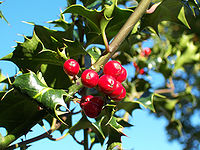
holly Holly Ilex) is a genus of 400 to 600 species of flowering plants in the family Aquifoliaceae, and the only living genus in that family. The species are evergreen and deciduous trees, shrubs, and climbers from tropics to temperate zones world wide.... |
|
| Wild thyme | ||
| Dunbar Clan Dunbar -Origins of the Clan:The Clan Dunbar descends from Gospatric, Earl of Northumbria, grandson of Crínán of Dunkeld and Seneschal of the Isles and nephew to King Duncan I of Scotland, who became Earl of Northumberland after his father’s death. William the Conqueror deprived Gospatric of the title in... |
||
| Dundas Clan Dundas Clan Dundas is the name given to one of Scotland's most historically important families. Once widely regarded as one of the most noble in the British Empire... |
||
| Dunlop | ||
| Durie Clan Durie -Origins:There is a persistent myth that the origin of the name Durie is from the French 'Du Roi' but there is no evidence for this. Rather, a younger son of the Earl of Strathearn was granted the existing lands of Durie and took the name... |
||
| Eliott Clan Eliott Clan Eliott is a borderclan. The Elliotts, with the Armstrongs, were the most troublesome of the great Scottish Border families in the Middle Ages. The principal family in the early days was the Elliots of Redheugh, who often held the captaincy of Hermitage Castle — still to be seen, squat and... |
||
| Elphinstone Clan Elphinstone Clan Elphinstone is a Lowland Scottish clan-Origins of the Name:The Clan Elphinstone is believed to have originated from Airth in Stirlingshire. The surname Elphinstone derives from the territory of Elphinstone in the parish of Tranent, East Lothian. The original name is thought to have been 'de... |
||
| Erskine Clan Erskine -Origins of the Name:The surname Erskine is derived from the name of Erskine, an area to the south of the River Clyde and ten miles to the west of Glasgow... |
||
| Falconer | ||
| Farquharson Clan Farquharson Clan Farquharson of Invercauld is a Highland Scottish clan. The clan hails from Aberdeenshire and is a member of the Chattan Confederation.-Origins:Farquhar - from the Gaelic 'fear' and 'char' meaning 'dear one'... |
Scots fir | |
| red whortleberry | ||
| foxglove | ||
| Fergusson Clan Fergusson Clan Fergusson is a Scottish clan which has multiple geographic origins across Scotland. Consequently the Fergussons may be viewed as both a Highland and a Lowland clan.... |
little sunflower | |
| Fleming | ||
| Fletcher | ||
| Forbes Clan Forbes Clan Forbes is a Lowland Scottish clan from Aberdeenshire, Scotland.-Origins:Concerning the origin of this Scottish clan, John of Forbes, the first upon record, seems to have been a man of importance in the time of William the Lion, and was the father of Fergus, from whom the clan are descended.... |
broom Broom (shrub) Brooms are a group of evergreen, semi-evergreen, and deciduous shrubs in the subfamily Faboideae of the legume family Fabaceae, mainly in the three genera Chamaecytisus, Cytisus and Genista, but also in many other small genera . All genera in this group are from the tribe Genisteae... |
|
| Forrester Clan Forrester Clan Forrester is a Lowland Scottish clan. The clan is an armigerous clan, and has no position under Scots law, because there is no chief recognised by the Lord Lyon King of Arms.-Origins of the Clan:... |
||
| Forsyth Clan Forsyth Clan Forsyth is one of Scotland's wealthiest clans.The name Forsyth derives from the Gaelic 'man of peace'... |
||
| Fraser Clan Fraser Clan Fraser is a Scottish clan of French origin. The Clan has been strongly associated with Inverness and the surrounding area since the Clan's founder gained lands there in the 13th century. Since its founding, the Clan has dominated local politics and been active in every major military conflict... |
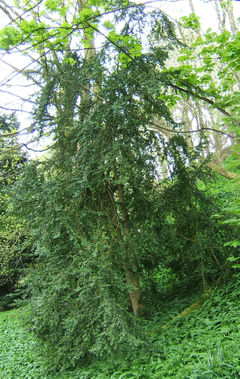
yew | |
| Fraser of Lovat | ||
| Fullarton | ||
| Galbraith Clan Galbraith Clan Galbraith is a Scottish clan. The clan does not have a chief recognised by the Lord Lyon King of Arms. Because of this, the clan is considered an armigerous clan, and as such Clan Galbraith has no standing under Scots Law. The clan-name of Galbraith is of Gaelic origin, however its meaning... |
||
| Garden | ||
| Gayre Clan Gayre -Origins of the Clan:The name Gayre has several possible origins. The chiefly line apparently originated in Cornwall in the south of England, where the de Kayres were lords of many manors. The name as it arises in Orkney and Shetland may have a separate origin deriving from the Norse word 'geirr',... |
||
| Gibsone | ||
| Gladstains | ||
| Glas | ||
| Glen | ||
| Gordon Clan Gordon Clan Gordon, also known as the House of Gordon, is a Scottish clan. The chief of the clan was the powerful Earl of Huntly, now also Marquess of Huntly.-Origins:... |
ivy Ivy Ivy, plural ivies is a genus of 12–15 species of evergreen climbing or ground-creeping woody plants in the family Araliaceae, native to western, central and southern Europe, Macaronesia, northwestern Africa and across central-southern Asia east to Japan and Taiwan.-Description:On level ground they... |
|
| Graham Clan Graham Clan Graham is a Scottish clan who had territories in both the Scottish Highlands and Lowlands.-Origins:Legend has it that the first Graham was one Gramus who forced a breach in the Roman Antonine wall known as Graeme's Dyke in 420 A.D... |
Laurel Bay Laurel The bay laurel , also known as sweet bay, bay tree, true laurel, Grecian laurel, laurel tree, or simply laurel, is an aromatic evergreen tree or large shrub with green, glossy leaves, native to the Mediterranean region. It is the source of the bay leaf used in cooking... |
Originally the badge was Spurge Laurel, but as that plant is poisonous and not indigenous to Scotland, James, 8th Duke of Montrose petitioned the Lord Lyon to have the True Laurel (Laurus Nobilis) recognised as the clan plant badge, which petition he was granted. |
| Grant Clan Grant -Origins:The Grants are one of the clans of Siol Alpin, and descend from the 9th century Kenneth MacAlpin, King of Scots; and also of Norse origin, from settlers who are the descents of Haakon inn Riki Sigurdarsson , Jarl of Hladr, Protector of Norway ,-Origins:The Grants are one of the clans of... |
pine (Scots fir) | |
| Gray | ||
| Gregor | pine (Scots fir) | |
| Grierson Clan Grierson The name Grierson originates from the Scottish lowlands.The surname Grierson is a modern spelling of the medieval surname Grerson. Ancestry.com states that it is a patronymic form of the medieval Scottish personal name Grier which is a form of the personal name Gregory, but provides no source for... |
||
| Gunn Clan Gunn Clan Gunn is a Scottish clan associated with northeastern Scotland, including Caithness and Sutherland as well as the Orkney Islands.The clan's origins stretch over the sea to Norway, and the Clan Gunn themselves claim descent from the legendary viking Sweyn Asleifsson, the progenitor of the clan,... |
juniper Juniper Junipers are coniferous plants in the genus Juniperus of the cypress family Cupressaceae. Depending on taxonomic viewpoint, there are between 50-67 species of juniper, widely distributed throughout the northern hemisphere, from the Arctic, south to tropical Africa in the Old World, and to the... |
|
| roseroot | ||
| Guthrie Clan Guthrie -Origins of the name:Although the surname Guthrie has several independent origins, the surname borne by the clan is almost certainly derives from the barony of the same name near Forfar... |
||
| Haig Clan Haig -Origins:The name 'Haig' comes from the Norman name 'de Haga'. There were theories that the Haigs were of Pictish descent but this has been discounted. A charter signed in 1162 to Dryburgh Abbey bears the name 'Petrus de Haga, proprietor of the lands and barony of Bemersyde'. He was later charged... |
||
| Haldane Clan Haldane Clan Haldane is a Lowland Scottish clan.- Origins of the Haldanes of Gleneagles :[The following text is copied verbatim from The Haldanes of Gleneagles, General Sir J. Aylmer L. Haldane, 1929, William Blackwood & Sons, Ltd., London and Edinburgh, which book is in the Public Domain since 2004... |
||
| Hamilton Clan Hamilton The House of Hamilton, occasionally and erroneously referred to as Clan Hamilton, is a Scottish family who historically held broad territories throughout central and southern Scotland, particularly Ayrshire, Lanarkshire and the Lothians... |
||
| Hannay Clan Hannay -Origins of the clan:Although the modern surname Hannay is likely derived from the place name Hannethe, the precise identity of the place is unknown. The family can be traced back to Galloway in South-West Scotland. The name 'Gillbert de Hannethe' appears on the Ragman Rolls of 1296, submitting to... |
periwinkle Vinca Vinca is a genus of six species in the family Apocynaceae, native to Europe, northwest Africa and southwest Asia. The English name periwinkle is shared with the related genus Catharanthus .-Description:Vinca plants are subshrubs or herbaceous, and have slender trailing stems 1–2 m long... |
|
| Hay Clan Hay Clan Hay is a Scottish clan that has played an important part in the history and politics of Scotland. Members of the clan are to be found in most parts of Scotland and in many other parts of the world. However, the North East of Scotland, i.e... |
mistletoe Mistletoe Mistletoe is the common name for obligate hemi-parasitic plants in several families in the order Santalales. The plants in question grow attached to and within the branches of a tree or shrub.-Mistletoe in the genus Viscum:... |
|
| Henderson Clan Henderson The Clan Henderson is a Scottish clan with members living throughout the world. The clan rose to prominence in Glen Coe with branches in Fife, the Borders, Caithness and the Shetland Islands... |
cotton grass | |
| Hepburn | ||
| Hog | ||
| Home Clan Home The Homes are a Scottish family. They were a powerful force in medieval Lothian and the Borders. The chief of the name is David Douglas-Home, 15th Earl of Home.-Origins of the clan:... |
broom | |
| Hope Clan Hope -Origins of the clan:Hope is a native Scottish name. However, in middle English it means 'small valley'. Another suggestion is that it derives from 'oublon', which is French for 'hop' and could be from the family de H'oublons of Picardy.... |
||
| Horsburgh | ||
| Houston Clan Houston Clan Houston is a Scottish clan. The clan does not currently have a chief therefore it is considered an Armigerous clan.-Origins of the Clan:... |
||
| Inglis | ||
| Hunter Clan Hunter Clan Hunter is a Scottish clan which has its seat at Hunterston in Ayrshire. It has historical connections with both the 'Highlands' and 'Lowlands' of Scotland due to several centuries of operation in some of the formerly Gaelic speaking Scottish Islands including Arran, Bute and the Cumbraes... |
||
| Innes | great bulrush | |
| Irvine Clan Irvine -Origins of the clan:As a surname Irvine is of territorial origins from one of two places of the same name. Firstly from Irving, an old parish in Dumfriesshire and from Irvine in Ayrshire.... |
||
| Jardine Clan Jardine -Origins of the clan:The Clan Jardine is believed to be of French origin. The French word jardin means garden or orchard and it is presumed that the Jardine family originally came from France. Members of the Jardine family travelled with William during the Norman conquest of England in 1066... |
||
| Johnstone Clan Johnstone -Origin of the name:Clan Johnstone is a Lowland Scottish clan. They were involved in many battles on the Scottish borders.Johnstone comes from "John's toun", not "John's stone" or "John's son." Historically, "Johnston" has been an alternate spelling of the surname... |
red hawthorn | |
| Keith Clan Keith Clan Keith is a Scottish clan associated with Aberdeenshire and Caithness.-Origins:It is said that a Scottish warrior slew the Danish General Camus at the legendary Battle of Barrie in 1010. For this, King Máel Coluim II of Scotland dipped three fingers into the blood of the slain and drew them... |
||
| Kennedy Clan Kennedy Clan Kennedy is a Scottish clan and an Irish surname.-Origins:The Kennedys had their home territory in Carrick in Ayrshire, in southwestern Scotland. Originally they were of Pictish/Norse stock from the Western Isles. In the fifteenth century, one Ulric Kennedy fled Ayrshire to Lochaber in the... |
oak | |
| Kerr Clan Kerr Clan Kerr is a Scottish clan that played an important role in the history of the Border country of Scotland.-Origins:The origins of the name Kerr are disputed as being either:*Caer *Ciar... |
||
| Kincaid Clan Kincaid Clan Kincaid is a modern Scottish clan.-Origins of the surname:The Kincaid surname is of territorial origin being taken from the former lands of Kincaid in the Parish of Campsie, Stirlingshire, Scotland. The lands are located just north of Kirkintilloch, in the north-west angle formed by the River... |
||
| Kinnaird | ||
| Kinnear | ||
| Kinninmont Clan Kinninmont Clan Kinninmont is a Scottish clan. The clan does not have a chief recognised by the Lord Lyon King of Arms, therefore the clan has no standing under Scots Law. Clan Kinninmont is considered an armigerous clan, meaning that it is considered to have had at one time a chief who possessed the chiefly... |
||
| Kirkpatrick Clan Kirkpatrick Clan Kirkpatrick is a Lowland armigerous Scottish clan. There are several variations of the Kirkpatrick name; Kilpatric, Kilpatrick, and Gilpatrick. The names Kilpatrick and Kirkpatrick may have been interchangeable at one time. The clan is recognised by the Court of the Lord Lyon, however the clan... |
||
| Lamont Clan Lamont Clan Lamont is a Highland Scottish clan. Clan Lamont claim descent from Lauman who lived in Cowal in 1238. Tradition gives this Lauman a descent from an Irish prince of the O'Neill dynasty, Ánrothán Ua Néill, son of Áed, son of Flaithbertach Ua Néill, King of Ailech and Cenél nEógain, died 1036... |
crab-apple tree Crabapple Crabapple is a term used for several species of Malus in the family Rosaceae, which are characterized by small sour fruit resembling familiar table apples . They are usually small trees or shrubs.... |
|
| trefoil | ||
| dryas | ||
| Learmonth | ||
| Leask Clan Leask -Origins:There is more than one theory as to the origin of the name Leask. One is from the Anglo-Saxon word lisse which means happy. Another is that it comes from the Norse meaning of stirring fellow. Another is that it comes from Liscus which was the name of the chief of a tribe called the Haedui.... |
||
| Lennox Clan Lennox -Origins of the name:The name Lennox in gaelic comes from the place of the same name. The clan name comes from the title of Earl of Lennox which commanded the vale of Leven between the 12th and 15th centuries.-15th century:... |
||
| Leslie Clan Leslie Clan Leslie is a Lowland Scottish clan.-Origins:The family name comes from the Leslie lands of Aberdeenshire and was to become famous in Germany, Poland, France and Russia... |
||
| Lindsay Clan Lindsay -Origins of the Clan:There is currently no known proven path pertaining to the origin of the Clan Lindsay. However, several possible theories have been advanced over the years. First is the theory proposed in 1769 by biographer/historian, Richard Rolt, in which he claimed that the Lindsays were... |
||
| Little | ||
| Lockhart Clan Lockhart -Origins of the Clan:The Clan Lockhart arrived in Scotland among the waves of Normans who arrived after the Norman conquest of England in 1066. The Lockharts settled in Lanark and Ayrshire where the towns of Symington, South Ayrshire, Symington, South Lanarkshire and Stevenson remain to mark the... |
||
| Logan Clan Logan Clan Logan is a both a Highland and Lowland Scottish clan. The clan does not have a Chief recognised by Lord Lyon King of Arms, and therefore can be considered an Armigerous clan... |
furze | |
| Lumsden Clan Lumsden -Origins of the clan:The name Lumsden derives from the old manor of Lumsden in the parish of Coldingham in Berwickshire. The earliest known recordings of the name appear between 1166 and 1182 when the brothers Gillem and Cren de Lumsden witnessed a charter by Waldeve Earl of Dunbar to Coldingham... |
||
| Lyle | ||
| Lyon Clan Lyon Clan Lyon is a Scottish clan, but is not associated with the lands of Glen Lyon in Perthshire, Scotland.-Origin of the name:*Leon, Normandy, France.... |
||
| MacAlister Clan MacAlister Clan MacAlister is a Scottish Clan and a branch of Clan Donald. The clan is the earliest branch to have split off from Clan Donald, claiming descent from Alasdair Mòr, son of Domhnall founder of Clan Donald. From Alasdair Mòr the clans takes its surname MacAlister; this surname is an Anglicisation... |
common heath | |
| MacAulay Clan MacAulay Clan MacAulay is a Scottish clan. The clan was historically centred around the lands of Ardincaple, which are today consumed by the little village of Rhu and burgh of Helensburgh in Argyll and Bute. The MacAulays of Ardincaple were located mainly in the traditional county of Dunbartonshire, which... |
pine (Scots fir) | |
| cranberry Cranberry Cranberries are a group of evergreen dwarf shrubs or trailing vines in the subgenus Oxycoccus of the genus Vaccinium. In some methods of classification, Oxycoccus is regarded as a genus in its own right... |
||
| MacBain Clan MacBain -Origins of the clan:There are several possible Gaelic origins for this name but the most likely is ben or ban which means "higher ground" and to a lesser extent bheathain and the step form MacBain which means "life". This could also have been rendered as Mac ic Bheatha which means MacBeth, a name... |
boxwood | |
| red whortleberry | ||
| Macbrayne | ||
| MacDonald | common heath (Scots heather) | |
| Macdonald of Clanranald | common heath | |
| MacDonald of Keppoch Clan MacDonald of Keppoch Clan MacDonald of Keppoch, also known as Clan Ranald of Lochaber, is a Scottish clan and a branch of Clan Donald.-History:The MacDonalds of Keppoch are descended from Alistair Carrach Macdonald who was a younger son of Good John of Islay, Lord of the Isles, 6th chief of Clan Donald and his second... |
common heath | |
| white heather | ||
| Macdonald of Sleat Clan MacDonald of Sleat Clan Macdonald of Sleat, sometimes known as Clan Donald North and in Gaelic Clann Ùisdein , is a Scottish clan and a branch of Clan Donald — one of the largest Scottish clans. The founder of the Macdonalds of Sleat is Ùisdean, 6th great-grandson of Somhairle, a 12th century Rì Innse Gall... |
||
| MacDonell of Glengarry | common heath | |
| MacDougall Clan MacDougall Clan MacDougall is a Highland Scottish clan consisting of the descendants of Dubgall mac Somairle, son of Somerled, who ruled Lorne and the Isle of Mull in Argyll in the 13th century... |
bell heather | |
| Macdowall Clan MacDowall Clan Macdowall is a Scottish clan. The clan claims to descend from the senior descendants in the male line of the princely house of Fergus, first of the ancient Lords of Galloway... |
||
| MacDuff Clan MacDuff Clan MacDuff is a Scottish armigerous clan, which is registered with Lyon Court, though currently without a chief. Moncreiffe wrote that the Clan MacDuff was the premier clan among the Scottish Gaels. The early chiefs of Clan MacDuff were the Earls of Fife... |
boxwood | |
| red whortleberry | ||
| MacEwen Clan MacEwen Clan MacEwen is a Highland Scottish clan. The clan does not have a chief recognized by Lord Lyon King of Arms and as such the clan can be considered an Armigerous clan. The principal clan with the name MacEwen was Clan MacEwen of Otter that was centred on the shores of Loch Fyne in Argyll... |
||
| Macfarlane Clan MacFarlane Clan MacFarlane is a Highland Scottish clan. The clan claims a descent from the old line of the Earls of Lennox. For some time there had been some controversy as to the descent of these earls, with both Gaelic and Anglo-Saxon origins given. Though today it is accepted that Clan MacFarlane is of... |
cranberry | |
| cloudberry Cloudberry Rubus chamaemorus is a rhizomatous herb native to alpine and arctic tundra and boreal forest, producing amber-colored edible fruit similar to the raspberry or blackberry... |
||
| Macfie Clan Macfie Clan Macfie is a Scottish clan. Since 1981, the clan has been officially registered with the Court of the Lord Lyon, which is the heraldic authority of Scotland... |
pine (Scots fir) | |
| oak | ||
| crowberry | ||
| Macgillivray Clan Macgillivray Clan Macgillivray is a Scottish clan. The clan does not currently have a chief therefore it is considered an Armigerous clan.-Origins of the clan:... |
boxwood | |
| red whortleberry | ||
| MacInnes Clan MacInnes Clan MacInnes is a Scottish clan from the highlands. As there is currently no clan chief, it is currently regarded as an Armigerous clan.-Origins of the name:... |
holly | |
| MacIntyre Clan Macintyre Clan MacIntyre is a Scottish clan. The name MacIntyre , means "son of the carpenter." Although no documented history of the clan exists, it is most commonly said to descend from Maurice Mac Neil a nephew of Somerled, the great 12th century leader of the Scottish Gaels... |
common heath | |
| MacIver Clan MacIver Clan MacIver, also known as Clan Iver, is Scottish clan recognised by the Lord Lyon King of Arms. The clan, however, does not have a chief recognised by the Lord Lyon King of Arms. Because of this the clan can be considered an armigerous clan. The clan name of MacIver is of Gaelic origin, derived... |
||
| Mackay Clan MacKay Clan Mackay is an ancient and once powerful Scottish clan from the far north of the Scottish Highlands, but with roots in the old kingdom of Moray. They were a powerful force in politics beginning in the 14th century, supporting Robert the Bruce. In the centuries that followed they were... |
great bulrush | |
| broom | ||
| Mackenzie Clan MacKenzie Clan Mackenzie is a Highland Scottish clan, traditionally associated with Kintail and lands in Ross-shire.-Origins:The Mackenzies, a powerful clan of Celtic stock, were not among the clans that originated from Norman ancestry. Descendants of the long defunct royal Cenél Loairn of Dál Riata, they... |
variegated holly | |
| deer's grass (heath club rush) | Innes of Learney Thomas Innes of Learney Sir Thomas Innes of Learney, GCVO, WS was Lord Lyon from 1945 to 1969, after having been Carrick Pursuivant and Albany Herald in the 1930s. He was a very active Lord Lyon, strongly promoting his views of what his office was through his writings and pronouncements in his Court. In 1950, he... claimed that heath club rush ('deer's grass') may be confused with club moss ('staghorn moss'). Club moss has also been attributed to the Macraes, who were the Mackenzie's "shirt of mail". Even if it is a confusion both 'deer's grass' and 'staghorn moss' likely refer to caberfeidh ("deer's antlers") in the Mackenzie chiefly arms. |
|
| Mackie | ||
| Mackinnon Clan MacKinnon Clan Mackinnon or Clan Fingon is a Highland Scottish clan associated with the islands of Mull and Skye, in the Inner Hebrides.Popular tradition gives the clan a Dalriadic Gaelic origin. The 19th century historian W. F. Skene named the clan as one of the seven clans of Siol Alpin - who according to... |
pine (Scots Fir) | |
| St John's wort St John's wort St John's wort is the plant species Hypericum perforatum, and is also known as Tipton's Weed, Chase-devil, or Klamath weed.... (St. Columba's flower) |
||
| Mackintosh Clan MacKintosh Clan Mackintosh is a Scottish clan from Inverness with strong Jacobite ties. The Mackintoshes were also chiefs of the Chattan Confederation.-Origins:... |
red whortleberry | |
| bearberry | ||
| boxwood | ||
| Maclachlan Clan MacLachlan Clan Maclachlan, also known as Clan Lachlan, is a Highland Scottish clan that historically centred on the lands of Strathlachlan on Loch Fyne, Argyll on the west coast of Scotland... |
rowan Rowan The rowans or mountain-ashes are shrubs or small trees in genus Sorbus of family Rosaceae. They are native throughout the cool temperate regions of the Northern Hemisphere, with the highest species diversity in the mountains of western China and the Himalaya, where numerous apomictic microspecies... (mountain ash) |
|
| lesser periwinkle | ||
| Maclaine of Lochbuie Clan MacLaine of Lochbuie Clan Maclaine of Lochbuie is a Scottish Clan that inhabited lands on the southern end of the Isle of Mull in the Inner Hebrides of the western Scottish Highlands. "Maclaine" is an alternate spelling for "MacLean." Clan Maclaine of Lochbuie and Clan MacLean of Duart are two separate clans... |
bilberry (blaeberry) | |
| bramble Bramble Brambles are thorny plants of the genus Rubus, in the rose family . Bramble fruit is the fruit of any such plant, including the blackberry and raspberry. The word comes from Germanic *bram-bezi, whence also German Brombeere , Dutch Braam and French framboise... |
||
| holly | ||
| black berry heath | ||
| MacLaren Clan MacLaren Clan MacLaren is a Highland Scottish clan.-History:-Origins:The origins of the clan are uncertain, but by tradition the MacLarens are descended from Loarn mac Eirc of Dál Riata, who landed in & settled Argyll in 503 A.D. The clan name is supposedly derived from Lorn ; these variations are all... |
laurel | |
| MacLea Clan MacLea The Clan MacLea is a Highland Scottish clan, which was traditionally located in the district of Lorn in Argyll, Scotland, and is seated on the Isle of Lismore. There is a tradition of some MacLeas Anglicising their names to Livingstone, thus the also refers to clan as the Highland Livingstones... |
The Flower of the Grass of Parnassus Grass of Parnassus The genus Parnassia, also known as Grass of Parnassus or bog-stars, are plants in the family Celastraceae. The plants occur in arctic and alpine habitats, as well as in dune systems and fens, swamps, moist woods, and across the Northern Hemisphere. It is actually not a grass, but an herbaceous dicot... . |
|
| Maclean Clan MacLean Clan Maclean is a Highland Scottish clan. They are one of the oldest clans in the Highlands and owned large tracts of land in Argyll as well as the Inner Hebrides. Many early MacLeans became famous for their honour, strength and courage in battle. They were involved in many clan skirmishes with... |
crowberry | |
| holly | ||
| MacLellan | ||
| MacLennan Clan MacLennan Clan MacLennan, also known as Siol Ghillinnein, is a Highland Scottish clan which historically populated lands in the north-west of Scotland. The surname MacLennan in Scottish Gaelic is Mac Gille Fhinnein meaning the son of the follower of St Finnan.-History:-Origins:According to tradition the... |
furze | |
| MacLeod Clan MacLeod Clan MacLeod is a Highland Scottish clan associated with the Isle of Skye. There are two main branches of the clan: the Macleods of Harris and Dunvegan, whose chief is Macleod of Macleod, are known in Gaelic as Sìol Tormoid ; the Macleods of Lewis, whose chief is Macleod of The Lewes, are known in... |
juniper | |
| Macleod of the Lewes | red whortleberry | |
| MacMillan Clan MacMillan Clan MacMillan is a Highland Scottish clan.-Origins of the clan:The MacMillans are one of a number of clans - including the MacKinnons, the MacQuarries, and the MacPhees - descended from Airbertach, a Hebridean prince of the old royal house of Moray who according to one account was the... |
holly | |
| Macnab Clan MacNab Clan Macnab is a Highland Scottish clan.-History:Clan Macnab is often said to have been a branch of the Clan Macdonald. However a bond of manrent exists to say that the Clan Macnab was an ally of the Clan Mackinnon and the Clan Gregor... |
stone bramble | |
| common heath | ||
| Macnaghten Clan MacNaghten Clan Macnaghten is a Scottish clan who claim descent from the eighth century Pictish king, Nechtan.-Origins of the clan:The earliest reference to the Clan Macnaghten is in connection with great Pictish rulers of Moray. The name 'Nechten' which means "pure" or "clear" was popular in the Pictish... |
trailing azalea | |
| MacNeacail Clan MacNeacail Clan MacNeacail, sometimes known as Clan MacNicol, is a Scottish clan long associated with the Isle of Skye. The clan is closely associated with Clan Macleod, with whom the MacNeacails have been aligned since around the 14th century... |
||
| MacNeil Clan MacNeil Clan MacNeil, also known in Scotland as Clan Niall, is a highland Scottish clan, particularly associated with the Outer Hebridean island of Barra. The early history of Clan MacNeil is obscure, however despite this the clan claims to descend from the legendary Niall of the nine hostages... |
dryas Dryas Dryas is the name of nine characters in Greek mythology1. Dryas was the son of King Lycurgus, king of the Edoni in Thrace. He was killed when Lycurgus went insane and mistook him for a mature trunk of ivy, a plant holy to the god Dionysus, whose cult Lycurgus was attempting to extirpate.Resisting... |
|
| trefoil | This clan badge may actually be attributed to the McNeills of Gigha, a branch of Clan MacNeil. Trefoil has also been atrributed to the Lamonts, another clan in Argyl. The Lamonts and MacNeils/McNeills both claim descent from the same O'Neill O'Neill (surname) The O'Neill dynasty is a group of families that have held prominent positions and titles throughout European history. The O'Neills take their name from Niall Glúndub, an early 10th century High King of Ireland from the Cenél nEógain... who settled in Scotland in the Middle Ages Middle Ages The Middle Ages is a periodization of European history from the 5th century to the 15th century. The Middle Ages follows the fall of the Western Roman Empire in 476 and precedes the Early Modern Era. It is the middle period of a three-period division of Western history: Classic, Medieval and Modern... . |
|
| Macpherson Clan Macpherson Clan Macpherson is a Highland Scottish clan from Badenoch, on the River Spey. It is a leading member of the Chattan Confederation.-Origins:... |
white heather | |
| boxwood | ||
| red whortleberry | ||
| Macquarrie Clan MacQuarrie Clan MacQuarrie is a Highland Scottish clan, associated with the islands of Ulva, Staffa and the Isle of Mull, which are all located in the Scottish Inner Hebrides. The last chief of Clan MacQuarrie died in 1818 and since the clan does not have a current Chief recognized by Lord Lyon it can be... |
pine (Scots fir) | |
| Macqueen Clan MacQueen Clan Macqueen is a Scottish clan, formally known as MacSween, one of the ancient West Highland and Hebridean Warrior Kindreds. The clan does not have a chief recognised by the Lord Lyon King of Arms. Because of this, the clan is considered an armigerous clan, and as such Clan Macqueen has no... |
boxwood | |
| red whortleberry | ||
| Macrae Clan MacRae The Clan Macrae is a Highland Scottish clan. The clan has no chief; it is therefore considered an Armigerous clan.-Surname:The surname Macrae is an Anglicisation of the patronymic from the Gaelic personal name Macraith. This personal name means "son of grace"... |
club moss | Club moss sometimes referred to as staghorn grass, may refer to the Mackenzie chiefly arms, or at least the Macrae's close association with the Mackenzies. |
| MacTavish Clan MacTavish -Origins:The MacTavishes and Campbells are thought to share a common origin. Clan MacTavish claims to descend from Taus Coir, illegitimate son of Colin Mael Maith and a daughter of Suibhne Ruadh . Nothing certain is known of Taus Coir other than he is listed in traditional genealogies... |
||
| MacThomas Clan MacThomas Clan MacThomas is a Highland Scottish clan from the Glens of Eastern Perthshire. The clan takes its name from Thomaidh Mor , who was the great-grandson of the William Mackintosh, 8th chief of the Clan Chattan... |
||
| Maitland Clan Maitland -Origins of the clan:The name Maitland is of Norman origin and was originally spelt Mautalent, Matulant or Matalan, it translates as "evil genius". The Mautalents come from the village of Les Moitiers d'Allonne near Carteret in Normandy. The name is found to occur frequently in Northumberland... |
||
| Makgill Clan Makgill Clan Makgill is a Lowland Scottish clan.-Origins:For some time people have quoted Dr. George F. Black's The Surnames of Scotland... |
||
| Malcolm Clan Malcolm Clan Malcolm is a Highland Scottish clan. The Clan Malcolm is sometimes also called MacCallum. The Clan MacCallum was originally a separate clan until the 18th century when the chief of Clan MacCallum adopted the name Malcolm and the two clans were drawn together.-Origins of the Clan:The name... (MacCallum Clan MacCallum Clan MacCallum is a West Highland Scottish clan, whose lands are traditionally in Argyll. The clan is part of the Clan Malcolm since the chief of Clan MacCallum adopted the name Malcolm instead of MacCallum in the 18th century. The two clans are now one.... ) |
rowan berries | |
| Mar Clan Mar Clan Mar is a Scottish clan from the Grampian Highlands, sometimes referred to as the Tribe of Mar. The chiefs of the clan held the position of Mormaer of Mar from the 1130s to the early 15th century as the original Earls of Mar... |
||
| Marjoribanks Clan Marjoribanks -Origins:The story often told of the origins of the surname Marjoribanks, and even supported by respectable authorities, is that Marjorie, daughter of King Robert the Bruce, brought into her marriage with Walter Stewart in 1315 lands in Dumfriesshire which became known as "Marjorie's Banks";... |
||
| Matheson Clan Matheson Clan Matheson is a Highland Scottish clan.-Origins of the clan:The name Matheson has been attributed to the Gaelic words Mic Mhathghamhuin which means Son of the Bear or Son of the Heroes... |
broom | |
| holly | ||
| Maxwell | ||
| McCorquodale | ||
| McCulloch | ||
| Melville | ||
| Menzies Clan Menzies For Menzies as a personal name, including its pronunciation and a list of famous people of that name, see Menzies.Clan Menzies ; , a member is a Mèinnearach) is a Highland Scottish clan.-Origins of the Clan:... |
menzie's heath | |
| Mercer | ||
| Middleton | ||
| Moffat Clan Moffat -Origins of the clan:The Moffats are an ancient Borders family who were influential and powerful as far back as the time of Sir William Wallace. The ancestor of the Moffats most likely gave their name to the town of Moffat in Dumfriesshire. The origin of the name itself is thought to be Norse... |
||
| Moncreiffe Clan Moncreiffe -Origins of the Clan:The Moncreiffes are of great antiquity, and possibly descend through a female stem of the Celtic Royal Dynasty. The name Moncreiffe is derived from the Barony of Moncreiffe in Perthshire. Their lands take their name from the Gaelic name Monadh Croibhe meaning hill of the sacred... |
oak | Oak-leaves appear on a stone carving of the 12th laird Laird A Laird is a member of the gentry and is a heritable title in Scotland. In the non-peerage table of precedence, a Laird ranks below a Baron and above an Esquire.-Etymology:... 's heraldic mantling Mantling In heraldry, mantling or lambrequin is drapery tied to the helmet above the shield. It forms a backdrop for the shield. In paper heraldry it is a depiction of the protective cloth covering worn by knights from their helmets to stave off the elements, and, secondarily, to decrease the effects of... of 1634. |
| Montgomery Clan Montgomery -Origins of the Clan:Clan Montgomery originated in Wales, and emigrated to Scotland in the 12th century as vassals of the FitzAlans. The family derives its surname from lands in Wales, likely from the Honour of Montgomery which was located near the Shropshire lands of the FitzAlans... |
||
| Morrison Clan Morrison Clan Morrison is a Scottish clan. There are numerous Scottish clans, both Highland and Lowland, which use the surname Morrison. In 1965, the Lord Lyon King of Arms decided to recognise one man as chief of all Morrisons, whether their clans were related or not.-Morrisons of mainland Scotland:The... |
driftwood | |
| Mow | ||
| Muir Clan Muir Clan Muir is an Armigerous Scottish clan, meaning that the clan doesn't have a chief recognized by the Court of the Lord Lyon. Historically, the surnames Muir, Mure, and Moore can be considered septs of Clann Campbell and septs of Clan Gordon in the highlands. The spelling variation More/Moore is... |
||
| Munro Clan Munro -Origins:The main traditional origin of the clan is that the Munros came from Ireland and settled in Scotland in the 11th century and that they fought as mercenary soldiers under the Earl of Ross who defeated Viking invaders in Rosshire... |
common club moss | |
| Murray Clan Murray Clan Murray is a Highland Scottish clan. The Murrays were a great and powerful clan whose lands and cadet houses were scattered throughout Scotland.- Origins of the Clan :... |
butcher's broom Butcher's broom Ruscus aculeatus is a low evergreen Eurasian shrub, with flat shoots known as cladodes that give the appearance of stiff, spine-tipped leaves. Small greenish flowers appear in spring, and are borne singly in the centre of the cladodes. The female flowers are followed by a red berry, and the seeds... |
|
| juniper | ||
| Murray of Atholl | ||
| Nairn | ||
| Napier Clan Napier Clan Napier is a Scottish clan originally from lands around Loch Lomond, but with presence in Stirlingshire, Edinburgh, Aberdeenshire and Kincardineshire.-Origins of the Clan:There is some debate about the origin of the name Napier... |
||
| Nesbitt Clan Nesbitt Clan Nesbitt is a Scottish clan recognised by the Lord Lyon King of Arms and first mentioned in a Scottish charter of 1139. It is a lowland family centred in Berwickshire, East Lothian, Edinburgh and Ayrshire, with a significant historical presence in Northumberland and Durham... |
||
| Newlands | ||
| Newton | ||
| Nicolson Clan Nicolson Clan Nicolson is a Lowland Scottish clan. The clan claims descent from an Edinburgh lawyer who lived in the 16th century and from a disinguished line of Aberdeen merchants who preceded him. During the mid-1980s David Nicolson, 4th Baron Carnock was recognised by the Lord Lyon King of Arms as the... |
juniper | |
| Ogilvy Clan Ogilvy -Origins of the clan:The Ogilvys are one of the most distinguished families in Scotland and take their name from Gillebride the second son of Gille Chriosd, Celtic Earl of Angus... |
whitethorn, hawthorn | |
| evergreen alkanet | ||
| Oliphant Clan Oliphant -Origins of the clan:The earliest record of the name was Osbernus Olifardus circa 1046 in Normandy.The first known Oliphant landholding was in England at Lilleford in Northampton by the family of David Olifard, who is commonly held to be the progenitor of the clan... |
bull rush | |
| Paisley | ||
| Paterson | ||
| Pennycook | ||
| Pitcairn | ||
| Pollock | ||
| Porterfield | ||
| Preston | ||
| Primrose Clan Primrose Clan Primrose is a Lowland Scottish clan.-Origins of the Clan:This name Primrose is taken from the lands of Primrose in the parish of Dunfermline, in Scotland. It has been suggested that it originally came from the old British, "prenn rhos": meaning "tree of the moor".The Primroses were well... |
||
| Pringle Clan Pringle Clan Pringle is an Armigerous clan from the Scottish Borders.-Origin of the Name:According to the detailed book 'The Records of the Pringles', published by Alexander Pringle in 1933, the surname Hoppringill, or Pringle, dates from the reign of Alexander III of Scotland and is one of the oldest... |
||
| Purves | ||
| Ramsay Clan Ramsay Clan Ramsay is a Lowland Scottish clan of Anglo-Norman origin. The clan can be traced to the 12th century in Scotland.-Origins:A ram in the sea is said to have been an emblem on the seal of Ramsay Abbey in Huntingdon in the 11th century... |
blue harebell | |
| Rattray Clan Rattray Clan Rattray is a Highland Scottish clan.-Origins of the clan:The name Rattray is derived from the barony of Rattray in Perthshire, Scotland. Legend has it that their land there was acquired from King Malcolm III of Scotland in the 11th century. Unfortunately there is no extant written record of... |
||
| Riddell Clan Riddell Clan Riddell is a Lowland Scottish clan-Origins of the Clan:One theory for the origin of the name "Riddell" suggests that a family from Gascony, France may have come to Scotland via Ryedale in Yorkshire... |
||
| Robertson Clan Robertson Clan Donnachaidh , also known as Clan Robertson, is one of the oldest of all Scottish clans.-Origins:There are two main theories as to the origins of the Clan Donnachaidh:... |
see Donnachaidh | |
| Rollo Clan Rollo Clan Rollo is a Lowland Scottish clan.-Origins of the Clan:The Clan Rollo are of Norman origin. However they can trace their roots to the feared Norsemen who raided the coast of England and Scotland in the seventh and eighth centuries... |
||
| Rose Clan Rose Clan Rose is a Highland Scottish clan. Their chief's motto is "Constant and True" and their chief'sfamily castle is Kilravock Castle, built in 1460... |
wild rosemary | |
| Ross Clan Ross Clan Ross is a Highland Scottish clan. The original chiefs of the clan were the original Earls of Ross.-Origins:Clan Ross is a Highland Scottish clan first named as such by King Malcolm IV of Scotland in 1160... |
juniper | |
| bearberry | The 19th century historian W. F. Skene listed this clan's badge as uva ursi, which is sometimes known as bearberry. | |
| Rutherford | ||
| Ruthven | ||
| Sandilands Clan Sandilands Clan Sandilands is a Lowland Scottish clan. Sandilands is also considered a sept of Clan Douglas.-Origins of the Clan:The name Sandilands comes from lands by that name in Clydesdale... |
||
| Scrymgeour Clan Scrymgeour -Origins of the Clan:The name Scrymgeour is believed to derive from the Old English word 'skrymsher' which means 'swordsman'. The clan appears to have been well established in Fife long before their connection with the city of Dundee where the chiefs of the clan would later become the Earls of... |
||
| Sempill Clan Sempill Clan Sempill is a Lowland Scottish clan.-Origins of the Clan:The name Sempill has been known in Renfrewshire since the 12th century. It is tradition that the name originates from someone who is humble or simple. An alternate, unlikely, etymology is that Sempill is a corruption of St Pauls.Robert... |
||
| Seton Clan Seton Clan Seton is a Scottish clan which does not currently have a chief, therefore it is considered an Armigerous clan.-Origins of the Clan:The name Seton is believed to be derived from the village of Sai in Normandy although other explanations have been suggested, such as from Tranent meaning "a sea... |
yew | |
| Scott Clan Scott Clan Scott is a Scottish clan. Clan Scott is not a Highland clan but Lowland, from the Borders region of Scotland. Families and clans from this area prefer to be known as Borderers instead of Lowlanders.-Origins:... |
||
| Shaw of Tordarroch | ||
| Sinclair Clan Sinclair Clan Sinclair is a Highland Scottish clan of Norman origin who held lands in the north of Scotland, the Orkney Islands, and the Lothians which they received from the Kings of Scots... |
furze (whin) | |
| white clover White clover Trifolium repens, the white clover , is a species of clover native to Europe, North Africa, and West Asia... |
||
| Skene Clan Skene -Origins of the clan:The Clan Skene is thought to have originally been an exceptionally early sept of the Clan Donnachaidh before it became known as the Clan Robertson. Clan Skene is known in Gaelic as Siol Sgeine or Clann Donnachaidh Mhar. The traditional origin of the name is found in an eleventh... |
||
| Somerville | ||
| Spalding Clan Spalding Clan Spalding is a Highland Scottish clan and sept of Clan Murray. The clan does not have a chief recognised by the Lord Lyon King of Arms so the clan is considered an Armigerous clan. The Spalding family lived in Perthshire, Scotland, for several hundred years before 1745, and dispersed to... |
||
| Spens Clan Spens Clan Spens or Spence is a Lowland Scottish clan.- Origins of the Clan :The name Spens or Spence means 'custodian' or 'dispenser' of the larder, possibly derived from Old French. The principal Scottish family of Clan Spens descend from one of the ancient Earls of Fife... |
||
| Stewart | oak Thistle | |
| Stewart of Appin Clan Stewart of Appin Clan Stewart of Appin is a west highland branch of the Clan Stewart and have been considered a distinct clan since the 15th century. They are descended from Sir James Stewart of Perston, who was himself the grandson of Alexander Stewart, 4th High Steward of Scotland... |
||
| Stirling Clan Stirling -Origins of the Clan:The originator of the Clan Stirling is believed to be a man by the name of Thoraldus de Strivelyn vicecomes de Strivelyn who was granted a charter of lands in Cadder by King David I of Scotland in 1147... |
||
| Strachan Clan Strachan Clan Strachan is a Scottish clan originating from Aberdeenshire. The clan does not currently have a chief, therefore it is treated as an Armigerous clan.The Clan Strachan warcry–slogan is Clachnaben!- Highland Clan :... |
||
| Straiton Clan Straiton Clan Straiton also called Straton or Stratton is a Lowland Scottish clan. The clan does not currently have a chief therefore it is considered an Armigerous clan. The barony of Straiton lies in the county of Midlothian on the outskirts of the city of Edinburgh... |
||
| Strange Clan Strange -Origins of the Clan:This name Strange is often found more commonly as Strang, and is probably derived from the Norman or French word ‘étrange’, meaning ‘foreign’. When rendered as ‘Strang’, its etymology was believed in the past to derive from the Scots dialect word for ‘strong’. Home le Estraunge... |
||
| Stuart of Bute Clan Stuart of Bute Clan Stuart of Bute is a highland Scottish clan. The Stuarts or Stewarts descend from Norman seneschals of Dol, Brittany who settled in England around the time of the Norman Invasion. The current chief of Clan Stuart of Bute is John Crichton-Stuart, 7th Marquess of Bute. The clan chief of the clan... |
||
| Sutherland Clan Sutherland Clan Sutherland is a Highland Scottish clan whose traditional territory is located in the region of Sutherland in northern highlands of Scotland and was one of the most powerful Scottish clans. The clan seat is at Dunrobin Castle, Sutherland... |
cotton sedge | |
| Swinton Clan Swinton Clan Swinton is a Lowland Scottish clan and founder of Clan Gordon, Clan Elphinstone, Clan Arbuthnott, Clan Nisbet and the Greystoke Family. Being a Border family, they were prominent Border Reivers.-Origins:... |
||
| Tailyour | ||
| Trotter Clan Trotter Clan Trotter is a Lowland Scottish clan. Several distinguished families of this name include the Trotters of Charterhall, of Catchelraw, of Prentannan and of Mortonhall.-Origins of the clan:... |
||
| Turnbull | ||
| Tweedie | ||
| Urquhart Clan Urquhart Urquhart is a Highland Scottish clan. They traditionally occupied the lands in the district and town of Cromarty, a former Royal Burgh with an excellent natural harbour on the tip of The Black Isle. Chiefs of the Clan were Barons and hereditary Sheriffs of the county for hundreds of years... |
wallflower Wallflower Erysimum is a genus that includes about 180 species, both popular garden plants and many wild forms. The genus Cheiranthus is sometimes included herein whole or in part. Erysimum has recently adscribed to a monogeneric cruciferous tribe, Erysimeae... , gillyflower |
|
| Walkinshaw | ||
| Wallace Clan Wallace -Origins of the clan:The Wallace family first came to Scotland with a Norman family in the 11th century. King David was eager to extend the benefits of Norman influence and gave grants to the nobles of the south. Among them was Walter Fitzallan, who the Scottish king appointed his Steward in 1136... |
oak Oak An oak is a tree or shrub in the genus Quercus , of which about 600 species exist. "Oak" may also appear in the names of species in related genera, notably Lithocarpus... |
|
| Wardlaw | ||
| Watson | ||
| Wedderburn Clan Wedderburn -Origins of the Clan:The first person by the name of Wedderburn to appear on record in Scotland is Wautier de Wederburn, who rendered homage to King Edward I of England on the Ragman Rolls in 1296. The lands of the Clan Wederburn lay in Berwickshire. References can also be found to John de... |
||
| Weir | ||
| Wemyss Clan Wemyss Clan Wemyss is a Lowland Scottish clan.-Origins of the Clan:The name "Wemyss" is derived from the Gaelic word ‘uaimh’, meaning ‘cave’, and is believed to be taken from the caves and cliffs of the Firth of Forth in that part of Fife where the family of Wemyss made its home. Wemyss in Fife has been... |
||
| Whitelaw | ||
| Wishart | ||
| Wood Clan Wood Clan Wood is a Lowland Scottish clan from North Esk, Largo Bay and Angus in Scotland.- History :The erroneous notion that clans are Highland groups and families are Lowland units is very much a Victorian one. In fact, the terms are interchangeable, and many a Lowland laird has held from the Lyon... |
||
| Young | yew |