

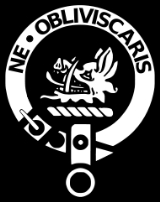
Clan Campbell

Encyclopedia
Clan Campbell is a Highland
Scottish clan
. Historically one of the largest, most powerful and most successful of the Highland clans, their lands were in Argyll
and the chief of the clan became the Earl and later Duke of Argyll
.
(floruit
1260s), father of Cailean Mór
, from whom the chiefs of the clan are thought to have taken their style MacCailean Mór. The byname kambel is recorded at this time. Fanciful reconstructions derive it from the Spanish de Campo Bello, but the likely source is the caimbeul, an Early Modern Irish or Gaelic
by name meaning wry mouth, crooked mouth or twisted mouth, which refers to "the man whose mouth inclined a little on one side" .
Regarding the earlier ancestors of Clan Campbell, there is good evidence that the Campbells themselves traced their descent from an earlier kindred known as the Mac Duibne, or perhaps the Uí Duibne. It has been suggested that the family's early landholdings, around Menstrie
, and in Cowal
, were related to the partition of the Earldom of Menteith
in 1213, and that Gilleasbuig may have been a kinsman of Muireadhach I, Earl of Menteith
. The lands around Loch Awe
, which would later form the core of their possessions, were not held at an early date.
The name begins to be established in Argyll
at the end of the 13th century, as followers of the Earl of Lennox
, with Campbells owning lands in Kintyre
and the famous warrior Cailean Mór
(Great Colin) knighted (1280) and established at Loch Awe
. Cailean Mór's older brother established at Strachur forming the oldest branch of Clan Campbell, see Campbell of Strachur
.
Between 1200 and 1500 the Campbells emerged as one of the most powerful families in Scotland, dominant in Argyll
and capable of wielding a wider influence and authority from Edinburgh to the Hebrides
and western Highlands.
and benefited from his successes with grants of lands, titles and good marriages. They fought for the Bruce against the English at the Battle of Bannockburn
in 1314 during the Wars of Scottish Independence
. During the 14th century the Clan Campbell rapidly expanded its lands and power. This is partly explained by the loyalty of Sir Niall Campbell
(Niall mac Caile), (d.1315), to the cause of Robert I of Scotland
(the Bruce) – a loyalty which was rewarded with marriage to Bruce's sister Mary
.
The family was closely associated with the Bruces and Stewarts in the time of Cailean Mór and his son Sir Niall mac Cailein
. Cailean Mór was killed in battle against the Clan MacDougall
, enemies of Bruce and Stewart, and Sir Niall was a staunch ally of King Robert Bruce
. Cailean Mór's mother Affrica of Carrick was probably the first cousin of King Robert's mother, Marjorie, Countess of Carrick
.
(Donnchadh) and his wife Lady Marjorie Stewart would be descendants of Robert the Bruce, King of Scotland and Robert II Stewart, King of Scotland. Lady Marjorie Stewart, b. 1390 was the daughter of King Robert II's son, Robert Stewart, 1st Duke of Albany. This would make all descendants of Sir Duncan Campbell and Lady Marjorie Stewart descendants of Robert I Bruce and most of the early Kings of Scotland.
The first Lord Campbell was created in 1445. It was from the 15th century that the Campbells came to take an increasingly prominent role. The personal reign of James I of Scotland
, saw that king launch a great political assault on the Albany Stewarts and their allies in the west, however Duncan Campbell, 1st lord Campbell (Donnchadh), escaped the fate of his Albany kinsmen who were all either executed or exiled.
Colin Campbell, 1st Earl of Argyll
(Cailean) was en-nobled as the Earl of Argyll in 1457 and later became Baron of Lorn and was also granted lands in Knapdale
, signs that the Argylls were one of the major forces in Scotland
. In 1493 after the forfeiture of the MacDonald, Lord of the Isles
, the Campbell lords may well have viewed themselves as natural successors to the Clan Donald
in terms of leadership of the Gaels of the Hebrides and western Highlands. The Campbell lordship thus remained one of the most significant bastions of Gaelic learning and culture in late medieval and early modern Scotland
.
Battle of Knockmary, 1490, Men of the Clan Campbell and the Clan Drummond join forces to defeat the Clan Murray. This also became known as the Massacre of Monzievaird
.
of the 16th century the Clan Campbell, led by Archibald Campbell, 2nd Earl of Argyll
fought on the side of King James IV of Scotland
against an English army. Many of the powerful Earls of Scotland participated in this battle which is sometimes referred to as the Charge of the Earls. Later during the Anglo-Scottish Wars the Clan Campbell was among the Scottish forces who fought the English at the Battle of Pinkie Cleugh
on 10 September 1547. Due to the large number of Scottish lives lost at this battle 10 September is remembered today in Scotland as Black Saturday
.
The Battle of Langside
took place in 1568, the chief of Clan Campbell, Archibald Campbell, 5th Earl of Argyll
, commanded the forces who fought for Mary, Queen of Scots against the forces of the Regent Moray, who were commanded by William Kirkcaldy of Grange
.
In 1567, a conflict took place between the Clan Campbell and Clan Arthur. Duncan MacArthur and his son of the Loch Awe MacArthur family, became the victims of their own success when jealousy of their power drove neighbours to drown them in Loch Awe during a skirmish with the Clan Campbell. In the archives of Inveraray Castle
a charter dated 1567 confirms that a pardon was granted to the Campbells of Inverawe for the "drowning of Clan Arthur". It is believed that the MacArthurs trying to defend themselves were driven into the loch. Centuries later in the 1970s an ancient sword was unearthed on the shore of the loch.
The Battle of Glenlivet
took place in 1594, Archibald Campbell, 7th Earl of Argyll
's forces of Clan Campbell, Clan Stewart of Atholl, Clan Forbes
and the Chattan Confederation
of Clan Mackintosh
fought against the Earl of Huntly who was supported by the Clan Gordon
, Clan Comyn
and the Clan Cameron
.
, who were staunch royalist supporters, found themselves surrounded by Covenanter clans. The Irvine's Drum Castle
was sacked on 2 May 1644 by the Clan Campbell. A chair with Drum symbols, now in the Scottish Museum, Edinburgh, is believed to have been taken from Drum Castle either in 1644 by the Campbells or in 1640 when a previous raid was carried out by General Robert Monro.
At the Battle of Inverlochy (1645)
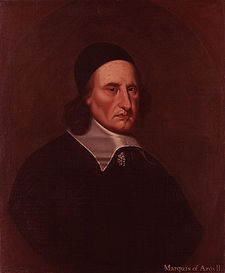
, the Scottish Argyll Covenanter forces of Clan Campbell led by Archibald Campbell, 1st Marquess of Argyll
were defeated by the Royalist forces of James Graham, 1st Marquess of Montrose
mainly made up from Clan MacDonald
, Clan MacLean
, Clan Ogilvy
and other MacDonald allies from Ireland.
After the Battle of Inverlochy in 1645 Montrose
laid siege to Castle Campbell
but was unable to beat the Clan Campbell defenders and failed to take the castle.
In 1646, the Clan Campbell massacred the Clan Lamont
in what became known as the Dunoon Massacre
. In 1647, the Argyll government troops of Clan Campbell, led by Stuart A Campbell, attacked and laid siege to Duart Castle
of the Clan MacLean
, but they were defeated and driven off by the Royalist troops of the Clan MacLean.
At the Battle of Stirling (1648)
the forces of Archibald Campbell, 1st Marquess of Argyll
were defeated by the forces of Sir George Munro, 1st of Newmore
who supported the Earl of Lanerick. Among Argyll's dead was William Campbell of Glenfalloch killed in action.
In 1672, debt forced George Sinclair, 6th Earl of Caithness
to resign his titles and estates in favour of Sir John Campbell. Campbell took possession of the estates on Sinclair's death in May 1676, and was created earl of Caithness in June the following year. Sinclair's heir, George Sinclair of Keiss disputed the claim and seized the land in 1678. This was followed by the Battle of Altimarlech
, 13 July 1680, between the Clan Campbell and the Clan Sinclair. The Campbells were victorious. Legend has it that so many Sinclairs were killed that the Campbells were able to cross the river without getting their feet wet. Having failed to regain his inheritance by force, Sinclair of Keiss then turned to the law. He took his place as Earl of Caithness on 15 July 1681, and his lands were restored on 23 September. Campbell was made Earl of Breadalbane by way of compensation.
In 1678 Archibald Campbell, 9th Earl of Argyll
, son of the Marquess of Argyll, successfully invaded the Clan MacLean
lands on the Isle of Mull
and garrisons Duart Castle
. Archibald Campbell, 9th Earl of Argyll, was hanged on 30 June 1685 for his participation in the Monmouth Rebellion
to depose Catholic James II and place the Protestant James, Duke of Monmouth on the throne.
Later in 1691 Duart Castle was surrendered by the Clan MacLean to the chief of Clan Campbell, Archibald Campbell, 1st Duke of Argyll
.
In 1692, 78 unarmed MacDonalds
were murdered in the Massacre of Glencoe
when a government initiative to suppress Jacobitism
was entangled in the long running feud between Clan MacDonald and Clan Campbell. The slaughter of the MacDonalds at the hands of the soldiers, led by Captain Robert Campbell of Glenlyon
, after enjoying their hospitality for over a week was a major affront of Scottish Law and Highland tradition. The majority of soldiers were not Campbells, but a roll call from a few months before included six Campbells in addition to Cpt. Robt. Campbell: Corporal Achibald Campbell, Private Archibald Campbell (elder), Private Donald Campbell (younger), Private Archibald Campbell (younger), Private James Campbell, Private Donald Campbell (elder), and Private Duncan Campbell. Retrieved from: Earl of Argyll's Regiment of Foot
 1715 to 1719 Jacobite Rising
On 23 October 1715, chief John Campbell, 2nd Duke of Argyll
having learned that a detachment of rebels was passing by Castle Campbell
, towards Dunfermline
, sent out a body of cavalry which came up with the party and defeated it, taking a number of gentlemen prisoners, with the damage of one dragoon wounded on the cheek and one horse slightly injured. A month later the British government forces, with the forces of Clan Campbell, fought and defeated the Jacobites at the Battle of Sheriffmuir
in 1715. However there were in fact a small number of Campbells who took the side of the Jacobites led by the son of Campbell of Glenlyon whose father had commanded the government troops at the Massacre of the Glencoe MacDonalds 22 years earlier. These two families then settled their differences and swore to be brothers in arms, fighting side by side in the Sheriffmuir. However the British government forces led by the Duke of Argyll defeated the Jacobites.
The Black Watch
In 1725, six Independent Black Watch
companies were formed: three from Clan Campbell, one from Clan Fraser
, one from Clan Munro
and one from Clan Grant
. These companies were known by the name Reicudan Dhu, or Black Watch. Taking advantage of the partisan nature and warrior instincts of the highlanders, these men were authorised to wear the kilt and to bear arms, thus it was not difficult to find recruits. The Regiment of the Line was formed officially in 1739 as the 43rd Highland Regiment of Foot under John Lindsay, 20th Earl of Crawford, and first mustered in 1740, at Aberfeldy. In May 1740, when the Independent companies were formed into the 43rd Highland Regiment (later the 42nd Royal Highlanders), Sir Robert Munro, 6th Baronet of Foulis was appointed lieutenant-colonel, and John Lindsay, 20th Earl of Crawford
was colonel. The regiment was then officially known as the 43rd Highland Regiment of Foot
.
1745 to 1746 Jacobite Rising
During the Jacobite Uprisings of 1745 to 1746 the Clan Campbell continued their support for the British Government. They fought against the rebel Jacobites at the Battle of Falkirk (1746)
where government forces were defeated. However shortly afterwards the Clan Campbell held out during the Siege of Fort William
. The Jacobites could not defeat the Campbell defenders who had been well supplied. Eventually the Campbells sent out their own force from Fort William who defeated the besieging Jacobites and captured their siege cannons.
Soon afterwards men of the Clan Campbell who formed part of Loudon's Highlanders
Regiment helped to finally defeat the Jacobites at the Battle of Culloden
in 1746.
, the Clan Chief recognizes only four:
The Sixth Duke of Argyll added a white line to his tartan to distinguish himself as Clan Chief. He was the only member of the family to do so, but the tartan has persisted as "Campbell of Argyll". Campbell of Argyll, as with any other tartan not listed above, is not recognized as official.
A History of Clan Campbell: From the Restoration to the present day By Alastair Campbell
A History of Clan Campbell: From Flodden to the Restoration By Alastair Campbell
The house of Argyll and the collateral branches of the clan Campbell, from the year 420 to the present time, J. Tweed, 1871
Scottish Highlands
The Highlands is an historic region of Scotland. The area is sometimes referred to as the "Scottish Highlands". It was culturally distinguishable from the Lowlands from the later Middle Ages into the modern period, when Lowland Scots replaced Scottish Gaelic throughout most of the Lowlands...
Scottish clan
Scottish clan
Scottish clans , give a sense of identity and shared descent to people in Scotland and to their relations throughout the world, with a formal structure of Clan Chiefs recognised by the court of the Lord Lyon, King of Arms which acts as an authority concerning matters of heraldry and Coat of Arms...
. Historically one of the largest, most powerful and most successful of the Highland clans, their lands were in Argyll
Argyll
Argyll , archaically Argyle , is a region of western Scotland corresponding with most of the part of ancient Dál Riata that was located on the island of Great Britain, and in a historical context can be used to mean the entire western coast between the Mull of Kintyre and Cape Wrath...
and the chief of the clan became the Earl and later Duke of Argyll
Duke of Argyll
Duke of Argyll is a title, created in the Peerage of Scotland in 1701 and in the Peerage of the United Kingdom in 1892. The Earls, Marquesses, and Dukes of Argyll were for several centuries among the most powerful, if not the most powerful, noble family in Scotland...
.
Origins
The earliest attested Campbell is Gilleasbaig of MenstrieGilleasbaig of Menstrie
Gille Escoib or Gilleasbaig of Menstrie is the earliest member of the Campbell family to be attested in contemporary sources, appearing in royal charters dating to the 1260s. His existence is confirmed by later Campbell pedigrees. According to these genealogies, he was the son of a man named...
(floruit
Floruit
Floruit , abbreviated fl. , is a Latin verb meaning "flourished", denoting the period of time during which something was active...
1260s), father of Cailean Mór
Cailean Mór
Cailean Mór Caimbeul, also known as Sir Colin Campbell , is one of the earliest attested members of Clan Campbell and an important ancestor figure of the later medieval Earls of Argyll....
, from whom the chiefs of the clan are thought to have taken their style MacCailean Mór. The byname kambel is recorded at this time. Fanciful reconstructions derive it from the Spanish de Campo Bello, but the likely source is the caimbeul, an Early Modern Irish or Gaelic
Irish language
Irish , also known as Irish Gaelic, is a Goidelic language of the Indo-European language family, originating in Ireland and historically spoken by the Irish people. Irish is now spoken as a first language by a minority of Irish people, as well as being a second language of a larger proportion of...
by name meaning wry mouth, crooked mouth or twisted mouth, which refers to "the man whose mouth inclined a little on one side" .
Regarding the earlier ancestors of Clan Campbell, there is good evidence that the Campbells themselves traced their descent from an earlier kindred known as the Mac Duibne, or perhaps the Uí Duibne. It has been suggested that the family's early landholdings, around Menstrie
Menstrie
Menstrie is a village in the county of Clackmannanshire in Scotland, UK. It is about 5 miles east-north-east of Stirling...
, and in Cowal
Cowal
thumb|Cowal shown within ArgyllCowal is a peninsula in Argyll and Bute in the Scottish Highlands.-Description:The northern part of Cowal is mostly the mountainous Argyll Forest Park. Cowal is separated from the Kintyre peninsula to the west by Loch Fyne, and from Inverclyde and North Ayrshire to...
, were related to the partition of the Earldom of Menteith
Earl of Menteith
The Mormaer or Earl of Menteith was originally the ruler of the province of Menteith in the Middle Ages. The first mormaer is usually regarded as Gille Críst, simply because he is the earliest on record. The title was held in a continuous line from Gille Crist until Muireadhach IV , although the...
in 1213, and that Gilleasbuig may have been a kinsman of Muireadhach I, Earl of Menteith
Muireadhach I, Earl of Menteith
Muireadhach I is the second known Mormaer of Menteith. He succeeded his father Gille Críst by the time of his appearance in a charter of William the Lion confirming the church at Moulin to Dunfermline Abbey. The charter is undated, but must have been written between 1189 and 1198...
. The lands around Loch Awe
Loch Awe
Loch Awe is a large body of water in Argyll and Bute, Scotland. It has also given its name to a village on its banks, variously known as Loch Awe, or Lochawe. There are islands within the loch such as Innis Chonnell and Inishail.- The loch :It is the third largest freshwater loch in Scotland with...
, which would later form the core of their possessions, were not held at an early date.
The name begins to be established in Argyll
Argyll
Argyll , archaically Argyle , is a region of western Scotland corresponding with most of the part of ancient Dál Riata that was located on the island of Great Britain, and in a historical context can be used to mean the entire western coast between the Mull of Kintyre and Cape Wrath...
at the end of the 13th century, as followers of the Earl of Lennox
Earl of Lennox
The Mormaer of Lennox or Earl of Lennox was the ruler of the long-lasting provincial Mormaerdom/Earldom of Lennox in the Medieval Kingdom of the Scots. The first Mormaer is usually regarded as Ailin I , but the genealogy of the Mormaers gives earlier names...
, with Campbells owning lands in Kintyre
Kintyre
Kintyre is a peninsula in western Scotland, in the southwest of Argyll and Bute. The region stretches approximately 30 miles , from the Mull of Kintyre in the south, to East Loch Tarbert in the north...
and the famous warrior Cailean Mór
Cailean Mór
Cailean Mór Caimbeul, also known as Sir Colin Campbell , is one of the earliest attested members of Clan Campbell and an important ancestor figure of the later medieval Earls of Argyll....
(Great Colin) knighted (1280) and established at Loch Awe
Loch Awe
Loch Awe is a large body of water in Argyll and Bute, Scotland. It has also given its name to a village on its banks, variously known as Loch Awe, or Lochawe. There are islands within the loch such as Innis Chonnell and Inishail.- The loch :It is the third largest freshwater loch in Scotland with...
. Cailean Mór's older brother established at Strachur forming the oldest branch of Clan Campbell, see Campbell of Strachur
Campbell of Strachur
The Campbells of Strachur, also known as the MacArthur Campbells of Strachur, may be the oldest branch of the Clan Campbell. The family traces it's descent from Sir Arthur Campbell, who is said to have been a son of Duncan Dubh, who in turn may have been an elder brother of Gilleasbaig, who was in...
.
Between 1200 and 1500 the Campbells emerged as one of the most powerful families in Scotland, dominant in Argyll
Argyll
Argyll , archaically Argyle , is a region of western Scotland corresponding with most of the part of ancient Dál Riata that was located on the island of Great Britain, and in a historical context can be used to mean the entire western coast between the Mull of Kintyre and Cape Wrath...
and capable of wielding a wider influence and authority from Edinburgh to the Hebrides
Hebrides
The Hebrides comprise a widespread and diverse archipelago off the west coast of Scotland. There are two main groups: the Inner and Outer Hebrides. These islands have a long history of occupation dating back to the Mesolithic and the culture of the residents has been affected by the successive...
and western Highlands.
Wars of Scottish Independence
The family of Colin Campbell went on to become firm supporters of King Robert the BruceRobert I of Scotland
Robert I , popularly known as Robert the Bruce , was King of Scots from March 25, 1306, until his death in 1329.His paternal ancestors were of Scoto-Norman heritage , and...
and benefited from his successes with grants of lands, titles and good marriages. They fought for the Bruce against the English at the Battle of Bannockburn
Battle of Bannockburn
The Battle of Bannockburn was a significant Scottish victory in the Wars of Scottish Independence...
in 1314 during the Wars of Scottish Independence
Wars of Scottish Independence
The Wars of Scottish Independence were a series of military campaigns fought between the independent Kingdom of Scotland and the Kingdom of England in the late 13th and early 14th centuries....
. During the 14th century the Clan Campbell rapidly expanded its lands and power. This is partly explained by the loyalty of Sir Niall Campbell
Niall mac Cailein
Niall mac Cailein , also known as Sir Neil Campbell, was a nobleman and warrior who spent his life in the service of King Robert I of Scotland, His Gaelic name means "Niall, Colin's son" since he was the son of Cailean Mór...
(Niall mac Caile), (d.1315), to the cause of Robert I of Scotland
Robert I of Scotland
Robert I , popularly known as Robert the Bruce , was King of Scots from March 25, 1306, until his death in 1329.His paternal ancestors were of Scoto-Norman heritage , and...
(the Bruce) – a loyalty which was rewarded with marriage to Bruce's sister Mary
Mary Bruce
Mary Bruce was the younger sister of Robert the Bruce, King of Scots. During the First War of Scottish Independence, she was captured by the English and imprisoned in a cage at Roxburgh Castle for about four years...
.
The family was closely associated with the Bruces and Stewarts in the time of Cailean Mór and his son Sir Niall mac Cailein
Niall mac Cailein
Niall mac Cailein , also known as Sir Neil Campbell, was a nobleman and warrior who spent his life in the service of King Robert I of Scotland, His Gaelic name means "Niall, Colin's son" since he was the son of Cailean Mór...
. Cailean Mór was killed in battle against the Clan MacDougall
Clan MacDougall
Clan MacDougall is a Highland Scottish clan consisting of the descendants of Dubgall mac Somairle, son of Somerled, who ruled Lorne and the Isle of Mull in Argyll in the 13th century...
, enemies of Bruce and Stewart, and Sir Niall was a staunch ally of King Robert Bruce
Robert I of Scotland
Robert I , popularly known as Robert the Bruce , was King of Scots from March 25, 1306, until his death in 1329.His paternal ancestors were of Scoto-Norman heritage , and...
. Cailean Mór's mother Affrica of Carrick was probably the first cousin of King Robert's mother, Marjorie, Countess of Carrick
Marjorie, Countess of Carrick
Marjorie of Carrick was countess of Carrick, Scotland, from 1256 to 1292, and is notable as the mother of Robert the Bruce.-Marriages:...
.
15th century and royal relations
Descendants of Sir Duncan Campbell, 1st Lord CampbellDuncan Campbell, 1st Lord Campbell
Duncan Campbell, 1st Lord Campbell Duncan Campbell, 1st Lord Campbell Duncan Campbell, 1st Lord Campbell (Classical Gaelic Donnchadh mac Cailein, and also called Donnchadh na-Adh of Loch Awe, (died 1453), was an important figure in Scottish affairs in the first half of the fifteenth century and...
(Donnchadh) and his wife Lady Marjorie Stewart would be descendants of Robert the Bruce, King of Scotland and Robert II Stewart, King of Scotland. Lady Marjorie Stewart, b. 1390 was the daughter of King Robert II's son, Robert Stewart, 1st Duke of Albany. This would make all descendants of Sir Duncan Campbell and Lady Marjorie Stewart descendants of Robert I Bruce and most of the early Kings of Scotland.
The first Lord Campbell was created in 1445. It was from the 15th century that the Campbells came to take an increasingly prominent role. The personal reign of James I of Scotland
James I of Scotland
James I, King of Scots , was the son of Robert III and Annabella Drummond. He was probably born in late July 1394 in Dunfermline as youngest of three sons...
, saw that king launch a great political assault on the Albany Stewarts and their allies in the west, however Duncan Campbell, 1st lord Campbell (Donnchadh), escaped the fate of his Albany kinsmen who were all either executed or exiled.
Colin Campbell, 1st Earl of Argyll
Colin Campbell, 1st Earl of Argyll
Colin Campbell, 1st Earl of Argyll was a Scottish nobleman.-Biography:He was the son of Gillespic Campbell, Master of Campbell and Elizabeth Somerville. Elizabeth Somerville was the daughter of John Somerville, 3rd Lord Somerville and Helen Hepburn...
(Cailean) was en-nobled as the Earl of Argyll in 1457 and later became Baron of Lorn and was also granted lands in Knapdale
Knapdale
Knapdale forms a rural district of Argyll and Bute in the Scottish Highlands, adjoining Kintyre to the south, and divided from the rest of Argyll to the north by the Crinan Canal. It includes two parishes, North Knapdale and South Knapdale....
, signs that the Argylls were one of the major forces in Scotland
Scotland
Scotland is a country that is part of the United Kingdom. Occupying the northern third of the island of Great Britain, it shares a border with England to the south and is bounded by the North Sea to the east, the Atlantic Ocean to the north and west, and the North Channel and Irish Sea to the...
. In 1493 after the forfeiture of the MacDonald, Lord of the Isles
Lord of the Isles
The designation Lord of the Isles is today a title of Scottish nobility with historical roots that go back beyond the Kingdom of Scotland. It emerged from a series of hybrid Viking/Gaelic rulers of the west coast and islands of Scotland in the Middle Ages, who wielded sea-power with fleets of...
, the Campbell lords may well have viewed themselves as natural successors to the Clan Donald
Clan Donald
Clan Donald is one of the largest Scottish clans. There are numerous branches to the clan. Several of these have chiefs recognised by the Lord Lyon King of Arms; these are: Clan Macdonald of Sleat, Clan Macdonald of Clanranald, Clan MacDonell of Glengarry, Clan MacDonald of Keppoch, and Clan...
in terms of leadership of the Gaels of the Hebrides and western Highlands. The Campbell lordship thus remained one of the most significant bastions of Gaelic learning and culture in late medieval and early modern Scotland
Scotland
Scotland is a country that is part of the United Kingdom. Occupying the northern third of the island of Great Britain, it shares a border with England to the south and is bounded by the North Sea to the east, the Atlantic Ocean to the north and west, and the North Channel and Irish Sea to the...
.
Battle of Knockmary, 1490, Men of the Clan Campbell and the Clan Drummond join forces to defeat the Clan Murray. This also became known as the Massacre of Monzievaird
Massacre of Monzievaird
The Massacre of Monzievaird took place on 21 October 1490, the result of a violent blood feud between the Murray and Drummond families of Monzievaird in the Scottish Highlands...
.
16th century and clan conflicts
The Battle of Flodden took place in 1513, during the Anglo-Scottish WarsAnglo-Scottish Wars
The Anglo-Scottish Wars were a series of wars fought between England and Scotland during the sixteenth century.After the Wars of Scottish Independence, England and Scotland had fought several times during the fourteenth, fifteenth and sixteenth centuries. In most cases, one country had attempted to...
of the 16th century the Clan Campbell, led by Archibald Campbell, 2nd Earl of Argyll
Archibald Campbell, 2nd Earl of Argyll
Gillespie Archibald Campbell, 2nd Earl of Argyll was a Scottish nobleman and politician.-Biography:Archibald was the eldest son of Colin Campbell, 1st Earl of Argyll and Isabel Stewart, daughter of John Stewart, 2nd Lord Lorn. He was made Master of the Royal Household of James IV of Scotland on 24...
fought on the side of King James IV of Scotland
James IV of Scotland
James IV was King of Scots from 11 June 1488 to his death. He is generally regarded as the most successful of the Stewart monarchs of Scotland, but his reign ended with the disastrous defeat at the Battle of Flodden Field, where he became the last monarch from not only Scotland, but also from all...
against an English army. Many of the powerful Earls of Scotland participated in this battle which is sometimes referred to as the Charge of the Earls. Later during the Anglo-Scottish Wars the Clan Campbell was among the Scottish forces who fought the English at the Battle of Pinkie Cleugh
Battle of Pinkie Cleugh
The Battle of Pinkie Cleugh, on the banks of the River Esk near Musselburgh, Scotland on 10 September 1547, was part of the War of the Rough Wooing. It was the last pitched battle between Scottish and English armies, and is seen as the first modern battle in the British Isles...
on 10 September 1547. Due to the large number of Scottish lives lost at this battle 10 September is remembered today in Scotland as Black Saturday
Black Saturday
Black Saturday may refer to:* Holy Saturday* Black Saturday , the busiest day of the year when many people go on holiday* Black Saturday bushfires , when a series of bushfires burnt across the Australian state of Victoria...
.
The Battle of Langside
Battle of Langside
The Battle of Langside, fought on 13 May 1568, was one of the more unusual contests in Scottish history, bearing a superficial resemblance to a grand family quarrel, in which a mother fought her brother who was defending the rights of her infant son...
took place in 1568, the chief of Clan Campbell, Archibald Campbell, 5th Earl of Argyll
Archibald Campbell, 5th Earl of Argyll
Archibald Campbell, 5th Earl of Argyll was one of the leading figures in the politics of Scotland during the reign of Mary, Queen of Scots, and the early part of that of James VI.-Biography:...
, commanded the forces who fought for Mary, Queen of Scots against the forces of the Regent Moray, who were commanded by William Kirkcaldy of Grange
William Kirkcaldy of Grange
Sir William Kirkcaldy of Grange , Scottish politician and general, was the eldest son of Sir James Kirkcaldy of Grange , a member of an old Fife family...
.
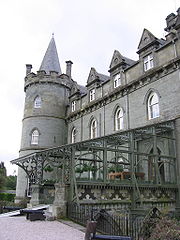
In 1567, a conflict took place between the Clan Campbell and Clan Arthur. Duncan MacArthur and his son of the Loch Awe MacArthur family, became the victims of their own success when jealousy of their power drove neighbours to drown them in Loch Awe during a skirmish with the Clan Campbell. In the archives of Inveraray Castle
Inveraray Castle
Inveraray Castle is an estate house near Inveraray in Argyll in western Scotland.It is the seat of the Duke of Argyll and a Category A listed building.-Ghosts:...
a charter dated 1567 confirms that a pardon was granted to the Campbells of Inverawe for the "drowning of Clan Arthur". It is believed that the MacArthurs trying to defend themselves were driven into the loch. Centuries later in the 1970s an ancient sword was unearthed on the shore of the loch.
The Battle of Glenlivet
Battle of Glenlivet
The Battle of Glenlivet was fought on 3 October 1594 near Allanreid and Morinsh in Scotland.-Background:This battle is often seen as a religious conflict, and was fought by the Catholic forces of the George Gordon, 1st Marquess of Huntly and Francis Hay, 9th Earl of Erroll, who were victorious over...
took place in 1594, Archibald Campbell, 7th Earl of Argyll
Archibald Campbell, 7th Earl of Argyll
Archibald Campbell, 7th Earl of Argyll , also called "Gillesbuig Grumach", was a Scottish politician and military leader.-Biography:...
's forces of Clan Campbell, Clan Stewart of Atholl, Clan Forbes
Clan Forbes
Clan Forbes is a Lowland Scottish clan from Aberdeenshire, Scotland.-Origins:Concerning the origin of this Scottish clan, John of Forbes, the first upon record, seems to have been a man of importance in the time of William the Lion, and was the father of Fergus, from whom the clan are descended....
and the Chattan Confederation
Chattan Confederation
Clan Chattan or the Chattan Confederation is a confederation of 16 Scottish clans who joined for mutual defence or blood bonds. Its leader was the chief of Clan Mackintosh.-Origins:The origin of the name Chattan is disputed...
of Clan Mackintosh
Clan MacKintosh
Clan Mackintosh is a Scottish clan from Inverness with strong Jacobite ties. The Mackintoshes were also chiefs of the Chattan Confederation.-Origins:...
fought against the Earl of Huntly who was supported by the Clan Gordon
Clan Gordon
Clan Gordon, also known as the House of Gordon, is a Scottish clan. The chief of the clan was the powerful Earl of Huntly, now also Marquess of Huntly.-Origins:...
, Clan Comyn
Clan Cumming
Clan Cumming, also known as Clan Comyn, is a Scottish clan from the central Highlands that played a major role in the history of 13th century Scotland and in the Wars of Scottish Independence and were instrumental in defeating the English at the Battle of Roslin in 1303...
and the Clan Cameron
Clan Cameron
Clan Cameron is a West Highland Scottish clan, with one main branch Lochiel, and numerous cadet branches. The Clan Cameron lands are in Lochaber and within their lands is the mountain Ben Nevis which is the highest mountain in the British Isles. The chief of the clan is customarily referred to as...
.
17th century and Civil War
During the Civil War, the Clan Campbell fought as Covenanters. In 1644, the Clan IrvineClan Irvine
-Origins of the clan:As a surname Irvine is of territorial origins from one of two places of the same name. Firstly from Irving, an old parish in Dumfriesshire and from Irvine in Ayrshire....
, who were staunch royalist supporters, found themselves surrounded by Covenanter clans. The Irvine's Drum Castle
Drum Castle
Drum Castle is a castle near Drumoak in Aberdeenshire, Scotland. For centuries it was the seat of the chief of Clan Irvine. The place-name Drum is derived from Gaelic druim, 'ridge'....
was sacked on 2 May 1644 by the Clan Campbell. A chair with Drum symbols, now in the Scottish Museum, Edinburgh, is believed to have been taken from Drum Castle either in 1644 by the Campbells or in 1640 when a previous raid was carried out by General Robert Monro.
At the Battle of Inverlochy (1645)
Battle of Inverlochy (1645)
The Battle of Inverlochy was a battle of the Scottish Civil War in which Montrose routed the pursuing forces of the Marquess of Argyll....
, the Scottish Argyll Covenanter forces of Clan Campbell led by Archibald Campbell, 1st Marquess of Argyll
Archibald Campbell, 1st Marquess of Argyll
Archibald Campbell, 1st Marquess of Argyll, 8th Earl of Argyll, chief of Clan Campbell, was the de facto head of government in Scotland during most of the conflict known as the Wars of the Three Kingdoms, also known as the British Civil War...
were defeated by the Royalist forces of James Graham, 1st Marquess of Montrose
James Graham, 1st Marquess of Montrose
James Graham, 1st Marquess of Montrose was a Scottish nobleman and soldier, who initially joined the Covenanters in the Wars of the Three Kingdoms, but subsequently supported King Charles I as the English Civil War developed...
mainly made up from Clan MacDonald
Clan Donald
Clan Donald is one of the largest Scottish clans. There are numerous branches to the clan. Several of these have chiefs recognised by the Lord Lyon King of Arms; these are: Clan Macdonald of Sleat, Clan Macdonald of Clanranald, Clan MacDonell of Glengarry, Clan MacDonald of Keppoch, and Clan...
, Clan MacLean
Clan MacLean
Clan Maclean is a Highland Scottish clan. They are one of the oldest clans in the Highlands and owned large tracts of land in Argyll as well as the Inner Hebrides. Many early MacLeans became famous for their honour, strength and courage in battle. They were involved in many clan skirmishes with...
, Clan Ogilvy
Clan Ogilvy
-Origins of the clan:The Ogilvys are one of the most distinguished families in Scotland and take their name from Gillebride the second son of Gille Chriosd, Celtic Earl of Angus...
and other MacDonald allies from Ireland.
After the Battle of Inverlochy in 1645 Montrose
James Graham, 1st Marquess of Montrose
James Graham, 1st Marquess of Montrose was a Scottish nobleman and soldier, who initially joined the Covenanters in the Wars of the Three Kingdoms, but subsequently supported King Charles I as the English Civil War developed...
laid siege to Castle Campbell
Castle Campbell
Castle Campbell is a mediæval castle situated above the town of Dollar, Clackmannanshire in central Scotland. It was the seat of the Earls and Dukes of Argyll, chiefs of Clan Campbell.- History :...
but was unable to beat the Clan Campbell defenders and failed to take the castle.
In 1646, the Clan Campbell massacred the Clan Lamont
Clan Lamont
Clan Lamont is a Highland Scottish clan. Clan Lamont claim descent from Lauman who lived in Cowal in 1238. Tradition gives this Lauman a descent from an Irish prince of the O'Neill dynasty, Ánrothán Ua Néill, son of Áed, son of Flaithbertach Ua Néill, King of Ailech and Cenél nEógain, died 1036...
in what became known as the Dunoon Massacre
Dunoon Massacre
The Dunoon Massacre was a massacre that took place in Scotland in 1646. Men of the powerful Clan Campbell massacred men, women and children of the Clan Lamont....
. In 1647, the Argyll government troops of Clan Campbell, led by Stuart A Campbell, attacked and laid siege to Duart Castle
Duart Castle
Duart Castle or Caisteal Dhubhairt in Scottish Gaelic is a castle on the Isle of Mull, off the west coast of Scotland, within the council area of Argyll and Bute...
of the Clan MacLean
Clan MacLean
Clan Maclean is a Highland Scottish clan. They are one of the oldest clans in the Highlands and owned large tracts of land in Argyll as well as the Inner Hebrides. Many early MacLeans became famous for their honour, strength and courage in battle. They were involved in many clan skirmishes with...
, but they were defeated and driven off by the Royalist troops of the Clan MacLean.
At the Battle of Stirling (1648)
Battle of Stirling (1648)
The second Battle of Stirling was fought on the 12 September 1648 during the Scottish Civil War of the 17th century.-Background:The Battle of Stirling in 1648 was part of the War of the Three Kingdoms. By this time, the Presbyterian Covenanter movement had defeated the Scottish Royalists, who...
the forces of Archibald Campbell, 1st Marquess of Argyll
Archibald Campbell, 1st Marquess of Argyll
Archibald Campbell, 1st Marquess of Argyll, 8th Earl of Argyll, chief of Clan Campbell, was the de facto head of government in Scotland during most of the conflict known as the Wars of the Three Kingdoms, also known as the British Civil War...
were defeated by the forces of Sir George Munro, 1st of Newmore
George Munro, 1st of Newmore
Sir George Munro, 1st of Newmore was a 17th century Scottish soldier and member of parliament from the Clan Munro, Ross-shire, Scotland. He was seated at Newmore Castle.-Lineage:...
who supported the Earl of Lanerick. Among Argyll's dead was William Campbell of Glenfalloch killed in action.
In 1672, debt forced George Sinclair, 6th Earl of Caithness
Earl of Caithness
Earl of Caithness is a title that has been created several times in the Peerage of Scotland, and has a very complex history. Its first grant, in the modern sense as to have been counted in strict lists of peerages, is now generally held to have taken place in favor of Maol Íosa V, Earl of...
to resign his titles and estates in favour of Sir John Campbell. Campbell took possession of the estates on Sinclair's death in May 1676, and was created earl of Caithness in June the following year. Sinclair's heir, George Sinclair of Keiss disputed the claim and seized the land in 1678. This was followed by the Battle of Altimarlech
Battle of Altimarlech
The Battle of Altimarlach or Battle of Altimarlech was a Scottish clan battle that took place on 13 July 1680. It was fought between the Clan Campbell and Clan Sinclair.-Background:...
, 13 July 1680, between the Clan Campbell and the Clan Sinclair. The Campbells were victorious. Legend has it that so many Sinclairs were killed that the Campbells were able to cross the river without getting their feet wet. Having failed to regain his inheritance by force, Sinclair of Keiss then turned to the law. He took his place as Earl of Caithness on 15 July 1681, and his lands were restored on 23 September. Campbell was made Earl of Breadalbane by way of compensation.
In 1678 Archibald Campbell, 9th Earl of Argyll
Archibald Campbell, 9th Earl of Argyll
Archibald Campbell, 9th Earl of Argyll was a Scottish peer.He was born in 1629 in Dalkeith, Scotland, the son of Archibald Campbell, 1st Marquess of Argyll....
, son of the Marquess of Argyll, successfully invaded the Clan MacLean
Clan MacLean
Clan Maclean is a Highland Scottish clan. They are one of the oldest clans in the Highlands and owned large tracts of land in Argyll as well as the Inner Hebrides. Many early MacLeans became famous for their honour, strength and courage in battle. They were involved in many clan skirmishes with...
lands on the Isle of Mull
Isle of Mull
The Isle of Mull or simply Mull is the second largest island of the Inner Hebrides, off the west coast of Scotland in the council area of Argyll and Bute....
and garrisons Duart Castle
Duart Castle
Duart Castle or Caisteal Dhubhairt in Scottish Gaelic is a castle on the Isle of Mull, off the west coast of Scotland, within the council area of Argyll and Bute...
. Archibald Campbell, 9th Earl of Argyll, was hanged on 30 June 1685 for his participation in the Monmouth Rebellion
Monmouth Rebellion
The Monmouth Rebellion,The Revolt of the West or The West Country rebellion of 1685, was an attempt to overthrow James II, who had become King of England, King of Scots and King of Ireland at the death of his elder brother Charles II on 6 February 1685. James II was a Roman Catholic, and some...
to depose Catholic James II and place the Protestant James, Duke of Monmouth on the throne.
Later in 1691 Duart Castle was surrendered by the Clan MacLean to the chief of Clan Campbell, Archibald Campbell, 1st Duke of Argyll
Archibald Campbell, 1st Duke of Argyll
Archibald Campbell, 1st Duke of Argyll, 10th Earl of Argyll was a Scottish peer.-Biography:The eldest son of Archibald Campbell, 9th Earl of Argyll and Mary Stuart, daughter of James Stuart, 4th Earl of Moray, Campbell sought to recover his father's estates...
.
In 1692, 78 unarmed MacDonalds
Clan Donald
Clan Donald is one of the largest Scottish clans. There are numerous branches to the clan. Several of these have chiefs recognised by the Lord Lyon King of Arms; these are: Clan Macdonald of Sleat, Clan Macdonald of Clanranald, Clan MacDonell of Glengarry, Clan MacDonald of Keppoch, and Clan...
were murdered in the Massacre of Glencoe
Massacre of Glencoe
Early in the morning of 13 February 1692, in the aftermath of the Glorious Revolution and the Jacobite uprising of 1689 led by John Graham of Claverhouse, an infamous massacre took place in Glen Coe, in the Highlands of Scotland. This incident is referred to as the Massacre of Glencoe, or in...
when a government initiative to suppress Jacobitism
Jacobitism
Jacobitism was the political movement in Britain dedicated to the restoration of the Stuart kings to the thrones of England, Scotland, later the Kingdom of Great Britain, and the Kingdom of Ireland...
was entangled in the long running feud between Clan MacDonald and Clan Campbell. The slaughter of the MacDonalds at the hands of the soldiers, led by Captain Robert Campbell of Glenlyon
Robert Campbell of Glenlyon
Robert Campbell, 5th Laird of Glenlyon , was a minor member of Scottish nobility and is best known as one of the commanding officers at the Massacre of Glencoe.-Life:...
, after enjoying their hospitality for over a week was a major affront of Scottish Law and Highland tradition. The majority of soldiers were not Campbells, but a roll call from a few months before included six Campbells in addition to Cpt. Robt. Campbell: Corporal Achibald Campbell, Private Archibald Campbell (elder), Private Donald Campbell (younger), Private Archibald Campbell (younger), Private James Campbell, Private Donald Campbell (elder), and Private Duncan Campbell. Retrieved from: Earl of Argyll's Regiment of Foot
Earl of Argyll's Regiment of Foot
The Earl of Argyll's Regiment of Foot was a 17th century Scottish infantry regiment, raised from the men of Argyll, and based at Fort William. The Colonel in Chief was the Earl of Argyll, although this was a nominal appointment, and he did not exercise his command or take part in the regiment's...
18th century and Jacobite Uprisings
On 23 October 1715, chief John Campbell, 2nd Duke of Argyll
John Campbell, 2nd Duke of Argyll
Field Marshal John Campbell, 2nd Duke of Argyll, 1st Duke of Greenwich KG , known as Iain Ruaidh nan Cath or Red John of the Battles, was a Scottish soldier and nobleman.-Early Life:...
having learned that a detachment of rebels was passing by Castle Campbell
Castle Campbell
Castle Campbell is a mediæval castle situated above the town of Dollar, Clackmannanshire in central Scotland. It was the seat of the Earls and Dukes of Argyll, chiefs of Clan Campbell.- History :...
, towards Dunfermline
Dunfermline
Dunfermline is a town and former Royal Burgh in Fife, Scotland, on high ground from the northern shore of the Firth of Forth. According to a 2008 estimate, Dunfermline has a population of 46,430, making it the second-biggest settlement in Fife. Part of the town's name comes from the Gaelic word...
, sent out a body of cavalry which came up with the party and defeated it, taking a number of gentlemen prisoners, with the damage of one dragoon wounded on the cheek and one horse slightly injured. A month later the British government forces, with the forces of Clan Campbell, fought and defeated the Jacobites at the Battle of Sheriffmuir
Battle of Sheriffmuir
The Battle of Sheriffmuir was an engagement in 1715 at the height of the Jacobite rebellion in England and Scotland.-History:John Erskine, 6th Earl of Mar, standard-bearer for the Jacobite cause in Scotland, mustered Highland chiefs, and on 6 September declared James Francis Edward Stuart as King...
in 1715. However there were in fact a small number of Campbells who took the side of the Jacobites led by the son of Campbell of Glenlyon whose father had commanded the government troops at the Massacre of the Glencoe MacDonalds 22 years earlier. These two families then settled their differences and swore to be brothers in arms, fighting side by side in the Sheriffmuir. However the British government forces led by the Duke of Argyll defeated the Jacobites.
The Black Watch
In 1725, six Independent Black Watch
Black Watch
The Black Watch, 3rd Battalion, Royal Regiment of Scotland is an infantry battalion of the Royal Regiment of Scotland. The unit's traditional colours were retired in 2011 in a ceremony led by Queen Elizabeth II....
companies were formed: three from Clan Campbell, one from Clan Fraser
Clan Fraser
Clan Fraser is a Scottish clan of French origin. The Clan has been strongly associated with Inverness and the surrounding area since the Clan's founder gained lands there in the 13th century. Since its founding, the Clan has dominated local politics and been active in every major military conflict...
, one from Clan Munro
Clan Munro
-Origins:The main traditional origin of the clan is that the Munros came from Ireland and settled in Scotland in the 11th century and that they fought as mercenary soldiers under the Earl of Ross who defeated Viking invaders in Rosshire...
and one from Clan Grant
Clan Grant
-Origins:The Grants are one of the clans of Siol Alpin, and descend from the 9th century Kenneth MacAlpin, King of Scots; and also of Norse origin, from settlers who are the descents of Haakon inn Riki Sigurdarsson , Jarl of Hladr, Protector of Norway ,-Origins:The Grants are one of the clans of...
. These companies were known by the name Reicudan Dhu, or Black Watch. Taking advantage of the partisan nature and warrior instincts of the highlanders, these men were authorised to wear the kilt and to bear arms, thus it was not difficult to find recruits. The Regiment of the Line was formed officially in 1739 as the 43rd Highland Regiment of Foot under John Lindsay, 20th Earl of Crawford, and first mustered in 1740, at Aberfeldy. In May 1740, when the Independent companies were formed into the 43rd Highland Regiment (later the 42nd Royal Highlanders), Sir Robert Munro, 6th Baronet of Foulis was appointed lieutenant-colonel, and John Lindsay, 20th Earl of Crawford
John Lindsay, 20th Earl of Crawford
Lieutenant-General John Lindsay, 20th Earl of Crawford was a Scottish peer and the first colonel of the Black Watch on its formation in 1739.He was the son of Lt.-Gen...
was colonel. The regiment was then officially known as the 43rd Highland Regiment of Foot
42nd Regiment of Foot
The 42nd Regiment of Foot was an infantry regiment of the British Army. Originally the 43rd Highlanders they were renumbered the 42nd in 1748.- Early history :...
.
1745 to 1746 Jacobite Rising
During the Jacobite Uprisings of 1745 to 1746 the Clan Campbell continued their support for the British Government. They fought against the rebel Jacobites at the Battle of Falkirk (1746)
Battle of Falkirk (1746)
During the Second Jacobite Rising, the Battle of Falkirk Muir was the last noteworthy Jacobite success.-Background:...
where government forces were defeated. However shortly afterwards the Clan Campbell held out during the Siege of Fort William
Siege of Fort William
The siege of Fort William, Scotland took place between 20 March and 3 April 1746. Prior to the siege the Jacobites had forced the surrender of Fort Augustus after a siege of just two days, from where they proceeded to Fort William with cannons they had taken from Fort Augustus...
. The Jacobites could not defeat the Campbell defenders who had been well supplied. Eventually the Campbells sent out their own force from Fort William who defeated the besieging Jacobites and captured their siege cannons.
Soon afterwards men of the Clan Campbell who formed part of Loudon's Highlanders
Loudon's Highlanders
Loudon's Highlanders, or the Earl of Loudon's Regiment of Foot, was an infantry regiment of the British Army.The great bravery of the 42nd Highlanders and the admirable service which they rendered at the Battle of Fontenoy in 1745, made the Government anxious to avail themselves still further of...
Regiment helped to finally defeat the Jacobites at the Battle of Culloden
Battle of Culloden
The Battle of Culloden was the final confrontation of the 1745 Jacobite Rising. Taking place on 16 April 1746, the battle pitted the Jacobite forces of Charles Edward Stuart against an army commanded by William Augustus, Duke of Cumberland, loyal to the British government...
in 1746.
Castles
- Inveraray CastleInveraray CastleInveraray Castle is an estate house near Inveraray in Argyll in western Scotland.It is the seat of the Duke of Argyll and a Category A listed building.-Ghosts:...
in ArgyllArgyllArgyll , archaically Argyle , is a region of western Scotland corresponding with most of the part of ancient Dál Riata that was located on the island of Great Britain, and in a historical context can be used to mean the entire western coast between the Mull of Kintyre and Cape Wrath...
is the current seat of the Chief of Clan Campbell. - Castle CampbellCastle CampbellCastle Campbell is a mediæval castle situated above the town of Dollar, Clackmannanshire in central Scotland. It was the seat of the Earls and Dukes of Argyll, chiefs of Clan Campbell.- History :...
or Castle Gloom was the seat of the chief of Clan Campbell until 1654 when they moved to Inveraray Castle. - Innis ChonnellInnis ChonnellInnischonnell is an island in Loch Awe, Scotland.It is part of Kilchrenan and Dalavich parish, in Argyll.-History:...
one of the earliest Clan Campbell castles. - Kilchurn CastleKilchurn CastleKilchurn Castle is a ruined 15th century structure on the northeastern end of Loch Awe, in Argyll and Bute, Scotland.It was the ancestral home of the Campbells of Glen Orchy, who later became the Earls of Breadalbane also known as the Breadalbane family branch, of the Clan Campbell. The earliest...
was seat of the Campbell of Glenorchy and Breadalbane branch of the clan - Edinample CastleEdinample CastleEdinample Castle is a late 16th century castle on the southern shores of Loch Earn near Balquhidder in the Stirling council area of Scotland....
was another seat of the Campbell of Glenorchy branch of the clan. - Finlarig CastleFinlarig CastleFinlarig Castle is an early 17th century castle standing on a mound on a peninsula between the River Lochay and Loch Tay, roughly 1 kilometre north of Killin in highland Perthshire, Scotland....
was another seat of the Campbell of Breadalbane branch of the clan. - Saddell CastleSaddellSaddell is a small Scottish village situated on the east side of the Kintyre Peninsula of Argyll and Bute, overlooking the Kilbrannan Sound and the Isle of Arran, 8 miles from Campbeltown on the B842 road to Carradale. The name Saddell is derived from the Norse for sandy dale.-Saddell...
was owned by the Campbells from the late 17th century onwards. - Torosay CastleTorosay castleTorosay Castle is a large house situated 1½ miles south of Craignure on the Isle of Mull, in the Scottish Inner Hebrides.It was designed by architect David Bryce for John Campbell of Possil in the Scottish Baronial style, and completed in 1858...
built by John Campbell of Possil in 1858. - Taymouth CastleTaymouth CastleTaymouth Castle is situated just north-east of the village of Kenmore, Perth and Kinross in the Highlands of Scotland.It stands on the site of the much older Balloch Castle , which was demolished to be rebuilt on a much larger scale in the early 19th century by the Campbells of Breadalbane.It was...
built by the Campbells of Breadalbane in the 19th century. - Castle SweenCastle SweenCastle Sween is located on the eastern shore of Loch Sween, in Knapdale, on the west coast of Argyll, Scotland. Castle Sween is thought to be one of the earliest stone castles built in Scotland, having been built sometime in the late twelfth century...
was granted to Colin Campbell in 1481 when he became the first Earl of Argyll. Was captured by the MacDonalds in 1647. - Dunoon Castle In 1334, Colin Campbell made Keeper of Dunoon Castle.
- Achallader CastleAchallader CastleAchallader Castle is a ruined 16th century tower house under the shadow of Beinn Achaladair, about 3.5 miles north of Bridge of Orchy, Argyll, Scotland. Its name is from Gaelic, meaning field of hard water.-History:...
was seat of Sir Duncan Campbell of Glen Orchy which he acquired in 1590. - Carnasserie CastleCarnasserie CastleCarnasserie Castle is a ruined 16th century tower house, noted for its unusual plan and renaissance detailing...
has belonged to the Clan Campbell since the 16th century. - Kilmartin CastleKilmartin CastleKilmartin Castle is a 16th century Z-plan tower house castle at Kilmartin, Scotland. Built by the Rector of Kilmartin and later owned by Clan Campbell.-Reference:...
- Ardkinglas Castle
- Auchinbreck Castle Dismantled. Built by the Campbells of Kilmichael Glassary, later renamed of Auchinbreck.
Tartans
Although mills produce many fabrics based on the Campbell tartanTartan
Tartan is a pattern consisting of criss-crossed horizontal and vertical bands in multiple colours. Tartans originated in woven wool, but now they are made in many other materials. Tartan is particularly associated with Scotland. Scottish kilts almost always have tartan patterns...
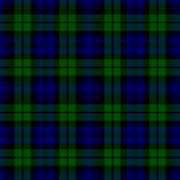
, the Clan Chief recognizes only four:
- Campbell: More commonly known as the Black WatchBlack WatchThe Black Watch, 3rd Battalion, Royal Regiment of Scotland is an infantry battalion of the Royal Regiment of Scotland. The unit's traditional colours were retired in 2011 in a ceremony led by Queen Elizabeth II....
tartan or the Government Sett. The Black Watch42nd Regiment of FootThe 42nd Regiment of Foot was an infantry regiment of the British Army. Originally the 43rd Highlanders they were renumbered the 42nd in 1748.- Early history :...
, first raised in 1695 to police the 'Black Trade' of cattle smuggling in the Highlands, taking role later as a militia in 1725 by General Wade, after the act of union in 1707, became what was the first Highland Regiment in the British ArmyBritish ArmyThe British Army is the land warfare branch of Her Majesty's Armed Forces in the United Kingdom. It came into being with the unification of the Kingdom of England and Scotland into the Kingdom of Great Britain in 1707. The new British Army incorporated Regiments that had already existed in England...
. All Campbell tartans are based upon the Black Watch tartan, as are many clan tartans. The tartan was used, and is in current use, by several military units throughout the CommonwealthCommonwealth of NationsThe Commonwealth of Nations, normally referred to as the Commonwealth and formerly known as the British Commonwealth, is an intergovernmental organisation of fifty-four independent member states...
. - Campbell of Breadalbane: This tartan may be worn by Campbells of the Breadalbane, or Glenorchy branches.
- Campbell of Cawdor: This tartan may be worn by members of the Campbell of Cawdor branch.
- Campbell of Loudoun: This tartan may be worn by members of the Campbell of Loudoun branch.
The Sixth Duke of Argyll added a white line to his tartan to distinguish himself as Clan Chief. He was the only member of the family to do so, but the tartan has persisted as "Campbell of Argyll". Campbell of Argyll, as with any other tartan not listed above, is not recognized as official.
Chief
- The most high, potent and noble prince, his Grace Torquhil Ian Campbell, 13th Duke of ArgyllDuke of ArgyllDuke of Argyll is a title, created in the Peerage of Scotland in 1701 and in the Peerage of the United Kingdom in 1892. The Earls, Marquesses, and Dukes of Argyll were for several centuries among the most powerful, if not the most powerful, noble family in Scotland...
, Marquess of Kintyre and Lorne, Earl of Argyll, Campbell and Cowal, Viscount Lochawe and Glenyla, Lord Campbell, Lorne, Kintyre, Inveraray, Mull, Morven and Tyrie in the peerage of ScotlandPeerage of ScotlandThe Peerage of Scotland is the division of the British Peerage for those peers created in the Kingdom of Scotland before 1707. With that year's Act of Union, the Kingdom of Scotland and the Kingdom of England were combined into the Kingdom of Great Britain, and a new Peerage of Great Britain was...
, Baron Sundbridge of Coombank and Baron Hamilton of HameldonBaron Hamilton of HameldonThe title Baron Hamilton of Hameldon, of Hambledon in the County of Leicester, is a title created in the Peerage of Great Britain in 1776. It was created for Elizabeth Hamilton , Duchess of Hamilton, wife since 1752 of James Douglas-Hamilton, 6th Duke of Hamilton...
in the peerage of Great BritainPeerage of Great BritainThe Peerage of Great Britain comprises all extant peerages created in the Kingdom of Great Britain after the Act of Union 1707 but before the Act of Union 1800...
, 6th Duke of ArgyllDuke of ArgyllDuke of Argyll is a title, created in the Peerage of Scotland in 1701 and in the Peerage of the United Kingdom in 1892. The Earls, Marquesses, and Dukes of Argyll were for several centuries among the most powerful, if not the most powerful, noble family in Scotland...
in the peerage of the United KingdomPeerage of the United KingdomThe Peerage of the United Kingdom comprises most peerages created in the United Kingdom of Great Britain and Ireland after the Act of Union in 1801, when it replaced the Peerage of Great Britain...
, Baronet of Nova ScotiaCampbell BaronetsThere have been 19 Baronetcies created for persons with the surname Campbell, seven in the Baronetage of Nova Scotia and twelve in the Baronetage of the United Kingdom.-Campbell Baronets, of Glenorchy :...
, Hereditary Master of the Royal Household in Scotland, Hereditary Keeper of the Great Seal of ScotlandGreat Seal of ScotlandThe Great Seal of Scotland allows the monarch to authorise official documents without having to sign each document individually. Wax is melted in a metal mould or matrix and impressed into a wax figure that is attached by cord or ribbon to documents that the monarch wishes to make official...
, Hereditary Keeper of the royal castles of Dunoon, Carrick CastleCarrick CastleCarrick Castle is a 15th-century tower house on the west shore of Loch Goil, Argyll, Scotland. It is located between Cuilmuich and Carrick, south of Lochgoilhead....
, Dunstaffnage CastleDunstaffnage CastleDunstaffnage Castle is a partially ruined castle in Argyll and Bute, western Scotland. It lies N.N.E. of Oban, situated on a platform of conglomerate rock on a promontory at the south-west of the entrance to Loch Etive, and is surrounded on three sides by the sea.The castle dates back to the 13th...
and Tarbet, AdmiralAdmiralAdmiral is the rank, or part of the name of the ranks, of the highest naval officers. It is usually considered a full admiral and above vice admiral and below admiral of the fleet . It is usually abbreviated to "Adm" or "ADM"...
of the Western coasts and isles, and Chief of the Honorable Clan Campbell; The chief's Gaelic title is MacCailein Mor ('Son of Colin the Great'). The Chief is also the hereditary High SheriffHigh SheriffA high sheriff is, or was, a law enforcement officer in the United Kingdom, Canada and the United States.In England and Wales, the office is unpaid and partly ceremonial, appointed by the Crown through a warrant from the Privy Council. In Cornwall, the High Sheriff is appointed by the Duke of...
of Argyllshire, Member Queen's Body Guard for Scotland and Member Royal Company of ArchersRoyal Company of ArchersThe Royal Company of Archers is a ceremonial unit that serves as the Sovereign's Bodyguard in Scotland, a role it has performed since 1822 and the reign of King George IV, when the company provided a personal bodyguard to the King on his visit to Scotland. It is currently known as the Queen's...
.
Branches
| Duke of Argyll |
Marquess of Breadalbane | Earl of Cawdor | Earl of Loudoun |
|---|---|---|---|
| Campbell of Aberuchill | Campbell of Ardchattan | Campbell of Barcaldine | Campbell of Cawdor |
| Campbell of Clathick | Campbell of Lawers | Campbell of Lochaw | Campbell of Lochdochart |
| Campbell of Lochnell | Campbell of Monzie | Campbell of Moy | Campbell of Ottar |
| Campbell of Park |  |
Campbell of Smiddygreen | Campbell of Craignish |
| Campbell of Auchinbreck | Campbell of Auchawillig | Campbell of Ardentinny | Campbell of Ardkinglas |
| Campbell of Gargunnock | Campbell of Inverneil | Lord Stratheden | Campbell of Netherplace |
| Campbell of Glenlyon | Campbell of Lix |
Campbell of Blythswood | Campbell of Glenfalloch |
A History of Clan Campbell: From the Restoration to the present day By Alastair Campbell
A History of Clan Campbell: From Flodden to the Restoration By Alastair Campbell
The house of Argyll and the collateral branches of the clan Campbell, from the year 420 to the present time, J. Tweed, 1871
- Campbell of Aberuchill
- Campbell of Ardkinglas
- Campbell of ArgyllDuke of ArgyllDuke of Argyll is a title, created in the Peerage of Scotland in 1701 and in the Peerage of the United Kingdom in 1892. The Earls, Marquesses, and Dukes of Argyll were for several centuries among the most powerful, if not the most powerful, noble family in Scotland...
- Campbell of AuchinbreckCampbell of AuchinbreckThe Auchinbreck of Campbell family , was founded by Duncan Campbell of Kilmichael, in Glassary, Argyllshire, Scotland. He was the son of Duncan, first Lord Campbell of the Clan Campbell, by his second wife Margaret, daughter of Sir John Stewart of Blackhall, the illegitimate son of King Robert III...
- Campbell of Barbreck (Old)
- Campbell of Barcaldine
- Campbell of Breadalbane and HollandEarl of Breadalbane and HollandEarl of Breadalbane and Holland is a dormant title in the Peerage of Scotland. It was created in 1681 for Sir John Campbell, 5th Baronet, of Glenorchy, who had previously been deprived of the title Earl of Caithness. He, as a principal creditor, had "acquired" the estates of George Sinclair, 6th...
- Campbell of Carrick Bouy
- Campbell of CawdorClan Campbell of CawdorClan Campbell of Cawdor is a highland Scottish clan. While the clan is recognised by the Standing Council of Scottish Chiefs, the clan does not have a clan chief recognised by the Standing Council of Scottish Chiefs...
- Campbell of CraignishCampbell of CraignishThe Campbells of Craignish , form one of the oldest branches of the ancient and powerful Clan Campbell in Scotland.. They claim descent from Dugald Campbell, the second son of Sir Archibald Gillespic Campbell , 5th Knight of Lochawe and 20th Chief of Clan Campbell at the time...
- Campbell of Dunstaffnage
- Campbell of Duntroon
- Campbell of Gartsford
- Campbell of Glenorchy
- Campbell of Inverawe
- Campbell of InverneillInverneill HouseInverneill House is a country house in Argyll, western Scotland. It stands on the west shore of Loch Fyne, around south of Lochgilphead. Although the house is not listed, the walled gardens and mausoleum on the estate are protected as category B listed buildings.]The lands of Inverneill first came...
- Campbell of Kenmore and Melfort
- Campbell of Lochnell
- Campbell of Loudoun
- Campbell of Lundie (Old)
- Campbell of Marchmont
- Campbell of Ormidale (Old)
- Campbell of Otter (Old)
- Campbell of Possil
- Campbell of Skipness
- Campbell of Strachurr
- Campbell of Succoth
External links
- The Clan Campbell Society (North America)
- Clan Cambell@ElectricScotland
- http://www.chebucto.ns.ca/Heritage/FSCNS/Scots_NS/Clans/Campbell.html
- http://chipdoc.tripod.com/Clan_Campbell.html
- http://www.macbraveheart.co.uk/campbell/