

2007 United Kingdom foot-and-mouth outbreak

Encyclopedia
An outbreak of foot-and-mouth disease
in the United Kingdom
was confirmed by the Department for Environment, Food and Rural Affairs
(DEFRA), on 3 August 2007, in the parish of Normandy, Surrey
.
The outbreak was centred on a field being used for beef
fattening rented by Derrick and Roger Pride.
saw 2,000 cases of the disease in farms in most of the British countryside. There was foot-and-mouth disease scare during January 2007 in Northern Ireland
but it is not thought to be related to the latest outbreak.
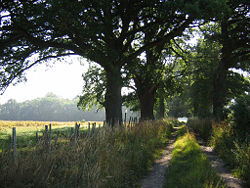
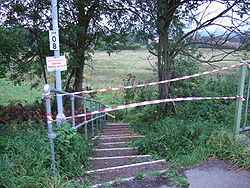 Symptoms were first reported late on 2 August 2007 on farmland located in Normandy
in Surrey
, which was subsequently isolated and placed under restrictions.
The following day the Chief Veterinary Officer (CVO) Debby Reynolds
confirmed that initial testing revealed that 60 cattle were infected with foot-and-mouth disease and
that other potential cases were being investigated.
On the 4 August the virus
was identified as the FMDV BFS 1860 O1 1967 (Foot-and-Mouth Disease Virus, British Field Strain 1860, serotype O, subtype 1, isolated in 1967; also referred to as strain BFS 1860/UK/67
), a virus isolated in the 1967 outbreak
and until the 2007 outbreak, not in circulation in animals. It was the same strain as used at the nearby Pirbright laboratory site, which houses separate units of the Institute for Animal Health
and Merial Animal Health Ltd
at Pirbright
, 2½ miles (4 km) away, which was identified as a possible source of infection, as it is one of only four European laboratories authorised to handle that strain of the virus to produce vaccines, the next nearest being in Belgium.
As a result the isolation zone was extended.
The laboratory carries out research into foot-and-mouth disease (FMD) as well as other diseases affecting livestock.
On 5 August another protection zone was created near Elstead
after a cow at one of the two other locations used by the farm tested positive. The herd at both locations had already been slaughtered the previous day as a standard precautionary measure.
On 6 August another herd within one of the protection zones showing symptoms of FMD was slaughtered on suspicion. Samples underwent analysis and on 7 August FMD was confirmed on a farm in Surrey within the protection zone. The cows were on land owned by farmer Lawrence Matthews who rented grazing to a neighbouring producer.
On 7 August the Health & Safety Executive (HSE) issued a report - "Initial report on potential breaches to biosecurity at the Pirbright site, 2007"
which contained the following comments –
The Pirbright site has been the source of foot and mouth outbreaks before - in 1970 the virus escaped from the experimental area into a holding pen elsewhere on the site. 18 animals had to be destroyed.
On 9 August, a farmer who let the land at the site of the second outbreak reported some cows on his own farm to DEFRA as a precautionary measure. A 3 km Temporary Control Zone was established,
and then removed,
on August 11 when negative test results were returned.
Three further potential outbreaks were investigated during August, at a farm elsewhere in Surrey; at the Chessington World of Adventures
zoo; and at a farm near Romney in Kent. All three tested negative for foot and mouth.
On 24 August, following a lack of further outbreaks since the initial discovery, Defra lifted the protection zones around the farms .
On 8 September the surveillance zone was removed. A 5 km radius Biosecurity Area remains in place around the Pirbright laboratories.
, Surrey
. A 3 km radius Protection Zone and a 10 km radius Surveillance Zone have been established around the farm.
A sick sheep found earlier during the day in Scotland at a Lanarkshire
market was later found to be negative.
Separately, a Temporary Control Zone was put around a premises in Norfolk
as a precautionary measure following a veterinary visit. Laboratory results for these animals were also negative and so the local restrictions were lifted the next evening.
and the Republic of Ireland
have closed all of their ports to livestock, fresh meat and non-pasteurised milk imports, and have ordered disinfectant measures to be put in place at ports and airports all over the island. Additionally, Canada
has blocked the entry of any livestock from the United Kingdom (including, for the moment, Northern Ireland) into the country, and Japan
and the United States
have blocked the entry of pigs and pig products. British beef is already banned in both of these countries.
Hugh Pennington
was quoted as saying, "If we know exactly where the virus has come from, and particularly if it's a vaccine type of virus, it's less likely to be a nasty virus."
Dr King, a former head of molecular biology at the IAH, was quoted in The Times as saying "As far as I am concerned the authorities have failed to find any chink in the armoury of the establishment’s bio-security. What you are left with is human movement, which is not a matter for the institute, it’s a police matter. It’s very, very unlikely that it could be spread by accident. People do not spread the disease easily."
Gordon Brown
and Environment Secretary
Hilary Benn
returned to London
early from their holidays, in a story broken by blind
BBC News
journalist Gary O'Donoghue
. Welsh
Minister for Rural Affairs Elin Jones
cut short her holiday to New Zealand, and opposition leader David Cameron
also cancelled his holiday in Brittany
. A COBRA
meeting took place shortly before the official announcement, with the Prime Minister participating on a telephone link.
An independent investigation carried out by Professor Brian Geoffrey Spratt, who received a CBE
for his work, found that due to the recognition that infected material could survive the initial citric acid disinfection stage within the Merial
plant, the effluent system up to the final caustic soda treatment plant was considered by Defra inspectors to be within the scope of Category 4 containment, yet it appeared not to have been subject to regular inspection and there was evidence of leakage both from broken pipework and via unsealed, overflowing manholes –
In May 2008, the authority responsible for prosecuting - Surrey County Council
- decided not to prosecute -
Peter Denard from Surrey Trading Standards added "This is a virulent disease spread on contact and proximity. The idea that anyone not wearing protective clothing and taking no bio-security measures is trampling through a potentially contaminated area of the countryside is beyond belief!".
The two photographers, Philip Hollis of The Daily Telegraph
and James Purkiss, were later found guilty under the Animal Health Act for ignoring prohibitions and entering protected sites. Hollis was fined £2,000 and ordered him to pay £5,000 costs. Purkiss was sentenced to 140 hours of community service, and fined £1,150.
Foot-and-mouth disease
Foot-and-mouth disease or hoof-and-mouth disease is an infectious and sometimes fatal viral disease that affects cloven-hoofed animals, including domestic and wild bovids...
in the United Kingdom
United Kingdom
The United Kingdom of Great Britain and Northern IrelandIn the United Kingdom and Dependencies, other languages have been officially recognised as legitimate autochthonous languages under the European Charter for Regional or Minority Languages...
was confirmed by the Department for Environment, Food and Rural Affairs
Department for Environment, Food and Rural Affairs
The Department for Environment, Food and Rural Affairs is the government department responsible for environmental protection, food production and standards, agriculture, fisheries and rural communities in the United Kingdom...
(DEFRA), on 3 August 2007, in the parish of Normandy, Surrey
Normandy, Surrey
Normandy is both the name of a civil parish in the borough of Guildford in Surrey, England and the name of the largest village in that parish. It lies close to the western edge of the county of Surrey close to the border with Hampshire and just north of the chalk hill known as the Hog's Back...
.
The outbreak was centred on a field being used for beef
Beef cattle
Beef cattle are cattle raised for meat production . The meat of cattle is known as beef. When raised in a feedlot cattle are known as feeder cattle. Many such feeder cattle are born in cow-calf operations specifically designed to produce beef calves...
fattening rented by Derrick and Roger Pride.
Background
The previous confirmed epidemic of foot-and-mouth disease in the United Kingdom was in the spring and summer of 2001; it caused a crisis in British agriculture and tourism. The epizooticEpizootic
In epizoology, an epizootic is a disease that appears as new cases in a given animal population, during a given period, at a rate that substantially exceeds what is "expected" based on recent experience . Epidemic is the analogous term applied to human populations...
saw 2,000 cases of the disease in farms in most of the British countryside. There was foot-and-mouth disease scare during January 2007 in Northern Ireland
Northern Ireland
Northern Ireland is one of the four countries of the United Kingdom. Situated in the north-east of the island of Ireland, it shares a border with the Republic of Ireland to the south and west...
but it is not thought to be related to the latest outbreak.
First outbreak
Normandy, Surrey
Normandy is both the name of a civil parish in the borough of Guildford in Surrey, England and the name of the largest village in that parish. It lies close to the western edge of the county of Surrey close to the border with Hampshire and just north of the chalk hill known as the Hog's Back...
in Surrey
Surrey
Surrey is a county in the South East of England and is one of the Home Counties. The county borders Greater London, Kent, East Sussex, West Sussex, Hampshire and Berkshire. The historic county town is Guildford. Surrey County Council sits at Kingston upon Thames, although this has been part of...
, which was subsequently isolated and placed under restrictions.
The following day the Chief Veterinary Officer (CVO) Debby Reynolds
Debby Reynolds
Deborah 'Debby' Reynolds CB served as the Chief Veterinary Officer of the United Kingdom from March 2004 until she retired in November 2007...
confirmed that initial testing revealed that 60 cattle were infected with foot-and-mouth disease and
that other potential cases were being investigated.
On the 4 August the virus
Virus
A virus is a small infectious agent that can replicate only inside the living cells of organisms. Viruses infect all types of organisms, from animals and plants to bacteria and archaea...
was identified as the FMDV BFS 1860 O1 1967 (Foot-and-Mouth Disease Virus, British Field Strain 1860, serotype O, subtype 1, isolated in 1967; also referred to as strain BFS 1860/UK/67
), a virus isolated in the 1967 outbreak
1967 United Kingdom foot-and-mouth outbreak
The 1967 United Kingdom foot-and-mouth outbreak was a major outbreak of foot and mouth disease in the United Kingdom. The only centre of the disease, in contrast to the three concentrated areas in the 2001 crisis, was on the Wales border with Shropshire...
and until the 2007 outbreak, not in circulation in animals. It was the same strain as used at the nearby Pirbright laboratory site, which houses separate units of the Institute for Animal Health
Institute for Animal Health
The Institute for Animal Health is a research institute in the United Kingdom dedicated to the study of infectious diseases of farm animals. It forms part of the UK government's Biotechnology and Biological Sciences Research Council . The institute employs many scientists and vets, along with a...
and Merial Animal Health Ltd
Merial
Merial is a multinational animal health company. It was formed as a joint venture between Merck & Co. and Sanofi-Aventis in 1997. Merial is now the animal health subsidiary of Sanofi-Aventis. Merial is a company leader in innovation, and provides an ample range with products to improve the...
at Pirbright
Pirbright
Pirbright is a village in Surrey, England. Neighbouring villages include Worplesdon, Deepcut, Brookwood and Normandy. Pirbright parish has an area of some falling into two distinct communities with the military area to the north of the railway and the village to the south...
, 2½ miles (4 km) away, which was identified as a possible source of infection, as it is one of only four European laboratories authorised to handle that strain of the virus to produce vaccines, the next nearest being in Belgium.
As a result the isolation zone was extended.
The laboratory carries out research into foot-and-mouth disease (FMD) as well as other diseases affecting livestock.
On 5 August another protection zone was created near Elstead
Elstead
Elstead is a village in Surrey, England, with shops and cottages mainly clustered around a central green, close to the River Wey. Neighbouring villages include Gatwick , Puttenham, Charleshill and Peper Harow...
after a cow at one of the two other locations used by the farm tested positive. The herd at both locations had already been slaughtered the previous day as a standard precautionary measure.
On 6 August another herd within one of the protection zones showing symptoms of FMD was slaughtered on suspicion. Samples underwent analysis and on 7 August FMD was confirmed on a farm in Surrey within the protection zone. The cows were on land owned by farmer Lawrence Matthews who rented grazing to a neighbouring producer.
On 7 August the Health & Safety Executive (HSE) issued a report - "Initial report on potential breaches to biosecurity at the Pirbright site, 2007"
which contained the following comments –
- "Subject to the ongoing work detailed above, the indications are that there is a strong probability that the FMDV strain involved in the farm outbreak originated from the IAH or the Merial sites."
- "We are further exploring the meteorological data, but at this stage, we consider there to be a negligible combined likelihood that there was an airborne release from the IAH or the Merial sites which was subsequently transferred to the first affected farm between the 14 and 25 July 2007."
- "Waterborne release onto the site remains a possibility. But preliminary investigations into the possibility of whether surface water from flooding from the site could have reached and contaminated the affected farm have indicated that this was negligible due to the distance, topography and direction of flow. These issues are being investigated further."
- "Release by human movement must also be considered a real possibility. Further investigation of the above issues is required and is being urgently pursued."
The Pirbright site has been the source of foot and mouth outbreaks before - in 1970 the virus escaped from the experimental area into a holding pen elsewhere on the site. 18 animals had to be destroyed.
On 9 August, a farmer who let the land at the site of the second outbreak reported some cows on his own farm to DEFRA as a precautionary measure. A 3 km Temporary Control Zone was established,
and then removed,
on August 11 when negative test results were returned.
Three further potential outbreaks were investigated during August, at a farm elsewhere in Surrey; at the Chessington World of Adventures
Chessington World of Adventures
Chessington World of Adventures Resort is a theme park and zoo in South West London, England. It lies south of Central London. Historically opened as Chessington Zoo in 1931, a theme park was developed alongside it, opening in 1987...
zoo; and at a farm near Romney in Kent. All three tested negative for foot and mouth.
On 24 August, following a lack of further outbreaks since the initial discovery, Defra lifted the protection zones around the farms .
On 8 September the surveillance zone was removed. A 5 km radius Biosecurity Area remains in place around the Pirbright laboratories.
Second outbreak
On 12 September a new case of foot and mouth was found 30 miles from the original case at Milton Park Farm in EghamEgham
Egham is a wealthy suburb in the Runnymede borough of Surrey, in the south-east of England. It is part of the London commuter belt and Greater London Urban Area, and about south-west of central London on the River Thames and near junction 13 of the M25 motorway.-Demographics:Egham town has a...
, Surrey
Surrey
Surrey is a county in the South East of England and is one of the Home Counties. The county borders Greater London, Kent, East Sussex, West Sussex, Hampshire and Berkshire. The historic county town is Guildford. Surrey County Council sits at Kingston upon Thames, although this has been part of...
. A 3 km radius Protection Zone and a 10 km radius Surveillance Zone have been established around the farm.
A sick sheep found earlier during the day in Scotland at a Lanarkshire
Lanarkshire
Lanarkshire or the County of Lanark ) is a Lieutenancy area, registration county and former local government county in the central Lowlands of Scotland...
market was later found to be negative.
Separately, a Temporary Control Zone was put around a premises in Norfolk
Norfolk
Norfolk is a low-lying county in the East of England. It has borders with Lincolnshire to the west, Cambridgeshire to the west and southwest and Suffolk to the south. Its northern and eastern boundaries are the North Sea coast and to the north-west the county is bordered by The Wash. The county...
as a precautionary measure following a veterinary visit. Laboratory results for these animals were also negative and so the local restrictions were lifted the next evening.
Precautions
All livestock at the 3 geographically separate locations were destroyed on 4 August. A nationwide ban on the movement of cattle and pigs has been imposed, with a 3 km (1.9 mi) protection zone currently in place around the affected farm and a further 10 km (6.2 mi) zone of cattle surveillance. An 8 km (5 mi) aerial exclusion zone has been set up around the site.International reaction
Following the confirmation of the outbreak, Northern IrelandNorthern Ireland
Northern Ireland is one of the four countries of the United Kingdom. Situated in the north-east of the island of Ireland, it shares a border with the Republic of Ireland to the south and west...
and the Republic of Ireland
Republic of Ireland
Ireland , described as the Republic of Ireland , is a sovereign state in Europe occupying approximately five-sixths of the island of the same name. Its capital is Dublin. Ireland, which had a population of 4.58 million in 2011, is a constitutional republic governed as a parliamentary democracy,...
have closed all of their ports to livestock, fresh meat and non-pasteurised milk imports, and have ordered disinfectant measures to be put in place at ports and airports all over the island. Additionally, Canada
Canada
Canada is a North American country consisting of ten provinces and three territories. Located in the northern part of the continent, it extends from the Atlantic Ocean in the east to the Pacific Ocean in the west, and northward into the Arctic Ocean...
has blocked the entry of any livestock from the United Kingdom (including, for the moment, Northern Ireland) into the country, and Japan
Japan
Japan is an island nation in East Asia. Located in the Pacific Ocean, it lies to the east of the Sea of Japan, China, North Korea, South Korea and Russia, stretching from the Sea of Okhotsk in the north to the East China Sea and Taiwan in the south...
and the United States
United States
The United States of America is a federal constitutional republic comprising fifty states and a federal district...
have blocked the entry of pigs and pig products. British beef is already banned in both of these countries.
Scientific reaction
On the prospect of the virus emanating from one of the Pirbright establishments, emeritus professor of bacteriologyBacteriology
Bacteriology is the study of bacteria. This subdivision of microbiology involves the identification, classification, and characterization of bacterial species...
Hugh Pennington
Hugh Pennington
Hugh Pennington FRCPath, FRCP FMedSci, FRSE is emeritus professor of bacteriology at the University of Aberdeen, Scotland. Outside academia, he is best known as the chair of the Pennington Group enquiry into the Scottish Escherichia coli outbreak of 1996 and as Chairman of the Public Inquiry...
was quoted as saying, "If we know exactly where the virus has come from, and particularly if it's a vaccine type of virus, it's less likely to be a nasty virus."
Dr King, a former head of molecular biology at the IAH, was quoted in The Times as saying "As far as I am concerned the authorities have failed to find any chink in the armoury of the establishment’s bio-security. What you are left with is human movement, which is not a matter for the institute, it’s a police matter. It’s very, very unlikely that it could be spread by accident. People do not spread the disease easily."
Political reaction
The Prime MinisterPrime Minister of the United Kingdom
The Prime Minister of the United Kingdom of Great Britain and Northern Ireland is the Head of Her Majesty's Government in the United Kingdom. The Prime Minister and Cabinet are collectively accountable for their policies and actions to the Sovereign, to Parliament, to their political party and...
Gordon Brown
Gordon Brown
James Gordon Brown is a British Labour Party politician who was the Prime Minister of the United Kingdom and Leader of the Labour Party from 2007 until 2010. He previously served as Chancellor of the Exchequer in the Labour Government from 1997 to 2007...
and Environment Secretary
Secretary of State for Environment, Food and Rural Affairs
The Secretary of State for Environment, Food and Rural Affairs is a UK cabinet-level position in charge of the Department for Environment, Food and Rural Affairs, and the successor to the positions of Minister of Agriculture, Fisheries and Food and Secretary of State for the Environment, Transport...
Hilary Benn
Hilary Benn
Hilary James Wedgwood Benn is a British Labour Party politician who has been the Member of Parliament for Leeds Central since 1999. He served in the Cabinet as Secretary of State for International Development from 2003 to 2007 and as the Secretary of State for Environment, Food and Rural Affairs...
returned to London
London
London is the capital city of :England and the :United Kingdom, the largest metropolitan area in the United Kingdom, and the largest urban zone in the European Union by most measures. Located on the River Thames, London has been a major settlement for two millennia, its history going back to its...
early from their holidays, in a story broken by blind
Blindness
Blindness is the condition of lacking visual perception due to physiological or neurological factors.Various scales have been developed to describe the extent of vision loss and define blindness...
BBC News
BBC News
BBC News is the department of the British Broadcasting Corporation responsible for the gathering and broadcasting of news and current affairs. The department is the world's largest broadcast news organisation and generates about 120 hours of radio and television output each day, as well as online...
journalist Gary O'Donoghue
Gary O'Donoghue
Gary O'Donoghue is an English journalist, currently working for the BBC.He was born to a semi-professional footballing father who worked as a taxi driver, and his mother taught ballroom dancing...
. Welsh
Welsh Assembly Government
The Welsh Government is the devolved government of Wales. It is accountable to the National Assembly for Wales, the legislature which represents the interests of the people of Wales and makes laws for Wales...
Minister for Rural Affairs Elin Jones
Elin Jones
Elin Jones AM , is a Welsh politician, born in Lampeter, Wales, who has represented Ceredigion for Plaid Cymru as a Member of the National Assembly for Wales since 1999.-Background:...
cut short her holiday to New Zealand, and opposition leader David Cameron
David Cameron
David William Donald Cameron is the current Prime Minister of the United Kingdom, First Lord of the Treasury, Minister for the Civil Service and Leader of the Conservative Party. Cameron represents Witney as its Member of Parliament ....
also cancelled his holiday in Brittany
Brittany
Brittany is a cultural and administrative region in the north-west of France. Previously a kingdom and then a duchy, Brittany was united to the Kingdom of France in 1532 as a province. Brittany has also been referred to as Less, Lesser or Little Britain...
. A COBRA
Cabinet Office Briefing Rooms
Cabinet Office Briefing Room is a term used to describe the formation of a crisis response committee, coordinating the actions of bodies within the government of the United Kingdom in response to instances of national or regional crisis, or during events abroad with major implications for the UK...
meeting took place shortly before the official announcement, with the Prime Minister participating on a telephone link.
Investigation
A report into the epidemic was released on September 5. It reported that traces of the virus were found in a pipe at the Pirbright institute running from Merial to the government's treatment plant. It is thought that tree roots damaged the pipe allowing the virus to the surface. The report hypothesises that site workmen conveyed the virus to the Normandy farm en-route home from work.An independent investigation carried out by Professor Brian Geoffrey Spratt, who received a CBE
CBE
CBE and C.B.E. are abbreviations for "Commander of the Order of the British Empire", a grade in the Order of the British Empire.Other uses include:* Chemical and Biochemical Engineering...
for his work, found that due to the recognition that infected material could survive the initial citric acid disinfection stage within the Merial
Merial
Merial is a multinational animal health company. It was formed as a joint venture between Merck & Co. and Sanofi-Aventis in 1997. Merial is now the animal health subsidiary of Sanofi-Aventis. Merial is a company leader in innovation, and provides an ample range with products to improve the...
plant, the effluent system up to the final caustic soda treatment plant was considered by Defra inspectors to be within the scope of Category 4 containment, yet it appeared not to have been subject to regular inspection and there was evidence of leakage both from broken pipework and via unsealed, overflowing manholes –
In May 2008, the authority responsible for prosecuting - Surrey County Council
Surrey County Council
Surrey County Council is the county council that governs the non-metropolitan county of Surrey in England. The council is composed of 80 elected councillors.The council is controlled by the Conservative party.The leader of the council is David Hodge....
- decided not to prosecute -
Media Reporting
The media were the only people to breach the Police cordones. At the time Surrey Police Assistant Chief Constable Mark Rowley said "So far, two photographers have been arrested for breaching cordons, despite the obvious need to protect the area and clear signs prohibiting entry. No members of the public have tried to get inside contaminated areas and unfortunately the only attempted breaches have been by some of the media."Peter Denard from Surrey Trading Standards added "This is a virulent disease spread on contact and proximity. The idea that anyone not wearing protective clothing and taking no bio-security measures is trampling through a potentially contaminated area of the countryside is beyond belief!".
The two photographers, Philip Hollis of The Daily Telegraph
The Daily Telegraph
The Daily Telegraph is a daily morning broadsheet newspaper distributed throughout the United Kingdom and internationally. The newspaper was founded by Arthur B...
and James Purkiss, were later found guilty under the Animal Health Act for ignoring prohibitions and entering protected sites. Hollis was fined £2,000 and ordered him to pay £5,000 costs. Purkiss was sentenced to 140 hours of community service, and fined £1,150.
See also
- 2001 United Kingdom foot-and-mouth crisis
- 1967 United Kingdom foot-and-mouth outbreak1967 United Kingdom foot-and-mouth outbreakThe 1967 United Kingdom foot-and-mouth outbreak was a major outbreak of foot and mouth disease in the United Kingdom. The only centre of the disease, in contrast to the three concentrated areas in the 2001 crisis, was on the Wales border with Shropshire...
- 2010 Japan foot-and-mouth outbreak2010 Japan foot-and-mouth outbreakThe Japan foot-and-mouth outbreak was an foot-and-mouth disease outbreak occurred year 2010 in Miyazaki Prefecture, affecting cattle, swine, sheep and goats and taking place ten years after a similar outbreak in 2000...