
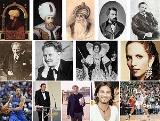
Turkish people, also known as the "
Turks" , are an
ethnic groupAn ethnic group is a group of people whose members identify with each other, through a common heritage, often consisting of a common language, a common culture and/or an ideology that stresses common ancestry or endogamy...
primarily living in
TurkeyTurkey , known officially as the Republic of Turkey , is a Eurasian country located in Western Asia and in East Thrace in Southeastern Europe...
and in the former lands of the
Ottoman EmpireThe Ottoman EmpireIt was usually referred to as the "Ottoman Empire", the "Turkish Empire", the "Ottoman Caliphate" or more commonly "Turkey" by its contemporaries...
where
Turkish minoritiesThe Turkish minorities refers to ethnic Turks who live in nowadays independent, but once conqured by the Ottoman Empire states, the ancestors of these people settled there for controlling and conquering these teritorries...
had been established in
BulgariaBulgaria , officially the Republic of Bulgaria , is a parliamentary democracy within a unitary constitutional republic in Southeast Europe. The country borders Romania to the north, Serbia and Macedonia to the west, Greece and Turkey to the south, as well as the Black Sea to the east...
,
CyprusCyprus , officially the Republic of Cyprus , is a Eurasian island country, member of the European Union, in the Eastern Mediterranean, east of Greece, south of Turkey, west of Syria and north of Egypt. It is the third largest island in the Mediterranean Sea.The earliest known human activity on the...
,
Bosnia and HerzegovinaBosnia and Herzegovina , sometimes called Bosnia-Herzegovina or simply Bosnia, is a country in Southern Europe, on the Balkan Peninsula. Bordered by Croatia to the north, west and south, Serbia to the east, and Montenegro to the southeast, Bosnia and Herzegovina is almost landlocked, except for the...
,
GeorgiaGeorgia is a sovereign state in the Caucasus region of Eurasia. Located at the crossroads of Western Asia and Eastern Europe, it is bounded to the west by the Black Sea, to the north by Russia, to the southwest by Turkey, to the south by Armenia, and to the southeast by Azerbaijan. The capital of...
,
GreeceGreece , officially the Hellenic Republic , and historically Hellas or the Republic of Greece in English, is a country in southeastern Europe....
,
KosovoKosovo is a region in southeastern Europe. Part of the Ottoman Empire for more than five centuries, later the Autonomous Province of Kosovo and Metohija within Serbia...
,
MacedoniaMacedonia , officially the Republic of Macedonia , is a country located in the central Balkan peninsula in Southeast Europe. It is one of the successor states of the former Yugoslavia, from which it declared independence in 1991...
, and
RomaniaRomania is a country located at the crossroads of Central and Southeastern Europe, on the Lower Danube, within and outside the Carpathian arch, bordering on the Black Sea...
. In addition, due to migration, a large Turkish community has been established in
WesternWestern Europe is a loose term for the collection of countries in the western most region of the European continents, though this definition is context-dependent and carries cultural and political connotations. One definition describes Western Europe as a geographic entity—the region lying in the...
EuropeThe Turks in Europe refers to Turkish people living in Europe. According to a 2011 academic estimate, there is approximately 9 million Turks living in Europe, excluding those who live in Turkey....
(particularly in Germany, France, the United Kingdom, the Netherlands, Austria, Belgium and Liechtenstein), as well as in Australia, the
Middle EastTurks in the Middle East refers to ethnic Turks who live in the Middle East.- Ottoman migration :During the rule of the Ottoman Empire , Turkish settlers began to move into the Ottoman territories in Europe as part of the Turkish expansion, because these Turkish communities migrated to these...
, North America and the former
Soviet UnionTurks in the former Soviet Union were a relatively small minority within the Soviet Union. However, their presence is considered important within Turkology due to the deportation of thousands of Turks from their home countries. Under the Ottoman Empire, Samtskhe-Javakheti was heavily Islamised...
.
Etymology
The name
Turk (Old Turkic:


Türük or


Kök Türük or


Türük, ,
PinyinPinyin is the official system to transcribe Chinese characters into the Roman alphabet in China, Malaysia, Singapore and Taiwan. It is also often used to teach Mandarin Chinese and spell Chinese names in foreign publications and used as an input method to enter Chinese characters into...
: Tūjué,
Wade-GilesWade–Giles , sometimes abbreviated Wade, is a romanization system for the Mandarin Chinese language. It developed from a system produced by Thomas Wade during the mid-19th century , and was given completed form with Herbert Giles' Chinese–English dictionary of 1892.Wade–Giles was the most...
: T'u-chüeh,
Middle ChineseMiddle Chinese , also called Ancient Chinese by the linguist Bernhard Karlgren, refers to the Chinese language spoken during Southern and Northern Dynasties and the Sui, Tang, and Song dynasties...
(
GuangyunThe Guangyun is a Chinese rime dictionary that was compiled from 1007 to 1008 under the auspices of Emperor Zhenzong of Song. Chen Pengnian and Qiu Yong were the chief editors....
): dʰuət-ki̯wɐt) was first applied to a clan of tribal chieftains (known as
Ashina) who overthrew the ruling
Rouran KhaganateRouran , Mongolia name Jujan or Nirun Ruanruan/Ruru , Tan Tan , Juan-Juan or Zhu-Zhuwas the name of a confederation of nomadic tribes on the northern borders of Inner China from the late 4th century until the middle 6th century...
, and founded the nomadic Göktürk Khaganate ("Celestial Turks") These nomads roamed in the Altai Mountains in northern Mongolia and on the steppes of
Central AsiaCentral Asia is a core region of the Asian continent from the Caspian Sea in the west, China in the east, Afghanistan in the south, and Russia in the north...
.
The name
Türk spread as a political designation during the period of Göktürk imperial hegemony to their subject Turkic and non-Turkic peoples. Subsequently, it was adopted as a generic ethnonym designating most if not all of the Turkish-speaking tribes in Central Asia by the Muslim peoples with whom they came into contact. The imperial era also provided a legacy of political and social organisation (with deep roots in pre-Türk Inner Asia) that in its
Türk form became the common inheritance of the Turkic groupings of Central Asia.
Origins
The homeland of the
Turkic peoplesThe Turkic peoples are peoples residing in northern, central and western Asia, southern Siberia and northwestern China and parts of eastern Europe. They speak languages belonging to the Turkic language family. They share, to varying degrees, certain cultural traits and historical backgrounds...
is assumed to have been somewhere in the vicinity of Altai in Central Asia. The first nomadic empire founded in present day Mongolia was
XiongnuThe Xiongnu were ancient nomadic-based people that formed a state or confederation north of the agriculture-based empire of the Han Dynasty. Most of the information on the Xiongnu comes from Chinese sources...
, sometimes identified as a candidate for the locus of proto-Turkic.
The Turkic languages spread from its homeland over much of
Central AsiaCentral Asia is a core region of the Asian continent from the Caspian Sea in the west, China in the east, Afghanistan in the south, and Russia in the north...
and the
Eurasian steppeThe Eurasian Steppe is the vast steppe ecoregion of Eurasia in the Temperate grasslands, savannas, and shrublands Biome. It stretches from Hungary to Mongolia...
during the
Turkic migrationThe Turkic migration as defined in this article was the expansion of the Turkic peoples across most of Central Asia into Europe and the Middle East between the 6th and 11th centuries AD . Tribes less certainly identified as Turkic began their expansion centuries earlier as the predominant element...
s of the 6th to 11th centuries.
The Turkic migration reached the territory of what is now Turkey, by the 11th century.
The Turkomen,
Oghuz TurksThe Turkomen also known as Oghuz Turks were a historical Turkic tribal confederation in Central Asia during the early medieval Turkic expansion....
who had been converted to Islam, were the main component of Turkic migration into Anatolia. The process was accelerated after the
Battle of ManzikertThe Battle of Manzikert , was fought between the Byzantine Empire and Seljuq Turks led by Alp Arslan on August 26, 1071 near Manzikert...
victory of Seljuk Turks against the Byzantines; Anatolia would be called
Turchia in the West as early as the 12th century. The Mongols invaded Transoxiana, Iran, Azerbaijan and Anatolia; this caused Turkomens to move further to Western Anatolia. In the case of the migrations, the Turkic peoples assimilated some of the
Indo-European peoplesThe Proto-Indo-Europeans were the speakers of the Proto-Indo-European language , a reconstructed prehistoric language of Eurasia.Knowledge of them comes chiefly from the linguistic reconstruction, along with material evidence from archaeology and archaeogenetics...
encountered;
TocharianThe Tocharians were the Tocharian-speaking inhabitants of the Tarim Basin, making them the easternmost speakers of Indo-European languages in antiquity. They were known as, or at least closely related to, the Yuezhi of Chinese sources...
as well as the numerous
IranIran , officially the Islamic Republic of Iran , is a country in Southern and Western Asia. The name "Iran" has been in use natively since the Sassanian era and came into use internationally in 1935, before which the country was known to the Western world as Persia...
ian speakers across the Asiatic steppe were switched to the Turkic language, and ultimately
GreekGreek is an independent branch of the Indo-European family of languages. Native to the southern Balkans, it has the longest documented history of any Indo-European language, spanning 34 centuries of written records. Its writing system has been the Greek alphabet for the majority of its history;...
, the majority language of Anatolia, declined in favour of Turkish.
Seljuk era
The Seljuks (
TurkishTurkish is a language spoken as a native language by over 83 million people worldwide, making it the most commonly spoken of the Turkic languages. Its speakers are located predominantly in Turkey and Northern Cyprus with smaller groups in Iraq, Greece, Bulgaria, the Republic of Macedonia, Kosovo,...
Selçuklular;
Ṣaljūqīyān;
ArabicArabic is a name applied to the descendants of the Classical Arabic language of the 6th century AD, used most prominently in the Quran, the Islamic Holy Book...
سلجوق
Saljūq, or السلاجقة
al-Salājiqa) were a Turkish tribe from Central Asia. In 1037, they entered Persia and established their first powerful state, called by historians the Empire of the Great Seljuks. They captured Baghdad in 1055 and a relatively small contingent of warriors (around 5,000 by some estimates) moved into eastern Anatolia. In 1071, the Seljuks engaged the armies of the Byzantine Empire at
ManzikertThe Battle of Manzikert , was fought between the Byzantine Empire and Seljuq Turks led by Alp Arslan on August 26, 1071 near Manzikert...
(Malazgirt), north of
Lake VanLake Van is the largest lake in Turkey, located in the far east of the country in Van district. It is a saline and soda lake, receiving water from numerous small streams that descend from the surrounding mountains. Lake Van is one of the world's largest endorheic lakes . The original outlet from...
. The Byzantines experienced minor casualties despite the fact that Emperor Romanus IV Diogenes was captured. With no potent
ByzantineByzantine usually refers to the Roman Empire during the Middle Ages.Byzantine may also refer to:* A citizen of the Byzantine Empire, or native Greek during the Middle Ages...
force to stop them, the Seljuks took control of most of Eastern and Central Anatolia. They established their capital at
KonyaKonya is a city in the Central Anatolia Region of Turkey. The metropolitan area in the entire Konya Province had a population of 1,036,027 as of 2010, making the city seventh most populous in Turkey.-Etymology:...
and ruled what would be known as the Seljuk Sultanate of Rum. The success of the Seljuk Turks stimulated a response from
Latin EuropeLatin Europe is a loose term for the region of Europe with an especially strong Latin cultural heritage inherited from the Roman Empire.-Application:...
in the form of the
First CrusadeThe First Crusade was a military expedition by Western Christianity to regain the Holy Lands taken in the Muslim conquest of the Levant, ultimately resulting in the recapture of Jerusalem...
. A counteroffensive launched in 1097 by the
ByzantinesThe Byzantine Empire was the Eastern Roman Empire during the periods of Late Antiquity and the Middle Ages, centred on the capital of Constantinople. Known simply as the Roman Empire or Romania to its inhabitants and neighbours, the Empire was the direct continuation of the Ancient Roman State...
with the aid of the Crusaders dealt the Seljuks a decisive defeat. Konya fell to the Crusaders, and after a few years of campaigning, Byzantine rule was restored in the western third of Anatolia. Although a Turkish revival in the 1140s nullified much of the Christian gains, greater damage was done to Byzantine security by dynastic strife in
ConstantinopleConstantinople was the capital of the Roman, Eastern Roman, Byzantine, Latin, and Ottoman Empires. Throughout most of the Middle Ages, Constantinople was Europe's largest and wealthiest city.-Names:...
in which the largely
FrenchThe French Republic , The French Republic , The French Republic , (commonly known as France , is a unitary semi-presidential republic in Western Europe with several overseas territories and islands located on other continents and in the Indian, Pacific, and Atlantic oceans. Metropolitan France...
contingents of the Fourth Crusade and their
VenetianThe Republic of Venice or Venetian Republic was a state originating from the city of Venice in Northeastern Italy. It existed for over a millennium, from the late 7th century until 1797. It was formally known as the Most Serene Republic of Venice and is often referred to as La Serenissima, in...
allies intervened. In 1204, these Crusaders conquered Constantinople and installed
Count Baldwin of FlandersBaldwin I , the first emperor of the Latin Empire of Constantinople, as Baldwin IX Count of Flanders and as Baldwin VI Count of Hainaut, was one of the most prominent leaders of the Fourth Crusade, which resulted in the capture of Constantinople, the conquest of the greater part of the Byzantine...
in the Byzantine capital as emperor of the so-called Latin Empire of Constantinople, dismembering the old realm into tributary states where West European feudal institutions were transplanted intact. Independent Greek kingdoms were established at
NicaeaThe Empire of Nicaea was the largest of the three Byzantine Greek successor states founded by the aristocracy of the Byzantine Empire that fled after Constantinople was occupied by Western European and Venetian forces during the Fourth Crusade...
(present-day
Iznikİznik is a city in Turkey which is primarily known as the site of the First and Second Councils of Nicaea, the first and seventh Ecumenical councils in the early history of the Church, the Nicene Creed, and as the capital city of the Empire of Nicaea...
),
TrebizondThe Empire of Trebizond, founded in April 1204, was one of three Byzantine successor states of the Byzantine Empire. However, the creation of the Empire of Trebizond was not directly related to the capture of Constantinople by the Fourth Crusade, rather it had broken away from the Byzantine Empire...
(present-day
TrabzonTrabzon is a city on the Black Sea coast of north-eastern Turkey and the capital of Trabzon Province. Trabzon, located on the historical Silk Road, became a melting pot of religions, languages and culture for centuries and a trade gateway to Iran in the southeast and the Caucasus to the northeast...
), and Epirus from remnant Byzantine provinces. Turks allied with
GreeksThe Greeks, also known as the Hellenes , are a nation and ethnic group native to Greece, Cyprus and neighboring regions. They also form a significant diaspora, with Greek communities established around the world....
in Anatolia against the Latins, and Greeks with Turks against the
MongolsMongols ) are a Central-East Asian ethnic group that lives mainly in the countries of Mongolia, China, and Russia. In China, ethnic Mongols can be found mainly in the central north region of China such as Inner Mongolia...
. In 1261,
Michael PalaeologusMichael VIII Palaiologos or Palaeologus reigned as Byzantine Emperor 1259–1282. Michael VIII was the founder of the Palaiologan dynasty that would rule the Byzantine Empire until the Fall of Constantinople in 1453...
of Nicaea drove the Latins from Constantinople and restored the
Byzantine EmpireThe Byzantine Empire was the Eastern Roman Empire during the periods of Late Antiquity and the Middle Ages, centred on the capital of Constantinople. Known simply as the Roman Empire or Romania to its inhabitants and neighbours, the Empire was the direct continuation of the Ancient Roman State...
. Seljuk Rum survived in the late 13th century as a vassal state of the
Mongol EmpireThe Mongol Empire , initially named as Greater Mongol State was a great empire during the 13th and 14th centuries...
, who had already subjugated the Abbasid Caliphate at
BaghdadBaghdad is the capital of Iraq, as well as the coterminous Baghdad Governorate. The population of Baghdad in 2011 is approximately 7,216,040...
.
MongolThe Ilkhanate, also spelled Il-khanate , was a Mongol khanate established in Azerbaijan and Persia in the 13th century, considered a part of the Mongol Empire...
influence in the region had disappeared by the 1330s, leaving behind gazi emirates competing for supremacy. From the chaotic conditions that prevailed throughout the Middle East, however, a new power was to emerge in Anatolia, the Ottoman Turks.
Ilkhanate rule and Beyliks era
Anatolian Beyliks ' onMouseout='HidePop("84705")' href="http://www.absoluteastronomy.com/topics/Ottoman_Turkish_language">Ottoman Turkish
The Ottoman Turkish language or Ottoman language is the variety of the Turkish language that was used for administrative and literary purposes in the Ottoman Empire. It borrows extensively from Arabic and Persian, and was written in a variant of the Perso-Arabic script...
: Tevâif-i mülûk) were small Turkish principalities governed by
BeyBey is a title for chieftain, traditionally applied to the leaders of small tribal groups. Accoding to some sources, the word "Bey" is of Turkish language In historical accounts, many Turkish, other Turkic and Persian leaders are titled Bey, Beg, Bek, Bay, Baig or Beigh. They are all the same word...
s, which were founded across
AnatoliaAnatolia is a geographic and historical term denoting the westernmost protrusion of Asia, comprising the majority of the Republic of Turkey...
at the end of the 11th century. The Seljuk
Sultanate of RumThe Sultanate of Rum , also known as the Anatolian Seljuk State , was a Turkic state centered in in Anatolia, with capitals first at İznik and then at Konya. Since the court of the sultanate was highly mobile, cities like Kayseri and Sivas also functioned at times as capitals...
collapsed after Mongol invasion and Anatolia was administered by Mongol military governors after Mongol conquest. However,
AnatoliaAnatolia is a geographic and historical term denoting the westernmost protrusion of Asia, comprising the majority of the Republic of Turkey...
was separated into several small regions under the domination of different beyliks (principalities) from the 14th century to the beginning of the 16th century. Eventually, the
OttomanThe Ottoman EmpireIt was usually referred to as the "Ottoman Empire", the "Turkish Empire", the "Ottoman Caliphate" or more commonly "Turkey" by its contemporaries...
principality which was established in
EskişehirEskişehir is a city in northwestern Turkey and the capital of the Eskişehir Province. According to the 2009 census, the population of the city is 631,905. The city is located on the banks of the Porsuk River, 792 m above sea level, where it overlooks the fertile Phrygian Valley. In the nearby...
,
Bilecik-External links:* http://www.eksisozluk.com/show.asp?t=bilecik%20diye%20bir%20yerin%20asl%C4%B1nda%20olmamas%C4%B1%20 Bilecik Conspiracy* http://www.bilecikaktuel.com* * http://www.voyagerbook.com/eng/iller/11/11.asp*...
and Bursa areas, subjugated other principalities and restored political unity over a large part of Anatolia.
Ottoman era
The Ottoman Empire (
Old Ottoman TurkishThe Ottoman Turkish language or Ottoman language is the variety of the Turkish language that was used for administrative and literary purposes in the Ottoman Empire. It borrows extensively from Arabic and Persian, and was written in a variant of the Perso-Arabic script...
: دولت عالیه عثمانیه
Devlet-i Âliye-yi Osmâniyye,
Late Ottoman and Modern TurkishTurkish is a language spoken as a native language by over 83 million people worldwide, making it the most commonly spoken of the Turkic languages. Its speakers are located predominantly in Turkey and Northern Cyprus with smaller groups in Iraq, Greece, Bulgaria, the Republic of Macedonia, Kosovo,...
:
Osmanlı Devleti or
Osmanlı İmparatorluğu) was known as the Turkish Empire or Turkey by its contemporaries. (See
the other names of the Ottoman StateThe state of the Ottomans which began as part of the Anatolian Seljuk Sultanate and became an independent Empire, has been known historically by different names at different periods and in various languages...
.) Starting as a small tribe whose territory bordered on the Byzantine frontier, the
Ottoman TurksThe Ottoman Turks were the Turkish-speaking population of the Ottoman Empire who formed the base of the state's military and ruling classes. Reliable information about the early history of Ottoman Turks is scarce, but they take their Turkish name, Osmanlı , from the house of Osman I The Ottoman...
built an empire that was at the height of its power in the 16th century. The empire spanned three continents, controlling much of Southeastern Europe, the
Middle EastThe Middle East is a region that encompasses Western Asia and Northern Africa. It is often used as a synonym for Near East, in opposition to Far East...
and
North AfricaNorth Africa or Northern Africa is the northernmost region of the African continent, linked by the Sahara to Sub-Saharan Africa. Geopolitically, the United Nations definition of Northern Africa includes eight countries or territories; Algeria, Egypt, Libya, Morocco, South Sudan, Sudan, Tunisia, and...
.
As the power of the Seljuk Sultanate of Rum weakened in the late 13th century, warrior chieftains claimed the lands of Northwestern
AnatoliaAnatolia is a geographic and historical term denoting the westernmost protrusion of Asia, comprising the majority of the Republic of Turkey...
, along the
Byzantine EmpireThe Byzantine Empire was the Eastern Roman Empire during the periods of Late Antiquity and the Middle Ages, centred on the capital of Constantinople. Known simply as the Roman Empire or Romania to its inhabitants and neighbours, the Empire was the direct continuation of the Ancient Roman State...
's borders.
Ertuğrul gaziErtuğrul was the father of Osman I, the founder of the Ottoman Empire. He was the leader of the Kayı clan of the Oghuz Turks...
ruled the lands around
SöğütSöğüt is a town and district of Bilecik Province in the Marmara region of Turkey. Söğüt has an area of and borders Bilecik to the west, Gölpazarı to the north, İnhisar to the northeast, Eskişehir to the southeast, and Bozüyük to the southwest. The 2000 census put the population at 21,012 citizens,...
, a town between Bursa and
EskisehirEskişehir is a city in northwestern Turkey and the capital of the Eskişehir Province. According to the 2009 census, the population of the city is 631,905. The city is located on the banks of the Porsuk River, 792 m above sea level, where it overlooks the fertile Phrygian Valley. In the nearby...
. Upon his death in 1281, his son,
OsmanOsman I or Othman I or El-Gazi Sultan Osman Ghazi, or Osman Bey or I. Osman, Osman Gazi Han), nicknamed "Kara" for his courage, was the leader of the Ottoman Turks, and the founder of the dynasty that established and ruled the Ottoman Empire...
, from whom the
Ottoman dynastyThe Ottoman Dynasty ruled the Ottoman Empire from 1299 to 1922, beginning with Osman I , though the dynasty was not proclaimed until Orhan Bey declared himself sultan...
and the Empire took its name, expanded the territory to 16,000 square kilometers.
Osman IOsman I or Othman I or El-Gazi Sultan Osman Ghazi, or Osman Bey or I. Osman, Osman Gazi Han), nicknamed "Kara" for his courage, was the leader of the Ottoman Turks, and the founder of the dynasty that established and ruled the Ottoman Empire...
, who was given the nickname "Kara" (
TurkishTurkish is a language spoken as a native language by over 83 million people worldwide, making it the most commonly spoken of the Turkic languages. Its speakers are located predominantly in Turkey and Northern Cyprus with smaller groups in Iraq, Greece, Bulgaria, the Republic of Macedonia, Kosovo,...
for black) for his courage, extended the frontiers of Ottoman settlement towards the edge of the
Byzantine EmpireThe Byzantine Empire was the Eastern Roman Empire during the periods of Late Antiquity and the Middle Ages, centred on the capital of Constantinople. Known simply as the Roman Empire or Romania to its inhabitants and neighbours, the Empire was the direct continuation of the Ancient Roman State...
. He shaped the early political development of the state and moved the Ottoman capital to Bursa. By 1452, the
Ottoman EmpireThe Ottoman EmpireIt was usually referred to as the "Ottoman Empire", the "Turkish Empire", the "Ottoman Caliphate" or more commonly "Turkey" by its contemporaries...
controlled almost all of the former
ByzantineByzantine usually refers to the Roman Empire during the Middle Ages.Byzantine may also refer to:* A citizen of the Byzantine Empire, or native Greek during the Middle Ages...
lands except
ConstantinopleConstantinople was the capital of the Roman, Eastern Roman, Byzantine, Latin, and Ottoman Empires. Throughout most of the Middle Ages, Constantinople was Europe's largest and wealthiest city.-Names:...
. On May 29, 1453,
Mehmed the ConquerorMehmed II , was Sultan of the Ottoman Empire for a short time from 1444 to September 1446, and later from...
capturedThe Fall of Constantinople was the capture of the capital of the Byzantine Empire, which occurred after a siege by the Ottoman Empire, under the command of Ottoman Sultan Mehmed II, against the defending army commanded by Byzantine Emperor Constantine XI...
Constantinople after a 53-day
siegeA siege is a military blockade of a city or fortress with the intent of conquering by attrition or assault. The term derives from sedere, Latin for "to sit". Generally speaking, siege warfare is a form of constant, low intensity conflict characterized by one party holding a strong, static...
and proclaimed that the city was now the new capital of his Ottoman Empire. Sultan Mehmed's first duty was to rejuvenate the city economically, creating the
Grand BazaarThe Grand Bazaar in Istanbul is one of the largest and oldest covered markets in the world, with more than 58 covered streets and over 4,000 shops which attract between 250,000 and half a million visitors daily.- History :...
and inviting the fleeing Orthodox and Catholic inhabitants to return. Captured prisoners were freed to settle in the city whilst provincial governors in Rumelia and Anatolia were ordered to send four thousand families to settle in the city, whether Muslim, Christian or Jew, to form a unique cosmopolitan
societyA society, or a human society, is a group of people related to each other through persistent relations, or a large social grouping sharing the same geographical or virtual territory, subject to the same political authority and dominant cultural expectations...
.
During the growth of the
Ottoman EmpireThe Ottoman EmpireIt was usually referred to as the "Ottoman Empire", the "Turkish Empire", the "Ottoman Caliphate" or more commonly "Turkey" by its contemporaries...
(also known as the
Pax OttomanaPax Ottomana is a term used to describe the economic and social stability attained in the conquered provinces of the Ottoman Empire, which, at the height of the Empire's power during the 16th and 17th centuries, applied to lands in the Balkans, Anatolia, the Middle East, North Africa and the...
),
Selim ISelim I, Yavuz Sultân Selim Khan, Hâdim-ül Haramain-ish Sharifain , nicknamed Yavuz "the Stern" or "the Steadfast", but often rendered in English as "the Grim" , was the Sultan of the Ottoman Empire from 1512 to...
extended Ottoman sovereignty southward, conquering
SyriaSyria , officially the Syrian Arab Republic , is a country in Western Asia, bordering Lebanon and the Mediterranean Sea to the West, Turkey to the north, Iraq to the east, Jordan to the south, and Israel to the southwest....
,
PalestinePalestine is a conventional name, among others, used to describe the geographic region between the Mediterranean Sea and the Jordan River, and various adjoining lands....
, and
EgyptEgypt , officially the Arab Republic of Egypt, Arabic: , is a country mainly in North Africa, with the Sinai Peninsula forming a land bridge in Southwest Asia. Egypt is thus a transcontinental country, and a major power in Africa, the Mediterranean Basin, the Middle East and the Muslim world...
. He also gained recognition as guardian of the holy cities of
MeccaMecca is a city in the Hijaz and the capital of Makkah province in Saudi Arabia. The city is located inland from Jeddah in a narrow valley at a height of above sea level...
and
MedinaMedina , or ; also transliterated as Madinah, or madinat al-nabi "the city of the prophet") is a city in the Hejaz region of western Saudi Arabia, and serves as the capital of the Al Madinah Province. It is the second holiest city in Islam, and the burial place of the Islamic Prophet Muhammad, and...
; he accepted pious the title of
The Servant of The Two Holy Shrines. Suleiman I was known in
the WestThe Western world, also known as the West and the Occident , is a term referring to the countries of Western Europe , the countries of the Americas, as well all countries of Northern and Central Europe, Australia and New Zealand...
as "Suleiman the Magnificent" and in
the East__FORCETOC__The term Eastern world refers very broadly to the various cultures or social structures and philosophical systems of Eastern Asia or geographically the Eastern Culture...
, as "the Lawgiver" (in Turkish
Kanuni; ,
al‐Qānūnī), for his complete restructuring of the Ottoman legal system. The reign of Suleiman the Magnificent is known as the "Ottoman golden age".
After reign of Suleiman the Magnificent, the Ottoman Empire entered the stagnation phase. Nevertheless in the 17th century, the Ottoman Empire retained its power and its growth was continued. After the failed
1683 attempt to capture ViennaThe Battle of Vienna took place on 11 and 12 September 1683 after Vienna had been besieged by the Ottoman Empire for two months...
, the Ottoman Empire lost some of the Western provinces. To stop decline, reformist Sultans such as
Mahmud IIMahmud II was the 30th Sultan of the Ottoman Empire from 1808 until his death in 1839. He was born in the Topkapi Palace, Istanbul, the son of Sultan Abdulhamid I...
modernized the Empire. However, the reforms were unable to prevent ultimate defeat in the World War I, after which the Ottoman Empire came to an end.
The Republic of Turkey
The Republic of Turkey was born from the disastrous
World War IWorld War I , which was predominantly called the World War or the Great War from its occurrence until 1939, and the First World War or World War I thereafter, was a major war centred in Europe that began on 28 July 1914 and lasted until 11 November 1918...
defeat of the
Ottoman EmpireThe Ottoman EmpireIt was usually referred to as the "Ottoman Empire", the "Turkish Empire", the "Ottoman Caliphate" or more commonly "Turkey" by its contemporaries...
. The Ottoman war hero, Mustafa Kemal Pasha (who was later given the surname Atatürk by the Turkish Parliament with the
Surname LawThe Surname Law of the Republic of Turkey was adopted on June 21, 1934. The law required all citizens of Turkey to adopt the use of surnames. Turkey's Christian and Jewish citizens were already using surnames, but Muslims generally did not use Western-style surnames...
of 1934), sailed from
IstanbulIstanbul , historically known as Byzantium and Constantinople , is the largest city of Turkey. Istanbul metropolitan province had 13.26 million people living in it as of December, 2010, which is 18% of Turkey's population and the 3rd largest metropolitan area in Europe after London and...
to
SamsunSamsun is a city of about half a million people on the north coast of Turkey. It is the provincial capital of Samsun Province and a major Black Sea port.-Name:...
in May 1919 to start the Turkish liberation movement; he organized an effective fighting force in
AnatoliaAnatolia is a geographic and historical term denoting the westernmost protrusion of Asia, comprising the majority of the Republic of Turkey...
, and rallied the people to the nationalist cause. Under the leadership of
Mustafa KemalMustafa Kemal Atatürk was an Ottoman and Turkish army officer, revolutionary statesman, writer, and the first President of Turkey. He is credited with being the founder of the Republic of Turkey....
PashaPasha or pascha, formerly bashaw, was a high rank in the Ottoman Empire political system, typically granted to governors, generals and dignitaries. As an honorary title, Pasha, in one of its various ranks, is equivalent to the British title of Lord, and was also one of the highest titles in...
, a military commander who had distinguished himself during the
Battle of GallipoliThe Gallipoli Campaign, also known as the Dardanelles Campaign or the Battle of Gallipoli, took place at the peninsula of Gallipoli in the Ottoman Empire between 25 April 1915 and 9 January 1916, during the First World War...
, the
Turkish War of IndependenceThe Turkish War of Independence was a war of independence waged by Turkish nationalists against the Allies, after the country was partitioned by the Allies following the Ottoman Empire's defeat in World War I...
was waged with the aim of revoking the terms of the
Treaty of SèvresThe Treaty of Sèvres was the peace treaty between the Ottoman Empire and Allies at the end of World War I. The Treaty of Versailles was signed with Germany before this treaty to annul the German concessions including the economic rights and enterprises. Also, France, Great Britain and Italy...
. By 1923 the nationalist government had driven out the invading armies; replaced the Treaty of Sèvres with the
Treaty of LausanneThe Treaty of Lausanne was a peace treaty signed in Lausanne, Switzerland on 24 July 1923, that settled the Anatolian and East Thracian parts of the partitioning of the Ottoman Empire. The treaty of Lausanne was ratified by the Greek government on 11 February 1924, by the Turkish government on 31...
and abolished the Ottoman State; promulgated a republican
constitutionA constitution is a set of fundamental principles or established precedents according to which a state or other organization is governed. These rules together make up, i.e. constitute, what the entity is...
; and established Turkey's new capital in
AnkaraAnkara is the capital of Turkey and the country's second largest city after Istanbul. The city has a mean elevation of , and as of 2010 the metropolitan area in the entire Ankara Province had a population of 4.4 million....
. Atatürk implemented series of political, legal, cultural, social and economic
reformsAtatürk's Reforms were a series of political, legal, cultural, social and economic reforms that were designed to modernize the new Republic of Turkey into a democratic and secular nation-state...
that were designed to modernize the new Republic of Turkey into a democratic and secular nation-state and increase the role of woman in society.
Genetics
It is difficult to understand the complex cultural and demographic dynamics of the
TurkicThe Turkic languages constitute a language family of at least thirty five languages, spoken by Turkic peoples across a vast area from Eastern Europe and the Mediterranean to Siberia and Western China, and are considered to be part of the proposed Altaic language family.Turkic languages are spoken...
speaking groups that have shaped the
AnatoliaAnatolia is a geographic and historical term denoting the westernmost protrusion of Asia, comprising the majority of the Republic of Turkey...
n landscape for the last millennium. During the
Bronze AgeThe Bronze Age is a period characterized by the use of copper and its alloy bronze as the chief hard materials in the manufacture of some implements and weapons. Chronologically, it stands between the Stone Age and Iron Age...
the population of Anatolia expanded, reaching an estimated level of 12 million during the late
Byzantine EmpireThe Byzantine Empire was the Eastern Roman Empire during the periods of Late Antiquity and the Middle Ages, centred on the capital of Constantinople. Known simply as the Roman Empire or Romania to its inhabitants and neighbours, the Empire was the direct continuation of the Ancient Roman State...
period. Such a large pre-existing Anatolian population would have reduced the impact by the subsequent arrival of
Turkic speaking groupsThe Turkomen also known as Oghuz Turks were a historical Turkic tribal confederation in Central Asia during the early medieval Turkic expansion....
from
Seljuk PersiaThe Great Seljuq Empire was a medieval Persianate, Turko-Persian Sunni Muslim empire, originating from the Qynyq branch of Oghuz Turks. The Seljuq Empire controlled a vast area stretching from the Hindu Kush to eastern Anatolia and from Central Asia to the Persian Gulf...
, whose ethno-linguistic roots could be traced back to the eastern coast of the
Caspian SeaThe Caspian Sea is the largest enclosed body of water on Earth by area, variously classed as the world's largest lake or a full-fledged sea. The sea has a surface area of and a volume of...
basin in
Central AsiaCentral Asia is a core region of the Asian continent from the Caspian Sea in the west, China in the east, Afghanistan in the south, and Russia in the north...
. The Seljuk Turks were the main Turkic people who moved into Anatolia, starting from the
Battle of ManzikertThe Battle of Manzikert , was fought between the Byzantine Empire and Seljuq Turks led by Alp Arslan on August 26, 1071 near Manzikert...
in 1071. Around 1 million Turkic migrants settled in Anatolia during the 12th and 13th centuries.
The question of to what extent a gene flow from
Central AsiaCentral Asia is a core region of the Asian continent from the Caspian Sea in the west, China in the east, Afghanistan in the south, and Russia in the north...
, via Persia, to
AnatoliaAnatolia is a geographic and historical term denoting the westernmost protrusion of Asia, comprising the majority of the Republic of Turkey...
has contributed to the current gene pool of the Turkish people, and the role of the 11th century invasion by Seljuk Turks, has been the subject of several studies. One research concludes that
aboriginalIndigenous peoples are ethnic groups that are defined as indigenous according to one of the various definitions of the term, there is no universally accepted definition but most of which carry connotations of being the "original inhabitants" of a territory....
AnatoliaAnatolia is a geographic and historical term denoting the westernmost protrusion of Asia, comprising the majority of the Republic of Turkey...
n groups may have given rise to the present-day Turkish population.
DNADeoxyribonucleic acid is a nucleic acid that contains the genetic instructions used in the development and functioning of all known living organisms . The DNA segments that carry this genetic information are called genes, but other DNA sequences have structural purposes, or are involved in...
analysis research studies suggest that the Anatolians do not significantly differ from other Mediterraneans, indicating that while the Seljuk Turks carried out a permanent territorial conquest with strong
culturalCulture is a term that has many different inter-related meanings. For example, in 1952, Alfred Kroeber and Clyde Kluckhohn compiled a list of 164 definitions of "culture" in Culture: A Critical Review of Concepts and Definitions...
,
linguisticLanguage may refer either to the specifically human capacity for acquiring and using complex systems of communication, or to a specific instance of such a system of complex communication...
and
religiousReligion is a collection of cultural systems, belief systems, and worldviews that establishes symbols that relate humanity to spirituality and, sometimes, to moral values. Many religions have narratives, symbols, traditions and sacred histories that are intended to give meaning to life or to...
significance, it is barely
geneticallyGenetics , a discipline of biology, is the science of genes, heredity, and variation in living organisms....
detectable. According to another study, 30% of the Turkish genetic pool can be attributed to Central Asian effects.
Geographic distribution
Turks primarily live in
TurkeyTurkey , known officially as the Republic of Turkey , is a Eurasian country located in Western Asia and in East Thrace in Southeastern Europe...
; however, when the borders of the
Ottoman EmpireThe Ottoman EmpireIt was usually referred to as the "Ottoman Empire", the "Turkish Empire", the "Ottoman Caliphate" or more commonly "Turkey" by its contemporaries...
became smaller after
World War IWorld War I , which was predominantly called the World War or the Great War from its occurrence until 1939, and the First World War or World War I thereafter, was a major war centred in Europe that began on 28 July 1914 and lasted until 11 November 1918...
and the new Turkish Republic was founded, many Turks chose to stay outside of Turkey's borders. Since then, some of them have migrated to
TurkeyTurkey , known officially as the Republic of Turkey , is a Eurasian country located in Western Asia and in East Thrace in Southeastern Europe...
but there are still significant minorities of Turks living in different countries such as in Northern Cyprus (
Turkish CypriotsTurkish Cypriots are the ethnic Turks and members of the Turkish-speaking ethnolinguistic community of the Eastern Mediterranean island of Cyprus. The term is used to refer explicitly to the indigenous Turkish Cypriots, whose Ottoman Turkish forbears colonised the island in 1571...
),
GreeceGreece , officially the Hellenic Republic , and historically Hellas or the Republic of Greece in English, is a country in southeastern Europe....
,
BulgariaBulgaria , officially the Republic of Bulgaria , is a parliamentary democracy within a unitary constitutional republic in Southeast Europe. The country borders Romania to the north, Serbia and Macedonia to the west, Greece and Turkey to the south, as well as the Black Sea to the east...
,
AlbaniaAlbania , officially known as the Republic of Albania , is a country in Southeastern Europe, in the Balkans region. It is bordered by Montenegro to the northwest, Kosovo to the northeast, the Republic of Macedonia to the east and Greece to the south and southeast. It has a coast on the Adriatic Sea...
,
Bosnia and HerzegovinaBosnia and Herzegovina , sometimes called Bosnia-Herzegovina or simply Bosnia, is a country in Southern Europe, on the Balkan Peninsula. Bordered by Croatia to the north, west and south, Serbia to the east, and Montenegro to the southeast, Bosnia and Herzegovina is almost landlocked, except for the...
, the
Republic of MacedoniaMacedonia , officially the Republic of Macedonia , is a country located in the central Balkan peninsula in Southeast Europe. It is one of the successor states of the former Yugoslavia, from which it declared independence in 1991...
, the
DobrujaNorthern Dobruja is the part of Dobruja within the borders of Romania. It lies between the lower Danube river and the Black Sea, bordered in south by Bulgarian Southern Dobruja.-Geography:...
region of
RomaniaRomania is a country located at the crossroads of Central and Southeastern Europe, on the Lower Danube, within and outside the Carpathian arch, bordering on the Black Sea...
, and
IraqIraq ; officially the Republic of Iraq is a country in Western Asia spanning most of the northwestern end of the Zagros mountain range, the eastern part of the Syrian Desert and the northern part of the Arabian Desert....
.
Turks in Turkey
People who identify themselves as ethnic Turks comprise 99% of Turkey's population.
Turks in Europe
As a legacy of the Ottoman Turkish Empire, there are significant Turkish minorities in Europe such as the
Turks in BulgariaThe Turks in Bulgaria number 588,318 people and constitute 8.8% of those who declared their ethnic group and 8.0% of the total population according to the 2011 Bulgarian census. 605,802 persons or 9.1% of the population pointed Turkish language as their mother tongue. They are also the largest...
, Cyprus,
GreeceTurks of Western Thrace are ethnic Turks who live in Western Thrace, in the north-eastern part of Greece.According to the Greek census of 1991, there were approximately 50,000 Turks in Western Thrace, out of the approximately 98,000 strong Muslim minority of Greece...
,
KosovoTurks in Kosovo are the ethnic Turks who constitute a minority group in Kosovo.-History:The Ottomans brought Islamisation with them, particularly in towns, and later also created the Vilayet of Kosovo as one of the Ottoman territorial entities...
and the
Republic of MacedoniaTurks in the Republic of Macedonia, also known as Macedonian Turks, are the ethnic Turks who constitute the third largest ethnic group in the Republic of Macedonia. According to the 2002 census, there were 77,959 Turks living in the country, forming a minority of some 4% of the population. The...
.
The post-
World War IIWorld War II, or the Second World War , was a global conflict lasting from 1939 to 1945, involving most of the world's nations—including all of the great powers—eventually forming two opposing military alliances: the Allies and the Axis...
migration of Turks to Europe began with ‘guest workers’ who arrived under the terms of a Labour Export Agreement with
GermanyGermany , officially the Federal Republic of Germany , is a federal parliamentary republic in Europe. The country consists of 16 states while the capital and largest city is Berlin. Germany covers an area of 357,021 km2 and has a largely temperate seasonal climate...
in October 1961, followed by a similar agreement with the
NetherlandsThe Netherlands is a constituent country of the Kingdom of the Netherlands, located mainly in North-West Europe and with several islands in the Caribbean. Mainland Netherlands borders the North Sea to the north and west, Belgium to the south, and Germany to the east, and shares maritime borders...
,
BelgiumBelgium , officially the Kingdom of Belgium, is a federal state in Western Europe. It is a founding member of the European Union and hosts the EU's headquarters, and those of several other major international organisations such as NATO.Belgium is also a member of, or affiliated to, many...
and
AustriaAustria , officially the Republic of Austria , is a landlocked country of roughly 8.4 million people in Central Europe. It is bordered by the Czech Republic and Germany to the north, Slovakia and Hungary to the east, Slovenia and Italy to the south, and Switzerland and Liechtenstein to the...
in 1964;
FranceThe French Republic , The French Republic , The French Republic , (commonly known as France , is a unitary semi-presidential republic in Western Europe with several overseas territories and islands located on other continents and in the Indian, Pacific, and Atlantic oceans. Metropolitan France...
in 1965 and
SwedenSweden , officially the Kingdom of Sweden , is a Nordic country on the Scandinavian Peninsula in Northern Europe. Sweden borders with Norway and Finland and is connected to Denmark by a bridge-tunnel across the Öresund....
in 1967. As one Turkish observer noted, ‘it has now been over 40 years and a Turk who went to Europe at the age of 25 has nearly reached the age of 70. His children have reached the age of 45 and their children have reached the age of 20’.
Despite the
United KingdomThe United Kingdom of Great Britain and Northern IrelandIn the United Kingdom and Dependencies, other languages have been officially recognised as legitimate autochthonous languages under the European Charter for Regional or Minority Languages...
not being part of the Labour Export Agreement, it is still a major hub for Turkish emigrants, and with a population of half a million Turks (an estimated 100,000 Turkish nationals and 130,000 nationals of the
Turkish Republic of Northern CyprusNorthern Cyprus or North Cyprus , officially the Turkish Republic of Northern Cyprus , is a self-declared state that comprises the northeastern part of the island of Cyprus...
currently live in the UK. These figures, however, do not include the much larger numbers of Turkish speakers who have been born or have obtained British nationality), it is home to Europe's third largest Turkish community. High immigration has resulted in the
Turkish languageTurkish is a language spoken as a native language by over 83 million people worldwide, making it the most commonly spoken of the Turkic languages. Its speakers are located predominantly in Turkey and Northern Cyprus with smaller groups in Iraq, Greece, Bulgaria, the Republic of Macedonia, Kosovo,...
being the seventh most commonly spoken language in the United Kingdom.
Due to the high rate of Turks in Europe, the Turkish language is also now home to one of the largest group of pupils after German-speakers, and the largest non-European language spoken in the European Union. Turkish in Germany is often used not only by members of its own community but also by people with a non-Turkish background. Especially in urban areas, it functions as a peer group vernacular for children and adolescents.
Anglo-America
The US Census reported in 2006 that approximately 170,000 Americans identify as having at least partial Turkish ancestry, while the Encyclopedia of Cleveland History states that there is an estimated 500,000 Turks living in the United States; the largest Turkish communities are found in
PatersonPaterson is a city serving as the county seat of Passaic County, New Jersey, United States. As of the 2010 United States Census, its population was 146,199, rendering it New Jersey's third largest city and one of the largest cities in the New York City Metropolitan Area, despite a decrease of 3,023...
,
New York CityNew York is the most populous city in the United States and the center of the New York Metropolitan Area, one of the most populous metropolitan areas in the world. New York exerts a significant impact upon global commerce, finance, media, art, fashion, research, technology, education, and...
(i.e.
BrooklynBrooklyn is the most populous of New York City's five boroughs, with nearly 2.6 million residents, and the second-largest in area. Since 1896, Brooklyn has had the same boundaries as Kings County, which is now the most populous county in New York State and the second-most densely populated...
and
Staten IslandStaten Island is a borough of New York City, New York, United States, located in the southwest part of the city. Staten Island is separated from New Jersey by the Arthur Kill and the Kill Van Kull, and from the rest of New York by New York Bay...
),
Long IslandLong Island is an island located in the southeast part of the U.S. state of New York, just east of Manhattan. Stretching northeast into the Atlantic Ocean, Long Island contains four counties, two of which are boroughs of New York City , and two of which are mainly suburban...
, Cleveland,
ChicagoChicago is the largest city in the US state of Illinois. With nearly 2.7 million residents, it is the most populous city in the Midwestern United States and the third most populous in the US, after New York City and Los Angeles...
, Houston, Miami, Washington D.C. (mostly in
Northern VirginiaNorthern Virginia consists of several counties and independent cities in the Commonwealth of Virginia, in a widespread region generally radiating southerly and westward from Washington, D.C...
),
BostonBoston is the capital of and largest city in Massachusetts, and is one of the oldest cities in the United States. The largest city in New England, Boston is regarded as the unofficial "Capital of New England" for its economic and cultural impact on the entire New England region. The city proper had...
(esp. the suburb of
WatertownThe Town of Watertown is a city in Middlesex County, Massachusetts, United States. The population was 31,915 at the 2010 census.- History :Archeological evidence suggests that Watertown was inhabited for thousands of years before the arrival of settlers from England...
), Philadelphia,
Los AngelesLos Ángeles is the capital of the province of Biobío, in the commune of the same name, in Region VIII , in the center-south of Chile. It is located between the Laja and Biobío rivers. The population is 123,445 inhabitants...
and San Francisco. Since the 1970s, the number of Turkish immigrants has risen to more than 4,000 per year. There is also a growing Turkish population in
CanadaCanada is a North American country consisting of ten provinces and three territories. Located in the northern part of the continent, it extends from the Atlantic Ocean in the east to the Pacific Ocean in the west, and northward into the Arctic Ocean...
, Turkish immigrants have settled mainly in
MontrealMontreal is a city in Canada. It is the largest city in the province of Quebec, the second-largest city in Canada and the seventh largest in North America...
and
TorontoToronto is the provincial capital of Ontario and the largest city in Canada. It is located in Southern Ontario on the northwestern shore of Lake Ontario. A relatively modern city, Toronto's history dates back to the late-18th century, when its land was first purchased by the British monarchy from...
, although there are small Turkish communities in
CalgaryCalgary is a city in the Province of Alberta, Canada. It is located in the south of the province, in an area of foothills and prairie, approximately east of the front ranges of the Canadian Rockies...
,
EdmontonEdmonton is the capital of the Canadian province of Alberta and is the province's second-largest city. Edmonton is located on the North Saskatchewan River and is the centre of the Edmonton Capital Region, which is surrounded by the central region of the province.The city and its census...
,
LondonLondon is a city in Southwestern Ontario, Canada, situated along the Quebec City – Windsor Corridor. The city has a population of 352,395, and the metropolitan area has a population of 457,720, according to the 2006 Canadian census; the metro population in 2009 was estimated at 489,274. The city...
,
OttawaOttawa is the capital of Canada, the second largest city in the Province of Ontario, and the fourth largest city in the country. The city is located on the south bank of the Ottawa River in the eastern portion of Southern Ontario...
, and
VancouverVancouver is a coastal seaport city on the mainland of British Columbia, Canada. It is the hub of Greater Vancouver, which, with over 2.3 million residents, is the third most populous metropolitan area in the country,...
. The population of
Turkish CanadiansTurks in Canada or Turkish Canadians are Turkish people who have immigrated to Canada. However, the term also refers to Canadian-born persons who have Turkish parents or who have a Turkish ancestral background...
in Metropolitan Toronto may be as large as 5,000.
Latin America
Turkish immigrants can be found in smaller numbers in Latin America, limited to Chile (about 1,000), Brazil (estimated at 5,000) and Mexico (fewer than 2,000). They are not to be confused with heavily numerous Christian Arab immigrants called "Turcos", an inaccurate name for
LebaneseThe Lebanese people are a nation and ethnic group of Levantine people originating in what is today the country of Lebanon, including those who had inhabited Mount Lebanon prior to the creation of the modern Lebanese state....
and Syrian refugees, due to the nickname came from their "Turkish" nationality passports on arrival, who fled World War I. in the Ottoman Empire in the 1910s and 1920s. Both ethnic Turk and smaller "Turco" Arab communities can be found in
South AmericaSouth America is a continent situated in the Western Hemisphere, mostly in the Southern Hemisphere, with a relatively small portion in the Northern Hemisphere. The continent is also considered a subcontinent of the Americas. It is bordered on the west by the Pacific Ocean and on the north and east...
,
Central AmericaCentral America is the central geographic region of the Americas. It is the southernmost, isthmian portion of the North American continent, which connects with South America on the southeast. When considered part of the unified continental model, it is considered a subcontinent...
and the
CaribbeanThe Caribbean is a crescent-shaped group of islands more than 2,000 miles long separating the Gulf of Mexico and the Caribbean Sea, to the west and south, from the Atlantic Ocean, to the east and north...
.
Culture
Turkish people have a very diverse culture that is a blend of various elements of the
Oğuz TurkicThe Turkic peoples are peoples residing in northern, central and western Asia, southern Siberia and northwestern China and parts of eastern Europe. They speak languages belonging to the Turkic language family. They share, to varying degrees, certain cultural traits and historical backgrounds...
and
AnatoliaAnatolia is a geographic and historical term denoting the westernmost protrusion of Asia, comprising the majority of the Republic of Turkey...
n,
OttomanThe culture of the Ottoman Empire evolved over several centuries as the ruling administration of the Turks absorbed, adapted and modified the cultures of conquered lands and their peoples...
, and
Western cultureWestern culture, sometimes equated with Western civilization or European civilization, refers to cultures of European origin and is used very broadly to refer to a heritage of social norms, ethical values, traditional customs, religious beliefs, political systems, and specific artifacts and...
and traditions since the start of
WesternizationWesternization or Westernisation , also occidentalization or occidentalisation , is a process whereby societies come under or adopt Western culture in such matters as industry, technology, law, politics, economics, lifestyle, diet, language, alphabet,...
of the Ottoman Empire. Turkish culture is mixed with those of the peoples inhabiting the areas of
their migrationThe Turkic migration as defined in this article was the expansion of the Turkic peoples across most of Central Asia into Europe and the Middle East between the 6th and 11th centuries AD . Tribes less certainly identified as Turkic began their expansion centuries earlier as the predominant element...
from Central Asia to West.
Architecture
Turkish architecture reached its peak during the
OttomanThe Ottoman EmpireIt was usually referred to as the "Ottoman Empire", the "Turkish Empire", the "Ottoman Caliphate" or more commonly "Turkey" by its contemporaries...
period. Ottoman architecture, influenced by
SeljukThe Seljuq ; were a Turco-Persian Sunni Muslim dynasty that ruled parts of Central Asia and the Middle East from the 11th to 14th centuries...
,
ByzantineByzantine usually refers to the Roman Empire during the Middle Ages.Byzantine may also refer to:* A citizen of the Byzantine Empire, or native Greek during the Middle Ages...
and
Islamic architectureIslamic architecture encompasses a wide range of both secular and religious styles from the foundation of Islam to the present day, influencing the design and construction of buildings and structures in Islamic culture....
, came to develop a style all of its own. Overall, Ottoman architecture has been described as a synthesis of the architectural traditions of the Mediterranean and the Middle East.
During the zenith of the
Sultanate of RumThe Sultanate of Rum , also known as the Anatolian Seljuk State , was a Turkic state centered in in Anatolia, with capitals first at İznik and then at Konya. Since the court of the sultanate was highly mobile, cities like Kayseri and Sivas also functioned at times as capitals...
,
SeljukThe Seljuq ; were a Turco-Persian Sunni Muslim dynasty that ruled parts of Central Asia and the Middle East from the 11th to 14th centuries...
architects undertook extensive public works projects. Using the abundant Anatolian stone and clay, they built mosques, medreses, and
türbeTürbe is the Turkish word for "tomb", and for the characteristic mausoleums, often relatively small, of Ottoman royalty and notables. It is related to the Arabic turba, which can also mean a mausoleum, but more often a funerary complex, or a plot in a cemetery.-Characteristics:A typical türbe...
s. To safeguard their profitable trade in silks, spices and to provide rest for merchants, the Seljuk’s built over 100
kervansarays along Anatolian highways, each spaced a day’s ride away from the next. These rest stops featured mosques, storage rooms, stables, coffeehouses, hamams, private rooms and dormitories. The most impressive of its kind is the Sultan Han outside
KayseriKayseri is a large and industrialized city in Central Anatolia, Turkey. It is the seat of Kayseri Province. The city of Kayseri, as defined by the boundaries of Kayseri Metropolitan Municipality, is structurally composed of five metropolitan districts, the two core districts of Kocasinan and...
. Seljuk buildings were characterised by their elaborate stone carvings. In addition to carvings, the Seljuk’s enhanced their mosques with glazed
earthenwareEarthenware is a common ceramic material, which is used extensively for pottery tableware and decorative objects.-Types of earthenware:Although body formulations vary between countries and even between individual makers, a generic composition is 25% ball clay, 28% kaolin, 32% quartz, and 15%...
(
faienceFaience or faïence is the conventional name in English for fine tin-glazed pottery on a delicate pale buff earthenware body, originally associated with Faenza in northern Italy. The invention of a white pottery glaze suitable for painted decoration, by the addition of an oxide of tin to the slip...
) which was used to cover walls and
minaretA minaret مناره , sometimes مئذنه) is a distinctive architectural feature of Islamic mosques, generally a tall spire with an onion-shaped or conical crown, usually either free standing or taller than any associated support structure. The basic form of a minaret includes a base, shaft, and gallery....
s with the best examples at
KonyaKonya is a city in the Central Anatolia Region of Turkey. The metropolitan area in the entire Konya Province had a population of 1,036,027 as of 2010, making the city seventh most populous in Turkey.-Etymology:...
in the
Karatay MedreseKaratay Medrese is a medrese, meaning a school with a frequently but not absolutely religious focus, built in Konya, Turkey, in 1251 by the Emir of the city Celaleddin Karatay, serving the Seljuk sultan....
.
The first Ottoman capital, Bursa, is a museum of 14th and 15th century Ottoman architecture. With the capital of
IstanbulIstanbul , historically known as Byzantium and Constantinople , is the largest city of Turkey. Istanbul metropolitan province had 13.26 million people living in it as of December, 2010, which is 18% of Turkey's population and the 3rd largest metropolitan area in Europe after London and...
in 1453, Ottoman architects were challenged to exceed the vaults and pendentives of the
Hagia Sophia'sHagia Sophia is a former Orthodox patriarchal basilica, later a mosque, and now a museum in Istanbul, Turkey...
dome. Ottoman architecture reached its peak under the unprecedented benefaction of
Suleiman the MagnificentSuleiman I was the tenth and longest-reigning Sultan of the Ottoman Empire, from 1520 to his death in 1566. He is known in the West as Suleiman the Magnificent and in the East, as "The Lawgiver" , for his complete reconstruction of the Ottoman legal system...
. During his rule alone, over 80 major mosques and hundreds of other buildings were constructed.
Divan Yolu, Istanbul’s processional avenue, boasts a collection of these structural wonders. The master architect, Mimar Sinan served Suleyman and his sons as Chief Court Architect from 1538–1588, during which time he created a unified style for all Istanbul and for much of the empire.
Many Ottoman mosques stand at the centre of a ‘
külliyeKülliye, deriving from the Arabic word "kull" is a term which designates a complex of buildings, centered around a mosque and managed within a single institution, often based on a vakıf , and composed of a medrese, a darüşşifa, kitchens, bakery, hammam, other buildings for various benevolent...
’ (complex) designed to serve all of a community’s needs. Some külliyes in Istanbul are the Fatih külliye (1463–70), the Bayezid Mosque (after 1491), the Selim Mosque (1522), the Şehzade külliye (1548), and the Süleyman külliye (after 1550).
Music
The roots of traditional music in Turkey span centuries to a time when the Seljuk Turks colonized
AnatoliaAnatolia is a geographic and historical term denoting the westernmost protrusion of Asia, comprising the majority of the Republic of Turkey...
and Persia in the 11th century and contains elements of both Turkic and pre-Turkic influences. Much of its modern popular music can trace its roots to the emergence in the early 1930s drive for Westernization.
Traditional music in Turkey falls into two main genres; classical art music and folk music. Turkish classical music is characterized by an Ottoman elite culture and influenced lyrically by neighbouring regions and Ottoman provinces. Earlier forms are sometimes termed as
saray music in Turkish, meaning royal court music, indicating the source of the genre comes from Ottoman royalty as patronage and composer. Neo-classical or postmodern versions of this traditional genre are termed as art music or
sanat musikisi, though often it is unofficially termed as
alla turca. In addition, from the
saray or royal courts came the
Ottoman military bandOttoman military bands are thought to be the oldest variety of military marching band in the world. Though they are often known by the Persian-derived word mahtar in the West, that word, properly speaking, refers only to a single musician in the band...
,
Mehter takımı in Turkish, considered to be the oldest type of military marching band in the world. It was also the forefather of modern Western percussion bands and has been described as the father of Western military music.
Turkish folk musicTurkish folk music combines the distinct cultural values of all civilisations that have lived in Anatolia and the Ottoman territories in Europe and Asia...
is the music of Turkish-speaking rural communities of Anatolia, the
BalkansThe Balkans is a geopolitical and cultural region of southeastern Europe...
, and
Middle EastThe Middle East is a region that encompasses Western Asia and Northern Africa. It is often used as a synonym for Near East, in opposition to Far East...
. While Turkish folk music contains definitive traces of the Central Asian
TurkicThe Turkic peoples are peoples residing in northern, central and western Asia, southern Siberia and northwestern China and parts of eastern Europe. They speak languages belonging to the Turkic language family. They share, to varying degrees, certain cultural traits and historical backgrounds...
cultures, it has also strongly influenced and been influenced by many other indigenous cultures.
Religious musicReligious music is music performed or composed for religious use or through religious influence.A lot of music has been composed to complement religion, and many composers have derived inspiration from their own religion. Many forms of traditional music have been adapted to fit religions'...
in Turkey is sometimes grouped with folk music due to the tradition of the wandering minstrel or
aşıkAn Ashik is a mystic troubadour or traveling bard, in Turkey, Azerbaijan, Georgia, Armenia, and Iran who sings and plays the saz, a form of lute. Ashiks' songs are semi-improvised around common bases....
, but its influences on
SufismSufism or ' is defined by its adherents as the inner, mystical dimension of Islam. A practitioner of this tradition is generally known as a '...
due to the spritiual
MevleviThe Mevlevi Order, or the Mevlevilik or Mevleviye are a Sufi order founded in Konya by the followers of Jalal ad-Din Muhammad Balkhi-Rumi, a 13th century Persian poet, Islamic jurist, and theologian. They are also known as the Whirling Dervishes due to their famous practice of whirling as a form...
sect arguably grants it special status. It has been suggested the distinction between the two major genres comes during the
TanzîmatThe Tanzimât , meaning reorganization of the Ottoman Empire, was a period of reformation that began in 1839 and ended with the First Constitutional Era in 1876. The Tanzimât reform era was characterized by various attempts to modernize the Ottoman Empire, to secure its territorial integrity against...
period of Ottoman era, when Turkish classical music was the music played in the Ottoman palaces and folk music was played in the villages.
Language and Literature
The
Turkish languageTurkish is a language spoken as a native language by over 83 million people worldwide, making it the most commonly spoken of the Turkic languages. Its speakers are located predominantly in Turkey and Northern Cyprus with smaller groups in Iraq, Greece, Bulgaria, the Republic of Macedonia, Kosovo,...
is a member of the ancient
OghuzThe Oghuz languages, a major branch of the Turkic language family, are spoken by more than 110 million people in an area spanning from the Balkans to China.-Linguistic features:...
subdivision of
Turkic languagesThe Turkic languages constitute a language family of at least thirty five languages, spoken by Turkic peoples across a vast area from Eastern Europe and the Mediterranean to Siberia and Western China, and are considered to be part of the proposed Altaic language family.Turkic languages are spoken...
. About 40% of Turkic-language speakers are Turkish speakers.
In the time of Kök Türks, the first khanate which uses the word Turk in state name, khan
Bilge KhanBilge Qaghan was khagan of the Second Eastern Turkic Khaganate...
, his brother
Kül TeginKul Tigin Kul Tigin Kul Tigin (Old Turkic:, Kultegin, (闕特勒/阙特勤, Pinyin: quètèqín, Wade-Giles: chüeh-t'e-ch'in, ? - 575 AD) was a general of the Second Turkic Kaganate. He was a second son of Ilterish Shad and the younger brother of Bilge Kagan....
and his prime minister
TonyukukTonyukuk Tonyukuk Tonyukuk (Old Turkic: , Bilge Tuňuquq, died c. 724 AD, (暾欲穀/暾欲谷, Pinyin: tūnyùgǔ, personal name: Ashide Yuanzhen 阿史德元珍, āshǐdé yuánzhēn, a-shih-te yüan-chen) was the yabgu and commander-in-chief of four Göktürk khagans, the best known of whom is Bilge Khan. He played a major role...
, immortalized their accomplishments with inscriptions in the Old Turkic script written using the Orkhon script, the oldest known Turkish writings. With the Turkic expansion during
Early Middle AgesThe Early Middle Ages was the period of European history lasting from the 5th century to approximately 1000. The Early Middle Ages followed the decline of the Western Roman Empire and preceded the High Middle Ages...
(c. 6th–11th centuries), peoples speaking Turkic languages spread across
Central AsiaCentral Asia is a core region of the Asian continent from the Caspian Sea in the west, China in the east, Afghanistan in the south, and Russia in the north...
, covering a vast geographical region stretching from
SiberiaSiberia is an extensive region constituting almost all of Northern Asia. Comprising the central and eastern portion of the Russian Federation, it was part of the Soviet Union from its beginning, as its predecessor states, the Tsardom of Russia and the Russian Empire, conquered it during the 16th...
to
EuropeEurope is, by convention, one of the world's seven continents. Comprising the westernmost peninsula of Eurasia, Europe is generally 'divided' from Asia to its east by the watershed divides of the Ural and Caucasus Mountains, the Ural River, the Caspian and Black Seas, and the waterways connecting...
and the Mediterranean. The
SeljuqsThe Seljuq ; were a Turco-Persian Sunni Muslim dynasty that ruled parts of Central Asia and the Middle East from the 11th to 14th centuries...
of the
Oghuz TurksThe Turkomen also known as Oghuz Turks were a historical Turkic tribal confederation in Central Asia during the early medieval Turkic expansion....
, in particular, brought their language,
Oghuz TurkicThe Oghuz languages, a major branch of the Turkic language family, are spoken by more than 110 million people in an area spanning from the Balkans to China.-Linguistic features:...
—the direct ancestor of today's Turkish language—into
AnatoliaAnatolia is a geographic and historical term denoting the westernmost protrusion of Asia, comprising the majority of the Republic of Turkey...
during the 11th century. Also during the 11th century, an early
linguistLinguistics is the scientific study of human language. Linguistics can be broadly broken into three categories or subfields of study: language form, language meaning, and language in context....
of the Turkic languages, Mahmud al-Kashgari from the
Kara-Khanid KhanateThe Kara-Khanid Khanate was a confederation of Turkic tribes ruled by a dynasty known in literature as the Karakhanids or Ilek Khanids, . Both dynastic names represent titles with Kara Kağan being the most important Turkish title up till the end of the dynasty.The Khanate ruled Transoxania in...
, published the first comprehensive Turkic language dictionary and map of the geographical distribution of Turkic speakers in the
Compendium of the Turkic Dialects (Arabic:
Dīwānu'l-Luġat at-Turk). In 1277
Karamanoğlu Mehmet BeyMehmed Beg or Mehmed Bey of Karaman , also known as Shams al-Din Mehmed Beg was the third ruler of the Karamanids.Mehmet Fuat Köprülü suggested that the government officials, who had been educated under the influence of the Persian culture, had used the Persian language in their state's official...
declared Turkish as the sole official language of the Karamanids in
AnatoliaAnatolia is a geographic and historical term denoting the westernmost protrusion of Asia, comprising the majority of the Republic of Turkey...
.
After the foundation of the Republic of Turkey and the script reform, the
Turkish Language AssociationThe Turkish Language Association is the official regulatory body of the Turkish language, founded on July 12, 1932 and headquartered in Ankara, Turkey...
(TDK) was established in 1932 under the patronage of
Mustafa Kemal AtatürkMustafa Kemal Atatürk was an Ottoman and Turkish army officer, revolutionary statesman, writer, and the first President of Turkey. He is credited with being the founder of the Republic of Turkey....
, with the aim of conducting research on Turkish. One of the tasks of the newly-established association was to initiate a
language reformLanguage reform is a type of language planning by massive change to a language. The usual tools of language reform are simplification and purification. Simplification makes the language easier to use by regularizing vocabulary and grammar...
to replace
loanwordA loanword is a word borrowed from a donor language and incorporated into a recipient language. By contrast, a calque or loan translation is a related concept where the meaning or idiom is borrowed rather than the lexical item itself. The word loanword is itself a calque of the German Lehnwort,...
s of Arabic and Persian origin with Turkish equivalents. By banning the usage of imported words in the press, the association succeeded in removing several hundred foreign words from the language. While most of the words introduced to the language by the TDK were newly derived from
TurkicThe Turkic languages constitute a language family of at least thirty five languages, spoken by Turkic peoples across a vast area from Eastern Europe and the Mediterranean to Siberia and Western China, and are considered to be part of the proposed Altaic language family.Turkic languages are spoken...
roots, it also opted for reviving Old Turkish words which had not been used for centuries.
IstanbulIstanbul , historically known as Byzantium and Constantinople , is the largest city of Turkey. Istanbul metropolitan province had 13.26 million people living in it as of December, 2010, which is 18% of Turkey's population and the 3rd largest metropolitan area in Europe after London and...
Turkish is established as the official
standard languageA standard language is a language variety used by a group of people in their public discourse. Alternatively, varieties become standard by undergoing a process of standardization, during which it is organized for description in grammars and dictionaries and encoded in such reference works...
of Turkey. Turkish is the official language of
TurkeyTurkey , known officially as the Republic of Turkey , is a Eurasian country located in Western Asia and in East Thrace in Southeastern Europe...
and is one of the official languages of
CyprusCyprus , officially the Republic of Cyprus , is a Eurasian island country, member of the European Union, in the Eastern Mediterranean, east of Greece, south of Turkey, west of Syria and north of Egypt. It is the third largest island in the Mediterranean Sea.The earliest known human activity on the...
. It also has official (but not primary) status in the
Prizren DistrictThe Prizren District was a district in Kosovo between 1990 and 1999. It was located in the southern part of Kosovo i Metohija. It had a population of 376,085. Seat of the District was in the city of Prizren...
of
KosovoKosovo is a region in southeastern Europe. Part of the Ottoman Empire for more than five centuries, later the Autonomous Province of Kosovo and Metohija within Serbia...
and several municipalities of
Republic of MacedoniaMacedonia , officially the Republic of Macedonia , is a country located in the central Balkan peninsula in Southeast Europe. It is one of the successor states of the former Yugoslavia, from which it declared independence in 1991...
, depending on the concentration of Turkish-speaking local population.
The literature of the Turkish Republic emerged largely from the pre-independence National Literature movement, with its roots simultaneously in the Turkish folk tradition and in the Western notion of progress. One important change to Turkish literature was enacted in 1928, when Mustafa Kemal initiated the creation and dissemination of a
modified versionThe Turkish alphabet is a Latin alphabet used for writing the Turkish language, consisting of 29 letters, seven of which have been modified from their Latin originals for the phonetic requirements of the language. This alphabet represents modern Turkish pronunciation with a high degree of accuracy...
of the
Latin alphabetThe Latin alphabet, also called the Roman alphabet, is the most recognized alphabet used in the world today. It evolved from a western variety of the Greek alphabet called the Cumaean alphabet, which was adopted and modified by the Etruscans who ruled early Rome...
to replace the Arabic alphabet based Ottoman script. Over time, this change, together with changes in Turkey's system of education, would lead to more widespread
literacyLiteracy has traditionally been described as the ability to read for knowledge, write coherently and think critically about printed material.Literacy represents the lifelong, intellectual process of gaining meaning from print...
in the country. Turkish literature is known for such notable writers as Orhan Pamuk, Yaşar Kemal, Orhan Veli, and Sait Faik.
Religion
Secularism in TurkeySecularism is the principle of separation between government institutions and the persons mandated to represent the State from religious institutions and religious dignitaries...
was introduced with the
Turkish Constitution of 1924The Constitution of 1924, formally titled the Constitution of the Republic of Turkey , was the fundamental law of Turkey from 1924 to 1961. It replaced the Constitution of 1921 and was ratified by the Grand National Assembly of Turkey following the proclamation of the republic on 29 October 1923....
, and later
Atatürk's ReformsAtatürk's Reforms were a series of political, legal, cultural, social and economic reforms that were designed to modernize the new Republic of Turkey into a democratic and secular nation-state...
set the administrative and political requirements to create a modern,
secular stateA secular state is a concept of secularism, whereby a state or country purports to be officially neutral in matters of religion, supporting neither religion nor irreligion. A secular state also claims to treat all its citizens equally regardless of religion, and claims to avoid preferential...
aligned with the
Kemalist ideologyKemalist Ideology, "Kemalism" or also known as the "Six Arrows" is the principle that defines the basic characteristics of the Republic of Turkey. It was developed by the Turkish national movement and its leader Mustafa Kemal Atatürk.-Fundamentals:...
. Thirteen years after its introduction,
laïcitéFrench secularism, in French, laïcité is a concept denoting the absence of religious involvement in government affairs as well as absence of government involvement in religious affairs. French secularism has a long history but the current regime is based on the 1905 French law on the Separation of...
(February 5, 1937) was explicitly stated as a property of the State in the second article of the Turkish constitution. Therefore the current Turkish constitution neither recognizes an official religion nor promotes any while majority of citizens subscribe to Islam.
Further reading