

Oxygen sensor

Encyclopedia
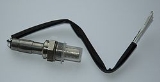
An oxygen sensor, or lambda sensor, is an electronic device that measures the proportion of oxygen
(O2) in the gas or liquid being analyzed. It was developed by the Robert Bosch GmbH
company during the late 1960s under the supervision of Dr. Günter Bauman. The original sensing element is made with a thimble-shaped zirconia ceramic
coated on both the exhaust and reference sides with a thin layer of platinum
and comes in both heated and unheated forms. The planar-style sensor entered the market in 1998 (also pioneered by Bosch) and significantly reduced the mass of the ceramic sensing element as well as incorporating the heater within the ceramic structure. This resulted in a sensor that started sooner and responded faster. The most common application is to measure the exhaust gas concentration of oxygen for internal combustion engine
s in automobile
s and other vehicles. Diver
s also use a similar device to measure the partial pressure
of oxygen in their breathing gas
.
Scientists use oxygen sensors to measure respiration
or production of oxygen and use a different approach. Oxygen sensors are used in oxygen analyzers which find a lot of use in medical applications such as anesthesia monitors, respirator
s and oxygen concentrators.
There are many different ways of measuring oxygen and these include technologies such as zirconia, electrochemical (also known as Galvanic), infrared
, ultrasonic
and very recently laser methods. Each method has its own advantages and disadvantages.
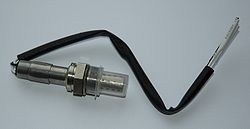 Automotive oxygen sensors, colloquially known as O2 sensors, make modern electronic fuel injection and emission control
possible. They help determine, in real time, if the air fuel ratio of a combustion engine is rich or lean. Since oxygen sensors are located in the exhaust stream, they do not directly measure the air or the fuel entering the engine. But when information from oxygen sensors is coupled with information from other sources, it can be used to indirectly determine the air-to-fuel ratio. Closed-loop feedback-controlled fuel injection varies the fuel injector output according to real-time sensor data rather than operating with a predetermined (open-loop) fuel map. In addition to enabling electronic fuel injection to work efficiently, this emissions control technique can reduce the amounts of both unburnt fuel and oxides of nitrogen entering the atmosphere. Unburnt fuel is pollution in the form of air-borne hydrocarbons, while oxides of nitrogen
(NOx gases) are a result of combustion chamber temperatures exceeding 1,300 kelvin
due to excess air in the fuel mixture and contribute to smog
and acid rain
. Volvo
was the first automobile manufacturer to employ this technology in the late 1970s, along with the 3-way catalyst used in the catalytic converter
.
The sensor does not actually measure oxygen concentration, but rather the difference between the amount of oxygen in the exhaust gas and the amount of oxygen in air. Rich mixture causes an oxygen demand. This demand causes a voltage to build up, due to transportation of oxygen ions through the sensor layer. Lean mixture causes low voltage, since there is an oxygen excess.
Modern spark-ignited combustion engines use oxygen sensors and catalytic converter
s in order to reduce exhaust emissions
. Information on oxygen concentration is sent to the engine management computer or ECU
, which adjusts the amount of fuel injected into the engine to compensate for excess air or excess fuel. The ECU attempts to maintain, on average, a certain air-fuel ratio
by interpreting the information it gains from the oxygen sensor. The primary goal is a compromise between power, fuel economy, and emissions, and in most cases is achieved by an air-fuel-ratio close to stoichiometric. For spark-ignition
engines (such as those that burn gasoline
, as opposed to diesel), the three types of emissions modern systems are concerned with are: hydrocarbons (which are released when the fuel is not burnt completely, such as when misfiring or running rich), carbon monoxide (which is the result of running slightly rich) and NOx (which dominate when the mixture is lean
). Failure of these sensors, either through normal aging, the use of leaded fuels, or fuel contaminated with silicone
s or silicate
s, for example, can lead to damage of an automobile's catalytic converter and expensive repairs.
Tampering with or modifying the signal that the oxygen sensor sends to the engine computer can be detrimental to emissions control and can even damage the vehicle. When the engine is under low-load conditions (such as when accelerating very gently, or maintaining a constant speed), it is operating in "closed-loop mode." This refers to a feedback loop between the ECU and the oxygen sensor(s) in which the ECU adjusts the quantity of fuel and expects to see a resulting change in the response of the oxygen sensor. This loop forces the engine to operate both slightly lean and slightly rich on successive loops, as it attempts to maintain a mostly stoichiometric ratio on average. If modifications cause the engine to run moderately lean, there will be a slight increase in fuel economy, sometimes at the expense of increased NOx emissions, much higher exhaust gas temperatures, and sometimes a slight increase in power that can quickly turn into misfires and a drastic loss of power, as well as potential engine damage, at ultra-lean air-to-fuel ratios. If modifications cause the engine to run rich, then there will be a slight increase in power to a point (after which the engine starts flooding from too much unburned fuel), but at the cost of decreased fuel economy, and an increase in unburned hydrocarbons in the exhaust which causes overheating of the catalytic converter. Prolonged operation at rich mixtures can cause catastrophic failure of the catalytic converter (see backfire
). The ECU also controls the spark engine timing along with the fuel injector pulse width, so modifications which alter the engine to operate either too lean or too rich may result in inefficient fuel consumption whenever fuel is ignited too soon or too late in the combustion cycle.
When an internal combustion engine is under high load (e.g. wide open throttle
), the output of the oxygen sensor is ignored, and the ECU automatically enriches the mixture to protect the engine, as misfires under load are much more likely to cause damage. This is referred to as an engine running in 'open-loop mode'. Any changes in the sensor output will be ignored in this state. In many cars (with the exception of some turbocharged models), inputs from the air flow meter
are also ignored, as they might otherwise lower engine performance due to the mixture being too rich or too lean, and increase the risk of engine damage due to detonation
if the mixture is too lean.
introduced the first automotive lambda probe in 1976, and it was first used by Volvo
and Saab
in that year. The sensors were introduced in the US from about 1980, and were required on all models of cars in many countries in Europe in 1993.
By measuring the proportion of oxygen in the remaining exhaust gas, and by knowing the volume and temperature of the air entering the cylinders
amongst other things, an ECU can use look-up tables to determine the amount of fuel required to burn at the stoichiometric ratio (14.7:1 air:fuel by mass for gasoline) to ensure complete combustion.
cylinder plated inside and out with porous platinum
electrodes; the whole assembly is protected by a metal gauze. It operates by measuring the difference in oxygen between the exhaust gas and the external air, and generates a voltage or changes its resistance depending on the difference between the two.
The sensors only work effectively when heated to approximately 316 °C (600 °F), so most newer lambda probes have heating elements encased in the ceramic that bring the ceramic tip up to temperature quickly. Older probes, without heating elements, would eventually be heated by the exhaust, but there is a time lag between when the engine is started and when the components in the exhaust system come to a thermal equilibrium. The length of time required for the exhaust gases to bring the probe to temperature depends on the temperature of the ambient air and the geometry of the exhaust system. Without a heater, the process may take several minutes. There are pollution problems that are attributed to this slow start-up process, including a similar problem with the working temperature of a catalytic converter
.
The probe typically has four wires attached to it: two for the lambda output, and two for the heater power, although some automakers use a common ground for the sensor element and heaters, resulting in three wires. Earlier non-electrically-heated sensors had one or two wires..
, or zirconia, lambda sensor is based on a solid-state electrochemical fuel cell
called the Nernst cell. Its two electrodes provide an output voltage corresponding to the quantity of oxygen in the exhaust relative to that in the atmosphere.
An output voltage of 0.2 V (200 mV) DC
represents a "lean mixture" of fuel and oxygen, where the amount of oxygen entering the cylinder is sufficient to fully oxidize the carbon monoxide
(CO), produced in burning the air and fuel, into carbon dioxide
(CO2). An output voltage of 0.8 V (800 mV) DC represents a "rich mixture", one which is high in unburned fuel and low in remaining oxygen. The ideal setpoint
is approximately 0.45 V (450 mV) DC. This is where the quantities of air and fuel are in the optimum ratio, which is ~0.5% lean of the stoichiometric point, such that the exhaust output contains minimal carbon monoxide.
The voltage produced by the sensor is nonlinear with respect to oxygen concentration. The sensor is most sensitive near the stoichiometric point
and less sensitive when either very lean or very rich.
The engine control unit (ECU) is a control system
that uses feedback from the sensor to adjust the fuel/air mixture. As in all control systems, the time constant
of the sensor is important; the ability of the ECU to control the fuel-air-ratio depends upon the response time of the sensor. An aging or fouled sensor tends to have a slower response time, which can degrade system performance. The shorter the time period, the higher the so-called "cross count" and the more responsive the system.
The zirconia sensor is of the "narrow band" type, referring to the narrow range of fuel/air ratios to which it responds.
loop controls the gas pump current to keep the output of the electrochemical cell constant, so that the pump current directly indicates the oxygen content of the exhaust gas. This sensor eliminates the lean-rich cycling inherent in narrow-band sensors, allowing the control unit to adjust the fuel delivery and ignition timing of the engine much more rapidly. In the automotive industry this sensor is also called a UEGO (for Universal Exhaust Gas Oxygen) sensor. UEGO sensors are also commonly used in aftermarket dyno
tuning and high-performance driver air-fuel display equipment. The wideband zirconia sensor is used in stratified fuel injection systems, and can now also be used in diesel engines to satisfy the upcoming EURO and ULEV emission limits.
Wideband sensors have three elements:
The wiring diagram for the wideband sensor typically has six wires:
(titania). This type does not generate its own voltage, but changes its electrical resistance
in response to the oxygen concentration. The resistance of the titania is a function of the oxygen partial pressure and the temperature. Therefore, some sensors are used with a gas temperature sensor to compensate for the resistance change due to temperature. The resistance value at any temperature is about 1/1000 the change in oxygen concentration. Luckily, at lambda = 1, there is a large change of oxygen, so the resistance change is typically 1000 times between rich and lean, depending on the temperature.
As titania is an N-type semiconductor with a structure TiO2-x, the x defects in the crystal lattice conduct the charge. So, for fuel-rich exhaust the resistance is low, and for fuel-lean exhaust the resistance is high. The control unit feeds the sensor with a small electrical current and measures the resulting voltage across the sensor, which varies from near 0 volts to about 5 volts. Like the zirconia sensor, this type is nonlinear, such that it is sometimes simplistically described as a binary
indicator, reading either "rich" or "lean". Titania sensors are more expensive than zirconia sensors, but they also respond faster.
In automotive applications the titania sensor, unlike the zirconia sensor, does not require a reference sample of atmospheric air to operate properly. This makes the sensor assembly easier to design against water contamination. While most automotive sensors are submersible, zirconia-based sensors require a very small supply of reference air from the atmosphere. In theory, the sensor wire harness and connector are sealed. Air that leaches through the wire harness to the sensor is assumed to come from an open point in the harness - usually the ECU which is housed in an enclosed space like the trunk or vehicle interior.
. New vehicles are required to have a sensor before and after the exhaust catalyst to meet U.S. regulations requiring that all emissions components be monitored for failure. Pre and post-catalyst signals are monitored to determine catalyst efficiency. Additionally, some catalyst systems require brief cycles of lean (oxygen-containing) gas to load the catalyst and promote additional oxidation reduction of undesirable exhaust components.
and naturally, the status of the sensor, can be monitored by means of using an air-fuel ratio meter
that displays the read output voltage
of the sensor.
Leaded gasoline contaminates the oxygen sensors and catalytic converters. Most oxygen sensors are rated for some service life in the presence of leaded gasoline but sensor life will be shortened to as little as 15,000 miles depending on the lead concentration. Lead-damaged sensors typically have their tips discolored light rusty.
Another common cause of premature failure of lambda probes is contamination of fuel with silicone
s (used in some sealings and grease
s) or silicate
s (used as corrosion inhibitor
s in some antifreeze
s). In this case, the deposits on the sensor are colored between shiny white and grainy light gray.
Leaks of oil into the engine may cover the probe tip with an oily black deposit, with associated loss of response.
An overly rich mixture causes buildup of black powdery deposit on the probe. This may be caused by failure of the probe itself, or by a problem elsewhere in the fuel rationing system.
Applying an external voltage to the zirconia sensors, e.g. by checking them with some types of ohmmeter
, may damage them.
Some sensors have an air inlet to the sensor in the lead, so contamination from the lead caused by water or oil leaks can be sucked into the sensor and cause failure.
Symptoms of a failing oxygen sensor includes:
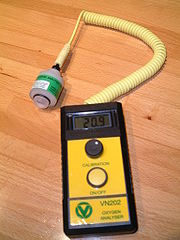 The diving type of oxygen sensor, which is sometimes called an oxygen analyser or ppO2 meter, is used in scuba diving
. They are used to measure the oxygen concentration of breathing gas
mixes such as nitrox and trimix. They are also used within the oxygen control mechanisms of closed-circuit rebreather
s to keep the partial pressure
of oxygen within safe limits. This type of sensor operates by measuring the electricity generated by a small electro-galvanic fuel cell
.
studies oxygen sensors can be used in conjunction with carbon dioxide sensors to help improve the characterization of soil respiration
. Typically, soil oxygen sensors use a galvanic cell
to produce a current flow that is proportional to the oxygen concentration being measured. These sensors are buried at various depths to monitor oxygen depletion over time, which is then used to predict soil respiration rates. Generally, these soil sensors are equipped with a built-in heater to prevent condensation from forming on the permeable membrane, as relative humidity can reach 100% in soil.
In marine biology
or limnology
oxygen measurements are usually done in order to measure respiration of a community or an organism, but have also been used to measure primary production of algae
. The traditional way of measuring oxygen concentration in a water sample has been to use wet chemistry techniques e.g. the Winkler titration
method. There are however commercially available oxygen sensors that measure the oxygen concentration in liquids with great accuracy. There are two types of oxygen sensors available: electrodes (electrochemical sensors) and optodes (optical sensors).
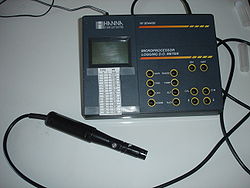 The Clark-type electrode
is the most used oxygen sensor for measuring oxygen dissolved in a liquid. The basic principle is that there is a cathode
and an anode
submersed in an electrolyte
. Oxygen enters the sensor through a permeable membrane by diffusion
, and is reduced at the cathode, creating a measurable electrical current.
There is a linear relationship between the oxygen concentration and the electrical current. With a two-point calibration (0% and 100% air saturation), it is possible to measure oxygen in the sample.
One drawback to this approach is that oxygen is consumed during the measurement with a rate equal to the diffusion in the sensor. This means that the sensor must be stirred in order to get the correct measurement and avoid stagnant water. With an increasing sensor size, the oxygen consumption increases and so does the stirring sensitivity. In large sensors there tend to also be a drift in the signal over time due to consumption of the electrolyte.
However, Clark-type sensors can be made very small with a tip size of 10 µm. The oxygen consumption of such a microsensor is so small that it is practically insensitive to stirring and can be used in stagnant media such as sediments or inside plant tissue.
is a sensor based on optical measurement of the oxygen concentration. A chemical film is glued to the tip of an optical cable and the fluorescence
properties of this film depend on the oxygen concentration. Fluorescence is at a maximum when there is no oxygen present. When an O2 molecule comes along it collides with the film and this quench
es the photoluminescence
. In a given oxygen concentration there will be a specific number of O2 molecules colliding with the film at any given time, and the fluorescence properties will be stable.
The signal (fluorescence) to oxygen ratio is not linear, and an optode is most sensitive
at low oxygen concentration. That is, the sensitivity decreases as oxygen concentration increases following the Stern–Volmer relationship. The optode sensors can, however, work in the whole region 0% to 100% oxygen saturation
in water, and the calibration is done the same way as with the Clark type sensor. No oxygen is consumed and hence the sensor is insensitive to stirring, but the signal will stabilize more quickly if the sensor is stirred after being put in the sample. These type of electrode sensors can be used for insitu and realtime monitoring of Oxygen production in water splitting reactions. The platinized electrodes can accomplish the real time monitoring of Hydrogen production in water splitting device. Calzaferri and his co workers employed this type of electrodes very extensively for photoelectrochemical water splitting research.
Oxygen
Oxygen is the element with atomic number 8 and represented by the symbol O. Its name derives from the Greek roots ὀξύς and -γενής , because at the time of naming, it was mistakenly thought that all acids required oxygen in their composition...
(O2) in the gas or liquid being analyzed. It was developed by the Robert Bosch GmbH
Robert Bosch GmbH
Robert Bosch GmbH is a multinational engineering and electronics company headquartered in Gerlingen, near Stuttgart, Germany. It is the world's largest supplier of automotive components...
company during the late 1960s under the supervision of Dr. Günter Bauman. The original sensing element is made with a thimble-shaped zirconia ceramic
Ceramic
A ceramic is an inorganic, nonmetallic solid prepared by the action of heat and subsequent cooling. Ceramic materials may have a crystalline or partly crystalline structure, or may be amorphous...
coated on both the exhaust and reference sides with a thin layer of platinum
Platinum
Platinum is a chemical element with the chemical symbol Pt and an atomic number of 78. Its name is derived from the Spanish term platina del Pinto, which is literally translated into "little silver of the Pinto River." It is a dense, malleable, ductile, precious, gray-white transition metal...
and comes in both heated and unheated forms. The planar-style sensor entered the market in 1998 (also pioneered by Bosch) and significantly reduced the mass of the ceramic sensing element as well as incorporating the heater within the ceramic structure. This resulted in a sensor that started sooner and responded faster. The most common application is to measure the exhaust gas concentration of oxygen for internal combustion engine
Internal combustion engine
The internal combustion engine is an engine in which the combustion of a fuel occurs with an oxidizer in a combustion chamber. In an internal combustion engine, the expansion of the high-temperature and high -pressure gases produced by combustion apply direct force to some component of the engine...
s in automobile
Automobile
An automobile, autocar, motor car or car is a wheeled motor vehicle used for transporting passengers, which also carries its own engine or motor...
s and other vehicles. Diver
Scuba diving
Scuba diving is a form of underwater diving in which a diver uses a scuba set to breathe underwater....
s also use a similar device to measure the partial pressure
Partial pressure
In a mixture of ideal gases, each gas has a partial pressure which is the pressure which the gas would have if it alone occupied the volume. The total pressure of a gas mixture is the sum of the partial pressures of each individual gas in the mixture....
of oxygen in their breathing gas
Breathing gas
Breathing gas is a mixture of gaseous chemical elements and compounds used for respiration.Air is the most common and only natural breathing gas...
.
Scientists use oxygen sensors to measure respiration
Respiration (physiology)
'In physiology, respiration is defined as the transport of oxygen from the outside air to the cells within tissues, and the transport of carbon dioxide in the opposite direction...
or production of oxygen and use a different approach. Oxygen sensors are used in oxygen analyzers which find a lot of use in medical applications such as anesthesia monitors, respirator
Respirator
A respirator is a device designed to protect the wearer from inhaling harmful dusts, fumes, vapors, or gases. Respirators come in a wide range of types and sizes used by the military, private industry, and the public...
s and oxygen concentrators.
There are many different ways of measuring oxygen and these include technologies such as zirconia, electrochemical (also known as Galvanic), infrared
Infrared
Infrared light is electromagnetic radiation with a wavelength longer than that of visible light, measured from the nominal edge of visible red light at 0.74 micrometres , and extending conventionally to 300 µm...
, ultrasonic
Ultrasound
Ultrasound is cyclic sound pressure with a frequency greater than the upper limit of human hearing. Ultrasound is thus not separated from "normal" sound based on differences in physical properties, only the fact that humans cannot hear it. Although this limit varies from person to person, it is...
and very recently laser methods. Each method has its own advantages and disadvantages.
Automotive applications
Automobile emissions control
Vehicle emissions control is the study and practice of reducing the motor vehicle emissions -- emissions produced by motor vehicles, especially internal combustion engines....
possible. They help determine, in real time, if the air fuel ratio of a combustion engine is rich or lean. Since oxygen sensors are located in the exhaust stream, they do not directly measure the air or the fuel entering the engine. But when information from oxygen sensors is coupled with information from other sources, it can be used to indirectly determine the air-to-fuel ratio. Closed-loop feedback-controlled fuel injection varies the fuel injector output according to real-time sensor data rather than operating with a predetermined (open-loop) fuel map. In addition to enabling electronic fuel injection to work efficiently, this emissions control technique can reduce the amounts of both unburnt fuel and oxides of nitrogen entering the atmosphere. Unburnt fuel is pollution in the form of air-borne hydrocarbons, while oxides of nitrogen
Nitrogen oxide
Nitrogen oxide can refer to a binary compound of oxygen and nitrogen, or a mixture of such compounds:* Nitric oxide, also known as nitrogen monoxide, , nitrogen oxide* Nitrogen dioxide , nitrogen oxide...
(NOx gases) are a result of combustion chamber temperatures exceeding 1,300 kelvin
Kelvin
The kelvin is a unit of measurement for temperature. It is one of the seven base units in the International System of Units and is assigned the unit symbol K. The Kelvin scale is an absolute, thermodynamic temperature scale using as its null point absolute zero, the temperature at which all...
due to excess air in the fuel mixture and contribute to smog
Smog
Smog is a type of air pollution; the word "smog" is a portmanteau of smoke and fog. Modern smog is a type of air pollution derived from vehicular emission from internal combustion engines and industrial fumes that react in the atmosphere with sunlight to form secondary pollutants that also combine...
and acid rain
Acid rain
Acid rain is a rain or any other form of precipitation that is unusually acidic, meaning that it possesses elevated levels of hydrogen ions . It can have harmful effects on plants, aquatic animals, and infrastructure. Acid rain is caused by emissions of carbon dioxide, sulfur dioxide and nitrogen...
. Volvo
Volvo
AB Volvo is a Swedish builder of commercial vehicles, including trucks, buses and construction equipment. Volvo also supplies marine and industrial drive systems, aerospace components and financial services...
was the first automobile manufacturer to employ this technology in the late 1970s, along with the 3-way catalyst used in the catalytic converter
Catalytic converter
A catalytic converter is a device used to convert toxic exhaust emissions from an internal combustion engine into non-toxic substances. Inside a catalytic converter, a catalyst stimulates a chemical reaction in which noxious byproducts of combustion are converted to less toxic substances by dint...
.
The sensor does not actually measure oxygen concentration, but rather the difference between the amount of oxygen in the exhaust gas and the amount of oxygen in air. Rich mixture causes an oxygen demand. This demand causes a voltage to build up, due to transportation of oxygen ions through the sensor layer. Lean mixture causes low voltage, since there is an oxygen excess.
Modern spark-ignited combustion engines use oxygen sensors and catalytic converter
Catalytic converter
A catalytic converter is a device used to convert toxic exhaust emissions from an internal combustion engine into non-toxic substances. Inside a catalytic converter, a catalyst stimulates a chemical reaction in which noxious byproducts of combustion are converted to less toxic substances by dint...
s in order to reduce exhaust emissions
Automobile emissions control
Vehicle emissions control is the study and practice of reducing the motor vehicle emissions -- emissions produced by motor vehicles, especially internal combustion engines....
. Information on oxygen concentration is sent to the engine management computer or ECU
Engine control unit
An engine control unit is a type of electronic control unit that determines the amount of fuel, ignition timing and other parameters an internal combustion engine needs to keep running...
, which adjusts the amount of fuel injected into the engine to compensate for excess air or excess fuel. The ECU attempts to maintain, on average, a certain air-fuel ratio
Air-fuel ratio
Air–fuel ratio is the mass ratio of air to fuel present in an internal combustion engine. If exactly enough air is provided to completely burn all of the fuel, the ratio is known as the stoichiometric mixture, often abbreviated to stoich...
by interpreting the information it gains from the oxygen sensor. The primary goal is a compromise between power, fuel economy, and emissions, and in most cases is achieved by an air-fuel-ratio close to stoichiometric. For spark-ignition
Spark-ignition
The term spark-ignition engine refers to internal combustion engines, usually petrol engines, where the combustion process of the air-fuel mixture is ignited by a spark from a spark plug...
engines (such as those that burn gasoline
Gasoline
Gasoline , or petrol , is a toxic, translucent, petroleum-derived liquid that is primarily used as a fuel in internal combustion engines. It consists mostly of organic compounds obtained by the fractional distillation of petroleum, enhanced with a variety of additives. Some gasolines also contain...
, as opposed to diesel), the three types of emissions modern systems are concerned with are: hydrocarbons (which are released when the fuel is not burnt completely, such as when misfiring or running rich), carbon monoxide (which is the result of running slightly rich) and NOx (which dominate when the mixture is lean
Lean burn
Lean burn refers to the use of lean mixtures in an internal combustion engine. The air-fuel ratios can be as high as 65:1, so the mixture has considerably less fuel in comparison to the stoichiometric combustion ratio ....
). Failure of these sensors, either through normal aging, the use of leaded fuels, or fuel contaminated with silicone
Silicone
Silicones are inert, synthetic compounds with a variety of forms and uses. Typically heat-resistant and rubber-like, they are used in sealants, adhesives, lubricants, medical applications , cookware, and insulation....
s or silicate
Silicate
A silicate is a compound containing a silicon bearing anion. The great majority of silicates are oxides, but hexafluorosilicate and other anions are also included. This article focuses mainly on the Si-O anions. Silicates comprise the majority of the earth's crust, as well as the other...
s, for example, can lead to damage of an automobile's catalytic converter and expensive repairs.
Tampering with or modifying the signal that the oxygen sensor sends to the engine computer can be detrimental to emissions control and can even damage the vehicle. When the engine is under low-load conditions (such as when accelerating very gently, or maintaining a constant speed), it is operating in "closed-loop mode." This refers to a feedback loop between the ECU and the oxygen sensor(s) in which the ECU adjusts the quantity of fuel and expects to see a resulting change in the response of the oxygen sensor. This loop forces the engine to operate both slightly lean and slightly rich on successive loops, as it attempts to maintain a mostly stoichiometric ratio on average. If modifications cause the engine to run moderately lean, there will be a slight increase in fuel economy, sometimes at the expense of increased NOx emissions, much higher exhaust gas temperatures, and sometimes a slight increase in power that can quickly turn into misfires and a drastic loss of power, as well as potential engine damage, at ultra-lean air-to-fuel ratios. If modifications cause the engine to run rich, then there will be a slight increase in power to a point (after which the engine starts flooding from too much unburned fuel), but at the cost of decreased fuel economy, and an increase in unburned hydrocarbons in the exhaust which causes overheating of the catalytic converter. Prolonged operation at rich mixtures can cause catastrophic failure of the catalytic converter (see backfire
Back-fire
A Back-fire or backfire is an explosion produced by a running internal combustion engine that occurs in the air intake or exhaust system rather than inside the combustion chamber. The same term is used when unburned fuel or hydrocarbons are ignited somewhere in the exhaust system. A visible flame...
). The ECU also controls the spark engine timing along with the fuel injector pulse width, so modifications which alter the engine to operate either too lean or too rich may result in inefficient fuel consumption whenever fuel is ignited too soon or too late in the combustion cycle.
When an internal combustion engine is under high load (e.g. wide open throttle
Wide open throttle
Wide open throttle refers to an internal combustion engine's maximum intake of air and fuel that occurs when the throttle plates inside the carburettor or throttle body are "wide open", providing the least resistance to the incoming air...
), the output of the oxygen sensor is ignored, and the ECU automatically enriches the mixture to protect the engine, as misfires under load are much more likely to cause damage. This is referred to as an engine running in 'open-loop mode'. Any changes in the sensor output will be ignored in this state. In many cars (with the exception of some turbocharged models), inputs from the air flow meter
Air flow meter
An air flow meter, is a device that measures how much air is flowing through a tube. It does not measure the volume of the air passing through the tube, it measures the actual speed of the air flowing through the device in a defined time segment. Thus air flow meters are simply an application of...
are also ignored, as they might otherwise lower engine performance due to the mixture being too rich or too lean, and increase the risk of engine damage due to detonation
Detonation
Detonation involves a supersonic exothermic front accelerating through a medium that eventually drives a shock front propagating directly in front of it. Detonations are observed in both conventional solid and liquid explosives, as well as in reactive gases...
if the mixture is too lean.
Function of a lambda probe
Lambda probes are used to reduce vehicle emissions by ensuring that engines burn their fuel efficiently and cleanly. Robert Bosch GmbHRobert Bosch GmbH
Robert Bosch GmbH is a multinational engineering and electronics company headquartered in Gerlingen, near Stuttgart, Germany. It is the world's largest supplier of automotive components...
introduced the first automotive lambda probe in 1976, and it was first used by Volvo
Volvo
AB Volvo is a Swedish builder of commercial vehicles, including trucks, buses and construction equipment. Volvo also supplies marine and industrial drive systems, aerospace components and financial services...
and Saab
Saab
Saab AB is a Swedish aerospace and defence company, founded in 1937. From 1947 to 1990 it was the parent company of automobile manufacturer Saab Automobile, and between 1968 and 1995 the company was in a merger with commercial vehicle manufacturer Scania, known as Saab-Scania.-History:"Svenska...
in that year. The sensors were introduced in the US from about 1980, and were required on all models of cars in many countries in Europe in 1993.
By measuring the proportion of oxygen in the remaining exhaust gas, and by knowing the volume and temperature of the air entering the cylinders
Cylinder (engine)
A cylinder is the central working part of a reciprocating engine or pump, the space in which a piston travels. Multiple cylinders are commonly arranged side by side in a bank, or engine block, which is typically cast from aluminum or cast iron before receiving precision machine work...
amongst other things, an ECU can use look-up tables to determine the amount of fuel required to burn at the stoichiometric ratio (14.7:1 air:fuel by mass for gasoline) to ensure complete combustion.
The probe
The sensor element is a ceramicCeramic
A ceramic is an inorganic, nonmetallic solid prepared by the action of heat and subsequent cooling. Ceramic materials may have a crystalline or partly crystalline structure, or may be amorphous...
cylinder plated inside and out with porous platinum
Platinum
Platinum is a chemical element with the chemical symbol Pt and an atomic number of 78. Its name is derived from the Spanish term platina del Pinto, which is literally translated into "little silver of the Pinto River." It is a dense, malleable, ductile, precious, gray-white transition metal...
electrodes; the whole assembly is protected by a metal gauze. It operates by measuring the difference in oxygen between the exhaust gas and the external air, and generates a voltage or changes its resistance depending on the difference between the two.
The sensors only work effectively when heated to approximately 316 °C (600 °F), so most newer lambda probes have heating elements encased in the ceramic that bring the ceramic tip up to temperature quickly. Older probes, without heating elements, would eventually be heated by the exhaust, but there is a time lag between when the engine is started and when the components in the exhaust system come to a thermal equilibrium. The length of time required for the exhaust gases to bring the probe to temperature depends on the temperature of the ambient air and the geometry of the exhaust system. Without a heater, the process may take several minutes. There are pollution problems that are attributed to this slow start-up process, including a similar problem with the working temperature of a catalytic converter
Catalytic converter
A catalytic converter is a device used to convert toxic exhaust emissions from an internal combustion engine into non-toxic substances. Inside a catalytic converter, a catalyst stimulates a chemical reaction in which noxious byproducts of combustion are converted to less toxic substances by dint...
.
The probe typically has four wires attached to it: two for the lambda output, and two for the heater power, although some automakers use a common ground for the sensor element and heaters, resulting in three wires. Earlier non-electrically-heated sensors had one or two wires..
Zirconia sensor
The zirconium dioxideZirconium dioxide
Zirconium dioxide , sometimes known as zirconia , is a white crystalline oxide of zirconium. Its most naturally occurring form, with a monoclinic crystalline structure, is the rare mineral baddeleyite. The high temperature cubic crystalline form is rarely found in nature as mineral tazheranite O2...
, or zirconia, lambda sensor is based on a solid-state electrochemical fuel cell
Fuel cell
A fuel cell is a device that converts the chemical energy from a fuel into electricity through a chemical reaction with oxygen or another oxidizing agent. Hydrogen is the most common fuel, but hydrocarbons such as natural gas and alcohols like methanol are sometimes used...
called the Nernst cell. Its two electrodes provide an output voltage corresponding to the quantity of oxygen in the exhaust relative to that in the atmosphere.
An output voltage of 0.2 V (200 mV) DC
Direct current
Direct current is the unidirectional flow of electric charge. Direct current is produced by such sources as batteries, thermocouples, solar cells, and commutator-type electric machines of the dynamo type. Direct current may flow in a conductor such as a wire, but can also flow through...
represents a "lean mixture" of fuel and oxygen, where the amount of oxygen entering the cylinder is sufficient to fully oxidize the carbon monoxide
Carbon monoxide
Carbon monoxide , also called carbonous oxide, is a colorless, odorless, and tasteless gas that is slightly lighter than air. It is highly toxic to humans and animals in higher quantities, although it is also produced in normal animal metabolism in low quantities, and is thought to have some normal...
(CO), produced in burning the air and fuel, into carbon dioxide
Carbon dioxide
Carbon dioxide is a naturally occurring chemical compound composed of two oxygen atoms covalently bonded to a single carbon atom...
(CO2). An output voltage of 0.8 V (800 mV) DC represents a "rich mixture", one which is high in unburned fuel and low in remaining oxygen. The ideal setpoint
Setpoint
Setpoint is the target value that an automatic control system, for example PID controller, will aim to reach. For example, a boiler control system might have a temperature setpoint, that is a temperature the control system aims to attain....
is approximately 0.45 V (450 mV) DC. This is where the quantities of air and fuel are in the optimum ratio, which is ~0.5% lean of the stoichiometric point, such that the exhaust output contains minimal carbon monoxide.
The voltage produced by the sensor is nonlinear with respect to oxygen concentration. The sensor is most sensitive near the stoichiometric point
Air-fuel ratio
Air–fuel ratio is the mass ratio of air to fuel present in an internal combustion engine. If exactly enough air is provided to completely burn all of the fuel, the ratio is known as the stoichiometric mixture, often abbreviated to stoich...
and less sensitive when either very lean or very rich.
The engine control unit (ECU) is a control system
Control system
A control system is a device, or set of devices to manage, command, direct or regulate the behavior of other devices or system.There are two common classes of control systems, with many variations and combinations: logic or sequential controls, and feedback or linear controls...
that uses feedback from the sensor to adjust the fuel/air mixture. As in all control systems, the time constant
Time constant
In physics and engineering, the time constant, usually denoted by the Greek letter \tau , is the risetime characterizing the response to a time-varying input of a first-order, linear time-invariant system.Concretely, a first-order LTI system is a system that can be modeled by a single first order...
of the sensor is important; the ability of the ECU to control the fuel-air-ratio depends upon the response time of the sensor. An aging or fouled sensor tends to have a slower response time, which can degrade system performance. The shorter the time period, the higher the so-called "cross count" and the more responsive the system.
The zirconia sensor is of the "narrow band" type, referring to the narrow range of fuel/air ratios to which it responds.
Wideband zirconia sensor
A variation on the zirconia sensor, called the "wideband" sensor, was introduced by Robert Bosch in 1994, and has been used on a lot of cars in order to meet the ever-increasing demands for better fuel economy, lower emissions and better engine performance at the same time. It is based on a planar zirconia element, but also incorporates an electrochemical gas pump. An electronic circuit containing a feedbackFeedback
Feedback describes the situation when output from an event or phenomenon in the past will influence an occurrence or occurrences of the same Feedback describes the situation when output from (or information about the result of) an event or phenomenon in the past will influence an occurrence or...
loop controls the gas pump current to keep the output of the electrochemical cell constant, so that the pump current directly indicates the oxygen content of the exhaust gas. This sensor eliminates the lean-rich cycling inherent in narrow-band sensors, allowing the control unit to adjust the fuel delivery and ignition timing of the engine much more rapidly. In the automotive industry this sensor is also called a UEGO (for Universal Exhaust Gas Oxygen) sensor. UEGO sensors are also commonly used in aftermarket dyno
Dynamometer
A dynamometer or "dyno" for short, is a device for measuring force, moment of force , or power. For example, the power produced by an engine, motor or other rotating prime mover can be calculated by simultaneously measuring torque and rotational speed .A dynamometer can also be used to determine...
tuning and high-performance driver air-fuel display equipment. The wideband zirconia sensor is used in stratified fuel injection systems, and can now also be used in diesel engines to satisfy the upcoming EURO and ULEV emission limits.
Wideband sensors have three elements:
- Ion oxygen pump
- Narrowband zirconia sensor
- Heating element
The wiring diagram for the wideband sensor typically has six wires:
- resistive heating element (two wires)
- sensor
- pump
- calibration resistor
- common
Titania sensor
A less common type of narrow-band lambda sensor has a ceramic element made of titanium dioxideTitanium dioxide
Titanium dioxide, also known as titanium oxide or titania, is the naturally occurring oxide of titanium, chemical formula . When used as a pigment, it is called titanium white, Pigment White 6, or CI 77891. Generally it comes in two different forms, rutile and anatase. It has a wide range of...
(titania). This type does not generate its own voltage, but changes its electrical resistance
Electrical resistance
The electrical resistance of an electrical element is the opposition to the passage of an electric current through that element; the inverse quantity is electrical conductance, the ease at which an electric current passes. Electrical resistance shares some conceptual parallels with the mechanical...
in response to the oxygen concentration. The resistance of the titania is a function of the oxygen partial pressure and the temperature. Therefore, some sensors are used with a gas temperature sensor to compensate for the resistance change due to temperature. The resistance value at any temperature is about 1/1000 the change in oxygen concentration. Luckily, at lambda = 1, there is a large change of oxygen, so the resistance change is typically 1000 times between rich and lean, depending on the temperature.
As titania is an N-type semiconductor with a structure TiO2-x, the x defects in the crystal lattice conduct the charge. So, for fuel-rich exhaust the resistance is low, and for fuel-lean exhaust the resistance is high. The control unit feeds the sensor with a small electrical current and measures the resulting voltage across the sensor, which varies from near 0 volts to about 5 volts. Like the zirconia sensor, this type is nonlinear, such that it is sometimes simplistically described as a binary
Binary numeral system
The binary numeral system, or base-2 number system, represents numeric values using two symbols, 0 and 1. More specifically, the usual base-2 system is a positional notation with a radix of 2...
indicator, reading either "rich" or "lean". Titania sensors are more expensive than zirconia sensors, but they also respond faster.
In automotive applications the titania sensor, unlike the zirconia sensor, does not require a reference sample of atmospheric air to operate properly. This makes the sensor assembly easier to design against water contamination. While most automotive sensors are submersible, zirconia-based sensors require a very small supply of reference air from the atmosphere. In theory, the sensor wire harness and connector are sealed. Air that leaches through the wire harness to the sensor is assumed to come from an open point in the harness - usually the ECU which is housed in an enclosed space like the trunk or vehicle interior.
Location of the probe in a system
The probe is typically screwed into a threaded hole in the exhaust system, located after the branch manifold of the exhaust system combines, and before the catalytic converterCatalytic converter
A catalytic converter is a device used to convert toxic exhaust emissions from an internal combustion engine into non-toxic substances. Inside a catalytic converter, a catalyst stimulates a chemical reaction in which noxious byproducts of combustion are converted to less toxic substances by dint...
. New vehicles are required to have a sensor before and after the exhaust catalyst to meet U.S. regulations requiring that all emissions components be monitored for failure. Pre and post-catalyst signals are monitored to determine catalyst efficiency. Additionally, some catalyst systems require brief cycles of lean (oxygen-containing) gas to load the catalyst and promote additional oxidation reduction of undesirable exhaust components.
Sensor surveillance
The air-fuel ratioAir-fuel ratio
Air–fuel ratio is the mass ratio of air to fuel present in an internal combustion engine. If exactly enough air is provided to completely burn all of the fuel, the ratio is known as the stoichiometric mixture, often abbreviated to stoich...
and naturally, the status of the sensor, can be monitored by means of using an air-fuel ratio meter
Air-fuel ratio meter
An air–fuel ratio meter monitors the air–fuel ratio of an internal combustion engine. Also called air–fuel ratio gauge, air–fuel meter, or air–fuel gauge...
that displays the read output voltage
Voltage
Voltage, otherwise known as electrical potential difference or electric tension is the difference in electric potential between two points — or the difference in electric potential energy per unit charge between two points...
of the sensor.
Sensor failures
Normally, the lifetime of an unheated sensor is about 30,000 to 50,000 miles (50,000 to 80,000 km). Heated sensor lifetime is typically 100,000 miles (160,000 km). Failure of an unheated sensor is usually caused by the buildup of soot on the ceramic element, which lengthens its response time and may cause total loss of ability to sense oxygen. For heated sensors, normal deposits are burned off during operation and failure occurs due to catalyst depletion. The probe then tends to report lean mixture, the ECU enriches the mixture, the exhaust gets rich with carbon monoxide and hydrocarbons, and the fuel economy worsens.Leaded gasoline contaminates the oxygen sensors and catalytic converters. Most oxygen sensors are rated for some service life in the presence of leaded gasoline but sensor life will be shortened to as little as 15,000 miles depending on the lead concentration. Lead-damaged sensors typically have their tips discolored light rusty.
Another common cause of premature failure of lambda probes is contamination of fuel with silicone
Silicone
Silicones are inert, synthetic compounds with a variety of forms and uses. Typically heat-resistant and rubber-like, they are used in sealants, adhesives, lubricants, medical applications , cookware, and insulation....
s (used in some sealings and grease
Grease (lubricant)
The term grease is used to describe semisolid lubricants. Although the word grease is also used to describe rendered fat of animals, in the context of lubrication, grease typically applies to a material consisting of a soap emulsified with mineral or vegetable oil...
s) or silicate
Silicate
A silicate is a compound containing a silicon bearing anion. The great majority of silicates are oxides, but hexafluorosilicate and other anions are also included. This article focuses mainly on the Si-O anions. Silicates comprise the majority of the earth's crust, as well as the other...
s (used as corrosion inhibitor
Corrosion inhibitor
A corrosion inhibitor is a chemical compound that, when added to a liquid or gas, decreases the corrosion rate of a material, typically a metal or an alloy. The effectiveness of a corrosion inhibitor depends on fluid composition, quantity of water, and flow regime...
s in some antifreeze
Antifreeze
Antifreeze is a freeze preventive used in internal combustion engines and other heat transfer applications, such as HVAC chillers and solar water heaters....
s). In this case, the deposits on the sensor are colored between shiny white and grainy light gray.
Leaks of oil into the engine may cover the probe tip with an oily black deposit, with associated loss of response.
An overly rich mixture causes buildup of black powdery deposit on the probe. This may be caused by failure of the probe itself, or by a problem elsewhere in the fuel rationing system.
Applying an external voltage to the zirconia sensors, e.g. by checking them with some types of ohmmeter
Ohmmeter
An ohmmeter is an electrical instrument that measures electrical resistance, the opposition to an electric current. Micro-ohmmeters make low resistance measurements. Megohmmeters measure large values of resistance...
, may damage them.
Some sensors have an air inlet to the sensor in the lead, so contamination from the lead caused by water or oil leaks can be sucked into the sensor and cause failure.
Symptoms of a failing oxygen sensor includes:
- Sensor Light on dash indicates problem
- Increased tailpipe emissions
- Increased fuel consumption
- Hesitation on acceleration
- Stalling
- Rough idling
Diving applications
Scuba diving
Scuba diving is a form of underwater diving in which a diver uses a scuba set to breathe underwater....
. They are used to measure the oxygen concentration of breathing gas
Breathing gas
Breathing gas is a mixture of gaseous chemical elements and compounds used for respiration.Air is the most common and only natural breathing gas...
mixes such as nitrox and trimix. They are also used within the oxygen control mechanisms of closed-circuit rebreather
Rebreather
A rebreather is a type of breathing set that provides a breathing gas containing oxygen and recycled exhaled gas. This recycling reduces the volume of breathing gas used, making a rebreather lighter and more compact than an open-circuit breathing set for the same duration in environments where...
s to keep the partial pressure
Partial pressure
In a mixture of ideal gases, each gas has a partial pressure which is the pressure which the gas would have if it alone occupied the volume. The total pressure of a gas mixture is the sum of the partial pressures of each individual gas in the mixture....
of oxygen within safe limits. This type of sensor operates by measuring the electricity generated by a small electro-galvanic fuel cell
Electro-galvanic fuel cell
An electro-galvanic fuel cell is an electrical device, one form of which is commonly used to measure the concentration of oxygen gas in scuba diving and medical equipment....
.
Scientific applications
In soil respirationSoil respiration
Soil respiration refers to the production of carbon dioxide when soil organisms respire. This includes respiration of plant roots, the rhizosphere, microbes and fauna....
studies oxygen sensors can be used in conjunction with carbon dioxide sensors to help improve the characterization of soil respiration
Soil respiration
Soil respiration refers to the production of carbon dioxide when soil organisms respire. This includes respiration of plant roots, the rhizosphere, microbes and fauna....
. Typically, soil oxygen sensors use a galvanic cell
Galvanic cell
A Galvanic cell, or Voltaic cell, named after Luigi Galvani, or Alessandro Volta respectively, is an electrochemical cell that derives electrical energy from spontaneous redox reaction taking place within the cell...
to produce a current flow that is proportional to the oxygen concentration being measured. These sensors are buried at various depths to monitor oxygen depletion over time, which is then used to predict soil respiration rates. Generally, these soil sensors are equipped with a built-in heater to prevent condensation from forming on the permeable membrane, as relative humidity can reach 100% in soil.
In marine biology
Marine biology
Marine biology is the scientific study of organisms in the ocean or other marine or brackish bodies of water. Given that in biology many phyla, families and genera have some species that live in the sea and others that live on land, marine biology classifies species based on the environment rather...
or limnology
Limnology
Limnology , also called freshwater science, is the study of inland waters. It is often regarded as a division of ecology or environmental science. It covers the biological, chemical, physical, geological, and other attributes of all inland waters...
oxygen measurements are usually done in order to measure respiration of a community or an organism, but have also been used to measure primary production of algae
Algae
Algae are a large and diverse group of simple, typically autotrophic organisms, ranging from unicellular to multicellular forms, such as the giant kelps that grow to 65 meters in length. They are photosynthetic like plants, and "simple" because their tissues are not organized into the many...
. The traditional way of measuring oxygen concentration in a water sample has been to use wet chemistry techniques e.g. the Winkler titration
Winkler test for dissolved oxygen
The Winkler test is used to determine the concentration of dissolved oxygen in water samples. Dissolved oxygen is widely used in water quality studies and routine operation of water reclamation facilities. An excess of manganese salt, iodide and hydroxide ions is added to a water sample causing...
method. There are however commercially available oxygen sensors that measure the oxygen concentration in liquids with great accuracy. There are two types of oxygen sensors available: electrodes (electrochemical sensors) and optodes (optical sensors).
Electrodes
Clark electrode
The Clark electrode is an electrode that measures oxygen on a catalytic platinum surface using the net reaction:- History :Leland Clark had developed the first bubble oxygenator for use in cardiac surgery...
is the most used oxygen sensor for measuring oxygen dissolved in a liquid. The basic principle is that there is a cathode
Cathode
A cathode is an electrode through which electric current flows out of a polarized electrical device. Mnemonic: CCD .Cathode polarity is not always negative...
and an anode
Anode
An anode is an electrode through which electric current flows into a polarized electrical device. Mnemonic: ACID ....
submersed in an electrolyte
Electrolyte
In chemistry, an electrolyte is any substance containing free ions that make the substance electrically conductive. The most typical electrolyte is an ionic solution, but molten electrolytes and solid electrolytes are also possible....
. Oxygen enters the sensor through a permeable membrane by diffusion
Diffusion
Molecular diffusion, often called simply diffusion, is the thermal motion of all particles at temperatures above absolute zero. The rate of this movement is a function of temperature, viscosity of the fluid and the size of the particles...
, and is reduced at the cathode, creating a measurable electrical current.
There is a linear relationship between the oxygen concentration and the electrical current. With a two-point calibration (0% and 100% air saturation), it is possible to measure oxygen in the sample.
One drawback to this approach is that oxygen is consumed during the measurement with a rate equal to the diffusion in the sensor. This means that the sensor must be stirred in order to get the correct measurement and avoid stagnant water. With an increasing sensor size, the oxygen consumption increases and so does the stirring sensitivity. In large sensors there tend to also be a drift in the signal over time due to consumption of the electrolyte.
However, Clark-type sensors can be made very small with a tip size of 10 µm. The oxygen consumption of such a microsensor is so small that it is practically insensitive to stirring and can be used in stagnant media such as sediments or inside plant tissue.
Optodes
An oxygen optodeOptode
An optode or optrode is an optical sensor device that optically measures a specific substance usually with the aid of a chemical transducer.-Construction:...
is a sensor based on optical measurement of the oxygen concentration. A chemical film is glued to the tip of an optical cable and the fluorescence
Fluorescence
Fluorescence is the emission of light by a substance that has absorbed light or other electromagnetic radiation of a different wavelength. It is a form of luminescence. In most cases, emitted light has a longer wavelength, and therefore lower energy, than the absorbed radiation...
properties of this film depend on the oxygen concentration. Fluorescence is at a maximum when there is no oxygen present. When an O2 molecule comes along it collides with the film and this quench
Quench
In materials science, quenching is the rapid cooling of a workpiece to obtain certain material properties. It prevents low-temperature processes, such as phase transformations, from occurring by only providing a narrow window of time in which the reaction is both thermodynamically favorable and...
es the photoluminescence
Photoluminescence
Photoluminescence is a process in which a substance absorbs photons and then re-radiates photons. Quantum mechanically, this can be described as an excitation to a higher energy state and then a return to a lower energy state accompanied by the emission of a photon...
. In a given oxygen concentration there will be a specific number of O2 molecules colliding with the film at any given time, and the fluorescence properties will be stable.
The signal (fluorescence) to oxygen ratio is not linear, and an optode is most sensitive
Sensitivity (electronics)
The sensitivity of an electronic device, such as a communications system receiver, or detection device, such as a PIN diode, is the minimum magnitude of input signal required to produce a specified output signal having a specified signal-to-noise ratio, or other specified criteria.Sensitivity is...
at low oxygen concentration. That is, the sensitivity decreases as oxygen concentration increases following the Stern–Volmer relationship. The optode sensors can, however, work in the whole region 0% to 100% oxygen saturation
Saturation (chemistry)
In chemistry, saturation has six different meanings, all based on reaching a maximum capacity...
in water, and the calibration is done the same way as with the Clark type sensor. No oxygen is consumed and hence the sensor is insensitive to stirring, but the signal will stabilize more quickly if the sensor is stirred after being put in the sample. These type of electrode sensors can be used for insitu and realtime monitoring of Oxygen production in water splitting reactions. The platinized electrodes can accomplish the real time monitoring of Hydrogen production in water splitting device. Calzaferri and his co workers employed this type of electrodes very extensively for photoelectrochemical water splitting research.
See also
- Carbon dioxide sensor
- List of sensors
- Oxygen saturationOxygen saturationOxygen saturation or dissolved oxygen is a relative measure of the amount of oxygen that is dissolved or carried in a given medium. It can be measured with a dissolved oxygen probe such as an oxygen sensor or an optode in liquid media, usually water.It has particular significance in medicine and...
- Pulse oximeterPulse oximeterA pulse oximeter is a medical device that indirectly monitors the oxygen saturation of a patient's blood and changes in blood volume in the skin, producing a photoplethysmograph. It is often attached to a medical monitor so staff can see a patient's oxygenation at all times...
- Pulse oximetryPulse oximetryPulse oximetry is a non-invasive method allowing the monitoring of the oxygenation of a patient's hemoglobin.A sensor is placed on a thin part of the patient's body, usually a fingertip or earlobe, or in the case of an infant, across a foot....