

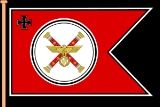
Oberkommando der Wehrmacht

Encyclopedia
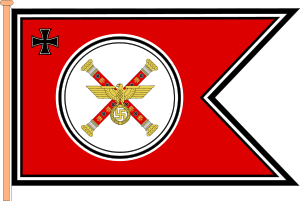
English language
English is a West Germanic language that arose in the Anglo-Saxon kingdoms of England and spread into what was to become south-east Scotland under the influence of the Anglian medieval kingdom of Northumbria...
: "Supreme Command of the Armed Forces") was part of the command structure of the armed forces (Wehrmacht
Wehrmacht
The Wehrmacht – from , to defend and , the might/power) were the unified armed forces of Nazi Germany from 1935 to 1945. It consisted of the Heer , the Kriegsmarine and the Luftwaffe .-Origin and use of the term:...
) of Nazi Germany
Nazi Germany
Nazi Germany , also known as the Third Reich , but officially called German Reich from 1933 to 1943 and Greater German Reich from 26 June 1943 onward, is the name commonly used to refer to the state of Germany from 1933 to 1945, when it was a totalitarian dictatorship ruled by...
during World War II
World War II
World War II, or the Second World War , was a global conflict lasting from 1939 to 1945, involving most of the world's nations—including all of the great powers—eventually forming two opposing military alliances: the Allies and the Axis...
.
Genesis
The OKW was formed on 4 February 1938 following the Blomberg-Fritsch AffairBlomberg-Fritsch Affair
The Blomberg–Fritsch Affair were two related scandals in early 1938 that resulted in the subjugation of the German Armed Forces to dictator Adolf Hitler...
, which led to the dismissal of Generalfeldmarschall
Generalfeldmarschall
Field Marshal or Generalfeldmarschall in German, was a rank in the armies of several German states and the Holy Roman Empire; in the Austrian Empire, the rank Feldmarschall was used...
(and Reich
Reich
Reich is a German word cognate with the English rich, but also used to designate an empire, realm, or nation. The qualitative connotation from the German is " sovereign state." It is the word traditionally used for a variety of sovereign entities, including Germany in many periods of its history...
War Minister) Werner von Blomberg
Werner von Blomberg
Werner Eduard Fritz von Blomberg was a German Generalfeldmarschall, Minister of War and Commander-in-Chief of the Armed Forces until January 1938.-Early life:...
and the dissolution of the Reichskriegsministerium (Reich War Ministry). The OKW replaced the War Ministry. The appointments made to the OKW and the motive behind the reorganization are commonly thought to be Adolf Hitler
Adolf Hitler
Adolf Hitler was an Austrian-born German politician and the leader of the National Socialist German Workers Party , commonly referred to as the Nazi Party). He was Chancellor of Germany from 1933 to 1945, and head of state from 1934 to 1945...
's desire to consolidate power and authority around his position as Führer
Führer
Führer , alternatively spelled Fuehrer in both English and German when the umlaut is not available, is a German title meaning leader or guide now most associated with Adolf Hitler, who modelled it on Benito Mussolini's title il Duce, as well as with Georg von Schönerer, whose followers also...
and Reich Chancellor (Führer und Reichskanzler), to the detriment of the military leadership of the Wehrmacht.
Organization
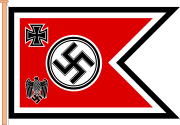
- Wehrmacht-Führungsamt (WFA) - operational orders.
- Abteilung Landesverteidigungsführungsamt (WFA/L) a sub department through which all details of operational planning were worked out, and from which all operational orders were communicated to the OKW.
- Amt Ausland/AbwehrAbwehrThe Abwehr was a German military intelligence organisation from 1921 to 1944. The term Abwehr was used as a concession to Allied demands that Germany's post-World War I intelligence activities be for "defensive" purposes only...
- foreign intelligence- Chief of Staff
- Zentralabteilung - central department
- Abteilung Ausland - foreign
- Gruppe I: Außen- und Wehrpolitik - foreign and defence policy
- Gruppe II: Beziehung zu fremden Wehrmächten - relations with foreign militaries
- Gruppe III: Fremde Wehrmachten, Meldesammelstelle des OKW - foreign militaries
- Gruppe IV: Etappenorganisation der Kriegsmarine
- Gruppe V: Auslandspresse - foreign media
- Gruppe VI: Militärische Untersuchungsstelle für Kriegsvölkerrecht - research service for international laws of war
- Gruppe VII: Kolonialfragen - colonial matters
- Gruppe VIII: Wehrauswertung - defence analysis
- Abteilung Nachrichtenbeschaffung - intelligence
- Gruppe H: Geheimer Meldedienst Heer - army intelligence service
- Gruppe M: Geheimer Meldedienst Marine - naval intelligence service
- Gruppe L: Geheimer Meldedienst Luftwaffe - air intelligence service
- Gruppe G: Technische Arbeitsmittel - technical equipment
- Gruppe wi: Geheimer Meldedienst Wirtschaft - economic intelligence service
- Gruppe P: Presseauswertung - media analysis
- Gruppe i: Funknetz Abwehr Funkstelle - radio communications
- Abteilung Sonderdienst - special service
- Gruppe I: Minderheiten - minorities
- Gruppe II: Sondermaßnahmen - special measures
- Abteilung Abwehr - counter-intelligence
- Führungsgruppe W: Abwehr in der Wehrmacht - counter-intelligence in the military
- Gruppe Wi: Abwehr Wirtschaft - economic counter-intelligence
- Gruppe C: Abwehr Inland - inland counter-intelligence
- Gruppe F: Abwehr Ausland - foreign counter-intelligence
- Gruppe D: Sonderdienst - special service
- Gruppe S: Sabotageabwehr - counter-sabotage
- Gruppe G: Gutachten - evaluation
- Gruppe Z: Zentralarchiv - central archives
- Auslands(telegramm)prüfstelle - foreign communications
- Gruppe I: Sortierung - sorting
- Gruppe II: Chemische Untersuchung - chemical testing
- Gruppe III: Privatbriefe - private mail
- Gruppe IV: Handelsbriefe - commercial mail
- Gruppe V: Feldpostbriefe - military mail
- Gruppe VI: Kriegsgefangenenbriefe - POWs' mail
- Gruppe VII: Zentralkartei - central register
- Gruppe VIII: Auswertung - analysis
- Gruppe IX: Kriegsgefangenen-Brief-Auswertung - analysis of POWs' mail
- Wirtschafts und Rüstungsamt - supply matters
- Amtsgruppe Allgemeine Wehrmachtangelegenheiten - miscellaneous matters.
- Abteilung Inland - inland
- Allgemeine Abteilung - general
- Wehrmachtsfürsorge- und versorgungsabteilung - supplies
- Wehrmachtsfachschulunterricht - education
- Wissenschaft - science
- Wehrmachtsverwaltungsabteilung - administration
- General zu besonderen Verfügung für Kriegsgefangenenwesen - prisoners of war
- Abteilung Wehrmachtverlustwesen (WVW) - casualties
- Wehrmachtauskunftstelle für Kriegerverluste und KriegsgefangeneDeutsche Dienststelle (WASt)The Deutsche Dienststelle is a German Agency based in Berlin which maintains records of members of the former German Wehrmacht who were killed in action. Formerly called the Wehrmachtsauskunftstelle this agency also provides information about the fate of foreign and German soldiers as well as...
(WaSt) - information centre for war casualties and prisoners of war
- Wehrmachtauskunftstelle für Kriegerverluste und Kriegsgefangene
The WFA replaced the Wehrmachtsamt (Armed Forces Office) which existed between 1935–1938. During this time Wilhelm Keitel
Wilhelm Keitel
Wilhelm Bodewin Gustav Keitel was a German field marshal . As head of the Oberkommando der Wehrmacht and de facto war minister, he was one of Germany's most senior military leaders during World War II...
had headed the ministry and Hitler promoted Keitel to head OKW under the title Chef des OKW, or Chief of the Supreme Command of the Armed Forces. As head of the WFA, Keitel appointed Max von Viebahn although after two months he was removed from command and the post was not filled again until the promotion of Alfred Jodl
Alfred Jodl
Alfred Josef Ferdinand Jodl was a German military commander, attaining the position of Chief of the Operations Staff of the Armed Forces High Command during World War II, acting as deputy to Wilhelm Keitel...
. To replace Jodl at Abteilung Landesverteidigungsführungsamt (WFA/L), Walther Warlimont was appointed.
The WFA was renamed as the Wehrmachtführungsstab (Wfst) in August 1940. In December 1941 further changes took place with Abteilung Landesverteidigungsführungsamt (WFA/L) being merged into the Wehrmacht-Führungsamt and losing its role as a subordinate organization. These changes were largely cosmetic however as key staff remained in post and continued to fulfill the same duties.
The OKW directed the operations of the German Armed Forces during World War II. The OKW was almost always represented at daily situation conferences (Lagevorträge) by Jodl, Keitel, and the officer serving as Hitler's adjutant. During these conferences situation reports prepared by the head of WFA/L would be delivered to Hitler and then discussed. Following these discussions, Hitler would issue further operational orders. These orders were then relayed back to WFA/L by Jodl along with the minutes of the meeting. These would then be converted into orders for issuance to the appropriate commanders.
OKW in operation
In theory, it served as the military general staff for the Third Reich, coordinating the efforts of the Army, Navy, and Air Force (HeerGerman Army
The German Army is the land component of the armed forces of the Federal Republic of Germany. Following the disbanding of the Wehrmacht after World War II, it was re-established in 1955 as the Bundesheer, part of the newly formed West German Bundeswehr along with the Navy and the Air Force...
, Kriegsmarine
Kriegsmarine
The Kriegsmarine was the name of the German Navy during the Nazi regime . It superseded the Kaiserliche Marine of World War I and the post-war Reichsmarine. The Kriegsmarine was one of three official branches of the Wehrmacht, the unified armed forces of Nazi Germany.The Kriegsmarine grew rapidly...
, and Luftwaffe
Luftwaffe
Luftwaffe is a generic German term for an air force. It is also the official name for two of the four historic German air forces, the Wehrmacht air arm founded in 1935 and disbanded in 1946; and the current Bundeswehr air arm founded in 1956....
). In practice, it acted as Hitler's personal military staff, translating his ideas into military orders and issuing them to the three services while having little control over them. However, as the war progressed the OKW found itself exercising increasing amounts of direct command authority over military units, particularly in the West. This created a situation such that by 1942 the OKW held the de facto
De facto
De facto is a Latin expression that means "concerning fact." In law, it often means "in practice but not necessarily ordained by law" or "in practice or actuality, but not officially established." It is commonly used in contrast to de jure when referring to matters of law, governance, or...
command of Western forces while the Army High Command (Oberkommando des Heeres
Oberkommando des Heeres
The Oberkommando des Heeres was Nazi Germany's High Command of the Army from 1936 to 1945. The Oberkommando der Wehrmacht commanded OKH only in theory...
) (OKH) exercised de facto command of the Eastern Front. It was not until 28 April 1945 (2 days before his suicide
Death of Adolf Hitler
Adolf Hitler committed suicide by gunshot on Monday, 30 April 1945 in his Führerbunker in Berlin. His wife Eva , committed suicide with him by ingesting cyanide...
) that Hitler placed OKH under OKW, giving OKW command of forces on the Eastern Front.
Setting different parts of the Nazi bureaucracy to compete for his favor in areas where their administration overlapped was a standard tactic employed by Hitler to reinforce his authority; and just as in other areas of government, there was a rivalry between the OKW and the OKH. As most German operations during World War II
World War II
World War II, or the Second World War , was a global conflict lasting from 1939 to 1945, involving most of the world's nations—including all of the great powers—eventually forming two opposing military alliances: the Allies and the Axis...
were army controlled (with air support), the OKH demanded control over German military forces. Nevertheless, Hitler decided against the OKH and in favour of the OKW overseeing operations in many land theaters. As the war progressed more and more influence moved from the OKH to the OKW, with Norway
Norway
Norway , officially the Kingdom of Norway, is a Nordic unitary constitutional monarchy whose territory comprises the western portion of the Scandinavian Peninsula, Jan Mayen, and the Arctic archipelago of Svalbard and Bouvet Island. Norway has a total area of and a population of about 4.9 million...
being the first "OKW war theater
Theater (warfare)
In warfare, a theater, is defined as an area or place within which important military events occur or are progressing. The entirety of the air, land, and sea area that is or that may potentially become involved in war operations....
". More and more areas came under complete control of the OKW. Finally only the Eastern Front remained the domain of the OKH. However, as the Eastern Front was by far the primary battlefield of the German military, the OKH was still influential, particularly as Hitler was commander-in-chief of the OKH (Oberbefehlshaber des Heeres) from December 1941 until his suicide on 30 April 1945.
The OKW ran military operations on the Western front, Africa and in Italy
Italy
Italy , officially the Italian Republic languages]] under the European Charter for Regional or Minority Languages. In each of these, Italy's official name is as follows:;;;;;;;;), is a unitary parliamentary republic in South-Central Europe. To the north it borders France, Switzerland, Austria and...
. In the west operations were further split between the OKW and Oberbefehlshaber West (OBW, Commander in Chief West), who was Generalfeldmarschall Gerd von Rundstedt
Gerd von Rundstedt
Karl Rudolf Gerd von Rundstedt was a Generalfeldmarschall of the German Army during World War II. He held some of the highest field commands in all phases of the war....
(succeeded by Field Marshal Günther von Kluge
Günther von Kluge
Günther Adolf Ferdinand “Hans” von Kluge was a German military leader. He was born in Posen into a Prussian military family. Kluge rose to the rank of Field Marshal in the Wehrmacht. He was also a recipient of the Knight's Cross of the Iron Cross with Oak Leaves and Swords...
).
There was even more fragmentation as naval and air operations had their own commands (Oberkommando der Marine
Oberkommando der Marine
The Oberkommando der Marine was Nazi Germany's Naval High Command and the highest administrative and command authority of the Kriegsmarine. It was officially formed from the Marineleitung of the Reichswehr on 11 January 1936. In 1937 it was combined with the newly formed Seekriegsleitung...
(OKM) and Oberkommando der Luftwaffe
Oberkommando der Luftwaffe
The Oberkommando der Luftwaffe was the air force High Command of the Third Reich.Air Force Commanders-in-Chief* Reich Marshal Hermann Göring * Field Marshal Robert Ritter von Greim -History:...
(OKL)) which, while theoretically subordinate, were largely independent from the OKW or the OBW.
During the entire period of the war, the OKW was led by Keitel, who reported directly to Hitler, from whom most operational orders actually originated as Oberster Befehlshaber der Wehrmacht (Supreme Commander of the Armed Forces).
Albrecht von Hagen
Albrecht von Hagen
Albrecht von Hagen was a German jurist and a resistance fighter in the time of the Third Reich.- Life :Hagen was born in Langen, Pomerania , on the manor of the original East Brandenburg-Pomeranian noble family in which he was rooted...
, a member of the 20 July failed assassination attempt
July 20 Plot
On 20 July 1944, an attempt was made to assassinate Adolf Hitler, Führer of the Third Reich, inside his Wolf's Lair field headquarters near Rastenburg, East Prussia. The plot was the culmination of the efforts of several groups in the German Resistance to overthrow the Nazi-led German government...
on Hitler, was stationed here to be responsible for the courier service between military posts in Berlin and Hitler's secret military headquarters known as the Wolf's Lair
Wolfsschanze
Wolf's Lair is the standard English name for Wolfsschanze, Adolf Hitler's first World War II Eastern Front military headquarters, one of several Führerhauptquartier or FHQs located in various parts of Europe...
.
International Military Tribunal
The OKW was indicted but acquitted of being a criminal organization during the Nuremberg TrialsNuremberg Trials
The Nuremberg Trials were a series of military tribunals, held by the victorious Allied forces of World War II, most notable for the prosecution of prominent members of the political, military, and economic leadership of the defeated Nazi Germany....
. Wilhelm Keitel
Wilhelm Keitel
Wilhelm Bodewin Gustav Keitel was a German field marshal . As head of the Oberkommando der Wehrmacht and de facto war minister, he was one of Germany's most senior military leaders during World War II...
and Alfred Jodl
Alfred Jodl
Alfred Josef Ferdinand Jodl was a German military commander, attaining the position of Chief of the Operations Staff of the Armed Forces High Command during World War II, acting as deputy to Wilhelm Keitel...
however were convicted and sentenced to death by hanging
Death by hanging
Death by hanging may refer to:* Hanging* Death by Hanging, a 1968 film by Nagisa Oshima...
. Jodl was posthumously acquitted of the main charges against him in 1952, six years after sentence was carried out.
Further reading
- Greiner, Helmut. Die Oberste Wehrmachtführung 1939–1943 (1951).
- Warlimont, Walther. Im Hauptquartier der deutschen Wehrmacht (1962).