


Mustard oil

Encyclopedia
Mustard seed
Mustard seeds are the small round seeds of various mustard plants. The seeds are usually about 1 or 2 mm in diameter. Mustard seeds may be colored from yellowish white to black. They are important spices in many regional foods. The seeds can come from three different plants: black mustard , brown...
s:
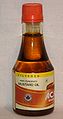
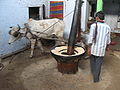
- A fatty vegetable oil resulting from pressing the seeds,
- An essential oilEssential oilAn essential oil is a concentrated hydrophobic liquid containing volatile aroma compounds from plants. Essential oils are also known as volatile oils, ethereal oils or aetherolea, or simply as the "oil of" the plant from which they were extracted, such as oil of clove...
resulting from grinding the seeds, mixing them with water, and extracting the resulting volatile oil by distillationDistillationDistillation is a method of separating mixtures based on differences in volatilities of components in a boiling liquid mixture. Distillation is a unit operation, or a physical separation process, and not a chemical reaction....
. - An oil made by infusing mustard seed extract into another vegetable oil, such as soybean oilSoybean oilSoybean oil is a vegetable oil extracted from the seeds of the soybean . It is one of the most widely consumed cooking oils. As a drying oil, processed soybean oil is also used as a base for printing inks and oil paints...
The pungency of mustard oil is due to the presence of allyl isothiocyanate
Allyl isothiocyanate
Allyl isothiocyanate is the organosulfur compound with the formula CH2CHCH2NCS. This colorless oil is responsible for the pungent taste of mustard, horseradish, and wasabi. This pungency and the lachrymatory effect of AITC is mediated through the TRPA1 and TRPV1 ion channels...
, an activator of the TRPA1
TRPA1
Transient receptor potential cation channel, subfamily A, member 1, also known as TRPA1, is a protein which in humans is encoded by the TRPA1 gene....
channel.
Pure oil
Horseradish
Horseradish is a perennial plant of the Brassicaceae family, which also includes mustard, wasabi, broccoli, and cabbages. The plant is probably native to south eastern Europe and the Arab World , but is popular around the world today...
or wasabi
Wasabi
, also known as Japanese horseradish, is a member of the Brassicaceae family, which includes cabbages, horseradish, and mustard. Its root is used as a condiment and has an extremely strong flavor. Its hotness is more akin to that of a hot mustard rather than the capsaicin in a chili pepper,...
, a hot nutty taste, and is often used for cooking in Northern India, eastern India, Nepal
Nepal
Nepal , officially the Federal Democratic Republic of Nepal, is a landlocked sovereign state located in South Asia. It is located in the Himalayas and bordered to the north by the People's Republic of China, and to the south, east, and west by the Republic of India...
and Bangladesh
Bangladesh
Bangladesh , officially the People's Republic of Bangladesh is a sovereign state located in South Asia. It is bordered by India on all sides except for a small border with Burma to the far southeast and by the Bay of Bengal to the south...
. In north India, it is mainly used in frying fritters. In Nepal
Nepalese cuisine
Nepalese cuisine refers to the cuisines of Nepal. The cultural and geographic diversity of Nepal provide ample space for a variety of cuisines based on ethnicity, soil and climate. Nevertheless dal-bhat-tarkari is eaten throughout the country. Dal is a soup made of lentils and spices...
and Bengal
Bengali cuisine
Bengali cuisine is a culinary style originating in Bengal, a region in the eastern South Asia which is now divided between the Indian state of West Bengal and the independent country of Bangladesh. Other regions, such as Tripura, and Barak Valley region of Assam also have large native Bengali...
, it is the traditionally preferred oil for cooking, although nowadays neutral-flavored oils like sunflower oil
Sunflower oil
Sunflower oil is the non-volatile oil expressed from sunflower seeds. Sunflower oil is commonly used in food as a frying oil, and in cosmetic formulations as an emollient. Sunflower oil was first industrially produced in 1835 in the Russian Empire.- Composition :Sunflower oil is mainly a...
are also extensively used. The oil makes up about 30% of the mustard seeds. It can be produced from black mustard (Brassica nigra
Brassica nigra
Brassica nigra is an annual weedy plant cultivated for its seeds, which are commonly used as a spice.-Description:...
), brown Indian mustard (Brassica juncea
Brassica juncea
Brassica juncea, also known as mustard greens, Indian mustard, Chinese mustard, and leaf mustard, is a species of mustard plant. Subvarieties include southern giant curled mustard, which resembles a headless cabbage such as kale, but with a distinct horseradish-mustard flavor...
), and white mustard (Brassica hirta).
Mustard oil contains the pungent Allyl isothiocyanate
Allyl isothiocyanate
Allyl isothiocyanate is the organosulfur compound with the formula CH2CHCH2NCS. This colorless oil is responsible for the pungent taste of mustard, horseradish, and wasabi. This pungency and the lachrymatory effect of AITC is mediated through the TRPA1 and TRPV1 ion channels...
and has about 60% monounsaturated fatty acid
Fatty acid
In chemistry, especially biochemistry, a fatty acid is a carboxylic acid with a long unbranched aliphatic tail , which is either saturated or unsaturated. Most naturally occurring fatty acids have a chain of an even number of carbon atoms, from 4 to 28. Fatty acids are usually derived from...
s of which 42% erucic acid
Erucic acid
Erucic acid is a monounsaturated omega-9 fatty acid, denoted 22:1 ω-9. It has the formula CH37CH=CH11COOH. It is prevalent in rapeseed, wallflower seed, and mustard seed, making up 40-50% of their oils...
and 12% oleic acid
Oleic acid
Oleic acid is a monounsaturated omega-9 fatty acid found in various animal and vegetable fats. It has the formula CH37CH=CH7COOH. It is an odorless, colourless oil, although commercial samples may be yellowish. The trans isomer of oleic acid is called elaidic acid...
, it has 21% polyunsaturates of which 6% is the omega-3 alpha-linolenic acid
Alpha-linolenic acid
α-Linolenic acid is an organic compound found in many common vegetable oils. In terms of its structure, it is named all-cis-9,12,15-octadecatrienoic acid. In physiological literature, it is given the name 18:3 ....
and 15% omega-6 linoleic acid
Linoleic acid
Linoleic acid is an unsaturated n-6 fatty acid. It is a colorless liquid at room temperature. In physiological literature, it has a lipid number of 18:2...
and it has 12% saturated fats.
Mustard seeds, like all seeds of the Brassica family, including canola (rapeseed) and turnip, have high levels of omega-3 (6–11%) and are a common, cheap, mass-produced source of plant-based (therefore, vegetarian) omega-3 fatty acids (see Indo-Mediterranean diet in the links below). Flax (linseed) oil has 55% plant-based omega-3 but is uncommon as a table or cooking oil. Soybean oil has 6% omega-3 but contains over 50% omega-6, the fatty acid that competes with the omega-3 function. Other than rapeseed and mustard oils, there are few other common sources of plant based omega-3 in Western and Indian diets. Especially when omega-6 intake is kept low, humans can convert the plant omega-3 into one of the fish omega-3s, eicosapentaenoic acid
Eicosapentaenoic acid
Eicosapentaenoic acid is an omega-3 fatty acid. In physiological literature, it is given the name 20:5. It also has the trivial name timnodonic acid...
, in limited amounts, a useful source for vegetarians.
In India
India
India , officially the Republic of India , is a country in South Asia. It is the seventh-largest country by geographical area, the second-most populous country with over 1.2 billion people, and the most populous democracy in the world...
, mustard oil is often heated almost to smoking before it is used for cooking; this may be an attempt to reduce the strong smell and taste. However, high heat can damage the omega-3 in the oil, reducing its unique role in health. In Western countries, the oil is often sold "for external use only" in stores catering to Indian immigrants, since in North India
North India
North India, known natively as Uttar Bhārat or Shumālī Hindustān , is a loosely defined region in the northern part of India. The exact meaning of the term varies by usage...
, mustard oil is also used for rub-downs and massages (see ayurveda
Ayurveda
Ayurveda or ayurvedic medicine is a system of traditional medicine native to India and a form of alternative medicine. In Sanskrit, words , meaning "longevity", and , meaning "knowledge" or "science". The earliest literature on Indian medical practice appeared during the Vedic period in India,...
), thought to improve blood circulation, muscular development and skin texture; the oil is also antibacterial. The oil is also sometimes used prior to sexual intercourse
Sexual intercourse
Sexual intercourse, also known as copulation or coitus, commonly refers to the act in which a male's penis enters a female's vagina for the purposes of sexual pleasure or reproduction. The entities may be of opposite sexes, or they may be hermaphroditic, as is the case with snails...
on the male genitalia to enhance erections or strengthen virility.
Effects on health
The effects of erucic acidErucic acid
Erucic acid is a monounsaturated omega-9 fatty acid, denoted 22:1 ω-9. It has the formula CH37CH=CH11COOH. It is prevalent in rapeseed, wallflower seed, and mustard seed, making up 40-50% of their oils...
from edible oils on human health are controversial. However no negative health effects have ever been documented in humans. A four-to-one mixture of erucic acid and oleic acid constitutes Lorenzo's oil
Lorenzo's oil
Lorenzo's oil is a 4:1 mixture of glycerol trioleate and glycerol trierucate , prepared from olive oil and rapeseed oil....
; an experimental treatment for a rare neurobiology disorder adrenoleukodystrophy
Adrenoleukodystrophy
Adrenoleukodystrophy is a rare, inherited disorder that leads to progressive brain damage, failure of the adrenal glands and eventually death. ALD is a disease in a group of genetic disorders called leukodystrophies, whose chief feature is damage to myelin...
.
Mustard oil was once considered unsuitable for human consumption in the United States
United States
The United States of America is a federal constitutional republic comprising fifty states and a federal district...
, Canada
Canada
Canada is a North American country consisting of ten provinces and three territories. Located in the northern part of the continent, it extends from the Atlantic Ocean in the east to the Pacific Ocean in the west, and northward into the Arctic Ocean...
, and the European Union
European Union
The European Union is an economic and political union of 27 independent member states which are located primarily in Europe. The EU traces its origins from the European Coal and Steel Community and the European Economic Community , formed by six countries in 1958...
due to the high content of erucic acid
Erucic acid
Erucic acid is a monounsaturated omega-9 fatty acid, denoted 22:1 ω-9. It has the formula CH37CH=CH11COOH. It is prevalent in rapeseed, wallflower seed, and mustard seed, making up 40-50% of their oils...
. This is because of early studies in rats. Subsequent studies on rats have shown that they are less able to digest vegetable fats (whether they contain erucic acid or not) than humans and pigs. Chariton et al. suggests that in rats: “Inefficient activation of erucic acid to erucyl-CoA and a low level of activity of triglyceride lipase and enzymes of betaoxidation for erucic acid probably contribute to the accumulation and retention of cardiac lipid.” Before this process was fully understood it led to the belief that erucic acid and mustard oil were both highly toxic to humans.
Epidemiological studies suggest that, in regions where mustard oil is still used in a traditional manner, mustard oil may afford some protection against cardiovascular diseases. In this sense "traditional" means that the oil is used fresh and vegetable fats count only as a small percentage of the total caloric intake. Whether this effect is due to the nature of erucic acid per se to make the blood platelets less sticky, or to the presence of a reasonably high percentage of α-linolenic acid, or to a combination of properties of fresh unrefined oil, is as yet uncertain. Care needs to be taken with such epidemiological studies in order to exclude the possibility of early deaths from other causes skewing the results. The fact that early asymptomatic coronary disease is readily detectable post mortem and is absent in the mustard oil cohorts tends to add weight to the hypothesis that mustard oil is protective.
The use of mustard oils in traditional societies for infant massage
Infant massage
Infant massage is a type of complementary and alternative treatment that uses massage therapy for human infants. This therapy has been practiced globally, and has been increasingly used in Western countries as a treatment for infants, though the scientific evidence supporting its use is limited...
has been identified by one study as risking damaging skin integrity and permeability. Other studies over larger samples have shown that massaging with mustard oil improved the weight, length, and midarm and midleg circumferences as compared to infants without massage, although sesame oil is a better candidate for this than mustard oil.
Nutritional information
1tbsp of mustard oil contains the following nutritional information according to the USDA:- Calories : 124
- Fat: 14
- Carbohydrates: 0
- Fibers: 0
- Protein: 0
Solution
The pungency of the condiment mustardMustard (condiment)
Mustard is a condiment made from the seeds of a mustard plant...
results when ground mustard seeds are mixed with water
Water
Water is a chemical substance with the chemical formula H2O. A water molecule contains one oxygen and two hydrogen atoms connected by covalent bonds. Water is a liquid at ambient conditions, but it often co-exists on Earth with its solid state, ice, and gaseous state . Water also exists in a...
, vinegar
Vinegar
Vinegar is a liquid substance consisting mainly of acetic acid and water, the acetic acid being produced through the fermentation of ethanol by acetic acid bacteria. Commercial vinegar is produced either by fast or slow fermentation processes. Slow methods generally are used with traditional...
, or other liquid (or even when chewed). Under these conditions, a chemical reaction between the enzyme
Enzyme
Enzymes are proteins that catalyze chemical reactions. In enzymatic reactions, the molecules at the beginning of the process, called substrates, are converted into different molecules, called products. Almost all chemical reactions in a biological cell need enzymes in order to occur at rates...
myrosinase
Myrosinase
Myrosinase is a family of enzymes involved in plant defense against herbivores. Their structure has been elucidated and is available.-Myrosinase activity:...
and a glucosinolate
Glucosinolate
The glucosinolates are a class of organic compounds that contain sulfur and nitrogen and are derived from glucose and an amino acid. They occur as secondary metabolites of almost all plants of the order Brassicales , but also in the genus Drypetes .-Chemistry:Glucosinolates are water-soluble...
known as sinigrin
Sinigrin
Sinigrin is a glucosinolate that belongs to the family of glucosides found in some plants of the Brassicaceae family such as Brussels sprouts, broccoli, and the seeds of black mustard to name but a few...
from the seeds of black mustard (Brassica nigra
Brassica nigra
Brassica nigra is an annual weedy plant cultivated for its seeds, which are commonly used as a spice.-Description:...
) or brown Indian mustard (Brassica juncea
Brassica juncea
Brassica juncea, also known as mustard greens, Indian mustard, Chinese mustard, and leaf mustard, is a species of mustard plant. Subvarieties include southern giant curled mustard, which resembles a headless cabbage such as kale, but with a distinct horseradish-mustard flavor...
) produces allyl isothiocyanate
Allyl isothiocyanate
Allyl isothiocyanate is the organosulfur compound with the formula CH2CHCH2NCS. This colorless oil is responsible for the pungent taste of mustard, horseradish, and wasabi. This pungency and the lachrymatory effect of AITC is mediated through the TRPA1 and TRPV1 ion channels...
. By distillation
Distillation
Distillation is a method of separating mixtures based on differences in volatilities of components in a boiling liquid mixture. Distillation is a unit operation, or a physical separation process, and not a chemical reaction....
one can produce a very sharp-tasting essential oil
Essential oil
An essential oil is a concentrated hydrophobic liquid containing volatile aroma compounds from plants. Essential oils are also known as volatile oils, ethereal oils or aetherolea, or simply as the "oil of" the plant from which they were extracted, such as oil of clove...
, sometimes called volatile oil of mustard, containing more than 92% allyl isothiocyanate. The pungency of allyl isothiocyanate is due to the activation of the TRPA1
TRPA1
Transient receptor potential cation channel, subfamily A, member 1, also known as TRPA1, is a protein which in humans is encoded by the TRPA1 gene....
ion channel in sensory neurons. White mustard (Brassica hirta) does not yield allyl isothiocyanate, but a different and milder isothiocyanate
Isothiocyanate
Isothiocyanate is the chemical group –N=C=S, formed by substituting sulfur for oxygen in the isocyanate group. Many natural isothiocyanates from plants are produced by enzymatic conversion of metabolites called glucosinolates. These natural isothiocyanates, such as allyl isothiocyanate, are also...
.
Allyl isothiocyanate serves
Adaptation
An adaptation in biology is a trait with a current functional role in the life history of an organism that is maintained and evolved by means of natural selection. An adaptation refers to both the current state of being adapted and to the dynamic evolutionary process that leads to the adaptation....
the plant as a defense against herbivores. Since it is harmful to the plant itself, it is stored in the harmless form of a glucosinolate, separate from the myrosinase enzyme. Once the herbivore chews the plant, the noxious allyl isothiocyanate is produced. Allyl isothiocyanate is also responsible for the pungent taste of horseradish
Horseradish
Horseradish is a perennial plant of the Brassicaceae family, which also includes mustard, wasabi, broccoli, and cabbages. The plant is probably native to south eastern Europe and the Arab World , but is popular around the world today...
and wasabi
Wasabi
, also known as Japanese horseradish, is a member of the Brassicaceae family, which includes cabbages, horseradish, and mustard. Its root is used as a condiment and has an extremely strong flavor. Its hotness is more akin to that of a hot mustard rather than the capsaicin in a chili pepper,...
. It can be produced synthetically, sometimes known as synthetic mustard oil.
Because of the contained allyl isothiocyanate, this type of mustard oil is toxic and irritates the skin and mucous membrane
Mucous membrane
The mucous membranes are linings of mostly endodermal origin, covered in epithelium, which are involved in absorption and secretion. They line cavities that are exposed to the external environment and internal organs...
s. In very small amounts, it is often used by the food industry for flavoring. In northern Italy
Northern Italy
Northern Italy is a wide cultural, historical and geographical definition, without any administrative usage, used to indicate the northern part of the Italian state, also referred as Settentrione or Alta Italia...
, for instance, it is used in the fruit condiment called mostarda
Mostarda
Mostarda is an Italian condiment made of candied fruit and a mustard flavoured syrup. Commercially the essential oil of mustard is employed, which has the advantage of transparency; in home cooking mustard powder heated in white wine may be used.Traditionally mostarda was served with boiled meats,...
.
It is also used to repel cats and dogs. It will also denature alcohol
Ethanol
Ethanol, also called ethyl alcohol, pure alcohol, grain alcohol, or drinking alcohol, is a volatile, flammable, colorless liquid. It is a psychoactive drug and one of the oldest recreational drugs. Best known as the type of alcohol found in alcoholic beverages, it is also used in thermometers, as a...
, making it unfit for human consumption, thus avoiding the taxes collected on alcoholic beverages.
The CAS number of this type of mustard oil is 8007-40-7, and the CAS number of pure allyl isothiocyanate is 57-06-7.
Use in North Indian cultural and artistic activities
Mustard oil was once popular as a cooking oil in northern India. In the second half of the 20th century the popularity of mustard oil receded due to the availability of mass-produced vegetable oils. It is still intricately embedded in the culture:- It is poured on both sides of the threshold when someone important comes home for the first time (e.g. a newly-wedded couple or a son or daughter when returning after a long absence, or succeeding in exams or an election.
- Used as traditional jaggo potPunjabi wedding traditionsPunjabi wedding traditions and ceremonies are traditionally conducted in Punjabi and are a strong reflection of Punjabi culture.The actual religious marriage ceremony - among Sikhs, the weddings are conducted in Punjabi; among Muslims, in Urdu; and among Hindus, in Sanskrit. There are...
fuel in Punjabi weddings. - Used as part of home-made cosmetics during mayianMayianMayian is the term used for the wedding preparation ceremony one day before a punjabi Wedding. This ceremony is an evening festival, at the couple's parental homes. It consists of many rites, the Batna, Choora, Jaggo Fireworks and sometimes the Ladies Sangeet and Mendhi.- The Ceremony :One day...
. - Used as fuel for lighting earthen lamps (diyas) on festive occasions such as Diwali.
- Used in hair. Known to be extremely beneficial for hair growth.
- Used in instruments. The residue cake from the mustard oil pressing is mixed with sand, mustard oil and (sometimes) tar. The resulting sticky mixture is then smeared on the inside of DholakDholakThe Dholak is a North Indian, Pakistani and Nepalese double-headed hand-drum Madal. The name dholki may also refer to a slightly different instrument that uses high-pitch tabla style syahi masala on its treble skin. This instrument is also known as Naal or Dholki....
and Dholki membranes to add weight (from underneath) the bass membrane.This enables the typical Indian drum glissando sound, created by rubbing one's wrist over it. This is also known as a (Tel masala) Dholak MasalaDholakThe Dholak is a North Indian, Pakistani and Nepalese double-headed hand-drum Madal. The name dholki may also refer to a slightly different instrument that uses high-pitch tabla style syahi masala on its treble skin. This instrument is also known as Naal or Dholki....
or oil syahiSyahiSyahi is the tuning paste applied to the head of many South Asian percussion instruments like the dholki, tabla, mridangam, and pakhavaj.-Overview:...
.