

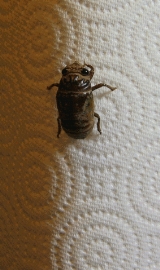
Moult

Encyclopedia
Biology
Biology is a natural science concerned with the study of life and living organisms, including their structure, function, growth, origin, evolution, distribution, and taxonomy. Biology is a vast subject containing many subdivisions, topics, and disciplines...
, moulting or molting (both pronounced ˈmoʊltɪŋ), also known as sloughing
Sloughing
Sloughing may refer to the act of shedding or casting off dead tissue, such as cells of the endometrium, shed during menstruation. It may also refer to the process where necrotic surface epithelial cells are discarded from the small intestinal mucosa following various infections which may occur...
, shedding, or for some species, ecdysis
Ecdysis
Ecdysis is the moulting of the cuticula in many invertebrates. This process of moulting is the defining feature of the clade Ecdysozoa, comprising the arthropods, nematodes, velvet worms, horsehair worms, rotifers, tardigrades and Cephalorhyncha...
, is the manner in which an animal routinely casts off a part of its body (often but not always an outer layer or covering), either at specific times of year, or at specific points in its life cycle.
Moulting can involve the epidermis (skin), pelage (hair
Hair
Hair is a filamentous biomaterial, that grows from follicles found in the dermis. Found exclusively in mammals, hair is one of the defining characteristics of the mammalian class....
, fur
Fur
Fur is a synonym for hair, used more in reference to non-human animals, usually mammals; particularly those with extensives body hair coverage. The term is sometimes used to refer to the body hair of an animal as a complete coat, also known as the "pelage". Fur is also used to refer to animal...
, wool
Wool
Wool is the textile fiber obtained from sheep and certain other animals, including cashmere from goats, mohair from goats, qiviut from muskoxen, vicuña, alpaca, camel from animals in the camel family, and angora from rabbits....
), or other external layer. In some species, other body parts may be shed, for example, wing
Wing
A wing is an appendage with a surface that produces lift for flight or propulsion through the atmosphere, or through another gaseous or liquid fluid...
s in some insect
Insect
Insects are a class of living creatures within the arthropods that have a chitinous exoskeleton, a three-part body , three pairs of jointed legs, compound eyes, and two antennae...
s. Examples include old feather
Feather
Feathers are one of the epidermal growths that form the distinctive outer covering, or plumage, on birds and some non-avian theropod dinosaurs. They are considered the most complex integumentary structures found in vertebrates, and indeed a premier example of a complex evolutionary novelty. They...
s in bird
Bird
Birds are feathered, winged, bipedal, endothermic , egg-laying, vertebrate animals. Around 10,000 living species and 188 families makes them the most speciose class of tetrapod vertebrates. They inhabit ecosystems across the globe, from the Arctic to the Antarctic. Extant birds range in size from...
s, old hair
Hair
Hair is a filamentous biomaterial, that grows from follicles found in the dermis. Found exclusively in mammals, hair is one of the defining characteristics of the mammalian class....
s in mammal
Mammal
Mammals are members of a class of air-breathing vertebrate animals characterised by the possession of endothermy, hair, three middle ear bones, and mammary glands functional in mothers with young...
s (especially dog
Dog
The domestic dog is a domesticated form of the gray wolf, a member of the Canidae family of the order Carnivora. The term is used for both feral and pet varieties. The dog may have been the first animal to be domesticated, and has been the most widely kept working, hunting, and companion animal in...
s and other canidae
Canidae
Canidae is the biological family of carnivorous and omnivorous mammals that includes wolves, foxes, jackals, coyotes, and domestic dogs. A member of this family is called a canid . The Canidae family is divided into two tribes: Canini and Vulpini...
), old skin
Skin
-Dermis:The dermis is the layer of skin beneath the epidermis that consists of connective tissue and cushions the body from stress and strain. The dermis is tightly connected to the epidermis by a basement membrane. It also harbors many Mechanoreceptors that provide the sense of touch and heat...
in reptile
Reptile
Reptiles are members of a class of air-breathing, ectothermic vertebrates which are characterized by laying shelled eggs , and having skin covered in scales and/or scutes. They are tetrapods, either having four limbs or being descended from four-limbed ancestors...
s, and the entire exoskeleton
Exoskeleton
An exoskeleton is the external skeleton that supports and protects an animal's body, in contrast to the internal skeleton of, for example, a human. In popular usage, some of the larger kinds of exoskeletons are known as "shells". Examples of exoskeleton animals include insects such as grasshoppers...
in arthropod
Arthropod
An arthropod is an invertebrate animal having an exoskeleton , a segmented body, and jointed appendages. Arthropods are members of the phylum Arthropoda , and include the insects, arachnids, crustaceans, and others...
s.
Examples
| Species | Item shed | Timing | Known as | Notes |
|---|---|---|---|---|
| Chicken Chicken The chicken is a domesticated fowl, a subspecies of the Red Junglefowl. As one of the most common and widespread domestic animals, and with a population of more than 24 billion in 2003, there are more chickens in the world than any other species of bird... s |
Feathers | Usually autumn | Moulting | Chickens generally stop laying eggs before their moulting begins until their new set of feathers has grown back. |
| Dog Dog The domestic dog is a domesticated form of the gray wolf, a member of the Canidae family of the order Carnivora. The term is used for both feral and pet varieties. The dog may have been the first animal to be domesticated, and has been the most widely kept working, hunting, and companion animal in... s and other canids |
Hair Hair Hair is a filamentous biomaterial, that grows from follicles found in the dermis. Found exclusively in mammals, hair is one of the defining characteristics of the mammalian class.... (Fur Fur Fur is a synonym for hair, used more in reference to non-human animals, usually mammals; particularly those with extensives body hair coverage. The term is sometimes used to refer to the body hair of an animal as a complete coat, also known as the "pelage". Fur is also used to refer to animal... ) |
Semi-annually, spring and fall (autumn) | SheddingMoulting | Moulting in canids, as in all mammals, is thought to be due to fluctuations in the amount of melatonin secreted by their pineal gland in response to seasonal sunlight variations. It has nothing to do with seasonal temperature variations. This seasonality in shed pattern is most preserved in Arctic breeds of dogs that shed twice a year, other breeds now shed year round. |
| Snake Snake Snakes are elongate, legless, carnivorous reptiles of the suborder Serpentes that can be distinguished from legless lizards by their lack of eyelids and external ears. Like all squamates, snakes are ectothermic, amniote vertebrates covered in overlapping scales... s |
Skin Skin -Dermis:The dermis is the layer of skin beneath the epidermis that consists of connective tissue and cushions the body from stress and strain. The dermis is tightly connected to the epidermis by a basement membrane. It also harbors many Mechanoreceptors that provide the sense of touch and heat... |
Regularly, when old skin is outgrown | Moulting | Snakes will rub against rough surfaces to shed their skin. |
| Lizard Lizard Lizards are a widespread group of squamate reptiles, with nearly 3800 species, ranging across all continents except Antarctica as well as most oceanic island chains... s |
Skin Skin -Dermis:The dermis is the layer of skin beneath the epidermis that consists of connective tissue and cushions the body from stress and strain. The dermis is tightly connected to the epidermis by a basement membrane. It also harbors many Mechanoreceptors that provide the sense of touch and heat... |
Regularly, when old skin is outgrown | Moulting | Lizards consume their shed skin for calcium, grooming, and other nutrients |
| Hermit crab Hermit crab Hermit crabs are decapod crustaceans of the superfamily Paguroidea. Most of the 1100 species possess an asymmetrical abdomen which is concealed in an empty gastropod shell that is carried around by the hermit crab.-Description:... s |
Exoskeleton Exoskeleton An exoskeleton is the external skeleton that supports and protects an animal's body, in contrast to the internal skeleton of, for example, a human. In popular usage, some of the larger kinds of exoskeletons are known as "shells". Examples of exoskeleton animals include insects such as grasshoppers... |
Regularly, when the carapace is outgrown | Moulting | Land hermit crabs bury themselves for many weeks while they moult and consume their exoskeleton. |
| Amphibian Amphibian Amphibians , are a class of vertebrate animals including animals such as toads, frogs, caecilians, and salamanders. They are characterized as non-amniote ectothermic tetrapods... s |
Skin Skin -Dermis:The dermis is the layer of skin beneath the epidermis that consists of connective tissue and cushions the body from stress and strain. The dermis is tightly connected to the epidermis by a basement membrane. It also harbors many Mechanoreceptors that provide the sense of touch and heat... |
Regularly | Moulting | Salamanders and frogs shed their skins regularly, and often eat it. |
Birds
 |
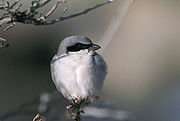 |
| A Loggerhead Shrike Loggerhead Shrike The Loggerhead Shrike is a passerine bird. It is the only member of the shrike family endemic to North America; the related Northern Shrike occurs north of its range but also in the Palearctic.... in mid-moult (left) compared to one with regular plumage (right). |
|
Bird
Birds are feathered, winged, bipedal, endothermic , egg-laying, vertebrate animals. Around 10,000 living species and 188 families makes them the most speciose class of tetrapod vertebrates. They inhabit ecosystems across the globe, from the Arctic to the Antarctic. Extant birds range in size from...
s, moulting is the periodic replacement of feather
Feather
Feathers are one of the epidermal growths that form the distinctive outer covering, or plumage, on birds and some non-avian theropod dinosaurs. They are considered the most complex integumentary structures found in vertebrates, and indeed a premier example of a complex evolutionary novelty. They...
s by shedding old feathers while producing new ones. Feathers are dead structures at maturity, and they become gradually worn down and need to be replaced. Adult birds moult at least once a year, though many moult twice, and a few three times. It is a comparatively slow process, as a bird never sheds all its feathers at once; it must keep enough of its feathers to regulate its body temperature and repel moisture. The amount of shed feathers varies. In some moulting periods, a bird may renew only the feathers on the head and body, shedding the wing and tail feathers during a later moulting period. Some species of wild bird become flightless during an annual "wing moult" and must seek protected habitat with a reliable food supply during that time. While plumage may look thin or uneven during moult, the general shape is maintained despite the loss of apparently many feathers; genuine bald spots are typically signs of unrelated illnesses, such as gross injuries, parasites, feather pecking
Feather pecking
Feather pecking is a behavioural problem that occurs most frequently amongst domestic hens reared for egg production, although it does occur in other poultry such as pheasants, turkeys, ducks and is sometimes seen in farmed ostriches. Feather pecking occurs when one bird repeatedly pecks at the...
(in commercial poultry), or (in pet birds) feather plucking.
The process of moulting in birds is as follows: First, the bird begins to shed some old feathers, then pin feathers
Pin feathers
A pin feather, sometimes called a "blood feather", is a developing feather on a bird. This feather can grow as a new feather during the bird's infancy, or grow to replace one from moulting....
grow in to replace the old feathers. As the pin feathers become full feathers, other feathers are shed. This is a cyclical process that occurs in many phases. It is usually symmetrical, with feather loss equal on each side of the body. Because feathers make up 4-12 percent of a bird's body weight, it takes a large amount of energy to replace them. For this reason, moults are frequently timed to occur right after the breeding season, but while food is still abundant. The plumage produced during this time is called postnuptial plumage.
Forced moulting
In some countries, flocks of layer hens are force moulted to reinvigorate egg-laying. This usually involves complete withdrawal of their food (and sometimes water) for 7-14 days or up to 28 days under experimental conditions which presumably reflect standard farming practice in some countries. This causes a body weight loss of 25 to 35%, which stimulates the hen to lose her feathers, but also reinvigorates egg-production. Some flocks may be force moulted several times. In 2003, more than 75% of all flocks were moulted in the US. Other methods of inducing a moult include low-density diets (e.g. grape pomace, cotton seed meal, alfalfaAlfalfa
Alfalfa is a flowering plant in the pea family Fabaceae cultivated as an important forage crop in the US, Canada, Argentina, France, Australia, the Middle East, South Africa, and many other countries. It is known as lucerne in the UK, France, Australia, South Africa and New Zealand, and known as...
meal) or dietary manipulation to create an imbalance of a particular nutrient(s). The most important among these include manipulation of minerals including sodium
Sodium
Sodium is a chemical element with the symbol Na and atomic number 11. It is a soft, silvery-white, highly reactive metal and is a member of the alkali metals; its only stable isotope is 23Na. It is an abundant element that exists in numerous minerals, most commonly as sodium chloride...
(Na), calcium
Calcium
Calcium is the chemical element with the symbol Ca and atomic number 20. It has an atomic mass of 40.078 amu. Calcium is a soft gray alkaline earth metal, and is the fifth-most-abundant element by mass in the Earth's crust...
(Ca), iodine
Iodine
Iodine is a chemical element with the symbol I and atomic number 53. The name is pronounced , , or . The name is from the , meaning violet or purple, due to the color of elemental iodine vapor....
(I) and zinc
Zinc
Zinc , or spelter , is a metallic chemical element; it has the symbol Zn and atomic number 30. It is the first element in group 12 of the periodic table. Zinc is, in some respects, chemically similar to magnesium, because its ion is of similar size and its only common oxidation state is +2...
(Zn), with full or partially reduced dietary intakes.
Dogs
DogDog
The domestic dog is a domesticated form of the gray wolf, a member of the Canidae family of the order Carnivora. The term is used for both feral and pet varieties. The dog may have been the first animal to be domesticated, and has been the most widely kept working, hunting, and companion animal in...
s shed their fur twice a year, in the spring and fall(or more often), depending on breed, living environment, and temperature. The shedding of dogs is never called "moulting". As dogs live with humans, the topic of dog shedding is of more immediate interest to the average pet owner than the shedding cycles of wild canidae. Wikipedia articles on individual dog breeds may contain more information on the shedding cycle of a particular breed.
The following is a list of breeds that are alleged by a pet website to have little or no shedding, but no proof or research is cited. Such breeds are often claimed to be hypoallergenic, but relying on such information can prove dangerous to an allergic person. The same pet website page from which the following list was obtained clearly states "All dogs shed".
| Affenpinscher Affenpinscher -History:The breed is German in origin and dates back to the seventeenth century. Its name is derived from the German Affe . The breed predates and is ancestral to the Griffon Bruxellois and Miniature Schnauzer.... |
Basenji Basenji The Basenji is a breed of hunting dog that was bred from stock originating in central Africa. Most of the major kennel clubs in the English-speaking world place the breed in the Hound Group; more specifically, it may be classified as belonging to the sighthound type... |
Bedlington Terrier Bedlington Terrier The Bedlington Terrier is a breed of terrier named after the mining town of Bedlington, Northumberland in North East England.- Description :Appearance:... |
Bergamasco | Bichon Frise Bichon Frisé A Bichon Frise , is a small breed of dog of the Bichon type. They are popular pets, similar in appearance to, but larger than, the Maltese.-Etymology and History:... |
Bolognese Bolognese (dog) The Bolognese is a small breed of dog of the Bichon type, originating in Italy. The name refers to the northern Italian city of Bologna.-Appearance:... |
| Brussels Griffon | Chinese Crested | Chinese Shar-Pei | Coton De Tulear Coton de Tulear The Coton de Tuléar is a small breed of dog. It is named for the city of Tuléar in Madagascar and for its cotton-like coat.-Appearance:Multiple registries with differing standards describe the Coton de Tuléar, but in general, it has very soft hair, comparable to a cotton ball, a prominent black... |
Dandie Dinmont Terrier Dandie Dinmont Terrier A Dandie Dinmont Terrier is a small Scottish breed of dog in the terrier family. The breed has a very long body, short legs, and a distinctive "top-knot" of hair on the head. A character in Sir Walter Scott's novel Guy Mannering has lent the name to the breed, with "Dandie Dinmont" thought to be... |
Giant Schnauzer Giant Schnauzer The Giant Schnauzer is a large, powerful, and compact breed of dog. It is one of the three Schnauzer breeds. Like most large breeds, the Giant Schnauzer needs a fair amount of exercise.-Appearance:... and Standard Schnauzer Standard Schnauzer The Standard Schnauzer is the original breed of the three breeds of Schnauzer, and despite its wiry coat and general appearance, is not related to the British terriers. Rather, its origins are in old herding and guard breeds of Europe. Generally classified as a working or utility dog, this... |
| Havanese Havanese The Havanese is a dog breed of the Bichon type, developed from the now extinct Blanquito de la Habana . The Blanquito descended from the also now extinct Bichon Tenerife, which was introduced to the Canary Islands by the Cubans... |
Irish Water Spaniel Irish Water Spaniel The Irish Water Spaniel is a breed of dog that is the largest and one of the oldest of spaniels.The Irish Water Spaniel is considered one of the rarer breeds with the AKC in terms of registrations but is still widely respected and sought-after for its unusual qualities.-Appearance:The Irish Water... |
Lakeland Terrier Lakeland Terrier The Lakeland Terrier is a dog breed, which takes its name from its home of origin, the Lake District in England. The dog is a small to mid-size member of the Terrier family. While independent in personality, it interacts well with owners and all family members, and is mostly hypo-allergenic... |
Lhasa Apso Lhasa Apso The Lhasa Apso is a non-sporting dog breed originating in Tibet. It was bred as an interior sentinel in the Buddhist monasteries, who alerted the monks to any intruders who entered... |
Maltese | Miniature Schnauzer Miniature Schnauzer The Miniature Schnauzer is a breed of small dog of the Schnauzer type that originated in Germany in the mid-to-late 19th century. Miniature Schnauzers developed from crosses between the Standard Schnauzer and one or more smaller breeds such as the Poodle and Affenpinscher.The breed remains one of... |
| Polish Lowland Sheepdog Polish Lowland Sheepdog The Polish Lowland Sheepdog , is a medium sized, shaggy-coated, sheep dog breed native to Poland.-Appearance:The PON is a muscular, thick-coated dog. The double coat can be of any color or pattern; white, gray, and brown are most common, with black, gray, or brown markings. It is common for colors... |
Poodle Poodle The Poodle is a breed of dog. The poodle breed is found officially in toy, miniature, and standard sizes, with many coat colors. Originally bred as a type of water dog, the poodle is highly intelligent and skillful in many dog sports, including agility, obedience, tracking, and even herding... |
Portuguese Water Dog Portuguese Water Dog The Portuguese Water Dog is a breed of working dog as classified by the American Kennel Club. Portuguese Water Dogs are originally from the Portuguese region of the Algarve, from where the breed expanded to all around Portugal's coast, where they were taught to herd fish into fishermen's nets, to... |
Puli Puli The Puli is a medium-big breed of Hungarian herding and livestock guarding dog known for its long, corded coat. The tight curls of the coat, similar to dreadlocks, make it virtually waterproof. A similar looking, but much larger Hungarian dog breed is called Komondor.- Appearance :The Puli is a... |
Pumi Pumi (dog) The Pumi is a medium-small terrier-type breed of sheep dog from Hungary.-History:The Pumi has been used as a "general farm dog", shepherding not only sheep but also cows and pigs, and also for catching small rodents. It originated in the 17th or 18th century, when shepherding terriers were brought... |
Shih Tzu Shih Tzu The Shih Tzu is a breed of dog weighing with long silky hair. The breed originated in China and is among the earliest breeds. Shih Tzu were officially recognized by the American Kennel Club in 1969... |
| Soft-Coated Wheaten Terrier Soft-Coated Wheaten Terrier The Soft-Coated Wheaten Terrier is a breed of dog originating from Ireland. There are four coat varieties: Traditional Irish, Heavy Irish, English, and American... |
Komondor Komondor The Komondor is a large, white-colored Hungarian breed of livestock guardian dog with a long, corded coat.... |
Welsh Terrier Welsh Terrier The Welsh Terrier is a British breed of dog. It was originally bred for hunting fox, rodents and badger , but during the last century it has mainly been bred for showing. Despite this, it has retained its terrier strength of character and therefore requires firm, non-aggressive handling... |
West Highland White Terrier West Highland White Terrier The West Highland White Terrier, commonly known as the Westie, is a Scottish breed of dog with a distinctive white coat. The modern breed is descended from a number of breeding programes of white terriers in Scotland prior to the 20th century... |
Wirehaired Pointing Griffon Wirehaired Pointing Griffon The Wirehaired Pointing Griffon is a breed of dog used in hunting as a gundog. It is sometimes considered to be Dutch in ancestry, due to the breed founder, Eduard Korthals, nationality... |
Yorkshire Terrier Yorkshire Terrier The Yorkshire Terrier is a small dog breed of terrier type, developed in the 19th century in the county of Yorkshire, England to catch rats in clothing mills. The defining features of the breed are its size, to , and its silky blue and tan coat... |
Reptiles
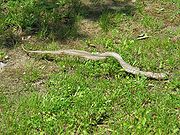
Reptile
Reptiles are members of a class of air-breathing, ectothermic vertebrates which are characterized by laying shelled eggs , and having skin covered in scales and/or scutes. They are tetrapods, either having four limbs or being descended from four-limbed ancestors...
s is when snake
Snake
Snakes are elongate, legless, carnivorous reptiles of the suborder Serpentes that can be distinguished from legless lizards by their lack of eyelids and external ears. Like all squamates, snakes are ectothermic, amniote vertebrates covered in overlapping scales...
s "shed their skin". This is usually achieved by the snake rubbing its head against a hard object, such as a rock (or between two rocks) or piece of wood, causing the already stretched skin
Skin
-Dermis:The dermis is the layer of skin beneath the epidermis that consists of connective tissue and cushions the body from stress and strain. The dermis is tightly connected to the epidermis by a basement membrane. It also harbors many Mechanoreceptors that provide the sense of touch and heat...
to split. At this point, the snake continues to rub its skin on objects, causing the end nearest the head to peel back on itself, until the snake is able to crawl out of its skin, effectively turning the moulted skin inside-out. This is similar to how one might remove a sock
Sock
A sock is an item of clothing worn on the feet. The foot is among the heaviest producers of sweat in the body, as it is able to produce over of perspiration per day. Socks help to absorb this sweat and draw it to areas where air can evaporate the perspiration. In cold environments, socks decrease...
from one's foot
Foot
The foot is an anatomical structure found in many vertebrates. It is the terminal portion of a limb which bears weight and allows locomotion. In many animals with feet, the foot is a separate organ at the terminal part of the leg made up of one or more segments or bones, generally including claws...
by grabbing the open end and pulling it over itself. The snake's skin is often left in one piece after the moulting process, including the discarded brille
Brille
The brille is the layer of transparent, immovable disc-shaped skin or scale covering the eyes of some animals for protection, especially in animals without eyelids. The brille has evolved from a fusion of the upper and lower eyelids...
, so that the moult is vital for maintaining the animal's quality of vision. Conversely, the skins of lizard
Lizard
Lizards are a widespread group of squamate reptiles, with nearly 3800 species, ranging across all continents except Antarctica as well as most oceanic island chains...
s generally fall off in pieces.
Amphibians
Both frogFrog
Frogs are amphibians in the order Anura , formerly referred to as Salientia . Most frogs are characterized by a short body, webbed digits , protruding eyes and the absence of a tail...
s and salamander
Salamander
Salamander is a common name of approximately 500 species of amphibians. They are typically characterized by a superficially lizard-like appearance, with their slender bodies, short noses, and long tails. All known fossils and extinct species fall under the order Caudata, while sometimes the extant...
s moult regularly and consume the skin, with some species moulting in pieces and others in one piece.
Arthropods
In arthropodArthropod
An arthropod is an invertebrate animal having an exoskeleton , a segmented body, and jointed appendages. Arthropods are members of the phylum Arthropoda , and include the insects, arachnids, crustaceans, and others...
s, such as insect
Insect
Insects are a class of living creatures within the arthropods that have a chitinous exoskeleton, a three-part body , three pairs of jointed legs, compound eyes, and two antennae...
s, arachnid
Arachnid
Arachnids are a class of joint-legged invertebrate animals in the subphylum Chelicerata. All arachnids have eight legs, although in some species the front pair may convert to a sensory function. The term is derived from the Greek words , meaning "spider".Almost all extant arachnids are terrestrial...
s and crustacean
Crustacean
Crustaceans form a very large group of arthropods, usually treated as a subphylum, which includes such familiar animals as crabs, lobsters, crayfish, shrimp, krill and barnacles. The 50,000 described species range in size from Stygotantulus stocki at , to the Japanese spider crab with a leg span...
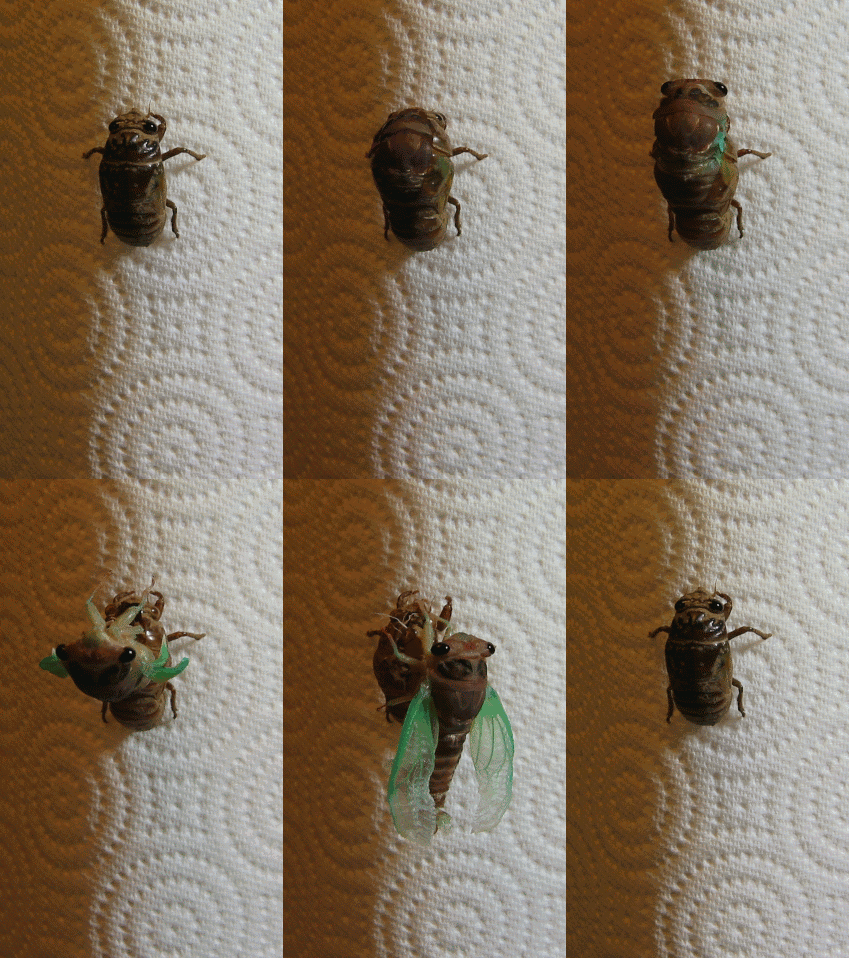
s, moulting is the shedding of the exoskeleton
Exoskeleton
An exoskeleton is the external skeleton that supports and protects an animal's body, in contrast to the internal skeleton of, for example, a human. In popular usage, some of the larger kinds of exoskeletons are known as "shells". Examples of exoskeleton animals include insects such as grasshoppers...
(which is often called its shell), typically to let the organism grow. This process is called ecdysis
Ecdysis
Ecdysis is the moulting of the cuticula in many invertebrates. This process of moulting is the defining feature of the clade Ecdysozoa, comprising the arthropods, nematodes, velvet worms, horsehair worms, rotifers, tardigrades and Cephalorhyncha...
. It is commonly said that ecdysis is necessary because the exoskeleton is rigid and cannot grow like skin
Skin
-Dermis:The dermis is the layer of skin beneath the epidermis that consists of connective tissue and cushions the body from stress and strain. The dermis is tightly connected to the epidermis by a basement membrane. It also harbors many Mechanoreceptors that provide the sense of touch and heat...
, but this is simplistic, ignoring the fact that Chelonia do not shed even the rigid external keratinous shell, and that most Arthropoda with soft, flexible skins also undergo ecdysis. The subject is far more complex than a matter of skin rigidity; it includes considerations such as nature of metamorphosis
Metamorphosis
Metamorphosis is a biological process by which an animal physically develops after birth or hatching, involving a conspicuous and relatively abrupt change in the animal's body structure through cell growth and differentiation...
, the differences between the morphology of successive instar
Instar
An instar is a developmental stage of arthropods, such as insects, between each molt , until sexual maturity is reached. Arthropods must shed the exoskeleton in order to grow or assume a new form. Differences between instars can often be seen in altered body proportions, colors, patterns, or...
s, and the fact that a new skin includes new external lenses for eyes etc (compare this with the replacement of a snake's brille in sloughing). The new exoskeleton is initially soft but hardens after the moulting of the old exoskeleton. The old exoskeleton is referred to as "exuvia
Exuvia
Exuviae is a term used in biology to describe the remains of an exoskeleton and related structures that are left after ecdysozoans have moulted...
e".
Humans
While humanHuman
Humans are the only living species in the Homo genus...
s do not strictly molt, an important part of the skin's defense against fungi is stratum corneum
Stratum corneum
The stratum corneum is the outermost layer of the epidermis, consisting of dead cells that lack nuclei and organelles. The purpose of the stratum corneum is to form a barrier to protect underlying tissue from infection, dehydration, chemicals and mechanical stress...
turnover that removes the microbes by shedding the old skin
Skin
-Dermis:The dermis is the layer of skin beneath the epidermis that consists of connective tissue and cushions the body from stress and strain. The dermis is tightly connected to the epidermis by a basement membrane. It also harbors many Mechanoreceptors that provide the sense of touch and heat...
surface. This is increased by the immune system
Immune system
An immune system is a system of biological structures and processes within an organism that protects against disease by identifying and killing pathogens and tumor cells. It detects a wide variety of agents, from viruses to parasitic worms, and needs to distinguish them from the organism's own...
detection of dermatophyte
Dermatophyte
Dermatophytes are a common label for a group of three types of fungus that commonly causes skin disease in animals and humans. These anamorphic genera are: Microsporum, Epidermophyton and Trichophyton. There are about 40 species in these three genera...
s (skin living fungi) such as Trichophyton rubrum
Trichophyton rubrum
Trichophyton rubrum is a fungus that is the most common cause of athlete's foot, jock itch and ringworm. This fungus was first described by Malmsten in 1845....
.