

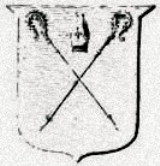
Laurence de Ergadia

Encyclopedia
Laurence de Ergadia was a thirteenth century Scottish
bishop
. Probably from the MacDougall kindred
of Argyll
, Laurence had become a Dominican
friar
and presumably university graduate before being elected Bishop of Argyll
, an election which took place sometime between 1262 and 1264. Although the election was quashed by the Pope in 1264, the Pope gave him a fresh provision to the bishopric. Laurence appears intermittently in the records during his three and a half decade episcopate, but his activities in his own diocese are badly recorded. He died as Bishop of Argyll sometime in either 1299 or 1300.
de Ergardia in a late note written into the margins of the Chronicle of Melrose
. It is simply the Latin
for "of" or "from Argyll
", a region encompassing [roughly] the west coast of central Scotland
; it does suggest, especially if it is meant as a surname
, that Laurence came from the family of the MacDougall
Lords of Argyll
, who used de Ergadia as a "surname" in the Latin documents of the period.
Laurence was a Dominican friar by the time he became Bishop of Argyll
in 1264, which meant he would have spent many of his earlier years abroad, and must have received a university education in the process. It is notable that during the long vacancy of the bishopric between the death of Bishop William in 1241 and the election of Bishop Alan 1248 × 1250, the bishopric was for several years under the custody of Clement
, Bishop of Dunblane
, himself a Dominican, the first Dominican to hold a bishopric in Scotland.
This custody occurred in a period when, urged on by Bishop Clement, King Alexander II of Scotland
had become more assertive in the area, particularly in relation to overlordship over its MacDougall ruler, Eóghan of Argyll
. The events of that decade thus may have induced Eóghan, at Clement's urging, to send a kinsman to be trained as a Dominican, and Laurence was indeed the first of three Dominican bishops of Argyll in the following century, another of whom appears to have been a MacDougall also. It might also be noted that the bishopric of Dunblane was partly dedicated to St Laurence, after whom Laurence may have been named.
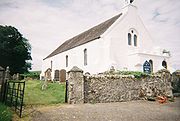 After the death of Bishop Alan in 1262, three compromissarrii (voting delegates) were selected by the cathedral chapter
of the diocese of Argyll
to elect a new bishop, and after the election of Laurence, the Dean
of the chapter travelled to the papal curia to obtain confirmation. Pope Urban IV
declared the election void on a technicality, but on March 31, 1264, issued a mandate to Gamelin
, Bishop of St Andrews, and Richard de Inverkeithing
, Bishop of Dunkeld
, authorising them to confirm the election of Laurence to the bishopric of Argyll, and instructed them to arrange for his consecration, if they found him fit.
It is not known when Laurence was consecrated, but he had received consecration by the date he is found witnessing charter
s of Bishop Gamelin of St Andrews at Loch Leven
, namely on June 20 and June 28, 1268,. He is found at Ayr
on October 23, 1269, confirming the rights of Paisley Abbey
to some churches in the bishopric of Argyll; and is found at Paisley
on May 6 and July 9, 1270, attaching his seal
to two charters granted by a landowner from Cowal
to the abbey. A papal mandate of March 15, 1273, named Bishop Laurence as one of the three bishops authorised to consecrate William Wishart
as Bishop of St Andrews, though there is no direct proof he was present at the latter's consecration, which took place on October 15, at Scone
.
In the summer of 1274 Laurence was one of the four bishop from the Kingdom of Scotland to attend the Second Council of Lyon
, and his seal his found attached to one of the Council's acts, dated July 13, 1274. Later in the year he was chosen as a papal mandatory to help resolved a dispute between Robert Wishart
, Bishop of Glasgow, and the Glasgow
cathedral chapter; at Muthill
on July 19, 1275, Laurence and the other papal mandatory, Robert de Prebenda
, Bishop of Dunblane, ordered the case to be heard later in that year, but details of the outcome have not survived. In 1275 he was named as one of the three bishops chosen to consecrated Archibald Herok as Bishop of Caithness
, the other two being Archibald
, Bishop of Moray
, and Hugh de Benin
, Bishop of Aberdeen
. Bishop Laurence is named as a papal mandatory once more on April 5, 1281, being authorised to legitimise a marriage of Hugh de Abernethy to a sister of Alexander of Argyll
, Laurence's probable kinsman.
On September 2, 1284, he issued a charter to Paisley Abbey from Kilfinan in the diocese of Argyll; sometime between 1286 and 1292 his seal was appended to a charter issued to the same abbey by Alexander Óg
, Lord of Islay
. On October 3, 1289, a papal mandate was issued to him regarding the relationship between Iona Abbey
and the Bishop of the Isles
, with the former seeking to be removed from the sphere of authority of the latter bishop, at that time Bishop Mark. Laurence is found among the prelates, magnates and barons of Scotland giving their assent to the Treaty of Birgham
on March 17, 1290, but unlike most of Scotland's senior political figures, is not found giving King Edward I of England
an oath of fealty before the Great Cause in 1291, not at any time afterwards.
He largely disappeared from the records in the 1290s, and his last known act was to send a proctor
to argue on his behalf in front of a papal judge-delegate
at Glasgow
on October 29, 1299; he was dead by December 18, 1300, the date that the Pope provided and consecrated his successor Andrew.
Kingdom of Scotland
The Kingdom of Scotland was a Sovereign state in North-West Europe that existed from 843 until 1707. It occupied the northern third of the island of Great Britain and shared a land border to the south with the Kingdom of England...
bishop
Bishop
A bishop is an ordained or consecrated member of the Christian clergy who is generally entrusted with a position of authority and oversight. Within the Catholic Church, Eastern Orthodox, Oriental Orthodox Churches, in the Assyrian Church of the East, in the Independent Catholic Churches, and in the...
. Probably from the MacDougall kindred
Clan MacDougall
Clan MacDougall is a Highland Scottish clan consisting of the descendants of Dubgall mac Somairle, son of Somerled, who ruled Lorne and the Isle of Mull in Argyll in the 13th century...
of Argyll
Argyll
Argyll , archaically Argyle , is a region of western Scotland corresponding with most of the part of ancient Dál Riata that was located on the island of Great Britain, and in a historical context can be used to mean the entire western coast between the Mull of Kintyre and Cape Wrath...
, Laurence had become a Dominican
Dominican Order
The Order of Preachers , after the 15th century more commonly known as the Dominican Order or Dominicans, is a Catholic religious order founded by Saint Dominic and approved by Pope Honorius III on 22 December 1216 in France...
friar
Friar
A friar is a member of one of the mendicant orders.-Friars and monks:...
and presumably university graduate before being elected Bishop of Argyll
Bishop of Argyll
The Bishop of Argyll or Bishop of Lismore was the ecclesiastical head of the Diocese of Argyll, one of Scotland's 13 medieval bishoprics. It was created in 1200, when the western half of the territory of the Bishopric of Dunkeld was formed into the new diocese. The bishops were based at Lismore...
, an election which took place sometime between 1262 and 1264. Although the election was quashed by the Pope in 1264, the Pope gave him a fresh provision to the bishopric. Laurence appears intermittently in the records during his three and a half decade episcopate, but his activities in his own diocese are badly recorded. He died as Bishop of Argyll sometime in either 1299 or 1300.
Background
Laurence is given the cognomenCognomen
The cognomen nōmen "name") was the third name of a citizen of Ancient Rome, under Roman naming conventions. The cognomen started as a nickname, but lost that purpose when it became hereditary. Hereditary cognomina were used to augment the second name in order to identify a particular branch within...
de Ergardia in a late note written into the margins of the Chronicle of Melrose
Chronicle of Melrose
The Chronicle of Melrose is a medieval chronicle from the Cottonian Manuscript, Faustina B. ix within the British Museum. It was written by unknown authors, though evidence in the writing shows that it most likely was written by the monks at Melrose Abbey. The chronicle begins on the year 735 and...
. It is simply the Latin
Latin
Latin is an Italic language originally spoken in Latium and Ancient Rome. It, along with most European languages, is a descendant of the ancient Proto-Indo-European language. Although it is considered a dead language, a number of scholars and members of the Christian clergy speak it fluently, and...
for "of" or "from Argyll
Argyll
Argyll , archaically Argyle , is a region of western Scotland corresponding with most of the part of ancient Dál Riata that was located on the island of Great Britain, and in a historical context can be used to mean the entire western coast between the Mull of Kintyre and Cape Wrath...
", a region encompassing [roughly] the west coast of central Scotland
Scotland
Scotland is a country that is part of the United Kingdom. Occupying the northern third of the island of Great Britain, it shares a border with England to the south and is bounded by the North Sea to the east, the Atlantic Ocean to the north and west, and the North Channel and Irish Sea to the...
; it does suggest, especially if it is meant as a surname
Surname
A surname is a name added to a given name and is part of a personal name. In many cases, a surname is a family name. Many dictionaries define "surname" as a synonym of "family name"...
, that Laurence came from the family of the MacDougall
Clan MacDougall
Clan MacDougall is a Highland Scottish clan consisting of the descendants of Dubgall mac Somairle, son of Somerled, who ruled Lorne and the Isle of Mull in Argyll in the 13th century...
Lords of Argyll
Lord of Argyll
The sovereign or feudal lordship of Argyle was the holding of the senior branch of descendants of king Somhairle, this branch becoming soon known as Clan MacDougallConstruction of the Lordship of Argyll-Lorne essentially started with Donnchad mac Dubgaill....
, who used de Ergadia as a "surname" in the Latin documents of the period.
Laurence was a Dominican friar by the time he became Bishop of Argyll
Bishop of Argyll
The Bishop of Argyll or Bishop of Lismore was the ecclesiastical head of the Diocese of Argyll, one of Scotland's 13 medieval bishoprics. It was created in 1200, when the western half of the territory of the Bishopric of Dunkeld was formed into the new diocese. The bishops were based at Lismore...
in 1264, which meant he would have spent many of his earlier years abroad, and must have received a university education in the process. It is notable that during the long vacancy of the bishopric between the death of Bishop William in 1241 and the election of Bishop Alan 1248 × 1250, the bishopric was for several years under the custody of Clement
Clement of Dunblane
Clement was a 13th century Dominican friar who was the first member of the Dominican Order in Britain and Ireland to become a bishop. In 1233, he was selected to lead the ailing diocese of Dunblane in Scotland, and faced a struggle to bring the bishopric of Dunblane to financial viability...
, Bishop of Dunblane
Bishop of Dunblane
The Bishop of Dunblane or Bishop of Strathearn was the ecclesiastical head of the Diocese of Dunblane/Strathearn, one of medieval Scotland's thirteen bishoprics. It was based at Dunblane Cathedral, now a parish church of the Church of Scotland. The bishopric itself certainly derives from an older...
, himself a Dominican, the first Dominican to hold a bishopric in Scotland.
This custody occurred in a period when, urged on by Bishop Clement, King Alexander II of Scotland
Alexander II of Scotland
Alexander II was King of Scots from1214 to his death.-Early life:...
had become more assertive in the area, particularly in relation to overlordship over its MacDougall ruler, Eóghan of Argyll
Eóghan of Argyll
Eóghan MacDubhghaill was a 13th century Scottish nobleman and warrior who was styled "King of the Isles", "Lord of Argyll"...
. The events of that decade thus may have induced Eóghan, at Clement's urging, to send a kinsman to be trained as a Dominican, and Laurence was indeed the first of three Dominican bishops of Argyll in the following century, another of whom appears to have been a MacDougall also. It might also be noted that the bishopric of Dunblane was partly dedicated to St Laurence, after whom Laurence may have been named.
Bishop of Argyll
Cathedral chapter
In accordance with canon law, a cathedral chapter is a college of clerics formed to advise a bishop and, in the case of a vacancy of the episcopal see in some countries, to govern the diocese in his stead. These councils are made up of canons and dignitaries; in the Roman Catholic church their...
of the diocese of Argyll
Diocese of Argyll
The Diocese of Argyll was an ecclesiastical territory or diocese in Scotland in the Middle Ages. The Diocese was led by the Bishop of Argyll, and was based at Lismore....
to elect a new bishop, and after the election of Laurence, the Dean
Dean (religion)
A dean, in a church context, is a cleric holding certain positions of authority within a religious hierarchy. The title is used mainly in the Anglican Communion and the Roman Catholic Church.-Anglican Communion:...
of the chapter travelled to the papal curia to obtain confirmation. Pope Urban IV
Pope Urban IV
Pope Urban IV , born Jacques Pantaléon, was Pope, from 1261 to 1264. He was not a cardinal, and there have been several Popes since him who have not been Cardinals, including Urban V and Urban VI.-Biography:...
declared the election void on a technicality, but on March 31, 1264, issued a mandate to Gamelin
Gamelin (bishop)
Gamelin was a 13th century Bishop of St Andrews. He had previously been the chancellor to King Alexander III of Scotland, as well as Papal chaplain. He was postulated to the see in Lent, 1255, and confirmed by Pope Alexander IV on 1 July 1255, who also agreed to overlook Gamelin's apparent "defect...
, Bishop of St Andrews, and Richard de Inverkeithing
Richard de Inverkeithing
Richard de Inverkeithing was a 13th century cleric from Scotland, probably from Inverkeithing in Fife. He was a Chamberlain of King Alexander II of Scotland and bishop of Dunkeld....
, Bishop of Dunkeld
Bishop of Dunkeld
The Bishop of Dunkeld is the ecclesiastical head of the Diocese of Dunkeld, one of the largest and more important of Scotland's 13 medieval bishoprics, whose first recorded bishop is an early 12th century cleric named Cormac...
, authorising them to confirm the election of Laurence to the bishopric of Argyll, and instructed them to arrange for his consecration, if they found him fit.
It is not known when Laurence was consecrated, but he had received consecration by the date he is found witnessing charter
Charter
A charter is the grant of authority or rights, stating that the granter formally recognizes the prerogative of the recipient to exercise the rights specified...
s of Bishop Gamelin of St Andrews at Loch Leven
Loch Leven
Loch Leven is a fresh water loch in Perth and Kinross council area, central Scotland.Roughly triangular, the loch is about 6 km at its longest. The burgh of Kinross lies at its western end. Loch Leven Castle lies on an island a short way offshore...
, namely on June 20 and June 28, 1268,. He is found at Ayr
Ayr
Ayr is a town and port situated on the Firth of Clyde in south-west Scotland. With a population of around 46,000, Ayr is the largest settlement in Ayrshire, of which it is the county town, and has held royal burgh status since 1205...
on October 23, 1269, confirming the rights of Paisley Abbey
Paisley Abbey
Paisley Abbey is a former Cluniac monastery, and current Church of Scotland parish kirk, located on the east bank of the White Cart Water in the centre of the town of Paisley, Renfrewshire, in west central Scotland.-History:...
to some churches in the bishopric of Argyll; and is found at Paisley
Paisley
Paisley is the largest town in the historic county of Renfrewshire in the west central Lowlands of Scotland and serves as the administrative centre for the Renfrewshire council area...
on May 6 and July 9, 1270, attaching his seal
Seal (device)
A seal can be a figure impressed in wax, clay, or some other medium, or embossed on paper, with the purpose of authenticating a document ; but the term can also mean the device for making such impressions, being essentially a mould with the mirror image of the design carved in sunken- relief or...
to two charters granted by a landowner from Cowal
Cowal
thumb|Cowal shown within ArgyllCowal is a peninsula in Argyll and Bute in the Scottish Highlands.-Description:The northern part of Cowal is mostly the mountainous Argyll Forest Park. Cowal is separated from the Kintyre peninsula to the west by Loch Fyne, and from Inverclyde and North Ayrshire to...
to the abbey. A papal mandate of March 15, 1273, named Bishop Laurence as one of the three bishops authorised to consecrate William Wishart
William Wishart
William Wishart was a 13th century Bishop of St. Andrews. He was postulated to the see of St. Andrews while holding the position as Bishop-elect of Glasgow, which he resigned when, on 2 June 1271, he was elected to that vacant see. He was succeeded at Glasgow by his cousin , Robert Wishart...
as Bishop of St Andrews, though there is no direct proof he was present at the latter's consecration, which took place on October 15, at Scone
Scone, Scotland
Scone is a village in Perth and Kinross, Scotland. The medieval village of Scone, which grew up around the monastery and royal residence, was abandoned in the early 19th century when the residents were removed and a new palace was built on the site by the Earl of Mansfield...
.
In the summer of 1274 Laurence was one of the four bishop from the Kingdom of Scotland to attend the Second Council of Lyon
Second Council of Lyon
The Second Council of Lyon was the fourteenth ecumenical council of the Catholic Church, convoked on 31 March 1272 and convened in Lyon, France, in 1274. Pope Gregory X presided over the council, called to act on a pledge by Byzantine emperor Michael VIII to reunite the Eastern church with the West...
, and his seal his found attached to one of the Council's acts, dated July 13, 1274. Later in the year he was chosen as a papal mandatory to help resolved a dispute between Robert Wishart
Robert Wishart
Robert Wishart was Bishop of Glasgow during the Wars of Scottish Independence and a leading supporter of Robert Bruce. For Wishart and many of his fellow churchmen the freedom of Scotland and the freedom of the Scottish church were one and the same thing...
, Bishop of Glasgow, and the Glasgow
Glasgow Cathedral
The church commonly known as Glasgow Cathedral is the Church of Scotland High Kirk of Glasgow otherwise known as St. Mungo's Cathedral.The other cathedrals in Glasgow are:* The Catholic Metropolitan Cathedral Church of Saint Andrew...
cathedral chapter; at Muthill
Muthill
Muthill, pronounced , is a village in Perth and Kinross, Perthshire, Scotland. It lies on the former railway line connecting Perth and Crieff, 3 miles south of Crieff. The name possibly derives from Moot hill, a place of judgement....
on July 19, 1275, Laurence and the other papal mandatory, Robert de Prebenda
Robert de Prebenda
Robert de Prebenda was a 13th century Anglo-French cleric who held the position of Bishop of Dunblane, Scotland....
, Bishop of Dunblane, ordered the case to be heard later in that year, but details of the outcome have not survived. In 1275 he was named as one of the three bishops chosen to consecrated Archibald Herok as Bishop of Caithness
Bishop of Caithness
The Bishop of Caithness was the ecclesiastical head of the Diocese of Caithness, one of Scotland's 13 medieval bishoprics. The first referenced bishop of Caithness was Aindréas, a Gael who appears in sources between 1146 and 1151 as bishop. Aindréas spent much if not all of his career outside his...
, the other two being Archibald
Archibald (d. 1298)
Archibald was a 13th century Scottish prelate best known for involvement in a dispute with the Pope.His Flemish name could indicate a connection with the de Douglas or de Moravia families either by kinship or geography, but there is no other direct evidence of this...
, Bishop of Moray
Bishop of Moray
The Bishop of Moray or Bishop of Elgin was the ecclesiastical head of the Diocese of Moray in northern Scotland, one of Scotland's 13 medieval bishoprics...
, and Hugh de Benin
Hugh de Benin
Hugh de Benin [Benham] was a 13th century bishop. If his name represents Benholm, then he may have come from an English or Anglo-Norman family recently settled in the Mearns Hugh de Benin [Benham] (died 1282) was a 13th century bishop. If his name represents Benholm, then he may have come from an...
, Bishop of Aberdeen
Bishop of Aberdeen
The Bishop of Aberdeen was the ecclesiastical head of the Diocese of Aberdeen, one of Scotland's 13 medieval bishoprics, whose first recorded bishop is an early 12th century cleric named Nechtan...
. Bishop Laurence is named as a papal mandatory once more on April 5, 1281, being authorised to legitimise a marriage of Hugh de Abernethy to a sister of Alexander of Argyll
Alexander of Argyll
Alexander of Argyll or Alexander of Lorne, also known as Alexander MacDougall , was a Scottish magnate from the late 13th and early 14th century, and was chief of Clan MacDougall. Alexander was the son of Ewen MacDougall, Lord of Argyll...
, Laurence's probable kinsman.
On September 2, 1284, he issued a charter to Paisley Abbey from Kilfinan in the diocese of Argyll; sometime between 1286 and 1292 his seal was appended to a charter issued to the same abbey by Alexander Óg
Alexander Óg
Alexander Óg , Lord of Islay , was a Hebridean magnate active at the end of the 13th- and beginning of the 14th centuries...
, Lord of Islay
Lord of Islay
The Lord of Islay was a 13th and 14th century titles used by the chief of Clan Donald of Islay before they rose to assume the title "Lord of the Isles". The first person known to style themselves "Lord of Islay" was Aonghas Mór, son of Domhnall the progenitor of the MacDonalds.-List of lords of...
. On October 3, 1289, a papal mandate was issued to him regarding the relationship between Iona Abbey
Iona Abbey
Iona Abbey is located on the Isle of Iona, just off the Isle of Mull on the West Coast of Scotland. It is one of the oldest and most important religious centres in Western Europe. The abbey was a focal point for the spread of Christianity throughout Scotland and marks the foundation of a monastic...
and the Bishop of the Isles
Bishop of the Isles
The Bishop of the Isles or Bishop of Sodor was the ecclesiastical head of the Diocese of Sodor, one of Scotland's thirteen medieval bishoprics. The bishopric, encompasing both the Hebrides and Mann, probably traces its origins as an ecclesiastical unity to the careers of Olaf, King of the Isles,...
, with the former seeking to be removed from the sphere of authority of the latter bishop, at that time Bishop Mark. Laurence is found among the prelates, magnates and barons of Scotland giving their assent to the Treaty of Birgham
Treaty of Birgham
The Treaty of Birgham, also referred to as the Treaty of Salisbury, comprised two treaties intended to secure the independence of Scotland after Alexander III died without issue in 1286....
on March 17, 1290, but unlike most of Scotland's senior political figures, is not found giving King Edward I of England
Edward I of England
Edward I , also known as Edward Longshanks and the Hammer of the Scots, was King of England from 1272 to 1307. The first son of Henry III, Edward was involved early in the political intrigues of his father's reign, which included an outright rebellion by the English barons...
an oath of fealty before the Great Cause in 1291, not at any time afterwards.
He largely disappeared from the records in the 1290s, and his last known act was to send a proctor
Proctor
Proctor, a variant of the word procurator, is a person who takes charge of, or acts for, another. The word proctor is frequently used to describe someone who oversees an exam or dormitory.The title is used in England in three principal senses:...
to argue on his behalf in front of a papal judge-delegate
Papal judge-delegate
A papal judge delegate was a type of judicial appointment created during the 12th century by the medieval papacy where the pope would designate a local judge, often an ecclesiastic, to decide a case that had been appealed to the papal court....
at Glasgow
Glasgow
Glasgow is the largest city in Scotland and third most populous in the United Kingdom. The city is situated on the River Clyde in the country's west central lowlands...
on October 29, 1299; he was dead by December 18, 1300, the date that the Pope provided and consecrated his successor Andrew.