

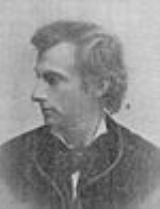
Karl Adolph Gjellerup

Encyclopedia
Karl Gjellerup was a Danish
poet
and novelist who together with his compatriot Henrik Pontoppidan
won the Nobel Prize in Literature
in 1917. He belonged to the Modern Break-Through. He occasionally used the pseudonym
Epigonos.
Gjellerup was the son of a vicar in Zealand and grew up in a national and romantic idealistic atmosphere. In the 1870s he broke with his background and at first he became an enthusiastic supporter of the naturalist movement and Georg Brandes
, writing audacious novels about free love
and atheism
. Strongly influenced by his origin he gradually left the Brandes line and 1885 he broke totally with the naturalists, becoming a new romanticist. A central trace of his life was his Germanophile
attitude, he felt himself strongly attracted to German
culture (his wife was a German) and 1892 he finally settled in Germany, which made him unpopular in Denmark on both the right and left wing. As years passed he totally identified with the German Empire, including its war aims 1914-18.
Among the early works of Gjellerup must be mentioned his most important novel Germanernes Lærling (1882, i.e. The Learner of German), a partly autobiographic tale of the development of a young man from being a conformist theologian to a pro-German atheist and intellectual, and Minna (1889), on the surface, a love story but more of a study in woman's psychology
. Some Wagnerian dramas show his growing romanticist interests. An important work is the novel Møllen (1896, i. e. The Mill), a sinister melodrama
of love and jealousy.
and Oriental culture. His critically acclaimed work Der Pilger Kamanita/Pilgrimen Kamanita (1906, i.e. The Pilgrim Kamanita) has been called 'one of the oddest novels written in Danish'. It features the journey of Kamanita, an Indian merchant's son, from earthly prosperity and carnal romance, through the ups and downs of the world's way, a chance meeting with a stranger monk (who, unbeknownst to Kamanita, was actually Gautama Buddha
), death, and reincarnation towards nirvana
. In Thailand
, which is a Buddhist country, The Pilgrim Kamanita is on the school programme.
Den fuldendtes hustru (1907, i.e. The wife of the perfect) is a versified drama, inspired by Dante
's Divine Comedy, about Buddha
's earthly life as Siddharta
, being inhibited in his spiritual efforts by his wife, Yasodhara. The giant novel Verdensvandrerne (1910, i.e. The world roamers) takes its contemporary starting point in a German female academic on a study tour in India, but evolves across chronological levels, in which characters re-experience what has happened in former eon
s, thus featuring souls roaming from one incarnation to another.
Rudolph Stens Landpraksis (1913, i.e. The country practice of [physician] Rudolph Sten) is set in the rural Zealand of Gjellerup's youth. The main character develops from a liberal, superficial outlook on life, including youthful romantical conflicts, through years of reflection and asketic devotion to duty towards a more mature standpoint, hinting at the author's own course of life.
Das heiligste Tier (1919, i.e. The holiest animal) was Gjellerup's last work. Having elements of self-parody, it is regarded as his only attempt at humour. It is a peculiar mythological satire in which animals arrive at their own Elysium after death. These include the snake that killed Cleopatra, Odysseus
' dog Argos, Wisvamitra (the holy cow of India), the donkey of Jesus
and the horses of various historical commanders in field. The assembly select, after discussion, Buddha's horse Kantaka as the holiest of animals, but it has left without a trace to follow its master to nirvana.
and the conservative right. His nomination for the Nobel award was, however, supported from Danish side for several times. Because Sweden
was neutral during World War I
, the divided prize did not arouse political speculations about partial decision, but showed on the other hand allegiance between the Nordic neighbors.
Today Gjellerup is almost forgotten in Denmark. In spite of this, however, literary historians normally regard him as an honest seeker after truth.
Gjellerup's works have been translated into several languages, including German (often translated by himself), Swedish, English, Dutch, Polish, Thai and others. The Pilgrim Kamanita is his most widely translated book, having been published in several European countries and the United States. In Thailand, a Buddhist country, the first half of the Thai translation of Kamanita have been used in secondary school
textbooks.
Denmark
Denmark is a Scandinavian country in Northern Europe. The countries of Denmark and Greenland, as well as the Faroe Islands, constitute the Kingdom of Denmark . It is the southernmost of the Nordic countries, southwest of Sweden and south of Norway, and bordered to the south by Germany. Denmark...
poet
Poetry
Poetry is a form of literary art in which language is used for its aesthetic and evocative qualities in addition to, or in lieu of, its apparent meaning...
and novelist who together with his compatriot Henrik Pontoppidan
Henrik Pontoppidan
Henrik Pontoppidan was a realist writer who shared with Karl Gjellerup the Nobel Prize for Literature in 1917 for "his authentic descriptions of present-day life in Denmark." Pontoppidan's novels and short stories — informed with a desire for social progress but despairing, later in his...
won the Nobel Prize in Literature
Nobel Prize in Literature
Since 1901, the Nobel Prize in Literature has been awarded annually to an author from any country who has, in the words from the will of Alfred Nobel, produced "in the field of literature the most outstanding work in an ideal direction"...
in 1917. He belonged to the Modern Break-Through. He occasionally used the pseudonym
Pseudonym
A pseudonym is a name that a person assumes for a particular purpose and that differs from his or her original orthonym...
Epigonos.
Gjellerup was the son of a vicar in Zealand and grew up in a national and romantic idealistic atmosphere. In the 1870s he broke with his background and at first he became an enthusiastic supporter of the naturalist movement and Georg Brandes
Georg Brandes
Georg Morris Cohen Brandes was a Danish critic and scholar who had great influence on Scandinavian and European literature from the 1870s through the turn of the 20th century. He is seen as the theorist behind the "Modern Breakthrough" of Scandinavian culture...
, writing audacious novels about free love
Free love
The term free love has been used to describe a social movement that rejects marriage, which is seen as a form of social bondage. The Free Love movement’s initial goal was to separate the state from sexual matters such as marriage, birth control, and adultery...
and atheism
Atheism
Atheism is, in a broad sense, the rejection of belief in the existence of deities. In a narrower sense, atheism is specifically the position that there are no deities...
. Strongly influenced by his origin he gradually left the Brandes line and 1885 he broke totally with the naturalists, becoming a new romanticist. A central trace of his life was his Germanophile
Germanophile
A Germanophile is a person who is fond of German culture, German people, and Germany in general, exhibiting as it were German nationalism in spite of not being an ethnic German or a German citizen. Its opposite is Germanophobia...
attitude, he felt himself strongly attracted to German
Germany
Germany , officially the Federal Republic of Germany , is a federal parliamentary republic in Europe. The country consists of 16 states while the capital and largest city is Berlin. Germany covers an area of 357,021 km2 and has a largely temperate seasonal climate...
culture (his wife was a German) and 1892 he finally settled in Germany, which made him unpopular in Denmark on both the right and left wing. As years passed he totally identified with the German Empire, including its war aims 1914-18.
Among the early works of Gjellerup must be mentioned his most important novel Germanernes Lærling (1882, i.e. The Learner of German), a partly autobiographic tale of the development of a young man from being a conformist theologian to a pro-German atheist and intellectual, and Minna (1889), on the surface, a love story but more of a study in woman's psychology
Psychology
Psychology is the study of the mind and behavior. Its immediate goal is to understand individuals and groups by both establishing general principles and researching specific cases. For many, the ultimate goal of psychology is to benefit society...
. Some Wagnerian dramas show his growing romanticist interests. An important work is the novel Møllen (1896, i. e. The Mill), a sinister melodrama
Melodrama
The term melodrama refers to a dramatic work that exaggerates plot and characters in order to appeal to the emotions. It may also refer to the genre which includes such works, or to language, behavior, or events which resemble them...
of love and jealousy.
Later years
In his last years he was clearly influenced by BuddhismBuddhism
Buddhism is a religion and philosophy encompassing a variety of traditions, beliefs and practices, largely based on teachings attributed to Siddhartha Gautama, commonly known as the Buddha . The Buddha lived and taught in the northeastern Indian subcontinent some time between the 6th and 4th...
and Oriental culture. His critically acclaimed work Der Pilger Kamanita/Pilgrimen Kamanita (1906, i.e. The Pilgrim Kamanita) has been called 'one of the oddest novels written in Danish'. It features the journey of Kamanita, an Indian merchant's son, from earthly prosperity and carnal romance, through the ups and downs of the world's way, a chance meeting with a stranger monk (who, unbeknownst to Kamanita, was actually Gautama Buddha
Gautama Buddha
Siddhārtha Gautama was a spiritual teacher from the Indian subcontinent, on whose teachings Buddhism was founded. In most Buddhist traditions, he is regarded as the Supreme Buddha Siddhārtha Gautama (Sanskrit: सिद्धार्थ गौतम; Pali: Siddhattha Gotama) was a spiritual teacher from the Indian...
), death, and reincarnation towards nirvana
Nirvana
Nirvāṇa ; ) is a central concept in Indian religions. In sramanic thought, it is the state of being free from suffering. In Hindu philosophy, it is the union with the Supreme being through moksha...
. In Thailand
Thailand
Thailand , officially the Kingdom of Thailand , formerly known as Siam , is a country located at the centre of the Indochina peninsula and Southeast Asia. It is bordered to the north by Burma and Laos, to the east by Laos and Cambodia, to the south by the Gulf of Thailand and Malaysia, and to the...
, which is a Buddhist country, The Pilgrim Kamanita is on the school programme.
Den fuldendtes hustru (1907, i.e. The wife of the perfect) is a versified drama, inspired by Dante
DANTE
Delivery of Advanced Network Technology to Europe is a not-for-profit organisation that plans, builds and operates the international networks that interconnect the various national research and education networks in Europe and surrounding regions...
's Divine Comedy, about Buddha
Buddha
In Buddhism, buddhahood is the state of perfect enlightenment attained by a buddha .In Buddhism, the term buddha usually refers to one who has become enlightened...
's earthly life as Siddharta
Gautama Buddha
Siddhārtha Gautama was a spiritual teacher from the Indian subcontinent, on whose teachings Buddhism was founded. In most Buddhist traditions, he is regarded as the Supreme Buddha Siddhārtha Gautama (Sanskrit: सिद्धार्थ गौतम; Pali: Siddhattha Gotama) was a spiritual teacher from the Indian...
, being inhibited in his spiritual efforts by his wife, Yasodhara. The giant novel Verdensvandrerne (1910, i.e. The world roamers) takes its contemporary starting point in a German female academic on a study tour in India, but evolves across chronological levels, in which characters re-experience what has happened in former eon
Eon
-Science:* Aeon, a very long time* Eon , a collective problem solving project* Eon Mountain, in Canada* A measure of time in the geologic time scale- Fiction :* Eon , by Greg Bear...
s, thus featuring souls roaming from one incarnation to another.
Rudolph Stens Landpraksis (1913, i.e. The country practice of [physician] Rudolph Sten) is set in the rural Zealand of Gjellerup's youth. The main character develops from a liberal, superficial outlook on life, including youthful romantical conflicts, through years of reflection and asketic devotion to duty towards a more mature standpoint, hinting at the author's own course of life.
Das heiligste Tier (1919, i.e. The holiest animal) was Gjellerup's last work. Having elements of self-parody, it is regarded as his only attempt at humour. It is a peculiar mythological satire in which animals arrive at their own Elysium after death. These include the snake that killed Cleopatra, Odysseus
Odysseus
Odysseus or Ulysses was a legendary Greek king of Ithaca and the hero of Homer's epic poem the Odyssey. Odysseus also plays a key role in Homer's Iliad and other works in the Epic Cycle....
' dog Argos, Wisvamitra (the holy cow of India), the donkey of Jesus
Jesus
Jesus of Nazareth , commonly referred to as Jesus Christ or simply as Jesus or Christ, is the central figure of Christianity...
and the horses of various historical commanders in field. The assembly select, after discussion, Buddha's horse Kantaka as the holiest of animals, but it has left without a trace to follow its master to nirvana.
Aftermath
In Denmark, Gjellerup's Nobel award was received with little enthusiasm. He had long been regarded as a German writer. During various stages of his career, he had made himself unpopular with both the naturalist left surrounding Georg BrandesGeorg Brandes
Georg Morris Cohen Brandes was a Danish critic and scholar who had great influence on Scandinavian and European literature from the 1870s through the turn of the 20th century. He is seen as the theorist behind the "Modern Breakthrough" of Scandinavian culture...
and the conservative right. His nomination for the Nobel award was, however, supported from Danish side for several times. Because Sweden
Sweden
Sweden , officially the Kingdom of Sweden , is a Nordic country on the Scandinavian Peninsula in Northern Europe. Sweden borders with Norway and Finland and is connected to Denmark by a bridge-tunnel across the Öresund....
was neutral during World War I
World War I
World War I , which was predominantly called the World War or the Great War from its occurrence until 1939, and the First World War or World War I thereafter, was a major war centred in Europe that began on 28 July 1914 and lasted until 11 November 1918...
, the divided prize did not arouse political speculations about partial decision, but showed on the other hand allegiance between the Nordic neighbors.
Today Gjellerup is almost forgotten in Denmark. In spite of this, however, literary historians normally regard him as an honest seeker after truth.
Gjellerup's works have been translated into several languages, including German (often translated by himself), Swedish, English, Dutch, Polish, Thai and others. The Pilgrim Kamanita is his most widely translated book, having been published in several European countries and the United States. In Thailand, a Buddhist country, the first half of the Thai translation of Kamanita have been used in secondary school
Secondary school
Secondary school is a term used to describe an educational institution where the final stage of schooling, known as secondary education and usually compulsory up to a specified age, takes place...
textbooks.
Biographies
- Georg Nørregård: Karl Gjellerup - en biografi, 1988 (in Danish)
- Olaf C. Nybo: Karl Gjellerup - ein literarischer Grenzgänger des Fin-de-siècle, 2002 (in German)
- Article in Vilhelm Andersen: Illustreret dansk Litteraturhistorie, 1924-34 (in Danish)
- Article in Hakon Stangerup: Dansk litteraturhistorie, 1964-66 (in Danish)
External links
- Karl Gjellerup, Timeline of Nobel Winners, brainparad.com
- Knud B. Gjesing: Karl Gjellerup, portrait of the author, Archive for Danish Literature, Danish Royal LibraryDanish Royal LibraryThe Royal Library in Copenhagen is the national library of Denmark and university library of University of Copenhagen. It is the largest library in the Nordic countries....
(in Danish) (pdf)