


Juris Doctor

Encyclopedia
Juris Doctor is a professional doctorate and first professional
graduate degree in law
.
The degree was first awarded by Harvard University
in the United States in the late 19th century and was created as a modern version of the old European doctor of law degree (such as the Dottore in Giurisprudenza in Italy and the Juris Utriusque Doctor in Germany and Central Europe). Originating from the 19th century Harvard movement for the scientific study of law, it is a law degree that in some common law jurisdictions has a goal of being the primary professional preparation for lawyers. It is a three year program in most jurisdictions.
s were law degrees, and the law degrees were doctorates. The foundations of the first universities were the glossators of the 11th century, which were schools of law. The first university, that of Bologna
, was founded as a school of law by four famous legal scholars in the 11th century who were students of the glossator
school in that city. The University of Bologna
served as the model for other law schools of the medieval age. While it was common for students of law to visit and study at schools in other countries, such was not the case with England because of the English rejection of Roman law
(except for certain jurisdictions such as the Admiralty Court) and although the University of Oxford
and University of Cambridge
did teach canon law
until the English Reformation
, the importance of common law was always superior to civil law
in those institutions.
 The nature of the J.D. can be better understood by a review of the context of the history of legal education in England. The teaching of law at Oxford University was for philosophical or scholarly purposes and not meant to prepare one to practice law. Professional training for practicing common law in England was undertaken at the Inns of Court
, but over time the training functions of the Inns lessened considerably and apprenticeships with individual practitioners arose as the prominent medium of preparation. However, because of the lack of standardization of study and of objective standards for appraisal of these apprenticeships, the role of universities became subsequently of importance for the education of lawyers in the English speaking world.
In England in 1292 when Edward I first requested that lawyers be trained, students merely sat in the courts and observed, but over time the students would hire professionals to lecture them in their residences, which led to the institution of the Inns of Court system. The original method of education at the Inns of Court was a mix of moot court
-like practice and lecture, as well as court proceedings observation. By the seventeenth century, the Inns obtained a status as a kind of university akin to the University of Oxford
and the University of Cambridge
, though very specialized in purpose. With the frequent absence of parties to suits during the Crusades
, the importance of the lawyer role grew tremendously, and the demand for lawyers grew.
Traditionally Oxford and Cambridge did not see common law as worthy of study, and included coursework in law only in the context of canon and civil law and for the purpose of the study of philosophy or history only. The apprenticeship program for solicitor
s thus emerged, structured and governed by the same rules as the apprenticeship programs for the trades. The training of solicitors by apprenticeship was formally established by an act of parliament in 1729. William Blackstone
became the first lecturer in English common law at the University of Oxford
in 1753, but the university did not establish the program for the purpose of professional study, and the lectures were very philosophical and theoretical in nature. Blackstone insisted that the study of law should be university based, where concentration on foundational principles can be had, instead of concentration on detail and procedure had through apprenticeship and the Inns of Court.
The Inns of Court continued but became less effective and admission to the bar still did not require any significant educational activity or examination, therefore in 1846 Parliament examined the education and training of prospective barristers and found the system to be inferior to the legal education provided in Europe and the United States. Therefore, formal schools of law were called for, but not finally established until later in the century, and even then the bar did not consider a university degree in admission decisions.
there was a functional bar in each state. Due to an initial distrust of a profession open only to the elite in England, as institutions for training developed in what would become the United States they emerged as quite different from those in England.
Initially in the United States the legal professionals were trained and imported from England. A formal apprenticeship or clerkship program was established first in New York in 1730—at that time a seven-year clerkship was required, and in 1756 a four-year college degree was required in addition to five years of clerking and an examination. Later the requirements were reduced to require only two years of college education. But a system like the Inns did not develop, and a college education was not required in England until the 19th century, so this system was unique.
The clerkship program required much individual study and the mentoring lawyer was expected to carefully select materials for study and guide the clerk in his study of the law and ensure that it was being absorbed. The student was supposed to compile his notes of his reading of the law into a "commonplace book", which he would try to memorize. Although those were the ideals, in reality the clerks were often overworked and rarely were able to study the law individually as expected. They were often employed to tedious tasks, such as making handwritten copies of documents. Finding sufficient legal texts was also a seriously debilitating issue, and there was no standardization in the books assigned to the clerk trainees because they were assigned by their mentor, whose opinion of the law may have differed greatly from his peers. It was said by one famous attorney in the U.S., William Livingston
, in 1745 in a New York newspaper that the clerkship program was severely flawed, and that most mentors "have no manner of concern for their clerk's future welfare... [T]is a monstrous absurdity to suppose, that the law is to be learnt by a perpetual copying of precedents." There were some few mentors that were dedicated to the service, and because of their rarity, they became so sought after that the first law schools evolved from the offices of some of these attorneys who took on many clerks and began to spend more time training than practicing law.
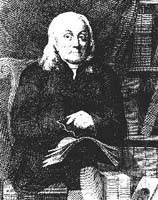 In time, the apprenticeship program was not considered sufficient to produce lawyers fully capable of serving their clients' needs. The apprenticeship programs often employed the trainee with menial tasks, and while they were well trained in the day to day operations of a law office, they were generally unprepared practitioners or legal reasoners. The establishment of formal faculties of law in U.S. universities did not occur until the latter part of the 18th century. With the beginning of the American Revolution, the supply of lawyers from Britain ended. The first law degree granted by a U.S. university was a Bachelor of Law in 1793 by the College of William and Mary
, which was abbreviated L.B.; Harvard was the first university to use the LL.B. abbreviation in the United States.
The first university law programs in the United States, such as that of the University of Maryland
established in 1812, included much theoretical and philosophical study, including works such as the Bible, Cicero
, Seneca
, Aristotle, Adam Smith, Montesquieu and Grotius. It has been said that the early university law schools of the early 19th century seemed to be preparing students for careers as statesmen rather than as lawyers. At the LL.B. programs in the early 1900s at Stanford University
and Yale
continued to include "cultural study," which included courses in languages, mathematics and economics.
In the 1850s there were many proprietary schools which originated from a practitioner taking on multiple apprentices and establishing a school and which provided a practical legal education, as opposed to the one offered in the universities which offered an education in the theory, history and philosophy of law. The universities assumed that the acquisition of skills would happen in practice, while the proprietary schools concentrated on the practical skills during education.
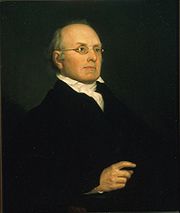 In part to compete with the small professional law schools, there began a great change in U.S. university legal education. For a short time beginning in 1826 Yale began to offer a complete "practitioners' course" which lasted two years and included practical courses, such as pleading drafting. U.S. Supreme Court justice Joseph Story
started the spirit of change in legal education at Harvard when he advocated a more "scientific study" of the law in the 19th century. At the time he was a lecturer at Harvard. Therefore at Harvard the education was much of a trade school type of approach to legal education, contrary to the more liberal arts education advocated by Blackstone at Oxford and Jefferson at William and Mary. Nonetheless there continued to be debate among educators over whether legal education should be more vocational, as at the private law schools, or through a rigorous scientific method, such as that developed by Story and Langdell
. In the words of Dorsey Ellis, "Langdell viewed law as a science and the law library as the laboratory, with the cases providing the basis for learning those 'principles or doctrines' of which law, considered as a science, consists. Nonetheless, into the year 1900 most states did not require a university education (although an apprenticeship was often required) and most practitioners had not attended any law school or college.
Therefore, the modern legal education system in the U.S. is a combination of teaching law as a science and a practical skill, implementing elements such as clinical training, which has become an essential part of legal education in the U.S. and in the J.D. program of study. Today as a result of the development of the U.S. legal education system, law graduates receive more practical experience, but are nonetheless unprepared to practice law on their own upon graduation from law school.
from 1870 to 1895, dedicated his life to reforming legal education
in the United States. The historian Robert Stevens wrote that "it was Langdell's goal to turn the legal profession into a university educated one—and not at the undergraduate level, but through a three-year post baccalaureate degree." This graduate level study would allow the intensive legal training that Langdell had developed, known as the case method (a method of studying landmark cases) and the Socratic method (a method of examining students on the reasoning of the court in the cases studied). Therefore, a graduate high level law degree was established, the Juris Doctor, implementing the case and Socratic methods as its didactic approach. According to professor J. H. Beale
, a 1882 Harvard Law graduate, one of the main arguments for the change was uniformity. Harvard's four professional schools of Theology, Law, Medicine and Arts and Sciences were all graduate schools, and their degrees were therefore a second degree. Two of them conferred a doctorate and the other two a baccalaureate degree. The change from LL. B. to J.D. was intended to end this discriminatory practice of conferring what is normally a first degree upon persons who have already their primary degree. The J.D. was established as the equivalent of the J.U.D. in Germany to reflect the advanced study required to be an effective lawyer. Harvard was first to offer the new doctorate. The University of Chicago Law School
was the first to offer it exclusively (i.e., the first to not offer both the J.D. and the LL.B.). While approval was still pending at Harvard, the degree was introduced at many other law schools in the United States.
Because of tradition, and concerns about less famous universities implementing a J.D. program, there was some reluctance by some institutions, such as Yale Law School, to implement the J.D. as the only law degree. By the 1960s every law school except Yale offered a J.D. as its sole professional law degree. Yale continued to confer the LL.B. as its professional degree in law until 1971. Nonetheless, the LL.B. at Yale retained the didactical changes of the "practitioners courses" of 1826 and was very different from the LL.B. in common law countries other than Canada.
The bachelor's degree originated at the University of Paris, which system was implemented at Oxford and Cambridge. The "arts" designation of the degree traditionally signifies that the student has undertaken a certain amount of study of the classics. On continental Europe the bachelor's degree was phased out in the 18th or early 19th century but it continued at Oxford and Cambridge. Today Oxford offers the bachelor's degree in law (B.C.L.) as a second entry program, contrary to the practice of all other English universities. Cambridge followed the same practice until relatively recently, renaming its LL.B. degree as LL.M. in 1982.
Because the English legal education is undergraduate and provides a general education (retaining some of the characteristics of the liberal arts degree advocated by Blackstone) a great number of the graduates have no intention of becoming solicitors or barristers. The approach of the English degree can be seen in the required curriculum, in which there is no study of civil procedure, and relatively few courses in advanced law such as business entities, bankruptcy, evidence, family law, etc. There has been a trend in the past twenty years in England to introduce more professionally relevant courses in the curriculum, particularly in "qualifying law degrees," and the law school has taken a more central role in the preparation of lawyers in England, but the degree is still more scholarly or academic than those in North America. This is also the case for other common law jurisdictions such as in Australia, India and Hong Kong.
Legal education in Canada has unique variations from other commonwealth countries. Even though the legal system of Canada is mostly a transplant of the English system (Quebec excepted), the Canadian system is unique in that there are no Inns of Court, the practical training occurs in the office of a barrister and solicitor with law society membership, and, since 1889, a university degree has been a prerequisite to initiating an articling clerkship (which requirement was not implemented until much later in England). The education in law schools in Canada was similar to that in the United States at the turn of the 20th century, but with a greater concentration on statutory drafting and interpretation, and elements of a liberal education. The bar associations in Canada were influenced by the changes at Harvard, and were sometimes quicker to nationally implement the changes proposed in the United States, such as requiring previous college education before studying law.
Until about 1997 the J.D. was unique to law schools in the U.S. But with the rise in international success of law firms from the United States, and the rise in students from outside the U.S. attending U.S. law schools, attorneys with the J.D. have become increasingly common internationally. Therefore the prestige of the J.D. has also risen, and many universities outside of the U.S. have started to offer the J.D., often for the express purpose of raising the prestige of their law school and graduates. Such institutions usually aim to appropriate the name of the degree only, and sometimes the new J.D. program of study is the same as that of their traditional law degree, which is usually more scholarly in purpose than the professional training intended with the J.D. as created in the U.S. Various characteristics can therefore be seen among J.D. degrees as implemented in universities around the world.
, intended to prepare practitioners through a scientific approach of analysing and teaching the law through logic and adversarial analysis (such as the Casebook
and Socratic methods). It has existed as described in the United States for over 100 years, and can therefore be termed the standard or traditional J.D. program. The J.D. program requires a bachelors degree for entry. The program of study for the degree has remained substantially unchanged since its creation, and is an intensive study of the substantive law and its professional applications (and therefore requires no thesis, although a lengthy writing project is sometimes required). As a professional training, it provides sufficient training for entry into practice (no apprenticeship is necessary to sit for the bar exam). It requires at least three academic years of full time study. Strictly defined, the United States is the only jurisdiction with this form of a J.D., but the University of Tokyo (in Japan) and the University of Melbourne (in Australia) are attempting to follow this model closely.
and University of Toronto Law School in Canada, and the University of Melbourne in Australia. Therefore, when the J.D. program was introduced at these institutions, it was a mere re-naming of their second-entry LL.B. program and entailed no significant substantive changes to their curricula. The reason given for so doing is because of the international popularity and recognizability of the J.D., and the need to recognize the demanding graduate characteristics of the program. Because these programs are in institutions heavily influenced by those in the UK, the J.D. programs often have some small scholarly element (see chart above, entitled "Comparisons of J.D. Variants"). And because the legal systems are also influenced by that of the UK, an apprenticeship is still required before being qualified to apply for a license to practice (see country sections below, under "Descriptions of the J.D. outside the U.S.").
, University of New South Wales
, Australian National University
, Bond University
, University of Southern Queensland
, University of New England
, University of Melbourne
, Monash University
, RMIT University
, Murdoch University
, University of Technology Sydney, University of Notre Dame Australia
, and University of Canberra
now offer the J.D., usually for graduates from non-law programs who wish to study law. At the University of Melbourne, the J.D. degree has completely replaced the LL.B. as the degree of law. In 2012 The University of Western Australia will follow the University of Melbourne's lead, also replacing the LL.B. with a J.D.
An Australian Juris Doctor lasts two or three years full-time and the courses, though both J.D. and LL.B. cannot be licensed to practice until after completing an articled clerkship program or practical legal training course. University of Technology Sydney offers Practical Legal Training as part of their J.D. program enabling direct admission upon graduation. Bond University offers a J.D. program that has core requirements that are identical to the LL.B. However, Bond University J.D. students are also required to complete five masters level elective subjects, making the Bond University J.D. program resemble an integrated Bachelor's and Master's degree. Even more unusual is the "LL.M. (J.D.)" at Monash University, which is the same as the Bond University program, and that institution also states that their degree is not a professional doctorate.
. As a practical matter, nearly all successful applicants have completed one or more degrees before admission to a Canadian law school. All Canadian Juris Doctor programs consist of three years, and have similar content in their mandatory first year courses. As with U.S. J.D. programs, such as that of the New York University Law School, the mandatory first year courses in Canadian law schools outside Quebec include "public" "constitutional" or "state" law, tort law, contract law, criminal law, and some sort of "professional practice" course. Beyond first year and the minimum requirements for graduation, course selection is elective with various concentrations such as business law, international law, natural resources law, criminal law, Aboriginal law, etc. After graduation from an accredited law school, each Province's law society requires completion of a bar examination, and a period of supervised "articling" prior to independent practice.
Use of the "J.D." designation by Canadian law schools is not intended to indicate an emphasis on American law, but rather to distinguish Canadian law degrees from English law degrees, which do not require prior undergraduate study nor offer practical legal training. The Canadian J.D. is a degree in Canadian Law. Accordingly, United States jurisdictions other than New York and Massachusetts, do not recognize Canadian Juris Doctor degrees automatically. This is equivalent to the manner in which United States J.D. graduates are treated in Canadian jurisdictions such as Ontario. To prepare graduates to practise in jurisdictions on both sides of the border, some pairs of law schools, such as the New York University (NYU) Law School and Osgoode Hall Law School, the University of Ottawa Law School and the Michigan State University Law School or American University, and the University of Windsor Law School and the University of Detroit Mercy Law School, have developed joint American-Canadian J.D programs.
, the City University of Hong Kong
, and the University of Hong Kong. The degree is known as the 法律博士 in Chinese, and in Cantonese it is pronounced as Faat Leot Bok Si. The J.D. in Hong Kong is almost identical to the LL.B. and is reserved for graduates of non-law disciplines, but the J.D. is considered to be a graduate-level degree and requires a thesis or dissertation. Like the LL.B. there is much scholarly content in the required coursework. Although the universities offering the degree claim that the J.D. is a two-year program, completing the degree in two years would require study during the summer term. There seems to be much confusion of the role or status of the J.D. in Hong Kong, as the City University website states that their J.D. is not a research doctorate. Neither the LL.B. nor the J.D. provides the education sufficient for a license to practice, as graduates of both are also required to undertake the PCLL course and a solicitor traineeship or a barrister pupillage.
the J.D. is known as Homu Hakushi (法務博士). The program generally lasts three years. Two years JD programs for applicants with legal knowledge (mainly undergrad level LLB graduates) are also offered .This curriculum is professionally oriented, but does not provide the education sufficient for a license, as all candidates for a license must attend the Legal Training and Research Institute.
, the J.D. exists alongside the more common LL.B. Like the standard LL.B, it requires four years of study, is considered as a graduate degree and requires prior undergraduate study as a prerequisite for admission, and covers the core subjects required for the bar examinations. However, the J.D. requires students to finish the core bar subjects in just 2½ years; take elective courses (such as legal theory, philosophy, and sometimes even theology); undergo an apprenticeship; and write and defend a thesis. Notwithstanding these differences, both the J.D. and the LL.B. are considered the equivalent of a master's degree by the Philippines' Commission on Higher Education.
The degree was first conferred in the Philippines by the Ateneo de Manila Law School
, which first developed the model program later adopted by most schools now offering the J.D.. After the Ateneo, schools such as the University of Batangas College of Law began offering the J.D., with schools such as the Far Eastern University Institute of Law
offering a joint degree program leading to a J.D. and an MBA. In 2008, the University of the Philippines College of Law
began conferring the J.D. on its graduates, the school choosing rename its LL.B. program into a J.D. because to accurately reflect the nature of education the university provides as "nomenclature does not accurately reflect the fact that the LL.B. is a professional as well as a post baccalaureate degree." In 2009, the Pamantasan ng Lungsod ng Maynila (PLM) and the Silliman University College of Law
also shifted their respective LL.B Programs to Juris Doctor -applying the change to incoming freshmen students for School Year 2009–2010. The newly established De La Salle University College of Law
will likewise offer the J.D., although it will offer the program using a trimestral calendar, unlike the model curriculum that uses a semestral calendar.
Also the San Sebastian College - Recoletos, Manila has started offering Juris Doctor Program last school year 2009 - 2010 http://sscrmnl.edu.ph/
J.D.'s are not generally awarded in the People's Republic of China (P.R.C.) instead,a J.M.(Juris Master) is awarded as the counterpart of JD in the United States, the professional degree in law in China. The primary law degree in the P.R.C. is the bachelor of law. In the fall of 2008 the Shenzhen campus of Peking University started the School of Transnational Law, which offers a U.S.-style education and awards both a Chinese masters degree and, by special authorization of the government, a J.D.
At this time the Juris Doctor does not exist in India; no official entity in India authorizes the award of such a degree. A new venture Jindal Global Law School sought to start an academic program with a recognized Juris Doctor degree, however that plan was withdrawn, and the school now only offers the more traditional LL.B. and LL.M. degrees.
No university in Italy awards a Juris Doctor degree, nor are there any plans to implement the degree. However, because the law degree in Italy is more advanced than a standard undergraduate program, and lawyers in Italy often use the title of "doctor" (Italian law authorizes all university graduates, including undergraduates, to use the title of doctor) lawyers in Italy believe that the best translation of their degree is "J.D." which commonly appears on their resumes and profiles.
(LL.M.), which ordinarily requires the J.D. or LL.B. as a prerequisite, and the Doctor of the Science of Law (S.J.D./J.S.D.), which ordinarily requires the LL.M. as a prerequisite. However, the American Bar Association
has issued a Council Statement advising that the J.D. be considered as being equivalent to the Ph.D. for educational employment purposes. Accordingly, while most law professors are required to conduct original writing and research in order to be awarded tenure, most only have a J.D. The United States Department of Education and the National Science Foundation
do not include the J.D. or other professional doctorates among the degrees that are equivalent to research doctorates.
First professional degree
A professional degree prepares the holder for a particular profession by emphasizing competency skills along with theory and analysis. These professions are typically licensed or otherwise regulated by a governmental or government-approved body...
graduate degree in law
Law
Law is a system of rules and guidelines which are enforced through social institutions to govern behavior, wherever possible. It shapes politics, economics and society in numerous ways and serves as a social mediator of relations between people. Contract law regulates everything from buying a bus...
.
The degree was first awarded by Harvard University
Harvard University
Harvard University is a private Ivy League university located in Cambridge, Massachusetts, United States, established in 1636 by the Massachusetts legislature. Harvard is the oldest institution of higher learning in the United States and the first corporation chartered in the country...
in the United States in the late 19th century and was created as a modern version of the old European doctor of law degree (such as the Dottore in Giurisprudenza in Italy and the Juris Utriusque Doctor in Germany and Central Europe). Originating from the 19th century Harvard movement for the scientific study of law, it is a law degree that in some common law jurisdictions has a goal of being the primary professional preparation for lawyers. It is a three year program in most jurisdictions.
Etymology and abbreviations
The degree is conferred in Latin as "Juris Doctor" (abbreviated J.D. or J. D.) or in English as "Doctor of Jurisprudence" or "Doctor of Law" (abbreviated J.D., J. D. or D. Jur.). This is different from the "Doctor of Laws" (abbreviated LL.D., LLD or LL. D.) which is usually an honorary degree.Origins of the law degree
In Europe the first academic degreeAcademic degree
An academic degree is a position and title within a college or university that is usually awarded in recognition of the recipient having either satisfactorily completed a prescribed course of study or having conducted a scholarly endeavour deemed worthy of his or her admission to the degree...
s were law degrees, and the law degrees were doctorates. The foundations of the first universities were the glossators of the 11th century, which were schools of law. The first university, that of Bologna
University of Bologna
The Alma Mater Studiorum - University of Bologna is the oldest continually operating university in the world, the word 'universitas' being first used by this institution at its foundation. The true date of its founding is uncertain, but believed by most accounts to have been 1088...
, was founded as a school of law by four famous legal scholars in the 11th century who were students of the glossator
Glossator
The scholars of the 11th and 12th century legal schools in Italy, France and Germany are identified as glossators in a specific sense. They studied Roman Law based on the Digestae, the Codex of Justinian, the Authenticae The scholars of the 11th and 12th century legal schools in Italy, France and...
school in that city. The University of Bologna
University of Bologna
The Alma Mater Studiorum - University of Bologna is the oldest continually operating university in the world, the word 'universitas' being first used by this institution at its foundation. The true date of its founding is uncertain, but believed by most accounts to have been 1088...
served as the model for other law schools of the medieval age. While it was common for students of law to visit and study at schools in other countries, such was not the case with England because of the English rejection of Roman law
Roman law
Roman law is the legal system of ancient Rome, and the legal developments which occurred before the 7th century AD — when the Roman–Byzantine state adopted Greek as the language of government. The development of Roman law comprises more than a thousand years of jurisprudence — from the Twelve...
(except for certain jurisdictions such as the Admiralty Court) and although the University of Oxford
University of Oxford
The University of Oxford is a university located in Oxford, United Kingdom. It is the second-oldest surviving university in the world and the oldest in the English-speaking world. Although its exact date of foundation is unclear, there is evidence of teaching as far back as 1096...
and University of Cambridge
University of Cambridge
The University of Cambridge is a public research university located in Cambridge, United Kingdom. It is the second-oldest university in both the United Kingdom and the English-speaking world , and the seventh-oldest globally...
did teach canon law
Canon law
Canon law is the body of laws & regulations made or adopted by ecclesiastical authority, for the government of the Christian organization and its members. It is the internal ecclesiastical law governing the Catholic Church , the Eastern and Oriental Orthodox churches, and the Anglican Communion of...
until the English Reformation
English Reformation
The English Reformation was the series of events in 16th-century England by which the Church of England broke away from the authority of the Pope and the Roman Catholic Church....
, the importance of common law was always superior to civil law
Civil law (legal system)
Civil law is a legal system inspired by Roman law and whose primary feature is that laws are codified into collections, as compared to common law systems that gives great precedential weight to common law on the principle that it is unfair to treat similar facts differently on different...
in those institutions.
The history of legal training in England
Inns of Court
The Inns of Court in London are the professional associations for barristers in England and Wales. All such barristers must belong to one such association. They have supervisory and disciplinary functions over their members. The Inns also provide libraries, dining facilities and professional...
, but over time the training functions of the Inns lessened considerably and apprenticeships with individual practitioners arose as the prominent medium of preparation. However, because of the lack of standardization of study and of objective standards for appraisal of these apprenticeships, the role of universities became subsequently of importance for the education of lawyers in the English speaking world.
In England in 1292 when Edward I first requested that lawyers be trained, students merely sat in the courts and observed, but over time the students would hire professionals to lecture them in their residences, which led to the institution of the Inns of Court system. The original method of education at the Inns of Court was a mix of moot court
Moot court
A moot court is an extracurricular activity at many law schools in which participants take part in simulated court proceedings, usually to include drafting briefs and participating in oral argument. The term derives from Anglo Saxon times, when a moot was a gathering of prominent men in a...
-like practice and lecture, as well as court proceedings observation. By the seventeenth century, the Inns obtained a status as a kind of university akin to the University of Oxford
University of Oxford
The University of Oxford is a university located in Oxford, United Kingdom. It is the second-oldest surviving university in the world and the oldest in the English-speaking world. Although its exact date of foundation is unclear, there is evidence of teaching as far back as 1096...
and the University of Cambridge
University of Cambridge
The University of Cambridge is a public research university located in Cambridge, United Kingdom. It is the second-oldest university in both the United Kingdom and the English-speaking world , and the seventh-oldest globally...
, though very specialized in purpose. With the frequent absence of parties to suits during the Crusades
Crusades
The Crusades were a series of religious wars, blessed by the Pope and the Catholic Church with the main goal of restoring Christian access to the holy places in and near Jerusalem...
, the importance of the lawyer role grew tremendously, and the demand for lawyers grew.
Traditionally Oxford and Cambridge did not see common law as worthy of study, and included coursework in law only in the context of canon and civil law and for the purpose of the study of philosophy or history only. The apprenticeship program for solicitor
Solicitor
Solicitors are lawyers who traditionally deal with any legal matter including conducting proceedings in courts. In the United Kingdom, a few Australian states and the Republic of Ireland, the legal profession is split between solicitors and barristers , and a lawyer will usually only hold one title...
s thus emerged, structured and governed by the same rules as the apprenticeship programs for the trades. The training of solicitors by apprenticeship was formally established by an act of parliament in 1729. William Blackstone
William Blackstone
Sir William Blackstone KC SL was an English jurist, judge and Tory politician of the eighteenth century. He is most noted for writing the Commentaries on the Laws of England. Born into a middle class family in London, Blackstone was educated at Charterhouse School before matriculating at Pembroke...
became the first lecturer in English common law at the University of Oxford
University of Oxford
The University of Oxford is a university located in Oxford, United Kingdom. It is the second-oldest surviving university in the world and the oldest in the English-speaking world. Although its exact date of foundation is unclear, there is evidence of teaching as far back as 1096...
in 1753, but the university did not establish the program for the purpose of professional study, and the lectures were very philosophical and theoretical in nature. Blackstone insisted that the study of law should be university based, where concentration on foundational principles can be had, instead of concentration on detail and procedure had through apprenticeship and the Inns of Court.
The Inns of Court continued but became less effective and admission to the bar still did not require any significant educational activity or examination, therefore in 1846 Parliament examined the education and training of prospective barristers and found the system to be inferior to the legal education provided in Europe and the United States. Therefore, formal schools of law were called for, but not finally established until later in the century, and even then the bar did not consider a university degree in admission decisions.
Legal training in colonial North America and 19th century U.S.
Initially there was much resistance to lawyers in colonial North America because of the role they had played in hierarchical England, but slowly the colonial governments started using the services of professionals trained in the Inns of Court in London, and by the end of the American RevolutionAmerican Revolution
The American Revolution was the political upheaval during the last half of the 18th century in which thirteen colonies in North America joined together to break free from the British Empire, combining to become the United States of America...
there was a functional bar in each state. Due to an initial distrust of a profession open only to the elite in England, as institutions for training developed in what would become the United States they emerged as quite different from those in England.
Initially in the United States the legal professionals were trained and imported from England. A formal apprenticeship or clerkship program was established first in New York in 1730—at that time a seven-year clerkship was required, and in 1756 a four-year college degree was required in addition to five years of clerking and an examination. Later the requirements were reduced to require only two years of college education. But a system like the Inns did not develop, and a college education was not required in England until the 19th century, so this system was unique.
The clerkship program required much individual study and the mentoring lawyer was expected to carefully select materials for study and guide the clerk in his study of the law and ensure that it was being absorbed. The student was supposed to compile his notes of his reading of the law into a "commonplace book", which he would try to memorize. Although those were the ideals, in reality the clerks were often overworked and rarely were able to study the law individually as expected. They were often employed to tedious tasks, such as making handwritten copies of documents. Finding sufficient legal texts was also a seriously debilitating issue, and there was no standardization in the books assigned to the clerk trainees because they were assigned by their mentor, whose opinion of the law may have differed greatly from his peers. It was said by one famous attorney in the U.S., William Livingston
William Livingston
William Livingston served as the Governor of New Jersey during the American Revolutionary War and was a signer of the United States Constitution.-Early life:...
, in 1745 in a New York newspaper that the clerkship program was severely flawed, and that most mentors "have no manner of concern for their clerk's future welfare... [T]is a monstrous absurdity to suppose, that the law is to be learnt by a perpetual copying of precedents." There were some few mentors that were dedicated to the service, and because of their rarity, they became so sought after that the first law schools evolved from the offices of some of these attorneys who took on many clerks and began to spend more time training than practicing law.
College of William and Mary
The College of William & Mary in Virginia is a public research university located in Williamsburg, Virginia, United States...
, which was abbreviated L.B.; Harvard was the first university to use the LL.B. abbreviation in the United States.
The first university law programs in the United States, such as that of the University of Maryland
University of Maryland School of Law
The University of Maryland Francis King Carey School of Law is the second-oldest law school in the United States by date of establishment and third-oldest by date of first classes. The school is located on the campus of the University of Maryland, Baltimore in Downtown Baltimore's West Side...
established in 1812, included much theoretical and philosophical study, including works such as the Bible, Cicero
Cicero
Marcus Tullius Cicero , was a Roman philosopher, statesman, lawyer, political theorist, and Roman constitutionalist. He came from a wealthy municipal family of the equestrian order, and is widely considered one of Rome's greatest orators and prose stylists.He introduced the Romans to the chief...
, Seneca
Seneca the Younger
Lucius Annaeus Seneca was a Roman Stoic philosopher, statesman, dramatist, and in one work humorist, of the Silver Age of Latin literature. He was tutor and later advisor to emperor Nero...
, Aristotle, Adam Smith, Montesquieu and Grotius. It has been said that the early university law schools of the early 19th century seemed to be preparing students for careers as statesmen rather than as lawyers. At the LL.B. programs in the early 1900s at Stanford University
Stanford University
The Leland Stanford Junior University, commonly referred to as Stanford University or Stanford, is a private research university on an campus located near Palo Alto, California. It is situated in the northwestern Santa Clara Valley on the San Francisco Peninsula, approximately northwest of San...
and Yale
YALE
RapidMiner, formerly YALE , is an environment for machine learning, data mining, text mining, predictive analytics, and business analytics. It is used for research, education, training, rapid prototyping, application development, and industrial applications...
continued to include "cultural study," which included courses in languages, mathematics and economics.
In the 1850s there were many proprietary schools which originated from a practitioner taking on multiple apprentices and establishing a school and which provided a practical legal education, as opposed to the one offered in the universities which offered an education in the theory, history and philosophy of law. The universities assumed that the acquisition of skills would happen in practice, while the proprietary schools concentrated on the practical skills during education.
Revolutionary approach: Scientific study of law
Joseph Story
Joseph Story was an American lawyer and jurist who served on the Supreme Court of the United States from 1811 to 1845. He is most remembered today for his opinions in Martin v. Hunter's Lessee and The Amistad, along with his magisterial Commentaries on the Constitution of the United States, first...
started the spirit of change in legal education at Harvard when he advocated a more "scientific study" of the law in the 19th century. At the time he was a lecturer at Harvard. Therefore at Harvard the education was much of a trade school type of approach to legal education, contrary to the more liberal arts education advocated by Blackstone at Oxford and Jefferson at William and Mary. Nonetheless there continued to be debate among educators over whether legal education should be more vocational, as at the private law schools, or through a rigorous scientific method, such as that developed by Story and Langdell
Christopher Columbus Langdell
Christopher Columbus Langdell , American jurist, was born in the town of New Boston, New Hampshire, of English and Scots-Irish ancestry....
. In the words of Dorsey Ellis, "Langdell viewed law as a science and the law library as the laboratory, with the cases providing the basis for learning those 'principles or doctrines' of which law, considered as a science, consists. Nonetheless, into the year 1900 most states did not require a university education (although an apprenticeship was often required) and most practitioners had not attended any law school or college.
Therefore, the modern legal education system in the U.S. is a combination of teaching law as a science and a practical skill, implementing elements such as clinical training, which has become an essential part of legal education in the U.S. and in the J.D. program of study. Today as a result of the development of the U.S. legal education system, law graduates receive more practical experience, but are nonetheless unprepared to practice law on their own upon graduation from law school.
Creation of the J.D. and major common law approaches to legal education
The J.D. originated in the United States during a movement to improve training of the professions. The didactic approaches which resulted were revolutionary for university education and have slowly been implemented outside the U.S., but only recently (since about 1997) and in stages. The degrees which resulted from this new approach, such as the M.D. and the J.D., are just as different from their European counterparts as the educational approaches differ.Legal education in the United States
Professional doctorates were developed in the United States in the 19th century, the first being the Doctor of Medicine in 1807, but the professional law degree took more time. At the time the legal system in the United States was still in development as the educational institutions were developing. The status of the legal profession was at that time still ambiguous, therefore the development of the legal degree took much time. Even when some universities offered training in law, they did not offer a degree. Because in the United States there were no Inns of Court, and the English academic degrees did not provide the necessary professional training, the models from England were inapplicable, and the degree program took some time to develop. At first the degree took the form of a B.L. (such as at the College of William and Mary), but then Harvard, keen on importing legitimacy through the trappings of Oxford and Cambridge, implemented an LL.B. degree. This was somewhat controversial at the time because it was a professional training without any of the cultural or classical studies required of a bachelors degree in England. Thus, even though the name of the English LL.B. degree was implemented at Harvard, the program in the U.S. was nonetheless intended as practical or professional training, and not, as in England, merely a bachelor of arts denoting a specialization in law.Creation of the Juris Doctor
In the mid-19th century there was much concern about the quality of legal education in the United States. Christopher Columbus Langdell, who served as dean of Harvard Law SchoolHarvard Law School
Harvard Law School is one of the professional graduate schools of Harvard University. Located in Cambridge, Massachusetts, it is the oldest continually-operating law school in the United States and is home to the largest academic law library in the world. The school is routinely ranked by the U.S...
from 1870 to 1895, dedicated his life to reforming legal education
Legal education
Legal education is the education of individuals who intend to become legal professionals or those who simply intend to use their law degree to some end, either related to law or business...
in the United States. The historian Robert Stevens wrote that "it was Langdell's goal to turn the legal profession into a university educated one—and not at the undergraduate level, but through a three-year post baccalaureate degree." This graduate level study would allow the intensive legal training that Langdell had developed, known as the case method (a method of studying landmark cases) and the Socratic method (a method of examining students on the reasoning of the court in the cases studied). Therefore, a graduate high level law degree was established, the Juris Doctor, implementing the case and Socratic methods as its didactic approach. According to professor J. H. Beale
Joseph Henry Beale
Joseph Henry Beale was an American law professor at Harvard Law School and served as the first dean of University of Chicago Law School...
, a 1882 Harvard Law graduate, one of the main arguments for the change was uniformity. Harvard's four professional schools of Theology, Law, Medicine and Arts and Sciences were all graduate schools, and their degrees were therefore a second degree. Two of them conferred a doctorate and the other two a baccalaureate degree. The change from LL. B. to J.D. was intended to end this discriminatory practice of conferring what is normally a first degree upon persons who have already their primary degree. The J.D. was established as the equivalent of the J.U.D. in Germany to reflect the advanced study required to be an effective lawyer. Harvard was first to offer the new doctorate. The University of Chicago Law School
University of Chicago Law School
The University of Chicago Law School was founded in 1902 as the graduate school of law at the University of Chicago and is among the most prestigious and selective law schools in the world. The U.S. News & World Report currently ranks it fifth among U.S...
was the first to offer it exclusively (i.e., the first to not offer both the J.D. and the LL.B.). While approval was still pending at Harvard, the degree was introduced at many other law schools in the United States.
Because of tradition, and concerns about less famous universities implementing a J.D. program, there was some reluctance by some institutions, such as Yale Law School, to implement the J.D. as the only law degree. By the 1960s every law school except Yale offered a J.D. as its sole professional law degree. Yale continued to confer the LL.B. as its professional degree in law until 1971. Nonetheless, the LL.B. at Yale retained the didactical changes of the "practitioners courses" of 1826 and was very different from the LL.B. in common law countries other than Canada.
Major common law approaches
The English legal system is the root of the systems of other common-law countries, such as the United States. Originally common lawyers in England were trained exclusively in the Inns of Court, but even though it took nearly 150 years since common law education began with Blackstone at Oxford for university education to be part of legal training in England and Wales, eventually the LL.B. became the degree usually taken before becoming a lawyer. Nonetheless, in England and Wales the LL.B. is an undergraduate scholarly program and does not provide all of the training required before becoming licensed in that jurisdiction. Both barristers and solicitors must undertake two further periods of training (the Bar Vocational Course and pupillage for barristers and the LPC and a training contract for solicitors).The bachelor's degree originated at the University of Paris, which system was implemented at Oxford and Cambridge. The "arts" designation of the degree traditionally signifies that the student has undertaken a certain amount of study of the classics. On continental Europe the bachelor's degree was phased out in the 18th or early 19th century but it continued at Oxford and Cambridge. Today Oxford offers the bachelor's degree in law (B.C.L.) as a second entry program, contrary to the practice of all other English universities. Cambridge followed the same practice until relatively recently, renaming its LL.B. degree as LL.M. in 1982.
Because the English legal education is undergraduate and provides a general education (retaining some of the characteristics of the liberal arts degree advocated by Blackstone) a great number of the graduates have no intention of becoming solicitors or barristers. The approach of the English degree can be seen in the required curriculum, in which there is no study of civil procedure, and relatively few courses in advanced law such as business entities, bankruptcy, evidence, family law, etc. There has been a trend in the past twenty years in England to introduce more professionally relevant courses in the curriculum, particularly in "qualifying law degrees," and the law school has taken a more central role in the preparation of lawyers in England, but the degree is still more scholarly or academic than those in North America. This is also the case for other common law jurisdictions such as in Australia, India and Hong Kong.
Legal education in Canada has unique variations from other commonwealth countries. Even though the legal system of Canada is mostly a transplant of the English system (Quebec excepted), the Canadian system is unique in that there are no Inns of Court, the practical training occurs in the office of a barrister and solicitor with law society membership, and, since 1889, a university degree has been a prerequisite to initiating an articling clerkship (which requirement was not implemented until much later in England). The education in law schools in Canada was similar to that in the United States at the turn of the 20th century, but with a greater concentration on statutory drafting and interpretation, and elements of a liberal education. The bar associations in Canada were influenced by the changes at Harvard, and were sometimes quicker to nationally implement the changes proposed in the United States, such as requiring previous college education before studying law.
Modern variants and curriculum
Legal education is rooted in the history and structure of the legal system of the jurisdiction where the education is given, therefore law degrees are vastly different from country to country, making comparisons among degrees problematic. This has proven true in the context of the various forms of the J.D. which have been implemented around the world.Until about 1997 the J.D. was unique to law schools in the U.S. But with the rise in international success of law firms from the United States, and the rise in students from outside the U.S. attending U.S. law schools, attorneys with the J.D. have become increasingly common internationally. Therefore the prestige of the J.D. has also risen, and many universities outside of the U.S. have started to offer the J.D., often for the express purpose of raising the prestige of their law school and graduates. Such institutions usually aim to appropriate the name of the degree only, and sometimes the new J.D. program of study is the same as that of their traditional law degree, which is usually more scholarly in purpose than the professional training intended with the J.D. as created in the U.S. Various characteristics can therefore be seen among J.D. degrees as implemented in universities around the world.
| Jurisdiction | Scholarly Content Required? | Duration in Years | Different curriculum from LL.B. in Jurisdiction? | Sufficient Education for License? |
|---|---|---|---|---|
| United States | No | 3 | Yes | Yes |
| Australia | Yes | 3 | No | No |
| Canada | No | 3 | No | No |
| Hong Kong | Yes | 2–3 | No | No |
| Japan | No | 2–3 | Yes | No |
| Philippines | Yes | 4 | Yes | Yes |
Types and characteristics
Until very recently, only law schools in the United States offered the Juris Doctor. Starting about 1997, universities in other countries began introducing the J.D. as a first professional degree in law, with differences appropriate to the legal systems of the countries in which these law schools are situated.Standard Juris Doctor curriculum
As stated by James Hall and Christopher Langdell, two people who were involved in the creation of the J.D., the J.D. is a professional degree like the M.D.Doctor of Medicine
Doctor of Medicine is a doctoral degree for physicians. The degree is granted by medical schools...
, intended to prepare practitioners through a scientific approach of analysing and teaching the law through logic and adversarial analysis (such as the Casebook
Casebook method
The casebook method, also known as the case method, is the primary method of teaching law in law schools in the United States. It was pioneered at Harvard Law School by Christopher Columbus Langdell...
and Socratic methods). It has existed as described in the United States for over 100 years, and can therefore be termed the standard or traditional J.D. program. The J.D. program requires a bachelors degree for entry. The program of study for the degree has remained substantially unchanged since its creation, and is an intensive study of the substantive law and its professional applications (and therefore requires no thesis, although a lengthy writing project is sometimes required). As a professional training, it provides sufficient training for entry into practice (no apprenticeship is necessary to sit for the bar exam). It requires at least three academic years of full time study. Strictly defined, the United States is the only jurisdiction with this form of a J.D., but the University of Tokyo (in Japan) and the University of Melbourne (in Australia) are attempting to follow this model closely.
For graduates of other departments
There has been an increase in the popularity of entering the professions, and to meet this demand some schools offer a program for students who have already graduated from another department to return to school to earn a law degree. Many of the participants in this kind of program already have some work experience. The best example of this form are the J.D. programs in Hong Kong and some in Australia. Those programs are more or less identical to the LL.B. programs, except they are usually more intensive and thus take less time to complete. Because such programs are essentially an LL.B. program, this kind of program is academic in nature, shorter than other J.D. programs, and more training is required before a graduate is qualified to apply to the bar for admission (such as Professional Legal Training and an apprenticeship).Replacement for the LL.B.
Canadian and Australian universities have law programs that are very similar to the J.D. programs in the United States. These include University of Victoria, Université de Moncton, University of Calgary, the Osgoode Hall Law SchoolOsgoode Hall Law School
Osgoode Hall Law School is a Canadian law school, located in Toronto, Ontario, Canada and affiliated with York University. Named after the first Chief Justice of Ontario, William Osgoode, the law school was established by The Law Society of Upper Canada in 1889 and was the only accredited law...
and University of Toronto Law School in Canada, and the University of Melbourne in Australia. Therefore, when the J.D. program was introduced at these institutions, it was a mere re-naming of their second-entry LL.B. program and entailed no significant substantive changes to their curricula. The reason given for so doing is because of the international popularity and recognizability of the J.D., and the need to recognize the demanding graduate characteristics of the program. Because these programs are in institutions heavily influenced by those in the UK, the J.D. programs often have some small scholarly element (see chart above, entitled "Comparisons of J.D. Variants"). And because the legal systems are also influenced by that of the UK, an apprenticeship is still required before being qualified to apply for a license to practice (see country sections below, under "Descriptions of the J.D. outside the U.S.").
Australia
An undergraduate degree is required for admittance to all J.D. programs in Australia, though both the J.D. and LL.B. programs are often combined with an arts degree (BA/LL.B or BA/JD) and can be completed in five years. The J.D. is being offered at an increasing number of universities, and the University of SydneyUniversity of Sydney
The University of Sydney is a public university located in Sydney, New South Wales. The main campus spreads across the suburbs of Camperdown and Darlington on the southwestern outskirts of the Sydney CBD. Founded in 1850, it is the oldest university in Australia and Oceania...
, University of New South Wales
University of New South Wales
The University of New South Wales , is a research-focused university based in Kensington, a suburb in Sydney, New South Wales, Australia...
, Australian National University
Australian National University
The Australian National University is a teaching and research university located in the Australian capital, Canberra.As of 2009, the ANU employs 3,945 administrative staff who teach approximately 10,000 undergraduates, and 7,500 postgraduate students...
, Bond University
Bond University
Bond University is a private university located in Robina, Gold Coast, Queensland, Australia. It is also the first private university established in Australia...
, University of Southern Queensland
University of Southern Queensland
The University of Southern Queensland is based in Toowoomba, Queensland, Australia. The institution was established in 1967 as the Queensland Institute of Technology...
, University of New England
University of New England (Australia)
The University of New England is an Australian public university with approximately 18,000 higher education students. Its original and main campus is located in the city of Armidale in northern New South Wales....
, University of Melbourne
University of Melbourne
The University of Melbourne is a public university located in Melbourne, Victoria. Founded in 1853, it is the second oldest university in Australia and the oldest in Victoria...
, Monash University
Monash University
Monash University is a public university based in Melbourne, Victoria. It was founded in 1958 and is the second oldest university in the state. Monash is a member of Australia's Group of Eight and the ASAIHL....
, RMIT University
RMIT University
RMIT University is an Australian public university located in Melbourne, Victoria. It has two branches, referred to as RMIT University in Australia and RMIT International University in Vietnam....
, Murdoch University
Murdoch University
Murdoch University is a public university based in Perth, Australia. It began operations as the state's second university in 1973, and accepted its first students in 1975...
, University of Technology Sydney, University of Notre Dame Australia
University of Notre Dame Australia
The University of Notre Dame Australia is a private Roman Catholic university established in 1989 in the Western Australian port city of Fremantle, . While the University of Notre Dame Australia has "strong collegial links" with the American University of Notre Dame located in Notre Dame, Indiana,...
, and University of Canberra
University of Canberra
Over the years the Stone Day program has gradually become larger and larger, taking up a whole week and now Stonefest is one of Australia's most popular music festivals. The first foundation celebrations were held in 1971. In 1973 Stone Day celebrations were held over two days, which was expanded...
now offer the J.D., usually for graduates from non-law programs who wish to study law. At the University of Melbourne, the J.D. degree has completely replaced the LL.B. as the degree of law. In 2012 The University of Western Australia will follow the University of Melbourne's lead, also replacing the LL.B. with a J.D.
An Australian Juris Doctor lasts two or three years full-time and the courses, though both J.D. and LL.B. cannot be licensed to practice until after completing an articled clerkship program or practical legal training course. University of Technology Sydney offers Practical Legal Training as part of their J.D. program enabling direct admission upon graduation. Bond University offers a J.D. program that has core requirements that are identical to the LL.B. However, Bond University J.D. students are also required to complete five masters level elective subjects, making the Bond University J.D. program resemble an integrated Bachelor's and Master's degree. Even more unusual is the "LL.M. (J.D.)" at Monash University, which is the same as the Bond University program, and that institution also states that their degree is not a professional doctorate.
Canada
The J.D. degree is the dominant law degree in Canada, replacing the traditional LL.B. degree prominent in Commonwealth countries. As with the second-entry LL.B., in order to be admitted to a Juris Doctor program, applicants must have completed a minimum 3-year Bachelor's study and scored high on the North American Law School Admission TestLaw School Admission Test
The Law School Admission Test is a half-day standardized test administered four times each year at designated testing centers throughout the world. Administered by the Law School Admission Council for prospective law school candidates, the LSAT is designed to assess Reading Comprehension,...
. As a practical matter, nearly all successful applicants have completed one or more degrees before admission to a Canadian law school. All Canadian Juris Doctor programs consist of three years, and have similar content in their mandatory first year courses. As with U.S. J.D. programs, such as that of the New York University Law School, the mandatory first year courses in Canadian law schools outside Quebec include "public" "constitutional" or "state" law, tort law, contract law, criminal law, and some sort of "professional practice" course. Beyond first year and the minimum requirements for graduation, course selection is elective with various concentrations such as business law, international law, natural resources law, criminal law, Aboriginal law, etc. After graduation from an accredited law school, each Province's law society requires completion of a bar examination, and a period of supervised "articling" prior to independent practice.
Use of the "J.D." designation by Canadian law schools is not intended to indicate an emphasis on American law, but rather to distinguish Canadian law degrees from English law degrees, which do not require prior undergraduate study nor offer practical legal training. The Canadian J.D. is a degree in Canadian Law. Accordingly, United States jurisdictions other than New York and Massachusetts, do not recognize Canadian Juris Doctor degrees automatically. This is equivalent to the manner in which United States J.D. graduates are treated in Canadian jurisdictions such as Ontario. To prepare graduates to practise in jurisdictions on both sides of the border, some pairs of law schools, such as the New York University (NYU) Law School and Osgoode Hall Law School, the University of Ottawa Law School and the Michigan State University Law School or American University, and the University of Windsor Law School and the University of Detroit Mercy Law School, have developed joint American-Canadian J.D programs.
Hong Kong
The J.D. degree is currently offered at the Chinese University of Hong KongChinese University of Hong Kong
The Chinese University of Hong Kong is a research-led university in Hong Kong.CUHK is the only tertiary education institution in Hong Kong with Nobel Prize winners on its faculty, including Chen Ning Yang, James Mirrlees, Robert Alexander Mundell and Charles K. Kao...
, the City University of Hong Kong
City University of Hong Kong
City University of Hong Kong is a comprehensive research university in Hong Kong. It was founded in 1984 as City Polytechnic of Hong Kong and became a fully accredited university in 1994. It has achieved fast growth in recent years and received international recognition for its academic achievements...
, and the University of Hong Kong. The degree is known as the 法律博士 in Chinese, and in Cantonese it is pronounced as Faat Leot Bok Si. The J.D. in Hong Kong is almost identical to the LL.B. and is reserved for graduates of non-law disciplines, but the J.D. is considered to be a graduate-level degree and requires a thesis or dissertation. Like the LL.B. there is much scholarly content in the required coursework. Although the universities offering the degree claim that the J.D. is a two-year program, completing the degree in two years would require study during the summer term. There seems to be much confusion of the role or status of the J.D. in Hong Kong, as the City University website states that their J.D. is not a research doctorate. Neither the LL.B. nor the J.D. provides the education sufficient for a license to practice, as graduates of both are also required to undertake the PCLL course and a solicitor traineeship or a barrister pupillage.
Japan
In JapanJapan
Japan is an island nation in East Asia. Located in the Pacific Ocean, it lies to the east of the Sea of Japan, China, North Korea, South Korea and Russia, stretching from the Sea of Okhotsk in the north to the East China Sea and Taiwan in the south...
the J.D. is known as Homu Hakushi (法務博士). The program generally lasts three years. Two years JD programs for applicants with legal knowledge (mainly undergrad level LLB graduates) are also offered .This curriculum is professionally oriented, but does not provide the education sufficient for a license, as all candidates for a license must attend the Legal Training and Research Institute.
Philippines
In the PhilippinesPhilippines
The Philippines , officially known as the Republic of the Philippines , is a country in Southeast Asia in the western Pacific Ocean. To its north across the Luzon Strait lies Taiwan. West across the South China Sea sits Vietnam...
, the J.D. exists alongside the more common LL.B. Like the standard LL.B, it requires four years of study, is considered as a graduate degree and requires prior undergraduate study as a prerequisite for admission, and covers the core subjects required for the bar examinations. However, the J.D. requires students to finish the core bar subjects in just 2½ years; take elective courses (such as legal theory, philosophy, and sometimes even theology); undergo an apprenticeship; and write and defend a thesis. Notwithstanding these differences, both the J.D. and the LL.B. are considered the equivalent of a master's degree by the Philippines' Commission on Higher Education.
The degree was first conferred in the Philippines by the Ateneo de Manila Law School
Ateneo Law School
The Ateneo de Manila Law School is the law school of the Ateneo de Manila University, a private Jesuit university in the Philippines. It was founded in 1936, in the Padre Faura, Manila campus of the Ateneo, where it remained even after the college, graduate school, and basic education units moved...
, which first developed the model program later adopted by most schools now offering the J.D.. After the Ateneo, schools such as the University of Batangas College of Law began offering the J.D., with schools such as the Far Eastern University Institute of Law
Far Eastern University Institute of Law
Far Eastern University Institute of Law or FEU Law is the college of law of Far Eastern University in Manila, Philippines.-Historical background:...
offering a joint degree program leading to a J.D. and an MBA. In 2008, the University of the Philippines College of Law
University of the Philippines College of Law
University of the Philippines College of Law or UP Law is the law school of the University of the Philippines. Since 1948, it has been located at the University of the Philippines Diliman in Quezon City, the flagship campus of UP's seven constituent universities. Until the 1970s, night classes of...
began conferring the J.D. on its graduates, the school choosing rename its LL.B. program into a J.D. because to accurately reflect the nature of education the university provides as "nomenclature does not accurately reflect the fact that the LL.B. is a professional as well as a post baccalaureate degree." In 2009, the Pamantasan ng Lungsod ng Maynila (PLM) and the Silliman University College of Law
Silliman University College of Law
The Silliman University College of Law is one of the constituent colleges of Silliman University, a private university in Dumaguete City, Philippines. The college was founded in 1935 with Emilio Javier and Felix Gaudiel as pioneers...
also shifted their respective LL.B Programs to Juris Doctor -applying the change to incoming freshmen students for School Year 2009–2010. The newly established De La Salle University College of Law
De La Salle University College of Law
The College of Law is one of the seven colleges of De La Salle University. The college started accepting applicants in Academic Year 2009-2010 and will start its classes on Academic Year 2010-2011 with the Juris Doctor program....
will likewise offer the J.D., although it will offer the program using a trimestral calendar, unlike the model curriculum that uses a semestral calendar.
Also the San Sebastian College - Recoletos, Manila has started offering Juris Doctor Program last school year 2009 - 2010 http://sscrmnl.edu.ph/
China
J.D.'s are not generally awarded in the People's Republic of China (P.R.C.) instead,a J.M.(Juris Master) is awarded as the counterpart of JD in the United States, the professional degree in law in China. The primary law degree in the P.R.C. is the bachelor of law. In the fall of 2008 the Shenzhen campus of Peking University started the School of Transnational Law, which offers a U.S.-style education and awards both a Chinese masters degree and, by special authorization of the government, a J.D.
India
At this time the Juris Doctor does not exist in India; no official entity in India authorizes the award of such a degree. A new venture Jindal Global Law School sought to start an academic program with a recognized Juris Doctor degree, however that plan was withdrawn, and the school now only offers the more traditional LL.B. and LL.M. degrees.
Italy
No university in Italy awards a Juris Doctor degree, nor are there any plans to implement the degree. However, because the law degree in Italy is more advanced than a standard undergraduate program, and lawyers in Italy often use the title of "doctor" (Italian law authorizes all university graduates, including undergraduates, to use the title of doctor) lawyers in Italy believe that the best translation of their degree is "J.D." which commonly appears on their resumes and profiles.
The Juris Doctor in Academia
As a professional doctorate, the Juris Doctor is a degree that prepares the recipient to enter the profession (as does the M.D. in the medical profession). While the J.D. is the sole degree necessary to become a professor of law or to obtain a license to practice law, it (like the M.D.) is not a "research degree". Research degrees in the study of law include the Master of LawsMaster of Laws
The Master of Laws is an advanced academic degree, pursued by those holding a professional law degree, and is commonly abbreviated LL.M. from its Latin name, Legum Magister. The University of Oxford names its taught masters of laws B.C.L...
(LL.M.), which ordinarily requires the J.D. or LL.B. as a prerequisite, and the Doctor of the Science of Law (S.J.D./J.S.D.), which ordinarily requires the LL.M. as a prerequisite. However, the American Bar Association
American Bar Association
The American Bar Association , founded August 21, 1878, is a voluntary bar association of lawyers and law students, which is not specific to any jurisdiction in the United States. The ABA's most important stated activities are the setting of academic standards for law schools, and the formulation...
has issued a Council Statement advising that the J.D. be considered as being equivalent to the Ph.D. for educational employment purposes. Accordingly, while most law professors are required to conduct original writing and research in order to be awarded tenure, most only have a J.D. The United States Department of Education and the National Science Foundation
National Science Foundation
The National Science Foundation is a United States government agency that supports fundamental research and education in all the non-medical fields of science and engineering. Its medical counterpart is the National Institutes of Health...
do not include the J.D. or other professional doctorates among the degrees that are equivalent to research doctorates.
See also
- Bachelor of Civil LawBachelor of Civil LawBachelor of Civil Law is the name of various degrees in law conferred by English-language universities. Historically, it originated as a postgraduate degree in the universities of Oxford and Cambridge, but many universities now offer the BCL as an undergraduate degree...
(B.C.L) or (LL.L.) - Bachelor of LawsBachelor of LawsThe Bachelor of Laws is an undergraduate, or bachelor, degree in law originating in England and offered in most common law countries as the primary law degree...
(LL.B) - Doctor of Juridical ScienceDoctor of Juridical ScienceDoctor of Juridical Science, Doctor of the Science of Law, Scientiae Juridicae Doctor , abbreviated J.S.D. or S.J.D., is a research doctorate in law and equivalent to the PhD It is offered primarily in the United States, where it originated, and in Canada...
(J.S.D. or S.J.D.) - Legum DoctorLegum DoctorLegum Doctor is a doctorate-level academic degree in law, or an honorary doctorate, depending on the jurisdiction. The double L in the abbreviation refers to the early practice in the University of Cambridge to teach both Canon Law and Civil Law, the double L indicating the plural, Doctor of both...
(LL.D) - Master of LawsMaster of LawsThe Master of Laws is an advanced academic degree, pursued by those holding a professional law degree, and is commonly abbreviated LL.M. from its Latin name, Legum Magister. The University of Oxford names its taught masters of laws B.C.L...
(LL.M) - Legal educationLegal educationLegal education is the education of individuals who intend to become legal professionals or those who simply intend to use their law degree to some end, either related to law or business...
- Admission to practice law
- Accelerated JD programAccelerated JD programIn United States legal education, an accelerated JD program is a program in which students combine certain requirements of a bachelor's degree with the requirements of the juris doctor degree. Students thus usually receive their bachelor's degree after completing the first year of law school...
- Law degreeLaw degreeA Law degree is an academic degree conferred for studies in law. Such degrees are generally preparation for legal careers; but while their curricula may be reviewed by legal authority, they do not themselves confer a license...
- Law school in the United StatesLaw school in the United StatesIn the United States, a law school is an institution where students obtain a professional education in law after first obtaining an undergraduate degree.Law schools in the U.S...
- describes general characteristics of the J.D. curriculum in the U.S. - LawyerLawyerA lawyer, according to Black's Law Dictionary, is "a person learned in the law; as an attorney, counsel or solicitor; a person who is practicing law." Law is the system of rules of conduct established by the sovereign government of a society to correct wrongs, maintain the stability of political...