
All Topics  
University of Bologna

 
University of Bologna

   Email Print
   Bookmark   Link


University of Bologna


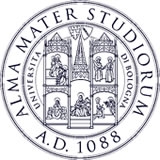
The University of Bologna (UNIBO) is the oldest continually operating degree-granting university in the world:, the word 'university' being first used by this institution at its foundation. The true date of its founding is uncertain, but believed by most accounts to have been 1088. Since 2000, the University's motto has been Alma mater
Alma mater

File:Alma_Mater,_Lorado_Taft.jpgAlma mater is Latin for "nourishing mother". It was used in ancient Rome as a title for the mother goddess, and in Middle Ages Christianity for the Virgin Mary....
 studiorum
(Latin for "fostering mother of studies").


Discussion
Ask a question about 'University of Bologna'
Start a new discussion about 'University of Bologna'
Answer questions from other users
Full Discussion Forum


Recent Posts


Encyclopedia


The University of Bologna (UNIBO) is the oldest continually operating degree-granting university in the world:, the word 'university' being first used by this institution at its foundation. The true date of its founding is uncertain, but believed by most accounts to have been 1088. Since 2000, the University's motto has been Alma mater
Alma mater

File:Alma_Mater,_Lorado_Taft.jpgAlma mater is Latin for "nourishing mother". It was used in ancient Rome as a title for the mother goddess, and in Middle Ages Christianity for the Virgin Mary....
 studiorum
(Latin for "fostering mother of studies"). The university of Bologna
Bologna

Bologna is the capital city of Emilia-Romagna in northern Italy, in the Po Valley , between the Po River and the Apennine Mountains, exactly between the Reno River and the S?vena River....
 received a charter
Charter

A charter is the grant of authority or rights, stating that the granter formally recognizes the prerogative of the recipient to exercise the rights specified....
 from Frederick I Barbarossa in 1158, but in the 19th century, a committee of historians led by Giosuč Carducci
Giosuč Carducci

Giosu? Carducci was an Italian poet, oft reckoned as one of Italy's greatest, and a noted teacher. He was very influential and was regarded as the unofficial national poet of modern Italy....
 traced the birth of the University back to 1088, making it arguably the longest-lived university in the West
List of oldest universities in continuous operation

This is a list of the oldest extant universities in the world. To be listed on this page, an educational institution must satisfy the definition of a university at the time of founding; it must have been founded before 1500 or be the oldest university in a region; and it must have been operational without a significant interruption ever sin...
. The University of Bologna is historically
HIStory

HIStory: Past, Present and Future, Book I is a double album by Michael Jackson, released on June 20, 1995, and is Jackson's ninth. The first disc, named "HIStory Begins" consists of a selection of Jackson's greatest hits from the singer's past fifteen years, while the second, named "HIStory Continues" features new songs, with the...
 notable for its teaching of canon
Canon law

Canon law is internal ecclesiastical law governing the Roman Catholic Church, the Eastern Orthodox Church churches, and the Anglicanism of churches....
 and civil law
Civil law (common law)

Civil law, as opposed to criminal law, refers to that branch of law dealing with disputes between individuals and/or organizations, in which damages may be awarded to the victim....
, and has been ranked as one of the world's top 50 universities.

The University counts about 100,000 students in its 23 faculties
Faculty (university)

A faculty is a division within a university comprising one subject area, or a number of related subject areas . The concept of a university with different faculties for different subjects dates back to Al-Azhar University, which had individual faculties for a Madrasah and theological seminary, Sharia and Fiqh, Arabic grammar, Islamic astronom...
. It has branch centers in Reggio Emilia
Reggio Emilia

Reggio Emilia is an affluent city of Northern Italy Italy, in the Emilia-Romagna region. It has about 167,013 inhabitants and is the main comune of the Province of Reggio Emilia....
, Imola
Imola

Imola is a town, comune in the province of Bologna, located on the Santerno river, in the Emilia-Romagna region of north-central Italy. The town is traditionally considered the western entrance to the historical region Romagna....
, Ravenna
Ravenna

Ravenna is a city and comune in the Emilia-Romagna region of Italy. The city is inland, but is connected to the Adriatic Sea by a canal. Ravenna once served as the seat of the Western Roman Empire and later the Ostrogoths and the Exarchate of Ravenna....
, Forlė
Forlė

Forl? is a comune and city in Emilia-Romagna, Italy, famed as the birthplace of the great painter Melozzo da Forl?, of the Renaissance humanism historian Flavio Biondo, of the famous physicians Geronimo Mercuriali and Giovanni Battista Morgagni....
, Cesena
Cesena

Cesena is a city in the Emilia-Romagna region of northern Italy, south of Ravenna and west of Rimini, on the Savio River, co-chief of the Province of province of Forl?-Cesena....
 and Rimini
Rimini

Rimini is a city in the Emilia-Romagna region of Italy and capital city of the Province of Rimini. It is located on the Adriatic Sea, near the coast between the rivers Marecchia and Ausa ....
 and a branch center abroad in Buenos Aires
Buenos Aires

Buenos Aires is the Capital and largest city of Argentina. It is located on the southern shore of the R?o de la Plata, on the southeastern coast of the South American continent....
. Moreover, it has a school of excellence named Collegio Superiore di Bologna
Collegio Superiore di Bologna

Collegio Superiore is a centre of excellence and higher education, founded in 1998 in Bologna by the former head of the University Fabio Roversi Monaco....
.

History

The University of Bologna's history is one of great thinkers in science and the humanities, making it an indispensable point of reference in the panorama of European culture.

The institution that we today call the University began to take shape in Bologna at the end of the 11th century, when masters of grammar
Grammar

Grammar is the field of linguistics that covers the conventions governing the use of any given natural language. It includes morphology and syntax, often complemented by phonetics, phonology, semantics, and pragmatics....
, rhetoric
Rhetoric

Rhetoric is the art of using language as a means to persuade. Along with logic and dialectic, rhetoric is one of the three ancient arts of discourse....
 and logic
Logic

Logic is the study of the principles of valid demonstration and inference. Logic is a branch of philosophy, a part of the classical Trivium . The word derives from Greek language ?????? , fem....
 began to devote themselves to law, inspired by the Byzantine
Byzantine

The word Byzantine may refer to:Topics directly related to the Byzantine Empire* A citizen of Byzantine Empire, or native Greeks during the Middle Ages ....
 Justinian Code.

The first recorded scholars were Pepone and Irnerius
Irnerius

Irnerius , sometimes referred to as lucerna juris , was an Italy jurist, and founder of the School of Glossators.He taught the newly recovered Roman lawcode of Justinian I, the Corpus Juris Civilis, among the liberal arts at the University of Bologna, his native city....
, the latter of whom was defined by the former as "lucerna iuris". In 1158, at the urging of four doctors (thought to be pupils at the University), Frederick I
Frederick I, Holy Roman Emperor

Frederick I Barbarossa was elected King of Germany at Frankfurt am Main on 4 March 1152 and crowned in Aachen on 9 March, crowned King of Italy in Pavia in 1154, and finally crowned Holy Roman Emperor by Pope Adrian IV on 18 June 1155....
 promulgated the Constitutio Habita, in which the University was legally declared a place where research could be performed independently from any other power.

In the 14th century, so-called "artists" — scholars of medicine
Medicine

Medicine is the art and science of healing. It encompasses a range of health care practices evolved to maintain and restore health by the prevention and treatment of illness....
, philosophy
Philosophy

Philosophy is the study of general problems concerning matters such as existence, knowledge, truth, beauty, justice, validity, mind, and language....
, arithmetic
Arithmetic

Arithmetic or arithmetics is the oldest and most elementary branch of mathematics, used by almost everyone, for tasks ranging from simple day-to-day counting to advanced science and business calculations....
, astronomy
Astronomy

Astronomy is the science of Astronomical object and Phenomenon that originate outside the Earth's atmosphere . It is concerned with the evolution, physics, chemistry, meteorology, and motion of celestial objects, as well as the physical cosmology....
, logic, rhetoric, and grammar — began to collaborate with the school of jurists. In 1364, the teaching of theology
Theology

Theology is the study of the existence or attributes of a deity or gods, or more generally the study of religion or spirituality. It is sometimes contrasted with religious studies: theology is understood as the study of religion from an internal perspective , and religious studies as the study of religion from an external perspective....
 was instituted. Dante Alighieri
Dante Alighieri

Durante degli Alighieri , commonly known as Dante Alighieri, was a Florence poet of the Middle Ages. His Magnum opus, the Divine Comedy , is often considered the greatest literary work composed in the Italian language and a masterpiece of world literature....
, Francesco Petrarca, Guido Guinizelli
Guido Guinizelli

Guido Guinizzelli was an Italian poet and 'founder' of the Dolce Stil Novo. He was the first to write in this new style of poetry writing, and thus is held to be the ipso facto founder....
, Cino da Pistoia
Cino da Pistoia

Cino da Pistoia was an Italian jurist and poet.He was born in Pistoia, Tuscany. His full name was Guittoncino dei Sinibaldi or, Latinised, Cinus de Sighibuldis....
, Cecco d'Ascoli
Cecco d'Ascoli

Cecco d'Ascoli is the popular name of Francesco degli Stabili , a famous Italian encyclopaedist, physician and poet. Cecco is the diminutive of Francesco....
, Re Enzo, Salimbene da Parma and Coluccio Salutati
Coluccio Salutati

Coluccio Salutati was an Italian man of letters and one of the most important political and cultural leaders of Renaissance Florence, Italy....
 all studied in Bologna.

Archiginnasio Teatroanatomico
In the 15th century Greek
Greek language

Greek is an Indo-European languages native to the southern Balkan peninsula, the language of the Greek people. It forms an independent branch within Indo-European....
 and Hebrew
Hebrew language

Hebrew is a Semitic languages of the Afro-Asiatic languages. Modern Hebrew is spoken by more than seven million people in Israel and Classical Hebrew is used for prayer or study in Jews communities around the world....
 studies were instituted, and in the 16th century those of "natural magic", which we would refer to as, "experimental sciences." The philosopher Pietro Pomponazzi
Pietro Pomponazzi

Pietro Pomponazzi was an Italy philosopher. He is sometimes known by his Latin language name, Petrus Pomponatius.Pomponazzi was born in Mantua and began his education there....
 upheld the study of the laws of nature against the traditionalist position of theology and philosophy. A representative figure of this period was Ulisse Aldrovandi
Ulisse Aldrovandi

Ulisse Aldrovandi was an Italy natural history, the moving force behind Bologna's botanical garden, one of the first in Europe. Carolus Linnaeus and the Georges-Louis Leclerc, Comte de Buffon reckoned him the father of natural history studies....
, whose contributions ranged from pharmacopoeia
Pharmacopoeia

Pharmacopoeia , in its modern technical sense, is a book containing directions for the identification of samples and the preparation of compound medicines, and published by the authority of a government or a medical or pharmaceutical society....
 to the study of animals, fossil
Fossil

Fossils are the preserved remains or trace fossil of animals, plants, and other organisms from the remote past. The totality of fossils, both discovered and undiscovered, and their placement in fossiliferous Rock formations and sedimentary rock layers is known as the fossil record....
s, and marvels of nature which he collected and classified.

In the 16th century Gaspare Tagliacozzi completed the first studies of plastic surgery
Plastic surgery

Plastic surgery is a medical :Category:Surgical specialties concerned with the correction or restoration of form and function. While famous for aesthetic surgery, plastic surgery also includes a variety of fields such as craniofacial surgery, hand surgery, burn surgery, microsurgery, and reconstructive surgery....
.

In the 17th century, which is thought of as the "golden era" of the University, medicine coincided with the teachings of Marcello Malpighi
Marcello Malpighi

Marcello Malpighi was an Italy doctor, who gave his name to several physiological features....
 and students began to employ the microscope
Microscope

A microscope is an Laboratory equipment for viewing objects that are too small to be seen by the naked or unaided eye. The science of investigating small objects using such an instrument is called microscopy....
 for anatomical research. By this time, the University's fame had spread throughout Europe and it was a destination for many illustrious guests. Famous scholars and students included Pico della Mirandola and Leon Battista Alberti, who devoted themselves to canon law; and Nicolaus Copernicus
Nicolaus Copernicus

Nicolaus Copernicus was the first astronomer to formulate a scientifically-based heliocentrism cosmology that displaced the Earth from the center of the universe....
 who began his astronomical observations while studying pontifical law. Paracelsus (aka Paracelso)
Paracelsus

Paracelsus was a Medieval physician, botanist, alchemy, astrologer, and general occultist. Born Phillip von Hohenheim, he later took up the name Philippus Theophrastus Aureolus Bombastus von Hohenheim, and still later took the title Paracelsus, meaning "equal to or greater than Celsus", a Roman encyclopedist, Aulus Cornelius Celsus fro...
, Raymond of Peņafort
Raymond of Peņafort

Saint Raymond of Penyafort, Dominican Order was born in Vilafranca del Pened?s, a small town near Barcelona, Catalonia, around 1175. He was educated in Barcelona and also at the University of Bologna, where he received doctorates in both Civil law and canon law....
, Albrecht Dürer
Albrecht Dürer

'Albrecht D?rer' was a Germans Painting, printmaker and theorist from Nuremberg. His still-famous works include the Apocalypse woodcuts, commons:Image:Duerer - Ritter, Tod und Teufel .jpg , St....
, St. Carlo Borromeo, Torquato Tasso
Torquato Tasso

Torquato Tasso was an Italy poet of the 16th century, best known for his poem La Gerusalemme liberata , in which he depicts a highly imaginative version of the combats between Christians and Muslims at the end of the First Crusade, during the siege of Jerusalem ....
, and Carlo Goldoni
Carlo Goldoni

Carlo Osvaldo Goldoni was a celebrated Republic of Venice playwright and librettist, whom critics today rank among the European theatre's greatest authors....
 all spent time at the University.

With the advent of the Industrial Revolution
Industrial Revolution

The Industrial Revolution was a period in the late 18th and early 19th centuries when major changes in agriculture, manufacturing, production, and transportation had a profound effect on the socioeconomics and cultural conditions in United Kingdom....
 in the 18th century, the University promoted scientific and technological development. In this period came the studies of Luigi Galvani
Luigi Galvani

Luigi Galvani was an Italy physician and physicist who lived and died in Bologna. In 1771, he discovered that the muscles of dead frogs twitched when struck by a spark....
 who was one of the founders of modern electrotechnical studies (along with Alessandro Volta
Alessandro Volta

Count Alessandro Antonio Anastasio Volta was a Lombardy Physics known especially for the development of the first cell in 1800....
, Benjamin Franklin
Benjamin Franklin

Benjamin Franklin was one of the Founding Fathers of the United States of the United States. A noted polymath, Franklin was a leading author and Printer , Satire, list of political philosophers, politician, scientist, inventor, activism, statesman, and diplomacy....
 and Henry Cavendish
Henry Cavendish

Henry Cavendish, Fellow of the Royal Society was a British scientist noted for his discovery of hydrogen or what he called "inflammable air". He described the density of inflammable air, which formed water on combustion, in a 1766 paper "On Factitious Airs"....
). Following the establishment of the United Italian State
Italy

Italy , officially the Italian Republic , is a country located on the Italian Peninsula in Southern Europe and on the two largest islands in the Mediterranean Sea, Sicily and Sardinia....
 came a period of great prosperity for the University in which the figures of Giovanni Capellini, Giosuč Carducci
Giosuč Carducci

Giosu? Carducci was an Italian poet, oft reckoned as one of Italy's greatest, and a noted teacher. He was very influential and was regarded as the unofficial national poet of modern Italy....
, Giovanni Pascoli
Giovanni Pascoli

Giovanni Pascoli was an Italy poet and classical scholar....
, Augusto Righi, Federigo Enriques
Federigo Enriques

Federigo Enriques was an Italy mathematician, now known principally as the first to give a classification of algebraic surfaces in birational geometry, and other contributions in algebraic geometry....
, Giacomo Ciamician, and Augusto Murri stand out.

In 1888 the eighth centennial of the University was celebrated with a grand ceremony. Representatives from universities all over the world convened in Bologna to honour the "mother of universities," and celebrate their common roots and ideals of progress and tolerance.

The University maintained its central position on the scene of global culture until the period between World War I
World War I

World War I, or the First World War , was a global military conflict which involved the Great powers, organized into two opposing military alliances: the Allies of World War I and the Central Powers....
 and World War II
World War II

World War II, or the Second World War , was a global military conflict which involved a Participants in World War II, including all of the great powers, organised into two opposing military alliances: the Allies of World War II and the Axis powers....
. As its own influence declined and other universities came to prominence, Bologna was called upon to forge relationships with institutions in the most advanced countries to modernise and reinvigorate its activities. Among the many challenges which it has met with success, Bologna committed itself to the European dimension which has now led to adoption of the new university system.

Organization

The primary objective of the faculties of the University of Bologna is to define, organise, and connect the academic activities of the degree courses. Corresponding to the defined scientific-disciplinary fields, the faculties are divided into one or more first-level degree courses which are followed by specialised degree courses.

Higher education processes are being harmonised across the European Community. Nowadays the University offers 128 different "Laurea" or "Laurea breve" first-level degrees (three years of courses), followed by a similar number of "Laurea specialistica" specialised degrees (two years). However, some courses have maintained preceding rules of "Laurea specialistica europea" or "Laurea magistrale", with only one cycle of study of five years, except for medicine which requires six years of courses. After the "Laurea" one may attain 1st level Master. After "Laurea specialistica" and "Laurea specialistica europea" are attained, one may proceed to 2nd level Master, specialisation schools, or doctorates of research.

  • Advanced School of Modern Languages for Interpreters and Translators — SSLMIT — Forlė
    Forlė

    Forl? is a comune and city in Emilia-Romagna, Italy, famed as the birthplace of the great painter Melozzo da Forl?, of the Renaissance humanism historian Flavio Biondo, of the famous physicians Geronimo Mercuriali and Giovanni Battista Morgagni....
  • Faculty of Agriculture
    Agriculture

    Agriculture refers to the production of food and goods through farming and forestry. Agriculture was the key development that led to the rise of civilization, with the animal husbandry of domestication animals and plants creating food surpluses that enabled the development of more Population density and Social stratification societies....
  • Faculty of Architecture
    Architecture

    The term architecture can refer to a process, a profession or documentation.As a process, architecture is the activity of designing and construction buildings and other physical structures by a person or a computer, primarily to provide shelter....
     Aldo Rossi
    Aldo Rossi

    Aldo Rossi was an Italian architect and designer who accomplished the unusual feat of achieving international recognition in three distinct areas: theory, drawing, and architecture....
  • Faculty of Economics
    Economics

    File:Ballard Farmers' Market - vegetables.jpgEconomics is the Social sciences that studies the Production theory basics, Distribution , and Consumption of Good and Service ....
  • Faculty of Economics
    Economics

    File:Ballard Farmers' Market - vegetables.jpgEconomics is the Social sciences that studies the Production theory basics, Distribution , and Consumption of Good and Service ....
     — Forlė
    Forlė

    Forl? is a comune and city in Emilia-Romagna, Italy, famed as the birthplace of the great painter Melozzo da Forl?, of the Renaissance humanism historian Flavio Biondo, of the famous physicians Geronimo Mercuriali and Giovanni Battista Morgagni....
  • Faculty of Economics
    Economics

    File:Ballard Farmers' Market - vegetables.jpgEconomics is the Social sciences that studies the Production theory basics, Distribution , and Consumption of Good and Service ....
     — Rimini
    Rimini

    Rimini is a city in the Emilia-Romagna region of Italy and capital city of the Province of Rimini. It is located on the Adriatic Sea, near the coast between the rivers Marecchia and Ausa ....
  • Faculty of Education Sciences
  • Faculty of Engineering
    Engineering

    Engineering is the discipline and profession of applying Technology and science knowledge and utilizing natural laws and physical resources in order to design and implement materials, structures, machines, devices, systems, and process that safely realize a desired objective and meet specified criteria....
  • II Faculty of Engineering
    Engineering

    Engineering is the discipline and profession of applying Technology and science knowledge and utilizing natural laws and physical resources in order to design and implement materials, structures, machines, devices, systems, and process that safely realize a desired objective and meet specified criteria....
     — Cesena
    Cesena

    Cesena is a city in the Emilia-Romagna region of northern Italy, south of Ravenna and west of Rimini, on the Savio River, co-chief of the Province of province of Forl?-Cesena....
    /Forlė
    Forlė

    Forl? is a comune and city in Emilia-Romagna, Italy, famed as the birthplace of the great painter Melozzo da Forl?, of the Renaissance humanism historian Flavio Biondo, of the famous physicians Geronimo Mercuriali and Giovanni Battista Morgagni....
  • Faculty of Exercise and Sport Sciences
  • Faculty of Foreign Languages
    Foreign language

    A foreign language is a language not spoken by the people of a certain place: for example, not only English language but also Late Old Japanese is a foreign language in Japan....
     and Literature
    Literature

    Literature is the art of written works. Literally translated, the word means "acquaintance with letters" . In Western culture the most basic written literary types include fiction and non-fiction....
  • Faculty of Industrial Chemistry
  • Faculty of Law
    LAW

    LAW may refer to:* Anti-tank warfare, e.g. the US Army M72 LAW or the British Army LAW 80*Palestinian Society for the Protection of Human Rights ...
  • Faculty of Letters
    Literature

    Literature is the art of written works. Literally translated, the word means "acquaintance with letters" . In Western culture the most basic written literary types include fiction and non-fiction....
     and Philosophy
    Philosophy

    Philosophy is the study of general problems concerning matters such as existence, knowledge, truth, beauty, justice, validity, mind, and language....
  • Faculty of Mathematical
    Mathematics

    Mathematics is the study of quantity, structure, space, change, and related topics of pattern and form. Mathematicians seek out patterns whether found in numbers, space, natural science, computers, imaginary abstractions, or elsewhere....
    , Physical
    Physics

    Physics is the natural science which examines basic concepts such as energy, force, and spacetime and all that derives from these, such as mass, charge, matter and its Motion ....
     and Natural Sciences
  • Faculty of Medicine
    Medicine

    Medicine is the art and science of healing. It encompasses a range of health care practices evolved to maintain and restore health by the prevention and treatment of illness....
  • Faculty of Pharmacy
    Pharmacy

    Pharmacy is the health profession that links the health sciences with the chemistrys, and it is charged with ensuring the safe and effective use of medication....
  • Faculty of Political Sciences
  • Faculty of Political Sciences Roberto Ruffilli
  • Faculty of Preservation
    Historic preservation

    Historic preservation or heritage conservation is a professional endeavor that seeks to preserve the ability of older objects to communicate an intended meaning....
     of the Cultural Heritage
    Cultural heritage

    Cultural heritage is the legacy of physical Cultural artifacts and intangible attributes of a group or society that are inherited from past generations, maintained in the present and bestowed for the benefit of future generations....
  • Faculty of Psychology
    Psychology

    Psychology is an academic and applied science discipline involving the science study of human mental functions and behavior. Occasionally it also relies on symbolic hermeneutics and critical theory, although these traditions are less pronounced than in other social sciences such as sociology....
  • Faculty of Statistical Sciences
  • Faculty of Veterinary Medicine
    Veterinary medicine

    Veterinary medicine is that branch of medical science,which deals with the study of diagnosis,treatment and prevention of diseases in companion,domestic, exotic, wildlife and production animals....


Notable members of the University of Bologna

  • 11th century
    • Irnerius
      Irnerius

      Irnerius , sometimes referred to as lucerna juris , was an Italy jurist, and founder of the School of Glossators.He taught the newly recovered Roman lawcode of Justinian I, the Corpus Juris Civilis, among the liberal arts at the University of Bologna, his native city....
  • 12th century
    • Gratian
      Gratian (jurist)

      Gratian, was a 12th century Canon law yer from Bologna. He is sometimes wrongly referred to as Franciscus Gratianus, or Johannes Gratianus, or Giovanni Graziano....
    • Patriarch Heraclius of Jerusalem
      Patriarch Heraclius of Jerusalem

      Heraclius or Eraclius , was archbishop of Caesarea and Latin Patriarch of Jerusalem.Heraclius was from the G?vaudan in Auvergne , France....
    • Stephen of Tournai
      Stephen of Tournai

      Stephen of Tournai was a Roman Catholic canonist....
    • Bulgarus
      Bulgarus

      Bulgarus was a twelfth century Italy jurist, born at Bologna. He is sometimes erroneously called Bulgarinus, which was properly the name of a jurist of the 15th century....
    • Martinus Gosia
      Martinus Gosia

      Martinus Gosia was one of the glossators and a 12th century Italy jurist, counted among the Four Doctors of Bologna, the others being Bulgarus, Hugo de Porta Ravennate and Jacobus de Boragine....
    • William of Tyre
      William of Tyre

      William of Tyre was archbishop of Tyre and a chronicler of the Crusades and the Middle Ages....
  • 13th century
    • Rambertino Buvalelli
      Rambertino Buvalelli

      Rambertino di Guido Buvalelli , a Bologna judge, statesman, diplomat, and poet, was the earliest of the podest?-troubadours of thirteenth-century Lombardy....
    • Bettisia Gozzadini
      Bettisia Gozzadini

      Bettisia Gozzadini flourished around 1250, and lectured in law at the University of Bologna She reputedly obtained her education disguised as a man and taught from behind a screen so that she would not distract the students....
    • William of Saliceto
      William of Saliceto

      William of Saliceto was a surgery and cleric in Lombardy who broke tradition with Galen by claiming that pus formation was bad for wounds and for the patient....
    • Guido Guinizelli
      Guido Guinizelli

      Guido Guinizzelli was an Italian poet and 'founder' of the Dolce Stil Novo. He was the first to write in this new style of poetry writing, and thus is held to be the ipso facto founder....
  • 14th century
    • Dante Alighieri
      Dante Alighieri

      Durante degli Alighieri , commonly known as Dante Alighieri, was a Florence poet of the Middle Ages. His Magnum opus, the Divine Comedy , is often considered the greatest literary work composed in the Italian language and a masterpiece of world literature....
    • Manuel Chrysoloras
      Manuel Chrysoloras

      Manuel Chrysoloras , one of the pioneers in introducing Greek language literature to Western Europe.He was born in Constantinople to a distinguished family, and was a pupil of Gemistus Pletho....
    • Francesco Petrarca (aka Petrarch
      Petrarch

      Francesco Petrarca , known in English language as Petrarch, was an Italy scholar, poet and one of the earliest Renaissance humanism. Petrarch is often popularly called the "Father of Humanism"....
      )
    • Coluccio Salutati
      Coluccio Salutati

      Coluccio Salutati was an Italian man of letters and one of the most important political and cultural leaders of Renaissance Florence, Italy....
  • 15th century
    • Leon Battista Alberti
    • Nicolaus Copernicus
      Nicolaus Copernicus

      Nicolaus Copernicus was the first astronomer to formulate a scientifically-based heliocentrism cosmology that displaced the Earth from the center of the universe....
    • Georgius de Drohobycz
    • Albrecht Dürer
      Albrecht Dürer

      'Albrecht D?rer' was a Germans Painting, printmaker and theorist from Nuremberg. His still-famous works include the Apocalypse woodcuts, commons:Image:Duerer - Ritter, Tod und Teufel .jpg , St....
    • Giovanni Pico della Mirandola
  • 16th century
    • Girolamo Cardano
    • Ignazio Danti
      Ignazio Danti

      Ignazio Danti was an Italy priest, mathematics, astronomy, and cosmography....
    • Girolamo Maggi
      Girolamo Maggi

      Girolamo Maggi , or Hieronymus Magius, was an Italian scholar, jurist, poet, military engineer, urban planning, philology, archaeologist, mathematics, and natural science who studied at Bologna under Francis Robortello....
    • Giovanni Antonio Magini
      Giovanni Antonio Magini

      Giovanni Antonio Magini was an Italy astronomer, astrologer, cartographer, and mathematician. He was born in Padua, and completed studies in philosophy in Bologna in 1579....
    • Paracelsus
      Paracelsus

      Paracelsus was a Medieval physician, botanist, alchemy, astrologer, and general occultist. Born Phillip von Hohenheim, he later took up the name Philippus Theophrastus Aureolus Bombastus von Hohenheim, and still later took the title Paracelsus, meaning "equal to or greater than Celsus", a Roman encyclopedist, Aulus Cornelius Celsus fro...
  • 17th century
    • Giovanni Cassini
      Giovanni Domenico Cassini

      This article is about the Italian-born astronomer. For his French-born great-grandson, see Dominique, comte de Cassini.Giovanni Domenico Cassini was an Italy/France mathematician, astronomer, engineer, and astrologer....
    • Ulisse Aldrovandi
      Ulisse Aldrovandi

      Ulisse Aldrovandi was an Italy natural history, the moving force behind Bologna's botanical garden, one of the first in Europe. Carolus Linnaeus and the Georges-Louis Leclerc, Comte de Buffon reckoned him the father of natural history studies....
    • Marcello Malpighi
      Marcello Malpighi

      Marcello Malpighi was an Italy doctor, who gave his name to several physiological features....
  • 18th century
    • Laura Bassi
      Laura Bassi

      Laura Maria Caterina Bassi was an Italian scientist, the first woman to officially teach at a college in Europe....
    • Maria Gaetana Agnesi
      Maria Gaetana Agnesi

      Maria Gaetana Agnesi was an Italian linguist, mathematician, and philosopher. Agnesi is credited with writing the first book discussing both differential and integral calculus....
    • Luigi Galvani
      Luigi Galvani

      Luigi Galvani was an Italy physician and physicist who lived and died in Bologna. In 1771, he discovered that the muscles of dead frogs twitched when struck by a spark....
    • Carlo Goldoni
      Carlo Goldoni

      Carlo Osvaldo Goldoni was a celebrated Republic of Venice playwright and librettist, whom critics today rank among the European theatre's greatest authors....
  • 19th century
    • Giosuč Carducci
      Giosuč Carducci

      Giosu? Carducci was an Italian poet, oft reckoned as one of Italy's greatest, and a noted teacher. He was very influential and was regarded as the unofficial national poet of modern Italy....
    • Giacomo Ciamician
    • Camillo Golgi
      Camillo Golgi

      Camillo Golgi was an Italy physician, pathologist and scientist....
    • Giovanni Pascoli
      Giovanni Pascoli

      Giovanni Pascoli was an Italy poet and classical scholar....
    • Pellegrino Rossi
      Pellegrino Rossi

      Pellegrino Rossi was an Italian people economist, politician and jurist. He was an important figure of the July Monarchy in France, and the Minister of Justice in the government of the Papal States, under Pope Pius IX....
    • Severino Ferrari
  • 20th century
    • Umberto Eco
      Umberto Eco

      Umberto Eco is an Italy medievalist, Semiotics, philosopher, Literary criticism and novelist, best known for his novel The Name of the Rose , an intellectual mystery combining semiotics in fiction, biblical analysis, medieval studies and literary theory....
    • Vincenzo Balzani
    • Romano Prodi
      Romano Prodi

      is an Politics of Italy and statesman. He served as President of the Council of Ministers of Italy of Italy twice, from 17 May 1996 to 21 October 1998 and from 17 May 2006 to 8 May 2008....
    • Amelio Guizzardi
    • Augusto Righi
    • Carlo Rovelli
      Carlo Rovelli

      Carlo Rovelli is an Italian physics and physical cosmology who has worked in Italy, the USA, and France. He was born in Verona, Italy in 1956....
    • Pier Paolo Pasolini
      Pier Paolo Pasolini

      Pier Paolo Pasolini was an Italy poet, intellectual, film director, and writer. Pasolini distinguished himself as a journalist, philosopher, linguist, novelist, playwright, filmmaker, newspaper and magazine columnist, actor, Painting and political figure....
  • 21st century
    • Vittorio Martino


Points of interest

  • Orto Botanico dell'Universitā di Bologna
    Orto Botanico dell'Universitā di Bologna

    The Orto Botanico dell'Universit? di Bologna, also known as the Orto Botanico di Bologna, is a botanical garden located operated by the University of Bologna....


See also

  • Collegio Superiore di Bologna
    Collegio Superiore di Bologna

    Collegio Superiore is a centre of excellence and higher education, founded in 1998 in Bologna by the former head of the University Fabio Roversi Monaco....
     (school of excellence of the University of Bologna)
  • Coimbra Group
    Coimbra Group

    The Coimbra Group is a network of European universities that gathers 38 universities, some of which are among the oldest and most prestigious in Europe....
     (a network of leading European universities)
  • Utrecht Network
    Utrecht Network

    The Utrecht Network is a network of European University. The network promotes the internationalisation of tertiary education through summer schools, student and staff Student exchange program and joint degrees....
  • Bologna declaration
    Bologna declaration

    The Bologna declaration is the main guiding document of the Bologna process. It was adopted by ministers of education of 29 European countries at their meeting in Bologna in 1999....
  • Bologna process
    Bologna process

    The purpose of the Bologna process is to create the European higher education area by making academic degree standards and quality assurance standards more comparable and compatible throughout Europe, in particular under the Lisbon Recognition Convention....
  • List of Italian universities
  • Medieval university
    Medieval university

    Medieval university is such an institution of higher learning which was established during Gothic art period and is a corporation.The first Europe medieval institutions generally considered to be University were established in Italy, France, and England in the late 11th and the 12th centuries for the study of Liberal arts, law, medicine, a...
  • Bologna
    Bologna

    Bologna is the capital city of Emilia-Romagna in northern Italy, in the Po Valley , between the Po River and the Apennine Mountains, exactly between the Reno River and the S?vena River....


External links

  • — reviews by former international students in Bologna on