

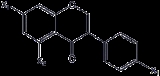
Isoflavone

Encyclopedia
Isoflavones comprise a class of organic compound
s, often naturally occurring, related to the isoflavonoid
s. Many act as phytoestrogens in mammal
s. Being phytochemicals, they are able to be termed antioxidants because of their ability to trap singlet oxygen.
Some isoflavones, in particular soy isoflavones, when studied in populations eating soy protein, have indicated that there is a lower incidence of breast cancer and other common cancers because of its role in influencing sex hormone metabolism and biological activity through intracellular enzymes, protein synthesis, growth factor actions, malignant cell proliferations, differentation and angiogenesis.
Isoflavones are produced almost exclusively by the members of the Fabaceae
(i.e., Leguminosae, or bean) family.
Isoflavone differs from flavone (2-phenyl-4H-1-benzopyr-4-one) in location of the phenyl group.
Isoflavones are produced via a branch of the general phenylpropanoid
pathway that produces flavonoid
compounds in higher plants. Soybeans are the most common source of isoflavones in human food; the major isoflavones in soybean
are genistein
and daidzein
. The phenylpropanoid pathway begins from the amino acid
phenylalanine
, and an intermediate of the pathway, naringenin
, is sequentially converted in to the isoflavone genistein by two legume-specific enzymes, isoflavone synthase, and a dehydratase
. Similarly, another intermediate naringenin chalcone is converted to the isoflavone daidzein by sequential action of three legume-specific enzymes: chalcone reductase, type II chalcone isomerase, and isoflavone synthase. Plants use isoflavones and their derivatives as phytoalexin
compounds to ward off disease-causing pathogen
ic fungi
and other microbes. In addition, soybean uses isoflavones to stimulate soil
-microbe rhizobium
to form nitrogen-fixing root nodule
s.
family contain significant quantities of isoflavones. Analysis of levels in various species has found that the highest levels of genistein and daidzein in psoralea
(Psoralea corylifolia). Various legumes including soybean (Glycine max L.), green bean (Phaseolus vulgaris L.), alfalfa
sprout (Medicago sativa L.), mung bean
sprout (Vigna radiata L.), cowpea (Vigna unguiculata L.), kudzu
root (Pueraria lobata L.), and red clover blossom and red clover sprout (Trifolium pratense L.) have been studied for their estrogenic activity. Highly processed foods made from legumes, such as tofu
, retain most of their isoflavone content, with the exception of fermented miso
, which has increased levels.
Other dietary sources of isoflavones include chick pea (biochanin A
), alfalfa
(formononetin
), and peanut
(genistein
).
In plant tissue, they most often occur as glycosides or their respective malonates or acetyl conjugates, rendering them even more water-soluble (see isoflavone-7-O-beta-glucoside 6"-O-malonyltransferase). The latter forms are unstable and are transformed, e.g. by decarboxylation
. Often when leguminose plants are challenged with viral or fungal infections, the water-soluble transport forms are hydrolyzed to the respective aglycones at the target site.
s produced estrogen-like compounds was first manifested in the infertility
among sheep that ate large amounts of clover
in Australia
.
Similarly, California Quail
s fed on the leaves of high-isoflavone desert annuals during periods of food shortage had reduced fertility.There multiple cases of documented adverse reactions to isoflavones in men. One report, published in 2008, documented a case of gynecomastia
in a 60-year-old man. The man reported erectile dysfunction and decreased libido, though no changes in testicular size. Laboratory assessment showed estrone and estradiol levels to be increased. He described a daily intake of 3 quarts of soy milk. After he discontinued drinking soy milk, his breast tenderness resolved.There are increasing number of reports of isoflavone's adverse estrogen like effects on males. A 2011 report documented a 19-year-old male who faced loss of libido and erectile dysfunction after engaging in a soy-heavy diet.
However, a 2010 meta-analysis of fifteen placebo-controlled studies said that "neither soy foods nor isoflavone supplements alter measures of bioavailable testosterone
concentrations in men."
Furthermore, Isoflavones supplementation has no effect on sperm concentration, count or motility, and show no changes in testicular or ejaculate volume.
Studies using chemically pure isoflavones or plant materials with known concentrations of these compounds have indicated both positive and negative effects of isoflavones on disease progression and fertility.
Studies on mice indicate that isoflavones may cause thymic and immune system abnormalities and reduction in immune system activity.
There may be a link between soy and health problems in certain animals.
Organic compound
An organic compound is any member of a large class of gaseous, liquid, or solid chemical compounds whose molecules contain carbon. For historical reasons discussed below, a few types of carbon-containing compounds such as carbides, carbonates, simple oxides of carbon, and cyanides, as well as the...
s, often naturally occurring, related to the isoflavonoid
Isoflavonoid
Isoflavonoids are a class of flavonoid polyphenolic compounds. They are biologically active compounds, such as phytoestrogens, produced by pea family plants.Isoflavonoids are derived from the flavonoid biosynthesis pathway via liquiritigenin or naringenin....
s. Many act as phytoestrogens in mammal
Mammal
Mammals are members of a class of air-breathing vertebrate animals characterised by the possession of endothermy, hair, three middle ear bones, and mammary glands functional in mothers with young...
s. Being phytochemicals, they are able to be termed antioxidants because of their ability to trap singlet oxygen.
Some isoflavones, in particular soy isoflavones, when studied in populations eating soy protein, have indicated that there is a lower incidence of breast cancer and other common cancers because of its role in influencing sex hormone metabolism and biological activity through intracellular enzymes, protein synthesis, growth factor actions, malignant cell proliferations, differentation and angiogenesis.
Isoflavones are produced almost exclusively by the members of the Fabaceae
Fabaceae
The Fabaceae or Leguminosae, commonly known as the legume, pea, or bean family, is a large and economically important family of flowering plants. The group is the third largest land plant family, behind only the Orchidaceae and Asteraceae, with 730 genera and over 19,400 species...
(i.e., Leguminosae, or bean) family.
Organic chemistry and biosynthesis
Isoflavones of nutritional interest are substituted derivatives of isoflavone, being related to the parent by the replacement of two or three hydrogen atoms with hydroxyl groups. The parent isoflavone is of no nutritional interest.Isoflavone differs from flavone (2-phenyl-4H-1-benzopyr-4-one) in location of the phenyl group.
Isoflavones are produced via a branch of the general phenylpropanoid
Phenylpropanoid
The phenylpropanoids are a diverse family of organic compounds that are synthesized by plants from the amino acid phenylalanine. Their name is derived from the six-carbon, aromatic phenyl group and the three-carbon propene tail of cinnamic acid, which is synthesized from phenylalanine in the first...
pathway that produces flavonoid
Flavonoid
Flavonoids , are a class of plant secondary metabolites....
compounds in higher plants. Soybeans are the most common source of isoflavones in human food; the major isoflavones in soybean
Soybean
The soybean or soya bean is a species of legume native to East Asia, widely grown for its edible bean which has numerous uses...
are genistein
Genistein
Genistein is one of several known isoflavones. Isoflavones, such as genistein and daidzein, are found in a number of plants including lupin, fava beans, soybeans, kudzu, and psoralea being the primary food source, also in the medicinal plant, Flemingia vestita and coffee Besides functioning as...
and daidzein
Daidzein
Daidzein belongs to the group of isoflavones. Daidzein and other isoflavone compounds, such as genistein, are present in a number of plants and herbs like the Thai Kwao Krua or Pueraria mirifica, Kudzu or Pueraria lobata, and in food sources such as soybeans and soy products like tofu and textured...
. The phenylpropanoid pathway begins from the amino acid
Amino acid
Amino acids are molecules containing an amine group, a carboxylic acid group and a side-chain that varies between different amino acids. The key elements of an amino acid are carbon, hydrogen, oxygen, and nitrogen...
phenylalanine
Phenylalanine
Phenylalanine is an α-amino acid with the formula C6H5CH2CHCOOH. This essential amino acid is classified as nonpolar because of the hydrophobic nature of the benzyl side chain. L-Phenylalanine is an electrically neutral amino acid, one of the twenty common amino acids used to biochemically form...
, and an intermediate of the pathway, naringenin
Naringenin
Naringenin is a flavanone, a type of flavonoid, that is considered to have a bioactive effect on human health as antioxidant, free radical scavenger, anti-inflammatory, carbohydrate metabolism promoter, and immune system modulator. It is the predominant flavanone in grapefruit.-Biological...
, is sequentially converted in to the isoflavone genistein by two legume-specific enzymes, isoflavone synthase, and a dehydratase
Dehydratase
Dehydratase is an enzyme that catalyzes the removal of oxygen and hydrogen from organic compounds in the form of water. This process is also known as dehydration.There are four classes of dehydratases:...
. Similarly, another intermediate naringenin chalcone is converted to the isoflavone daidzein by sequential action of three legume-specific enzymes: chalcone reductase, type II chalcone isomerase, and isoflavone synthase. Plants use isoflavones and their derivatives as phytoalexin
Phytoalexin
Phytoalexins are antimicrobial substances synthesized de novo by plants that accumulate rapidly at areas of incompatible pathogen infection. They are broad spectrum inhibitors and are chemically diverse with different types characteristic of particular plant species...
compounds to ward off disease-causing pathogen
Pathogen
A pathogen gignomai "I give birth to") or infectious agent — colloquially, a germ — is a microbe or microorganism such as a virus, bacterium, prion, or fungus that causes disease in its animal or plant host...
ic fungi
Fungus
A fungus is a member of a large group of eukaryotic organisms that includes microorganisms such as yeasts and molds , as well as the more familiar mushrooms. These organisms are classified as a kingdom, Fungi, which is separate from plants, animals, and bacteria...
and other microbes. In addition, soybean uses isoflavones to stimulate soil
Soil
Soil is a natural body consisting of layers of mineral constituents of variable thicknesses, which differ from the parent materials in their morphological, physical, chemical, and mineralogical characteristics...
-microbe rhizobium
Rhizobium
Rhizobium is a genus of Gram-negative soil bacteria that fix nitrogen. Rhizobium forms an endosymbiotic nitrogen fixing association with roots of legumes and Parasponia....
to form nitrogen-fixing root nodule
Root nodule
Root nodules occur on the roots of plants that associate with symbiotic nitrogen-fixing bacteria. Under nitrogen-limiting conditions, capable plants form a symbiotic relationship with a host-specific strain of bacteria known as rhizobia...
s.
Occurrence
Most members of the FabaceaeFabaceae
The Fabaceae or Leguminosae, commonly known as the legume, pea, or bean family, is a large and economically important family of flowering plants. The group is the third largest land plant family, behind only the Orchidaceae and Asteraceae, with 730 genera and over 19,400 species...
family contain significant quantities of isoflavones. Analysis of levels in various species has found that the highest levels of genistein and daidzein in psoralea
Psoralea
Psoralea is a genus in the legume family . Although most species are poisonous, the starchy roots of P. esculenta and P. hypogaea are edible...
(Psoralea corylifolia). Various legumes including soybean (Glycine max L.), green bean (Phaseolus vulgaris L.), alfalfa
sprout (Medicago sativa L.), mung bean
Mung bean
The mung bean is the seed of Vigna radiata. It is native to the Indian subcontinent.-Description:They are small, ovoid in shape, and green in color...
sprout (Vigna radiata L.), cowpea (Vigna unguiculata L.), kudzu
Kudzu
Kudzu is a plant in the genus Pueraria in the pea family Fabaceae, subfamily Faboideae. It is a climbing, coiling, and trailing vine native to southern Japan and southeast China. Its name comes from the Japanese name for the plant, . It is a weed that climbs over trees or shrubs and grows so...
root (Pueraria lobata L.), and red clover blossom and red clover sprout (Trifolium pratense L.) have been studied for their estrogenic activity. Highly processed foods made from legumes, such as tofu
Tofu
is a food made by coagulating soy milk and then pressing the resulting curds into soft white blocks. It is part of East Asian and Southeast Asian cuisine such as Chinese, Japanese, Korean, Indonesian, Vietnamese, and others. There are many different varieties of tofu, including fresh tofu and tofu...
, retain most of their isoflavone content, with the exception of fermented miso
Miso
is a traditional Japanese seasoning produced by fermenting rice, barley and/or soybeans, with salt and the fungus , the most typical miso being made with soy. The result is a thick paste used for sauces and spreads, pickling vegetables or meats, and mixing with dashi soup stock to serve as miso...
, which has increased levels.
Other dietary sources of isoflavones include chick pea (biochanin A
Biochanin A
Biochanin A is an O-methylated isoflavone. It is a natural organic compound in the class of phytochemicals known as flavonoids. Biochanin A can be found in red clover in soy, in alfalfa sprouts, in peanuts, in chickpea and in other legumes.Biochanin A is classified as a phytoestrogen and has...
), alfalfa
Alfalfa
Alfalfa is a flowering plant in the pea family Fabaceae cultivated as an important forage crop in the US, Canada, Argentina, France, Australia, the Middle East, South Africa, and many other countries. It is known as lucerne in the UK, France, Australia, South Africa and New Zealand, and known as...
(formononetin
Formononetin
Formononetin is an O-methylated isoflavone. It is found in a number of plants and herbs like the red clover. Along with other phytoestrogens, it predominantly occurs in leguminous plants and Fabaceae, particularly in beans, such as green beans, lima beans, soy and many others, as the free aglycone...
), and peanut
Peanut
The peanut, or groundnut , is a species in the legume or "bean" family , so it is not a nut. The peanut was probably first cultivated in the valleys of Peru. It is an annual herbaceous plant growing tall...
(genistein
Genistein
Genistein is one of several known isoflavones. Isoflavones, such as genistein and daidzein, are found in a number of plants including lupin, fava beans, soybeans, kudzu, and psoralea being the primary food source, also in the medicinal plant, Flemingia vestita and coffee Besides functioning as...
).
In plant tissue, they most often occur as glycosides or their respective malonates or acetyl conjugates, rendering them even more water-soluble (see isoflavone-7-O-beta-glucoside 6"-O-malonyltransferase). The latter forms are unstable and are transformed, e.g. by decarboxylation
Decarboxylation
Decarboxylation is a chemical reaction that releases carbon dioxide . Usually, decarboxylation refers to a reaction of carboxylic acids, removing a carbon atom from a carbon chain. The reverse process, which is the first chemical step in photosynthesis, is called carbonation, the addition of CO2 to...
. Often when leguminose plants are challenged with viral or fungal infections, the water-soluble transport forms are hydrolyzed to the respective aglycones at the target site.
Health effects
Because of their diversity, isoflavones can have diverse effects on human and animal health. Isoflavones such as genistein and daidzein, were able to prevent the growth of estrogen-receptor positive and negative breast cancer cells in vitro. Although isoflavones were able to prevent growth of breast cancer cells, early evidence that plantPlant
Plants are living organisms belonging to the kingdom Plantae. Precise definitions of the kingdom vary, but as the term is used here, plants include familiar organisms such as trees, flowers, herbs, bushes, grasses, vines, ferns, mosses, and green algae. The group is also called green plants or...
s produced estrogen-like compounds was first manifested in the infertility
Infertility
Infertility primarily refers to the biological inability of a person to contribute to conception. Infertility may also refer to the state of a woman who is unable to carry a pregnancy to full term...
among sheep that ate large amounts of clover
Clover
Clover , or trefoil, is a genus of about 300 species of plants in the leguminous pea family Fabaceae. The genus has a cosmopolitan distribution; the highest diversity is found in the temperate Northern Hemisphere, but many species also occur in South America and Africa, including at high altitudes...
in Australia
Australia
Australia , officially the Commonwealth of Australia, is a country in the Southern Hemisphere comprising the mainland of the Australian continent, the island of Tasmania, and numerous smaller islands in the Indian and Pacific Oceans. It is the world's sixth-largest country by total area...
.
Similarly, California Quail
California Quail
The California Quail, Callipepla californica, also known as the California Valley Quail or Valley Quail, is a small ground-dwelling bird in the New World quail family...
s fed on the leaves of high-isoflavone desert annuals during periods of food shortage had reduced fertility.There multiple cases of documented adverse reactions to isoflavones in men. One report, published in 2008, documented a case of gynecomastia
Gynecomastia
Gynecomastia or Gynaecomastia, , is the abnormal development of large mammary glands in males resulting in breast enlargement. The term comes from the Greek γυνή gyné meaning "woman" and μαστός mastós meaning "breast"...
in a 60-year-old man. The man reported erectile dysfunction and decreased libido, though no changes in testicular size. Laboratory assessment showed estrone and estradiol levels to be increased. He described a daily intake of 3 quarts of soy milk. After he discontinued drinking soy milk, his breast tenderness resolved.There are increasing number of reports of isoflavone's adverse estrogen like effects on males. A 2011 report documented a 19-year-old male who faced loss of libido and erectile dysfunction after engaging in a soy-heavy diet.
However, a 2010 meta-analysis of fifteen placebo-controlled studies said that "neither soy foods nor isoflavone supplements alter measures of bioavailable testosterone
Testosterone
Testosterone is a steroid hormone from the androgen group and is found in mammals, reptiles, birds, and other vertebrates. In mammals, testosterone is primarily secreted in the testes of males and the ovaries of females, although small amounts are also secreted by the adrenal glands...
concentrations in men."
Furthermore, Isoflavones supplementation has no effect on sperm concentration, count or motility, and show no changes in testicular or ejaculate volume.
Studies using chemically pure isoflavones or plant materials with known concentrations of these compounds have indicated both positive and negative effects of isoflavones on disease progression and fertility.
Studies on mice indicate that isoflavones may cause thymic and immune system abnormalities and reduction in immune system activity.
There may be a link between soy and health problems in certain animals.