

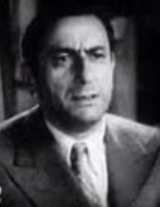
Ernst Lubitsch

Encyclopedia
Ernst Lubitsch was a German-born film director
. His urbane comedies of manners gave him the reputation of being Hollywood's most elegant and sophisticated director; as his prestige grew, his films were promoted as having "the Lubitsch touch."
In 1947 he received an Honorary Academy Award for his distinguished contributions to the art of the motion picture, and he was nominated three times for Best Director.
. He turned his back on his father's tailoring business to enter the theater, and by 1911, he was a member of Max Reinhardt
's Deutsches Theater. He made his film debut the following year as an actor, but he gradually abandoned acting to concentrate on directing.
. Lubitsch alternated between escapist
comedies and large-scale historical dramas, enjoying great international success with both. His reputation as a grand master of world cinema reached a new peak after the release of his spectacles Madame Du Barry
(retitled Passion, 1919) and Anna Boleyn
(Deception, 1920). Both of these films found American distributorship by early 1921. They, along with Lubitsch's Carmen (released as Gypsy Blood in the U.S. in 1921) were selected by The New York Times
on its list of the 15 most important movies of 1921.
With glowing reviews under his belt, and American money flowing his way, Lubitsch formed his own production company and set to work on the high-budget spectacular The Loves of Pharaoh (1921). Lubitsch sailed to the United States for the first time in December 1921 for what was intended as a lengthy publicity and professional factfinding tour, scheduled to culminate in the February premiere of Pharaoh. However, with World War I still fresh, and with a slew of German "New Wave' releases encroaching on American movie workers' livelihoods, Lubitsch was not gladly received. He cut his trip short after little more than three weeks and returned to Germany. But he had already seen enough of the American film industry to know that its resources far outstripped the spartan German companies.
. He directed Pickford in the film Rosita
; the result was a critical and commercial success, but director and star clashed during its filming, and it ended up as the only project that they made together. A free agent after just one American film, Lubitsch was signed to a remarkable three-year, six-picture contract by Warner Brothers that guaranteed the director his choice of both cast and crew, and full editing control over the final cut.
Settling in America, Lubitsch established his reputation for sophisticated comedy with such stylish films as The Marriage Circle
(1924), Lady Windermere's Fan
(1925), and So This Is Paris
(1926). But his films were only marginally profitable for Warner Brothers, and Lubitsch's contract was eventually dissolved by mutual consent, with MGM-Paramount buying out the remainder. His first film for MGM, The Student Prince in Old Heidelberg
(1927), was well regarded, but lost money.
Lubitsch seized upon the advent of talkies to direct musicals. With his first sound film, The Love Parade
(1929), starring Maurice Chevalier
and Jeanette MacDonald
, Lubitsch hit his stride as a maker of worldly musical comedies (and earned himself another Oscar
nomination). The Love Parade
(1929), Monte Carlo
(1930), and The Smiling Lieutenant
(1931) were hailed by critics as masterpieces of the newly emerging musical genre. Lubitsch served on the faculty of the University of Southern California
for a time.
His next film was a romantic comedy, written with Samson Raphaelson
, Trouble in Paradise (1932). Later described (approvingly) as "truly amoral" by critic David Thomson
, the cynical comedy was popular both with critics and with audiences. But it was a project that could only have been made before the enforcement of the Production Code
, and after 1935, Trouble in Paradise was withdrawn from circulation. It was not seen again until 1968. The film was never available on videocassette and only became available on DVD
in 2003.
Writing about Lubitsch's work, critic Michael Wilmington observed:
 Whether with music, as in MGM's opulent The Merry Widow
(1934) and Paramount's One Hour with You
(1932), or without, as in Design for Living
(1933), Lubitsch continued to specialize in comedy. He made only one other dramatic film, the antiwar Broken Lullaby
(also known as The Man I Killed, 1932).
In 1935, he was appointed Paramount
's production manager, thus becoming the only major Hollywood director to run a large studio. Lubitsch subsequently produced his own films and supervised the production of films of other directors. But Lubitsch had trouble delegating authority, which was a problem when he was overseeing sixty different films. He was fired after a year on the job, and returned to full-time moviemaking. In 1936, he became a naturalized citizen of the United States.
On July 27, 1935 he married British actress Vivian Gaye. They had one daughter, Nicola Lubitsch, on October 27, 1938. When war was declared in Europe, Vivian Lubitsch and her daughter were staying in London. Vivian sent her baby daughter, accompanied by her nursemaid, Consuela Strohmeier, to Montreal aboard the Donaldson Atlantic Line's SS Athenia
, which was sunk by a German submarine on September 3, 1939 with a loss of 118 passengers. The child and the nurse survived.
In 1939, Lubitsch moved to MGM, and directed Greta Garbo
in Ninotchka
. Garbo and Lubitsch were friendly and had hoped to work together on a movie for years, but this would be their only project. The film, co-written by Billy Wilder
, is a satirical
comedy in which the famously serious actress' laughing scene was heavily promoted by studio publicists with the tagline "Garbo Laughs!"
In 1940, he directed The Shop Around the Corner
, an artful comedy of cross purposes. The film reunited Lubitsch with his Merry Widow screenwriter Raphaelson, and starred James Stewart
and Margaret Sullavan
as a pair of bickering co-workers in Budapest
, each unaware that the other is their secret romantic correspondent. David Thomson wrote of it:
Biographer Scott Eyman
attempted to characterize the famed "Lubitsch touch":
Lubitsch went independent to direct That Uncertain Feeling
(1941, a remake of his 1925 film Kiss Me Again
), and the dark anti-Nazi
farce To Be or Not to Be
(1942), which was Jack Benny
's only major screen success and Carole Lombard
's last picture.
, but a heart condition curtailed his activity, and he spent much of his time in supervisory capacities. It has been claimed that the last picture made by the director with his distinctive "touch" was Heaven Can Wait
(1943), another Raphaelson collaboration. The film is about Henry Van Cleve (played by Don Ameche
) who presents himself at the gates of Hell
to recount his life and the women he has known from his mother onwards, concentrating on his happy but sometimes difficult 25 years of marriage to Martha (Gene Tierney
).
After Heaven Can Wait, Lubitsch worked with Edwin Justus Mayer
on the scripting process of A Royal Scandal
(1945), a remake of Ernst Lubitsch's silent film A Forbidden Paradise. Mayer wrote the screenplay for A Royal Scandal, and had worked with Lubitsch on To Be or Not to Be (1942). The script of A Royal Scandal (1945) was written and prepared under Ernst Lubitsch, and he was the original director of this film, and directed the rehearsals. He became ill during shooting, so Lubitsch hired Otto Preminger
to do the rest of the shooting. But A Royal Scandal is considered "a Lubitsch picture." After A Royal Scandal, Ernst Lubitsch regained his health, and directed Cluny Brown
(1946), with Charles Boyer
and Jennifer Jones
.
In March 1947, Lubitsch was awarded a Special Academy Award
for his "25-year contribution to motion pictures". Presenter Mervyn LeRoy
, calling Lubitsch "a master of innuendo", described some of his attributes as a filmmaker: "He had an adult mind and a hatred of saying things the obvious way." Lubitsch was the subject of several interviews at that time, and consistently cited The Shop Around the Corner as his favorite of his films. Considering his overall career, he mused, "I made sometimes pictures which were not up to my standard, but then it can only be said about a mediocrity that all his works live up to his standard."
He died later that year in Hollywood of a heart attack
, his sixth. His last film, That Lady in Ermine
with Betty Grable
, was completed by Otto Preminger
and released posthumously in 1948.
Leaving Lubitsch's funeral, Billy Wilder ruefully said, "No more Lubitsch." William Wyler
responded, "Worse than that. No more Lubitsch pictures." Wilder had a sign over his office door, which read "How would Lubitsch do it?". He has a Star on the Walk of Fame at 7040 Hollywood Blvd., Hollywood, California.
Film director
A film director is a person who directs the actors and film crew in filmmaking. They control a film's artistic and dramatic nathan roach, while guiding the technical crew and actors.-Responsibilities:...
. His urbane comedies of manners gave him the reputation of being Hollywood's most elegant and sophisticated director; as his prestige grew, his films were promoted as having "the Lubitsch touch."
In 1947 he received an Honorary Academy Award for his distinguished contributions to the art of the motion picture, and he was nominated three times for Best Director.
Life and career
Lubitsch was born in Berlin, the son of Anna (née Lindenstaedt) and Simon Lubitsch , a tailor. His family was Jewish, his father born in Grodno and his mother from Wriezen-on-the-Oder, outside BerlinBerlin
Berlin is the capital city of Germany and is one of the 16 states of Germany. With a population of 3.45 million people, Berlin is Germany's largest city. It is the second most populous city proper and the seventh most populous urban area in the European Union...
. He turned his back on his father's tailoring business to enter the theater, and by 1911, he was a member of Max Reinhardt
Max Reinhardt
----Max Reinhardt was an Austrian theater and film director and actor.-Biography:...
's Deutsches Theater. He made his film debut the following year as an actor, but he gradually abandoned acting to concentrate on directing.
Weimar years (1918-1922)
In 1918, he made his mark as a serious director with Die Augen der Mumie Ma (The Eyes of the Mummy), starring Pola NegriPola Negri
Pola Negri was a Polish stage and film actress who achieved worldwide fame for her tragedienne and femme fatale roles from the 1910s through the 1940s during the Golden Era of Hollywood film. She was the first European film star to be invited to Hollywood, and became a great American star. She...
. Lubitsch alternated between escapist
Escapist
Escapist may refer to:*The Escapist , an online games advocacy magazine*The Escapist , an online games culture magazine*The Escapist , a comic book character...
comedies and large-scale historical dramas, enjoying great international success with both. His reputation as a grand master of world cinema reached a new peak after the release of his spectacles Madame Du Barry
Madame Du Barry (1919 film)
Madame Du Barry was a 1919 German silent film on the life of Madame Du Barry. It was directed by Ernst Lubitsch, written by Norbert Falk and Hanns Kräly and its cast included Alexander Ekert, with the title role taken by Pola Negri and Louis XV played by Emil Jannings....
(retitled Passion, 1919) and Anna Boleyn
Anna Boleyn (film)
Anna Boleyn is a 1920 German historical film directed by Ernst Lubitsch. It starred Henny Porten as Anne Boleyn and Emil Jannings as King Henry VIII.-Cast:*Henny Porten as Anna Boleyn*Emil Jannings as Henry VIII*Paul Hartmann as Sir Henry Norris...
(Deception, 1920). Both of these films found American distributorship by early 1921. They, along with Lubitsch's Carmen (released as Gypsy Blood in the U.S. in 1921) were selected by The New York Times
The New York Times
The New York Times is an American daily newspaper founded and continuously published in New York City since 1851. The New York Times has won 106 Pulitzer Prizes, the most of any news organization...
on its list of the 15 most important movies of 1921.
With glowing reviews under his belt, and American money flowing his way, Lubitsch formed his own production company and set to work on the high-budget spectacular The Loves of Pharaoh (1921). Lubitsch sailed to the United States for the first time in December 1921 for what was intended as a lengthy publicity and professional factfinding tour, scheduled to culminate in the February premiere of Pharaoh. However, with World War I still fresh, and with a slew of German "New Wave' releases encroaching on American movie workers' livelihoods, Lubitsch was not gladly received. He cut his trip short after little more than three weeks and returned to Germany. But he had already seen enough of the American film industry to know that its resources far outstripped the spartan German companies.
Career in Hollywood
Lubitsch finally left Germany for Hollywood in 1922, contracted as a director by Mary PickfordMary Pickford
Mary Pickford was a Canadian-born motion picture actress, co-founder of the film studio United Artists and one of the original 36 founders of the Academy of Motion Picture Arts and Sciences...
. He directed Pickford in the film Rosita
Rosita (film)
Rosita is a 1923 silent film directed by Ernst Lubitsch. The film is based upon a 1872 opera Don César de Bazan.-Synopsis:The film takes place in Seville, in a period where the city has sunk into the depths of depravity and sin...
; the result was a critical and commercial success, but director and star clashed during its filming, and it ended up as the only project that they made together. A free agent after just one American film, Lubitsch was signed to a remarkable three-year, six-picture contract by Warner Brothers that guaranteed the director his choice of both cast and crew, and full editing control over the final cut.
Settling in America, Lubitsch established his reputation for sophisticated comedy with such stylish films as The Marriage Circle
The Marriage Circle
The Marriage Circle is a 1924 silent film produced by Ernst Lubitsch and Warner Brothers with direction by Lubitsch and distribution by the Warners. Based on the play Only a Dream by Lothar Schmidt, the screenplay was written by Paul Bern...
(1924), Lady Windermere's Fan
Lady Windermere's Fan
Lady Windermere's Fan, A Play About a Good Woman is a four act comedy by Oscar Wilde, first produced 22 February 1892 at the St James's Theatre in London. The play was first published in 1893...
(1925), and So This Is Paris
So This Is Paris
So This Is Paris is a 1955 film directed by Richard Quine. It stars Tony Curtis and Gloria DeHaven. There is a 1926 film of the same name.-Cast:*Tony Curtis as Joe Maxwell*Gloria DeHaven as Colette d'Avril / Jane Mitchell*Gene Nelson as Al Howard...
(1926). But his films were only marginally profitable for Warner Brothers, and Lubitsch's contract was eventually dissolved by mutual consent, with MGM-Paramount buying out the remainder. His first film for MGM, The Student Prince in Old Heidelberg
The Student Prince in Old Heidelberg
The Student Prince in Old Heidelberg, also known as The Student Prince and Old Heidelberg, is a Metro-Goldwyn-Mayer 1927 silent film based on a novel by Wilhelm Meyer-Förster. Ernst Lubitsch directed the picture...
(1927), was well regarded, but lost money.
Lubitsch seized upon the advent of talkies to direct musicals. With his first sound film, The Love Parade
The Love Parade
The Love Parade is a 1929 musical comedy film about the marital difficulties of Queen Louise of Sylvania and her consort, Count Alfred Renard...
(1929), starring Maurice Chevalier
Maurice Chevalier
Maurice Auguste Chevalier was a French actor, singer, entertainer and a noted Sprechgesang performer. He is perhaps best known for his signature songs, including Louise, Mimi, Valentine, and Thank Heaven for Little Girls and for his films including The Love Parade and The Big Pond...
and Jeanette MacDonald
Jeanette MacDonald
Jeanette MacDonald was an American singer and actress best remembered for her musical films of the 1930s with Maurice Chevalier and Nelson Eddy...
, Lubitsch hit his stride as a maker of worldly musical comedies (and earned himself another Oscar
Academy Awards
An Academy Award, also known as an Oscar, is an accolade bestowed by the American Academy of Motion Picture Arts and Sciences to recognize excellence of professionals in the film industry, including directors, actors, and writers...
nomination). The Love Parade
The Love Parade
The Love Parade is a 1929 musical comedy film about the marital difficulties of Queen Louise of Sylvania and her consort, Count Alfred Renard...
(1929), Monte Carlo
Monte Carlo (1930 film)
Monte Carlo is a 1930 American musical comedy film directed by Ernst Lubitsch. It stars Jeanette MacDonald as Countess Helene Mara. The film is also notable for the song "Beyond the Blue Horizon", which was written for the film and was performed by Jeanette MacDonald. The film was also hailed by...
(1930), and The Smiling Lieutenant
The Smiling Lieutenant
The Smiling Lieutenant is an American film directed by Ernst Lubitsch, starring Maurice Chevalier and Claudette Colbert, and released by Paramount Pictures.-Production background:...
(1931) were hailed by critics as masterpieces of the newly emerging musical genre. Lubitsch served on the faculty of the University of Southern California
University of Southern California
The University of Southern California is a private, not-for-profit, nonsectarian, research university located in Los Angeles, California, United States. USC was founded in 1880, making it California's oldest private research university...
for a time.
His next film was a romantic comedy, written with Samson Raphaelson
Samson Raphaelson
Samson Raphaelson was an American screenwriter and playwright.Born in New York City, Raphaelson worked on nine films with Ernst Lubitsch, including Trouble in Paradise , The Shop Around the Corner , Heaven Can Wait , and That Lady in Ermine...
, Trouble in Paradise (1932). Later described (approvingly) as "truly amoral" by critic David Thomson
David Thomson
David Thomson may refer to:* David Coupar Thomson , Scottish publisher, founder of D. C. Thomson & Co. Ltd* David Thomson, 3rd Baron Thomson of Fleet , Canadian businessman and currently the wealthiest individual in Canada...
, the cynical comedy was popular both with critics and with audiences. But it was a project that could only have been made before the enforcement of the Production Code
Production Code
The Motion Picture Production Code was the set of industry moral censorship guidelines that governed the production of the vast majority of United States motion pictures released by major studios from 1930 to 1968. It is also popularly known as the Hays Code, after Hollywood's chief censor of the...
, and after 1935, Trouble in Paradise was withdrawn from circulation. It was not seen again until 1968. The film was never available on videocassette and only became available on DVD
DVD
A DVD is an optical disc storage media format, invented and developed by Philips, Sony, Toshiba, and Panasonic in 1995. DVDs offer higher storage capacity than Compact Discs while having the same dimensions....
in 2003.
Writing about Lubitsch's work, critic Michael Wilmington observed:
- At once elegant and ribald, sophisticated and earthy, urbane and bemused, frivolous yet profound. They were directed by a man who was amused by sex rather than frightened of it-- and who taught a whole culture to be amused by it as well.
The Merry Widow
The Merry Widow is an operetta by the Austro–Hungarian composer Franz Lehár. The librettists, Viktor Léon and Leo Stein, based the story – concerning a rich widow, and her countrymen's attempt to keep her money in the principality by finding her the right husband – on an 1861 comedy play,...
(1934) and Paramount's One Hour with You
One Hour with You
One Hour with You is a 1932 American film. It was produced and directed by Ernst Lubitsch and written by Samson Raphaelson, from the Lothar Schmidt play Only a Dream....
(1932), or without, as in Design for Living
Design for Living (film)
Design for Living is a 1933 American comedy film produced and directed by Ernst Lubitsch. The screenplay by Ben Hecht is based on the 1933 play of the same name by Noël Coward. It concerns a trio of artistic Americans in Paris and their complicated three-way relationship.The film stars Fredric...
(1933), Lubitsch continued to specialize in comedy. He made only one other dramatic film, the antiwar Broken Lullaby
Broken Lullaby
Broken Lullaby is an American drama film directed by Ernst Lubitsch and released by Paramount Pictures. The screenplay by Samson Raphaelson and Ernest Vajda is based on the 1930 play L'homme que j'ai tué by Maurice Rostand and its 1931 English-language adaptation, The Man I Killed, by Reginald...
(also known as The Man I Killed, 1932).
In 1935, he was appointed Paramount
Paramount Pictures
Paramount Pictures Corporation is an American film production and distribution company, located at 5555 Melrose Avenue in Hollywood. Founded in 1912 and currently owned by media conglomerate Viacom, it is America's oldest existing film studio; it is also the last major film studio still...
's production manager, thus becoming the only major Hollywood director to run a large studio. Lubitsch subsequently produced his own films and supervised the production of films of other directors. But Lubitsch had trouble delegating authority, which was a problem when he was overseeing sixty different films. He was fired after a year on the job, and returned to full-time moviemaking. In 1936, he became a naturalized citizen of the United States.
On July 27, 1935 he married British actress Vivian Gaye. They had one daughter, Nicola Lubitsch, on October 27, 1938. When war was declared in Europe, Vivian Lubitsch and her daughter were staying in London. Vivian sent her baby daughter, accompanied by her nursemaid, Consuela Strohmeier, to Montreal aboard the Donaldson Atlantic Line's SS Athenia
SS Athenia
The S.S. Athenia was the first British ship to be sunk by Nazi Germany in World War II.-Description:Athenia was built by the Fairfield Shipbuilding and Engineering Company, Ltd., and was launched at Govan, Scotland in 1923. She was built for Anchor-Donaldson Ltd.'s route between Britain and Canada...
, which was sunk by a German submarine on September 3, 1939 with a loss of 118 passengers. The child and the nurse survived.
In 1939, Lubitsch moved to MGM, and directed Greta Garbo
Greta Garbo
Greta Garbo , born Greta Lovisa Gustafsson, was a Swedish film actress. Garbo was an international star and icon during Hollywood's silent and classic periods. Many of Garbo's films were sensational hits, and all but three were profitable...
in Ninotchka
Ninotchka
Ninotchka is a 1939 American film made for Metro Goldwyn Mayer by producer and director Ernst Lubitsch which stars Greta Garbo and Melvyn Douglas. It was written by Billy Wilder, Charles Brackett and Walter Reisch, based on a screen story by Melchior Lengyel. Ninotchka is Greta Garbo's first full...
. Garbo and Lubitsch were friendly and had hoped to work together on a movie for years, but this would be their only project. The film, co-written by Billy Wilder
Billy Wilder
Billy Wilder was an Austro-Hungarian born American filmmaker, screenwriter, producer, artist, and journalist, whose career spanned more than 50 years and 60 films. He is regarded as one of the most brilliant and versatile filmmakers of Hollywood's golden age...
, is a satirical
Satire
Satire is primarily a literary genre or form, although in practice it can also be found in the graphic and performing arts. In satire, vices, follies, abuses, and shortcomings are held up to ridicule, ideally with the intent of shaming individuals, and society itself, into improvement...
comedy in which the famously serious actress' laughing scene was heavily promoted by studio publicists with the tagline "Garbo Laughs!"
In 1940, he directed The Shop Around the Corner
The Shop Around the Corner
-External links:* Movie: A Journal of Film Criticism, Issue 1, 2010...
, an artful comedy of cross purposes. The film reunited Lubitsch with his Merry Widow screenwriter Raphaelson, and starred James Stewart
James Stewart
James Stewart was a Hollywood movie actor and USAF brigadier general.James Stewart may also refer to:-Noblemen:*James Stewart, 5th High Steward of Scotland*James Stewart, the Black Knight of Lorn James Stewart (1908–1997) was a Hollywood movie actor and USAF brigadier general.James Stewart...
and Margaret Sullavan
Margaret Sullavan
Margaret Brooke Sullavan was an American stage and film actress. Sullavan started her career on the stage in 1929. In 1933 she caught the attention of movie director John M. Stahl and had her debut on the screen that same year in Only Yesterday...
as a pair of bickering co-workers in Budapest
Budapest
Budapest is the capital of Hungary. As the largest city of Hungary, it is the country's principal political, cultural, commercial, industrial, and transportation centre. In 2011, Budapest had 1,733,685 inhabitants, down from its 1989 peak of 2,113,645 due to suburbanization. The Budapest Commuter...
, each unaware that the other is their secret romantic correspondent. David Thomson wrote of it:
- The Shop Around the Corner... is among the greatest of films... This is a love story about a couple too much in love with love to fall tidily into each other's arms. Though it all works out finally, a mystery is left, plus the fear of how easily good people can miss their chances. Beautifully written (by Lubitsch's favorite writer, Samson Raphaelson), Shop Around the Corner is a treasury of hopes and anxieties based in the desperate faces of Stewart and Sullavan. It is a comedy so good it frightens us for them. The cafe conversation may be the best meeting in American film. The shot of Sullavan's gloved hand, and then her ruined face, searching an empty mail box for a letter is one of the most fragile moments in film. For an instant, the ravishing Sullavan looks old and ill, touched by loss.
Biographer Scott Eyman
Scott Eyman
Scott Eyman is an American author and book editor of the Palm Beach Post and contributor for The New York Observer. His books specialize in the Golden Age of Hollywood. He is the author of Empire of Dreams: The Epic Life of Cecil B. DeMille, , Louis B...
attempted to characterize the famed "Lubitsch touch":
- With few exceptions Lubitsch's movies take place neither in Europe nor America but in Lubitschland, a place of metaphor, benign grace, rueful wisdom... What came to preoccupy this anomalous artist was the comedy of manners and the society in which it transpired, a world of delicate sangfroid, where a breach of sexual or social propriety and the appropriate response are ritualized, but in unexpected ways, where the basest things are discussed in elegant whispers; of the rapier, never the broadsword... To the unsophisticated eye, Lubitsch's work can appear dated, simply because his characters belong to a world of formal sexual protocol. But his approach to film, to comedy, and to life was not so much ahead of its time as it was singular, and totally out of any time.
Lubitsch went independent to direct That Uncertain Feeling
That Uncertain Feeling
That Uncertain Feeling is a comic novel by Kingsley Amis, first published in 1956.In 1962, the book was made into a film starring Peter Sellers, with the title changed to Only Two Can Play...
(1941, a remake of his 1925 film Kiss Me Again
Kiss Me Again
Kiss Me Again may refer to:*Kiss Me Again , a 1925 film directed by Ernst Lubitsch*Kiss Me Again , a 1931 film*Kiss Me Again , a 2006 film*Kiss Me Again , a 2010 film...
), and the dark anti-Nazi
Nazism
Nazism, the common short form name of National Socialism was the ideology and practice of the Nazi Party and of Nazi Germany...
farce To Be or Not to Be
To Be or Not to Be (1942 film)
To Be or Not to Be is a 1942 American comedy directed by Ernst Lubitsch, about a troupe of actors in Nazi-occupied Warsaw who use their abilities at disguise and acting to fool the occupying troops. It was adapted by Lubitsch and Edwin Justus Mayer from the story by Melchior Lengyel...
(1942), which was Jack Benny
Jack Benny
Jack Benny was an American comedian, vaudevillian, and actor for radio, television, and film...
's only major screen success and Carole Lombard
Carole Lombard
Carole Lombard was an American actress. She was particularly noted for her comedic roles in the screwball comedies of the 1930s...
's last picture.
Later career
Lubitsch spent the balance of his career at 20th Century Fox20th Century Fox
Twentieth Century Fox Film Corporation — also known as 20th Century Fox, or simply 20th or Fox — is one of the six major American film studios...
, but a heart condition curtailed his activity, and he spent much of his time in supervisory capacities. It has been claimed that the last picture made by the director with his distinctive "touch" was Heaven Can Wait
Heaven Can Wait (1943 film)
Heaven Can Wait is a 1943 American comedy film produced and directed by Ernst Lubitsch. The screenplay was by Samson Raphaelson based on the play Birthday by Leslie Bush-Fekete. The music score was by Alfred Newman and the cinematography by Edward Cronjager.The film tells the story of a man who has...
(1943), another Raphaelson collaboration. The film is about Henry Van Cleve (played by Don Ameche
Don Ameche
Don Ameche was an Academy Award winning American actor with a career spanning almost sixty years.-Personal life:...
) who presents himself at the gates of Hell
Hell
In many religious traditions, a hell is a place of suffering and punishment in the afterlife. Religions with a linear divine history often depict hells as endless. Religions with a cyclic history often depict a hell as an intermediary period between incarnations...
to recount his life and the women he has known from his mother onwards, concentrating on his happy but sometimes difficult 25 years of marriage to Martha (Gene Tierney
Gene Tierney
Gene Eliza Tierney was an American film and stage actress. Acclaimed as one of the great beauties of her day, she is best remembered for her performance in the title role of Laura and her Academy Award-nominated performance for Best Actress in Leave Her to Heaven .Other notable roles include...
).
After Heaven Can Wait, Lubitsch worked with Edwin Justus Mayer
Edwin Justus Mayer
Edwin Justus Mayer was an American screenwriter. He wrote or co-wrote the screenplays for 47 films between 1927 and 1958....
on the scripting process of A Royal Scandal
A Royal Scandal (film)
A Royal Scandal, also known as Czarina, is a 1945 film about the love life of Russian Empress Catherine the Great. It stars Tallulah Bankhead, Charles Coburn, Anne Baxter, and William Eythe...
(1945), a remake of Ernst Lubitsch's silent film A Forbidden Paradise. Mayer wrote the screenplay for A Royal Scandal, and had worked with Lubitsch on To Be or Not to Be (1942). The script of A Royal Scandal (1945) was written and prepared under Ernst Lubitsch, and he was the original director of this film, and directed the rehearsals. He became ill during shooting, so Lubitsch hired Otto Preminger
Otto Preminger
Otto Ludwig Preminger was an Austro–Hungarian-American theatre and film director.After moving from the theatre to Hollywood, he directed over 35 feature films in a five-decade career. He rose to prominence for stylish film noir mysteries such as Laura and Fallen Angel...
to do the rest of the shooting. But A Royal Scandal is considered "a Lubitsch picture." After A Royal Scandal, Ernst Lubitsch regained his health, and directed Cluny Brown
Cluny Brown
Cluny Brown is a 1946 film made by Twentieth Century-Fox, directed and produced by Ernst Lubitsch. The screenplay was written by Samuel Hoffenstein and Elizabeth Reinhardt, based on a novel by Margery Sharp. The music score is by Cyril J. Mockridge. The film stars Charles Boyer and Jennifer Jones...
(1946), with Charles Boyer
Charles Boyer
Charles Boyer was a French actor who appeared in more than 80 films between 1920 and 1976. After receiving an education in drama, Boyer started on the stage, but he found success in movies during the 1930s. His memorable performances were among the era's most highly praised romantic dramas,...
and Jennifer Jones
Jennifer Jones
Phylis Lee Isley , better known by her stage name Jennifer Jones, was an American actress. A five-time Academy Award nominee, Jones won the Academy Award for Best Actress for her performance in The Song of Bernadette .-Early life:Jones was born in Tulsa, Oklahoma, the daughter of Flora Mae and...
.
In March 1947, Lubitsch was awarded a Special Academy Award
Academy Honorary Award
The Academy Honorary Award, instituted in 1948 for the 21st Academy Awards , is given by the discretion of the Board of Governors of the Academy of Motion Picture Arts and Sciences to celebrate motion picture achievements that are not covered by existing Academy Awards, although prior winners of...
for his "25-year contribution to motion pictures". Presenter Mervyn LeRoy
Mervyn LeRoy
Mervyn LeRoy was an American film director, producer and sometime actor.-Early life:Born to Jewish parents in San Francisco, California, his family was financially ruined by the 1906 earthquake...
, calling Lubitsch "a master of innuendo", described some of his attributes as a filmmaker: "He had an adult mind and a hatred of saying things the obvious way." Lubitsch was the subject of several interviews at that time, and consistently cited The Shop Around the Corner as his favorite of his films. Considering his overall career, he mused, "I made sometimes pictures which were not up to my standard, but then it can only be said about a mediocrity that all his works live up to his standard."
He died later that year in Hollywood of a heart attack
Myocardial infarction
Myocardial infarction or acute myocardial infarction , commonly known as a heart attack, results from the interruption of blood supply to a part of the heart, causing heart cells to die...
, his sixth. His last film, That Lady in Ermine
That Lady in Ermine
That Lady in Ermine is a 1948 American musical film directed by Ernst Lubitsch. The screenplay by Samson Raphaelson is based on the operetta Die Frau im Hermelin by Rudolph Schanzer and Ernst Welisch....
with Betty Grable
Betty Grable
Elizabeth Ruth "Betty" Grable was an American actress, dancer and singer.Her iconic bathing suit photo made her the number-one pin-up girl of the World War II era. It was later included in the LIFE magazine project "100 Photos that Changed the World"...
, was completed by Otto Preminger
Otto Preminger
Otto Ludwig Preminger was an Austro–Hungarian-American theatre and film director.After moving from the theatre to Hollywood, he directed over 35 feature films in a five-decade career. He rose to prominence for stylish film noir mysteries such as Laura and Fallen Angel...
and released posthumously in 1948.
Leaving Lubitsch's funeral, Billy Wilder ruefully said, "No more Lubitsch." William Wyler
William Wyler
William Wyler was a leading American motion picture director, producer, and screenwriter.Notable works included Ben-Hur , The Best Years of Our Lives , and Mrs. Miniver , all of which won Wyler Academy Awards for Best Director, and also won Best Picture...
responded, "Worse than that. No more Lubitsch pictures." Wilder had a sign over his office door, which read "How would Lubitsch do it?". He has a Star on the Walk of Fame at 7040 Hollywood Blvd., Hollywood, California.
Further reading
- Bourget, J.-L. & O'Neil, E.: Lubitsch o la sátira romántica - Lubitsch: Satire and Romance, Festival Internacional de cine de San Sebastián and Filmoteca Española, San Sebastián/Madrid, Spain, 2006 (bilingual edition, originally published in French, 1987.)
- Eyman, Scott: Ernst Lubitsch: Laughter in Paradise, Simon & Schuster, New York, 1993. ISBN 0671749366
- Weinberg, Herman G.: The Lubitsch Touch: a Critical Study, New York, Dutton, c1968.