

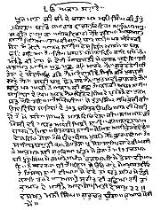
Dasam Granth

Encyclopedia
Dasven Patshah Da Granth or Dasam Granth , often called Sri
Dasam Granth Sahib
with respect, is a scripture of Sikhism
, containing some of the texts attributed to 10th Sikh Guru
, Guru Gobind Singh
. Although the Dasam Granth is commonly confused with the Guru Granth Sahib
, there is no overlap in content between them. W. H. McLeod has noted that while the Guru Granth Sahib
has a religious focus on "liberation through meditation" the Dasam Granth's focus has "little to do with religious belief". Some compositions of the Dasam Granth like Jaap Sahib
, Amrit Savaiye
, and Benti Chaupai are part of daily prayers Nitnem
of the Sikhs. These compositions are also part of Sikh baptism (Khanda di Pahul). It is written in the Braj Bhasha language with the Gurmukhi script.
In his religious court at Anandpur Sahib
, Guru Gobind Singh had employed 52 poets, who translated several classical texts into Braj Bhasha. Most of the writing compiled at Anandpur Sahib was lost while the Guru's camp was crossing the Sirsa river before the Battle of Chamkaur
. Later, Bhai Mani Singh compiled all the available works under the title Dasam Granth. The traditional scholars claim that all the works in Dasam Granth were composed by the Guru himself, on the basis of Bhai Mani Singh's letter. However, a number of scholars dispute this claim, saying that the some of the compositions included in Dasam Granth (such as Charitropakhyan) are out of tune with other Sikh scriptures, and must have been composed by other poets.
Following is in brief about Historical books after Demise of Guru Gobind Singh which mention that Compositions in present Dasam Granth was written by Guru Gobind Singh:
, the Akal Ustat
or praise of the Creator, the Bachitar Natak or Wonderful Drama, in which gives an account of his parentage, his divine mission, and the battles in which he had been engaged.
Then come three abridged compositions of the wars of Durga with demons, (Chandi Chritras: Chandi Chritra I, Chandi Chritra II, Chandi di Var
). These were written to instill the spirit of war among Sikhs. The first stanza of the Sikh ardaas, an invocation to God and the 9 Guru's preceding Guru Gobind Singh Ji, is from Chandi di Var
.
Then follow the Gyan Parbodh, or awakening of knowledge; the Shabad Hazare; quatrain
s called Sawaiyas, which are religious hymns in praise of God and reprobation of idolatry and hypocrisy; the Shastar Nam Mala, a list of offensive and defensive weapons used in the Guru's time, with special reference to the attributes of the Creator; the Kabiovach Bainti Chaupai will "absolve the suffering, pain or fear of the person, who will even once recite this Bani"; the Zafarnamah
, containing the tenth Guru's epistle to the emperor Aurangzeb; and Hikayats, several metrical tales in the Persian language.
.
at one extreme and simple colloquial Hindi
at the other, although conventional Hindi is used marginally. The Braj dialect is a variety of medieval Hindi with a mixture of Sanskrit and Arabic words. The Zafarnamah
and the Hikayats are in Persian
using Gurmukhi characters and several passages in other works are in Punjabi
. The 'author(s)' not only used this melange of languages but also coined words half Arabic half Sanskrit (and sometimes words without any meaning just to create a musical effect). Some of this kind of writing has great power and beauty.
From A Short History of the Sikhs, Ganda Singh & Teja Singh:
"In Hindi he developed a style, which for martial cadence, variety of form and richness of imagination...has remained unsurpassed since his times. In lines ranging from monosyllabic verse to long and multiplied swayyas and kabits, we seem to hear the torrential flow of hill streams or the galloping sweep of cavalry on the march. His intellect quivers in emotion and breaks out against superstition and hypocrisy into humour, irony or banter. His emotion...is raised to the highest pitch of ecstasy when he communes with God."
From Sikhan de Raj di Vithya (History of the Sikh Rule):
"This Granth is very difficult, and is composed in the Gurmukhi dialect in several kinds of verses. In it there is the description of several weapons of warfare, the rules of warfare, the shortcomings in the character of men and women, and some information on worship and religious knowledge.
The descriptions of scenes of battle are couched in extremely vigorous staccato rhyme often reduced to lines of one word each. The battles waged by Chandi encounters with the hill chiefs at Bhangani
and Nadaun
are among the most stirring that exist.
Advaita-type Condemnation of the concept in Puranic theology that God takes various incarnations
Condemnation of Idol Worship
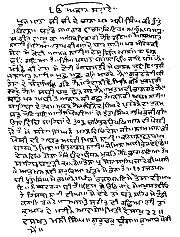 Giani Gian Singh claims that the full copy of the Dasam Granth was in possession of the Budha Dal, an 18th century Sikh army, at the Battle of Kup and was lost during the Second Sikh Holocaust (1762)
The earliest surviving full manuscript of the Dasam Granth dates to 1713, although it appears not to have been publicly available. In 1721, Mata Sundri commissioned Bhai Mani Singh with compiling a volume of the Dasam Granth. He completed his manuscript after collecting and sifting through material collected from a number of Sikhs. "Minor textual variation" exist between the early manuscripts. During the 1890s the text was standardized into its current two-volume 1,428 page print version.
Regarding Bhai Mani Singh compiling the writings of Guru Gobind Singh
, Giani Gian Singh in Panth Parkash
writes
Sri
Sri , also transliterated as Shri or Shree or shre is a word of Sanskrit origin, used in the Indian subcontinent as polite form of address equivalent to the English "Mr." in written and spoken language, or as a title of veneration for deities .-Etymology:Sri has the root meaning of radiance, or...
Dasam Granth Sahib
Sahib
Sahib is an Urdu term which literally translates to "Owner" or "Proprietor". The primary Arabic meaning of Sahib is "associate, companion, comrade, friend" though it also includes "Sahib is an Urdu term which literally translates to "Owner" or "Proprietor". The primary Arabic meaning of Sahib...
with respect, is a scripture of Sikhism
Sikhism
Sikhism is a monotheistic religion founded during the 15th century in the Punjab region, by Guru Nanak Dev and continued to progress with ten successive Sikh Gurus . It is the fifth-largest organized religion in the world and one of the fastest-growing...
, containing some of the texts attributed to 10th Sikh Guru
Guru
A guru is one who is regarded as having great knowledge, wisdom, and authority in a certain area, and who uses it to guide others . Other forms of manifestation of this principle can include parents, school teachers, non-human objects and even one's own intellectual discipline, if the...
, Guru Gobind Singh
Guru Gobind Singh
Guru Gobind Singh is the tenth and last Sikh guru in a sacred lineage of ten Sikh gurus. Born in Patna, Bihar in India, he was also a warrior, poet and philosopher. He succeeded his father Guru Tegh Bahadur as the leader of Sikhs at a young age of nine...
. Although the Dasam Granth is commonly confused with the Guru Granth Sahib
Guru Granth Sahib
Sri Guru Granth Sahib , or Adi Granth, is the religious text of Sikhism. It is the final and eternal guru of the Sikhs. It is a voluminous text of 1430 angs, compiled and composed during the period of Sikh gurus, from 1469 to 1708...
, there is no overlap in content between them. W. H. McLeod has noted that while the Guru Granth Sahib
Guru Granth Sahib
Sri Guru Granth Sahib , or Adi Granth, is the religious text of Sikhism. It is the final and eternal guru of the Sikhs. It is a voluminous text of 1430 angs, compiled and composed during the period of Sikh gurus, from 1469 to 1708...
has a religious focus on "liberation through meditation" the Dasam Granth's focus has "little to do with religious belief". Some compositions of the Dasam Granth like Jaap Sahib
Jaap Sahib
Jaap Sahib is the morning prayer of the Sikhs. The Prayer or Bani was composed by the tenth Sikh Master, Guru Gobind Singh. This Bani is one of 5 Banis that a Sikh must recite everyday and is recited by the Panj Pyare while preparing Amrit on the occasion of Amrit Sanchar , a ceremony held to admit...
, Amrit Savaiye
Amrit Savaiye
Sudha Swayas was composed by Guru Gobind Singh to give an opinion on how to worship God. This Bani appears in the Dasam Granth on pages 13 to 15.-Translation:Below is the English transliteration and translation:*Ik Oangkar waheguru ji ki fateh....
, and Benti Chaupai are part of daily prayers Nitnem
Nitnem
Nit Nem is a collaboration of different banis that were designated to be read by sikhs every day.The Nit Nem bani's usually include the Panj bania which are read in the morning 1am and Rehras Sahib in the evening 6pm and Kirtan Sohila at night 9pm*Japji Sahib *Jaap Sahib *Tav-Prasad Savaiye*Benti...
of the Sikhs. These compositions are also part of Sikh baptism (Khanda di Pahul). It is written in the Braj Bhasha language with the Gurmukhi script.
Authorship
There are three major views on the authorship of the Dasam Granth:- The traditional view is that the entire work was composed by Guru Gobind Singh himself.
- The entire collection was composed by the poets in the Guru's entourage.
- Only a part of the work was composed by the Guru, while the rest was composed by the other poets.
In his religious court at Anandpur Sahib
Anandpur Sahib
Anandpur Sahib is a city in Rupnagar district in the state of Punjab, India. Known as "the holy City of Bliss," it is a holy city of the Sikhs and is one of their most important sacred places, closely linked with their religious traditions and history...
, Guru Gobind Singh had employed 52 poets, who translated several classical texts into Braj Bhasha. Most of the writing compiled at Anandpur Sahib was lost while the Guru's camp was crossing the Sirsa river before the Battle of Chamkaur
Battle of Chamkaur
The Battle Of Chamkaur or also known as Battle Of Chamkaur Sahib was a battle fought between the Khalsa led by Guru Gobind Singh against the Mughal forces led by Wazir Khan. Guru Gobind Singh makes a reference to this battle in Zafarnamah...
. Later, Bhai Mani Singh compiled all the available works under the title Dasam Granth. The traditional scholars claim that all the works in Dasam Granth were composed by the Guru himself, on the basis of Bhai Mani Singh's letter. However, a number of scholars dispute this claim, saying that the some of the compositions included in Dasam Granth (such as Charitropakhyan) are out of tune with other Sikh scriptures, and must have been composed by other poets.
Following is in brief about Historical books after Demise of Guru Gobind Singh which mention that Compositions in present Dasam Granth was written by Guru Gobind Singh:
- Rehitnama Bhai Nand Lal mentioned Jaap Sahib is an important Bani for a Sikh.
- RehitNama Chaupa Singh Chibber quotes various lines from Bachitar Natak, 33 Swiayey, Chopai Sahib, Jaap Sahib.
- In 1711, Sri Gur Sobha was written by Poet Senapat mentioned Conversation of Guru Gobind Singh and Akal Purakh, and written three of it's Adhyay on base of Bachitar Natak.
- In 1741, Parchian Srvadas Kian quoted lines from Rama Avtar, 33 Swaiyey and mentioned Zafarnama with Hikayats.
- in 1751, Gurbilas Patshahi 10 - Koyar Singh Kalal, mentioned Guru Gobind Singh composed Bachitar Natak, Krisna Avtar, Bisan Avtar, Akal Ustat, Jaap Sahib, Zafarnama, Hikayats etc. This is first Granth mentioned Guruship of Guru Granth Shahib.
- In 1766, Kesar Singh Chibber mentioned history of Compilation of Dasam Granth by Bhai Mani Singh Khalsa on directions of Mata Sundri, as he was first who wrote history after death of Guru Gobind Singh.
- In 1766, Sri Guru Mahima Parkash - Sarup Chand Bhalla, mentioned about various Banis of Guru Gobind Singh and Compilation of Dasam Granth
- In 1790, Guru Kian Sakhian - Svarup Singh Kashish, mentione Guru Gobind Singh Composed, bachitar Natak, Krishna Avtar, Shastarnaam Mala, 33 Swaiyey etc.
- In 1797, Gurbilas Patshahi 10 - Sukkha Singh, mentioned compositions of Guru Gobind Singh.
- In 1812, JB Malcolm, in Sektch of Sikhs mentioned about Dasam Granth as Bani of Guru Gobind Singh.
Structure
The Dasam Granth has 1428 pages and contains Jaap SahibJaap Sahib
Jaap Sahib is the morning prayer of the Sikhs. The Prayer or Bani was composed by the tenth Sikh Master, Guru Gobind Singh. This Bani is one of 5 Banis that a Sikh must recite everyday and is recited by the Panj Pyare while preparing Amrit on the occasion of Amrit Sanchar , a ceremony held to admit...
, the Akal Ustat
Akal Ustat
Akal Ustat is the name given to the second Bani in the second holy scriptures of the Sikhs called the Dasam Granth. This text spans from page 33 to page 94 of the 2326 pages of this holy book of the Sikhs at www.sridasam.org....
or praise of the Creator, the Bachitar Natak or Wonderful Drama, in which gives an account of his parentage, his divine mission, and the battles in which he had been engaged.
Then come three abridged compositions of the wars of Durga with demons, (Chandi Chritras: Chandi Chritra I, Chandi Chritra II, Chandi di Var
Chandi di Var
Chandi di Var, also known as Var Sri Bhagauti Ji is a composition included in the 5th chapter of Dasam Granth. It is based on an episode from the Sanskrit work Markandeya Purana, and describes the conflict between the Gods and the Demons...
). These were written to instill the spirit of war among Sikhs. The first stanza of the Sikh ardaas, an invocation to God and the 9 Guru's preceding Guru Gobind Singh Ji, is from Chandi di Var
Chandi di Var
Chandi di Var, also known as Var Sri Bhagauti Ji is a composition included in the 5th chapter of Dasam Granth. It is based on an episode from the Sanskrit work Markandeya Purana, and describes the conflict between the Gods and the Demons...
.
Then follow the Gyan Parbodh, or awakening of knowledge; the Shabad Hazare; quatrain
Quatrain
A quatrain is a stanza, or a complete poem, consisting of four lines of verse. Existing in various forms, the quatrain appears in poems from the poetic traditions of various ancient civilizations including Ancient Greece, Ancient Rome, and China; and, continues into the 21st century, where it is...
s called Sawaiyas, which are religious hymns in praise of God and reprobation of idolatry and hypocrisy; the Shastar Nam Mala, a list of offensive and defensive weapons used in the Guru's time, with special reference to the attributes of the Creator; the Kabiovach Bainti Chaupai will "absolve the suffering, pain or fear of the person, who will even once recite this Bani"; the Zafarnamah
Zafarnamah
Zafarnāmah means the Epistle of Victory and is the name given to the letter sent by the tenth Sikh Guru, Guru Gobind Singh Sahib in 1705 to the Mughal Emperor of India, Aurangzeb. The letter is written in Persian verse....
, containing the tenth Guru's epistle to the emperor Aurangzeb; and Hikayats, several metrical tales in the Persian language.
Contents
The Contents of the Dasam Granth are:- Jaap SahibJaap SahibJaap Sahib is the morning prayer of the Sikhs. The Prayer or Bani was composed by the tenth Sikh Master, Guru Gobind Singh. This Bani is one of 5 Banis that a Sikh must recite everyday and is recited by the Panj Pyare while preparing Amrit on the occasion of Amrit Sanchar , a ceremony held to admit...
(MeditationMeditationMeditation is any form of a family of practices in which practitioners train their minds or self-induce a mode of consciousness to realize some benefit....
) - Akal UstatAkal UstatAkal Ustat is the name given to the second Bani in the second holy scriptures of the Sikhs called the Dasam Granth. This text spans from page 33 to page 94 of the 2326 pages of this holy book of the Sikhs at www.sridasam.org....
(praises of GodGodGod is the English name given to a singular being in theistic and deistic religions who is either the sole deity in monotheism, or a single deity in polytheism....
) - Bachitar Natak (autobiography of the Guru)
- Chandi Charitar I & II (the character of Goddess ChandiChandiChandi or Chandika is the supreme Goddess of Devi Mahatmya also known as Chandi or Durga Sapthashati. Chandi is described as the Supreme reality who is a combination of Mahakali, Maha Lakshmi and Maha Saraswati...
) - Chandi di VarChandi di VarChandi di Var, also known as Var Sri Bhagauti Ji is a composition included in the 5th chapter of Dasam Granth. It is based on an episode from the Sanskrit work Markandeya Purana, and describes the conflict between the Gods and the Demons...
(a balladBalladA ballad is a form of verse, often a narrative set to music. Ballads were particularly characteristic of British and Irish popular poetry and song from the later medieval period until the 19th century and used extensively across Europe and later the Americas, Australia and North Africa. Many...
to describe Goddess ChandiChandiChandi or Chandika is the supreme Goddess of Devi Mahatmya also known as Chandi or Durga Sapthashati. Chandi is described as the Supreme reality who is a combination of Mahakali, Maha Lakshmi and Maha Saraswati...
) - Gyan Prabod (The Awakening of Knowledge)
- Chaubis Avtar (Narrative of 24 incarnations of VishnuVishnuVishnu is the Supreme god in the Vaishnavite tradition of Hinduism. Smarta followers of Adi Shankara, among others, venerate Vishnu as one of the five primary forms of God....
as ordered by God Almighty) - Shabad Hazare (Ten Shabads)
- Swayyae (33 stanzas)
- Khalsa Mehma (the praises of the Khalsa)
- Shastar Nam Mala (a list of weapons)
- Charitropakhyan (various character of men and women [details both negative and positive])
- Chaupai (Sikhism)Chaupai (Sikhism)Benti Chaupai is a hymn by Guru Gobind Singh.Benti Chaupai consists of three parts: Kabiyo Bach Benti Chaupai, Arril and Chaupai, and Savaiye and Dohra. Kabiyo Bach Benti Chaupai is normally referred to as Chaupai in short...
(hymn of supplication) - ZafarnamahZafarnamahZafarnāmah means the Epistle of Victory and is the name given to the letter sent by the tenth Sikh Guru, Guru Gobind Singh Sahib in 1705 to the Mughal Emperor of India, Aurangzeb. The letter is written in Persian verse....
(epistle of victory, a letter written to Emperor AurangzebAurangzebAbul Muzaffar Muhy-ud-Din Muhammad Aurangzeb Alamgir , more commonly known as Aurangzeb or by his chosen imperial title Alamgir , was the sixth Mughal Emperor of India, whose reign lasted from 1658 until his death in 1707.Badshah Aurangzeb, having ruled most of the Indian subcontinent for nearly...
)
.
Language and Literary Quality
The Dasam Granth is written in rhymed poetry. It was designed to be heard, so there is considerable repetition, and a variety of meters to hold the attention. The language of most of the Dasam Granth is largely Braj Bhasha veering towards SanskritSanskrit
Sanskrit , is a historical Indo-Aryan language and the primary liturgical language of Hinduism, Jainism and Buddhism.Buddhism: besides Pali, see Buddhist Hybrid Sanskrit Today, it is listed as one of the 22 scheduled languages of India and is an official language of the state of Uttarakhand...
at one extreme and simple colloquial Hindi
Hindi
Standard Hindi, or more precisely Modern Standard Hindi, also known as Manak Hindi , High Hindi, Nagari Hindi, and Literary Hindi, is a standardized and sanskritized register of the Hindustani language derived from the Khariboli dialect of Delhi...
at the other, although conventional Hindi is used marginally. The Braj dialect is a variety of medieval Hindi with a mixture of Sanskrit and Arabic words. The Zafarnamah
Zafarnamah
Zafarnāmah means the Epistle of Victory and is the name given to the letter sent by the tenth Sikh Guru, Guru Gobind Singh Sahib in 1705 to the Mughal Emperor of India, Aurangzeb. The letter is written in Persian verse....
and the Hikayats are in Persian
Persian language
Persian is an Iranian language within the Indo-Iranian branch of the Indo-European languages. It is primarily spoken in Iran, Afghanistan, Tajikistan and countries which historically came under Persian influence...
using Gurmukhi characters and several passages in other works are in Punjabi
Punjabi language
Punjabi is an Indo-Aryan language spoken by inhabitants of the historical Punjab region . For Sikhs, the Punjabi language stands as the official language in which all ceremonies take place. In Pakistan, Punjabi is the most widely spoken language...
. The 'author(s)' not only used this melange of languages but also coined words half Arabic half Sanskrit (and sometimes words without any meaning just to create a musical effect). Some of this kind of writing has great power and beauty.
From A Short History of the Sikhs, Ganda Singh & Teja Singh:
"In Hindi he developed a style, which for martial cadence, variety of form and richness of imagination...has remained unsurpassed since his times. In lines ranging from monosyllabic verse to long and multiplied swayyas and kabits, we seem to hear the torrential flow of hill streams or the galloping sweep of cavalry on the march. His intellect quivers in emotion and breaks out against superstition and hypocrisy into humour, irony or banter. His emotion...is raised to the highest pitch of ecstasy when he communes with God."
From Sikhan de Raj di Vithya (History of the Sikh Rule):
"This Granth is very difficult, and is composed in the Gurmukhi dialect in several kinds of verses. In it there is the description of several weapons of warfare, the rules of warfare, the shortcomings in the character of men and women, and some information on worship and religious knowledge.
The descriptions of scenes of battle are couched in extremely vigorous staccato rhyme often reduced to lines of one word each. The battles waged by Chandi encounters with the hill chiefs at Bhangani
Battle of Bhangani
The Battle of Bhangani was fought between Guru Gobind Singh's army and the combined forces of many Rajas of the Sivalik Hills , on 18 September 1688, at Bhangani near Paonta Sahib...
and Nadaun
Battle of Nadaun
The Battle of Nadaun was fought at Nadaun, between Raja Bhim Chand of Bilaspur and the Mughals under Alif Khan. Raja Bhim Chand was supported by Guru Gobind Singh and other hill chieftains, who had refused to pay tribute to the Mughal emperor. The Mughals were supported by Raja of Kangra and Raja...
are among the most stirring that exist.
Quotes from Dasam Granth
Internal evidence to the dates of compilation of different portions of various compositions- ਸੱਤ੍ਰਹ ਸੈ ਪੈਤਾਲ ਮਹਿ ਸਾਵਨ ਸੁਦਿ ਥਿਤਿ ਦੀਪ ॥ਨਗਰ ਪਾਂਵਟਾ ਸੁਭ ਕਰਨ ਜਮਨਾ ਬਹੈ ਸਮੀਪ ॥2490॥
- (This work has been completed) in the year 1745 of the Vikrami era in the Sudi aspect of the moon in the month of Sawan, (July 1688 A.D.) in the town of Paonta at the auspicious hour, on banks of the flowing Yamuna. (Sri Guru Gobind Singh Sahib in 'Krishnavtar')
- ਸੱਤ੍ਰਹ ਸੈ ਪੈਤਾਲ ਮੈ ਕੀਨੀ ਕਥਾ ਸੁਧਾਰ ॥ਚੂਕ ਹੋਇ ਜਹ ਤਹ ਸੁ ਕਬਿ ਲੀਜਹੁ ਸਕਲ ਸੁਧਾਰ ॥੭੫੫॥
- In Samvat 1745 (1688 A.D.), this 'katha' (composition) was improved and if there is any error and omission in it, then the poets may still improve it.755. (Sri Guru Gobind Singh Sahib in 'Krishnavtar')
- ਸੰਬਤ ਸਤ੍ਰਹ ਸਹਸ ਭਣਿਜੈ ॥ਅਰਧ ਸਹਸ ਫੁਨਿ ਤੀਨਿ ਕਹਿਜੈ ॥ਭਾਦ੍ਰਵ ਸੁਦੀ ਅਸਟਮੀ ਰਵਿ ਵਾਰਾ ॥ਤੀਰ ਸਤੁਦ੍ਰਵ ਗ੍ਰੰਥ ਸੁਧਾਰਾ ॥405॥
- The Granth was completed on Sunday, the 18th day of month of Bhadon, in 1753 Bikrami Sammat (September 14, 1696 A.D.) on the banks of river Satluj.(Sri Guru Gobind Singh Sahib in 'Charitropakhyan')
- ਸੰਮਤ ਸੱਤ੍ਰਹ ਸਹਸ ਪਚਾਵਨ॥ਹਾੜ ਵਦੀ ਪ੍ਰਿਥਮੈ ਸੁਖ ਦਾਵਨ ॥ਤ ਪ੍ਰਸਾਦਿ ਕਰਿ ਗ੍ਰੰਥ ਸੁਧਾਰਾ ॥ਭੂਲ ਪਰੀ ਲਹੁ ਲੇਹੁ ਸੁਧਾਰਾ ॥860॥
- This Granth has been completed (and improved) in Vadi first in the month of Haar in the year 1755 Bikrami (July 1698); if there has remained any error in it, then kindly correct it.(Sri Guru Gobind Singh Sahib in 'Ramavtaar')
- ਸਤ੍ਰਹ ਸੈ ਚਵਤਾਲ ਮੈ ਸਾਵਨ ਸੁਦਿ ਬੁਧਵਾਰ ॥ਨਗਰ ਪਾਵਟਾ ਮੋ ਤੁਮੋ ਰਚਿਯੋ ਗ੍ਰੰਥ ਸੁਧਾਰ ॥੯੮੩ ॥
- This (part of the) Granth has been prepared after revision in Paonta city on Wednesday in Sawan Sudi Samvat 1744 (August 1687 AD). 983.(Sri Guru Gobind Singh Sahib in 'Krishnavtar')
Advaita-type Condemnation of the concept in Puranic theology that God takes various incarnations
- ਕਿਤੇ ਕਿਸਨ ਸੇ ਕੀਟ ਕੋਟੈ ਉਪਾਏ, ਉਸਾਰੇ ਗੜੇ ਫਿਰ ਮੇਟੇ ਬਨਾਏ॥
- He hath Created millions of Krishnas like worms. He Created them, annihilated them, again created them, again destroyed them.
- ਕਿਤੇ ਕ੍ਰਿਸਨ ਸੇ ਕੀਟ ਕੋਟੈ ਬਨਾਏ ॥ਕਿਤੇ ਰਾਮ ਸੇ ਮੇਟਿ ਡਾਰੇ ਉਪਾਏ ॥
- Somewhere He hath created millions of servants like Krishna. Somewhere He hath effaced and then created (many) like Rama. (pg.98)
- ਰਾਮ ਰਹੀਮ ਉਬਾਰ ਨ ਸਕਹੈ ਜਾਕਰ ਨਾਮ ਰਟੈ ਹੈ॥ਬ੍ਰਹਮਾ ਬਿਸ਼ਨ ਰੁਦ੍ਰ ਸੂਰਹ ਸਸਿ ਤੇ ਬਸਿ ਕਾਲ ਸਭੈ ਹੈ ॥੧ (ਸ. ਹਜਾਰੇ)
- Ram and Rahim whose names you are uttering cant save you. Brahma, Vishnu Shiva, Sun and Moon, all are subject to the power of Death.1. .(pg.1349)
- ਰਾਮ ਰਹੀਮ ਪੁਰਾਨ ਕੁਰਾਨ ਅਨੇਕ ਕਹੈਂ ਮਤ ਏਕ ਨ ਮਾਨਯੋ॥ਸਿੰਮ੍ਰਿਤ ਸਾਸਤ੍ਰ ਬੇਦ ਸਭੈ ਬਹੁ ਭੇਦ ਕਹੈਂ ਹਮ ਏਕਨ ਜਾਨਯੋ॥ਪਾਂਇ ਗਹੇ ਜਬ ਤੇ ਤੁਮਰੇ ਤਬ ਤੇ ਕੋਊ ਆਂਖ ਤਰੇ ਨਹੀ ਆਨਯੋ ॥(ਰਾਮਾਵਤਾਰ)
- O God ! the day when I caught hold of your feet, I do not bring anyone else under my sight; none other is liked by me now; the Puranas and the Quran try to know Thee by the names of Ram and Rahim and talk about you through several stories, but I do not accept these
- ਜਾਕਰ ਰੂਪ ਰੰਗ ਨਹਿ ਜਨਿਯਤ ਸੋ ਕਿਮ ਸਯਾਮ ਕਹੈ ਹੈ॥(ਸਬਦ ਹਜ਼ਾਰੇ ਪਾ.10)
- He, whose form and colour are not, how can he be called Shyaam (black)? .(p1349)
- ਕਾਹੂ ਕਹਯੋ ਕ੍ਰਿਸਨਾਂ ਕਹੁ ਕਾਹੂ ਮਨੈ ਅਵਤਾਰਨ ਮਾਨਯੋ॥ ਫੋਕਟ ਧਰਮ ਬਿਸਾਰ ਸਭੈ ਕਰਤਾਰ ਹੀ ਕਉ ਕਰਤਾ ਜੀਅ ਜਾਨਯੋ॥...ਅੰਤ ਮਰੇ ਪਛੁਤਾਇ ਪ੍ਰਿਥੀ ਪਰ, ਜੇ ਜਗ ਮੈ ਅਵਤਾਰ ਕਹਾਏ॥(33 ਸਵੈਯੇ)
- Someone calls Him Ram or Krishna and someone believes in His incarnations, but my mind has forsaken all useless actions and has accepted only One Creator.12. (p. 1352)
- ਕਾਲ ਹੀ ਪਾਇ ਭਇਓ ਬ੍ਰਹਮਾ ਗਹਿ ਦੰਡ ਕਮੰਡਲ ਭੂਮ ਭ੍ਰਮਾਨਯੋ ॥ਕਾਲ ਹੀ ਪਾਇ ਸਦਾ ਸ਼ਿਵਜੂ ਸਭ ਦੇਸ ਬਿਦੇਸ ਭਇਆ ਹਮ ਜਾਨਯੋ ॥
- Brahma came into being under the control of time and taking his staff and pot his hand, he wandered on the earth; Shiva was also under the control of time and wandered in various countries far and near;
- ਕ੍ਰਿਸਨ ਔ ਬਿਸਨ ਜਪੇ ਤੁਹਿ ਕੋਟਿਕ ਰਾਮ ਰਹੀਮ ਭਲੀ ਬਿਧਿ ਧਿਆਯੋ ॥ਬ੍ਰਹਮ ਜਪਿਓ ਅਰੁ ਸੰਭੁ ਥਪਿਓ ਤਿਹ ਤੇ ਤੁਹਿ ਕੋ ਕਿਨਹੂੰ ਨ ਬਚਾਯੋ ॥……..ਤੋਹਿ ਬਚਾਇ ਸਕੈ ਕਹੁ ਕੈਸੇ ਕੈ ਆਪਨ ਘਾਵ ਬਚਾਇ ਨ ਐਹੈ ॥ਕੋਪ ਕਰਾਲ ਕੀ ਪਾਵਕ ਕੁੰਡ ਮੈ ਆਪ ਟੰਗਿਓ ਤਿਮ ਤੋਹਿ ਟੰਗੈਹੈ ॥
- Thou hast meditated on millions of Krishnas, Vishnus, Ramas and Rahims. Thou hast recited the name of Brahma and established Shivalingam, even then none could save thee…….They cannot save themselves from the blow of death, how can they protect thee? They are all hanging in the blazing fire of anger, therefore they will cause thy hanging similarly. (pg111)
- ਮੈ ਨ ਗਨੇਸ਼ਹਿ ਪ੍ਰਿਥਮ ਮਨਾਊਂ ॥ਕਿਸ਼ਨ ਬਿਸ਼ਨ ਕਬਹੂੰ ਨਹ ਧਿਆਊਂ ॥ਕਾਨ ਸੁਨੇ ਪਹਿਚਾਨ ਨ ਤਿਨ ਸੋਂ ॥ਲਿਵ ਲਾਗੀ ਮੋਰੀ ਪਗ ਇਨ ਸੋਂ ॥੪੩੪॥(ਕ੍ਰਿ.ਵਤਾਰ)
- I do not adore Ganesha in the beginning and also do not meditate on Krishna and Vishnu; I have only heard about them with my ears and I do not recognize them; my consciousness is absorbed at the feet of the Supreme Lord.434.
- ਖੋਜ ਰਹੇ ਸ਼ਿਵ ਸੇ ਜਿਹ ਅੰਤ ਅਨੰਤ ਕਹਿਓ ਥਕ ਅੰਤ ਨ ਪਾਯੋ ॥ਤਾਹੀ ਕੀ ਬਾਤ ਸੁਨੋ ਤੁਮਰੇ ਮੁਖ ਤੇ ਸੁਕਦੇਵ ਇਹੈ ਠਹਰਾਯੋ ॥੨੪੦੩॥
- He, whom Shiva etc. had been searching, but could not know His Mystery; O Shukdev ! relate to me the story of that Lord.2403.
- ਜੌ ਕਹੌ ਰਾਮ ਅਜੋਨਿ ਅਜੈ ਅਤਿ ਕਾਹੇ ਕੌ ਕੌਸ਼ਲ ਕੁੱਖ ਜਯੋ ਜੂ ॥ਕਾਲ ਹੂੰ ਕਾਲ ਕਹੈ ਜਿਹਿ ਕੌ ਕਿਹਿ ਕਾਰਣ ਕਾਲ ਤੇ ਦੀਨ ਭਯੋ ਜੂ ॥
- If you consider Ram, the Lord as Unborn, then how did he take birth from the womb of Kaushalya? He, who is said to be the destroyer of death, then why did he become subjugated himself before death?
- ਸੱਤ ਸਰੂਪ ਬਿਬੈਰ ਕਹਾਇ ਸੁ ਕਯੋਂ ਪਥ ਕੌ ਰਥ ਹਾਂਕ ਧਯੋ ਜੂ ॥ਤਾਹੀ ਕੋ ਮਾਨਿ ਪ੍ਰਭੂ ਕਰਿ ਕੈ ਜਿਹ ਕੋ ਕੋਊ ਭੇਦੁ ਨ ਲੇਨ ਲਯੋ ਜੂ ॥੧੩॥
- If he (Krishna) is called the Truth-incarnate, beyond enmity and opposition, then why did he become the charioteer of Arjuna? O mind! you only consider him the Lord God, whose Mysetry could not be known to anyone.13.
- ਕਯੋਂ ਕਹੁ ਕ੍ਰਿਸ਼ਨ ਕ੍ਰਿਪਾਨਿਧ ਹੈ ਕਿਹ ਕਾਜ ਤੇ ਬੱਧਕ ਬਾਣ ਲਗਾਯੋ ॥ਅਉਰ ਕੁਲੀਨ ਉਧਾਰਤ ਜੋ ਕਿਹ ਤੇ ਅਪਨੋ ਕੁਲ ਨਾਸੁ ਕਰਾਯੋ ॥
- Krishna himself is considered the treasure of Grace, then why did the hunter shot his arrow at him? He has been described as redeeming the clans of others then he caused the destruction of his own clan;
- ਆਦਿ ਅਜੋਨਿ ਕਹਾਇ ਕਹੋ ਕਿਮ ਦੇਵਕਿ ਕੇ ਜਠਰੰਤਰ ਆਯੋ ॥ਤਾਤ ਨ ਮਾਤ ਕਹੈ ਜਿਹ ਕੋ ਤਿਹ ਕਯੋਂ ਬਸੁਦੇਵਹਿ ਬਾਪੁ ਕਹਾਯੋ ॥੧੪॥
- If he (Krishna) is said to be unborn and without a beginning, then how did he come into the womb of Devaki? He, who is considered without any father or mother, then why did he cause Vasudev to be called his father? 14.
- ਕਾਹੇ ਕੋ ਏਸ਼ ਮਹੇਸ਼ਹਿ ਭਾਖਤ ਕਾਹਿ ਦਿਜੇਸ਼ ਕੋ ਏਸ ਬਖਾਨਯੋ ॥ਹੈ ਨ ਰਘ੍ਵੇਸ਼ ਜਦ੍ਵੇਸ਼ ਰਮਾਪਤਿ ਤੈ ਜਿਨ ਕੌ ਬਿਸ੍ਵਨਾਥ ਪਛਾਨਯੋ ॥
- Why do you consider Shiva or Brahma as the Lord? There is none amongst Ram, Krishna and Vishnu, who may be considered as the Lord of the Universe by you;
- ਏਕ ਕੋ ਛਾਡਿ ਅਨੇਕ ਭਜੈ ਸੁਕਦੇਵ ਪਰਾਸਰ ਬਯਾਸ ਝੁਠਾਨਯੋ ॥ਫੋਕਟ ਧਰਮ ਸਜੇ ਸਭ ਹੀ ਹਮ ਏਕ ਹੀ ਕੌ ਬਿਧ ਨੈਕ ਪ੍ਰਮਾਨਯੋ ॥੧੫॥
- Relinquishing One Lord, you worship many. Likewise Sukhdev, Prashar and Vyas were proven false due to pantheism. All have established hollow religions. I believe in One God who reveals Himself in multifarious modes.(15)
- ਕੋਊ ਦਿਜੇਸ਼ ਕੋ ਮਾਨਤ ਹੈ ਅਰੁ ਕੋਊ ਮਹੇਸ਼ ਕੋ ਏਸ਼ ਬਤੈ ਹੈ ॥ਕੋਊ ਕਹੈ ਬਿਸ਼ਨੋ ਬਿਸ਼ਨਾਇਕ ਜਾਹਿ ਭਜੇ ਅਘ ਓਘ ਕਟੈ ਹੈ ॥
- Someone calls Brahma as the Lord-God and someone tells the same thing about Shiva; someone considers Vishnu as the hero of the universe and says that only by remembering him, all the sins will be destroyed;
- ਬਾਰ ਹਜ਼ਾਰ ਬਿਚਾਰ ਅਰੇ ਜੜ ਅੰਤ ਸਮੈ ਸਭ ਹੀ ਤਜਿ ਜੈ ਹੈ ॥ਤਾਹੀ ਕੋ ਧਯਾਨ ਪ੍ਰਮਾਨਿ ਹੀਏ ਜੋਊ ਥੇ ਅਬ ਹੈ ਅਰੁ ਆਗੈ ਊ ਹ੍ਵੈ ਹੈ ॥੧੬॥
- O fool ! think about it a thousand times, all of them will leave you at the time of death. Therefore, you should only meditate on Him, who was in the past, is there in the present and will also be there in the future.16.
- ਕੋਟਕ ਇੰਦ੍ਰ ਕਰੇ ਜਿਹ ਕੋ ਕਈ ਕੋਟਿ ਉਪਿੰਦ੍ਰ ਬਾਨਇ ਖਪਾਯੋ ॥ਦਾਨਵ ਦੇਵ ਫਨਿੰਦ੍ਰ ਧਰਾਧਰ ਪੱਛ ਪਸੂ ਨਹਿ ਜਾਤਿ ਗਨਾਯੋ ॥
- He, who created millions of Indras and Upendras and then destroyed them; He, who created innumerable gods, demons, Sheshnaga, tortoises, birds, animals etc.,
- ਆਜ ਲਗੇ ਤਪੁ ਸਾਧਤ ਹੈ ਸ਼ਿਵ ਊ ਬ੍ਰਹਮਾ ਕਛੁ ਪਾਰ ਨ ਪਾਯੋ ॥ਬੇਦ ਕਤੇਬ ਨ ਭੇਦ ਲਖਯੋ ਜਿਹ ਸੋਊ ਗੁਰੂ ਗੁਰ ਮੋਹਿ ਬਤਾਯੋ ॥੧੭॥
- And for knowing whose Mystery, Shiva and Brahma are performing austerities even till today, but could not know His end; He is such a Guru, whose Mystery could not be comprehended also by Vedas and Katebs and my Guru has told me the same thing.17.
- ਬੇਦ ਕਤੇਬ ਨ ਭੇਦ ਲਹਯੋ ਤਿਹਿ ਸਿੱਧ ਸਮਾਧਿ ਸਭੈ ਕਰਿ ਹਾਰੇ ॥ਸਿੰਮ੍ਰਿਤ ਸ਼ਾਸਤ੍ਰ ਬੇਦ ਸਭੈ ਬਹੁ ਭਾਂਤਿ ਪੁਰਾਨ ਬਿਚਾਰ ਬੀਚਾਰੇ ॥
- The Vedas and Ketebs could not comprehend His Mystery and the adepts have been defeated in practicing contemplation; Different kinds of thoughts have been mentioned about God in Vedas, Shastras, Puranas and smrities; (p1351)
- ਸੋ ਕਿਮ ਮਾਨਸ ਰੂਪ ਕਹਾਏ॥ਸਿਧ ਸਮਾਧਿ ਸਾਧ ਕਰ ਹਾਰੇ ਕਯੋ੍ ਨ ਦੇਖਨ ਪਾਏ ॥੧॥ਰਹਾਉ ॥(ਸ. ਹਜ਼ਾਰੇ)
- How can He be said to come in human form? The Siddha (adept) in deep meditation became tired of the discipline on not seeing Him in any way…..Pause. (p. 1348)
- ਸ਼ੇਸ਼ ਸੁਰੇਸ਼ ਗਣੇਸ਼ ਮਹੇਸੁਰ ਗਾਹਿ ਫਿਰੈ ਸ੍ਰੁਤਿ ਥਾਹ ਨ ਆਯੋ ॥ਰੇ ਮਨ ਮੂੜ ਅਗੂੜ ਇਸੋ ਪ੍ਰਭ ਤੈ ਕਿਹ ਕਾਜਿ ਕਹੋ ਬਿਸਰਾਯੋ ॥4॥1350 33 ਸਵੈਯੇ
- Sheshnaga, Indra, Ganesha, Shiva and also the Shrutis (Vedas) could not know Thy Mystery; O my foolish mind! why have you forgotten such a Lord. 4.
Condemnation of Idol Worship
- ਕਾਹੂ ਲੈ ਪਾਹਨ ਪੂਜ ਧਰਯੋ ਸਿਰ ਕਾਹੂ ਲੈ ਲਿੰਗ ਗਰੇ ਲਟਕਾਇਓ ॥
- Someone worships stone and places it on his head. Someone hangs the phallus (lingam) from his neck. .(pg.42)
- ਕੋਉ ਬੁਤਾਨ ਕੋ ਪੂਜਤ ਹੈ ਪਸੁ ਕੋਉ ਮ੍ਰਿਤਾਨ ਕੋ ਪੂਜਨ ਧਾਇਓ ॥
- Some fools worship the idols and some go to worship the dead. (pg.42)
- ਪਾਇ ਪਰੋ ਪਰਮੇਸਰ ਕੇ ਜੜ ਪਾਹਨ ਮੈਂ ਪਰਮੇਸਰ ਨਾਹੀ ॥੯੯॥
- O fool! Fall at the feet of Lord-God, the Lord is not within the stone-idols.99.(pg.111)
- ਤੇ ਭੀ ਬਸਿ ਮਮਤਾ ਹੁਇ ਗਏ ॥ਪਰਮੇਸਰ ਪਾਹਨ ਠਹਿਰਏ ॥੧੩॥
- They also were overpowered by ‘mineness’ and exhibited the Lord in statues.13. .(pg.134)
- ਪਾਹਨ ਪੁਜੈ ਹੈ ਏਕ ਨ ਧਿਐ ਹੈ ਮਤ ਕੇ ਅਧਕ ਅਧੇਰਾ ॥ਅੰਮ੍ਰਿਤ ਕਹੁ ਤਜਿ ਹੈ ਬਿਖ ਕਹੁ ਭਜਿ ਹੈ ਸਾਝਹਿ ਕਹਹਿ ਸਵੈਰਾ ॥
- Worshipping the stones, they will not meditate on One Lord; there will be prevalent the darkness of many sects; Leaving the ambrosia they will desire for poison, and they will name the evening time as early-morning; .(pg.1142)
- ਤਾਸ ਕਿਉ ਨ ਪਛਾਨਹੀ ਜੋ ਹੋਹਿ ਹੈ ਅਬ ਹੈ ॥ਨਿਹਫਲ ਕਾਹੇ ਭਜਤ ਪਾਹਨ ਤੋਹਿ ਕਛੁ ਫਲਿ ਦੈ ॥
- Why do you not pray to Him, who will be there in future and who is there in the present? You are worshipping the stones uselessly; what will you gain by that worship? (pg. 1289)
- ਅੱਛਤ ਧੂਪ ਦੀਪ ਅਰਪਤ ਹੈ ਪਾਹਨ ਕਛੂ ਨ ਖੈ ਹੈ ॥
- Rice, incense and lamps are offered, but the stones do not eat anything. (pg.1349)
- ਕਹਾ ਭਇਓ ਜੋ ਅਤ ਹਿਤ ਚਿਤ ਕਰ ਬਹੁ ਬਿਧ ਸਿਲਾ ਪੁਜਾਈ॥ ਪ੍ਰਾਨ ਥਕਿਓ ਪਾਹਿਨ ਕਹ ਪਰਸਤ ਕਛੁ ਕਰ ਸਿਧਨ ਆਈ॥ਤਾ ਮੈਂ ਕਹਾਂ ਸਿਧ ਹੈ ਰੇ ਜੜ ਤੋਹਿ ਕਛੁ ਬਰ ਦੇਹੈ॥..(ਸਬਦ ਹਜਾਰੇ)
- Of what use is the worship of the stones with devotion and sincerity in various ways? The hand became tired of touching the stones, because no spiritual power accrued. O fool! where is the spiritual power in them, so that they may bless you with some boon. (pg.1349)
- ਕਾਹੇ ਕਉ ਪੂਜਤ ਪਾਹਨ ਕਉ ਕਛੁ ਪਾਹਨ ਮੈ ਪਰਮੇਸੁਰ ਨਾਹੀ ॥ਤਾਹੀ ਕੋ ਪੂਜ ਪ੍ਰਭੂ ਕਰਿ ਕੈ ਜਿਹ ਪੂਜਤ ਹੀ ਅਘ ਓਘ ਮਿਟਾਹੀ ॥
- Why do you worship stones? Because the Lord-God is not within those stones; you may only worship Him, whose adoration destroys clusters of sins; (pg.1353)
- ਜੌ ਜੁਗ ਤੈ ਕਰਿ ਹੈ ਤਪਸਾ ਕਛੁ ਤੋਹਿ ਪ੍ਰਸੰਨੁ ਨ ਪਾਹਨ ਕੈ ਹੈ ॥ਹਾਥ ਉਠਾਇ ਭਲੀ ਬਿਧ ਸੋ ਜੜ ਤੋਹਿ ਕਛੂ ਬਰਦਾਨੁ ਨ ਦੈ ਹੈ ॥
- You may even perform the austerities for an age, but these stones will not fulfill your wishes and please you; they will not raise their hands and grant you the boon; (pg.1353)
- ਫੋਕਟ ਧਰਮ ਭਯੋ ਫਲ ਹੀਨ ਜੁ ਪੂਜ ਸਿਲਾ ਜੁਗਿ ਕੋਟ ਗਵਾਈ ॥ਸਿੱਧ ਕਹਾ ਸਿਲ ਕੇ ਪਰਸੇ ਬਲ ਬ੍ਰਿੱਧ ਘਟੀ ਨਵਨਿੱਧ ਨ ਪਾਈ ॥
- The hollow religion became fruitless and O being! you have lost years and years by worshipping the stones; you will not get power with the worship of stones; the strength and glory will only decrease; (pg.1353)
- ਪਾਹਨ ਕੋ ਅਸਥਾਲਯ ਕੋ ਸਿਰ ਨਯਾਇ ਫਿਰਯੋ ਕਛੁ ਹਾਥ ਨ ਆਯੋ ॥ਰੇ ਮਨ ਮੂੜ ਅਗੂੜ ਪ੍ਰਭੂ ਤਜਿ ਆਪਨ ਹੂੜ ਕਹਾ ਉਰਝਾਯੋ ॥੨੬॥
- You had been wandering with bowed head in the temples of stones, but you realized nothing; O foolish mind! you were only entangled in your bad intellect abandoning that Effulgent Lord.26. (pg.1354)
- ਕਹੂੰ ਲੈ ਠੋਕ ਬਧੇ ਉਰ ਠਾਕੁਰ ਕਾਹੂੰ ਮਹੇਸ਼ ਕੌ ਏਸ ਬਖਾਨਯੋ ॥ਕਾਹੂੰ ਕਹਯੋ ਹਰਿ ਮੰਦਰ ਮੈ ਹਰਿ ਕਾਹੂੰ ਮਸੀਤ ਕੈ ਬੀਚ ਪ੍ਰਮਾਨਯੋ ॥
- Someone has tied the stone-idol around his neck and someone has accepted Shiva as the Lord; someone considers the Lord within the temple or the mosque; (p1351)
- ਕਿ ਓ ਬੁਤ ਪਰਸਤੰਦੁ ਮਨ ਬੁਤ ਸਿਕਸਤ (ਜ਼ਫਰਨਾਮਹ)
- They were the idol worshippers, and me the idol destroyer
Compilation
Second Sikh Holocaust (1762)
The Waḍḍā Ghallūghārā , meaning "the great massacre or holocaust" was the mass killing of the Sikhs by Muslims that happened during the years of Afghan influence in Punjab region owing to the repeated incursions of Ahmad Shah Abdali in 1764. As such, it is distinguished from the Sikh holocaust of...
The earliest surviving full manuscript of the Dasam Granth dates to 1713, although it appears not to have been publicly available. In 1721, Mata Sundri commissioned Bhai Mani Singh with compiling a volume of the Dasam Granth. He completed his manuscript after collecting and sifting through material collected from a number of Sikhs. "Minor textual variation" exist between the early manuscripts. During the 1890s the text was standardized into its current two-volume 1,428 page print version.
Regarding Bhai Mani Singh compiling the writings of Guru Gobind Singh
Guru Gobind Singh
Guru Gobind Singh is the tenth and last Sikh guru in a sacred lineage of ten Sikh gurus. Born in Patna, Bihar in India, he was also a warrior, poet and philosopher. He succeeded his father Guru Tegh Bahadur as the leader of Sikhs at a young age of nine...
, Giani Gian Singh in Panth Parkash
Panth Parkash
Panth Parkash is the name of two well-known books on Sikh history.#Panth Parkash of Rattan Singh Bhangu, the grandson of famous Sikh warrior, Sardar Mehtab Singh Mirankotia. It was written during 1809-1841. Panth Parkash is the only source of historical account of Banda Bahadur and the...
writes
- ਸਤ੍ਰਾਂ ਸੈ ਅਠਤ੍ਰੈ ਸਾਲ. ਪੰਥ ਇਕਠਾ ਭਯੋ ਬਿਸਾਲ....
- ਇਕ ਦਿਨ ਆਗਿਆ ਪੰਥ ਕੀ ਮਨੀ ਸਿੰਘ ਜੀ ਪਾਇ.
- ਬਾਣੀ ਦਸਮੇਂ ਗੁਰੂ ਕੀ ਸੰਗ੍ਰਹਿ ਕਰ ਧਰ ਭਾਇ. 20.
- ਏਕ ਜਿਲਦ ਮੈ ਕੀਨੀ ਕਰ ਹੈ. ਤਿਸ ਕਾ ਭੋਗ ਹਕਾਇਤ ਪਰ ਹੈ.
- One day in 1778 Bikrami (1721 AD) the panth got together...
- Bhai Mani Singh accepted the orders of the panth
- And he collected the banees of the Dasam Guru.
- Compiled in one bind (the beerh) ends at Hikayat
External links
- www.sridasamgranth.com: Articles, Videos, manuscripts on Guru Gobind Singhs compositions
- Panjab Digital Library - Digitally preserving manuscripts of Dasam Granth
- patshahi10.org: writings and multimedia related to Dasam Granth
- Resource on Dasam Granth
- Dasam Granth translation
- Dasam Granth translation online
- Dasam Granth at SearchGurbani.com
- Bachitter Natak - A Strange Drama
- Dasam Granth History - Daljeet Singh
- Compilation of Dasam Granth -A scientific Analysis
- Sikh Research and Education Center - Disseminating Gurmat philosophy and the spirit of Sikhism
- Report, Sodhak (Revision) Committee