


Colonoscopy

Encyclopedia
Colonoscopy is the endoscopic
examination of the large bowel
and the distal part of the small bowel
with a CCD camera or a fiber optic camera on a flexible tube passed through the anus
. It may provide a visual diagnosis (e.g. ulceration
, polyps
) and grants the opportunity for biopsy
or removal of suspected lesions.
Colonoscopy can remove polyps as small as one millimetre or less. Once polyps are removed, they can be studied with the aid of a microscope to determine if they are precancerous or not.
Colonoscopy is similar to, but not the same as, sigmoidoscopy
—the difference being related to which parts of the colon each can examine. A colonoscopy allows an examination of the entire colon (measuring four to five feet in length). A sigmoidoscopy allows an examination of the distal portion (final two feet) of the colon, which may be sufficient because benefits to colonoscopy (cancer survival) have been limited to the distal portion of the colon.
The American Cancer Society “Guidelines for the Early Detection of Cancer” recommend, beginning at age 50, both men and women follow one of these testing schedules for screening to find colon polyps and cancer: 1. Flexible sigmoidoscopy every 5 years, or 2. Colonoscopy every 10 years, or 3. Double-contrast barium enema every 5 years, or 4. CT colonography (virtual colonoscopy) every 5 years.
A sigmoidoscopy is often used as a screening procedure for a full colonoscopy, often done in conjunction with a fecal occult blood test (FOBT). About 5% of these screened patients are referred to colonoscopy.
Virtual colonoscopy
, which uses 2D and 3D imagery reconstructed from computed tomography
(CT) scans or from nuclear magnetic resonance
(MR) scans, is also possible, as a totally non-invasive medical test, although it is not standard and still under investigation regarding its diagnostic abilities. Furthermore, virtual colonoscopy does not allow for therapeutic maneuvers such as polyp/tumour removal or biopsy nor visualization of lesions smaller than 5 millimetres. If a growth or polyp is detected using CT colonography, a standard colonoscopy would still need to be performed.
Colonoscopy is not recommended for patients having an active flare of ulcerative colitis
or Crohn's disease
to avoid a perforation of the colon. Additionally, surgeons have lately been using the term pouchoscopy
to refer to a colonoscopy of the ileo-anal pouch
.
, unexplained changes in bowel habit and suspicion of malignancy. Colonoscopies are often used to diagnose colon cancer, but are also frequently used to diagnose inflammatory bowel disease
. In older patients (sometimes even younger ones) an unexplained drop in hematocrit
(one sign of anemia
) is an indication that calls for a colonoscopy, usually along with an esophagogastroduodenoscopy
(EGD), even if no obvious blood has been seen in the stool
(feces).
Fecal occult blood
is a quick test which can be done to test for microscopic traces of blood in the stool. A positive test is almost always an indication to do a colonoscopy. In most cases the positive result is just due to hemorrhoids; however, it can also be due to diverticulosis
, inflammatory bowel disease (Crohn's disease
, ulcerative colitis
), colon cancer, or polyps
. However—since its development by Dr. Hiromi Shinya
and Dr. William I. Wolff in the 1960s—polypectomy
has become a routine part of colonoscopy, allowing for quick and simple removal of polyps without invasive surgery.
Colonoscopy has become a primary routine screening test for people in the US who are over 50 years of age, but flexible sigmoidoscopy every 5 years, or colonoscopy every 10 years, or double-contrast barium enema every 5 years, or CT colonography (virtual colonoscopy) every 5 years are all equally recommended.; Subsequent rescreenings are then scheduled based on the initial results found, with a five- or ten-year recall being common for colonoscopies that produce normal results. Patients with a family history of colon cancer are often first screened during their teenage years.
Among people who have had an initial colonoscopy that found no polyps, the risk of developing colorectal cancer within five years is extremely low. Therefore, there is no need for those people to have another colonoscopy sooner than five years after the first screening.
, chicken and/or beef broth or bouillon
, lemon-lime
soda
, lemonade, sports drink
, and water
. It is very important that the patient remain hydrated. Sports drinks contain electrolytes which are depleted during the purging of the bowel. Orange juice
, prune
juice, and milk
containing fiber should not be consumed, nor should liquids dyed red, purple, orange, or sometimes brown; however, cola is allowed. In most cases, tea
(no milk) or black coffee
(no milk) are allowed.
The day before the colonoscopy, the patient is either given a laxative
preparation (such as Picosalax, Bisacodyl
, phospho soda
, sodium picosulfate
, or sodium phosphate and/or magnesium citrate
) and large quantities of fluid, or whole bowel irrigation
is performed using a solution of polyethylene glycol
and electrolytes. Often, the procedure involves both a pill-form laxative and a bowel irrigation preparation with the polyethylene glycol powder dissolved into any clear liquid, preferably a sports drink which contain electrolytes.
In this case, a typical procedure regimen then would be as follows: in the morning of the day before the procedure, a 238 g bottle of polyethylene glycol powder should be poured into 64 oz. of the chosen clear liquid, which then should be mixed and refrigerated. Two (2) bisacodyl 5 mg tablets are taken 3 pm; at 5 pm, the patient starts drinking the mixture (approx. 8 oz. each 15-30 min. until finished); at 8 pm, take two (2) bisacodyl 5 mg tablets; continue drinking/hydrating into the evening until bedtime with clear permitted fluids. A common brand name of bisacodyl is Dulcolax, and store brands are available. A common brand name of polyethylene glycol powder is MiraLAX. It may be advisable to schedule the procedure early on a given day so the patient need not go without food and only limited fluids the morning of the procedure on top of having to go through the foregoing preparation procedures the preceding day.
Since the goal of the preparation is to clear the colon of solid matter, the patient should plan to spend the day at home in comfortable surroundings with ready access to toilet
facilities. The patient may also want to have at hand moist toilettes or a bidet for cleaning the anus
. A soothing salve such as petroleum jelly
applied after cleaning the anus will improve patient comfort.
The patient may be asked to skip aspirin and aspirin-like products such as salicylate, ibuprofen
, and similar medications for up to ten days before the procedure to avoid the risk of bleeding if a polypectomy is performed during the procedure. A blood test may be performed before the procedure.
intravenously, employing agents such as fentanyl or midazolam
. Although meperidine (Demerol) may be used as an alternative to fentanyl, the concern of seizures has relegated this agent to second choice for sedation behind the combination of fentanyl and midazolam
. The average person will receive a combination of these two drugs, usually between 25 to 100 µg IV fentanyl and 1–4 mg IV midazolam. Sedation practices vary between practitioners and nations; in some clinics in Norway, sedation is rarely administered.
Some endoscopists are experimenting with, or routinely use, alternative or additional methods such as nitrous oxide
and propofol
, which have advantages and disadvantages relating to recovery time (particularly the duration of amnesia after the procedure is complete), patient experience, and the degree of supervision needed for safe administration. This sedation is called "twilight anesthesia
." For some patients it is not fully effective, so they are indeed awake for the procedure and can watch the inside of their colon on the color monitor. Substituting propofol for midazolam, which gives the patient quicker recovery, is gaining wider use, but requires closer monitoring of respiration
.
A meta-analysis
found that playing music improves patient tolerability of the procedure.
The first step is usually a digital rectal examination, to examine the tone of the sphincter
and to determine if preparation has been adequate. The endoscope
is then passed through the anus
up the rectum
, the colon
(sigmoid, descending, transverse and ascending colon, the cecum), and ultimately the terminal ileum
. The endoscope has a movable tip and multiple channels for instrumentation, air, suction and light. The bowel is occasionally insufflated with air to maximize visibility. Biopsies are frequently taken for histology
.
In most experienced hands, the endoscope is advanced to the junction of where the colon and small bowel join up (cecum
) in under 10 minutes in 95% of cases. Due to tight turns and redundancy in areas of the colon that are not "fixed", loops may form in which advancement of the endoscope creates a "bowing" effect that causes the tip to actually retract. These loops often result in discomfort due to stretching of the colon and its associated mesentery
. Manoeuvres to "reduce" or remove the loop include pulling the endoscope backwards while torquing the instrument. Alternatively, body position changes and abdominal support from external hand pressure can often "straighten" the endoscope to allow the scope to move forward. In a minority of patients, looping is often cited as a cause for an incomplete examination. Usage of alternative instruments leading to completion of the examination has been investigated, including use of pediatric colonoscope, push enteroscope and upper GI endoscope variants.
For screening purposes, a closer visual inspection is then often performed upon withdrawal of the endoscope over the course of 20 to 25 minutes. Lawsuits over missed cancerous lesions have recently prompted some institutions to better document withdrawal time as rapid withdrawal times may be a source of potential medical legal liability. This is often a real concern in clinical settings where high caseloads could provide financial incentive to complete colonoscopies as quickly as possible.
Suspicious lesions may be cauterized
, treated with laser
light or cut with an electric wire for purposes of biopsy
or complete removal polypectomy
. Medication can be injected, e.g. to control bleeding lesions. On average, the procedure takes 20–30 minutes, depending on the indication and findings. With multiple polypectomies or biopsies, procedure times may be longer. As mentioned above, anatomic considerations may also affect procedure times.
After the procedure, some recovery time is usually allowed to let the sedative wear off. Outpatient recovery time can take an estimate of 30–60 minutes. Most facilities require that patients have a person with them to help them home afterwards (again, depending on the sedation method used).
One very common aftereffect from the procedure is a bout of flatulence
and minor wind pain caused by air insufflation into the colon during the procedure.
An advantage of colonoscopy over x-ray imaging or other, less invasive tests, is the ability to perform therapeutic interventions during the test. A polyp is a growth of excess of tissue that can develop into cancer. If a polyp is found, for example, it can be removed by one of several techniques. A snare device can be placed around a polyp for removal. Even if the polyp is flat on the surface it can often be removed. For example, the following shows a polyp removed in stages:
The colon is wrinkled and corrugated like an accordion, or a clothes-dryer exhaust tube. This gives it the large surface area needed for digestion. But in order to inspect this surface, the doctor must blow it up like a balloon, to get the creases out. This is done using a powered air compressor a lot like the one used to inflate a car's tires.
The stomach, intestines and colon have a "second brain" wrapped around them. This "second brain" has at least sensor nerves, decision processes, and motor nerves, so that it runs the chemical factory of digestion completely by itself, without the person's having to think about it. It uses 95% of all serotonin in the body. And it uses other complex hormone signals and nerve signals to communicate with the brain and the rest of the body.
Normally a colon's job is to digest food, and to detect when a person gets sick.
Harmful bacteria in rancid food create unexpected gas. So the colon has distension sensors that can tell when there is unexpected gas pushing the colon walls out. Then the "second brain" tells the person to feel sick — he or she is having intestinal difficulties. In the case of bad food, this would involve stopping moving around. The person would sit groaning in the bathroom until the body eliminated the food.
This is why doctors often recommend a total anesthesia or a partial "twilight" sedative to lessen the brain's awareness of the pain.
Once the colon has been inflated, the doctor inspects it with the scope on the way out, as it is slowly pulled backwards. If any polyps are found, they can be cut out at this point.
Some doctors prefer to work with totally anesthetized patients at this point, since the lack of pain being reported allows a leisurely examination; whereas a doctor with a twilight-sedated patient might hurry the inspection at this point, because of the groaning. However, twilight sedation is safer than general anesthesia. For this reason, it is generally better to request twilight sedation and ask the doctor to take his or her time, even if the patient groans.
The intensity of the pain may be correlated with the pressure of the air inside the colon. Doctors should use an air pump with a constant pressure source, not a constant volume source. Only enough air to maintain a particular pressure should be pumped into the colon.
Most other known physical means of distending the colon without pumping air in introduce another physical contact into the system, with corresponding substantial increases in the probability of puncture. It is much safer, from a medical standpoint, to distend the colon with air, even if it does cause pain. The pain is transitory and can be borne.
Tens of millions of adults need to have colonoscopies each year, and yet many don't, because they are afraid of the pain.
If pain is truly an issue, the patient can always request a general anesthetic. In the meantime, knowing that the pain comes from the colon being inflated, and not from the scope itself, makes the pain understandable and possibly more bearable. However, when the patient is under light anesthesia and unable to fully communicate his or her concerns or move, the intense, inescapable pain can be traumatizing, regardless of its source. It can also inhibit willingness to undergo future procedures.
It is worth noting that in many hospitals (for instance St. Mark's Hospital
, London
, which specialises in intestinal and colorectal medicine) colonoscopies are carried out without any sedation. This allows the patient to shift his or her body position to help the doctor carry out the procedure and significantly reduces recovery time and side-effects. Although there is some discomfort when the colon is distended with air, this is not usually particularly painful and it passes relatively quickly. Patients can then be released from hospital on their own very swiftly without any feelings of nausea.
Doppler ultrasonography using a low frequency transducer — for example a 2.5 MHz — and a high frequency transducer ,for example a 7.5 MHz probe. Detailed examination of duodenal walls and folds, colonic walls and haustra was performed using a 7.5 MHz probe. Deeply located abdominal structures were examined using 2.5 MHz probe. All ultrasound examinations are performed after overnight fasting (for at least 16 hours) using standard scanning procedure. Subjects are examined with and without water contrast. Water contrast imaging is performed by having adult subjects take at least one liter of water prior to examination. Patients are examined in the supine, left posterior oblique, and left lateral decubitus positions using the intercostal and subcostal approaches. The liver, gall bladder, spleen, pancreas, duodenum, colon, and kidneys are routinely evaluated in all patients. With patient lying supine, the examination of the duodenum with high frequency ultrasound duodenography is performed with 7.5 MHz probe placed in the right upper abdomen, and central epigastric successively; for high frequency ultrasound colonography, the ascending colon, is examined with starting point usually midway of an imaginary line running from the iliac crest to the umbilicus and proceeding cephalid through the right mid abdomen; for the descending colon, the examination begins from the left upper abdomen proceeding caudally and traversing the left mid abdomen and left lower abdomen, terminating at the sigmoid colon in the lower pelvic region. Color flow Doppler sonography is used to examine the localization of lesions in relation to vessels. All measurements of diameter and wall thickness are performed with built-in software. Measurements are taken between peristaltic waves.
who died of colon cancer by 2003, and hence studied colonoscopies done in the early to mid 1990s. (Since the procedure continues to evolve, more recent colonoscopies may be more effective). The summary result, according to table 3 of the report, show approximately a 37% reduction in the death rate from colorectal cancer, with a significantly lower reduction in death for "incomplete" colonoscopies.
A 2011 study published in Annals of Internal Medicine, on the other hand, showed that in people who had colonoscopy in the previous 10 years "the risks for early and more advanced stages of cancer were reduced by more than 50%. A lower risk for CRC [colorectal cancer] was seen for both cancer on the left side of the colon (closer to the anus and thus easier to reach during colonoscopy) and for cancer on the right side (which is harder to reach)."
The rate of complications varies with the practitioner and institution performing the procedure, as well as a function of other variables.
The most serious complication generally is the gastrointestinal perforation
, which is life-threatening and requires immediate major surgery for repair. A 2003 summary study of 25,000 patients showed a perforation rate of 0.2%, and a death rate of 0.006% on a total of 84,000 patients. The 2006 study by Levin et al. showed a perforation rate of 0.09%; while a 2009 study quoted a similar perforation rate of 0.082%. Appendicitis, has been associated with either perforation or colonoscopy, in case reports in Korean, Italian and English journals.
According to a study published in the Annals of Internal Medicine, for which researchers reviewed colon cancer screening data
from 1966 to 2001, the most severe complications from colonoscopy are perforation (that occurred in 0.029% to 0.72% of cases), heavy bleeding (occurring in 0.2% to 2.67 % of colonoscopies) and death (occurring in 0.003% to 0.03% of colonoscopy patients).
An analysis of the relative risks of sigmoidoscopy
and colonoscopy, published in the February 5, 2003 issue of the Journal of the National Cancer Institute brought into attention that the risk of perforation after colonoscopy is approximately double that after sigmoidoscopy (consistent with the fact that colonoscopy examines a longer section of the colon), even though this difference appeared to be decreasing.
Bleeding complications may be treated immediately during the procedure by cauterization
via the instrument. Delayed bleeding may also occur at the site of polyp removal up to a week after the procedure and a repeat procedure can then be performed to treat the bleeding site. Even more rarely, splenic rupture can occur after colonoscopy because of adhesions between the colon and the spleen.
As with any procedure involving anaesthesia, other complications would include cardiopulmonary complication
s such as a temporary drop in blood pressure
, and oxygen saturation
usually the result of overmedication
, and are easily reversed. Anesthesia can also increase the risk of developing blood clots and lead to pulmonary embolism or deep venous thrombosis. (DVT) In rare cases, more serious cardiopulmonary events such as a heart attack
, stroke
, or even death may occur; these are extremely rare except in critically ill patients with multiple risk factors. In very rare cases, coma associated with anesthesia may occur.
Virtual colonoscopies carry risks that are associated with radiation exposure.
Severe dehydration
caused by the laxatives that are usually administered during the bowel preparation for colonoscopy also may occur. Therefore, patients must drink large amounts of fluids during the days of colonoscopy preparation to prevent dehydration. Loss of electrolytes or dehydration is potential risk that can even prove deadly. In rare cases, severe dehydration can lead to kidney damage or renal dysfunction under the form of phosphate nephropathy.
Colonoscopy preparation and colonoscopy procedure can cause inflammation
of the bowels and diarrhea
or even bowel obstruction
.
During colonoscopies where a polyp
is removed (a polypectomy), the risk of complications has been higher, although still very uncommon, at about 2.3 percent. One of the most serious complications that may arise after colonoscopy is the postpolypectomy syndrome. This syndrome occurs due to potential burns to the bowel wall when the polyp is removed. It is however a very rare complication and as a result patients may experience fever and abdominal pain. The condition is treated with intravenous fluids and antibiotics while the patient is recommended to rest.
Bowel infections are a potential colonoscopy risk, although very rare. The colon is not a sterile environment as many bacteria live in the colon to assure the well-functioning of the bowel and therefore the risk of infections is very low. Infections can occur during biopsies when too much tissue is removed and bacteria protrude in areas they do not belong to or in cases when the lining of the colon is perforated and the bacteria get into the abdominal cavity
. Infection may also be transmitted between patients if the colonoscope is not cleaned and sterilized properly between tests, although the risk of this happening is very low.
Minor colonoscopy risks may include nausea
, vomiting
or allergies to the sedatives that are used. If medication is given intravenously, the vein
may become irritated. Most localized irritations to the vein leave a tender lump lasting a number of days but going away eventually. The incidence of these complications is less than 1%.
On very rare occasions, intracolonic explosion
may occur. High frequency ultrasound duodenography and colonography do not carry the risks associated with a traditional colonoscopy.
Although complications after colonoscopy are uncommon, it is important for patients to recognize early signs of any possible complications. They include severe abdominal pain
, fevers and chills, or rectal bleeding (more than half a cup).
procedure. Colonoscopy is relatively risky, with 5 in 1000 patients facing serious complications. To prevent one cancer death, 1,250 colonoscopies need to be performed, but perforation of the colon occurs at a rate of about 1 in 1000 procedures.
Since polyps often take 10 to 15 years to transform into cancer, in someone at average risk of colorectal cancer, guidelines recommend 10 years after a normal screening colonoscopy before the next colonoscopy. (This interval does not apply to people at high risk of colorectal cancer, or to those who experience symptoms of colorectal cancer.)
Colonoscopy is not recommended for patients over 75, and the procedure has been "considerably overused" among elderly patients. Researchers found that older patients with three or more significant health problems, like dementia or heart failure, had high rates of repeat colonoscopies without medical indications. These patients are less likely to live long enough to develop colon cancer. Gordon states, "At about $1,000 per procedure, there’s clearly an economic incentive".
Endoscopy
Endoscopy means looking inside and typically refers to looking inside the body for medical reasons using an endoscope , an instrument used to examine the interior of a hollow organ or cavity of the body. Unlike most other medical imaging devices, endoscopes are inserted directly into the organ...
examination of the large bowel
Large intestine
The large intestine is the third-to-last part of the digestive system — — in vertebrate animals. Its function is to absorb water from the remaining indigestible food matter, and then to pass useless waste material from the body...
and the distal part of the small bowel
Ileum
The ileum is the final section of the small intestine in most higher vertebrates, including mammals, reptiles, and birds. In fish, the divisions of the small intestine are not as clear and the terms posterior intestine or distal intestine may be used instead of ileum.The ileum follows the duodenum...
with a CCD camera or a fiber optic camera on a flexible tube passed through the anus
Anus
The anus is an opening at the opposite end of an animal's digestive tract from the mouth. Its function is to control the expulsion of feces, unwanted semi-solid matter produced during digestion, which, depending on the type of animal, may be one or more of: matter which the animal cannot digest,...
. It may provide a visual diagnosis (e.g. ulceration
Peptic ulcer
A peptic ulcer, also known as PUD or peptic ulcer disease, is the most common ulcer of an area of the gastrointestinal tract that is usually acidic and thus extremely painful. It is defined as mucosal erosions equal to or greater than 0.5 cm...
, polyps
Colorectal polyp
A colorectal polyp is a polyp occurring on the lining of the colon or rectum. Untreated colorectal polyps can develop into colorectal cancer....
) and grants the opportunity for biopsy
Biopsy
A biopsy is a medical test involving sampling of cells or tissues for examination. It is the medical removal of tissue from a living subject to determine the presence or extent of a disease. The tissue is generally examined under a microscope by a pathologist, and can also be analyzed chemically...
or removal of suspected lesions.
Colonoscopy can remove polyps as small as one millimetre or less. Once polyps are removed, they can be studied with the aid of a microscope to determine if they are precancerous or not.
Colonoscopy is similar to, but not the same as, sigmoidoscopy
Sigmoidoscopy
Sigmoidoscopy From Greek Sigma - eidos - scopy, to look inside an s-like object, is the minimally invasive medical examination of the large intestine from the rectum through the last part of the colon. There are two types of sigmoidoscopy, flexible sigmoidoscopy, which uses a flexible endoscope,...
—the difference being related to which parts of the colon each can examine. A colonoscopy allows an examination of the entire colon (measuring four to five feet in length). A sigmoidoscopy allows an examination of the distal portion (final two feet) of the colon, which may be sufficient because benefits to colonoscopy (cancer survival) have been limited to the distal portion of the colon.
The American Cancer Society “Guidelines for the Early Detection of Cancer” recommend, beginning at age 50, both men and women follow one of these testing schedules for screening to find colon polyps and cancer: 1. Flexible sigmoidoscopy every 5 years, or 2. Colonoscopy every 10 years, or 3. Double-contrast barium enema every 5 years, or 4. CT colonography (virtual colonoscopy) every 5 years.
A sigmoidoscopy is often used as a screening procedure for a full colonoscopy, often done in conjunction with a fecal occult blood test (FOBT). About 5% of these screened patients are referred to colonoscopy.
Virtual colonoscopy
Virtual colonoscopy
Virtual colonoscopy is a medical imaging procedure which uses x-rays and computers to produce two- and three-dimensional images of the colon from the lowest part, the rectum, all the way to the lower end of the small intestine and display them on a screen...
, which uses 2D and 3D imagery reconstructed from computed tomography
Computed tomography
X-ray computed tomography or Computer tomography , is a medical imaging method employing tomography created by computer processing...
(CT) scans or from nuclear magnetic resonance
Nuclear magnetic resonance
Nuclear magnetic resonance is a physical phenomenon in which magnetic nuclei in a magnetic field absorb and re-emit electromagnetic radiation...
(MR) scans, is also possible, as a totally non-invasive medical test, although it is not standard and still under investigation regarding its diagnostic abilities. Furthermore, virtual colonoscopy does not allow for therapeutic maneuvers such as polyp/tumour removal or biopsy nor visualization of lesions smaller than 5 millimetres. If a growth or polyp is detected using CT colonography, a standard colonoscopy would still need to be performed.
Colonoscopy is not recommended for patients having an active flare of ulcerative colitis
Ulcerative colitis
Ulcerative colitis is a form of inflammatory bowel disease . Ulcerative colitis is a form of colitis, a disease of the colon , that includes characteristic ulcers, or open sores. The main symptom of active disease is usually constant diarrhea mixed with blood, of gradual onset...
or Crohn's disease
Crohn's disease
Crohn's disease, also known as regional enteritis, is a type of inflammatory bowel disease that may affect any part of the gastrointestinal tract from mouth to anus, causing a wide variety of symptoms...
to avoid a perforation of the colon. Additionally, surgeons have lately been using the term pouchoscopy
Pouchoscopy
Pouchoscopy is a minimally invasive endoscopic procedure to examine an ileo-anal pouch, a replacement for the colon / rectum which is surgically created from the small intestine as a cure for ulcerative colitis and as a treatment for other inflammatory bowel diseases such as Crohn's disease, a...
to refer to a colonoscopy of the ileo-anal pouch
Ileo-anal pouch
The ileal pouch-anal anastomosis , also known as an ileo-anal pouch, restorative proctocolectomy, ileal-anal pullthrough, or sometimes referred to as a j-pouch, s-pouch, w-pouch or an internal pouch, is an internal reservoir; usually situated where the rectum would normally be...
.
Medical uses
Conditions that call for colonoscopies include gastrointestinal hemorrhageGastrointestinal bleeding
Gastrointestinal bleeding or gastrointestinal hemorrhage describes every form of hemorrhage in the gastrointestinal tract, from the pharynx to the rectum. It has diverse causes, and a medical history, as well as physical examination, generally distinguishes between the main forms...
, unexplained changes in bowel habit and suspicion of malignancy. Colonoscopies are often used to diagnose colon cancer, but are also frequently used to diagnose inflammatory bowel disease
Inflammatory bowel disease
In medicine, inflammatory bowel disease is a group of inflammatory conditions of the colon and small intestine. The major types of IBD are Crohn's disease and ulcerative colitis.-Classification:...
. In older patients (sometimes even younger ones) an unexplained drop in hematocrit
Hematocrit
The hematocrit or packed cell volume or erythrocyte volume fraction is the percentage of the concentration of red blood cells in blood. It is normally about 45% for men and 40% for women...
(one sign of anemia
Anemia
Anemia is a decrease in number of red blood cells or less than the normal quantity of hemoglobin in the blood. However, it can include decreased oxygen-binding ability of each hemoglobin molecule due to deformity or lack in numerical development as in some other types of hemoglobin...
) is an indication that calls for a colonoscopy, usually along with an esophagogastroduodenoscopy
Esophagogastroduodenoscopy
For other expansions of the initialism "OGD", see the disambiguation page.In medicine , esophagogastroduodenoscopy is a diagnostic endoscopic procedure that visualizes the upper part of the gastrointestinal tract up to the duodenum...
(EGD), even if no obvious blood has been seen in the stool
Human feces
Human feces , also known as a stool, is the waste product of the human digestive system including bacteria. It varies significantly in appearance, according to the state of the digestive system, diet and general health....
(feces).
Fecal occult blood
Fecal occult blood
Fecal occult blood refers to blood in the feces that is not visibly apparent. A fecal occult blood test checks for hidden blood in the stool...
is a quick test which can be done to test for microscopic traces of blood in the stool. A positive test is almost always an indication to do a colonoscopy. In most cases the positive result is just due to hemorrhoids; however, it can also be due to diverticulosis
Diverticulosis
Diverticulosis also known as "diverticular disease" is the condition of having diverticula in the colon, which are outpocketings of the colonic mucosa and submucosa through weaknesses of muscle layers in the colon wall. These are more common in the sigmoid colon, which is a common place for...
, inflammatory bowel disease (Crohn's disease
Crohn's disease
Crohn's disease, also known as regional enteritis, is a type of inflammatory bowel disease that may affect any part of the gastrointestinal tract from mouth to anus, causing a wide variety of symptoms...
, ulcerative colitis
Ulcerative colitis
Ulcerative colitis is a form of inflammatory bowel disease . Ulcerative colitis is a form of colitis, a disease of the colon , that includes characteristic ulcers, or open sores. The main symptom of active disease is usually constant diarrhea mixed with blood, of gradual onset...
), colon cancer, or polyps
Polyp (medicine)
A polyp is an abnormal growth of tissue projecting from a mucous membrane. If it is attached to the surface by a narrow elongated stalk, it is said to be pedunculated. If no stalk is present, it is said to be sessile. Polyps are commonly found in the colon, stomach, nose, sinus, urinary bladder...
. However—since its development by Dr. Hiromi Shinya
Hiromi Shinya
is a Japanese-born general surgeon. He practices half of the year in Japan and the other half in the United States . He is a clinical professor of surgery at Albert Einstein College of Medicine at Yeshiva University ; head of the endoscopic center at Beth Israel Medical Center in New York, New...
and Dr. William I. Wolff in the 1960s—polypectomy
Polypectomy
The method used to perform colonic polypectomies during colonoscopy depends on the size, shape and histological type of the polyp to be removed. Prior to performing polypectomy, polyps can be biopsied and examined histologically to determine the need to perform polypectomy.Gastrointestinal polyps...
has become a routine part of colonoscopy, allowing for quick and simple removal of polyps without invasive surgery.
Colonoscopy has become a primary routine screening test for people in the US who are over 50 years of age, but flexible sigmoidoscopy every 5 years, or colonoscopy every 10 years, or double-contrast barium enema every 5 years, or CT colonography (virtual colonoscopy) every 5 years are all equally recommended.; Subsequent rescreenings are then scheduled based on the initial results found, with a five- or ten-year recall being common for colonoscopies that produce normal results. Patients with a family history of colon cancer are often first screened during their teenage years.
Among people who have had an initial colonoscopy that found no polyps, the risk of developing colorectal cancer within five years is extremely low. Therefore, there is no need for those people to have another colonoscopy sooner than five years after the first screening.
Preparation
The colon must be free of solid matter for the test to be performed properly. For one to three days, the patient is required to follow a low fiber or clear-liquid only diet. Examples of clear fluids are apple juiceApple juice
Apple juice is a fruit juice manufactured by the maceration and pressing of apples. The resulting expelled juice may be further treated by enzymatic and centrifugal clarification to remove the starch and pectin, which holds fine particulate in suspension, and then pasteurized for packaging in...
, chicken and/or beef broth or bouillon
Bouillon (broth)
Bouillon, in French cuisine, is simply a broth. This name comes from the verb bouillir, meaning to boil. It is usually made by the simmering of mirepoix and aromatic herbs with either beef, veal, or poultry bones and/or with shrimp, or vegetables in boiling water.This is not to be confused with...
, lemon-lime
Lemon-lime
Lemon-lime is a common carbonated soft drink flavor, consisting of lemon and lime flavoring. Sprite and 7 Up are the most popular examples.-Description:...
soda
Soft drink
A soft drink is a non-alcoholic beverage that typically contains water , a sweetener, and a flavoring agent...
, lemonade, sports drink
Sports drink
A sports drink beverage is designed to help athletes rehydrate when fluids are depleted after training or competition. Electrolyte replacement promotes proper rehydration, which is important in delaying the onset of fatigue during exercise...
, and water
Drinking water
Drinking water or potable water is water pure enough to be consumed or used with low risk of immediate or long term harm. In most developed countries, the water supplied to households, commerce and industry is all of drinking water standard, even though only a very small proportion is actually...
. It is very important that the patient remain hydrated. Sports drinks contain electrolytes which are depleted during the purging of the bowel. Orange juice
Orange juice
Orange juice is a popular beverage made from oranges. It is made by extraction from the fresh fruit, by desiccation and subsequent reconstitution of dried juice, or by concentration of the juice and the subsequent addition of water to the concentrate...
, prune
Prune
A prune is any of various plum cultivars, mostly Prunus domestica or European Plum, sold as fresh or dried fruit. The dried fruit is also referred to as a dried plum...
juice, and milk
Milk
Milk is a white liquid produced by the mammary glands of mammals. It is the primary source of nutrition for young mammals before they are able to digest other types of food. Early-lactation milk contains colostrum, which carries the mother's antibodies to the baby and can reduce the risk of many...
containing fiber should not be consumed, nor should liquids dyed red, purple, orange, or sometimes brown; however, cola is allowed. In most cases, tea
Tea
Tea is an aromatic beverage prepared by adding cured leaves of the Camellia sinensis plant to hot water. The term also refers to the plant itself. After water, tea is the most widely consumed beverage in the world...
(no milk) or black coffee
Coffee
Coffee is a brewed beverage with a dark,init brooo acidic flavor prepared from the roasted seeds of the coffee plant, colloquially called coffee beans. The beans are found in coffee cherries, which grow on trees cultivated in over 70 countries, primarily in equatorial Latin America, Southeast Asia,...
(no milk) are allowed.
The day before the colonoscopy, the patient is either given a laxative
Laxative
Laxatives are foods, compounds, or drugs taken to induce bowel movements or to loosen the stool, most often taken to treat constipation. Certain stimulant, lubricant, and saline laxatives are used to evacuate the colon for rectal and/or bowel examinations, and may be supplemented by enemas under...
preparation (such as Picosalax, Bisacodyl
Bisacodyl
Bisacodyl is a stimulant laxative drug that works directly on the large colon to produce a bowel movement. It is typically prescribed for relief of constipation and for the management of neurogenic bowel dysfunction as well as part of bowel preparation before medical examinations, such as for a...
, phospho soda
Phospho soda
Phospho soda is an over the counter saline laxative formerly produced by the C.B. Fleet Company in Lynchburg, Va. Phospho soda consisted mostly of monobasic sodium phosphate monohydrate and dibasic sodium phosphate heptahydrate...
, sodium picosulfate
Sodium picosulfate
Sodium picosulfate is a contact laxative used as a treatment for constipation or to prepare the large bowel before colonoscopy or surgery....
, or sodium phosphate and/or magnesium citrate
Magnesium citrate
Magnesium citrate, a magnesium salt of citric acid, is a chemical agent used medicinally as a saline laxative and to completely empty the bowel prior to a major surgery or colonoscopy. It is available without a prescription, both as a generic brand or under the brand name Citromag or Citroma. It is...
) and large quantities of fluid, or whole bowel irrigation
Whole bowel irrigation
Whole bowel irrigation is a medical process involving the rapid administration of large volumes of an osmotically balanced polyethylene glycol solution , either orally or via a nasogastric tube, to flush out the entire gastrointestinal tract.-History:Whole bowel irrigation was originally developed...
is performed using a solution of polyethylene glycol
Polyethylene glycol
Polyethylene glycol is a polyether compound with many applications from industrial manufacturing to medicine. It has also been known as polyethylene oxide or polyoxyethylene , depending on its molecular weight, and under the tradename Carbowax.-Available forms:PEG, PEO, or POE refers to an...
and electrolytes. Often, the procedure involves both a pill-form laxative and a bowel irrigation preparation with the polyethylene glycol powder dissolved into any clear liquid, preferably a sports drink which contain electrolytes.
In this case, a typical procedure regimen then would be as follows: in the morning of the day before the procedure, a 238 g bottle of polyethylene glycol powder should be poured into 64 oz. of the chosen clear liquid, which then should be mixed and refrigerated. Two (2) bisacodyl 5 mg tablets are taken 3 pm; at 5 pm, the patient starts drinking the mixture (approx. 8 oz. each 15-30 min. until finished); at 8 pm, take two (2) bisacodyl 5 mg tablets; continue drinking/hydrating into the evening until bedtime with clear permitted fluids. A common brand name of bisacodyl is Dulcolax, and store brands are available. A common brand name of polyethylene glycol powder is MiraLAX. It may be advisable to schedule the procedure early on a given day so the patient need not go without food and only limited fluids the morning of the procedure on top of having to go through the foregoing preparation procedures the preceding day.
Since the goal of the preparation is to clear the colon of solid matter, the patient should plan to spend the day at home in comfortable surroundings with ready access to toilet
Toilet
A toilet is a sanitation fixture used primarily for the disposal of human excrement, often found in a small room referred to as a toilet/bathroom/lavatory...
facilities. The patient may also want to have at hand moist toilettes or a bidet for cleaning the anus
Anus
The anus is an opening at the opposite end of an animal's digestive tract from the mouth. Its function is to control the expulsion of feces, unwanted semi-solid matter produced during digestion, which, depending on the type of animal, may be one or more of: matter which the animal cannot digest,...
. A soothing salve such as petroleum jelly
Petroleum jelly
Petroleum jelly, petrolatum, white petrolatum or soft paraffin, CAS number 8009-03-8, is a semi-solid mixture of hydrocarbons , originally promoted as a topical ointment for its healing properties...
applied after cleaning the anus will improve patient comfort.
The patient may be asked to skip aspirin and aspirin-like products such as salicylate, ibuprofen
Ibuprofen
Ibuprofen is a nonsteroidal anti-inflammatory drug used for relief of symptoms of arthritis, fever, as an analgesic , especially where there is an inflammatory component, and dysmenorrhea....
, and similar medications for up to ten days before the procedure to avoid the risk of bleeding if a polypectomy is performed during the procedure. A blood test may be performed before the procedure.
The investigation
During the procedure the patient is often given sedationSedation
Sedation is the reduction of irritability or agitation by administration of sedative drugs, generally to facilitate a medical procedure or diagnostic procedure...
intravenously, employing agents such as fentanyl or midazolam
Midazolam
Midazolam is a short-acting drug in the benzodiazepine class developed by Hoffmann-La Roche in the 1970s. The drug is used for treatment of acute seizures, moderate to severe insomnia, and for inducing sedation and amnesia before medical procedures. It possesses profoundly potent anxiolytic,...
. Although meperidine (Demerol) may be used as an alternative to fentanyl, the concern of seizures has relegated this agent to second choice for sedation behind the combination of fentanyl and midazolam
Midazolam
Midazolam is a short-acting drug in the benzodiazepine class developed by Hoffmann-La Roche in the 1970s. The drug is used for treatment of acute seizures, moderate to severe insomnia, and for inducing sedation and amnesia before medical procedures. It possesses profoundly potent anxiolytic,...
. The average person will receive a combination of these two drugs, usually between 25 to 100 µg IV fentanyl and 1–4 mg IV midazolam. Sedation practices vary between practitioners and nations; in some clinics in Norway, sedation is rarely administered.
Some endoscopists are experimenting with, or routinely use, alternative or additional methods such as nitrous oxide
Nitrous oxide
Nitrous oxide, commonly known as laughing gas or sweet air, is a chemical compound with the formula . It is an oxide of nitrogen. At room temperature, it is a colorless non-flammable gas, with a slightly sweet odor and taste. It is used in surgery and dentistry for its anesthetic and analgesic...
and propofol
Propofol
Propofol is a short-acting, intravenously administered hypnotic agent. Its uses include the induction and maintenance of general anesthesia, sedation for mechanically ventilated adults, and procedural sedation. Propofol is also commonly used in veterinary medicine...
, which have advantages and disadvantages relating to recovery time (particularly the duration of amnesia after the procedure is complete), patient experience, and the degree of supervision needed for safe administration. This sedation is called "twilight anesthesia
Twilight anesthesia
Twilight anesthesia is a type of anesthetic technique where a mild dose of general anesthesia is applied that affects the brain as well as the entire body. The patient is not unconscious, but sedated...
." For some patients it is not fully effective, so they are indeed awake for the procedure and can watch the inside of their colon on the color monitor. Substituting propofol for midazolam, which gives the patient quicker recovery, is gaining wider use, but requires closer monitoring of respiration
Respiration (physiology)
'In physiology, respiration is defined as the transport of oxygen from the outside air to the cells within tissues, and the transport of carbon dioxide in the opposite direction...
.
A meta-analysis
Meta-analysis
In statistics, a meta-analysis combines the results of several studies that address a set of related research hypotheses. In its simplest form, this is normally by identification of a common measure of effect size, for which a weighted average might be the output of a meta-analyses. Here the...
found that playing music improves patient tolerability of the procedure.
The first step is usually a digital rectal examination, to examine the tone of the sphincter
Sphincter
A sphincter is an anatomical structure, or a circular muscle, that normally maintains constriction of a natural body passage or orifice and which relaxes as required by normal physiological functioning...
and to determine if preparation has been adequate. The endoscope
Endoscopy
Endoscopy means looking inside and typically refers to looking inside the body for medical reasons using an endoscope , an instrument used to examine the interior of a hollow organ or cavity of the body. Unlike most other medical imaging devices, endoscopes are inserted directly into the organ...
is then passed through the anus
Anus
The anus is an opening at the opposite end of an animal's digestive tract from the mouth. Its function is to control the expulsion of feces, unwanted semi-solid matter produced during digestion, which, depending on the type of animal, may be one or more of: matter which the animal cannot digest,...
up the rectum
Rectum
The rectum is the final straight portion of the large intestine in some mammals, and the gut in others, terminating in the anus. The human rectum is about 12 cm long...
, the colon
Colon (anatomy)
The colon is the last part of the digestive system in most vertebrates; it extracts water and salt from solid wastes before they are eliminated from the body, and is the site in which flora-aided fermentation of unabsorbed material occurs. Unlike the small intestine, the colon does not play a...
(sigmoid, descending, transverse and ascending colon, the cecum), and ultimately the terminal ileum
Ileum
The ileum is the final section of the small intestine in most higher vertebrates, including mammals, reptiles, and birds. In fish, the divisions of the small intestine are not as clear and the terms posterior intestine or distal intestine may be used instead of ileum.The ileum follows the duodenum...
. The endoscope has a movable tip and multiple channels for instrumentation, air, suction and light. The bowel is occasionally insufflated with air to maximize visibility. Biopsies are frequently taken for histology
Histology
Histology is the study of the microscopic anatomy of cells and tissues of plants and animals. It is performed by examining cells and tissues commonly by sectioning and staining; followed by examination under a light microscope or electron microscope...
.
In most experienced hands, the endoscope is advanced to the junction of where the colon and small bowel join up (cecum
Cecum
The cecum or caecum is a pouch, connecting the ileum with the ascending colon of the large intestine. It is separated from the ileum by the ileocecal valve or Bauhin's valve, and is considered to be the beginning of the large intestine. It is also separated from the colon by the cecocolic...
) in under 10 minutes in 95% of cases. Due to tight turns and redundancy in areas of the colon that are not "fixed", loops may form in which advancement of the endoscope creates a "bowing" effect that causes the tip to actually retract. These loops often result in discomfort due to stretching of the colon and its associated mesentery
Mesentery
In anatomy, the mesentery is the double layer of peritoneum that suspends the jejunum and ileum from the posterior wall of the abdomen. Its meaning, however, is frequently extended to include double layers of peritoneum connecting various components of the abdominal cavity.-Mesentery :The...
. Manoeuvres to "reduce" or remove the loop include pulling the endoscope backwards while torquing the instrument. Alternatively, body position changes and abdominal support from external hand pressure can often "straighten" the endoscope to allow the scope to move forward. In a minority of patients, looping is often cited as a cause for an incomplete examination. Usage of alternative instruments leading to completion of the examination has been investigated, including use of pediatric colonoscope, push enteroscope and upper GI endoscope variants.
For screening purposes, a closer visual inspection is then often performed upon withdrawal of the endoscope over the course of 20 to 25 minutes. Lawsuits over missed cancerous lesions have recently prompted some institutions to better document withdrawal time as rapid withdrawal times may be a source of potential medical legal liability. This is often a real concern in clinical settings where high caseloads could provide financial incentive to complete colonoscopies as quickly as possible.
Suspicious lesions may be cauterized
Cauterization
The medical practice or technique of cauterization is the burning of part of a body to remove or close off a part of it in a process called cautery, which destroys some tissue, in an attempt to mitigate damage, remove an undesired growth, or minimize other potential medical harmful possibilities...
, treated with laser
Laser
A laser is a device that emits light through a process of optical amplification based on the stimulated emission of photons. The term "laser" originated as an acronym for Light Amplification by Stimulated Emission of Radiation...
light or cut with an electric wire for purposes of biopsy
Biopsy
A biopsy is a medical test involving sampling of cells or tissues for examination. It is the medical removal of tissue from a living subject to determine the presence or extent of a disease. The tissue is generally examined under a microscope by a pathologist, and can also be analyzed chemically...
or complete removal polypectomy
Polypectomy
The method used to perform colonic polypectomies during colonoscopy depends on the size, shape and histological type of the polyp to be removed. Prior to performing polypectomy, polyps can be biopsied and examined histologically to determine the need to perform polypectomy.Gastrointestinal polyps...
. Medication can be injected, e.g. to control bleeding lesions. On average, the procedure takes 20–30 minutes, depending on the indication and findings. With multiple polypectomies or biopsies, procedure times may be longer. As mentioned above, anatomic considerations may also affect procedure times.
After the procedure, some recovery time is usually allowed to let the sedative wear off. Outpatient recovery time can take an estimate of 30–60 minutes. Most facilities require that patients have a person with them to help them home afterwards (again, depending on the sedation method used).
One very common aftereffect from the procedure is a bout of flatulence
Flatulence
Flatulence is the expulsion through the rectum of a mixture of gases that are byproducts of the digestion process of mammals and other animals. The medical term for the mixture of gases is flatus, informally known as a fart, or simply gas...
and minor wind pain caused by air insufflation into the colon during the procedure.
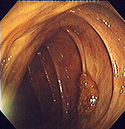
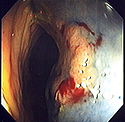
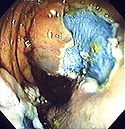
An advantage of colonoscopy over x-ray imaging or other, less invasive tests, is the ability to perform therapeutic interventions during the test. A polyp is a growth of excess of tissue that can develop into cancer. If a polyp is found, for example, it can be removed by one of several techniques. A snare device can be placed around a polyp for removal. Even if the polyp is flat on the surface it can often be removed. For example, the following shows a polyp removed in stages:
| Polyp is identified | A sterile solution is injected under the polyp to lift it away from deeper tissues. | A portion of the polyp is now removed. | The polyp is fully removed. |
|---|---|---|---|
 |
 |
 |
 |
Pain
The pain associated with the procedure is not caused by the insertion of the scope but from inflating of the colon in order to do the inspection. The scope is basically a long, flexible tube about a centimeter in diameter, that is, roughly as big around as the little finger. This is less than the diameter of an average stool, so just as there is normally no pain from the daily passage of food inside the colon, there should be no pain from a normal insertion.The colon is wrinkled and corrugated like an accordion, or a clothes-dryer exhaust tube. This gives it the large surface area needed for digestion. But in order to inspect this surface, the doctor must blow it up like a balloon, to get the creases out. This is done using a powered air compressor a lot like the one used to inflate a car's tires.
The stomach, intestines and colon have a "second brain" wrapped around them. This "second brain" has at least sensor nerves, decision processes, and motor nerves, so that it runs the chemical factory of digestion completely by itself, without the person's having to think about it. It uses 95% of all serotonin in the body. And it uses other complex hormone signals and nerve signals to communicate with the brain and the rest of the body.
Normally a colon's job is to digest food, and to detect when a person gets sick.
Harmful bacteria in rancid food create unexpected gas. So the colon has distension sensors that can tell when there is unexpected gas pushing the colon walls out. Then the "second brain" tells the person to feel sick — he or she is having intestinal difficulties. In the case of bad food, this would involve stopping moving around. The person would sit groaning in the bathroom until the body eliminated the food.
This is why doctors often recommend a total anesthesia or a partial "twilight" sedative to lessen the brain's awareness of the pain.
Once the colon has been inflated, the doctor inspects it with the scope on the way out, as it is slowly pulled backwards. If any polyps are found, they can be cut out at this point.
Some doctors prefer to work with totally anesthetized patients at this point, since the lack of pain being reported allows a leisurely examination; whereas a doctor with a twilight-sedated patient might hurry the inspection at this point, because of the groaning. However, twilight sedation is safer than general anesthesia. For this reason, it is generally better to request twilight sedation and ask the doctor to take his or her time, even if the patient groans.
The intensity of the pain may be correlated with the pressure of the air inside the colon. Doctors should use an air pump with a constant pressure source, not a constant volume source. Only enough air to maintain a particular pressure should be pumped into the colon.
Most other known physical means of distending the colon without pumping air in introduce another physical contact into the system, with corresponding substantial increases in the probability of puncture. It is much safer, from a medical standpoint, to distend the colon with air, even if it does cause pain. The pain is transitory and can be borne.
Tens of millions of adults need to have colonoscopies each year, and yet many don't, because they are afraid of the pain.
If pain is truly an issue, the patient can always request a general anesthetic. In the meantime, knowing that the pain comes from the colon being inflated, and not from the scope itself, makes the pain understandable and possibly more bearable. However, when the patient is under light anesthesia and unable to fully communicate his or her concerns or move, the intense, inescapable pain can be traumatizing, regardless of its source. It can also inhibit willingness to undergo future procedures.
It is worth noting that in many hospitals (for instance St. Mark's Hospital
St. Mark's Hospital
St. Mark's Hospital is a hospital in the Harrow and Wembley border as well as the London Borough of Harrow and London Borough of Brent border in northwest London, UK. It is the only hospital in the world to specialise entirely in intestinal and colorectal medicine and is a national and...
, London
London
London is the capital city of :England and the :United Kingdom, the largest metropolitan area in the United Kingdom, and the largest urban zone in the European Union by most measures. Located on the River Thames, London has been a major settlement for two millennia, its history going back to its...
, which specialises in intestinal and colorectal medicine) colonoscopies are carried out without any sedation. This allows the patient to shift his or her body position to help the doctor carry out the procedure and significantly reduces recovery time and side-effects. Although there is some discomfort when the colon is distended with air, this is not usually particularly painful and it passes relatively quickly. Patients can then be released from hospital on their own very swiftly without any feelings of nausea.
Ultrasound
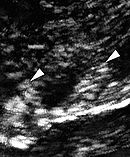
Duodenography and colonography are performed like a standard abdominal examination using B-mode and color flowDoppler ultrasonography using a low frequency transducer — for example a 2.5 MHz — and a high frequency transducer ,for example a 7.5 MHz probe. Detailed examination of duodenal walls and folds, colonic walls and haustra was performed using a 7.5 MHz probe. Deeply located abdominal structures were examined using 2.5 MHz probe. All ultrasound examinations are performed after overnight fasting (for at least 16 hours) using standard scanning procedure. Subjects are examined with and without water contrast. Water contrast imaging is performed by having adult subjects take at least one liter of water prior to examination. Patients are examined in the supine, left posterior oblique, and left lateral decubitus positions using the intercostal and subcostal approaches. The liver, gall bladder, spleen, pancreas, duodenum, colon, and kidneys are routinely evaluated in all patients. With patient lying supine, the examination of the duodenum with high frequency ultrasound duodenography is performed with 7.5 MHz probe placed in the right upper abdomen, and central epigastric successively; for high frequency ultrasound colonography, the ascending colon, is examined with starting point usually midway of an imaginary line running from the iliac crest to the umbilicus and proceeding cephalid through the right mid abdomen; for the descending colon, the examination begins from the left upper abdomen proceeding caudally and traversing the left mid abdomen and left lower abdomen, terminating at the sigmoid colon in the lower pelvic region. Color flow Doppler sonography is used to examine the localization of lesions in relation to vessels. All measurements of diameter and wall thickness are performed with built-in software. Measurements are taken between peristaltic waves.
| The abdominal regions scanned in the order. | The duodenal tri-band wall with folds of Kerckring, showing floaters with water contrast. | A high resolution view of colonic haustration. |
|---|---|---|
 |
 |
 |
Results
A 2009 study published in the Annals of Internal Medicine implies that colonoscopy screening prevents approximately two thirds of the deaths due to colorectal cancers on the left side of the colon, and is not associated with a significant reduction in deaths from right-sided disease. This study examined people with colon cancer diagnosed between 1996 and 2001 in OntarioOntario
Ontario is a province of Canada, located in east-central Canada. It is Canada's most populous province and second largest in total area. It is home to the nation's most populous city, Toronto, and the nation's capital, Ottawa....
who died of colon cancer by 2003, and hence studied colonoscopies done in the early to mid 1990s. (Since the procedure continues to evolve, more recent colonoscopies may be more effective). The summary result, according to table 3 of the report, show approximately a 37% reduction in the death rate from colorectal cancer, with a significantly lower reduction in death for "incomplete" colonoscopies.
A 2011 study published in Annals of Internal Medicine, on the other hand, showed that in people who had colonoscopy in the previous 10 years "the risks for early and more advanced stages of cancer were reduced by more than 50%. A lower risk for CRC [colorectal cancer] was seen for both cancer on the left side of the colon (closer to the anus and thus easier to reach during colonoscopy) and for cancer on the right side (which is harder to reach)."
Risks
This procedure has a low (0.35%) risk of serious complications. In a 2006 study of colonoscopies done from 1994 to 2002, Levin et al., found serious complications occurred in 5.0 of 1000 colonoscopies, comprising 0.8 in 1000 colonoscopies without biopsy or polypectomy, and a rate of 7.0 per 1000 for colonoscopies with biopsy or polypectomy; although McDonell and Loura criticize this rate as being unacceptably high.The rate of complications varies with the practitioner and institution performing the procedure, as well as a function of other variables.
The most serious complication generally is the gastrointestinal perforation
Gastrointestinal perforation
Gastrointestinal perforation is a complete penetration of the wall of the stomach, small intestine or large bowel, resulting in intestinal contents flowing into the abdominal cavity. Perforation of the intestines results in the potential for bacterial contamination of the abdominal cavity...
, which is life-threatening and requires immediate major surgery for repair. A 2003 summary study of 25,000 patients showed a perforation rate of 0.2%, and a death rate of 0.006% on a total of 84,000 patients. The 2006 study by Levin et al. showed a perforation rate of 0.09%; while a 2009 study quoted a similar perforation rate of 0.082%. Appendicitis, has been associated with either perforation or colonoscopy, in case reports in Korean, Italian and English journals.
According to a study published in the Annals of Internal Medicine, for which researchers reviewed colon cancer screening data
Data
The term data refers to qualitative or quantitative attributes of a variable or set of variables. Data are typically the results of measurements and can be the basis of graphs, images, or observations of a set of variables. Data are often viewed as the lowest level of abstraction from which...
from 1966 to 2001, the most severe complications from colonoscopy are perforation (that occurred in 0.029% to 0.72% of cases), heavy bleeding (occurring in 0.2% to 2.67 % of colonoscopies) and death (occurring in 0.003% to 0.03% of colonoscopy patients).
An analysis of the relative risks of sigmoidoscopy
Sigmoidoscopy
Sigmoidoscopy From Greek Sigma - eidos - scopy, to look inside an s-like object, is the minimally invasive medical examination of the large intestine from the rectum through the last part of the colon. There are two types of sigmoidoscopy, flexible sigmoidoscopy, which uses a flexible endoscope,...
and colonoscopy, published in the February 5, 2003 issue of the Journal of the National Cancer Institute brought into attention that the risk of perforation after colonoscopy is approximately double that after sigmoidoscopy (consistent with the fact that colonoscopy examines a longer section of the colon), even though this difference appeared to be decreasing.
Bleeding complications may be treated immediately during the procedure by cauterization
Cauterization
The medical practice or technique of cauterization is the burning of part of a body to remove or close off a part of it in a process called cautery, which destroys some tissue, in an attempt to mitigate damage, remove an undesired growth, or minimize other potential medical harmful possibilities...
via the instrument. Delayed bleeding may also occur at the site of polyp removal up to a week after the procedure and a repeat procedure can then be performed to treat the bleeding site. Even more rarely, splenic rupture can occur after colonoscopy because of adhesions between the colon and the spleen.
As with any procedure involving anaesthesia, other complications would include cardiopulmonary complication
Complication (medicine)
Complication, in medicine, is an unfavorable evolution of a disease, a health condition or a medical treatment. The disease can become worse in its severity or show a higher number of signs, symptoms or new pathological changes, become widespread throughout the body or affect other organ systems. A...
s such as a temporary drop in blood pressure
Blood pressure
Blood pressure is the pressure exerted by circulating blood upon the walls of blood vessels, and is one of the principal vital signs. When used without further specification, "blood pressure" usually refers to the arterial pressure of the systemic circulation. During each heartbeat, BP varies...
, and oxygen saturation
Oxygen saturation
Oxygen saturation or dissolved oxygen is a relative measure of the amount of oxygen that is dissolved or carried in a given medium. It can be measured with a dissolved oxygen probe such as an oxygen sensor or an optode in liquid media, usually water.It has particular significance in medicine and...
usually the result of overmedication
Overmedication
Overmedication is an inappropriate medical treatment that occurs when a patient takes unnecessary or excessive medications. This may happen because the prescriber is unaware of other medications the patient is already taking, because of drug interactions with another chemical or target population,...
, and are easily reversed. Anesthesia can also increase the risk of developing blood clots and lead to pulmonary embolism or deep venous thrombosis. (DVT) In rare cases, more serious cardiopulmonary events such as a heart attack
Myocardial infarction
Myocardial infarction or acute myocardial infarction , commonly known as a heart attack, results from the interruption of blood supply to a part of the heart, causing heart cells to die...
, stroke
Stroke
A stroke, previously known medically as a cerebrovascular accident , is the rapidly developing loss of brain function due to disturbance in the blood supply to the brain. This can be due to ischemia caused by blockage , or a hemorrhage...
, or even death may occur; these are extremely rare except in critically ill patients with multiple risk factors. In very rare cases, coma associated with anesthesia may occur.
Virtual colonoscopies carry risks that are associated with radiation exposure.
Severe dehydration
Dehydration
In physiology and medicine, dehydration is defined as the excessive loss of body fluid. It is literally the removal of water from an object; however, in physiological terms, it entails a deficiency of fluid within an organism...
caused by the laxatives that are usually administered during the bowel preparation for colonoscopy also may occur. Therefore, patients must drink large amounts of fluids during the days of colonoscopy preparation to prevent dehydration. Loss of electrolytes or dehydration is potential risk that can even prove deadly. In rare cases, severe dehydration can lead to kidney damage or renal dysfunction under the form of phosphate nephropathy.
Colonoscopy preparation and colonoscopy procedure can cause inflammation
Inflammation
Inflammation is part of the complex biological response of vascular tissues to harmful stimuli, such as pathogens, damaged cells, or irritants. Inflammation is a protective attempt by the organism to remove the injurious stimuli and to initiate the healing process...
of the bowels and diarrhea
Diarrhea
Diarrhea , also spelled diarrhoea, is the condition of having three or more loose or liquid bowel movements per day. It is a common cause of death in developing countries and the second most common cause of infant deaths worldwide. The loss of fluids through diarrhea can cause dehydration and...
or even bowel obstruction
Bowel obstruction
Bowel obstruction is a mechanical or functional obstruction of the intestines, preventing the normal transit of the products of digestion. It can occur at any level distal to the duodenum of the small intestine and is a medical emergency...
.
During colonoscopies where a polyp
Polyp (medicine)
A polyp is an abnormal growth of tissue projecting from a mucous membrane. If it is attached to the surface by a narrow elongated stalk, it is said to be pedunculated. If no stalk is present, it is said to be sessile. Polyps are commonly found in the colon, stomach, nose, sinus, urinary bladder...
is removed (a polypectomy), the risk of complications has been higher, although still very uncommon, at about 2.3 percent. One of the most serious complications that may arise after colonoscopy is the postpolypectomy syndrome. This syndrome occurs due to potential burns to the bowel wall when the polyp is removed. It is however a very rare complication and as a result patients may experience fever and abdominal pain. The condition is treated with intravenous fluids and antibiotics while the patient is recommended to rest.
Bowel infections are a potential colonoscopy risk, although very rare. The colon is not a sterile environment as many bacteria live in the colon to assure the well-functioning of the bowel and therefore the risk of infections is very low. Infections can occur during biopsies when too much tissue is removed and bacteria protrude in areas they do not belong to or in cases when the lining of the colon is perforated and the bacteria get into the abdominal cavity
Abdominal cavity
The abdominal cavity is the body cavity of the human body that holds the bulk of the viscera. It is located below the thoracic cavity, and above the pelvic cavity. Its dome-shaped roof is the thoracic diaphragm , and its oblique floor is the pelvic inlet...
. Infection may also be transmitted between patients if the colonoscope is not cleaned and sterilized properly between tests, although the risk of this happening is very low.
Minor colonoscopy risks may include nausea
Nausea
Nausea , is a sensation of unease and discomfort in the upper stomach with an involuntary urge to vomit. It often, but not always, precedes vomiting...
, vomiting
Vomiting
Vomiting is the forceful expulsion of the contents of one's stomach through the mouth and sometimes the nose...
or allergies to the sedatives that are used. If medication is given intravenously, the vein
Vein
In the circulatory system, veins are blood vessels that carry blood towards the heart. Most veins carry deoxygenated blood from the tissues back to the heart; exceptions are the pulmonary and umbilical veins, both of which carry oxygenated blood to the heart...
may become irritated. Most localized irritations to the vein leave a tender lump lasting a number of days but going away eventually. The incidence of these complications is less than 1%.
On very rare occasions, intracolonic explosion
Intracolonic explosion
An intracolonic explosion is an explosion inside the colon of a person due to ignition of explosive gases such as methane. This can happen during colonic exploration, as a result of the electrical nature of a colonoscope. The result can be acute colonic perforation, which can be fatal....
may occur. High frequency ultrasound duodenography and colonography do not carry the risks associated with a traditional colonoscopy.
Although complications after colonoscopy are uncommon, it is important for patients to recognize early signs of any possible complications. They include severe abdominal pain
Abdominal pain
Abdominal pain can be one of the symptoms associated with transient disorders or serious disease. Making a definitive diagnosis of the cause of abdominal pain can be difficult, because many diseases can result in this symptom. Abdominal pain is a common problem...
, fevers and chills, or rectal bleeding (more than half a cup).
Controversy
Colonoscopy reduces cancer rates by preventing some colon cancers on the left side of the colon; these colon polyps and early cancers would have been treated during a safer sigmoidoscopySigmoidoscopy
Sigmoidoscopy From Greek Sigma - eidos - scopy, to look inside an s-like object, is the minimally invasive medical examination of the large intestine from the rectum through the last part of the colon. There are two types of sigmoidoscopy, flexible sigmoidoscopy, which uses a flexible endoscope,...
procedure. Colonoscopy is relatively risky, with 5 in 1000 patients facing serious complications. To prevent one cancer death, 1,250 colonoscopies need to be performed, but perforation of the colon occurs at a rate of about 1 in 1000 procedures.
Since polyps often take 10 to 15 years to transform into cancer, in someone at average risk of colorectal cancer, guidelines recommend 10 years after a normal screening colonoscopy before the next colonoscopy. (This interval does not apply to people at high risk of colorectal cancer, or to those who experience symptoms of colorectal cancer.)
Colonoscopy is not recommended for patients over 75, and the procedure has been "considerably overused" among elderly patients. Researchers found that older patients with three or more significant health problems, like dementia or heart failure, had high rates of repeat colonoscopies without medical indications. These patients are less likely to live long enough to develop colon cancer. Gordon states, "At about $1,000 per procedure, there’s clearly an economic incentive".
See also
- Anal probe
- Bow and arrow signBow and arrow signThe bow and arrow sign is an endoscopic sign for determining the location of the ileocecal valve during colonoscopy. Identifying the ileocecal valve in a colonoscopy is important, as it indicates that the entire colon has been visualized....
- Rectal examinationRectal examinationA rectal examination or rectal exam is an internal examination of the rectum such as by a physician or other healthcare professional.-Procedure:...
- SigmoidoscopySigmoidoscopySigmoidoscopy From Greek Sigma - eidos - scopy, to look inside an s-like object, is the minimally invasive medical examination of the large intestine from the rectum through the last part of the colon. There are two types of sigmoidoscopy, flexible sigmoidoscopy, which uses a flexible endoscope,...
- PolypectomyPolypectomyThe method used to perform colonic polypectomies during colonoscopy depends on the size, shape and histological type of the polyp to be removed. Prior to performing polypectomy, polyps can be biopsied and examined histologically to determine the need to perform polypectomy.Gastrointestinal polyps...
- Virtual colonoscopyVirtual colonoscopyVirtual colonoscopy is a medical imaging procedure which uses x-rays and computers to produce two- and three-dimensional images of the colon from the lowest part, the rectum, all the way to the lower end of the small intestine and display them on a screen...
- EsophagogastroduodenoscopyEsophagogastroduodenoscopyFor other expansions of the initialism "OGD", see the disambiguation page.In medicine , esophagogastroduodenoscopy is a diagnostic endoscopic procedure that visualizes the upper part of the gastrointestinal tract up to the duodenum...
External links
- LearnColoRectalSurgery.com - Colonoscopy pictures
- Colonoscopy. Based on public-domain NIH Publication No. 02-4331, dated February 2002.
- Patient Education Brochures. American Society for Gastrointestinal Endoscopy information