

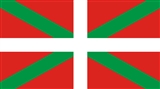
Basque Country (autonomous community)

Encyclopedia
The Basque Country is an autonomous community
of northern Spain
. It includes the Basque provinces of Álava
, Biscay
and Gipuzkoa, also called Historical Territories.
The Basque Country or Basque Autonomous Community was granted the status of nationality within Spain, attributed by the Spanish Constitution of 1978
to separate ethnic realities. The autonomous community is based on the Statute of Autonomy of the Basque Country
, a foundational legal document providing the framework for the development of the Basque people
on Spanish soil
. Notwithstanding this spirit, the territory of Navarre
was left out and made into a separate autonomous community. The capital is Vitoria-Gasteiz
(Vitoria is the name in Spanish, Gasteiz in Basque), located in the province of Álava, and Bilbao
its largest city, located in the province of Biscay.
The autonomous community of the Basque Country should not be confused with the larger Basque Country (Basque: Euskal Herria) of which it is a component part.
make up the autonomous community:
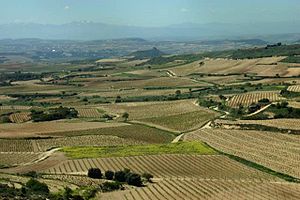 The Basque Country borders with Cantabria
and the Burgos province to the west, the Bay of Biscay
to the north, France and Navarre
to the east and La Rioja (the Ebro River) to the south.
The territory has three distinct areas, that are defined by the two parallel ranges of the Basque Mountains
. The main range of mountains forms the water divide
of the Atlantic and Mediterranean basins. The highest point of the range is in the Aizkorri massif (1551 m). The three areas are:
, like the Nervión
, Urola
or Oria.
The coast is rough, with high cliffs and small inlets. The main features of the coast are the Bilbao Abra
Bay and the Estuary of Bilbao
, the Urdaibai
estuary and the Bidasoa-Txingudi Bay that forms the border with France.
plains) where the capital Gasteiz is located. The rivers flow in southern direction from the mountains to the Ebro river. Main rivers are Zadorra
and Bayas river
.
The northern valleys, in Biscay and Gipuzkoa and also the valley of Ayala in Álava, are part of the Green Spain
, where oceanic climate
is predominant, with its wet weather all year round and moderate temperatures. Precipitation average is about 1200 mm.
The middle section has a more Continental Mediterranean climate, but with some influence of the northern oceanic one, this causes dry and warm summers and cold and snowy winters.
The Ebro valley has a pure Continental Mediterranean climate, winters are cold and dry and summers very warm and dry, with precipitation peaking in spring and autumn. Precipitation is scarce and irregular, as low as 300 mm.
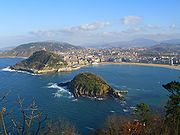
 Almost half of the 2,155,546 inhabitants of the Basque Country live in Greater Bilbao, Bilbao's metropolitan area. Of the ten most populous cities, six form part of Bilbao's conurbation
(Bilbao, Barakaldo, Getxo, Portugalete, Santurce and Basauri).
At 28.2% of the Basque population born outside this region, immigration is crucial to Basque demographics. Over the 20th century most of this immigration came from other parts of Spain, typically from Galicia or Castile and León
. Over the last years, sizeable numbers of this population have returned to their birthplaces whereas immigration to the Basque country currently originates abroad, chiefly from South America.
and the northern edge of Álava
, while few native Basque speaking communities existed in Western Biscay and most of Álava.
The 2006 sociolinguistic survey of all Basque provinces showed that in 2006 of all people aged 16 and above in the Basque Autonomous Community, 30.1% were fluent Basque speakers, 18.3% passive speakers and 51.5% did not speak Basque. The percentage was highest in Gipuzkoa (49.1% speakers) and lowest in Álava (14.2%). These results represent an increase on previous years (29.5% in 2001, 27.7% in 1996 and 24.1% in 1991). The highest percentage of speakers can now be found in the 16-24 age range (57.5%) vs 25.0% in the 65+ age range.
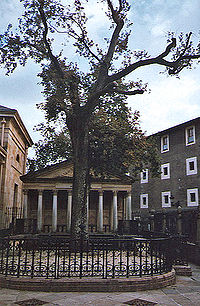
The forerunner of the Gernika Statute was the short-lived Statute of Autonomy for Álava, Gipuzkoa and Biscay enforced in October 1936 just in Biscay with the Spanish Civil War already raging and automatically abolished when the Spanish Nationalist troops occupied the territory.
Before the Spanish Constitution of 1978 and its system of autonomous communities, these three provinces were known in Spanish as the Provincias Vascongadas. The political structure of the new autonomous community is defined in the Gernika Statute
, which was approved by a majority in a referendum
held on 25 October 1979. Nowadays it is one of the most decentralized regions in the world, in this regard it has been quoted as having "more autonomy than just about any other in Europe" by The Economist
.
As regards the bounds to the Spanish Constitution, Basque nationalists cite the fact that in the 1978 Spanish Constitution
referendum, which was passed with a majority of votes and a poor turnout in this area, the Basque Country had the highest abstention
(the Basque Nationalist Party had endorsed abstention on the grounds that the Constitution was being forced upon them without any Basque input). To this, the "no" vote in this referendum was also higher in the Basque Country than in the rest of the state. All in all, many Basques believe that they are not bound to a constitution that they never endorsed.
The Statute of Autonomy of the Basque Country is a constitutional law but powers have been devolved gradually during decades according to re-negotiations between the Spanish and the consecutive Basque regional governments to reach an effective implementation, while the transfer of many powers are still due and has always been a matter of heated political discussion. Basque nationalists often put down this limitation in the devolution of powers to concessions made to appease the military involved in the 23-F
coup d'état attempt (1981).
In 2003, the governing Basque Nationalist Party
(PNV) proposed to alter this statute through the Ibarretxe Plan
. The bill, though approved by majority in the Basque chamber, was subject to lengthy legal objections (on the grounds that it contradicts the Spanish Constitution) but was finally discussed and rejected in January 2005 by a large majority in the Madrid
Cortes Generales
.
Since the first autonomic cabinet, the Basque Nationalist Party has led office in the Basque Autonomous Community up to May 5, 2009, when after thirty years the Lehendakaritza (Basque presidency) was first handed over to the Basque Socialist Party's candidate Patxi López
, after an unprecedented agreement with the conservative Popular Party. The new coalition based its power on a new majority formed by outlawing the Basque nationalist leftists deemed by the Spanish judiciary linked to ETA, with more than 100,000 votes coming from that political force considered void.
(GDP) per capita being 40% higher than that of the European Union
and 33.8% higher than Spain's average in 2008, at €31,712 EUR. Industrial activities were traditionally centered on steel and shipbuilding, mainly due to the rich iron ore resources found during the 19th century around Bilbao. The Estuary of Bilbao was the center of the Basque Country's industrial revolution
during the 19th and the first half of the 20th century. These activities decayed during the economic crisis of the 1970s and 1980s, giving ground for the development of the services sector and new technologies.
Today, the strongest industrial sectors of the Basque Country's economy are machine tool
, present in the valleys of Biscay and Gipuzkoa, aeronautics
in Vitoria-Gasteiz and energy
, in Bilbao.
The main companies in the Basque Country are: BBVA bank, Iberdrola
energy company, (both of them have their headquarters in Bilbao) Mondragón Cooperative Corporation
that is the largest cooperative in the world, Gamesa
wind turbine
producer and CAF
rolling stock
producer.
In 2009 and during the financial crisis the Basque Country outperformed Spain as a whole. Unemployment in the Basque country is roughly 10%, a percentage in line with the EU average. Spain as a whole is the country with the highest unemployment rate in the European Union, at 19.5%. In the last quarter of 2009 unemployment went down by 3,500 people. Spain's unemployment went up by over 100,000 people in the same period.
In regards to GDP performance, Q4 meant that the Basque Country was out of recession with a 0.2% growth. The Spanish economy as a whole remained in recession after Q4.
During 2009 the Basque economy contracted by -3.3% compared to a -3.6% in the rest of Spain.
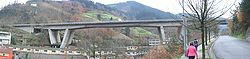 The strategic geographical location of the Basque Country as a link between the northwest and centre of Spain and the rest of Europe makes this territory a very transited one.
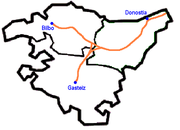
that links Bilbao, San Sebastián and the French border and the A-1 motorway
that links San Sebastián and Gasteiz with central Spain.
Other important routes include the AP-68 motorway
that links Bilbao with the Mediterranean.
(Basque Train) is the Basque Government-owned narrow gauge
rail company that operates commuter services in Bilbao and San Sebastián, intercity Bilbao-San Sebastián service, and EuskoTran
tram services in Bilbao and Vitoria-Gasteiz.
Metro Bilbao
operates the two metro
lines that serve the Greater Bilbao area.
The Spanish government owns two main RENFE
broad gauge
lines that link Gasteiz with San Sebastián and Bilbao with central Spain. It also operates Cercanías
commuter lines in both Bilbao and San Sebastián.
 FEVE
FEVE
narrow gauge company operates a commuter line between Bilbao and Balmaseda
and links Bilbao with the rest of northern Spain.
A new high speed network (called Basque Y
) is under construction, that will link the three capitals in 'Y' formation. It is scheduled to be completed in 2013, including a connection with the French TGV
network in Hendaye
. Because of the rough geography of the territory, most of the network will run through tunnels, with a total estimated cost of up to €10billion. The estimated ecological impact of the project has encouraged the formation of a group campaigning against it called AHTrik Ez Elkarlana. The group uses social disobedience to oppose the project and promotes referendums against it in the towns it affects most.
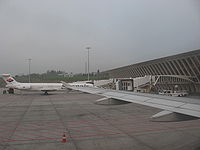 The three capitals have airports:
Of the three, the most important hub and entry point to the Basque Country is Bilbao Airport, offering many international connections and through which moved over 4,200,000 passengers in 2007.
and the Port of Pasaia
. There are other minor fishing ports like Bermeo
and Ondarroa
.
The Port of Bilbao is by far the most important of the Basque Country and the north of Spain, being the fourth most important in Spain with over 38 million tons of traffic.
All the cruising routes arrive to Bilbao, there is a ferry
service that links Bilbao with Portsmouth
(United Kingdom).
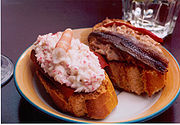 Basque cuisine
is an important part of Basque culture. According to the chef Ferran Adrià
, San Sebastián
"in terms of the average quality of the food, in terms of what you can get at any place you happen to walk into, maybe it is - probably it is, yes - the best in the world." The most popular dishes there are the seafood, fish (for example Marmitako
) and the "Pintxos", bar finger food.
Basque food is one of the reasons for tourism to the Basque Country, especially the pintxos. A popular way to socialize is "ir de pintxos" or txikiteo, a Basque version of a pub crawl
, albeit generally more civilized.
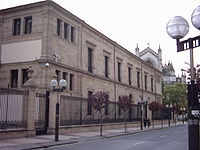 The current laws configure the autonomous community as a federation of the three constituent provinces, which had been ruled locally since their incorporation to Castile in 1200 by their own laws and institutions in what is known as the Foral System
. These autonomous regimes, similar to the one for Navarre
, were curtailed in the 19th century, largely suspended under Franco, but restored by the Spanish Constitution of 1978
.
The post-Franco Spanish Constitution of 1978 acknowledges "historical rights" and attempts compromise in the old conflict between centralism and federalism
by the establishment of autonomous communities
(e.g. Castile and León
, Catalonia
, the Valencian Community
, etc.). The provincial governments (diputación foral) were restored only in the Basque Country and Navarre
, but many of their powers were transferred to the new government of the Basque Country and Navarra autonomous communities; however, the provinces still perform tax collection in their respective territories, coordinating with the Basque, Spanish and European governments.
Under this system the Diputaciones Forales (Basque: Foru Aldundiak) administer most of each of the provinces but are coordinated and centralized by the autonomous Basque Government
(Spanish Gobierno Vasco, Basque: Eusko Jaurlaritza).
.jpg) The seats of the Basque Parliament
The seats of the Basque Parliament
and Government are in Vitoria-Gasteiz
, so this is the capital city de facto
, but the Basque Autonomous Community has no capital de iure. The Parliament is composed of 25 representatives from each of the three provinces. The Basque Parliament elects the Lehendakari
(President) who forms a government following regular parliamentary procedures. Until 2009 all Lehendakaris (even those in 1937 and during the exile) have been members of the Basque Nationalist Party
(Euzko Alderdi Jeltzalea) (moderate and Christian-Democrat) since 1978. Despite their continued leadership role, they have not always enjoyed majorities for their party and have needed to form coalitions with either Spain wide parties or left-leaning Basque nationalist parties, often governing in a difficult minority position.
 The former government was led by Juan José Ibarretxe
(Euzko Alderdi Jeltzalea) and supported also by left-leaning nationalists of Eusko Alkartasuna
(Basque Solidarity) and Communist-dominated Ezker Batua
(United Left).
Both non-regional parties, Partido Socialista de Euskadi (federated to the Spanish Socialist Workers' Party) and Partido Popular
(People's Party) reached an agreement in the votation for new president and Patxi López
was elected as Lehendakari on May 5, 2009, ending a thirty year nationalist predominance.
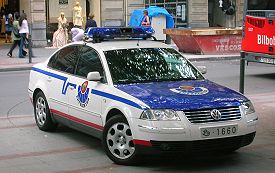
The autonomous community has its own police force (the Ertzaintza
), controls the education
and health systems, and has a Basque radio/TV station. These and other powers have since 1980 been transferred to the Autonomous Community by the Cortes Generales
under the Gernika Statute.
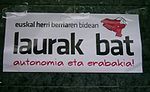 The statute, insofar as it is addressed and provides an administrative framework for the Basque people, provides the mechanisms for neighbour Navarre to join the three western provinces if it wishes to do so, since it also has a Basque ethnic background. The Basque Government used the "Laurak Bat", which included the arms of Navarre, as its symbol for many years. The Navarrese Government protested, and tribunals ruled in their favour. The Basque Government replaced it with an empty red field.
Navarre is one of the historical Basque territories and claimed by the Basque nationalists
as the core of the Basque nation. There are also two enclaves surrounded by Basque territory—Treviño
(Basque: Trebiñu) and Valle de Villaverde
(Basque: Villaverde-Turtzioz)—which belong to the fellow neighbouring communities of Castile and León
and Cantabria
respectively and have become an on-off matter of political discussion.
Autonomous communities of Spain
An autonomous community In other languages of Spain:*Catalan/Valencian .*Galician .*Basque . The second article of the constitution recognizes the rights of "nationalities and regions" to self-government and declares the "indissoluble unity of the Spanish nation".Political power in Spain is...
of northern Spain
Spain
Spain , officially the Kingdom of Spain languages]] under the European Charter for Regional or Minority Languages. In each of these, Spain's official name is as follows:;;;;;;), is a country and member state of the European Union located in southwestern Europe on the Iberian Peninsula...
. It includes the Basque provinces of Álava
Álava
Álava is a province of Spain and a historical territory of the Basque Country, heir of the ancient Lord of Álava. Its capital city is Vitoria-Gasteiz which is also the capital of the autonomous community...
, Biscay
Biscay
Biscay is a province of Spain and a historical territory of the Basque Country, heir of the ancient Lord of Biscay. Its capital city is Bilbao...
and Gipuzkoa, also called Historical Territories.
The Basque Country or Basque Autonomous Community was granted the status of nationality within Spain, attributed by the Spanish Constitution of 1978
Spanish Constitution of 1978
-Structure of the State:The Constitution recognizes the existence of nationalities and regions . Preliminary Title As a result, Spain is now composed entirely of 17 Autonomous Communities and two autonomous cities with varying degrees of autonomy, to the extent that, even though the Constitution...
to separate ethnic realities. The autonomous community is based on the Statute of Autonomy of the Basque Country
Statute of Autonomy of the Basque Country
The Statute of Autonomy of the Basque Country is the legal document organizing the political system of the Autonomous Community of the Basque Country' which includes the historical territories of Alava, Biscay and Gipuzkoa. It forms the region into one of the autonomous communities envisioned in...
, a foundational legal document providing the framework for the development of the Basque people
Basque people
The Basques as an ethnic group, primarily inhabit an area traditionally known as the Basque Country , a region that is located around the western end of the Pyrenees on the coast of the Bay of Biscay and straddles parts of north-central Spain and south-western France.The Basques are known in the...
on Spanish soil
Southern Basque Country
The Southern Basque Country is a term used to refer to the Basque territories within Spain as a unified whole.It does not exist as a political unit but includes the three provinces and two enclaves of the Basque Autonomous Community in the west, as well as the Chartered Community of Navarre to...
. Notwithstanding this spirit, the territory of Navarre
Navarre
Navarre , officially the Chartered Community of Navarre is an autonomous community in northern Spain, bordering the Basque Country, La Rioja, and Aragon in Spain and Aquitaine in France...
was left out and made into a separate autonomous community. The capital is Vitoria-Gasteiz
Vitoria-Gasteiz
Vitoria-Gasteiz is the capital city of the province of Álava and of the autonomous community of the Basque Country in northern Spain with a population of 235,661 people. It is the second largest Basque city...
(Vitoria is the name in Spanish, Gasteiz in Basque), located in the province of Álava, and Bilbao
Bilbao
Bilbao ) is a Spanish municipality, capital of the province of Biscay, in the autonomous community of the Basque Country. With a population of 353,187 , it is the largest city of its autonomous community and the tenth largest in Spain...
its largest city, located in the province of Biscay.
The autonomous community of the Basque Country should not be confused with the larger Basque Country (Basque: Euskal Herria) of which it is a component part.
Geography
The following provincesProvinces of Spain
Spain and its autonomous communities are divided into fifty provinces .In other languages of Spain:*Catalan/Valencian , sing. província.*Galician , sing. provincia.*Basque |Galicia]] — are not also the capitals of provinces...
make up the autonomous community:
- ÁlavaÁlavaÁlava is a province of Spain and a historical territory of the Basque Country, heir of the ancient Lord of Álava. Its capital city is Vitoria-Gasteiz which is also the capital of the autonomous community...
(Basque Araba), capital Vitoria-GasteizVitoria-GasteizVitoria-Gasteiz is the capital city of the province of Álava and of the autonomous community of the Basque Country in northern Spain with a population of 235,661 people. It is the second largest Basque city... - BiscayBiscayBiscay is a province of Spain and a historical territory of the Basque Country, heir of the ancient Lord of Biscay. Its capital city is Bilbao...
(Spanish Vizcaya, Basque Bizkaia), capital BilbaoBilbaoBilbao ) is a Spanish municipality, capital of the province of Biscay, in the autonomous community of the Basque Country. With a population of 353,187 , it is the largest city of its autonomous community and the tenth largest in Spain... - Gipuzkoa (Spanish Guipúzcoa), capital Donostia-San Sebastián
Features
Cantabria
Cantabria is a Spanish historical region and autonomous community with Santander as its capital city. It is bordered on the east by the Basque Autonomous Community , on the south by Castile and León , on the west by the Principality of Asturias, and on the north by the Cantabrian Sea.Cantabria...
and the Burgos province to the west, the Bay of Biscay
Bay of Biscay
The Bay of Biscay is a gulf of the northeast Atlantic Ocean located south of the Celtic Sea. It lies along the western coast of France from Brest south to the Spanish border, and the northern coast of Spain west to Cape Ortegal, and is named in English after the province of Biscay, in the Spanish...
to the north, France and Navarre
Navarre
Navarre , officially the Chartered Community of Navarre is an autonomous community in northern Spain, bordering the Basque Country, La Rioja, and Aragon in Spain and Aquitaine in France...
to the east and La Rioja (the Ebro River) to the south.
The territory has three distinct areas, that are defined by the two parallel ranges of the Basque Mountains
Basque mountains
The Basque Mountains are a mountain range situated in the northern Iberian Peninsula. Geographically it is considered as the eastern section of the larger Cantabrian Range...
. The main range of mountains forms the water divide
Water divide
A drainage divide, water divide, divide or watershed is the line separating neighbouring drainage basins...
of the Atlantic and Mediterranean basins. The highest point of the range is in the Aizkorri massif (1551 m). The three areas are:
The Atlantic Basin
Formed by many valleys with short rivers that flow from the mountains to the Bay of BiscayBay of Biscay
The Bay of Biscay is a gulf of the northeast Atlantic Ocean located south of the Celtic Sea. It lies along the western coast of France from Brest south to the Spanish border, and the northern coast of Spain west to Cape Ortegal, and is named in English after the province of Biscay, in the Spanish...
, like the Nervión
Nervión
The river Nervión runs through the city of Bilbao, Spain into the Cantabrian Sea .It is also known as Estuary of Bilbao on its final tract, from the joining with Ibaizabal river to the sea.-Geography:...
, Urola
Urola
The Urola is a river and valley in Gipuzkoa , Basque Country, Spain.The river is only 55 kilometres in length, and runs from headwaters in the Aizkorri Mountains, near the town of Legazpi to its outflow into the Cantabrian Sea at the town of Zumaia on the Bay of Biscay...
or Oria.
The coast is rough, with high cliffs and small inlets. The main features of the coast are the Bilbao Abra
Bilbao Abra
The Bilbao Abra is a bay of the Bay of Biscay, in the Atlantic Ocean, that is located at the mouth of the Estuary of Bilbao, in Biscay . The bay is delimited by the capes of Punta Galea to the north and Punta Lucero to the south...
Bay and the Estuary of Bilbao
Estuary of Bilbao
The Estuary of Bilbao lies at the common mouth of the rivers Nervion, Ibaizabal and Cadagua, that drain most of Biscay and part of Alava in the Basque Country, Spain. It is a large estuary long that extends from Bilbao to the Bilbao Abra bay, a widening that makes the final transition between...
, the Urdaibai
Urdaibai
The Urdaibai estuary is a natural region and a Biosphere Reserve of Biscay, Basque Country. It is also referred as Mundaka or Gernika estuary....
estuary and the Bidasoa-Txingudi Bay that forms the border with France.
The middle section
Between the two mountain ranges, the area is occupied mainly by a high plateau called Llanada Alavesa (ÁlavaÁlava
Álava is a province of Spain and a historical territory of the Basque Country, heir of the ancient Lord of Álava. Its capital city is Vitoria-Gasteiz which is also the capital of the autonomous community...
plains) where the capital Gasteiz is located. The rivers flow in southern direction from the mountains to the Ebro river. Main rivers are Zadorra
Zadorra
The Zadorra is a river tributary of the Ebro in the Basque Country at the north of the Iberian Peninsula. The river flows across province Álava all along till it pours into the Ebro near Miranda de Ebro in Burgos' lands. The river's water volume is the largest in Álava, with its basin being the...
and Bayas river
Bayas River
The Bayas River is a river of Spain. It flows through Burgos, Castilla y León and Álava. It has a length of 64 kilometres....
.
The Ebro Valley
From the southern mountains to the Ebro, is the so called Rioja Alavesa, that shares the Mediterranean characteristics of other Ebro Valley zones, here is produced part of the Rioja wine.Climate
The Basque mountains form the water divide and mark also the distinct climatic areas of the Basque Country:The northern valleys, in Biscay and Gipuzkoa and also the valley of Ayala in Álava, are part of the Green Spain
Green Spain
Green Spain is the name given to the Spanish northern maritime façade exposed to the Atlantic Ocean in Galicia which also runs along the coastal strip lying north of the Cantabrian and Basque mountains, along the Bay of Biscay...
, where oceanic climate
Oceanic climate
An oceanic climate, also called marine west coast climate, maritime climate, Cascadian climate and British climate for Köppen climate classification Cfb and subtropical highland for Köppen Cfb or Cwb, is a type of climate typically found along the west coasts at the middle latitudes of some of the...
is predominant, with its wet weather all year round and moderate temperatures. Precipitation average is about 1200 mm.
The middle section has a more Continental Mediterranean climate, but with some influence of the northern oceanic one, this causes dry and warm summers and cold and snowy winters.
The Ebro valley has a pure Continental Mediterranean climate, winters are cold and dry and summers very warm and dry, with precipitation peaking in spring and autumn. Precipitation is scarce and irregular, as low as 300 mm.
Demography
Conurbation
A conurbation is a region comprising a number of cities, large towns, and other urban areas that, through population growth and physical expansion, have merged to form one continuous urban and industrially developed area...
(Bilbao, Barakaldo, Getxo, Portugalete, Santurce and Basauri).
At 28.2% of the Basque population born outside this region, immigration is crucial to Basque demographics. Over the 20th century most of this immigration came from other parts of Spain, typically from Galicia or Castile and León
Castile and León
Castile and León is an autonomous community in north-western Spain. It was so constituted in 1983 and it comprises the historical regions of León and Old Castile...
. Over the last years, sizeable numbers of this population have returned to their birthplaces whereas immigration to the Basque country currently originates abroad, chiefly from South America.
Major cities
- BilbaoBilbaoBilbao ) is a Spanish municipality, capital of the province of Biscay, in the autonomous community of the Basque Country. With a population of 353,187 , it is the largest city of its autonomous community and the tenth largest in Spain...
(354,145) - Vitoria-GasteizVitoria-GasteizVitoria-Gasteiz is the capital city of the province of Álava and of the autonomous community of the Basque Country in northern Spain with a population of 235,661 people. It is the second largest Basque city...
(226,490) - San SebastiánSan SebastiánDonostia-San Sebastián is a city and municipality located in the north of Spain, in the coast of the Bay of Biscay and 20 km away from the French border. The city is the capital of Gipuzkoa, in the autonomous community of the Basque Country. The municipality’s population is 186,122 , and its...
(183,308) - BarakaldoBarakaldoBarakaldo , is a municipality in the Basque Country in Spain. It is located in the Biscay province, administratively included in the "Basque Autonomous Community", on the left bank of the Estuary of Bilbao.Barakaldo is part of Bilbao's metropolitan area , and its official population...
(95,675) - GetxoGetxoGetxo is a town located in the province of Biscay, in the autonomous community of the Basque Country, in the north of Spain.It is part of the metropolitan area of Bilbao , and has about 83,000 inhabitants...
(83,000) - IrunIrunIrun is a town of the Bidasoa-Txingudi region in the province of Gipuzkoa in the Basque Autonomous Community, Spain...
(59,557) - PortugaletePortugaletePortugalete is a town lying to the west of Bilbao in the province of Biscay in the Autonomous Community of Basque Country, northern Spain.The town has 51,066 inhabitants and is part of Bilbao's metropolitan area. It is located at the mouth of the Estuary of Bilbao, on the left bank...
(51,066) - SanturtziSanturtziSanturtzi is a port town in the province of Biscay, in the autonomous community of Basque Country, Spain. It is located in the Bilbao Abra bay, near the mouth of the Nervión river, on its left bank, 14km downriver from Bilbao and forms part of the Greater Bilbao agglomeration...
(47,320) - BasauriBasauriBasauri is a major municipality of Biscay, in the Basque Country, an Autonomous Community in northern Spain.The town is a part of the Greater Bilbao conurbation, being only a few kilometers south of Bilbao. It is an industrial town that also includes monuments such as the tower-house of Ariz. It...
(45,045) - ErrenteriaErrenteriaErrenteria is a town located in the province of Gipuzkoa in the Basque Autonomous Community, North of Spain, near the French border. The river Oiartzun cuts its way through the town, one that has undergone severe pollution up to recent times on its lower...
(38,397)
Languages
Spanish and Basque are co-official in all territories of the Community, but only Spanish is compulsory. The Basque-speaking area in the area of the modern-day Autonomous Community has experienced both decline and expansion in its history. For much of the 20th century, until the relatively recent advent of Basque in the education system, it had a strong presence in most of Gipuzkoa, Central and Eastern BiscayBiscay
Biscay is a province of Spain and a historical territory of the Basque Country, heir of the ancient Lord of Biscay. Its capital city is Bilbao...
and the northern edge of Álava
Álava
Álava is a province of Spain and a historical territory of the Basque Country, heir of the ancient Lord of Álava. Its capital city is Vitoria-Gasteiz which is also the capital of the autonomous community...
, while few native Basque speaking communities existed in Western Biscay and most of Álava.
The 2006 sociolinguistic survey of all Basque provinces showed that in 2006 of all people aged 16 and above in the Basque Autonomous Community, 30.1% were fluent Basque speakers, 18.3% passive speakers and 51.5% did not speak Basque. The percentage was highest in Gipuzkoa (49.1% speakers) and lowest in Álava (14.2%). These results represent an increase on previous years (29.5% in 2001, 27.7% in 1996 and 24.1% in 1991). The highest percentage of speakers can now be found in the 16-24 age range (57.5%) vs 25.0% in the 65+ age range.
History
- This section is about the history of the Autonomous Community since 1978. See also History of the Basque peopleHistory of the Basque peopleThe Basque people are a group of people inhabiting adjacent areas of Spain and France. Their history is therefore interconnected with Spanish and French history and also with the history of many other past and present countries, particularly in Europe and the Americas.-First historical...
The forerunner of the Gernika Statute was the short-lived Statute of Autonomy for Álava, Gipuzkoa and Biscay enforced in October 1936 just in Biscay with the Spanish Civil War already raging and automatically abolished when the Spanish Nationalist troops occupied the territory.
Before the Spanish Constitution of 1978 and its system of autonomous communities, these three provinces were known in Spanish as the Provincias Vascongadas. The political structure of the new autonomous community is defined in the Gernika Statute
Statute of Autonomy of the Basque Country
The Statute of Autonomy of the Basque Country is the legal document organizing the political system of the Autonomous Community of the Basque Country' which includes the historical territories of Alava, Biscay and Gipuzkoa. It forms the region into one of the autonomous communities envisioned in...
, which was approved by a majority in a referendum
Referendum
A referendum is a direct vote in which an entire electorate is asked to either accept or reject a particular proposal. This may result in the adoption of a new constitution, a constitutional amendment, a law, the recall of an elected official or simply a specific government policy. It is a form of...
held on 25 October 1979. Nowadays it is one of the most decentralized regions in the world, in this regard it has been quoted as having "more autonomy than just about any other in Europe" by The Economist
The Economist
The Economist is an English-language weekly news and international affairs publication owned by The Economist Newspaper Ltd. and edited in offices in the City of Westminster, London, England. Continuous publication began under founder James Wilson in September 1843...
.
As regards the bounds to the Spanish Constitution, Basque nationalists cite the fact that in the 1978 Spanish Constitution
Spanish Constitution of 1978
-Structure of the State:The Constitution recognizes the existence of nationalities and regions . Preliminary Title As a result, Spain is now composed entirely of 17 Autonomous Communities and two autonomous cities with varying degrees of autonomy, to the extent that, even though the Constitution...
referendum, which was passed with a majority of votes and a poor turnout in this area, the Basque Country had the highest abstention
Abstention
Abstention is a term in election procedure for when a participant in a vote either does not go to vote or, in parliamentary procedure, is present during the vote, but does not cast a ballot. Abstention must be contrasted with "blank vote", in which a voter casts a ballot willfully made invalid by...
(the Basque Nationalist Party had endorsed abstention on the grounds that the Constitution was being forced upon them without any Basque input). To this, the "no" vote in this referendum was also higher in the Basque Country than in the rest of the state. All in all, many Basques believe that they are not bound to a constitution that they never endorsed.
The Statute of Autonomy of the Basque Country is a constitutional law but powers have been devolved gradually during decades according to re-negotiations between the Spanish and the consecutive Basque regional governments to reach an effective implementation, while the transfer of many powers are still due and has always been a matter of heated political discussion. Basque nationalists often put down this limitation in the devolution of powers to concessions made to appease the military involved in the 23-F
23-F
23-F was an attempted coup d'état in Spain that began on 23 February 1981 and ended on the following day. It is also known as El Tejerazo from the name of its most visible figure, Antonio Tejero, who led the failed coup's most notable event: the bursting into the Spanish Congress of Deputies by a...
coup d'état attempt (1981).
In 2003, the governing Basque Nationalist Party
Basque Nationalist Party
The Basque National Party is the largest and oldest Basque nationalist party. It is currently the largest political party in the Basque Autonomous Community also with a minor presence in Navarre and a marginal one in the French Basque Country...
(PNV) proposed to alter this statute through the Ibarretxe Plan
Ibarretxe Plan
The Political statute of the Community of the Basque Country, more known as Ibarretxe Plan was a proposal by former lehendakari Juan Jose Ibarretxe to radically alter the Statute of Autonomy of the Basque Country proposing a free association of the Basque Country with Spain on an equal footing, and...
. The bill, though approved by majority in the Basque chamber, was subject to lengthy legal objections (on the grounds that it contradicts the Spanish Constitution) but was finally discussed and rejected in January 2005 by a large majority in the Madrid
Madrid
Madrid is the capital and largest city of Spain. The population of the city is roughly 3.3 million and the entire population of the Madrid metropolitan area is calculated to be 6.271 million. It is the third largest city in the European Union, after London and Berlin, and its metropolitan...
Cortes Generales
Cortes Generales
The Cortes Generales is the legislature of Spain. It is a bicameral parliament, composed of the Congress of Deputies and the Senate . The Cortes has power to enact any law and to amend the constitution...
.
Since the first autonomic cabinet, the Basque Nationalist Party has led office in the Basque Autonomous Community up to May 5, 2009, when after thirty years the Lehendakaritza (Basque presidency) was first handed over to the Basque Socialist Party's candidate Patxi López
Patxi López
Francisco Javier López Álvarez is a Spanish socialist politician and the current president of the Autonomous Community of the Basque Country...
, after an unprecedented agreement with the conservative Popular Party. The new coalition based its power on a new majority formed by outlawing the Basque nationalist leftists deemed by the Spanish judiciary linked to ETA, with more than 100,000 votes coming from that political force considered void.
Economy
The Basque Autonomous Community is currently the wealthiest region in Spain, with gross domestic productGross domestic product
Gross domestic product refers to the market value of all final goods and services produced within a country in a given period. GDP per capita is often considered an indicator of a country's standard of living....
(GDP) per capita being 40% higher than that of the European Union
European Union
The European Union is an economic and political union of 27 independent member states which are located primarily in Europe. The EU traces its origins from the European Coal and Steel Community and the European Economic Community , formed by six countries in 1958...
and 33.8% higher than Spain's average in 2008, at €31,712 EUR. Industrial activities were traditionally centered on steel and shipbuilding, mainly due to the rich iron ore resources found during the 19th century around Bilbao. The Estuary of Bilbao was the center of the Basque Country's industrial revolution
Industrial Revolution
The Industrial Revolution was a period from the 18th to the 19th century where major changes in agriculture, manufacturing, mining, transportation, and technology had a profound effect on the social, economic and cultural conditions of the times...
during the 19th and the first half of the 20th century. These activities decayed during the economic crisis of the 1970s and 1980s, giving ground for the development of the services sector and new technologies.
Today, the strongest industrial sectors of the Basque Country's economy are machine tool
Machine tool
A machine tool is a machine, typically powered other than by human muscle , used to make manufactured parts in various ways that include cutting or certain other kinds of deformation...
, present in the valleys of Biscay and Gipuzkoa, aeronautics
Aeronautics
Aeronautics is the science involved with the study, design, and manufacturing of airflight-capable machines, or the techniques of operating aircraft and rocketry within the atmosphere...
in Vitoria-Gasteiz and energy
Energy
In physics, energy is an indirectly observed quantity. It is often understood as the ability a physical system has to do work on other physical systems...
, in Bilbao.
The main companies in the Basque Country are: BBVA bank, Iberdrola
Iberdrola
Iberdrola , headquartered in Bilbao, is a private utility with a global footprint and over 150 years of experience...
energy company, (both of them have their headquarters in Bilbao) Mondragón Cooperative Corporation
Mondragón Cooperative Corporation
The MONDRAGON Corporation is a corporation and federation of worker cooperatives based in the Basque region of Spain. Founded in the town of Mondragón in 1956, its origin is linked to the activity of a modest technical college and a small workshop producing paraffin heaters...
that is the largest cooperative in the world, Gamesa
Gamesa Corporación Tecnológica
Gamesa Corporación Tecnológica , is a manufacturing company principally involved in the fabrication of wind turbines and the construction of wind farms....
wind turbine
Wind turbine
A wind turbine is a device that converts kinetic energy from the wind into mechanical energy. If the mechanical energy is used to produce electricity, the device may be called a wind generator or wind charger. If the mechanical energy is used to drive machinery, such as for grinding grain or...
producer and CAF
Construcciones y Auxiliar de Ferrocarriles
Construcciones y Auxiliar de Ferrocarriles is a rail equipment manufacturer based in Beasain in the Basque Country, Spain. Equipment manufactured by CAF includes light rail vehicles, rapid transit trains, railroad cars and locomotives, as well as variable gauge axles that can be fitted on any...
rolling stock
Rolling stock
Rolling stock comprises all the vehicles that move on a railway. It usually includes both powered and unpowered vehicles, for example locomotives, railroad cars, coaches and wagons...
producer.
In 2009 and during the financial crisis the Basque Country outperformed Spain as a whole. Unemployment in the Basque country is roughly 10%, a percentage in line with the EU average. Spain as a whole is the country with the highest unemployment rate in the European Union, at 19.5%. In the last quarter of 2009 unemployment went down by 3,500 people. Spain's unemployment went up by over 100,000 people in the same period.
In regards to GDP performance, Q4 meant that the Basque Country was out of recession with a 0.2% growth. The Spanish economy as a whole remained in recession after Q4.
During 2009 the Basque economy contracted by -3.3% compared to a -3.6% in the rest of Spain.
Transport
Road
The main backbones of road transport are the AP-8 motorwayAutopista AP-8
The Autopista AP-8 is a highway in the north of Spain and crosses the Basque Country from east to west. It is known as the Autopista del Cantábrico and connects the French Border with Bilbao...
that links Bilbao, San Sebastián and the French border and the A-1 motorway
Autovía A-1
The Autovía A-1 is a Spanish autovía route which starts in Madrid and ends in Irun. It replaced the former main road from Madrid to France the N-I....
that links San Sebastián and Gasteiz with central Spain.
Other important routes include the AP-68 motorway
Autopista AP-68
The Autopista AP-68 is a highway in Spain. It connects Zaragoza with Bilbao via Tudela, Calahorra and Logroño.It has junctions with Autovía A-2, Autovía A-15, Autovía A-1 and ending at the Autovía A-8....
that links Bilbao with the Mediterranean.
Rail
Eusko Trenbide Sarea (Basque Railway Network) is the Basque Government-owned company that maintains and creates the railway infrastructure in the autonomous region. EuskoTrenEuskoTren
EuskoTren is a commuter rail service which operates in the Basque Country provinces of Biscay and Gipuzkoa. It is one of the three commercial brands of the public society owned by the Basque Government, Eusko Trenbideak - Ferrocarriles Vascos...
(Basque Train) is the Basque Government-owned narrow gauge
Narrow gauge
A narrow gauge railway is a railway that has a track gauge narrower than the of standard gauge railways. Most existing narrow gauge railways have gauges of between and .- Overview :...
rail company that operates commuter services in Bilbao and San Sebastián, intercity Bilbao-San Sebastián service, and EuskoTran
EuskoTran
EuskoTran is a light rail tram service which operates in the cities of Bilbao , Vitoria and, in the future, in the town of Leioa , all of them in the Basque Country, Spain. It is one of the three commercial brands of the public society owned by the Basque Government, Eusko Trenbideak -...
tram services in Bilbao and Vitoria-Gasteiz.
Metro Bilbao
Metro Bilbao
Metro Bilbao is a rapid transit system serving the city of Bilbao and the region of Greater Bilbao. Its lines have a "Y" shape, with two lines that transit both banks of the Nervión river and then combine to form one line that ends in the south of Bilbao...
operates the two metro
Rapid transit
A rapid transit, underground, subway, elevated railway, metro or metropolitan railway system is an electric passenger railway in an urban area with a high capacity and frequency, and grade separation from other traffic. Rapid transit systems are typically located either in underground tunnels or on...
lines that serve the Greater Bilbao area.
The Spanish government owns two main RENFE
RENFE
Renfe Operadora is the state-owned company which operates freight and passenger trains on the 1668-mm "Iberian gauge" and 1435-mm "European gauge" networks of the Spanish national railway infrastructure company ADIF .- History :The name RENFE is derived from that of the former Spanish National...
broad gauge
Broad gauge
Broad-gauge railways use a track gauge greater than the standard gauge of .- List :For list see: List of broad gauges, by gauge and country- History :...
lines that link Gasteiz with San Sebastián and Bilbao with central Spain. It also operates Cercanías
Cercanías
Cercanías is the name given to the commuter rail systems of Spain's major metropolitan areas. In Catalonia and Valencia, however, the term is replaced by Rodalies , while the designation Aldirikoak is used in the Basque Country....
commuter lines in both Bilbao and San Sebastián.
FEVE
FEVE is a state-owned Spanish railway company, which operates most of Spain's of metre gauge railway.-History:...
narrow gauge company operates a commuter line between Bilbao and Balmaseda
Balmaseda
Balmaseda is a town in the Encartaciones region of Biscay in the Spanish Basque Country....
and links Bilbao with the rest of northern Spain.
A new high speed network (called Basque Y
Basque Y
Basque Y is the name given to the Spanish high-speed rail network being built between the three cities of the Basque Country autonomous community; Bilbao, Vitoria-Gasteiz and Donostia-San Sebastián, Spain.-Characteristics:...
) is under construction, that will link the three capitals in 'Y' formation. It is scheduled to be completed in 2013, including a connection with the French TGV
TGV
The TGV is France's high-speed rail service, currently operated by SNCF Voyages, the long-distance rail branch of SNCF, the French national rail operator....
network in Hendaye
Hendaye
Hendaye is the most south-westerly town and commune in France, lying in the Pyrénées-Atlantiques department and located in the traditional province Lapurdi of the French Basque Country...
. Because of the rough geography of the territory, most of the network will run through tunnels, with a total estimated cost of up to €10billion. The estimated ecological impact of the project has encouraged the formation of a group campaigning against it called AHTrik Ez Elkarlana. The group uses social disobedience to oppose the project and promotes referendums against it in the towns it affects most.
Airports
- Bilbao AirportBilbao AirportBilbao Airport is a public airport located north of Bilbao, in the municipality of Loiu, in the Basque Country. It is the most important airport of the Basque Country and northern Spain, with 4,172,903 passengers on 2008...
{BIO} International. - Vitoria AirportVitoria AirportVitoria Airport is an airport near Vitoria-Gasteiz, in the Basque Country of Spain.-Airlines and destinations:At the present, there aren't scheduled flights from VIT.-Cargo airlines:-External links:*...
{VIT}. - San Sebastián AirportSan Sebastián AirportSan Sebastián Airport is the airport serving San Sebastián in Basque Country, Spain. Despite its name, the facilities are located in the municipality of Hondarribia, with the runway stretching like a spit of land along the river Bidasoa right on the Spanish-French border.The airport serves...
{EAS}.
Of the three, the most important hub and entry point to the Basque Country is Bilbao Airport, offering many international connections and through which moved over 4,200,000 passengers in 2007.
Seaports
The two most important ports are the Port of BilbaoPort of Bilbao
The Port of Bilbao is located on the Bilbao Abra bay, and along the Estuary of Bilbao, in Biscay . The main facilities are in the Santurtzi and Zierbena municipalities, approximately 15 km west of Bilbao...
and the Port of Pasaia
Pasaia
Pasaia is a town and municipality located in the province of Gipuzkoa in the Basque Autonomous Community of northern Spain. It is a fishing community, commercial port and the birth place of the fighting admiral Blas de Lezo. Pasaia lies approximately 5 km east of Donostia's centre, lying at the...
. There are other minor fishing ports like Bermeo
Bermeo
Bermeo is a town and municipality in the sub-region of Busturialdea and the wider province of Biscay, part of the autonomous region of the Basque Country, in Northern Spain. Bermeo has 17,026 inhabitants and is the most important fishing port of the Basque Country. The town was founded in 1236 and...
and Ondarroa
Ondarroa
Ondarroa is a town and municipality located in the province of Biscay, in the autonomous community of Basque Country, northern Spain.-Main sights:*Church of St. Mary, in late Gothic style *Likona Tower, a typical Basque tower-house....
.
The Port of Bilbao is by far the most important of the Basque Country and the north of Spain, being the fourth most important in Spain with over 38 million tons of traffic.
All the cruising routes arrive to Bilbao, there is a ferry
Ferry
A ferry is a form of transportation, usually a boat, but sometimes a ship, used to carry primarily passengers, and sometimes vehicles and cargo as well, across a body of water. Most ferries operate on regular, frequent, return services...
service that links Bilbao with Portsmouth
Portsmouth
Portsmouth is the second largest city in the ceremonial county of Hampshire on the south coast of England. Portsmouth is notable for being the United Kingdom's only island city; it is located mainly on Portsea Island...
(United Kingdom).
Cuisine
Basque cuisine
Basque cuisine, the cuisine of the Basque people, includes meats and fish grilled over hot coals, marmitako and lamb stews, cod, Tolosa bean dishes, paprikas from Lekeitio, pintxos , Idiazabal sheep's cheese, txakoli sparkling wine, and Basque cider.A basquaise is a type of dish prepared in the...
is an important part of Basque culture. According to the chef Ferran Adrià
Ferran Adrià
Ferran Adrià i Acosta is a Catalan chef born on May 14, 1962 in L'Hospitalet de Llobregat. He was the head chef of the El Bulli restaurant in Roses on the Costa Brava, and is considered one of the best chefs in the world.-Career:...
, San Sebastián
San Sebastián
Donostia-San Sebastián is a city and municipality located in the north of Spain, in the coast of the Bay of Biscay and 20 km away from the French border. The city is the capital of Gipuzkoa, in the autonomous community of the Basque Country. The municipality’s population is 186,122 , and its...
"in terms of the average quality of the food, in terms of what you can get at any place you happen to walk into, maybe it is - probably it is, yes - the best in the world." The most popular dishes there are the seafood, fish (for example Marmitako
Marmitako
Tuna pot, marmitako in Basque Country and marmita, marmite or sorropotún in Cantabria is a fish stew that was eaten on tuna fishing boats in the Cantabrian Sea. Today it is a beautiful and simple dish with potatoes, onions, pimientos, and tomatoes.The original French word marmite is a metal pot...
) and the "Pintxos", bar finger food.
Basque food is one of the reasons for tourism to the Basque Country, especially the pintxos. A popular way to socialize is "ir de pintxos" or txikiteo, a Basque version of a pub crawl
Pub crawl
A pub crawl is the act of one or more people drinking in multiple pubs or bars in a single night, normally walking or busing to each one between drinking.-Origin of the term:...
, albeit generally more civilized.
Government
Fuero
Fuero , Furs , Foro and Foru is a Spanish legal term and concept.The word comes from Latin forum, an open space used as market, tribunal and meeting place...
. These autonomous regimes, similar to the one for Navarre
Navarre
Navarre , officially the Chartered Community of Navarre is an autonomous community in northern Spain, bordering the Basque Country, La Rioja, and Aragon in Spain and Aquitaine in France...
, were curtailed in the 19th century, largely suspended under Franco, but restored by the Spanish Constitution of 1978
Spanish Constitution of 1978
-Structure of the State:The Constitution recognizes the existence of nationalities and regions . Preliminary Title As a result, Spain is now composed entirely of 17 Autonomous Communities and two autonomous cities with varying degrees of autonomy, to the extent that, even though the Constitution...
.
The post-Franco Spanish Constitution of 1978 acknowledges "historical rights" and attempts compromise in the old conflict between centralism and federalism
Federalism
Federalism is a political concept in which a group of members are bound together by covenant with a governing representative head. The term "federalism" is also used to describe a system of the government in which sovereignty is constitutionally divided between a central governing authority and...
by the establishment of autonomous communities
Autonomous communities of Spain
An autonomous community In other languages of Spain:*Catalan/Valencian .*Galician .*Basque . The second article of the constitution recognizes the rights of "nationalities and regions" to self-government and declares the "indissoluble unity of the Spanish nation".Political power in Spain is...
(e.g. Castile and León
Castile and León
Castile and León is an autonomous community in north-western Spain. It was so constituted in 1983 and it comprises the historical regions of León and Old Castile...
, Catalonia
Catalonia
Catalonia is an autonomous community in northeastern Spain, with the official status of a "nationality" of Spain. Catalonia comprises four provinces: Barcelona, Girona, Lleida, and Tarragona. Its capital and largest city is Barcelona. Catalonia covers an area of 32,114 km² and has an...
, the Valencian Community
Valencian Community
The Valencian Community is an autonomous community of Spain located in central and south-eastern Iberian Peninsula. Its capital and largest city is Valencia...
, etc.). The provincial governments (diputación foral) were restored only in the Basque Country and Navarre
Navarre
Navarre , officially the Chartered Community of Navarre is an autonomous community in northern Spain, bordering the Basque Country, La Rioja, and Aragon in Spain and Aquitaine in France...
, but many of their powers were transferred to the new government of the Basque Country and Navarra autonomous communities; however, the provinces still perform tax collection in their respective territories, coordinating with the Basque, Spanish and European governments.
Under this system the Diputaciones Forales (Basque: Foru Aldundiak) administer most of each of the provinces but are coordinated and centralized by the autonomous Basque Government
Basque Government
The Basque Government is the governing body of the Basque Autonomous Community of Spain. The head of this government is the lehendakari or Basque president that is appointed by the Basque Parliament every four years...
(Spanish Gobierno Vasco, Basque: Eusko Jaurlaritza).
Basque Parliament
The Basque Parliament is the legislative body of the Basque Autonomous Community of Spain and the elected assembly to which the Basque Government is responsible....
and Government are in Vitoria-Gasteiz
Vitoria-Gasteiz
Vitoria-Gasteiz is the capital city of the province of Álava and of the autonomous community of the Basque Country in northern Spain with a population of 235,661 people. It is the second largest Basque city...
, so this is the capital city de facto
De facto
De facto is a Latin expression that means "concerning fact." In law, it often means "in practice but not necessarily ordained by law" or "in practice or actuality, but not officially established." It is commonly used in contrast to de jure when referring to matters of law, governance, or...
, but the Basque Autonomous Community has no capital de iure. The Parliament is composed of 25 representatives from each of the three provinces. The Basque Parliament elects the Lehendakari
Lehendakari
The President of the Basque Government , usually known in English as the Basque regional president, is the head of government of Basque Country. The president leads the executive branch of the regional government....
(President) who forms a government following regular parliamentary procedures. Until 2009 all Lehendakaris (even those in 1937 and during the exile) have been members of the Basque Nationalist Party
Basque Nationalist Party
The Basque National Party is the largest and oldest Basque nationalist party. It is currently the largest political party in the Basque Autonomous Community also with a minor presence in Navarre and a marginal one in the French Basque Country...
(Euzko Alderdi Jeltzalea) (moderate and Christian-Democrat) since 1978. Despite their continued leadership role, they have not always enjoyed majorities for their party and have needed to form coalitions with either Spain wide parties or left-leaning Basque nationalist parties, often governing in a difficult minority position.
Juan José Ibarretxe
Juan José Ibarretxe Markuartu is a Basque politician of Spain. A leading member of the Basque Nationalist Party , he was President of Spain's Basque Country autonomous community from January 2, 1999 to May 7, 2009....
(Euzko Alderdi Jeltzalea) and supported also by left-leaning nationalists of Eusko Alkartasuna
Eusko Alkartasuna
Eusko Alkartasuna is a Basque nationalist political party operating in Spain and France. The Basque language name means Basque Solidarity and abbreviated as EA. The party describes itself as a Basque nationalist, democratic, popular, progressive and non-denominational party...
(Basque Solidarity) and Communist-dominated Ezker Batua
United Left (Spain)
The United Left is a political coalition that was organized in 1986 bringing together several political organisations opposed to Spain joining NATO. It was formed by a number of groups of leftists, greens, left-wing socialists and republicans, but was dominated by the Communist Party of Spain...
(United Left).
Both non-regional parties, Partido Socialista de Euskadi (federated to the Spanish Socialist Workers' Party) and Partido Popular
People's Party (Spain)
The People's Party is a conservative political party in Spain.The People's Party was a re-foundation in 1989 of the People's Alliance , a party led and founded by Manuel Fraga Iribarne, a former Minister of Tourism during Francisco Franco's dictatorship...
(People's Party) reached an agreement in the votation for new president and Patxi López
Patxi López
Francisco Javier López Álvarez is a Spanish socialist politician and the current president of the Autonomous Community of the Basque Country...
was elected as Lehendakari on May 5, 2009, ending a thirty year nationalist predominance.
The autonomous community has its own police force (the Ertzaintza
Ertzaintza
The Ertzaintza , is the police force of the Basque Country, one of the autonomous communities of Spain. An Ertzaintza member is an ertzaina .- Origins :...
), controls the education
Basque education system
Education in the Basque Autonomous Community is entirely free from the age of 3 , and compulsory between 6 and 16 years. The majority of students are educated in the Basque language.-Levels of schooling:*Infant education...
and health systems, and has a Basque radio/TV station. These and other powers have since 1980 been transferred to the Autonomous Community by the Cortes Generales
Cortes Generales
The Cortes Generales is the legislature of Spain. It is a bicameral parliament, composed of the Congress of Deputies and the Senate . The Cortes has power to enact any law and to amend the constitution...
under the Gernika Statute.
Territorial issues
Navarre is one of the historical Basque territories and claimed by the Basque nationalists
Basque nationalism
Basque nationalism is a political movement advocating for either further political autonomy or, chiefly, full independence of the Basque Country in the wider sense...
as the core of the Basque nation. There are also two enclaves surrounded by Basque territory—Treviño
Enclave of Treviño
The Enclave of Treviño in northern Spain is part of the territory of the province of Burgos , but is completely surrounded by the territory of the Basque province of Álava. It consists of two municipalities—Condado de Treviño and La Puebla de Arganzón—and is part of the legal district of Miranda...
(Basque: Trebiñu) and Valle de Villaverde
Valle de Villaverde
Valle de Villaverde is a town and municipality located in the autonomous community of Cantabria, Spain. It is surrounded by the Basque municipalities of Carranza, Arcentales, and Trucíos, but the town belongs to the administration of the government of Cantabria...
(Basque: Villaverde-Turtzioz)—which belong to the fellow neighbouring communities of Castile and León
Castile and León
Castile and León is an autonomous community in north-western Spain. It was so constituted in 1983 and it comprises the historical regions of León and Old Castile...
and Cantabria
Cantabria
Cantabria is a Spanish historical region and autonomous community with Santander as its capital city. It is bordered on the east by the Basque Autonomous Community , on the south by Castile and León , on the west by the Principality of Asturias, and on the north by the Cantabrian Sea.Cantabria...
respectively and have become an on-off matter of political discussion.
See also
- Basque Country (greater region)
- Basque peopleBasque peopleThe Basques as an ethnic group, primarily inhabit an area traditionally known as the Basque Country , a region that is located around the western end of the Pyrenees on the coast of the Bay of Biscay and straddles parts of north-central Spain and south-western France.The Basques are known in the...
- Basque mythologyBasque mythologyThe mythology of the ancient Basques largely did not survive the, albeit late, arrival of Christianity in the Basque Country between the 4th and 12th century AD...
- Tourism in the Basque Autonomous CommunityTourism in the Basque Autonomous CommunityTourism in the Basque Autonomous Community has increased considerably in recent years. According to data from the Eustat the number of tourists entering the region in the year 2009 was 1,991,790, a figure which has improved over 2010, with the final result still pending...
External links
- Basque Government
- José Aranda Aznar, “La mezcla del pueblo vasco”, en Empiria: Revista de metodología de ciencias sociales, ISSN 1139-5737, Nº 1, 1998, págs. 121-180.