

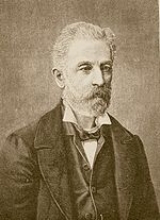
Adolf Bastian

Encyclopedia
Adolf Bastian was a 19th century polymath
best remembered for his contributions to the development of ethnography
and the development of anthropology
as a discipline. Modern psychology owes him a great debt, because of his theory of the Elementargedanke, which led to Carl Jung
's development of the theory of archetype
s, besides influencing work of comparative mythologist Joseph Campbell
.
, into a prosperous bourgeois German family of merchants. His career at university was broad almost to the point of being eccentric. He studied law at the Ruprecht Karl University of Heidelberg
, and biology
at what is today Humboldt University of Berlin
, the Friedrich Schiller University of Jena
, and the University of Würzburg
. It was at this last university that he attended lectures by Rudolf Virchow
and developed an interest in what was then known as 'ethnology
'. He finally settled on medicine and earned a degree from Prague
in 1850.
Bastian became a ship's doctor and began an eight-year voyage which took him around the world. This was the first of what would be a quarter of a century of travels outside the German Confederation. He returned to the Confederation in 1859 and wrote a popular account of his travels along with an ambitious three volume work entitled Man in History, which became one of his most well-known works.
In 1861 he undertook a four-year trip to Southeast Asia
and his account of this trip, The People of East Asia ran to six volumes. For the next eight years Bastian remained in the territory of the North German Confederation
, where be became involved in the creation of several key ethnological institutions in Berlin. He had always been an avid collector, and his contributions to Berlin's Royal museum was so copious that a second museum, the Museum of Folkart, was founded largely as a result of Bastian's contributions. Its collection of ethnographic artifacts became one of the largest in the world for decades to come. He also worked with Rudolf Virchow
to organize the Ethnological Society of Berlin. During this period he was also the head of the Royal Geographical Society of Germany. Among others who worked under him at the museum was the young Franz Boas
who later founded the American school of ethnology.
In the 1870s Bastian left the German Empire
and began travelling extensively in Africa
as well as the New World
.
He died in Port of Spain
, Trinidad and Tobago
during one these journeys in 1905.
, and influenced Carl Jung
's idea of the collective unconscious
. He also argued that the world was divided up into different 'geographical provinces' and that each of these provinces moved through the same stages of evolutionary development. According to Bastian, innovations and culture traits tended not to diffuse across areas. Rather, each province took its unique form as a result of its environment. This approach was part of a larger nineteenth century interest in the 'comparative method' as practiced by anthropologists such as Edward B. Tylor.
While Bastian considered himself to be extremely scientific, it is worth noting that he emerged out of the naturalist tradition that was inspired by Johann Gottfried Herder
and exemplified by figures such as Alexander von Humboldt
. For him, empiricism
meant a rejection of philosophy in favor of scrupulous observations. As a result, he was extremely hostile to Darwin's
theory of evolution
because the physical transformation of species had never been empirically observed, despite the fact that he posited a similar evolutionary development for human civilization. Additionally, he was much more concerned with documenting unusual civilizations before they vanished (presumably as a result of contact with Western civilization) than with the rigorous application of scientific observation. As a result, some have criticized his works for being disorganized collections of facts rather than coherently structured or carefully researched empirical studies.
According to Bastian, the contingencies of geographic location and historical background create different local elaborations of the "elementary ideas"; these he called "folk ideas" (Volkergedanken). Bastian also proposed a lawful “genetic principle” by which societies develop over the course of their history from exhibiting simple sociocultural institutions to becoming increasingly complex in their organization. Through the accumulation of ethnographic data, we can study the psychological laws of mental development as they reveal themselves in diverse regions and under differing conditions. Although one is speaking with individual informants, Bastian held that the object of research is not the study of the individual per se, but rather the “folk ideas” or “collective mind” of a particular people.
The more one studies various peoples, Bastian thought, the more one sees that the historically conditioned "folk ideas" are of secondary importance compared with the universal "elementary ideas". The individual is like the cell in an organism, a social animal whose mind - its "folk ideas" - is influenced by its social background; and the "elementary ideas" are the ground from which these “folk ideas” develop. From this perspective, the social group has a kind of group mind, a social “soul” (Gesellschaftsseele) if you will, in which the individual mind is embedded.
Bastian believed that the "elementary ideas" are to be scientifically reconstructed from "folk ideas" as varying forms of collective representations (Gesellschaftsgedanken). Because one cannot observe the collective representations per se, Bastian felt that the ethnographic project had to proceed through a series of five analytical steps (see Koepping, 1983):
What Bastian argued for was nothing less than what today we might call a psychobiologically grounded, cross-cultural social psychology. The key to developing this robust science of human consciousness was to collect as much ethnographic data as possible from all over the world before folk cultures became too “tainted” by contact with European imperialist powers. Through ethnographic research, he wrote, we can study the psychological laws of mental development as they reveal themselves in diverse geographical settings. Thus in modern day parlance, our different sociocultural forms are due both to trans-culturally shared (i.e., archetypal) processes inherent in our very distinct human psychophysiology -- much of it operating at a non-conscious level -- and to our development (or enculturation
) within a particular environment.
Polymath
A polymath is a person whose expertise spans a significant number of different subject areas. In less formal terms, a polymath may simply be someone who is very knowledgeable...
best remembered for his contributions to the development of ethnography
Ethnography
Ethnography is a qualitative method aimed to learn and understand cultural phenomena which reflect the knowledge and system of meanings guiding the life of a cultural group...
and the development of anthropology
Anthropology
Anthropology is the study of humanity. It has origins in the humanities, the natural sciences, and the social sciences. The term "anthropology" is from the Greek anthrōpos , "man", understood to mean mankind or humanity, and -logia , "discourse" or "study", and was first used in 1501 by German...
as a discipline. Modern psychology owes him a great debt, because of his theory of the Elementargedanke, which led to Carl Jung
Carl Jung
Carl Gustav Jung was a Swiss psychiatrist and the founder of Analytical Psychology. Jung is considered the first modern psychiatrist to view the human psyche as "by nature religious" and make it the focus of exploration. Jung is one of the best known researchers in the field of dream analysis and...
's development of the theory of archetype
Archetype
An archetype is a universally understood symbol or term or pattern of behavior, a prototype upon which others are copied, patterned, or emulated...
s, besides influencing work of comparative mythologist Joseph Campbell
Joseph Campbell
Joseph John Campbell was an American mythologist, writer and lecturer, best known for his work in comparative mythology and comparative religion. His work is vast, covering many aspects of the human experience...
.
Biography
Bastian was born in Bremen, German ConfederationGerman Confederation
The German Confederation was the loose association of Central European states created by the Congress of Vienna in 1815 to coordinate the economies of separate German-speaking countries. It acted as a buffer between the powerful states of Austria and Prussia...
, into a prosperous bourgeois German family of merchants. His career at university was broad almost to the point of being eccentric. He studied law at the Ruprecht Karl University of Heidelberg
Ruprecht Karl University of Heidelberg
The Ruprecht-Karls-Universität Heidelberg is a public research university located in Heidelberg, Baden-Württemberg, Germany. Founded in 1386, it is the oldest university in Germany and was the third university established in the Holy Roman Empire. Heidelberg has been a coeducational institution...
, and biology
Biology
Biology is a natural science concerned with the study of life and living organisms, including their structure, function, growth, origin, evolution, distribution, and taxonomy. Biology is a vast subject containing many subdivisions, topics, and disciplines...
at what is today Humboldt University of Berlin
Humboldt University of Berlin
The Humboldt University of Berlin is Berlin's oldest university, founded in 1810 as the University of Berlin by the liberal Prussian educational reformer and linguist Wilhelm von Humboldt, whose university model has strongly influenced other European and Western universities...
, the Friedrich Schiller University of Jena
Friedrich Schiller University of Jena
Friedrich Schiller University of Jena , is a public research university located in Jena, Thuringia, Germany....
, and the University of Würzburg
University of Würzburg
The University of Würzburg is a university in Würzburg, Germany, founded in 1402. The university is a member of the distinguished Coimbra Group.-Name:...
. It was at this last university that he attended lectures by Rudolf Virchow
Rudolf Virchow
Rudolph Carl Virchow was a German doctor, anthropologist, pathologist, prehistorian, biologist and politician, known for his advancement of public health...
and developed an interest in what was then known as 'ethnology
Ethnology
Ethnology is the branch of anthropology that compares and analyzes the origins, distribution, technology, religion, language, and social structure of the ethnic, racial, and/or national divisions of humanity.-Scientific discipline:Compared to ethnography, the study of single groups through direct...
'. He finally settled on medicine and earned a degree from Prague
Prague
Prague is the capital and largest city of the Czech Republic. Situated in the north-west of the country on the Vltava river, the city is home to about 1.3 million people, while its metropolitan area is estimated to have a population of over 2.3 million...
in 1850.
Bastian became a ship's doctor and began an eight-year voyage which took him around the world. This was the first of what would be a quarter of a century of travels outside the German Confederation. He returned to the Confederation in 1859 and wrote a popular account of his travels along with an ambitious three volume work entitled Man in History, which became one of his most well-known works.
In 1861 he undertook a four-year trip to Southeast Asia
Southeast Asia
Southeast Asia, South-East Asia, South East Asia or Southeastern Asia is a subregion of Asia, consisting of the countries that are geographically south of China, east of India, west of New Guinea and north of Australia. The region lies on the intersection of geological plates, with heavy seismic...
and his account of this trip, The People of East Asia ran to six volumes. For the next eight years Bastian remained in the territory of the North German Confederation
North German Confederation
The North German Confederation 1866–71, was a federation of 22 independent states of northern Germany. It was formed by a constitution accepted by the member states in 1867 and controlled military and foreign policy. It included the new Reichstag, a parliament elected by universal manhood...
, where be became involved in the creation of several key ethnological institutions in Berlin. He had always been an avid collector, and his contributions to Berlin's Royal museum was so copious that a second museum, the Museum of Folkart, was founded largely as a result of Bastian's contributions. Its collection of ethnographic artifacts became one of the largest in the world for decades to come. He also worked with Rudolf Virchow
Rudolf Virchow
Rudolph Carl Virchow was a German doctor, anthropologist, pathologist, prehistorian, biologist and politician, known for his advancement of public health...
to organize the Ethnological Society of Berlin. During this period he was also the head of the Royal Geographical Society of Germany. Among others who worked under him at the museum was the young Franz Boas
Franz Boas
Franz Boas was a German-American anthropologist and a pioneer of modern anthropology who has been called the "Father of American Anthropology" and "the Father of Modern Anthropology." Like many such pioneers, he trained in other disciplines; he received his doctorate in physics, and did...
who later founded the American school of ethnology.
In the 1870s Bastian left the German Empire
German Empire
The German Empire refers to Germany during the "Second Reich" period from the unification of Germany and proclamation of Wilhelm I as German Emperor on 18 January 1871, to 1918, when it became a federal republic after defeat in World War I and the abdication of the Emperor, Wilhelm II.The German...
and began travelling extensively in Africa
Africa
Africa is the world's second largest and second most populous continent, after Asia. At about 30.2 million km² including adjacent islands, it covers 6% of the Earth's total surface area and 20.4% of the total land area...
as well as the New World
New World
The New World is one of the names used for the Western Hemisphere, specifically America and sometimes Oceania . The term originated in the late 15th century, when America had been recently discovered by European explorers, expanding the geographical horizon of the people of the European middle...
.
He died in Port of Spain
Port of Spain
Port of Spain, also written as Port-of-Spain, is the capital of the Republic of Trinidad and Tobago and the country's third-largest municipality, after San Fernando and Chaguanas. The city has a municipal population of 49,031 , a metropolitan population of 128,026 and a transient daily population...
, Trinidad and Tobago
Trinidad and Tobago
Trinidad and Tobago officially the Republic of Trinidad and Tobago is an archipelagic state in the southern Caribbean, lying just off the coast of northeastern Venezuela and south of Grenada in the Lesser Antilles...
during one these journeys in 1905.
Works and ideas
Bastian is remembered as one of the pioneers of the concept of the 'psychic unity of mankind' -- the idea that all humans share a basic mental framework. This became the basis in other guises of 20th century structuralismStructuralism
Structuralism originated in the structural linguistics of Ferdinand de Saussure and the subsequent Prague and Moscow schools of linguistics. Just as structural linguistics was facing serious challenges from the likes of Noam Chomsky and thus fading in importance in linguistics, structuralism...
, and influenced Carl Jung
Carl Jung
Carl Gustav Jung was a Swiss psychiatrist and the founder of Analytical Psychology. Jung is considered the first modern psychiatrist to view the human psyche as "by nature religious" and make it the focus of exploration. Jung is one of the best known researchers in the field of dream analysis and...
's idea of the collective unconscious
Collective unconscious
Collective unconscious is a term of analytical psychology, coined by Carl Jung. It is proposed to be a part of the unconscious mind, expressed in humanity and all life forms with nervous systems, and describes how the structure of the psyche autonomously organizes experience...
. He also argued that the world was divided up into different 'geographical provinces' and that each of these provinces moved through the same stages of evolutionary development. According to Bastian, innovations and culture traits tended not to diffuse across areas. Rather, each province took its unique form as a result of its environment. This approach was part of a larger nineteenth century interest in the 'comparative method' as practiced by anthropologists such as Edward B. Tylor.
While Bastian considered himself to be extremely scientific, it is worth noting that he emerged out of the naturalist tradition that was inspired by Johann Gottfried Herder
Johann Gottfried Herder
Johann Gottfried von Herder was a German philosopher, theologian, poet, and literary critic. He is associated with the periods of Enlightenment, Sturm und Drang, and Weimar Classicism.-Biography:...
and exemplified by figures such as Alexander von Humboldt
Alexander von Humboldt
Friedrich Wilhelm Heinrich Alexander Freiherr von Humboldt was a German naturalist and explorer, and the younger brother of the Prussian minister, philosopher and linguist Wilhelm von Humboldt...
. For him, empiricism
Empiricism
Empiricism is a theory of knowledge that asserts that knowledge comes only or primarily via sensory experience. One of several views of epistemology, the study of human knowledge, along with rationalism, idealism and historicism, empiricism emphasizes the role of experience and evidence,...
meant a rejection of philosophy in favor of scrupulous observations. As a result, he was extremely hostile to Darwin's
Charles Darwin
Charles Robert Darwin FRS was an English naturalist. He established that all species of life have descended over time from common ancestry, and proposed the scientific theory that this branching pattern of evolution resulted from a process that he called natural selection.He published his theory...
theory of evolution
Evolution
Evolution is any change across successive generations in the heritable characteristics of biological populations. Evolutionary processes give rise to diversity at every level of biological organisation, including species, individual organisms and molecules such as DNA and proteins.Life on Earth...
because the physical transformation of species had never been empirically observed, despite the fact that he posited a similar evolutionary development for human civilization. Additionally, he was much more concerned with documenting unusual civilizations before they vanished (presumably as a result of contact with Western civilization) than with the rigorous application of scientific observation. As a result, some have criticized his works for being disorganized collections of facts rather than coherently structured or carefully researched empirical studies.
The Psychic Unity of Mankind
In arguing for the “psychic unity of mankind,” Bastian proposed a straightforward project for the long-term development of a science of human culture and consciousness based upon this notion. He argued that the mental acts of all people everywhere on the planet are the products of physiological mechanisms characteristic of the human species (what today we might term the genetic loading on the organization and functioning of the human neuroendocrine system). Every human mind inherits a complement of species-specific “elementary ideas” (Elementargedanken), and hence the minds of all people, regardless of their race or culture, operate in the same way.According to Bastian, the contingencies of geographic location and historical background create different local elaborations of the "elementary ideas"; these he called "folk ideas" (Volkergedanken). Bastian also proposed a lawful “genetic principle” by which societies develop over the course of their history from exhibiting simple sociocultural institutions to becoming increasingly complex in their organization. Through the accumulation of ethnographic data, we can study the psychological laws of mental development as they reveal themselves in diverse regions and under differing conditions. Although one is speaking with individual informants, Bastian held that the object of research is not the study of the individual per se, but rather the “folk ideas” or “collective mind” of a particular people.
The more one studies various peoples, Bastian thought, the more one sees that the historically conditioned "folk ideas" are of secondary importance compared with the universal "elementary ideas". The individual is like the cell in an organism, a social animal whose mind - its "folk ideas" - is influenced by its social background; and the "elementary ideas" are the ground from which these “folk ideas” develop. From this perspective, the social group has a kind of group mind, a social “soul” (Gesellschaftsseele) if you will, in which the individual mind is embedded.
Bastian believed that the "elementary ideas" are to be scientifically reconstructed from "folk ideas" as varying forms of collective representations (Gesellschaftsgedanken). Because one cannot observe the collective representations per se, Bastian felt that the ethnographic project had to proceed through a series of five analytical steps (see Koepping, 1983):
- 1. Fieldwork: Empirical description of cross-cultural data (as opposed to armchair philosophy; Bastian himself spent much of his adult life among non-European peoples).
- 2. Deduction of collective representations: From cross-cultural data we describe the collective representations in a given society.
- 3. Analysis of folk ideas: Collective representations are broken down into constituent folk ideas. Geographical regions often exhibit similar patterns of folk ideas – he called these “idea circles” which described the collective representations of particular regions.
- 4. Deduction of elementary ideas: Resemblances between folk ideas and patterns of folk ideas across regions indicate underlying elementary ideas.
- 5. Application of a scientific psychology: Study of elementary ideas defines the psychic unity of mankind, which is due to the underlying psychophysiological structure of the species – this study is to be accomplished by a truly scientific, cross-culturally grounded psychology.
What Bastian argued for was nothing less than what today we might call a psychobiologically grounded, cross-cultural social psychology. The key to developing this robust science of human consciousness was to collect as much ethnographic data as possible from all over the world before folk cultures became too “tainted” by contact with European imperialist powers. Through ethnographic research, he wrote, we can study the psychological laws of mental development as they reveal themselves in diverse geographical settings. Thus in modern day parlance, our different sociocultural forms are due both to trans-culturally shared (i.e., archetypal) processes inherent in our very distinct human psychophysiology -- much of it operating at a non-conscious level -- and to our development (or enculturation
Enculturation
Enculturation is the process by which a person learns the requirements of the culture by which he or she is surrounded, and acquires values and behaviours that are appropriate or necessary in that culture. As part of this process, the influences which limit, direct, or shape the individual include...
) within a particular environment.
Sources and further reading
- Buchheit, Klaus Peter: "Die Verkettung der Dinge. Stil und Diagnose im Schreiben Adolf Bastians" (Concatenation of things : Style and Diagnosis as methods of Adolf Bastian's writing and of writing Adolf Bastian), Lit Verlag Münster 2005
- Buchheit, Klaus Peter; Klaus Peter Koepping: "Adolf Philipp Wilhelm Bastian", in: Feest/Kohl (Hg.) "Hauptwerke der Ethnologie", Kröner Stuttgart 2001:19-25
- Buchheit, Klaus Peter: "The Concatenation of Minds" (an essay on Bastian's conception of lore), in: Rao/Hutnyk (Hg.) "Celebrating Transgression. Method and Politics in Anthropological Studies of Culture", Berghahn Oxford New York 2006:211-224
- Buchheit, Klaus Peter: The World as Negro and déjà vue (an essay on Adolf Bastian and the self-deconstructing infringements of Buddhism, jargon, and racism as means of intercultural diagnosis), in: Manuela Fischer, Peter Bolz, Susan Kamel (eds.), Adolf Bastian and his universal archive of humanity. The origins of German anthropology. Georg Olms Verlag, Hildesheim, Zürich, New York, 2007:39-44
- Koepping, Klaus-Peter (1983) Adolf Bastian and the Psychic Unity of Mankind: The Foundations of Anthropology in Nineteenth Century Germany. St. Lucia: University of Queensland Press.
- Lowie, Robert (1937) The History of Ethnological Theory. Holt Rhinehart (contains a chapter on Bastian).
- Tylor, Edward B. (1905) "Professor Adolf Bastian." Man 5:138-143.
External links
- Adolf Bastian, Profile 1911 encyclopedia
- Works of Adolf Bastian at archive.org