
All Topics  
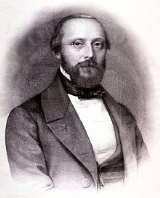
Rudolf Virchow


   Email Print
   Bookmark   Link


Rudolf Virchow


Scientific CareerFrom a farming family of relatively modest means, Virchow studied medicineMedicine

Medicine is the branch of health science and the sector of public life concerned with maintaining or restoring human health ...
 in Berlin at the military academy of PrussiaPrussia

Prussia was, most recently, a historic state originating in Brandenburg, an area which for centuries had substantial influen...
 on a scholarship. When he graduated in 1842 he went to serve as Robert FroriepRobert Froriep

Robert Friedrich Froriep was a German anatomist who was a native of Jena....
's assistant at the Berlin CharitéCharité

The Charit? claimed in 2003 to be the largest university hospital in Europe after the merger with their fourth campus....
 rather than the expected military service. He was employed as an intern at Charité Hospital in Berlin but was suspended on March 31, 1849 because of his liberal view of the German government. Due to political reasons, he moved to WürzburgUniversity of Würzburg

The University of Wrzburg is a university in Wrzburg, Germany, founded in 1402....
 to study and teach anatomyAnatomy

Anatomy , is the branch of biology that deals with the structure and organization of living things....
. In 1856, he returned to Berlin as a professor of anatomic pathology (a chair created just for him) at Berlin University and the Berlin Charité where he had previously worked as Froriep's assistant. One of his major contributions to German medical education was to encourage the use of microscopes by medical students and was known for constantly urging his students to 'think microscopically'.


Discussion
Ask a question about 'Rudolf Virchow'
Start a new discussion about 'Rudolf Virchow'
Answer questions from other users
Full Discussion Forum


Timeline

1821   Born

1902   Died


Quotations


For if medicine is really to accomplish its great task, it must intervene in political and social life. It must point out the hindrances that impede the normal social functioning of vital processes, and effect their removal.

1849 (quoted in Pathologies of Power, by Paul Farmer, page 323)


Encyclopedia


Scientific Career

From a farming family of relatively modest means, Virchow studied medicineMedicine

Medicine is the branch of health science and the sector of public life concerned with maintaining or restoring human health ...
 in Berlin at the military academy of PrussiaPrussia

Prussia was, most recently, a historic state originating in Brandenburg, an area which for centuries had substantial influen...
 on a scholarship. When he graduated in 1842 he went to serve as Robert FroriepRobert Froriep

Robert Friedrich Froriep was a German anatomist who was a native of Jena....
's assistant at the Berlin CharitéCharité

The Charit? claimed in 2003 to be the largest university hospital in Europe after the merger with their fourth campus....
 rather than the expected military service. He was employed as an intern at Charité Hospital in Berlin but was suspended on March 31, 1849 because of his liberal view of the German government. Due to political reasons, he moved to WürzburgUniversity of Würzburg

The University of Wrzburg is a university in Wrzburg, Germany, founded in 1402....
 to study and teach anatomyAnatomy

Anatomy , is the branch of biology that deals with the structure and organization of living things....
. In 1856, he returned to Berlin as a professor of anatomic pathology (a chair created just for him) at Berlin University and the Berlin Charité where he had previously worked as Froriep's assistant. One of his major contributions to German medical education was to encourage the use of microscopes by medical students and was known for constantly urging his students to 'think microscopically'. The campus where this Charité hospital is located is named after him, the Campus Virchow Klinikum.

Virchow is credited with multiple significant discoveries.Although he and Theodor Schwann are not mentioned together. His most widely known is indeed his cell theory. He is cited as the first to recognize leukemiaLeukemia

Leukemia is a cancer of the blood or bone marrow characterized by an abnormal proliferation of blood cells, usually white b...
. However, he is perhaps best known for his theory Omnis cellula e cellula ("every cell originates from another existing cell like it.") which he published in 1858. (The epigramEpigram

An epigram is a short poem with a clever twist at the end or a concise and witty statement....
 was actually coined by François-Vincent RaspailFrançois-Vincent Raspail

Fran?ois-Vincent Raspail was a French chemist, physiologist, and socialist....
 but popularized by Virchow). It is a rejection of the concept of spontaneous generation, which held that organisms could arise from non-living matter. It was believed, for example, that maggots could spontaneously appear in decaying meat; Francesco RediFrancesco Redi

Francesco Redi was an Italian physician...
 carried out experiments which disproved this. Redi's work gave rise to the maxim Omne vivum ex ovoOmne vivum ex ovo Summary

"Omne vivum ex ovo" is Latin for "All life [is] from [an] egg"....
 ("every living thing comes from a living thing" [literally, "from an egg"]), Virchow (and his predecessors) extended this to state that the only source for a living cell was another living cell.

Another significant credit relates to the discovery, made approximately simultaneously by Virchow and Charles Emile TroisierCharles Emile Troisier

Charles Emile Troisier was a French doctor....
, that an enlarged left supra-clavicular node is one of the earliest signs of gastrointestinal malignancy, commonly of the stomach, or less commonly, lung cancer. This has become known as Virchow's nodeVirchow's node

In medicine, Virchow's node is an enlarged, hard, left supraclavicular lymph node which can contain metastasis of visceral m...
 and simultaneously Troisier's signTroisier's sign Summary

Troisier's sign is finding a hard, enlarged, left supraclavicular lymph node....
.

Virchow is also famous for elucidating the mechanism of pulmonary thromboembolism, coining the term embolismEmbolism

In medicine, an embolism occurs when an object migrates from one part of the body and cause a blockage of a blood vessel in ...
. He noted that blood clots in the pulmonary artery originate first from venous thrombi, stating: "The detachment of larger or smaller fragments from the end of the softening thrombus which are carried along by the current of blood and driven into remote vessels. This gives rise to the very frequent process on which I have bestowed the name of Embolia." Related to this research, Virchow described the factors contributing to venous thrombosis, Virchow's triadVirchow's triad

The following are considered the contributors of Virchow's Triad:...
.

Furthermore, Virchow founded the medical disciplines of cellular pathologyCellular pathology

Cellular pathology is the branch of general pathology studying the cellular basis of disease....
, comparative pathology (comparison of diseases common to humanHuman

Humans, or human beings, are bipedal primates belonging to the mammalian species Homo sapiens under the fami...
s and animalAnimal

Animals are a major group of organisms, classified as the kingdom Animalia or Meta­zoa....
s). His very innovative work may be viewed as sitting between that of MorgagniGiovanni Battista Morgagni

Giovanni Battista Morgagni, Italian anatomist, was born on at Forl and he is celebrated as the father of the modern anatomic...
 whose work Virchow studied, and that of Paul EhrlichPaul Ehrlich

Paul Ehrlich was a German scientist who won the 1908 Nobel Prize in Physiology or Medicine....
, who studied at the Charité while Virchow was developing microscopic pathology there.

In 1869 he founded the Society for anthropology, ethnologyEthnology

Ethnology is a genre of anthropological study, involving the systematic comparison of the folklore, beliefs and practices o...
 and prehistoryPrehistory Overview

Prehistory is a term often used to describe the period before written history became available....
 (Gesellschaft für Anthropologie, Ethnologie und Urgeschichte) which was very influential in coordinating and intensifying German archaeological research. In 1885 he launched a study of craniometryCraniometry

Craniometry is the technique of measuring the bones of the skull....
, which gave surprising results according to contemporary scientific racistScientific racism

Scientific racism is any publication or propaganda with the veneer of science which was fabricated to support a racist parad...
 theories on the "Aryan raceAryan race Summary

The "Aryan race" is a concept in European culture that was influential in the period of the late nineteenth and early twenti...
", leading him to denounce the "Nordic mysticism" in the 1885 Anthropology Congress in KarlsruheKarlsruhe

Karlsruhe is a city in the south west of Germany, in the Bundesland Baden-Wrttemberg, located near the French-German border....
. Josef Kollmann , a collaborator of Virchow, stated in the same congress that the people of Europe, be them German, Italian, English or French, belonged to a "mixture of various races," furthermore declaring that the "results of craniology" led to "struggle against any theory concerning the superiority of this or that European race" on others .

In 1892 he was awarded the Copley MedalCopley Medal

The Copley Medal is a scientific award for work in any field of science, the highest award granted by the Royal Society of L...
.

He was a very prolific writer. Some of his works are:
  • Mittelheilungen über die Typhus-Epidemie, (1848)
  • Die Cellularpathologie, (1858), English translation, (1860)
  • Handbuch Media:der speciellen Pathologie und Therapie, (1854-62)
  • Vorlesungen über Pathologie, (1862-72)
  • Die krankhaften Geschwülste, (1863-67)
  • Gegen den Antisemitismus, (1880)


He also developed a standard method of autopsyAutopsy

An autopsy, also known as a post-mortem examination or an obduction, is a medical procedure that consists of a thoro...
 procedure, named for him, that is still one of the two main techniques used today.
More than a laboratory physician, Virchow was an impassioned advocate for social and political reform, stating that physicians should act as "attorneys for the poor." His views are evident in his "Report on the TyphusTyphus

This is about the disease Typhus. See Typhus for the monster in Greek mythology, or typhoid fever for an unrelated disease with...
 Outbreak of Upper SilesiaUpper Silesia

Upper Silesia is the southeastern part of Silesia, a historical and geographical region of Poland and of the Czech Republic....
 (1848),"writing that the outbreak could not be solved by treating individual patients with drugs or with minor changes in food, housing, or clothing laws, but only through radical action to promote the advancement of an entire population.
He is widely regarded as a pioneer of social medicineSocial medicine Summary

The field of social medicine seeks to:...
. and anthropology."

Hostility toward antiseptics

Despite these many accomplishments in medicine, Virchow's reputation is blackened by his rejection of and hostility towards the theory that bacteria cause disease. His attacks on Ignaz SemmelweisIgnaz Semmelweis

Ignaz Philipp Semmelweis, born Semmelweis Ignc Flp, was a Hungarian physician who discovered that the incidence of pue...
's advocacy of antisepsis delayed the use of antiseptics.

He died following a hip fracture that he sustained falling from a tram.

Medical terms

  • Virchow's angle — The angle between the nasobasilar line and the nasosubnasal line.
  • Virchow's disease — leontiasis ossium.
  • Virchow's line — a line from the root of the nose to the lambda.
  • Virchow's method of autopsy — A method of autopsy where each organ is taken out one by one. Other methods are Letulle's method, where they are taken out en bloc, Rokitansky's method, where they are examined in situ, and Ghon's method where they are usually taken out in three separate blocks - a cervical block, a thoracic block and an abdominopelvic block.
  • Virchow's nodeVirchow's node

    In medicine, Virchow's node is an enlarged, hard, left supraclavicular lymph node which can contain metastasis of visceral m...
    — the presence of metastatic cancer in a lymph-node in the supraclavicular fossa (root of the neck left of the midline). Also known as Troisier's signFacts About Troisier's sign

    Troisier's sign is finding a hard, enlarged, left supraclavicular lymph node....
    .
  • Virchow's triadVirchow's triad

    The following are considered the contributors of Virchow's Triad:...
    — factors contributing toward venous thrombus formation.


;Source: Dorland's Medical Dictionary (1938)

Political career

Virchow also worked as a politician (member of the Berlin City Council, the Prussian parliament since 1861, German ReichstagReichstag (institution)

The Reichstag was the parliament of the Holy Roman Empire, the North German Confederation, and of Germany until 1945....
 1880-1893) to improve the health care conditions for the Berlin citizens, namely working towards modern water and sewer systems. Virchow is also credited with the founding of "Social MedicineSocial medicine

The field of social medicine seeks to:...
", frequently focusing on the fact that disease is never purely biological, but often, socially derived. As a co-founder and member of the liberal party (Deutschen Fortschrittspartei) he was an important political antagonist of BismarckOtto von Bismarck

Otto Eduard Leopold, Prince von Bismarck, Duke of Lauenburg was one of the most prominent European aristocrats and statesme...
.

It is said (though not confirmed) that Otto von Bismarck challenged Rudolf Virchow to a duel. Virchow, as the challenged party had the choice of weapons; he chose two sausages, one of which had been inoculated with choleraCholera

Cholera is a water-borne disease caused by the bacterium Vibrio cholerae, which is typically ingested by drinking conta...
. Bismarck is said to have called off the duel at once.

One area where he co-operated with Bismarck was in the KulturkampfKulturkampf

The German term Kulturkampf refers to German policies in relation to secularity and the influence of the Roman Catholic Chur...
, the anti-clerical campaign against the Catholic Church claiming that the anti-clerical laws bore "the character of a great struggle in the interest of humanity". It was during the discussion of Falk’sPaul Ludwig Falk

Paul Ludwig Adalbert Falk, or Adalbert Falk, German politician, was born at Matschkau, Silesia....
 May Laws (Maigesetze) that Virchow first used the term.

Virchow was respected in Masonic circles, and according to one source may have been a freemason, though no official record of this has been found.

The Society for Medical Anthropology gives an annual award in Virchow's name, Rudolph Virchow AwardRudolph Virchow Award

The Rudolf Virchow Awards are annual Americanawards in anthropology. ...
.

Further reading

  • Becher, Rudolf Virchow, Berlin, (1891)
  • J. L. Pagel, Rudolf Virchow, Leipzig, (1906)
  • Erwin H. Ackerknecht, Rudolf Virchow: Doctor, Statesman, Anthropologist, Madison, (1953)
  • Virchow, RLK (1978) Cellular pathology. 1859 special ed., 204-207 John Churchill London, UK.
  • , available at Project Gutenburg (co-authored by Virchow with Tomás Comyn, Fedor Jagor, and Chas Wilkes)

External links

  • Becher, , available at Project Gutenburg (co-authored by Virchow with Tomás Comyn, Fedor Jagor, and Chas Wilkes)
  • in the Virtual Laboratory of the Max Planck Institute for the History of ScienceMax Planck Institute for the History of Science

    The Max Planck Institute for the History of Science in Berlin was established in March 1994....
  • A biography of Virchow at , including phenomena namedEponym

    An eponym is the name of a person, whether real or fictitious, which has given rise to the name of a particular place, trib...
     after him
  • A biography of Virchow by the that deals with his early work in Cerebrovascular Pathology
  • An English translation of the complete 1848 Report on the Typhus Epidemic in Upper Silesia is available in the February 2006 edition of the journal