


Triticeae

Encyclopedia
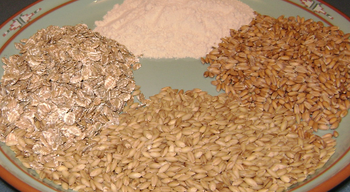
Triticeae is a tribe
within the Pooideae subfamily of grasses that includes genera with many domesticated species. Major crop genera are found in this tribe including wheat (See Wheat taxonomy
), barley
, and rye
; crops in other genera include some for human consumption and others used for animal feed or rangeland protection. Among the world's cultivated species, this tribe has some of the most complex genetic histories. An example is bread wheat, which contains the genomes of three species, only one of them originally a wheat Triticum species. Seed storage proteins in Triticeae
are implicated in various food allergies
and intolerances.
land from opportunistic or invasive species
Triticeae and its sister tribe Bromeae (possible cultivars: Bromus mango S. America) when joined form a sister clade with Poeae and Aveneae (oats). Inter-generic gene flow characterized these taxa from the early stages. For example, Poeae and Aveneae share a genetic marker with barley and 10 other members of Triticeae, whereas all 19 genera of Triticeae bear a wheat marker along with Bromeae. Genera within Triticeae contain diploid, allotetraploid and/or allohexaploid genomes, the capacity to form allopolyploid genomes varies within the tribe. In this tribe, the majority of diploid species tested are closely related to Aegilops, the more distal members (earliest branch points) include Hordeum (Barley), Eremian, Psathyrostachys. The broad distribution of cultivars within the Tribe and the properties of the proteins have implication in the treatment of certain digestive diseases and autoimmune disorders.
and are seen in Elmyus (HHStSt), but also shows introgression from Australian and Agropyron wheatgrasses. Elymus contains mostly Pseudoroegeneria mtDNA.
Many genera and species of Triticeae are exemplary of allopolyploids, having more chromosomes than seen in typical diploids. Typically allopolyploids are tetraploid or hexaploid, XXYY or XXYYZZ. The creation of polyploid species results from natural random events tolerated by polyploid capable plants. Likewise natural allopolyploid plants may have selective benefits and may allow the recombination of distantly related genetic material facilitating at a later time a reversion back to diploid. Poulard wheat is an example of a stable allotetraploid wheat.
The Secale (domesticated rye) may be a very early branch from the goat grass clad (or goat grasses are a branch of early rye grasses), as branch these are almost contemporary with the branching between monoploid wheat and Aegilops tauschii. Studies in Anatolia now suggest Rye (Secale
) was cultivated, but not domesticated, prior to the holocene
and to evidence for the cultivation of wheat. As climate changed the favorablitiy of Secale declined. At that time other strains of barley and wheat may have been cultivated, but humans did little to change them.

required a longer period with wild seeding maintaining a presence in archaeological finds.
component that some contend goes back to the Neolithic period and is referred to as the Garden Hunting Hypothesis. In this hypothesis grains could be planted or shared for the purpose of attracting game animals so that they could be hunted close to settlements.
Today, rye and other Triticeae cultivars are used to grazing animals, particularly cattle.
Rye grasses in the New World have been used to selectively for use as fodder, but also
to protect grasslands without the introduction of invasive old world species.
. While it was once believed that [oat]s carried similar potentials, recent studies indicate that most-oat sensitivity is the result of contamination. Triticeae glutens
examines of the proteins of Triticeae, important in the link between gluten, gastrointestinal, allergic and autoimmune diseases Some of the recently discovered biochemical and immunochemical properties of these proteins suggest they evolved for protection against dedicated or continuous consumption by mammalian seed eaters. One recent publication even raises doubts about wheat's safety for anyone to eat Overlapping properties with regard to food preparation have made these proteins much more useful as cereal cultivars and a balanced perspective suggest a variable tolerance to Triticeae glutens reflects early childhood environment and genetic predisposition.
Tribe (biology)
In biology, a tribe is a taxonomic rank between family and genus. It is sometimes subdivided into subtribes.Some examples include the tribes: Canini, Acalypheae, Hominini, Bombini, and Antidesmeae.-See also:* Biological classification* Rank...
within the Pooideae subfamily of grasses that includes genera with many domesticated species. Major crop genera are found in this tribe including wheat (See Wheat taxonomy
Wheat taxonomy
During 10,000 years of cultivation, numerous forms of wheat have evolved under human selection. This diversity has led to much confusion in the naming of wheats. This article explains how genetic and morphological characteristics of wheat influence its classification, and gives the most common...
), barley
Barley
Barley is a major cereal grain, a member of the grass family. It serves as a major animal fodder, as a base malt for beer and certain distilled beverages, and as a component of various health foods...
, and rye
Rye
Rye is a grass grown extensively as a grain and as a forage crop. It is a member of the wheat tribe and is closely related to barley and wheat. Rye grain is used for flour, rye bread, rye beer, some whiskeys, some vodkas, and animal fodder...
; crops in other genera include some for human consumption and others used for animal feed or rangeland protection. Among the world's cultivated species, this tribe has some of the most complex genetic histories. An example is bread wheat, which contains the genomes of three species, only one of them originally a wheat Triticum species. Seed storage proteins in Triticeae
Triticeae glutens
Triticeae glutens are seed storage proteins found in mature seeds of grass tribe Triticeae. Seed glutens of non-Triticeae plants have varieties of similar properties, but none singly can perform on a par with those of the Triticeae taxa, particularly the triticum species...
are implicated in various food allergies
Food allergy
A food allergy is an adverse immune response to a food protein. They are distinct from other adverse responses to food, such as food intolerance, pharmacological reactions, and toxin-mediated reactions....
and intolerances.
Genera of Triticeae
This list of tribes broadly follows that in Grass Genera of World. Although there are taxonomic disagreements about the precise circumscription of some genera, this scheme is typical of those used in taxonomic literature.- AegilopsAegilopsAegilops is a genus of plants generally known as goatgrasses and belonging to the grass family, Poaceae. There are about 23 species and numerous sub species in the genus. Various members of the genus are classed as agricultural weeds. Growing through the winter, they resemble winter wheat...
(goat grasses - jointed goatgrass, Tausch goatgrass, etc.) - AgropyronAgropyronAgropyron is a genus of grasses , native to Europe and Asia. Species in the genus are commonly referred to as crested-wheat grasses...
(crested wheatgrasses Desert wheatgrass, quackgrass, etc.) - AmblyopyrumAmblyopyrumAmblyopyrum is a genus of grass in the Poaceae family....
(Slim wheat grass - amblyopyrum) - Australopyrum (Australian wheatgrasses - velvet wheatgrass,pectinated wheatgrass, etc.)
- Cockaynea {See Stenostachys; Cockaynea is a younger, and hence invalid, name for Stenostachys
- Crithopsis (delileana grass)
- Dasypyrum (Mosquito grass)
- ElymusElymus (genus)Elymus is a genus of perennial grasses in the tribe which contains many of the main cereal grains. Plants of this genus are known generally as wildrye or wheatgrass...
(Elymus (wild ryes - blue wildrye,Texas ryegrass, etc.) - Elytrigia (This genus is often included in Elymus)
- Eremium (This genus is sometimes included in Leymus; Argentine desert ryegrass)
- Eremopyrum (false wheatgrasses - tapertip false wheatgrass,annual wheatgrass, etc.)
- Festucopsis
- Haynaldia
- Henrardia
- Heteranthelium
- Hordelymus
- HordeumHordeumHordeum is a genus of about 30 species of annual and perennial grasses, native throughout the temperate Northern Hemisphere, temperate South America, and also South Africa....
(barleys - common barley, foxtail barley, etc.) - Hystrix (porcupine grass- bottlebrush grass)
- Kengyilia
- LeymusLeymusLeymus is a genus of the true grass family . The common name for this genus is "wild rye"; however, members of the genus Elymus are also sometimes given the same common name...
(wild rye- American dune grass,lyme grass, etc.) - Lophopyrum (tall wheatgrass)
- Malacurus
- Pascopyrum(western wheatgrass)
- Peridictyon
- Psathyrostachys (Russian wildrye)
- Pseudoroegneria (bluebunch wheatgrasses - beardless wheatgrass, etc.)
- SecaleSecaleSecale is a genus of grasses in the Triticeae tribe. The most known member is rye .Other species include:*Secale montanum Guss.*Secale sylvestre Host....
(Ryes - Cereal rye, Himalayan Rye, etc.) - Sitanion
- Stenostachys (New Zealand wheatgrasses)
- Taeniatherum (medusahead - medusahead)
- Thinopyrum (intermediate wheatgrass, Russian wheatgrass, thick quackgrass)
- Triticum (Wheats - common wheatCommon wheatCommon wheat, Triticum aestivum, is a cultivated wheat species.-Nomenclature and taxonomy of the variety and its cultivars:-Evolution:...
, durumDurumDurum wheat or macaroni wheat is the only tetraploid species of wheat of commercial importance that is widely cultivated today...
wheat, etc.)
Cultivated or edible species
Aegilops
- Various species (rarely identifiable to species in archaeological material) occur in pre-agrarian archaeobotanical remains from Near Eastern sites. Their edible grains were doubtless harvested as wild food resources.
- speltoides - ancient food grain, putative source of B genome in bread wheat and G genome in T. timopheevii
- tauschii - Source of D genome in wheat
Elymus
Various species are cultivated for pastoral purposes or to protect fallowland from opportunistic or invasive species
- canadensis - edible, bread flour capable, fiddly seeds
- trachycaulus - pastoral cultivar
Hordeum
Many barley cultivars- vulgare - common barley (6 subspecies, ~100 cultivars)
- bulbosum - edible seeds
- murinum (mouse barley) - cooked as piñole, bread flour capable, medicinal: diuretic.
Leymus
- arenarius (Lyme grass) - bread flour capable, possible food additive
- racemosus (Volga Wild Rye) - drought tolerant cereal, used in Russia
- condensatus (Giant Wild Rye) - Edible seeds, harvesting problematic small seeds
- triticoides (Squaw grass) - used in North America, seed hairs must be singed
Secale
Ryes- cereale (Cereal Rye) - Livestock feed and sour dough bread - 6 subspecies.
- cornutum-ergot (Ergot of Spurred Rye) - herbal medicine at very low doses, deadly poisonous as food.
- strictum - actively cultivated
- sylvestre - (Tibetan Rye) - actively cultivated in Tibet and China highlands.
- vavilovii (Armenian Wild Rye) - edible seeds, thickener.
Triticum
(Wheat)- aestivum (bread wheat) - (AABBDD Genome)
- compactum (club wheat)
- macha (hulled)
- spelta (hulled, speltSpeltSpelt is a hexaploid species of wheat. Spelt was an important staple in parts of Europe from the Bronze Age to medieval times; it now survives as a relict crop in Central Europe and northern Spain and has found a new market as a health food. Spelt is sometimes considered a subspecies of the...
) - sphaerococcum (shot wheat)
- monococcum (Einkorn wheat) (A Genome)
- timopheeviiTriticum timopheeviiTimopheev's Wheat is a tetraploid wheat that has both cultivated and wild forms. The domesticated form is restricted to western Georgia, while the wild form Timopheev's Wheat (Triticum timopheevii, also called Zanduri Wheat) is a tetraploid wheat that has both cultivated and wild forms. The...
(Sanduri wheat) - turgidum (poulard wheat) (AB Genome)
- carthlicum (Persian black wheat)
- dicoccoides (wild emmer wheat)
- dicoccum (cultivated emmer wheat) - used to make Farro
- durumDurumDurum wheat or macaroni wheat is the only tetraploid species of wheat of commercial importance that is widely cultivated today...
(durum wheat) - paleocolchicum
- polonicum (Polish wheat)
- turanicum
- turgidum
Genetics
| Genera & Species | 1st | 2nd | 3rd | ||
| Triticum boeoticum | AA | ||||
| Triticum monococcum | AMAM | ||||
| Triticum aurata | AUAU | ||||
| Aegilops speltoides Aegilops speltoides Aegilops speltoides is an edible plant in the Poaceae family native to Southeastern Europe and Western Asia, which is often used for animal feed, and it has grown in cultivated beds... speltoides |
BB | ||||
| Aegilops caudata | CC | ||||
| Aegilops tauschii | DD | ||||
| Lophopyrum elongatum | EE | ||||
| Hordeum vulgare | HH | ||||
| Thinopyrum bessarabicum | JJ | ||||
| Aegilops comosa | MM | ||||
| Aegilops uniaristata | NN | ||||
| Henradia Persia | OO | ||||
| Agropyrum cristatum | PP | ||||
| Secale cereale | RR | ||||
| Aegilops bicornis | SS | ||||
| Amblyopyrum muticum | TT | ||||
| Aegilops umbellulata | UU | ||||
| Dasypyrum | VV | ||||
| Psathyrostachys | NsNs | ||||
| Pseudoregenia | StSt | ||||
| Triticum zhukovskyi | AA | AMAM | GG | ||
| Triticum turgidum | AA | BB | |||
| Triticum aestivum | AA | BB | DD | ||
| Triticum timopheevii Triticum timopheevii Timopheev's Wheat is a tetraploid wheat that has both cultivated and wild forms. The domesticated form is restricted to western Georgia, while the wild form Timopheev's Wheat (Triticum timopheevii, also called Zanduri Wheat) is a tetraploid wheat that has both cultivated and wild forms. The... |
AA | GG | |||
| Stenostachys sp. | HH | WW | |||
| Elmyus canadensis | HH | StSt | |||
| Elmyus abolinii | YY | StSt | |||
| Thinopyrum Vjd =(V/J/D) | JJ | StSt | VjdVjd | ||
| Leymus tricoides | NsNs | XmXm |
Triticeae and its sister tribe Bromeae (possible cultivars: Bromus mango S. America) when joined form a sister clade with Poeae and Aveneae (oats). Inter-generic gene flow characterized these taxa from the early stages. For example, Poeae and Aveneae share a genetic marker with barley and 10 other members of Triticeae, whereas all 19 genera of Triticeae bear a wheat marker along with Bromeae. Genera within Triticeae contain diploid, allotetraploid and/or allohexaploid genomes, the capacity to form allopolyploid genomes varies within the tribe. In this tribe, the majority of diploid species tested are closely related to Aegilops, the more distal members (earliest branch points) include Hordeum (Barley), Eremian, Psathyrostachys. The broad distribution of cultivars within the Tribe and the properties of the proteins have implication in the treatment of certain digestive diseases and autoimmune disorders.
Evolution of the tribe
One of the earliest branches in Triticeae, to Pseudoroegeneria, produces the genome StSt and another Hordeum then genome = HH. Allotetraploid combinations of Pseudoroegeneria and HordeumHordeum
Hordeum is a genus of about 30 species of annual and perennial grasses, native throughout the temperate Northern Hemisphere, temperate South America, and also South Africa....
and are seen in Elmyus (HHStSt), but also shows introgression from Australian and Agropyron wheatgrasses. Elymus contains mostly Pseudoroegeneria mtDNA.
Many genera and species of Triticeae are exemplary of allopolyploids, having more chromosomes than seen in typical diploids. Typically allopolyploids are tetraploid or hexaploid, XXYY or XXYYZZ. The creation of polyploid species results from natural random events tolerated by polyploid capable plants. Likewise natural allopolyploid plants may have selective benefits and may allow the recombination of distantly related genetic material facilitating at a later time a reversion back to diploid. Poulard wheat is an example of a stable allotetraploid wheat.
The Secale (domesticated rye) may be a very early branch from the goat grass clad (or goat grasses are a branch of early rye grasses), as branch these are almost contemporary with the branching between monoploid wheat and Aegilops tauschii. Studies in Anatolia now suggest Rye (Secale
Secale
Secale is a genus of grasses in the Triticeae tribe. The most known member is rye .Other species include:*Secale montanum Guss.*Secale sylvestre Host....
) was cultivated, but not domesticated, prior to the holocene
Holocene
The Holocene is a geological epoch which began at the end of the Pleistocene and continues to the present. The Holocene is part of the Quaternary period. Its name comes from the Greek words and , meaning "entirely recent"...
and to evidence for the cultivation of wheat. As climate changed the favorablitiy of Secale declined. At that time other strains of barley and wheat may have been cultivated, but humans did little to change them.
Goat grasses and the evolution of bread wheat
Tetraploidation in wild emmer wheat
Aegilops appears to be basal to several taxa such as Triticum, Ambylopyrum, and Crithopsis. Certain species such as Aegilops speltoides could potentially represent core variants of the taxa. The generic placement may be more a matter of nomenclature. Aegilops and Triticum genera are very closely related as the image to the right illustrates the Aegilops species occupy most of the basal branch points in bread wheat evolution indicating that Triticum genus evolved from Aegilops after an estimated 4 million years ago. The divergence of the genomes is followed by allotetraploidation of a speltoid goatgrass x basal wheat species Triticum boeoticum with strains in the middle eastern region giving rise to cultivated emmer wheat.Hexaploidation of tetraploid wheat
Hybridization of tetraploid wheat with Ae. tauschii produced a hulled wheat similar to spelt, suggesting T. spelta is basal. The tauschii species can be subdivided into subspecies tauschii (eastern Turkey to China or Pakistan) and strangulata (Caucasus to S. Caspian, N. Iran). The D genome of bread wheat is closer to A.t. strangulata than A.t. tauschii. It is suggested that Ae. tauschii underwent rapid selective evolution prior to combining with tetraploid wheat.Wild Triticeae use by humans
Intense use of wild Triticeae can be seen in the Levant as early as 23,000 years ago. This site, Ohala II (Israel), also shows that Triticeae grains were processed and cooked. Many cultivars appear to have been domesticated in the region of the upper Fertile Crescent, Levant and central Anatolia. More recent evidence suggests that cultivation of wheat from emmer's wheatrequired a longer period with wild seeding maintaining a presence in archaeological finds.
Pastoral grasses
Triticeae has a pastoralPastoral
The adjective pastoral refers to the lifestyle of pastoralists, such as shepherds herding livestock around open areas of land according to seasons and the changing availability of water and pasturage. It also refers to a genre in literature, art or music that depicts such shepherd life in an...
component that some contend goes back to the Neolithic period and is referred to as the Garden Hunting Hypothesis. In this hypothesis grains could be planted or shared for the purpose of attracting game animals so that they could be hunted close to settlements.
Today, rye and other Triticeae cultivars are used to grazing animals, particularly cattle.
Rye grasses in the New World have been used to selectively for use as fodder, but also
to protect grasslands without the introduction of invasive old world species.
Triticeae and health
Glutens (storage proteins) in the Triticeae tribe have been linked to gluten-sensitive diseasesGluten sensitivity
Gluten sensitivity belongs to a spectrum of disorders in which gluten has an adverse effect on the body. It can be defined as a non-allergic and non-autoimmune condition in which the consumption of gluten can lead to symptoms similar to those observed in coeliac disease or wheat allergy .Gluten...
. While it was once believed that [oat]s carried similar potentials, recent studies indicate that most-oat sensitivity is the result of contamination. Triticeae glutens
Triticeae glutens
Triticeae glutens are seed storage proteins found in mature seeds of grass tribe Triticeae. Seed glutens of non-Triticeae plants have varieties of similar properties, but none singly can perform on a par with those of the Triticeae taxa, particularly the triticum species...
examines of the proteins of Triticeae, important in the link between gluten, gastrointestinal, allergic and autoimmune diseases Some of the recently discovered biochemical and immunochemical properties of these proteins suggest they evolved for protection against dedicated or continuous consumption by mammalian seed eaters. One recent publication even raises doubts about wheat's safety for anyone to eat Overlapping properties with regard to food preparation have made these proteins much more useful as cereal cultivars and a balanced perspective suggest a variable tolerance to Triticeae glutens reflects early childhood environment and genetic predisposition.
External links
- Pubmed:Triticeae
- Database of Edible Seed Plants
- International Center for Agricultural Research in the Dry Areas (ICARDA) - An excellent resource for the ancestral genetics of Triticeae.
- Aegilops (genome) Comparative Classification Table
- Triticum (genome) Comparative Classification Table
- Genomes in Aegilops, Triticum, and Amblyopyrum
- Triticeae germplasm