

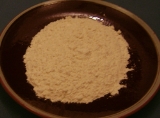
Triticeae glutens

Encyclopedia
Protein
Proteins are biochemical compounds consisting of one or more polypeptides typically folded into a globular or fibrous form, facilitating a biological function. A polypeptide is a single linear polymer chain of amino acids bonded together by peptide bonds between the carboxyl and amino groups of...
s found in mature seeds of grass tribe Triticeae
Triticeae
Triticeae is a tribe within the Pooideae subfamily of grasses that includes genera with many domesticated species. Major crop genera are found in this tribe including wheat , barley, and rye; crops in other genera include some for human consumption and others used for animal feed or rangeland...
. Seed gluten
Gluten
Gluten is a protein composite found in foods processed from wheat and related grain species, including barley and rye...
s of non-Triticeae plants have varieties of similar properties, but none singly can perform on a par with those of the Triticeae taxa, particularly the triticum species (bread wheat, durum wheat, etc). By its strictest definition gluten means the factors in bread wheat (Triticeae Triticum aestivum) that give rise to the sticky capacity that allows dough to rise and retain its shape during baking. The same proteins or very similar proteins are also found in other triticeae genera and species. What distinguishes bread wheat from these other grass seeds is the quantity of these proteins and the level of subcomponents, with bread wheat having the highest protein content and a complex mixture of proteins from derived from 3 grass species (Aegilops speltoides
Aegilops speltoides
Aegilops speltoides is an edible plant in the Poaceae family native to Southeastern Europe and Western Asia, which is often used for animal feed, and it has grown in cultivated beds...
, Aegilops tauschii strangulata, and triticum monococcum
Einkorn wheat
thumbnail|150px|left|Wild einkorn, Karadag, central TurkeyEinkorn wheat can refer either to the wild species of wheat, Triticum boeoticum , or to the domesticated form, Triticum monococcum...
).
Because of the sequence similarity of these glutens, gluten sensitivity (most importantly Coeliac disease
Coeliac disease
Coeliac disease , is an autoimmune disorder of the small intestine that occurs in genetically predisposed people of all ages from middle infancy onward...
)has a reactivity primarily restricted to grass seeds of this tribe (known reactivity to Triticum, Secale
Secale
Secale is a genus of grasses in the Triticeae tribe. The most known member is rye .Other species include:*Secale montanum Guss.*Secale sylvestre Host....
, Triticosecale, Hordeum
Hordeum
Hordeum is a genus of about 30 species of annual and perennial grasses, native throughout the temperate Northern Hemisphere, temperate South America, and also South Africa....
, Aegilops
Aegilops
Aegilops is a genus of plants generally known as goatgrasses and belonging to the grass family, Poaceae. There are about 23 species and numerous sub species in the genus. Various members of the genus are classed as agricultural weeds. Growing through the winter, they resemble winter wheat...
, and Agropyron
Agropyron
Agropyron is a genus of grasses , native to Europe and Asia. Species in the genus are commonly referred to as crested-wheat grasses...
), but this may extend to related grass seeds of Aveneae. Between 2 and 10% of gluten sensitive individuals are also sensitive to oats
OATS
OATS - Open Source Assistive Technology Software - is a source code repository or "forge" for assistive technology software. It was launched in 2006 with the goal to provide a one-stop “shop” for end users, clinicians and open-source developers to promote and develop open source assistive...
, but it is not clear how much of this is due to contamination of triticeae seeds in oats or allergic
Food allergy
A food allergy is an adverse immune response to a food protein. They are distinct from other adverse responses to food, such as food intolerance, pharmacological reactions, and toxin-mediated reactions....
responses (versus intolerance). Therefore when broadly applied the designation of Gluten-free applies to foods bearing the seed storage proteins derived from Triticeae.
Triticeae seed proteins fall into four groups:
- albuminAlbuminAlbumin refers generally to any protein that is water soluble, which is moderately soluble in concentrated salt solutions, and experiences heat denaturation. They are commonly found in blood plasma, and are unique to other blood proteins in that they are not glycosylated...
s - soluble in hypotonic solutions and are coagulated by heat - globulinGlobulinGlobulin is one of the three types of serum proteins, the others being albumin and fibrinogen. Some globulins are produced in the liver, while others are made by the immune system. The term globulin encompasses a heterogeneous group of proteins with typical high molecular weight, and both...
s - soluble on 'isotonic' solutions - prolaminProlaminProlamins are a group of plant storage proteins having a high proline content and found in the seeds of cereal grains: wheat , barley , rye , corn , sorghum and as a minor protein, avenin in oats. They are characterised by a high glutamine and proline content and are generally soluble only in...
s - soluble in aqueous alcohol - glutelinGlutelinGlutelins proteins are soluble in dilute acids or bases, detergents, chaotropic, or reducing agents. In general, they are prolamin-like proteins in certain grass seeds. Glutenin is the most common glutelin, as it is found in wheat and is responsible for some of the refined baking properties in...
s - are soluble in dilute acidAcidAn acid is a substance which reacts with a base. Commonly, acids can be identified as tasting sour, reacting with metals such as calcium, and bases like sodium carbonate. Aqueous acids have a pH of less than 7, where an acid of lower pH is typically stronger, and turn blue litmus paper red...
s or baseBase (chemistry)For the term in genetics, see base A base in chemistry is a substance that can accept hydrogen ions or more generally, donate electron pairs. A soluble base is referred to as an alkali if it contains and releases hydroxide ions quantitatively...
s, detergentDetergentA detergent is a surfactant or a mixture of surfactants with "cleaning properties in dilute solutions." In common usage, "detergent" refers to alkylbenzenesulfonates, a family of compounds that are similar to soap but are less affected by hard water...
s, chaotropicChaotropic agentA denaturating agent is a substance which disrupts the three dimensional structure in macromolecules such as proteins, DNA, or RNA and denatures them. A denaturating agent is a chaotropic agent, but chaotropic agents aren't necessarily denaturating agents...
or reducing agentReducing agentA reducing agent is the element or compound in a reduction-oxidation reaction that donates an electron to another species; however, since the reducer loses an electron we say it is "oxidized"...
s.
Of these proteins the last two, prolamin (in wheat - gliadin) and glutelin (in wheat - glutenin) form the classically defined gluten
Gluten
Gluten is a protein composite found in foods processed from wheat and related grain species, including barley and rye...
components in wheat.
Triticeae glutens are primarily important to a developing definition 'gluten-free' in dietary treatments for gluten sensitivity
Gluten sensitivity
Gluten sensitivity belongs to a spectrum of disorders in which gluten has an adverse effect on the body. It can be defined as a non-allergic and non-autoimmune condition in which the consumption of gluten can lead to symptoms similar to those observed in coeliac disease or wheat allergy .Gluten...
which are intended to exclude pathogenic proteins from the diet of susceptible individuals (namely coeliac disease
Coeliac disease
Coeliac disease , is an autoimmune disorder of the small intestine that occurs in genetically predisposed people of all ages from middle infancy onward...
). The poisonous motifs appear to be spread widely in Triticeae
Triticeae
Triticeae is a tribe within the Pooideae subfamily of grasses that includes genera with many domesticated species. Major crop genera are found in this tribe including wheat , barley, and rye; crops in other genera include some for human consumption and others used for animal feed or rangeland...
, but not other taxa, for most coeliacs. However all 4 proteins are involved in wheat allergies, and proteins from non-wheats may not be involved in certain gluten allergies, or in idiopathic sensitivities.
Prolamins and Glutelins
Proteins of the Triticeae endosperm that are generally rich in arginine, proline, glutamine, and/or asparagine.- Prolamins
- Triticum (True Wheats) - gliadinGliadinGliadin is a glycoprotein present in wheat and several other cereals within the grass genus Triticum. Gliadins are prolamins and are separated on the basis of electrophoretic mobility and isoelectric focusing.- Types :...
s - Hordeum (Food Barleys) - hordeinHordeinHordein is a glycoprotein, present in barley and some other cereals, together with gliadin and other glycoproteins as gluten.Some people are sensitive to hordein due to disorders such as celiac disease or gluten intolerance....
s (B-hordein is homolous to LMW-glutenin) - Secale (Food Ryes) - secalinSecalinSecalin is a protein found in the grain rye.Secalin is one of the forms of gluten that people with coeliac disease cannot tolerate, and thus rye should be avoided by people with this disease. It is generally recommended that such people follow a gluten free diet.In bread making with rye flour, this...
s
- Triticum (True Wheats) - gliadin
- glutelins
- Triticum - glutenGlutenGluten is a protein composite found in foods processed from wheat and related grain species, including barley and rye...
in - Hordeum - barley glutelin
- Secale - rye glutelin
- Triticum - gluten
Genetics of Prolamins and Glutelins
Because of the usefulness of wheat glutens genetic studies have largely focused on wheat geneticsGenetics
Genetics , a discipline of biology, is the science of genes, heredity, and variation in living organisms....
. Wheat has three genome
Genome
In modern molecular biology and genetics, the genome is the entirety of an organism's hereditary information. It is encoded either in DNA or, for many types of virus, in RNA. The genome includes both the genes and the non-coding sequences of the DNA/RNA....
s (AABBDD) and it can encode for many variations of the same protein, even in the gliadin subcategories many types of gliadin per cultivar, X = genome (A, B, or D genome chromosomes (1 to 7)). The A and B genomes are derived from wild emmers wheat which in turn is a natural digenomic species that contains a triticum monococcum and aegilops speltoides like genome. The D genome is derived from the extant species Aegilops tauschii strangulatum.
- Glutenins and Gliadins on Chromosome 1
- short arm (Chromosome 1)
- ω-gliadin - (Gli-X1 - A is null @ 84%, B (>8 alleles), D (>4 alleles))
- glutenin, LMW - (Glu-X3 - A (>5 alleles), B (>7 alleles), D (>2 alleles))
- γ-gliadins, most - (Gli-X3), homologous proteins exists in Barley.
- β-gliadins, few - variants of γ-gliadin that migrate with β-gliadins?
- long arm (Chromosome 1)
- glutenin, HMW (Glu-X1 - A (>2 alleles), B (>8 alleles), D (>4 alleles))
- short arm (Chromosome 1)
- Gliadins on Chromosome 6 (A, B and D genomes)
- short arm (~30 coding loci over A, B,D undeterminant alleles)
- α-gliadin - (Gli-X2)
- β-gliadins, most - (Gli-X2) variants of α-gliadin with alter isoelectric points.
- γ-gliadins, few - (Gli-X2) variants of α-gliadin that migrate with γ-gliadins?
- short arm (~30 coding loci over A, B,D undeterminant alleles)
The genetic studies indicate that in wheat, each protein type can be encoded by several loci and several different alleles for each loci can be found in different genomes, allowing a great number of uniquely encoded isoforms.
Chemical behavior
- Gliadins, an example of the prolaminProlaminProlamins are a group of plant storage proteins having a high proline content and found in the seeds of cereal grains: wheat , barley , rye , corn , sorghum and as a minor protein, avenin in oats. They are characterised by a high glutamine and proline content and are generally soluble only in...
s in Triticeae, are separated on the basis of electrophoretic mobility and isolelectric focusing.- α-/β-gliadins - soluble in low percentage alcoholAlcoholIn chemistry, an alcohol is an organic compound in which the hydroxy functional group is bound to a carbon atom. In particular, this carbon center should be saturated, having single bonds to three other atoms....
s. - γ-gliadins - ancenstral form of cysteine rich gliadin with only intrachain disulfide
- ω-gliadins - soluble in higher percentages of alcohol and acidic acetonitrileAcetonitrileAcetonitrile is the chemical compound with formula . This colourless liquid is the simplest organic nitrile. It is produced mainly as a byproduct of acrylonitrile manufacture...
.
- α-/β-gliadins - soluble in low percentage alcohol
- Cultivar glutelinGlutelinGlutelins proteins are soluble in dilute acids or bases, detergents, chaotropic, or reducing agents. In general, they are prolamin-like proteins in certain grass seeds. Glutenin is the most common glutelin, as it is found in wheat and is responsible for some of the refined baking properties in...
s in Triticeae- Glutenin is 35-40% of wheatWheatWheat is a cereal grain, originally from the Levant region of the Near East, but now cultivated worldwide. In 2007 world production of wheat was 607 million tons, making it the third most-produced cereal after maize and rice...
(Triticum aestivum) protein. - Glutenin in wheat forms long covelantly interlinked polymers of two repeating subunits.
- High molecular weight (HMW) - proline-less (Glu-1 locus)
- Low molecular weight (LMW) - α-gliadin-like polypeptide (Glu-3 locus)
- Barley (HordeumHordeumHordeum is a genus of about 30 species of annual and perennial grasses, native throughout the temperate Northern Hemisphere, temperate South America, and also South Africa....
) has two glutelins, soluble at high pH, precipitates at low pH.- α-glutelin (major component, HMW) - cuts at 1 to 3% rel. saturation ammonium sulfateAmmonium sulfateAmmonium sulfate , 2SO4, is an inorganic salt with a number of commercial uses. The most common use is as a soil fertilizer. It contains 21% nitrogen as ammonium cations, and 24% sulfur as sulfate anions...
- β-glutelin (minor component) - cuts at 18% rel. saturation ammonium sulfate
- α-glutelin (major component, HMW) - cuts at 1 to 3% rel. saturation ammonium sulfate
- Rye (SecalinSecalinSecalin is a protein found in the grain rye.Secalin is one of the forms of gluten that people with coeliac disease cannot tolerate, and thus rye should be avoided by people with this disease. It is generally recommended that such people follow a gluten free diet.In bread making with rye flour, this...
) has one glutelin- HMW - (equivalent of Barley α-glutelin)
- LMW - subspecies sylvestre has (Glu-R3) glutenin-like (Ssy1, Ssy2 and Ssy3 loci)
- Glutenin is 35-40% of wheat
As substrates for enzymes
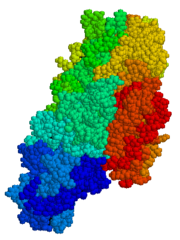
Prolamins and to a lesser degree glutelins are excellent substrates for deamidation
Deamidation
Deamidation is a chemical reaction in which an amide functional group is removed from an organic compound. In biochemistry, the reaction is important in the degradation of proteins because it damages the amide-containing side chains of the amino acids asparagine and glutamine.In the biochemical...
particularly by mammalian tissue transglutaminase
Tissue transglutaminase
Tissue transglutaminase is an enzyme of the transglutaminase family. Like other transglutaminases, it crosslinks proteins between an ε-amino group of a lysine residue and a γ-carboxamide group of glutamine residue, creating an inter- or intramolecular bond that is highly resistant to proteolysis...
s (tTG). Deamidation is a process in which the R-C0-NH2 portion of glutamines (or asparagine) is hydrolyzed to R-CO-OH forming glutamic acid or aspartic acid. In gliadin
Gliadin
Gliadin is a glycoprotein present in wheat and several other cereals within the grass genus Triticum. Gliadins are prolamins and are separated on the basis of electrophoretic mobility and isoelectric focusing.- Types :...
the -QQP-, -QVP-, -QLP-, -QYP- tripeptides in the context of favorable adjacent peptides are readily deamidated. Most proteins have few or no such transglutaminase sites; however alpha gliadin has 13 such sites. Human tissue transglutaminase not only deamidates gliadin, but it also crosslinks itself to gliadin, which has immunological consequences. Gliadin also has a small peptide that appears to alter the distribution of transglutaminase in the gut but is not crosslinked, the mechanism of its 'innate' behavior is not clear. tTG also crosslinks gliadin to other proteins via these sites, generating anti-food responses, anti-self protein responses, and self-crossreactive responses to food proteins that result in secondary autoimmunities.
The role of tTG in the extracellular matrix is to crosslink lysine side chains of proteins such as collagen
Collagen
Collagen is a group of naturally occurring proteins found in animals, especially in the flesh and connective tissues of mammals. It is the main component of connective tissue, and is the most abundant protein in mammals, making up about 25% to 35% of the whole-body protein content...
to proteins, however glutens appear to infiltrate into the small intestine, interfering with this process and resulting in a false immune recognition of the matrix and surrounding cells as foreign, leading, ultimately, to
the destruction of the intestinal mucousa. Seeds of certain plants may elicit the innate and cellular responses as a defensive response to overconsumption of seeds.
Proteolysis
While prolamins and glutelins are excellent deamidase and transaminase substrates the highly repetitive motifs, particularly polyproline/glutamine tracts, are often poor substrates for gastroentestinal endoproteases, such as those produced in the GI tract. One clear example is a 33-mer of α-2 gliadin. Another digestion resistant region is a 25-mer
which contains the innate peptide. The alpha gliadins, which bear these sites, specifically are poisonous to young rats when fed at concentrations higher than 1% and the addition of Mannosidase
Mannosidase
Mannosidase is an enzyme which hydrolyzes mannose.There are two types:* alpha-Mannosidase* beta-MannosidaseA deficiency is associated with mannosidosis....
inhibitors increases the sensitivity specifically to alpha gliadins. These properties of certain alpha-gliadins appear to have evolved to prevent long-term or dedicated consumption of certain wheat grasses by certain species.
This is one of the ironic properties of wheat, since a major advantage of wheat is the amount of protein in the wheat, however, some of this is wasted to the gut flora (or host immune system) since it cannot be broken down. One suggested remedy to this problem are new enzymes that help specifically break prolamins in the stomach. This may prevent the onset of wheat related disease in susceptible individuals, but no such screening is currently effective and once the clinical state is reached most individuals are so sensitive to wheat gliadins that, effectively, complete digestion in the stomach would be required.
Immunochemistry of Triticeae glutens
The immunochemistry of Triticeae is important in several autoimmune diseases (see section on Human Disease), and gluten sensitivityGluten sensitivity
Gluten sensitivity belongs to a spectrum of disorders in which gluten has an adverse effect on the body. It can be defined as a non-allergic and non-autoimmune condition in which the consumption of gluten can lead to symptoms similar to those observed in coeliac disease or wheat allergy .Gluten...
and gluten allergy in general. It can be subdivided into innate responses (direct stimulation of immune system), Class II mediated presentation (HLA DQ), Class I meditiated stimulation of killer cells, and Antibody recognition. The DQ restricted class II mediated presentation of gliadin to T-helper lymphocytes appears to be the primary process involved in Coeliac Disease
Coeliac disease
Coeliac disease , is an autoimmune disorder of the small intestine that occurs in genetically predisposed people of all ages from middle infancy onward...
.
Triticeae glutens and industry
Glutens are an essential part of the modern food industry. The industry of wheat goes back to before the NeolithicNeolithic
The Neolithic Age, Era, or Period, or New Stone Age, was a period in the development of human technology, beginning about 9500 BC in some parts of the Middle East, and later in other parts of the world. It is traditionally considered as the last part of the Stone Age...
period when people process grain berries (or corns) singley by hand. During the early phase of cultivation wheats were selected for their harvestability and growability under various climate conditions resulting in the first cultivars. This industry spread into many areas of western Eurasia during neolithization, carrying the more primitive cultivars. These grains were capable of being used for soups (speltiods) or tediously ground into simple flours and baked goods. During the second phase an Emmer wheat was produced that was an alloquadraploid species and this contained more gluten making baking more efficient this also spread during the neolithization but in places such cultivars were a minority.
One variant of emmer
Emmer
Emmer wheat , also known as farro especially in Italy, is a low yielding, awned wheat. It was one of the first crops domesticated in the Near East...
wheat is called durum
Durum
Durum wheat or macaroni wheat is the only tetraploid species of wheat of commercial importance that is widely cultivated today...
wheat and is the source of semolina
Semolina
Semolina is the coarse, purified wheat middlings of durum wheat used in making pasta, and also used for breakfast cereals and puddings. Semolina is also used to designate coarse middlings from other varieties of wheat, and from other grains such as rice and corn.-Name:The term semolina derives from...
flour, used in making pastas and other food pastes. Comparable varieties are found throughout Eurasia. Finally, emmers wheat was combined with a goat grass (Aegilops tauschii) to form allohexaploid bread wheat, which has a soft fine texture after rising and cooking. The industrial properties of this wheat are based in its glutens, glutens of high elasticity, high heat tolerance of other glutens or that change when subjected to heat to produce stronger polymers.
Comparing wheat gluten with corn (Zea) glutens
Corn is prepared for breading by boiling in water with alkali, resulting in a de-skinned material called nixtamalizedNixtamalization
Nixtamalization typically refers to a process for the preparation of maize , or other grain, in which the grain is soaked and cooked in an alkaline solution, usually limewater, and hulled. The term can also refer to the removal via an alkali process of the pericarp from other grains such as sorghum...
masa
Masa
Masa is Spanish for dough. In the Americas it is often short for masa de maíz, a maize dough made from freshly prepared hominy. It is used for making corn tortillas, tamales, pupusas, arepas and many other Latin American dishes. The dried and powdered form is called masa harina, masa de harina,...
. Masa can be used for industrial purposes (tortillas, tamales, chips), but it must be used quickly because its glutens change rapidly and binding decreases rapidly. Masa does not store well and chemicals are added to enhance preservation at the expense of quality. At its peak attempting to use masa as dough generally results in a crumbly flat bread, correctable by regrinding masa to a fine flour and adding gums (such as Xanthan Gum
Xanthan gum
Xanthan gum is a polysaccharide, derived from the bacterial coat of Xanthomonas campestris, used as a food additive and rheology modifier, commonly used as a food thickening agent and a stabilizer...
). In contrast the glutens in wheat have more adhesive properties that change when prepared in different ways. The glutenins, for example
stretch, but can also fix their shape at high temperatures, causing bread to maintain
its characteristic rise.
Important Triticeae Composites
When the flourFlour
Flour is a powder which is made by grinding cereal grains, other seeds or roots . It is the main ingredient of bread, which is a staple food for many cultures, making the availability of adequate supplies of flour a major economic and political issue at various times throughout history...
is combined with water and yeast
Yeast
Yeasts are eukaryotic micro-organisms classified in the kingdom Fungi, with 1,500 species currently described estimated to be only 1% of all fungal species. Most reproduce asexually by mitosis, and many do so by an asymmetric division process called budding...
the dough
Dough
Dough is a paste made out of any cereals or leguminous crops by mixing flour with a small amount of water and/or other liquid. This process is a precursor to making a wide variety of foodstuffs, particularly breads and bread-based items , flatbreads, noodles, pastry, and similar items)...
can be risen and subsequently fixed by heat resulting in a hard outer shell with a soft palatable interior. This makes bread amicable for both transport and preserves the bread for several days (in dry conditions). Barley can be sprouted for a short period and roasted, the resulting malt
Malt
Malt is germinated cereal grains that have been dried in a process known as "malting". The grains are made to germinate by soaking in water, and are then halted from germinating further by drying with hot air...
can be ground for food or combined with bread yeast (currently a brewers variety) to produce beer
Beer
Beer is the world's most widely consumed andprobably oldest alcoholic beverage; it is the third most popular drink overall, after water and tea. It is produced by the brewing and fermentation of sugars, mainly derived from malted cereal grains, most commonly malted barley and malted wheat...
and distilled spirits
Distilled beverage
A distilled beverage, liquor, or spirit is an alcoholic beverage containing ethanol that is produced by distilling ethanol produced by means of fermenting grain, fruit, or vegetables...
such as whiskey, vodka
Vodka
Vodka , is a distilled beverage. It is composed primarily of water and ethanol with traces of impurities and flavorings. Vodka is made by the distillation of fermented substances such as grains, potatoes, or sometimes fruits....
and sourdough
Sourdough
Sourdough is a dough containing a Lactobacillus culture, usually in symbiotic combination with yeasts. It is one of two principal means of biological leavening in bread baking, along with the use of cultivated forms of yeast . It is of particular importance in baking rye-based breads, where yeast...
malts. Adding mild acid to rye flour activates it for bread making (Sourdough breads used in northern Europe).

Durum
Durum wheat or macaroni wheat is the only tetraploid species of wheat of commercial importance that is widely cultivated today...
semolina
Semolina
Semolina is the coarse, purified wheat middlings of durum wheat used in making pasta, and also used for breakfast cereals and puddings. Semolina is also used to designate coarse middlings from other varieties of wheat, and from other grains such as rice and corn.-Name:The term semolina derives from...
flour can be used to make pastas, or without egg a pasta variant used to make Chinese dumplings. Wheat or semolina flour can be added other ingredients such as fish, meat or milk to create food pastes. Wheat can be further processed to a very fine flour and sifted, alternatively the glutens either can be extracted and readded to other products. While many seed glutens and food gums when combined with food starch, come close to creating the refined products of wheat flour and durum flour, no combination has yet come close to the qualities of these flours at a comparable price.
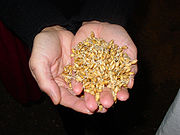
Malting
Some triticeae cultivars, like barley, have relatively low protein values. This makes them more acceptable for brewingBrewing
Brewing is the production of beer through steeping a starch source in water and then fermenting with yeast. Brewing has taken place since around the 6th millennium BCE, and archeological evidence suggests that this technique was used in ancient Egypt...
without wasting soil nutrients. Seed storage proteins in grass seeds (i.e., gluten in wheat) are designed to help the plant grow during its early life, and among the seed proteins are enzyme
Enzyme
Enzymes are proteins that catalyze chemical reactions. In enzymatic reactions, the molecules at the beginning of the process, called substrates, are converted into different molecules, called products. Almost all chemical reactions in a biological cell need enzymes in order to occur at rates...
s that convert starch
Starch
Starch or amylum is a carbohydrate consisting of a large number of glucose units joined together by glycosidic bonds. This polysaccharide is produced by all green plants as an energy store...
to sugar.

Endosperm
Endosperm is the tissue produced inside the seeds of most flowering plants around the time of fertilization. It surrounds the embryo and provides nutrition in the form of starch, though it can also contain oils and protein. This makes endosperm an important source of nutrition in human diet...
is converted to sugar
Sugar
Sugar is a class of edible crystalline carbohydrates, mainly sucrose, lactose, and fructose, characterized by a sweet flavor.Sucrose in its refined form primarily comes from sugar cane and sugar beet...
s. Later the prolamins are broken down to provide the young seeds with a source of nitrogen and energy giving the Triticeae seedling a great boost during early life.
Once the starch
Starch
Starch or amylum is a carbohydrate consisting of a large number of glucose units joined together by glycosidic bonds. This polysaccharide is produced by all green plants as an energy store...
is converted to sugar
Sugar
Sugar is a class of edible crystalline carbohydrates, mainly sucrose, lactose, and fructose, characterized by a sweet flavor.Sucrose in its refined form primarily comes from sugar cane and sugar beet...
it can be readily fermented by Saccharomyces cerevisiae. However, first the sprouting process should be stopped. In order to do this, the partially sprouted grains are placed in a roasting oven and roasted until the sprouts are sterilized and dried. This process of sprouting and drying is called malting. Then the roasted sprouts are ground, rehydrated and fermented. This produces a crude beer
Beer
Beer is the world's most widely consumed andprobably oldest alcoholic beverage; it is the third most popular drink overall, after water and tea. It is produced by the brewing and fermentation of sugars, mainly derived from malted cereal grains, most commonly malted barley and malted wheat...
. Evidence for beer industry has been found in ancient Egypt
Egypt
Egypt , officially the Arab Republic of Egypt, Arabic: , is a country mainly in North Africa, with the Sinai Peninsula forming a land bridge in Southwest Asia. Egypt is thus a transcontinental country, and a major power in Africa, the Mediterranean Basin, the Middle East and the Muslim world...
, and some archaeologists believe that neolithization of Northern Europe may have been preferential for barley
Barley
Barley is a major cereal grain, a member of the grass family. It serves as a major animal fodder, as a base malt for beer and certain distilled beverages, and as a component of various health foods...
as a result of its preferential capacity for fermentation
Fermentation (food)
Fermentation in food processing typically is the conversion of carbohydrates to alcohols and carbon dioxide or organic acids using yeasts, bacteria, or a combination thereof, under anaerobic conditions. Fermentation in simple terms is the chemical conversion of sugars into ethanol...
.
Gluten Deamidation
The deamidation potential for wheats is discussed above. Glutens are generated by the wheat starch industry. Glutens however are more difficult to handle once starch and other proteins are removed, for example alcohol soluble glutens cannot be mixed with dairy since the alcohol denatures and precipitates dairy proteins. Therefore, gluten is often modified for commercial use by deamidation by treatment with acid at high temperatures, or enzymatic treatment with deamidase or transglutaminases. The increased charge increases the hydrophilicity of gliadins causing them to stretch out in solution. Deamidation of 20% of glutamine side chains to glutamate suffices to generate a soluble product. This renders gluten soluble enough without alcohol to mix with other products like milk.Gluten sensitivity reveals unexpected infiltration of Triticeae into Foods
Wheat and barley glutens have crept into a number of foods that are unexpectedbased on the names, such as soy sauces, vinegar, chips. Oats are contaminated
with wheat, and in most brands greatly contaminated.
Examples of hidden wheat in foods
Added wheat, barley or rye:
- Soy Sauce- may actually have more wheat than soy
- Modified food starch - made from wheat (from Triticum aestivum Linnaeus), may not be pure
- Drug manufacturing - modified food starch, in off the shelf products in coating materials. As a source of vitamins.
- Vinegar - may be made from barley.
- Beer, wine coolerWine coolerA wine cooler is an alcoholic beverage made from wine and fruit juice, often in combination with a carbonated beverage and sugar.Traditionally home-made, wine coolers have been bottled and sold by commercial distributors since the early 1980s, especially in areas where their lower alcohol content...
s - although beer is made from barley. - Tea - barley tea and other herbals may have barley added.
Wheat gluten added:
- School pastes
- Binding agent in food pastes and pastas
- ketchupKetchupKetchup is a sweet-and-tangy condiment typically made from tomatoes, vinegar, sugar or high-fructose corn syrup and an assortment of...
- fish sausages
- buckwheat 'soba' noodles
- ketchup
- adhesion agent for
- flavored chips (corn, potato, etc.)
- ice-cream
- unflavored foods made on same processing equipment as above
Inadvertent contamination:
- Oats - contaminanted by introgression from similar appearing wheat
- In fields - wild seeded Triticeae
- In storage equipment - such as Silos
- In transportation equipment - trucks, tractors, etc.
- Corn, milletMilletThe millets are a group of small-seeded species of cereal crops or grains, widely grown around the world for food and fodder. They do not form a taxonomic group, but rather a functional or agronomic one. Their essential similarities are that they are small-seeded grasses grown in difficult...
, other cereals processed in facilities with wheat- milling equipment
- handler error
Triticeae and human disease
Gluten-sensitive enteropathy/coeliac diseaseCoeliac disease
Coeliac disease , is an autoimmune disorder of the small intestine that occurs in genetically predisposed people of all ages from middle infancy onward...
can be mediated by gluten from all known edible cultivars of Triticeae.