


Scirii

Encyclopedia
East Germanic tribes
The Germanic tribes referred to as East Germanic constitute a wave of migrants who may have moved from Scandinavia into the area between the Oder and Vistula rivers between the years 600 and 300 BC. Later they went to the south...
of Eastern Europe, attested in historical works between the 2nd century BC and 5th century AD.
The etymology of their name is unclear. Attempts that are based on Germanic yielded clean- or pure-bloods as opposed to the neighbouring tribe of Bastarnae
Bastarnae
The Bastarnae or Basternae were an ancient Germanic tribe,, who between 200 BC and 300 AD inhabited the region between the eastern Carpathian mountains and the Dnieper river...
mixed-bloods (cf. bastard) Other authors suggest a link with the term Shire
Shire
A shire is a traditional term for a division of land, found in the United Kingdom and in Australia. In parts of Australia, a shire is an administrative unit, but it is not synonymous with "county" there, which is a land registration unit. Individually, or as a suffix in Scotland and in the far...
.
The Scirii are believed to have first lived within the territory of modern Poland. They migrated southwards apparently around 200 BC (some secondary works give a more precise date of 230 BC), along with the Bastarnae
Bastarnae
The Bastarnae or Basternae were an ancient Germanic tribe,, who between 200 BC and 300 AD inhabited the region between the eastern Carpathian mountains and the Dnieper river...
. The Protogenes
Protogenes
Protogenes was an ancient Greek painter, a contemporary rival of Apelles. As with the other famous ancient Greek painters, none of his work has survived, and it is known only from literary references and descriptions....
Inscription (3rd century BC) mention the Sciri, when they tried unsuccessfully to capture the Greek city Olbia, northwest of the Black Sea
Black Sea
The Black Sea is bounded by Europe, Anatolia and the Caucasus and is ultimately connected to the Atlantic Ocean via the Mediterranean and the Aegean seas and various straits. The Bosphorus strait connects it to the Sea of Marmara, and the strait of the Dardanelles connects that sea to the Aegean...
. After a peace treaty with the Roman Empire
Roman Empire
The Roman Empire was the post-Republican period of the ancient Roman civilization, characterised by an autocratic form of government and large territorial holdings in Europe and around the Mediterranean....
they are recorded as living east of the Bastarnae
Bastarnae
The Bastarnae or Basternae were an ancient Germanic tribe,, who between 200 BC and 300 AD inhabited the region between the eastern Carpathian mountains and the Dnieper river...
, near the Black Sea.
For the next six centuries historical references to the Scirii are sporadic, but sufficient to suggest continuity.
In the 4th century AD, some of the Scirii lived in the Carpathians
Carpathian Mountains
The Carpathian Mountains or Carpathians are a range of mountains forming an arc roughly long across Central and Eastern Europe, making them the second-longest mountain range in Europe...
, where they were defeated by the Huns
Huns
The Huns were a group of nomadic people who, appearing from east of the Volga River, migrated into Europe c. AD 370 and established the vast Hunnic Empire there. Since de Guignes linked them with the Xiongnu, who had been northern neighbours of China 300 years prior to the emergence of the Huns,...
. During the height of the Hunnic empire under the Huns' leader Attila, the Scirians allied themselves with Attila and provided potent infantry for him. After the Hunnic empire disintegrated, part of the Scirii joined the Western and Eastern Goths, while others became foederati
Foederati
Foederatus is a Latin term whose definition and usage drifted in the time between the early Roman Republic and the end of the Western Roman Empire...
in the Roman empire. Odoacer
Odoacer
Flavius Odoacer , also known as Flavius Odovacer, was the first King of Italy. His reign is commonly seen as marking the end of the Western Roman Empire. Though the real power in Italy was in his hands, he represented himself as the client of Julius Nepos and, after Nepos' death in 480, of the...
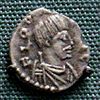
, the first "king of Italy", was half-Scirian.
See also
- List of Germanic tribes
- East Germanic tribesEast Germanic tribesThe Germanic tribes referred to as East Germanic constitute a wave of migrants who may have moved from Scandinavia into the area between the Oder and Vistula rivers between the years 600 and 300 BC. Later they went to the south...
- BastarnaeBastarnaeThe Bastarnae or Basternae were an ancient Germanic tribe,, who between 200 BC and 300 AD inhabited the region between the eastern Carpathian mountains and the Dnieper river...
- Barbarian invasions