

Satoyama

Encyclopedia
Japanese language
is a language spoken by over 130 million people in Japan and in Japanese emigrant communities. It is a member of the Japonic language family, which has a number of proposed relationships with other languages, none of which has gained wide acceptance among historical linguists .Japanese is an...
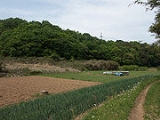
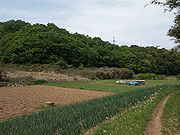
term applied to the border zone or area between mountain foothills and arable flat land. Literally, sato means arable
Arable land
In geography and agriculture, arable land is land that can be used for growing crops. It includes all land under temporary crops , temporary meadows for mowing or pasture, land under market and kitchen gardens and land temporarily fallow...
and livable land or home land, and yama means mountain. Satoyama, which have been developed through centuries of small scale agricultural and forestry use, also promise biodiversity
Biodiversity
Biodiversity is the degree of variation of life forms within a given ecosystem, biome, or an entire planet. Biodiversity is a measure of the health of ecosystems. Biodiversity is in part a function of climate. In terrestrial habitats, tropical regions are typically rich whereas polar regions...
if properly maintained by human activities.
The concept of satoyama has several definitions. The first definition is the management of forests through local agricultural communities. During the Edo
Edo
, also romanized as Yedo or Yeddo, is the former name of the Japanese capital Tokyo, and was the seat of power for the Tokugawa shogunate which ruled Japan from 1603 to 1868...
era, young and fallen leaves were gathered from community forests to use as fertilizer
Fertilizer
Fertilizer is any organic or inorganic material of natural or synthetic origin that is added to a soil to supply one or more plant nutrients essential to the growth of plants. A recent assessment found that about 40 to 60% of crop yields are attributable to commercial fertilizer use...
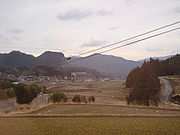
in wet rice paddy fields. Villagers also used wood for construction, cooking and heating. More recently, satoyama has been defined not only as mixed community forests, but also as entire landscapes that are used for agriculture. According to this definition, satoyama contains a mosaic of mixed forests, rice paddy fields
Paddy field
A paddy field is a flooded parcel of arable land used for growing rice and other semiaquatic crops. Paddy fields are a typical feature of rice farming in east, south and southeast Asia. Paddies can be built into steep hillsides as terraces and adjacent to depressed or steeply sloped features such...
, dry rice fields, grasslands, streams, ponds, and reservoirs for irrigation. Farmers use the grasslands to feed horses and cattle. Streams, ponds, and reservoirs play an important role in adjusting water levels of paddy fields and farming fish as a food source.
Human population, ownership, landuse
Shifting cultivation
Shifting cultivation is an agricultural system in which plots of land are cultivated temporarily, then abandoned. This system often involves clearing of a piece of land followed by several years of wood harvesting or farming, until the soil loses fertility...
, grasslands, thatch fields, Secondary forest
Secondary forest
A secondary forest is a forest or woodland area which has re-grown after a major disturbance such as fire, insect infestation, timber harvest or windthrow, until a long enough period has passed so that the effects of the disturbance are no longer evident...
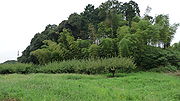
s for fuel, and giant bamboo
Bamboo
Bamboo is a group of perennial evergreens in the true grass family Poaceae, subfamily Bambusoideae, tribe Bambuseae. Giant bamboos are the largest members of the grass family....
forests.
Biodiversity
Dragonfly
A dragonfly is a winged insect belonging to the order Odonata, the suborder Epiprocta or, in the strict sense, the infraorder Anisoptera . It is characterized by large multifaceted eyes, two pairs of strong transparent wings, and an elongated body...
, and fireflies
Firefly
Lampyridae is a family of insects in the beetle order Coleoptera. They are winged beetles, and commonly called fireflies or lightning bugs for their conspicuous crepuscular use of bioluminescence to attract mates or prey. Fireflies produce a "cold light", with no infrared or ultraviolet frequencies...
. In the early stages of their life cycle, they spend most of their time in water. Through maintaining a mixture of successional stages by the agricultural activities and the management of satoyama, the preservation and promotion of biodiversity are facilitated. For instance, the deciduous oaks Quercus acutissima and Quercus serrata are planted by farmers to maintain deciduous broad-leaf trees. Succession to dense and dark laurel forest is prevented by farmers that cut down these trees for firewood and charcoal every 15 to 20 years. Most plant and animal species are able to live in these deciduous forests because of traditional management practices. Therefore, much more wildlife can be supported by well managed forests than dark unmanaged laurel forests.
Causalities of the disappearance
Intermediate Disturbance Hypothesis
The Intermediate Disturbance Hypothesis states that local species diversity is maximized when ecological disturbance is neither too rare nor too frequent. At low levels of disturbance, more competitive organisms will push subordinate species to extinction and dominate the ecosystem...
on forests such as harvesting trees for timber
Timber
Timber may refer to:* Timber, a term common in the United Kingdom and Australia for wood materials * Timber, Oregon, an unincorporated community in the U.S...
and charcoal
Charcoal
Charcoal is the dark grey residue consisting of carbon, and any remaining ash, obtained by removing water and other volatile constituents from animal and vegetation substances. Charcoal is usually produced by slow pyrolysis, the heating of wood or other substances in the absence of oxygen...
, cutting shrubs for firewood
Firewood
Firewood is any wood-like material that is gathered and used for fuel. Generally, firewood is not highly processed and is in some sort of recognizable log or branch form....
and collecting litter
Litter
Litter consists of waste products such as containers, papers, wrappers or faeces which have been disposed of without consent. Litter can also be used as a verb...
as compost
Compost
Compost is organic matter that has been decomposed and recycled as a fertilizer and soil amendment. Compost is a key ingredient in organic farming. At its most essential, the process of composting requires simply piling up waste outdoors and waiting for the materials to break down from anywhere...
. These human impacts can help the success of the forest occur. As the final causality of the disappearing of satoyama, pine dominated secondary forests in satoyama were increasingly destroyed since pine wilt disease devastated pine forests in the 1970s.
Conservation
Throughout the 80s and 90s, the satoyama conservation movement was implemented in Japan because people realized that satoyama were needed to maintain healthy ecosystems. Currently, there are more than 500 environmental groups that work for the conservation of satoyama. The main challenge for satoyama conservation today is that depopulation in satoyama has prevented the harvest of old growth treesOld growth forest
An old-growth forest is a forest that has attained great age , and thereby exhibits unique ecological features. An old growth forest has also usually reached a climax community...
which can support less biodiversity in satoyama than secondary growth forests
Secondary forest
A secondary forest is a forest or woodland area which has re-grown after a major disturbance such as fire, insect infestation, timber harvest or windthrow, until a long enough period has passed so that the effects of the disturbance are no longer evident...
. To deal with this problem, volunteers from the groups monitor satoyama to determine when to harvest trees appropriately. They also educate young people to teach how satoyama is important historically and ecologically and how the conservation of satoyama should be managed. Because of their efforts, satoyama has become more prevalent in Japanese landscapes.
See also
- Beneficial insectsBeneficial insectsBeneficial insects are any of a number of species of insects that perform valued services like pollination and pest control. The concept of beneficial is subjective and only arises in light of desired outcomes from a human perspective...
- Biodiversity bankingBiodiversity bankingBiodiversity banking, also known as biodiversity trading, biodiversity offsets or conservation banking is a process by which biodiversity loss can be reduced by creating a framework which allows biodiversity to be reliably measured, and market based solutions applied to improving biodiversity...
- Companion plantingCompanion plantingCompanion planting is the planting of different crops in proximity , on the theory that they assist each other in nutrient uptake, pest control, pollination, and other factors necessary to increasing crop productivity...
- Convention on Biological DiversityConvention on Biological DiversityThe Convention on Biological Diversity , known informally as the Biodiversity Convention, is an international legally binding treaty...
- DeforestationDeforestationDeforestation is the removal of a forest or stand of trees where the land is thereafter converted to a nonforest use. Examples of deforestation include conversion of forestland to farms, ranches, or urban use....
- InsectInsectInsects are a class of living creatures within the arthropods that have a chitinous exoskeleton, a three-part body , three pairs of jointed legs, compound eyes, and two antennae...
—Relationship to humans - Land use, land-use change and forestryLand Use, Land-Use Change and ForestryLand use, land-use change and forestry is defined by the United Nations Climate Change Secretariat as "A greenhouse gas inventory sector that covers emissions and removals of greenhouse gases resulting from direct human-induced land use, land-use change and forestry activities."LULUCF has impacts...
- Laurel forestLaurel forestLaurel forest is a subtropical or mild temperate forest, found in areas with high humidity and relatively stable and mild temperatures. They are characterized by tree species with evergreen, glossy, enlongated leaves, known as laurophyll or lauroide...
- Masanobu FukuokaMasanobu Fukuokawas a Japanese farmer and philosopher celebrated for his natural farming and re-vegetation of desertified lands. He was a proponent of no-till, no-herbicide grain cultivation farming methods traditional to many indigenous cultures, from which he created a particular method of farming, commonly...
- Paddy fieldPaddy fieldA paddy field is a flooded parcel of arable land used for growing rice and other semiaquatic crops. Paddy fields are a typical feature of rice farming in east, south and southeast Asia. Paddies can be built into steep hillsides as terraces and adjacent to depressed or steeply sloped features such...
- Temperate deciduous forestTemperate deciduous forestA temperate deciduous forest, more precisely termed temperate broadleaf forest or temperate broadleaved forest, is a biome found in North America, southern South America, Europe, and Asia. A temperate deciduous forest consists of trees that lose their leaves every year...
- Terrace (agriculture)Terrace (agriculture)Terraces are used in farming to cultivate sloped land. Graduated terrace steps are commonly used to farm on hilly or mountainous terrain. Terraced fields decrease erosion and surface runoff, and are effective for growing crops requiring much water, such as rice...
- VerminVerminVermin is a term applied to various animal species regarded by some as pests or nuisances and especially to those associated with the carrying of disease. Since the term is defined in relation to human activities, which species are included will vary from area to area and even person to person...
Further reading
- Takeuchi, K. & Brown, R.D. & Washitani, I. & Tsunekawa, A. & Yokohari, M., 2008. Satoyama: The Traditional Rural Landscape of Japan Second Edition, Springer. ISBN 4-431-00007-0, ISBN 978-4431000075. A comprehensive commentary book of Satoyama, including the conservation.
External links
- Satoyama Initiative Official Portal Site, Ministry of the Environment of Japan, the United Nations University Institute of Advanced Studies
- Participatory Conservation Approaches for Satoyama, the Traditional Forest and Agricultural Landscape of Japan, AMBIO: A Journal of the Human Environment; The Royal Swedish Academy of SciencesRoyal Swedish Academy of SciencesThe Royal Swedish Academy of Sciences or Kungliga Vetenskapsakademien is one of the Royal Academies of Sweden. The Academy is an independent, non-governmental scientific organization which acts to promote the sciences, primarily the natural sciences and mathematics.The Academy was founded on 2...
- SATOYAMA Gallery Pictures of satoyama
- NOVA online: Japan's Secret Garden, Public Broadcasting ServicePublic Broadcasting ServiceThe Public Broadcasting Service is an American non-profit public broadcasting television network with 354 member TV stations in the United States which hold collective ownership. Its headquarters is in Arlington, Virginia....
- Human Well–Being and the Restoration of Satoyama, United Nations UniversityUnited Nations UniversityThe United Nations University is an academic arm of the United Nations established in 1973, which serves purposes and principles of the Charter of the United Nations. The UNU undertakes research into the pressing global problems of human survival, development and welfare that are the concern of...
- Wildlife in satoyama; The Village Forest Environmental Biology Laboratory (里山と雑木林の生きものたち;里山環境生物学研究所)(In Japanese)
- In the Pines A blog offering an anthropological perspective of satoyama life in Nagano, Japan
- Satoyama in the world through NHKNHKNHK is Japan's national public broadcasting organization. NHK, which has always identified itself to its audiences by the English pronunciation of its initials, is a publicly owned corporation funded by viewers' payments of a television license fee....
web site (In Japanese with photo gallery)- 世界里山紀行、フィンランド 森・妖精との対話;(World satoyama travelTravelTravel is the movement of people or objects between relatively distant geographical locations. 'Travel' can also include relatively short stays between successive movements.-Etymology:...
in FinlandFinlandFinland , officially the Republic of Finland, is a Nordic country situated in the Fennoscandian region of Northern Europe. It is bordered by Sweden in the west, Norway in the north and Russia in the east, while Estonia lies to its south across the Gulf of Finland.Around 5.4 million people reside...
, Literally; Forest - Dialog with fairy), NHKNHKNHK is Japan's national public broadcasting organization. NHK, which has always identified itself to its audiences by the English pronunciation of its initials, is a publicly owned corporation funded by viewers' payments of a television license fee.... - 世界里山紀行、ポーランド 水辺に響きあういのち;(World satoyama travelTravelTravel is the movement of people or objects between relatively distant geographical locations. 'Travel' can also include relatively short stays between successive movements.-Etymology:...
in PolandPolandPoland , officially the Republic of Poland , is a country in Central Europe bordered by Germany to the west; the Czech Republic and Slovakia to the south; Ukraine, Belarus and Lithuania to the east; and the Baltic Sea and Kaliningrad Oblast, a Russian exclave, to the north...
, Literally; The lives echoing around waterside), NHKNHKNHK is Japan's national public broadcasting organization. NHK, which has always identified itself to its audiences by the English pronunciation of its initials, is a publicly owned corporation funded by viewers' payments of a television license fee.... - 世界里山紀行、中国・雲南、竹とともに生きる;(World satoyama travelTravelTravel is the movement of people or objects between relatively distant geographical locations. 'Travel' can also include relatively short stays between successive movements.-Etymology:...
in YunnanYunnanYunnan is a province of the People's Republic of China, located in the far southwest of the country spanning approximately and with a population of 45.7 million . The capital of the province is Kunming. The province borders Burma, Laos, and Vietnam.Yunnan is situated in a mountainous area, with...
, ChinaChinaChinese civilization may refer to:* China for more general discussion of the country.* Chinese culture* Greater China, the transnational community of ethnic Chinese.* History of China* Sinosphere, the area historically affected by Chinese culture...
, Literally; SymbioticSymbiosisSymbiosis is close and often long-term interaction between different biological species. In 1877 Bennett used the word symbiosis to describe the mutualistic relationship in lichens...
human life with bamboo), NHKNHKNHK is Japan's national public broadcasting organization. NHK, which has always identified itself to its audiences by the English pronunciation of its initials, is a publicly owned corporation funded by viewers' payments of a television license fee....
- 世界里山紀行、フィンランド 森・妖精との対話;(World satoyama travel
- Satoyama videos produced by the United Nations UniversityUnited Nations UniversityThe United Nations University is an academic arm of the United Nations established in 1973, which serves purposes and principles of the Charter of the United Nations. The UNU undertakes research into the pressing global problems of human survival, development and welfare that are the concern of...
(on YouTube)- Harvest time in Satoyama and associated article on Our World 2.0Our World 2.0Our World 2.0 is an online magazine created by the United Nations University Media Centre, located in Tokyo, Japan and was launched in July 2008 in time for the 34th G8 summit...
Harvet time in Satoyama - Life in a vibrant satoyama forest and associated article on Our World 2.0Our World 2.0Our World 2.0 is an online magazine created by the United Nations University Media Centre, located in Tokyo, Japan and was launched in July 2008 in time for the 34th G8 summit...
Greetings from Satoyama
- Harvest time in Satoyama and associated article on Our World 2.0