

Prolapse

Encyclopedia
Prolapse literally means "to fall out of place", from the Latin
prolabi meaning "to fall out". In medicine
, prolapse is a condition where organs, such as the uterus
, fall down or slip out of place. It is used for organs protruding through the vagina
or the rectum
or for the misalignment of the valves of the heart
. A spinal disc herniation
is also sometimes called "disc prolapse".
Relating to the uterus, prolapse condition results in an inferior extension of the organ into the vagina, causing weakened muscles.
s in humans is mitral valve prolapse
(MVP), which is a valvular heart disease
characterized by the displacement of an abnormally thickened mitral valve leaflet into the left atrium during systole.
Tricuspid valve prolapse can cause tricuspid regurgitation.
is a condition in which part of the wall or the entire wall of the rectum falls out of place. In some cases, the rectum may protrude.
Symptoms of a rectal prolapse may be:
A surgeon may operate through the abdomen to secure part of the large intestine or rectum to the inside the abdominal cavity (rectopexy). Sometimes the surgeon removes the affected part of the intestine.
Surgery also can be done through the perineum (the area between the genitals and the anus) to remove the prolapsing tissue.
Surgery is most often successful for people who still have some control over their bowel movements. If the anal sphincter is damaged, surgery may correct the prolapse but not be able to completely correct fecal incontinence (lack of control of bowel movements). Fecal incontinence can both potentially improve or worsen after prolapse surgery.
If the lining has fallen out of the anus and is around 7 cm or less, it should eventually retract back inside naturally, though the retraction can take up to 96 hours (4 days).
by hysteropexy, the re-suspension of the prolapsed uterus. Traditional gynecologic practice favors removal of the uterus and/or ovaries at the time of prolapse surgery, and one estimate states that of the 600,000 hysterectomies done in the United States every year, 13% are done for prolapse. However, there is concern that many of these hysterectomies may be unnecessary and that hysteropexy would suffice as a treatment instead.
The rectum or urinary bladder may also prolapse as a result of changes in the integrity of connective tissue in the posterior or anterior vaginal walls, respectively. Symptoms may include a feeling of pressure in the pelvis, or the visible protrusion of organs from the vagina. Prolapse is almost never painful, but the change in position of organs may cause urinary or bowel symptoms.
 Oviduct
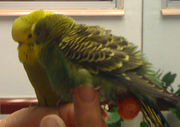
prolapse is an often fatal condition in birds. When an egg is laid, the vagina everts through the cloaca to deliver the egg. Large eggs and avian obesity are contributors to this condition. Immediate veterinary assistance is paramount to the survival of a bird with prolapse. Even with immediate medical intervention the chances for survival are usually uncertain. Untreated birds will begin to tear at the injury site, and other flockmates will begin to cannibalize the prolapse area, a behaviour commonly known as pickout.
prolapse in cattle, particularly dairy cattle, generally occurs in the first 12 hours post-calving. Frequent causes are hypocalcemia combined with irritation of the birth canal, causing straining. Replacement of the protrusion, which can range from the size of a softball to the hanging of the entire uterus down below the hocks, is performed with the cow in sternal recumbency, an epidural
injection, and hindlimbs 'frogged' rearwards to allow the pelvis to tip forward, easing replacement. Careful washing and cleaning prior to replacement is important as is ensuring that the horns are completely everted once inside the cow. Often a Buhner suture is placed in the vulva to prevent subsequent re-prolapse.
.
and mule
would be better termed anal prolapse, as it only involves mucous membrane moving posteriorly to form a circular protrusion outside the anus The condition is not painful.
In mare
s after parturition, it is described as a 10 to 60 mm mucous protrusion.
In young mules and foals, anal prolapse occurs with a frequency similar to that of Gasterophilus haemorrhoidalis
. In extensive breeding conditions, the disease is only recognized after some days, leading to intense edema
of prolapsed tissues and necrosis
of the mucous membrane.
Early cases in should be treated with the application of hygroscopic substances like powdered sugar
followed by purse-string suturing. When prolapsed tissues are edematous and necrotic, amputation is performed. The prognosis is fair as the removed tissues do not contain any important organs or large blood vessels.
Latin
Latin is an Italic language originally spoken in Latium and Ancient Rome. It, along with most European languages, is a descendant of the ancient Proto-Indo-European language. Although it is considered a dead language, a number of scholars and members of the Christian clergy speak it fluently, and...
prolabi meaning "to fall out". In medicine
Medicine
Medicine is the science and art of healing. It encompasses a variety of health care practices evolved to maintain and restore health by the prevention and treatment of illness....
, prolapse is a condition where organs, such as the uterus
Uterus
The uterus or womb is a major female hormone-responsive reproductive sex organ of most mammals including humans. One end, the cervix, opens into the vagina, while the other is connected to one or both fallopian tubes, depending on the species...
, fall down or slip out of place. It is used for organs protruding through the vagina
Vagina
The vagina is a fibromuscular tubular tract leading from the uterus to the exterior of the body in female placental mammals and marsupials, or to the cloaca in female birds, monotremes, and some reptiles. Female insects and other invertebrates also have a vagina, which is the terminal part of the...
or the rectum
Rectum
The rectum is the final straight portion of the large intestine in some mammals, and the gut in others, terminating in the anus. The human rectum is about 12 cm long...
or for the misalignment of the valves of the heart
Heart
The heart is a myogenic muscular organ found in all animals with a circulatory system , that is responsible for pumping blood throughout the blood vessels by repeated, rhythmic contractions...
. A spinal disc herniation
Spinal disc herniation
A spinal disc herniation , informally and misleadingly called a "slipped disc", is a medical condition affecting the spine due to trauma, lifting injuries, or idiopathic, in which a tear in the outer, fibrous ring of an intervertebral disc allows the soft, central portion A spinal disc herniation...
is also sometimes called "disc prolapse".
Relating to the uterus, prolapse condition results in an inferior extension of the organ into the vagina, causing weakened muscles.
Heart valve prolapse
The main type of prolapse of heart valveHeart valve
A heart valve normally allows blood flow in only one direction through the heart. The four valves commonly represented in a mammalian heart determine the pathway of blood flow through the heart...
s in humans is mitral valve prolapse
Mitral valve prolapse
Mitral valve prolapse is a valvular heart disease characterized by the displacement of an abnormally thickened mitral valve leaflet into the left atrium during systole. There are various types of MVP, broadly classified as classic and nonclassic. In its nonclassic form, MVP carries a low risk of...
(MVP), which is a valvular heart disease
Valvular heart disease
Valvular heart disease is any disease process involving one or more of the valves of the heart . Valve problems may be congenital or acquired...
characterized by the displacement of an abnormally thickened mitral valve leaflet into the left atrium during systole.
Tricuspid valve prolapse can cause tricuspid regurgitation.
Rectal prolapse
Rectal prolapseRectal prolapse
Rectal prolapse normally describes a medical condition wherein the walls of the rectum protrude through the anus and hence become visible outside the body.-Types:There are three chief conditions which come under the title rectal prolapse:...
is a condition in which part of the wall or the entire wall of the rectum falls out of place. In some cases, the rectum may protrude.
Symptoms of a rectal prolapse may be:
- Leakage of stool
- Bleeding, anal pain, itching, irritation
- Tissue that protrudes from the rectum
A surgeon may operate through the abdomen to secure part of the large intestine or rectum to the inside the abdominal cavity (rectopexy). Sometimes the surgeon removes the affected part of the intestine.
Surgery also can be done through the perineum (the area between the genitals and the anus) to remove the prolapsing tissue.
Surgery is most often successful for people who still have some control over their bowel movements. If the anal sphincter is damaged, surgery may correct the prolapse but not be able to completely correct fecal incontinence (lack of control of bowel movements). Fecal incontinence can both potentially improve or worsen after prolapse surgery.
If the lining has fallen out of the anus and is around 7 cm or less, it should eventually retract back inside naturally, though the retraction can take up to 96 hours (4 days).
Female genital prolapse
Uterine prolapse (or Pelvic organ prolapse) occurs when the female pelvic organs fall from their normal position, into or through the vagina. Occurring in women of all ages, it is more common as women age, particularly in those who have delivered large babies or had exceedingly long pushing phases of labor. Smoking, obesity, connective tissue disorders, upper respiratory disorders and repetitive strain injuries can all increase prolapse risk. Minor prolapse can be treated with exercises to strengthen the pelvic floor muscles; more serious prolapse, e.g. complete procidentia, requires pessary use or reconstructive surgical treatment. Reconstructive pelvic prolapse surgery may be done without resorting to complete hysterectomyHysterectomy
A hysterectomy is the surgical removal of the uterus, usually performed by a gynecologist. Hysterectomy may be total or partial...
by hysteropexy, the re-suspension of the prolapsed uterus. Traditional gynecologic practice favors removal of the uterus and/or ovaries at the time of prolapse surgery, and one estimate states that of the 600,000 hysterectomies done in the United States every year, 13% are done for prolapse. However, there is concern that many of these hysterectomies may be unnecessary and that hysteropexy would suffice as a treatment instead.
The rectum or urinary bladder may also prolapse as a result of changes in the integrity of connective tissue in the posterior or anterior vaginal walls, respectively. Symptoms may include a feeling of pressure in the pelvis, or the visible protrusion of organs from the vagina. Prolapse is almost never painful, but the change in position of organs may cause urinary or bowel symptoms.
In birds
Oviduct
In non-mammalian vertebrates, the passageway from the ovaries to the outside of the body is known as the oviduct. The eggs travel along the oviduct. These eggs will either be fertilized by sperm to become a zygote, or will degenerate in the body...
prolapse is an often fatal condition in birds. When an egg is laid, the vagina everts through the cloaca to deliver the egg. Large eggs and avian obesity are contributors to this condition. Immediate veterinary assistance is paramount to the survival of a bird with prolapse. Even with immediate medical intervention the chances for survival are usually uncertain. Untreated birds will begin to tear at the injury site, and other flockmates will begin to cannibalize the prolapse area, a behaviour commonly known as pickout.
In cattle
UterineUterine
The word uterine can refer to different meanings:* relating to or near the uterus or womb* having the same mother, but different fathers, see matrilineality...
prolapse in cattle, particularly dairy cattle, generally occurs in the first 12 hours post-calving. Frequent causes are hypocalcemia combined with irritation of the birth canal, causing straining. Replacement of the protrusion, which can range from the size of a softball to the hanging of the entire uterus down below the hocks, is performed with the cow in sternal recumbency, an epidural
Epidural
The term epidural is often short for epidural analgesia, a form of regional analgesia involving injection of drugs through a catheter placed into the epidural space...
injection, and hindlimbs 'frogged' rearwards to allow the pelvis to tip forward, easing replacement. Careful washing and cleaning prior to replacement is important as is ensuring that the horns are completely everted once inside the cow. Often a Buhner suture is placed in the vulva to prevent subsequent re-prolapse.
In pigs
Rectal prolapse is a condition routinely identified in pigs on farms and at slaughterhouses. If not reduced quickly, prolapses in pigs become necrotic and infected, and risk being cannibalized by other pen mates. If the latter happens it normally results in death of the animal by septicemia, shock or faecal peritonitisPeritonitis
Peritonitis is an inflammation of the peritoneum, the serous membrane that lines part of the abdominal cavity and viscera. Peritonitis may be localised or generalised, and may result from infection or from a non-infectious process.-Abdominal pain and tenderness:The main manifestations of...
.
In horses and mules
Rectal prolapse occurring in horseHorse
The horse is one of two extant subspecies of Equus ferus, or the wild horse. It is a single-hooved mammal belonging to the taxonomic family Equidae. The horse has evolved over the past 45 to 55 million years from a small multi-toed creature into the large, single-toed animal of today...
and mule
Mule
A mule is the offspring of a male donkey and a female horse. Horses and donkeys are different species, with different numbers of chromosomes. Of the two F1 hybrids between these two species, a mule is easier to obtain than a hinny...
would be better termed anal prolapse, as it only involves mucous membrane moving posteriorly to form a circular protrusion outside the anus The condition is not painful.
In mare
Mare
Female horses are called mares.Mare is the Latin word for "sea".The word may also refer to:-People:* Ahmed Marzooq, also known as Mare, a footballer and Secretary General of Maldives Olympic Committee* Mare Winningham, American actress and singer...
s after parturition, it is described as a 10 to 60 mm mucous protrusion.
In young mules and foals, anal prolapse occurs with a frequency similar to that of Gasterophilus haemorrhoidalis
Gasterophilus haemorrhoidalis
Gasterophilus haemorrhoidalis is a species of the genus Gasterophilus that lays eggs on the lips and around the mouth of horses, mules and donkey, but also reindeer....
. In extensive breeding conditions, the disease is only recognized after some days, leading to intense edema
Edema
Edema or oedema ; both words from the Greek , oídēma "swelling"), formerly known as dropsy or hydropsy, is an abnormal accumulation of fluid beneath the skin or in one or more cavities of the body that produces swelling...
of prolapsed tissues and necrosis
Necrosis
Necrosis is the premature death of cells in living tissue. Necrosis is caused by factors external to the cell or tissue, such as infection, toxins, or trauma. This is in contrast to apoptosis, which is a naturally occurring cause of cellular death...
of the mucous membrane.
Early cases in should be treated with the application of hygroscopic substances like powdered sugar
Sugar
Sugar is a class of edible crystalline carbohydrates, mainly sucrose, lactose, and fructose, characterized by a sweet flavor.Sucrose in its refined form primarily comes from sugar cane and sugar beet...
followed by purse-string suturing. When prolapsed tissues are edematous and necrotic, amputation is performed. The prognosis is fair as the removed tissues do not contain any important organs or large blood vessels.