


Pragmatics

Encyclopedia
Pragmatics is a subfield of linguistics
which studies the ways in which context contributes to meaning. Pragmatics encompasses speech act
theory, conversational implicature
, talk in interaction
and other approaches to language behavior in philosophy
, sociology
, and linguistics
. It studies how the transmission of meaning depends not only on the linguistic knowledge (e.g. grammar
, lexicon
etc.) of the speaker and listener, but also on the context of the utterance, knowledge about the status of those involved, the inferred intent
of the speaker, and so on. In this respect, pragmatics explains how language users are able to overcome apparent ambiguity
, since meaning relies on the manner, place, time etc. of an utterance. The ability to understand another speaker's intended meaning is called pragmatic competence. So an utterance describing pragmatic function is described as metapragmatic
. Pragmatic awareness is regarded as one of the most challenging aspects of language learning, and comes only through experience
.
Similarly, the sentence "Sherlock saw the man with binoculars" could mean that Sherlock observed the man by using binoculars; or it could mean that Sherlock observed a man who was holding binoculars. The meaning of the sentence depends on an understanding of the context and the speaker's intent. As defined in linguistics, a sentence is an abstract entity — a string of words divorced from non-linguistic context — as opposed to an utterance
, which is a concrete example of a speech act in a specific context. The closer conscious subjects stick to common words, idioms, phrasings, and topics, the more easily others can surmise their meaning; the further they stray from common expressions and topics, the wider the variations in interpretations. This suggests that sentences do not have meaning intrinsically; there is not a meaning associated with a sentence or word, they can only symbolically represent an idea. The cat sat on the mat is a sentence of English; if you say to your sister on Tuesday afternoon: "The cat sat on the mat", this is an example of an utterance. Thus, there is no such thing as a sentence, term, expression or word symbolically representing a single true meaning; it is underspecified (which cat sat on which mat?) and potentially ambiguous. The meaning of an utterance, on the other hand, is inferred based on linguistic knowledge and knowledge of the non-linguistic context of the utterance (which may or may not be sufficient to resolve ambiguity). In mathematics with Berry's paradox there arose a systematic ambiguity with the word "definable". The ambiguity with words shows that the descriptive power of any human language is limited.
linguistics as outlined by Ferdinand de Saussure
. In many cases, it expanded upon his idea that language has an analyzable structure, composed of parts that can be defined in relation to others. Pragmatics first engaged only in synchronic study, as opposed to examining the historical development of language. However, it rejected the notion that all meaning comes from signs
existing purely in the abstract space of langue. Meanwhile, historical pragmatics
has also come into being.
to refer to certain items. Below is an explanation of, first, what a sign is, second, how meanings are accomplished through its usage.
A sign is the link or relationship between a signified and the signifier
as defined by Saussure and Huguenin. The signified is some entity or concept in the world. The signifier represents the signified. An example would be:
Signified: the concept cat
Signifier: the word "cat"
The relationship between the two gives the sign meaning. This relationship can be further explained by considering what we mean by "meaning." In pragmatics, there are two different types of meaning to consider: semantico-referential meaning and indexical meaning. Semantico-referential meaning refers to the aspect of meaning, which describes events in the world that are independent of the circumstance they are uttered in. An example would be propositions such as:
"Santa Claus eats cookies."
In this case, the proposition is describing that Santa Claus eats cookies. The meaning of this proposition does not rely on whether or not Santa Claus is eating cookies at the time of its utterance. Santa Claus could be eating cookies at any time and the meaning of the proposition would remain the same. The meaning is simply describing something that is the case in the world. In contrast, the proposition, "Santa Claus is eating a cookie right now," describes events that are happening at the time the proposition is uttered.
Semantico-referential meaning is also present in meta-semantical statements such as:
Tiger: omnivorous, a mammal
If someone were to say that a tiger is an omnivorous animal in one context and a mammal in another, the definition of tiger would still be the same. The meaning of the sign tiger is describing some animal in the world, which does not change in either circumstance.
Indexical meaning, on the other hand, is dependent on the context of the utterance and has rules of use. By rules of use, it is meant that indexicals can tell you when they are used, but not what they actually mean.
Example: "I"
Whom "I" refers to depends on the context and the person uttering it.
As mentioned, these meanings are brought about through the relationship between the signified and the signifier. One way to define the relationship is by placing signs in two categories: referential indexical signs, also called "shifters," and pure indexical signs.
Referential indexical signs are signs where the meaning shifts depending on the context hence the nickname "shifters." 'I' would be considered a referential indexical sign. The referential aspect of its meaning would be '1st person singular' while the indexical aspect would be the person who is speaking (refer above for definitions of semantico-referential and indexical meaning). Another example would be:
"This"
Referential: singular count
Indexical: Close by
A pure indexical sign does not contribute to the meaning of the propositions at all. It is an example of a ""non-referential use of language.""
A second way to define the signified and signifier relationship is C.S. Peirce's Peircean Trichotomy. The components of the trichotomy are the following:
1. Icon: the signified resembles the signifier (signified: a dog's barking noise, signifier: bow-wow)
2. Index: the signified and signifier are linked by proximity or the signifier has meaning only because it is pointing to the signified
3. Symbol: the signified and signifier are arbitrarily linked (signified: a cat, signifier: the word cat)
These relationships allow us to use signs to convey what we want to say. If two people were in a room and one of them wanted to refer to a characteristic of a chair in the room he would say "this chair has four legs" instead of "a chair has four legs." The former relies on context (indexical and referential meaning) by referring to a chair specifically in the room at that moment while the latter is independent of the context (semantico-referential meaning), meaning the concept chair.
has argued that "nonreferential" or "pure" indices do not contribute to an utterance's referential meaning but instead "signal some particular value of one or more contextual variables." Although nonreferential indexes are devoid of semantico-referential meaning, they do encode "pragmatic" meaning.
The sorts of contexts that such indexes can mark are varied. Examples include:
In all of these cases, the semantico-referential meaning of the utterances is unchanged from that of the other possible (but often impermissible) forms, but the pragmatic meaning is vastly different.
, Speech act theory
J.L. Austin introduced the concept of the performative
, contrasted in his writing with "constative" (i.e. descriptive) utterances. According to Austin's original formulation, a performative is a type of utterance characterized by two distinctive features:
However, a performative utterance must also conform to a set of felicity conditions
.
Examples:
 Roman Jakobson
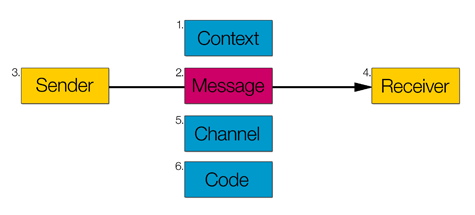
, expanding on the work of Karl Bühler, described six "constitutive factors" of a speech event
, each of which represents the privileging of a corresponding function, and only one of which is the referential (which corresponds to the context of the speech event). The six constitutive factors and their corresponding functions are diagrammed below.
The six constitutive factors of a speech event
Addresser---------------------Addressee
The six functions of language
Emotive-----------------------Conative
, since both share an interest in linguistic meaning
as determined by usage in a speech community. However, sociolinguists tend to be more interested in variations in language within such communities.
Pragmatics helps anthropologists relate elements of language to broader social phenomena; it thus pervades the field of linguistic anthropology
. Because pragmatics describes generally the forces in play for a given utterance, it includes the study of power, gender, race, identity, and their interactions with individual speech acts. For example, the study of code switching
directly relates to pragmatics, since a switch in code effects a shift in pragmatic force.
According to Charles W. Morris
, pragmatics tries to understand the relationship between signs and their users, while semantics
tends to focus on the actual objects or ideas to which a word refers, and syntax
(or "syntactics") examines relationships among signs or symbols. Semantics is the literal meaning of an idea whereas pragmatics is the implied meaning of the given idea.
Speech Act Theory
, pioneered by J.L. Austin and further developed by John Searle
, centers around the idea of the performative, a type of utterance that performs the very action it describes. Speech Act Theory's examination of Illocutionary Acts
has many of the same goals as pragmatics, as outlined above.
notion of the performative) underpins Judith Butler's
theory of gender performativity
. In Gender Trouble
, she claims that gender and sex are not natural categories, but socially constructed roles produced by "reiterative acting."
In Excitable Speech she extends her theory of performativity
to hate speech
and censorship
, arguing that censorship necessarily strengthens any discourse it tries to suppress and therefore, since the state has sole power to define hate speech legally, it is the state that makes hate speech performative.
Jaques Derrida remarked that some work done under Pragmatics aligned well with the program he outlined in his book Of Grammatology
.
Émile Benveniste
argued that the pronouns "I" and "you" are fundamentally distinct from other pronouns because of their role in creating the subject
.
Gilles Deleuze
and Félix Guattari
discuss linguistic pragmatics in the fourth chapter of A Thousand Plateaus
("November 20, 1923--Postulates of Linguistics"). They draw three conclusions from Austin: (1) A performative utterance
does not communicate information about an act second-hand—it is the act; (2) Every aspect of language ("semantics, syntactics, or even phonematics") functionally interacts with pragmatics; (3) There is no distinction between language and speech. This last conclusion attempts to refute Saussure's
division between langue and parole and Chomsky's
distinction between surface structure and deep structure
simultaneously.
Linguistics
Linguistics is the scientific study of human language. Linguistics can be broadly broken into three categories or subfields of study: language form, language meaning, and language in context....
which studies the ways in which context contributes to meaning. Pragmatics encompasses speech act
Speech act
Speech Act is a technical term in linguistics and the philosophy of language. The contemporary use of the term goes back to John L. Austin's doctrine of locutionary, illocutionary, and perlocutionary acts...
theory, conversational implicature
Implicature
Implicature is a technical term in the pragmatics subfield of linguistics, coined by H. P. Grice, which refers to what is suggested in an utterance, even though neither expressed nor strictly implied by the utterance...
, talk in interaction
Conversation analysis
Conversation analysis is the study of talk in interaction . CA generally attempts to describe the orderliness, structure and sequential patterns of interaction, whether institutional or in casual conversation.Inspired by ethnomethodology Conversation analysis (commonly abbreviated as CA) is the...
and other approaches to language behavior in philosophy
Philosophy of language
Philosophy of language is the reasoned inquiry into the nature, origins, and usage of language. As a topic, the philosophy of language for analytic philosophers is concerned with four central problems: the nature of meaning, language use, language cognition, and the relationship between language...
, sociology
Sociology of language
Sociology of language focuses on the language's effect on the society. It is closely related to the field of sociolinguistics, which focuses on the effect of the society on the language....
, and linguistics
Linguistics
Linguistics is the scientific study of human language. Linguistics can be broadly broken into three categories or subfields of study: language form, language meaning, and language in context....
. It studies how the transmission of meaning depends not only on the linguistic knowledge (e.g. grammar
Grammar
In linguistics, grammar is the set of structural rules that govern the composition of clauses, phrases, and words in any given natural language. The term refers also to the study of such rules, and this field includes morphology, syntax, and phonology, often complemented by phonetics, semantics,...
, lexicon
Lexicon
In linguistics, the lexicon of a language is its vocabulary, including its words and expressions. A lexicon is also a synonym of the word thesaurus. More formally, it is a language's inventory of lexemes. Coined in English 1603, the word "lexicon" derives from the Greek "λεξικόν" , neut...
etc.) of the speaker and listener, but also on the context of the utterance, knowledge about the status of those involved, the inferred intent
Intention
Intention is an agent's specific purpose in performing an action or series of actions, the end or goal that is aimed at. Outcomes that are unanticipated or unforeseen are known as unintended consequences....
of the speaker, and so on. In this respect, pragmatics explains how language users are able to overcome apparent ambiguity
Ambiguity
Ambiguity of words or phrases is the ability to express more than one interpretation. It is distinct from vagueness, which is a statement about the lack of precision contained or available in the information.Context may play a role in resolving ambiguity...
, since meaning relies on the manner, place, time etc. of an utterance. The ability to understand another speaker's intended meaning is called pragmatic competence. So an utterance describing pragmatic function is described as metapragmatic
Metapragmatics
Metapragmatics is a term from linguistics and the semiotically-informed linguistic anthropology of Michael Silverstein, describing language that characterizes or describes the pragmatic function of some speech. Discussions of linguistic pragmatics—that is, discussions of what speech does in a...
. Pragmatic awareness is regarded as one of the most challenging aspects of language learning, and comes only through experience
Experience
Experience as a general concept comprises knowledge of or skill in or observation of some thing or some event gained through involvement in or exposure to that thing or event....
.
Structural ambiguity
The sentence "You have a green light" is ambiguous. Without knowing the context, the identity of the speaker, and their intent, it is not possible to infer the meaning with confidence. For example:- It could mean you have green ambient lighting.
- Or that you have a green light while driving your car.
- Or it could be indicating that you can go ahead with the project.
- Or that your body has a green glow.
- Or that you have in your possession a light bulb that is tinted green.
Similarly, the sentence "Sherlock saw the man with binoculars" could mean that Sherlock observed the man by using binoculars; or it could mean that Sherlock observed a man who was holding binoculars. The meaning of the sentence depends on an understanding of the context and the speaker's intent. As defined in linguistics, a sentence is an abstract entity — a string of words divorced from non-linguistic context — as opposed to an utterance
Utterance
In spoken language analysis an utterance is a complete unit of speech. It is generally but not always bounded by silence.It can be represented and delineated in written language in many ways. Note that in such areas of research utterances do not exist in written language, only their representations...
, which is a concrete example of a speech act in a specific context. The closer conscious subjects stick to common words, idioms, phrasings, and topics, the more easily others can surmise their meaning; the further they stray from common expressions and topics, the wider the variations in interpretations. This suggests that sentences do not have meaning intrinsically; there is not a meaning associated with a sentence or word, they can only symbolically represent an idea. The cat sat on the mat is a sentence of English; if you say to your sister on Tuesday afternoon: "The cat sat on the mat", this is an example of an utterance. Thus, there is no such thing as a sentence, term, expression or word symbolically representing a single true meaning; it is underspecified (which cat sat on which mat?) and potentially ambiguous. The meaning of an utterance, on the other hand, is inferred based on linguistic knowledge and knowledge of the non-linguistic context of the utterance (which may or may not be sufficient to resolve ambiguity). In mathematics with Berry's paradox there arose a systematic ambiguity with the word "definable". The ambiguity with words shows that the descriptive power of any human language is limited.
Origins
Pragmatics was a reaction to structuralistStructuralism
Structuralism originated in the structural linguistics of Ferdinand de Saussure and the subsequent Prague and Moscow schools of linguistics. Just as structural linguistics was facing serious challenges from the likes of Noam Chomsky and thus fading in importance in linguistics, structuralism...
linguistics as outlined by Ferdinand de Saussure
Ferdinand de Saussure
Ferdinand de Saussure was a Swiss linguist whose ideas laid a foundation for many significant developments in linguistics in the 20th century. He is widely considered one of the fathers of 20th-century linguistics...
. In many cases, it expanded upon his idea that language has an analyzable structure, composed of parts that can be defined in relation to others. Pragmatics first engaged only in synchronic study, as opposed to examining the historical development of language. However, it rejected the notion that all meaning comes from signs
Sign (semiotics)
A sign is understood as a discrete unit of meaning in semiotics. It is defined as "something that stands for something, to someone in some capacity" It includes words, images, gestures, scents, tastes, textures, sounds – essentially all of the ways in which information can be...
existing purely in the abstract space of langue. Meanwhile, historical pragmatics
Historical pragmatics
Historical pragmatics is the study of language use in its historical dimension.- State of the Art :Since the late 1970s, historical linguists have discovered their growing interest in pragmatic questions—first in German, then in Romance linguistics...
has also come into being.
Areas of interest
- The study of the speaker's meaning, not focusing on the phonetic or grammatical form of an utterance, but instead on what the speaker's intentions and beliefs are.
- The study of the meaning in context, and the influence that a given context can have on the message. It requires knowledge of the speaker's identities, and the place and time of the utterance.
- The study of implicatureImplicatureImplicature is a technical term in the pragmatics subfield of linguistics, coined by H. P. Grice, which refers to what is suggested in an utterance, even though neither expressed nor strictly implied by the utterance...
s, i.e. the things that are communicated even though they are not explicitly expressed.
- The study of relative distance, both social and physical, between speakers in order to understand what determines the choice of what is said and what is not said.
- The study of what is not meant, as opposed to the intended meaning, i.e. that which is unsaid and unintended, or unintentional.
- Information Structure, the study of how utterances are marked in order to efficiently manage the common ground of referred entities between speaker and hearer
- Formal Pragmatics, the study of those aspects of meaning and use, for which context of use is an important factor, by using the methods and goals of formal semantics.
Referential uses of language
When we speak of the referential uses of language we are talking about how we use signsSign (semiotics)
A sign is understood as a discrete unit of meaning in semiotics. It is defined as "something that stands for something, to someone in some capacity" It includes words, images, gestures, scents, tastes, textures, sounds – essentially all of the ways in which information can be...
to refer to certain items. Below is an explanation of, first, what a sign is, second, how meanings are accomplished through its usage.
A sign is the link or relationship between a signified and the signifier
Sign (semiotics)
A sign is understood as a discrete unit of meaning in semiotics. It is defined as "something that stands for something, to someone in some capacity" It includes words, images, gestures, scents, tastes, textures, sounds – essentially all of the ways in which information can be...
as defined by Saussure and Huguenin. The signified is some entity or concept in the world. The signifier represents the signified. An example would be:
Signified: the concept cat
Signifier: the word "cat"
The relationship between the two gives the sign meaning. This relationship can be further explained by considering what we mean by "meaning." In pragmatics, there are two different types of meaning to consider: semantico-referential meaning and indexical meaning. Semantico-referential meaning refers to the aspect of meaning, which describes events in the world that are independent of the circumstance they are uttered in. An example would be propositions such as:
"Santa Claus eats cookies."
In this case, the proposition is describing that Santa Claus eats cookies. The meaning of this proposition does not rely on whether or not Santa Claus is eating cookies at the time of its utterance. Santa Claus could be eating cookies at any time and the meaning of the proposition would remain the same. The meaning is simply describing something that is the case in the world. In contrast, the proposition, "Santa Claus is eating a cookie right now," describes events that are happening at the time the proposition is uttered.
Semantico-referential meaning is also present in meta-semantical statements such as:
Tiger: omnivorous, a mammal
If someone were to say that a tiger is an omnivorous animal in one context and a mammal in another, the definition of tiger would still be the same. The meaning of the sign tiger is describing some animal in the world, which does not change in either circumstance.
Indexical meaning, on the other hand, is dependent on the context of the utterance and has rules of use. By rules of use, it is meant that indexicals can tell you when they are used, but not what they actually mean.
Example: "I"
Whom "I" refers to depends on the context and the person uttering it.
As mentioned, these meanings are brought about through the relationship between the signified and the signifier. One way to define the relationship is by placing signs in two categories: referential indexical signs, also called "shifters," and pure indexical signs.
Referential indexical signs are signs where the meaning shifts depending on the context hence the nickname "shifters." 'I' would be considered a referential indexical sign. The referential aspect of its meaning would be '1st person singular' while the indexical aspect would be the person who is speaking (refer above for definitions of semantico-referential and indexical meaning). Another example would be:
"This"
Referential: singular count
Indexical: Close by
A pure indexical sign does not contribute to the meaning of the propositions at all. It is an example of a ""non-referential use of language.""
A second way to define the signified and signifier relationship is C.S. Peirce's Peircean Trichotomy. The components of the trichotomy are the following:
1. Icon: the signified resembles the signifier (signified: a dog's barking noise, signifier: bow-wow)
2. Index: the signified and signifier are linked by proximity or the signifier has meaning only because it is pointing to the signified
3. Symbol: the signified and signifier are arbitrarily linked (signified: a cat, signifier: the word cat)
These relationships allow us to use signs to convey what we want to say. If two people were in a room and one of them wanted to refer to a characteristic of a chair in the room he would say "this chair has four legs" instead of "a chair has four legs." The former relies on context (indexical and referential meaning) by referring to a chair specifically in the room at that moment while the latter is independent of the context (semantico-referential meaning), meaning the concept chair.
Silverstein's "pure" indexes
Michael SilversteinMichael Silverstein
Michael Silverstein is a professor of anthropology, linguistics, and psychology at the University of Chicago. He is a theoretician of semiotics and linguistic anthropology. Over the course of his career he has drawn together research on linguistic pragmatics, sociolinguistics, language ideology,...
has argued that "nonreferential" or "pure" indices do not contribute to an utterance's referential meaning but instead "signal some particular value of one or more contextual variables." Although nonreferential indexes are devoid of semantico-referential meaning, they do encode "pragmatic" meaning.
The sorts of contexts that such indexes can mark are varied. Examples include:
- Sex indexes are affixes or inflections that index the sex of the speaker, e.g. the verb forms of female KoasatiKoasati languageKoasati is a Native American language of Muskogean origin. The language is spoken by the Coushatta people, most of whom live in Allen Parish north of the town of Elton, Louisiana, though a smaller number share a reservation near Livingston, Texas, with the Alabama people...
speakers take the suffix "-s". - Deference indexes are words that signal social differences (usually related to status or age) between the speaker and the addressee. The most common example of a deference index is the V form in a language with a T-V distinctionT-V distinctionIn sociolinguistics, a T–V distinction is a contrast, within one language, between second-person pronouns that are specialized for varying levels of politeness, social distance, courtesy, familiarity, or insult toward the addressee....
, the widespread phenomenon in which there are multiple second-person pronouns that correspond to the addressee's relative status or familiarity to the speaker. HonorificHonorificAn honorific is a word or expression with connotations conveying esteem or respect when used in addressing or referring to a person. Sometimes, the term is used not quite correctly to refer to an honorary title...
s are another common form of deference index and demonstrate the speaker's respect or esteem for the addressee via special forms of address and/or self-humbling first-person pronouns. - An Affinal taboo index is an example of avoidance speechAvoidance speechAvoidance speech, or "mother-in-law languages", is a feature of many Australian Aboriginal languages and some North American languages and Bantu languages of Africa whereby in the presence of certain relatives it is taboo to use everyday speech style, and instead a special speech style must be...
and produces and reinforces sociological distance, as seen in the Aboriginal Dyirbal languageDyirbal languageDyirbal is an Australian Aboriginal language spoken in northeast Queensland by about 5 speakers of the Dyirbal tribe. It is a member of the small Dyirbalic branch of the Pama–Nyungan family...
of Australia. In this language and some others, there is a social taboo against the use of the everyday lexicon in the presence of certain relatives (mother-in-law, child-in-law, paternal aunt's child, and maternal uncle's child). If any of those relatives are present, a Dyirbal speaker has to switch to a completely separate lexicon reserved for that purpose.
In all of these cases, the semantico-referential meaning of the utterances is unchanged from that of the other possible (but often impermissible) forms, but the pragmatic meaning is vastly different.
The performative
Main articles: Performative utterancePerformative utterance
The notion of performative utterances was introduced by language philosopher J. L. Austin. According to his original conception, it is a sentence which does something in the world rather than describing something about it...
, Speech act theory
J.L. Austin introduced the concept of the performative
Performative utterance
The notion of performative utterances was introduced by language philosopher J. L. Austin. According to his original conception, it is a sentence which does something in the world rather than describing something about it...
, contrasted in his writing with "constative" (i.e. descriptive) utterances. According to Austin's original formulation, a performative is a type of utterance characterized by two distinctive features:
- It is not truth-evaluableLogical valueIn logic and mathematics, a truth value, sometimes called a logical value, is a value indicating the relation of a proposition to truth.In classical logic, with its intended semantics, the truth values are true and false; that is, classical logic is a two-valued logic...
(i.e. it is neither true nor false) - Its uttering performs an action rather than simply describing one
However, a performative utterance must also conform to a set of felicity conditions
Felicity conditions
In J.L. Austin's formulation of Speech act theory, a performative utterance is neither true nor false, but can instead be deemed "felicitous" or "infelicitous" according to a set of conditions whose interpretation differs depending on whether the utterance in question is a declaration , a request ...
.
Examples:
- "I hereby pronounce you man and wife."
- "I accept your apology."
- "This meeting is now adjourned."
Jakobson's six functions of language
Roman Jakobson
Roman Osipovich Jakobson was a Russian linguist and literary theorist.As a pioneer of the structural analysis of language, which became the dominant trend of twentieth-century linguistics, Jakobson was among the most influential linguists of the century...
, expanding on the work of Karl Bühler, described six "constitutive factors" of a speech event
Speech act
Speech Act is a technical term in linguistics and the philosophy of language. The contemporary use of the term goes back to John L. Austin's doctrine of locutionary, illocutionary, and perlocutionary acts...
, each of which represents the privileging of a corresponding function, and only one of which is the referential (which corresponds to the context of the speech event). The six constitutive factors and their corresponding functions are diagrammed below.
The six constitutive factors of a speech event
-
-
- Context
- Message
-
Addresser---------------------Addressee
-
-
- Contact
- Code
-
The six functions of language
-
-
- Referential
- Poetic
-
Emotive-----------------------Conative
-
-
- Phatic
- Metalingual
-
- The Referential Function corresponds to the factor of Context and describes a situation, object or mental state. The descriptive statements of the referential function can consist of both definite descriptions and deicticDeixisIn linguistics, deixis refers to the phenomenon wherein understanding the meaning of certain words and phrases in an utterance requires contextual information. Words are deictic if their semantic meaning is fixed but their denotational meaning varies depending on time and/or place...
words, e.g. "The autumn leaves have all fallen now." - The Expressive (alternatively called "emotive" or "affective") Function relates to the Addresser and is best exemplified by interjections and other sound changes that do not alter the denotative meaningDenotationThis word has distinct meanings in other fields: see denotation . For the opposite of Denotation see Connotation.*In logic, linguistics and semiotics, the denotation of a word or phrase is a part of its meaning; however, the part referred to varies by context:** In grammar and literary theory, the...
of an utterance but do add information about the Addresser's (speaker's) internal state, e.g. "Wow, what a view!" - The Conative Function engages the Addressee directly and is best illustrated by vocatives and imperativesImperative moodThe imperative mood expresses commands or requests as a grammatical mood. These commands or requests urge the audience to act a certain way. It also may signal a prohibition, permission, or any other kind of exhortation.- Morphology :...
, e.g. "Tom! Come inside and eat!" - The Poetic Function focuses on "the message for its own sake" and is the operative function in poetry as well as slogans.
- The PhaticPhaticIn linguistics, a phatic expression is one whose only function is to perform a social task, as opposed to conveying information.-History:The term was coined by anthropologist Bronisław Malinowski in the early 1900s from Greek phanein: to show oneself, appear.-Understanding:The utterance of a...
Function is language for the sake of interaction and is therefore associated with the Contact factor. The Phatic Function can be observed in greetings and casual discussions of the weather, particularly with strangers. - The Metalingual (alternatively called "metalinguistic" or "reflexive") Function is the use of language (what Jakobson calls "Code") to discuss or describe itself.
Related fields
There is considerable overlap between pragmatics and sociolinguisticsSociolinguistics
Sociolinguistics is the descriptive study of the effect of any and all aspects of society, including cultural norms, expectations, and context, on the way language is used, and the effects of language use on society...
, since both share an interest in linguistic meaning
Linguistic meaning
The nature of meaning, its definition, elements, and types, was discussed by philosophers Aristotle, Augustine, and Aquinas. According to them 'meaning is a relationship between two sorts of things: signs and the kinds of things they mean '. One term in the relationship of meaning necessarily...
as determined by usage in a speech community. However, sociolinguists tend to be more interested in variations in language within such communities.
Pragmatics helps anthropologists relate elements of language to broader social phenomena; it thus pervades the field of linguistic anthropology
Linguistic anthropology
Linguistic anthropology is the interdisciplinary study of how language influences social life. It is a branch of anthropology that originated from the endeavor to document endangered languages, and has grown over the past 100 years to encompass almost any aspect of language structure and...
. Because pragmatics describes generally the forces in play for a given utterance, it includes the study of power, gender, race, identity, and their interactions with individual speech acts. For example, the study of code switching
Code-switching
In linguistics, code-switching is the concurrent use of more than one language, or language variety, in conversation. Multilinguals—people who speak more than one language—sometimes use elements of multiple languages in conversing with each other...
directly relates to pragmatics, since a switch in code effects a shift in pragmatic force.
According to Charles W. Morris
Charles W. Morris
Charles W. Morris was an American semiotician and philosopher.-Background:A son of Charles William and Laura Morris, Charles William Morris was born on May 23, 1901...
, pragmatics tries to understand the relationship between signs and their users, while semantics
Semantics
Semantics is the study of meaning. It focuses on the relation between signifiers, such as words, phrases, signs and symbols, and what they stand for, their denotata....
tends to focus on the actual objects or ideas to which a word refers, and syntax
Syntax
In linguistics, syntax is the study of the principles and rules for constructing phrases and sentences in natural languages....
(or "syntactics") examines relationships among signs or symbols. Semantics is the literal meaning of an idea whereas pragmatics is the implied meaning of the given idea.
Speech Act Theory
Speech act
Speech Act is a technical term in linguistics and the philosophy of language. The contemporary use of the term goes back to John L. Austin's doctrine of locutionary, illocutionary, and perlocutionary acts...
, pioneered by J.L. Austin and further developed by John Searle
John Searle
John Rogers Searle is an American philosopher and currently the Slusser Professor of Philosophy at the University of California, Berkeley.-Biography:...
, centers around the idea of the performative, a type of utterance that performs the very action it describes. Speech Act Theory's examination of Illocutionary Acts
Illocutionary act
Illocutionary act is a term in linguistics introduced by John L. Austin in his investigation of the various aspects of speech acts. We may sum up Austin's theory of speech acts with the following example...
has many of the same goals as pragmatics, as outlined above.
Pragmatics in philosophy
Pragmatics (more specifically, Speech Act Theory'sSpeech act
Speech Act is a technical term in linguistics and the philosophy of language. The contemporary use of the term goes back to John L. Austin's doctrine of locutionary, illocutionary, and perlocutionary acts...
notion of the performative) underpins Judith Butler's
Judith Butler
Judith Butler is an American post-structuralist philosopher, who has contributed to the fields of feminism, queer theory, political philosophy, and ethics. She is a professor in the Rhetoric and Comparative Literature departments at the University of California, Berkeley.Butler received her Ph.D...
theory of gender performativity
Gender performativity
Gender Performativity is a term created by post-structuralist feminist philosopher Judith Butler in her 1990 book Gender Trouble. In it, Butler characterizes gender as the effect of reiterated acting, one that produces the effect of a static or normal gender while obscuring the contradiction and...
. In Gender Trouble
Gender Trouble
Gender Trouble by Judith Butler is a highly influential book in academic feminism and queer theory. It is also the book credited with creating the seminal notion of gender performativity. It is considered to be one of the canonical texts of queer theory and postmodern/poststructural feminism.-...
, she claims that gender and sex are not natural categories, but socially constructed roles produced by "reiterative acting."
In Excitable Speech she extends her theory of performativity
Performativity
Performativity is an interdisciplinary term often used to name the capacity of speech and language in particular, as well as other non-verbal forms of expressive action, to intervene in the course of human events. The term derives from the work in speech act theory originated by the analytic...
to hate speech
Hate speech
Hate speech is, outside the law, any communication that disparages a person or a group on the basis of some characteristic such as race, color, ethnicity, gender, sexual orientation, nationality, religion, or other characteristic....
and censorship
Censorship
thumb|[[Book burning]] following the [[1973 Chilean coup d'état|1973 coup]] that installed the [[Military government of Chile |Pinochet regime]] in Chile...
, arguing that censorship necessarily strengthens any discourse it tries to suppress and therefore, since the state has sole power to define hate speech legally, it is the state that makes hate speech performative.
Jaques Derrida remarked that some work done under Pragmatics aligned well with the program he outlined in his book Of Grammatology
Of Grammatology
De la grammatologie is a book by French philosopher Jacques Derrida, first published in 1967 by Les Éditions de Minuit. Of Grammatology, the English translation by Gayatri Chakravorty Spivak, was first published in 1976 by Johns Hopkins University Press...
.
Émile Benveniste
Émile Benveniste
Émile Benveniste was a French Jewish structural linguist, semiotician, an apprentice of Antoine Meilletand his successor, who, in his later years, became enlightened by the structural view of language through the work of Ferdinand de Saussure, although he was unwilling to grasp it at first, being...
argued that the pronouns "I" and "you" are fundamentally distinct from other pronouns because of their role in creating the subject
Subject (philosophy)
In philosophy, a subject is a being that has subjective experiences, subjective consciousness or a relationship with another entity . A subject is an observer and an object is a thing observed...
.
Gilles Deleuze
Gilles Deleuze
Gilles Deleuze , was a French philosopher who, from the early 1960s until his death, wrote influentially on philosophy, literature, film, and fine art. His most popular works were the two volumes of Capitalism and Schizophrenia: Anti-Oedipus and A Thousand Plateaus , both co-written with Félix...
and Félix Guattari
Félix Guattari
Pierre-Félix Guattari was a French militant, an institutional psychotherapist, philosopher, and semiotician; he founded both schizoanalysis and ecosophy...
discuss linguistic pragmatics in the fourth chapter of A Thousand Plateaus
A Thousand Plateaus
A Thousand Plateaus is the second book of Capitalism and Schizophrenia, the first being Anti-Oedipus. Written by Gilles Deleuze and Félix Guattari, it was translated into English by Brian Massumi...
("November 20, 1923--Postulates of Linguistics"). They draw three conclusions from Austin: (1) A performative utterance
Performative utterance
The notion of performative utterances was introduced by language philosopher J. L. Austin. According to his original conception, it is a sentence which does something in the world rather than describing something about it...
does not communicate information about an act second-hand—it is the act; (2) Every aspect of language ("semantics, syntactics, or even phonematics") functionally interacts with pragmatics; (3) There is no distinction between language and speech. This last conclusion attempts to refute Saussure's
Ferdinand de Saussure
Ferdinand de Saussure was a Swiss linguist whose ideas laid a foundation for many significant developments in linguistics in the 20th century. He is widely considered one of the fathers of 20th-century linguistics...
division between langue and parole and Chomsky's
Noam Chomsky
Avram Noam Chomsky is an American linguist, philosopher, cognitive scientist, and activist. He is an Institute Professor and Professor in the Department of Linguistics & Philosophy at MIT, where he has worked for over 50 years. Chomsky has been described as the "father of modern linguistics" and...
distinction between surface structure and deep structure
Deep structure
In linguistics, specifically in the study of syntax in the tradition of generative grammar , the deep structure of a linguistic expression is a theoretical construct that seeks to unify several related structures. For example, the sentences "Pat loves Chris" and "Chris is loved by Pat" mean...
simultaneously.
Significant works
- J. L. AustinJ. L. AustinJohn Langshaw Austin was a British philosopher of language, born in Lancaster and educated at Shrewsbury School and Balliol College, Oxford University. Austin is widely associated with the concept of the speech act and the idea that speech is itself a form of action...
's How To Do Things With Words - Paul GricePaul GriceHerbert Paul Grice , usually publishing under the name H. P. Grice, H...
's cooperative principleCooperative principleIn social science generally and linguistics specifically, the cooperative principle describes how people interact with one another. As phrased by Paul Grice, who introduced it, it states, "Make your contribution such as it is required, at the stage at which it occurs, by the accepted purpose or...
and conversational maxims - Brown & Levinson's Politeness TheoryPoliteness theoryPoliteness theory is the theory that accounts for the redressing of the affronts to face posed by face-threatening acts to addressees. First formulated in 1978 by Penelope Brown and Stephen Levinson, politeness theory has since expanded academia’s perception of politeness...
- Geoffrey LeechGeoffrey LeechGeoffrey Leech was Professor of Linguistics and Modern English Language at Lancaster University from 1974 to 2002. He then became Research Professor in English Linguistics...
's politeness maximsPoliteness maximsAccording to Geoffrey Leech, there is a politeness principle with conversational maxims similar to those formulated by Paul Grice. He lists six maxims: tact, generosity, approbation, modesty, agreement, and sympathy. The first and second form a pair, as do the third and the fourth... - Levinson's Presumptive Meanings
- Jürgen HabermasJürgen HabermasJürgen Habermas is a German sociologist and philosopher in the tradition of critical theory and pragmatism. He is perhaps best known for his theory on the concepts of 'communicative rationality' and the 'public sphere'...
's universal pragmaticsUniversal pragmaticsUniversal pragmatics, more recently placed under the heading of formal pragmatics, is the philosophical study of the necessary conditions for reaching an understanding through communication... - Dan SperberDan SperberDan Sperber is a French social and cognitive scientist. His most influential work has been in the fields of cognitive anthropology and linguistic pragmatics: developing, with British psychologist Deirdre Wilson, relevance theory in the latter; and an approach to cultural evolution known as the...
and Deirdre Wilson's relevance theoryRelevance theoryRelevance theory is a proposal by Dan Sperber and Deirdre Wilson that seeks to explain the second method of communication: one that takes into account implicit inferences...
See also
- Formal Pragmatics
- EntailmentEntailmentIn logic, entailment is a relation between a set of sentences and a sentence. Let Γ be a set of one or more sentences; let S1 be the conjunction of the elements of Γ, and let S2 be a sentence: then, Γ entails S2 if and only if S1 and not-S2 are logically inconsistent...
- IndexicalityIndexicalityIn linguistics and in philosophy of language, an indexical behavior or utterance points to some state of affairs. For example, I refers to whoever is speaking; now refers to the time at which that word is uttered; and here refers to the place of utterance...
- AnaphoraAnaphora (linguistics)In linguistics, anaphora is an instance of an expression referring to another. Usually, an anaphoric expression is represented by a pro-form or some other kind of deictic--for instance, a pronoun referring to its antecedent...
- DeixisDeixisIn linguistics, deixis refers to the phenomenon wherein understanding the meaning of certain words and phrases in an utterance requires contextual information. Words are deictic if their semantic meaning is fixed but their denotational meaning varies depending on time and/or place...
- OrigoOrigoIn pragmatics, the origo is the reference point on which deictic relationships are based. In most deictic systems, the origo identifies with the current speaker . For instance, if the speaker, John, were to say "This is now my fish", then John would be the origo, and the deictic word "my" would be...
- ImplicatureImplicatureImplicature is a technical term in the pragmatics subfield of linguistics, coined by H. P. Grice, which refers to what is suggested in an utterance, even though neither expressed nor strictly implied by the utterance...
- Practical reasonPractical reasonIn philosophy, practical reason is the use of reason to decide how to act. This contrasts with theoretical reason , which is the use of reason to decide what to believe. For example: agents use practical reason to decide whether to build a telescope, but theoretical reason to decide which of two...
- PresuppositionPresuppositionIn the branch of linguistics known as pragmatics, a presupposition is an implicit assumption about the world or background belief relating to an utterance whose truth is taken for granted in discourse...
- Speech actSpeech actSpeech Act is a technical term in linguistics and the philosophy of language. The contemporary use of the term goes back to John L. Austin's doctrine of locutionary, illocutionary, and perlocutionary acts...
- Sign relationSign relationA sign relation is the basic construct in the theory of signs, also known as semeiotic or semiotics, as developed by Charles Sanders Peirce.-Anthesis:...
- SemioticsSemioticsSemiotics, also called semiotic studies or semiology, is the study of signs and sign processes , indication, designation, likeness, analogy, metaphor, symbolism, signification, and communication...
- SemanticsSemanticsSemantics is the study of meaning. It focuses on the relation between signifiers, such as words, phrases, signs and symbols, and what they stand for, their denotata....
- Charles Sanders Peirce (and also see: Charles Sanders Peirce bibliographyCharles Sanders Peirce bibliographyThis Charles Sanders Peirce bibliography consolidates numerous references to Charles Sanders Peirce's writings, including letters, manuscripts, publications, and Nachlass...
) - Paul GricePaul GriceHerbert Paul Grice , usually publishing under the name H. P. Grice, H...
- Gricean maxims
- William JamesWilliam JamesWilliam James was a pioneering American psychologist and philosopher who was trained as a physician. He wrote influential books on the young science of psychology, educational psychology, psychology of religious experience and mysticism, and on the philosophy of pragmatism...
- ExegesisExegesisExegesis is a critical explanation or interpretation of a text, especially a religious text. Traditionally the term was used primarily for exegesis of the Bible; however, in contemporary usage it has broadened to mean a critical explanation of any text, and the term "Biblical exegesis" is used...
- Sitz im LebenSitz im LebenIn Biblical criticism, Sitz im Leben is a German phrase roughly translating to "setting in life".-Origins:The term originated with the German Protestant theologian Hermann Gunkel. The term Sitz im Volksleben was employed for the first time in 1906 and the term Sitz im Leben in 1917...
External links
- Journal of Pragmatics, An Interdisciplinary Journal of Language Studies
- Liu, Shaozhong, "What is Pragmatics?", Eprint
- Dan Sperber discusses Pragmatics from Philosophy Talk Radio Program
- wiki project in comparative pragmatics: European Communicative Strategies (ECSTRA) (directed by Joachim GrzegaJoachim GrzegaJoachim Grzega studied English and French in Eichstätt, Salt Lake City, Paris-Sorbonne University and Graz. He has taught since 1998 at the Catholic University of Eichstätt-Ingolstadt. Grzega obtain his doctorate in 2000 in the subjects of the Roman, English and German linguistics. His habilitation...
)