


Phlogiston theory

Encyclopedia
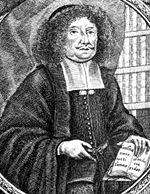
J. J. Becher
-Further reading:*Anthony Endres, Neoclassical Microeconomic Theory: The Founding Austrian Version .*Erik Grimmer-Solem, The Rise of Historical Economics and Social Reform in Germany 1864-1894....
, is an obsolete scientific theory that postulated the existence of a fire-like element called "phlogiston", which was contained within combustible bodies and released during combustion
Combustion
Combustion or burning is the sequence of exothermic chemical reactions between a fuel and an oxidant accompanied by the production of heat and conversion of chemical species. The release of heat can result in the production of light in the form of either glowing or a flame...
. The theory was an attempt to explain processes of burning such as combustion
Combustion
Combustion or burning is the sequence of exothermic chemical reactions between a fuel and an oxidant accompanied by the production of heat and conversion of chemical species. The release of heat can result in the production of light in the form of either glowing or a flame...
and the rust
Rust
Rust is a general term for a series of iron oxides. In colloquial usage, the term is applied to red oxides, formed by the reaction of iron and oxygen in the presence of water or air moisture...
ing of metals, which are now collectively known as oxidation
Redox
Redox reactions describe all chemical reactions in which atoms have their oxidation state changed....
.
Theory
The theory holds that all combustible resources contain phlogiston, a substance without colour, odor, taste or mass, and is liberated in burning. Once burned, the "dephlogisticated" substance was held to be in its "true" form, the calxCalx
Calx is a residual substance, sometimes in the form of a fine powder, that is left when a metal or mineral combusts or is calcinated due to heat.Calx, especially of a metal, is now known as an oxide...
.

Thus, phlogiston was described in a way that was basically the opposite of the role of oxygen
Oxygen
Oxygen is the element with atomic number 8 and represented by the symbol O. Its name derives from the Greek roots ὀξύς and -γενής , because at the time of naming, it was mistakenly thought that all acids required oxygen in their composition...
in combustion.
Joseph Black
Joseph Black
Joseph Black FRSE FRCPE FPSG was a Scottish physician and chemist, known for his discoveries of latent heat, specific heat, and carbon dioxide. He was professor of Medicine at University of Glasgow . James Watt, who was appointed as philosophical instrument maker at the same university...
's student Daniel Rutherford
Daniel Rutherford
Daniel Rutherford was a Scottish physician, chemist and botanist who is most famous for the isolation of nitrogen in 1772.Rutherford was the uncle of the novelist Sir Walter Scott.-Early life:...
discovered nitrogen
Nitrogen
Nitrogen is a chemical element that has the symbol N, atomic number of 7 and atomic mass 14.00674 u. Elemental nitrogen is a colorless, odorless, tasteless, and mostly inert diatomic gas at standard conditions, constituting 78.08% by volume of Earth's atmosphere...
in 1772 and the pair used the theory to explain his results. The residue of air left after burning, in fact a mixture of nitrogen and carbon dioxide
Carbon dioxide
Carbon dioxide is a naturally occurring chemical compound composed of two oxygen atoms covalently bonded to a single carbon atom...
, was sometimes referred to as "phlogisticated air", having taken up all of the phlogiston. Conversely, when oxygen
Oxygen
Oxygen is the element with atomic number 8 and represented by the symbol O. Its name derives from the Greek roots ὀξύς and -γενής , because at the time of naming, it was mistakenly thought that all acids required oxygen in their composition...
was first discovered it was thought to be "dephlogisticated air", capable of combining with more phlogiston and thus supporting combustion for longer than ordinary air.
History of the theory
In 1667, Johann Joachim BecherJ. J. Becher
-Further reading:*Anthony Endres, Neoclassical Microeconomic Theory: The Founding Austrian Version .*Erik Grimmer-Solem, The Rise of Historical Economics and Social Reform in Germany 1864-1894....
published his Physical Education, which was the first mention of what would become the phlogiston theory. Traditionally, alchemists considered that there were four classical elements
Classical element
Many philosophies and worldviews have a set of classical elements believed to reflect the simplest essential parts and principles of which anything consists or upon which the constitution and fundamental powers of anything are based. Most frequently, classical elements refer to ancient beliefs...
: fire, water, air, and earth. In his book, Becher eliminated fire and air from the classical element model and replaced them with three forms of earth: terra lapidea, terra fluida, and terra pinguis. Terra pinguis was the element which imparted oil
Oil
An oil is any substance that is liquid at ambient temperatures and does not mix with water but may mix with other oils and organic solvents. This general definition includes vegetable oils, volatile essential oils, petrochemical oils, and synthetic oils....
y, sulphurous
Sulfur
Sulfur or sulphur is the chemical element with atomic number 16. In the periodic table it is represented by the symbol S. It is an abundant, multivalent non-metal. Under normal conditions, sulfur atoms form cyclic octatomic molecules with chemical formula S8. Elemental sulfur is a bright yellow...
, or combustible properties. Becher believed that terra pinguis was a key feature of combustion and was released when combustible substances were burned. In 1703 Georg Ernst Stahl
Georg Ernst Stahl
Georg Ernst Stahl was a German chemist and physician.He was born at Ansbach. Having graduated in medicine at the University of Jena in 1683, he became court physician to Duke Johann Ernst of Sachsen Weimar in 1687...
, professor of medicine and chemistry at Halle, proposed a variant of the theory in which he renamed Becher's terra pinguis to phlogiston, and it was in this form that the theory probably had its greatest influence.
Challenge and demise
Eventually, quantitative experimentExperiment
An experiment is a methodical procedure carried out with the goal of verifying, falsifying, or establishing the validity of a hypothesis. Experiments vary greatly in their goal and scale, but always rely on repeatable procedure and logical analysis of the results...
s revealed problems, including the fact that some metals, such as magnesium
Magnesium
Magnesium is a chemical element with the symbol Mg, atomic number 12, and common oxidation number +2. It is an alkaline earth metal and the eighth most abundant element in the Earth's crust and ninth in the known universe as a whole...
, gained weight when they burned, even though they were supposed to have lost phlogiston. Mikhail Lomonosov
Mikhail Lomonosov
Mikhail Vasilyevich Lomonosov was a Russian polymath, scientist and writer, who made important contributions to literature, education, and science. Among his discoveries was the atmosphere of Venus. His spheres of science were natural science, chemistry, physics, mineralogy, history, art,...
attempted to repeat Robert Boyle
Robert Boyle
Robert Boyle FRS was a 17th century natural philosopher, chemist, physicist, and inventor, also noted for his writings in theology. He has been variously described as English, Irish, or Anglo-Irish, his father having come to Ireland from England during the time of the English plantations of...
's celebrated experiment in 1753 and concluded that the phlogiston theory was false. He wrote in his diary:
"Today I made an experiment in hermetic glass vessels in order to determine whether the mass of metals increases from the action of pure heat. The experiment demonstrated that the famous Robert Boyle was deluded, for without access of air from outside, the mass of the burnt metal remains the same."
Some phlogiston proponents explained this by concluding that phlogiston had negative weight; others, such as Louis-Bernard Guyton de Morveau
Louis-Bernard Guyton de Morveau
Louis-Bernard Guyton de Morveau was a French chemist and politician...
, gave the more conventional argument that it was lighter than air. However, a more detailed analysis based on the Archimedean principle and the densities of magnesium and its combustion product shows that just being lighter than air cannot account for the increase in mass.
During the eighteenth century, as it became clear that metals gained weight when they were oxidized, phlogiston was increasingly regarded as a principle rather than a material substance. By the end of the eighteenth century, for the few chemists who still used the term phlogiston, the concept was linked to hydrogen
Hydrogen
Hydrogen is the chemical element with atomic number 1. It is represented by the symbol H. With an average atomic weight of , hydrogen is the lightest and most abundant chemical element, constituting roughly 75% of the Universe's chemical elemental mass. Stars in the main sequence are mainly...
. Joseph Priestley
Joseph Priestley
Joseph Priestley, FRS was an 18th-century English theologian, Dissenting clergyman, natural philosopher, chemist, educator, and political theorist who published over 150 works...
, for example, in referring to the reaction of steam on iron, whilst fully acknowledging that the iron gains weight as it binds with oxygen to form a calx
Calx
Calx is a residual substance, sometimes in the form of a fine powder, that is left when a metal or mineral combusts or is calcinated due to heat.Calx, especially of a metal, is now known as an oxide...
, iron oxide, iron also loses “the basis of inflammable air (hydrogen
Hydrogen
Hydrogen is the chemical element with atomic number 1. It is represented by the symbol H. With an average atomic weight of , hydrogen is the lightest and most abundant chemical element, constituting roughly 75% of the Universe's chemical elemental mass. Stars in the main sequence are mainly...
), and this is the substance or principle, to which we give the name phlogiston.” Following Lavoisier’s
Antoine Lavoisier
Antoine-Laurent de Lavoisier , the "father of modern chemistry", was a French nobleman prominent in the histories of chemistry and biology...
description of oxygen as the oxidizing principle (hence the name oxygen: oxus = sharp, acid; geneo = generate, produce), Priestley described phlogiston as the alkaline principle.
Phlogiston remained the dominant theory until Antoine-Laurent Lavoisier showed that combustion requires a gas that has weight (oxygen
Oxygen
Oxygen is the element with atomic number 8 and represented by the symbol O. Its name derives from the Greek roots ὀξύς and -γενής , because at the time of naming, it was mistakenly thought that all acids required oxygen in their composition...
) and could be measured by means of weighing closed vessels. The use of closed vessels also negated the buoyancy which had disguised the weight of the gases of combustion. These observations solved the weight paradox and set the stage for the new caloric theory
Caloric theory
The caloric theory is an obsolete scientific theory that heat consists of a self-repellent fluid called caloric that flows from hotter bodies to colder bodies. Caloric was also thought of as a weightless gas that could pass in and out of pores in solids and liquids...
of combustion.
Enduring aspects
Phlogiston theory permitted chemists to bring clarification of apparently different phenomena into a coherent structure: combustion, metabolismMetabolism
Metabolism is the set of chemical reactions that happen in the cells of living organisms to sustain life. These processes allow organisms to grow and reproduce, maintain their structures, and respond to their environments. Metabolism is usually divided into two categories...
, and configuration of rust. The recognition of the relation between combustion and metabolism was a forerunner of the recognition that the metabolism of living organisms and combustion can be understood in terms of fundamentally related chemical processes.