

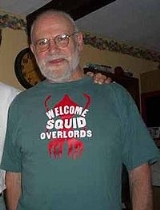
Oliver Sacks

Encyclopedia
Oliver Wolf Sacks, CBE
(born 9 July 1933, London, England), is a British neurologist
and psychologist
residing in New York City. He is a professor of neurology
and psychiatry
at Columbia University
, where he also holds the position of Columbia Artist. He previously spent many years on the clinical faculty of Yeshiva University
's Albert Einstein College of Medicine
.
Sacks is the author of numerous bestselling books, including several collections of case studies of people with neurological disorder
s. His 1973 book Awakenings
was adapted into an Academy Award-nominated film of the same name
in 1990 starring Robin Williams
and Robert De Niro
. He, and his book Musicophilia: Tales of Music and the Brain, were also the subject of "Musical Minds
", an episode of the PBS
series Nova
.
Jewish couple: Samuel Sacks, a physician, and Muriel Elsie Landau, one of the first female surgeons in England. Sacks had a large extended family, and among his first cousins are Israeli statesman Abba Eban
, writer and director Jonathan Lynn
, and economist Robert Aumann
.
When Sacks was six years old, he and his brother Michael were evacuated from London to escape The Blitz
, retreating to a boarding school in the Midlands
, where he remained until 1943. He attended St Paul's School in London. During his youth, he was a keen amateur chemist, as recalled in his memoir Uncle Tungsten. He also learned to share his parents' enthusiasm for medicine and entered The Queen's College
, Oxford University in 1951, from which he received a Bachelor of Arts
(BA) in physiology and biology in 1954. At the same institution, in 1958 he went on to incept as a Master of Arts (MA) and earn an BM BCh, thereby qualifying to practice medicine. He undertook residencies and fellowship work at Mt. Zion Hospital
in San Francisco and at UCLA.
as opposed to BM BCh), Sacks moved to New York, where he has lived and practiced neurology since 1965.
Sacks began consulting at chronic care facility Beth Abraham Hospital (now Beth Abraham Health Services), in Olinville, Bronx
, in 1966. At Beth Abraham, Sacks worked with a group of survivors of the 1920s sleeping sickness, encephalitis lethargica
, who had been unable to move on their own for decades. These patients and his treatment of them were the basis of Sacks' book Awakenings
.
Sacks served as an instructor and later clinical professor of neurology at the Albert Einstein College of Medicine
from 1966 to 2007, and also held an appointment at the New York University School of Medicine
from 1999 to 2007. In July 2007, Sacks joined the faculty of Columbia University Medical Center
as a professor of neurology and psychiatry. At the same time, he was appointed Columbia University's first Columbia University Artist at the university's Morningside campus, recognizing the role of his work in bridging the arts and sciences.
Since 1966, Sacks has served as a neurological consultant to various nursing homes in New York City run by the Little Sisters of the Poor
, and from 1966 to 1991, he was a consulting neurologist at Bronx State Hospital.
Sacks's work at Beth Abraham helped provide the foundation on which the Institute for Music and Neurologic Function
(IMNF) is built; Sacks is currently an honorary medical advisor. In 2000, IMNF honored Sacks with its first Music Has Power Award. The IMNF again bestowed a Music Has Power Award on Sacks in 2006 to commemorate "his 40 years at Beth Abraham and honor his outstanding contributions in support of music therapy and the effect of music on the human brain and mind".
Sacks remains a consultant neurologist to the Little Sisters of the Poor, and maintains a practice in New York City. He serves on the boards of the The Neurosciences Institute
and the New York Botanical Garden
.
and The New York Review of Books
, as well as other medical, scientific, and general publications. He was awarded the Lewis Thomas Prize for Writing about Science
in 2001.
Sacks's work has been featured in a "broader range of media than those of any other contemporary medical author" and in 1990, The New York Times
said he "has become a kind of poet laureate of contemporary medicine". His descriptions of people coping with and adapting to neurological conditions or injuries often illuminate the ways in which the normal brain deals with perception, memory and individuality.
Sacks considers that his literary style grows out of the tradition of 19th-century "clinical anecdotes," a literary style that included detailed narrative case histories. He also counts among his inspirations the case histories of the Russian neuropsychologist A. R. Luria.
Sacks describes his cases with a wealth of narrative detail, concentrating on the experiences of the patient (in the case of his A Leg to Stand On, the patient was himself). The patients he describes are often able to adapt to their situation in different ways despite the fact that their neurological conditions are usually considered incurable. His most famous book, Awakenings
, upon which the 1990 feature film of the same name
is based, describes his experiences using the new drug L-Dopa on Beth Abraham post-encephalitic
patients. Sacks' book Awakenings was also the subject of the first documentary made (in 1974) for the British television series Discovery.
In his other books, he describes cases of Tourette syndrome
and various effects of Parkinson's disease
. The title article of The Man Who Mistook His Wife for a Hat
is about a man with visual agnosia
and was the subject of a 1986 opera by Michael Nyman
. The title article of An Anthropologist on Mars
, which won a Polk Award for magazine reporting, is about Temple Grandin
, a professor with high-functioning autism
. Seeing Voices
, Sacks's 1989 book, covers a variety of topics in deaf studies.
In his book The Island of the Colorblind
Sacks describes the Chamorro people of Guam
, who have a high incidence of a neurodegenerative disease known as Lytico-bodig
(a devastating combination of Amyotrophic lateral sclerosis
ALS, dementia, and parkinsonism). Along with Paul Cox
, Sacks has published papers suggesting a possible environmental cause for the cluster, namely the toxin beta-methylamino L-alanine
(BMAA) from the cycad
nut accumulating by biomagnification
in the flying fox bat
.
Sacks has sometimes faced criticism in the medical and disability studies communities. During the 1970s and 1980s, his book and articles on the "Awakenings" patients were criticized or ignored by much of the medical establishment, on the grounds that his work was not based on the quantitative, double-blind study model. His account of abilities of autistic savants has been questioned by the researcher Makoto Yamaguchi, and Daniel Tammet
shared this view. According to Yamaguchi, Sacks' mathematical explanations are also irrelevant. Arthur K. Shapiro
—described as "the father of modern tic disorder
research"—referring to Sacks' celebrity status and that his literary publications received greater publicity than Shapiro's medical publications, said he is "a much better writer than he is a clinician". Howard Kushner's A Cursing Brain? : The Histories of Tourette Syndrome, says Shapiro "contrasted his own careful clinical work with Sacks's idiosyncratic and anecdotal approach to a clinical investigation".
More sustained has been the critique of his political and ethical positions. Although many characterize Sacks as a "compassionate" writer and doctor, others feel he exploits his subjects. Sacks was called "the man who mistook his patients for a literary career" by British academic and disability-rights activist Tom Shakespeare
, and one critic called his work "a high-brow freak show". Such criticism was echoed by a Sacks-like caricature played by Bill Murray
in the film The Royal Tenenbaums
. Sacks himself has stated "I would hope that a reading of what I write shows respect and appreciation, not any wish to expose or exhibit for the thrill... but it's a delicate business."
(Literature). In 1999, Sacks became a Fellow
of the New York Academy of Sciences
. Also in 1999, he became an Honorary Fellow at The Queen's College, Oxford
. In 2002, he became Fellow of the American Academy of Arts and Sciences
(Class IV—Humanities and Arts, Section 4—Literature). and he was awarded the 2001 Lewis Thomas Prize
by Rockefeller University
.
Sacks has been awarded honorary doctorates
from the College of Staten Island
(1991), Tufts University
(1991), New York Medical College
(1991), Georgetown University
(1992), Medical College of Pennsylvania
(1992), Bard College
(1992), Queen's University
(Ontario) (2001), Gallaudet University
(2005), University of Oxford
(2005), Pontificia Universidad Católica del Perú (2006), and Cold Spring Harbor Laboratory
(2008).
Oxford University
awarded him an honorary
Doctor of Civil Law
degree in June 2005.
He was given the position "Columbia Artist" by Columbia University in 2007. This position was created for him specifically, and gives the university as a whole unconstrained access to him, regardless of department or discipline.
Sacks was appointed Commander of the Order of the British Empire (CBE) in the 2008 Queen's Birthday Honours.
Asteroid
84928 Oliversacks, discovered in 2003 and 2 miles (3.2 km) in diameter, was named in his honor.
In February 2010 Sacks was named to the Freedom From Religion Foundation
's Honorary Board of distinguished achievers.
or face blindness. In a December 2010 interview Sacks discussed how he had also lost his stereoscopic vision in the previous year because of a malignant tumor in his right eye. He now has no remaining vision in his right eye. His loss of stereo vision was recounted in his book The Mind's Eye
which was published in October 2010.
Sacks has never married or lived with anyone and says that he is celibate. He says that he has not had a relationship in many years and has described his own shyness
as "a disease". Sacks swims almost every day and has done so for decades. He discussed his work and his own personal health issues in BBC's Imagine
documentary broadcast on 28 June 2011.
Order of the British Empire
The Most Excellent Order of the British Empire is an order of chivalry established on 4 June 1917 by George V of the United Kingdom. The Order comprises five classes in civil and military divisions...
(born 9 July 1933, London, England), is a British neurologist
Neurologist
A neurologist is a physician who specializes in neurology, and is trained to investigate, or diagnose and treat neurological disorders.Neurology is the medical specialty related to the human nervous system. The nervous system encompasses the brain, spinal cord, and peripheral nerves. A specialist...
and psychologist
Psychologist
Psychologist is a professional or academic title used by individuals who are either:* Clinical professionals who work with patients in a variety of therapeutic contexts .* Scientists conducting psychological research or teaching psychology in a college...
residing in New York City. He is a professor of neurology
Neurology
Neurology is a medical specialty dealing with disorders of the nervous system. Specifically, it deals with the diagnosis and treatment of all categories of disease involving the central, peripheral, and autonomic nervous systems, including their coverings, blood vessels, and all effector tissue,...
and psychiatry
Psychiatry
Psychiatry is the medical specialty devoted to the study and treatment of mental disorders. These mental disorders include various affective, behavioural, cognitive and perceptual abnormalities...
at Columbia University
Columbia University
Columbia University in the City of New York is a private, Ivy League university in Manhattan, New York City. Columbia is the oldest institution of higher learning in the state of New York, the fifth oldest in the United States, and one of the country's nine Colonial Colleges founded before the...
, where he also holds the position of Columbia Artist. He previously spent many years on the clinical faculty of Yeshiva University
Yeshiva University
Yeshiva University is a private university in New York City, with six campuses in New York and one in Israel. Founded in 1886, it is a research university ranked as 45th in the US among national universities by U.S. News & World Report in 2012...
's Albert Einstein College of Medicine
Albert Einstein College of Medicine
Albert Einstein College of Medicine is a graduate school of Yeshiva University. It is a not-for-profit, private, nonsectarian medical school located on the Jack and Pearl Resnick Campus in the Morris Park neighborhood of the borough of the Bronx of New York City...
.
Sacks is the author of numerous bestselling books, including several collections of case studies of people with neurological disorder
Neurological disorder
A neurological disorder is a disorder of the body's nervous system. Structural, biochemical or electrical abnormalities in the brain, spinal cord, or in the nerves leading to or from them, can result in symptoms such as paralysis, muscle weakness, poor coordination, loss of sensation, seizures,...
s. His 1973 book Awakenings
Awakenings (book)
Awakenings is a 1973 non-fiction book by Oliver Sacks. It recounts the life histories of those who had been victims of the 1920s encephalitis lethargica epidemic. Sacks chronicles his efforts in the late 1960s to help these patients at the Beth Abraham Hospital in the Bronx, New York. The...
was adapted into an Academy Award-nominated film of the same name
Awakenings
Awakenings is a 1990 American drama film based on Oliver Sacks's 1973 memoir Awakenings. It tells the true story of British neurologist Oliver Sacks, fictionalized as American Malcolm Sayer and portrayed by Robin Williams who, in 1969, discovers beneficial effects of the then-new drug L-Dopa...
in 1990 starring Robin Williams
Robin Williams
Robin McLaurin Williams is an American actor and comedian. Rising to fame with his role as the alien Mork in the TV series Mork and Mindy, and later stand-up comedy work, Williams has performed in many feature films since 1980. He won the Academy Award for Best Supporting Actor for his performance...
and Robert De Niro
Robert De Niro
Robert De Niro, Jr. is an American actor, director and producer. His first major film roles were in Bang the Drum Slowly and Mean Streets, both in 1973...
. He, and his book Musicophilia: Tales of Music and the Brain, were also the subject of "Musical Minds
Musical Minds
Musical Minds is a NOVA documentary based on neurologist Oliver Sacks's 2007 book Musicophilia: Tales of Music and the Brain about music and the human brain aired on June 30, 2009 on Public Broadcasting Service ....
", an episode of the PBS
Public Broadcasting Service
The Public Broadcasting Service is an American non-profit public broadcasting television network with 354 member TV stations in the United States which hold collective ownership. Its headquarters is in Arlington, Virginia....
series Nova
NOVA (TV series)
Nova is a popular science television series from the U.S. produced by WGBH Boston. It can be seen on the Public Broadcasting Service in the United States, and in more than 100 other countries...
.
Early life
Sacks was the youngest of four children born to a North LondonNorth London
North London is the northern part of London, England. It is an imprecise description and the area it covers is defined differently for a range of purposes. Common to these definitions is that it includes districts located north of the River Thames and is used in comparison with South...
Jewish couple: Samuel Sacks, a physician, and Muriel Elsie Landau, one of the first female surgeons in England. Sacks had a large extended family, and among his first cousins are Israeli statesman Abba Eban
Abba Eban
Abba Eban was an Israeli diplomat and politician.In his career he was Israeli Foreign Affairs Minister, Education Minister, Deputy Prime Minister, and ambassador to the United States and to the United Nations...
, writer and director Jonathan Lynn
Jonathan Lynn
Jonathan Lynn is an English actor, comedy writer and director. He is best known for being the co-writer of Yes Minister and Yes, Prime Minister.-Personal life:...
, and economist Robert Aumann
Robert Aumann
Robert John Aumann is an Israeli-American mathematician and a member of the United States National Academy of Sciences. He is a professor at the Center for the Study of Rationality in the Hebrew University of Jerusalem in Israel...
.
When Sacks was six years old, he and his brother Michael were evacuated from London to escape The Blitz
The Blitz
The Blitz was the sustained strategic bombing of Britain by Nazi Germany between 7 September 1940 and 10 May 1941, during the Second World War. The city of London was bombed by the Luftwaffe for 76 consecutive nights and many towns and cities across the country followed...
, retreating to a boarding school in the Midlands
English Midlands
The Midlands, or the English Midlands, is the traditional name for the area comprising central England that broadly corresponds to the early medieval Kingdom of Mercia. It borders Southern England, Northern England, East Anglia and Wales. Its largest city is Birmingham, and it was an important...
, where he remained until 1943. He attended St Paul's School in London. During his youth, he was a keen amateur chemist, as recalled in his memoir Uncle Tungsten. He also learned to share his parents' enthusiasm for medicine and entered The Queen's College
The Queen's College, Oxford
The Queen's College, founded 1341, is one of the constituent colleges of the University of Oxford in England. Queen's is centrally situated on the High Street, and is renowned for its 18th-century architecture...
, Oxford University in 1951, from which he received a Bachelor of Arts
Bachelor of Arts
A Bachelor of Arts , from the Latin artium baccalaureus, is a bachelor's degree awarded for an undergraduate course or program in either the liberal arts, the sciences, or both...
(BA) in physiology and biology in 1954. At the same institution, in 1958 he went on to incept as a Master of Arts (MA) and earn an BM BCh, thereby qualifying to practice medicine. He undertook residencies and fellowship work at Mt. Zion Hospital
UCSF Medical Center
The University of California, San Francisco Medical Center is a world renowned hospital in research and a teaching hospital in San Francisco, California. It is one of the leading hospitals in the United States and with the UCSF School of Medicine has been the site of various breakthroughs in all...
in San Francisco and at UCLA.
Career
After converting his British qualifications to American recognition (i.e., an MDDoctor of Medicine
Doctor of Medicine is a doctoral degree for physicians. The degree is granted by medical schools...
as opposed to BM BCh), Sacks moved to New York, where he has lived and practiced neurology since 1965.
Sacks began consulting at chronic care facility Beth Abraham Hospital (now Beth Abraham Health Services), in Olinville, Bronx
Olinville, Bronx
Olinville is a disused neighborhood name in the New York City borough of the Bronx. Designating the area around Olinville Avenue, it is today considered to be part of the Williamsbridge section of the Bronx which shares the 10467 ZIP code. The neighborhood is part of Bronx Community Board 12.It is...
, in 1966. At Beth Abraham, Sacks worked with a group of survivors of the 1920s sleeping sickness, encephalitis lethargica
Encephalitis lethargica
Encephalitis lethargica or von Economo disease is an atypical form of encephalitis. Also known as "sleepy sickness" , it was first described by the neurologist Constantin von Economo in 1917. The disease attacks the brain, leaving some victims in a statue-like condition, speechless and motionless...
, who had been unable to move on their own for decades. These patients and his treatment of them were the basis of Sacks' book Awakenings
Awakenings (book)
Awakenings is a 1973 non-fiction book by Oliver Sacks. It recounts the life histories of those who had been victims of the 1920s encephalitis lethargica epidemic. Sacks chronicles his efforts in the late 1960s to help these patients at the Beth Abraham Hospital in the Bronx, New York. The...
.
Sacks served as an instructor and later clinical professor of neurology at the Albert Einstein College of Medicine
Albert Einstein College of Medicine
Albert Einstein College of Medicine is a graduate school of Yeshiva University. It is a not-for-profit, private, nonsectarian medical school located on the Jack and Pearl Resnick Campus in the Morris Park neighborhood of the borough of the Bronx of New York City...
from 1966 to 2007, and also held an appointment at the New York University School of Medicine
New York University School of Medicine
The New York University School of Medicine is one of the graduate schools of New York University. Founded in 1841 as the University Medical College, the NYU School of Medicine is one of the foremost medical schools in the United States....
from 1999 to 2007. In July 2007, Sacks joined the faculty of Columbia University Medical Center
Columbia University Medical Center
Columbia University Medical Center is an academic medical center that includes Columbia University's College of Physicians and Surgeons, College of Dental Medicine, School of Nursing and Mailman School of Public Health...
as a professor of neurology and psychiatry. At the same time, he was appointed Columbia University's first Columbia University Artist at the university's Morningside campus, recognizing the role of his work in bridging the arts and sciences.
Since 1966, Sacks has served as a neurological consultant to various nursing homes in New York City run by the Little Sisters of the Poor
Little Sisters of the Poor
The Little Sisters of the Poor is a Roman Catholic religious order for women. It was founded in the 19th century by Saint Jeanne Jugan near Rennes, France. Jugan felt the need to care for the many impoverished elderly who lined the streets of French towns and cities.This led her to welcome an...
, and from 1966 to 1991, he was a consulting neurologist at Bronx State Hospital.
Sacks's work at Beth Abraham helped provide the foundation on which the Institute for Music and Neurologic Function
Institute for Music and Neurologic Function
The Institute for Music and Neurologic Function is a US nonprofit organization conducting research into and applying music therapy. It is located in The Bronx, New York City....
(IMNF) is built; Sacks is currently an honorary medical advisor. In 2000, IMNF honored Sacks with its first Music Has Power Award. The IMNF again bestowed a Music Has Power Award on Sacks in 2006 to commemorate "his 40 years at Beth Abraham and honor his outstanding contributions in support of music therapy and the effect of music on the human brain and mind".
Sacks remains a consultant neurologist to the Little Sisters of the Poor, and maintains a practice in New York City. He serves on the boards of the The Neurosciences Institute
The Neurosciences Institute
The Neurosciences Institute is a non-profit, scientific research organization dedicated to learning about the brain. Under the leadership of Nobel Laureate Gerald M...
and the New York Botanical Garden
New York Botanical Garden
- See also :* Education in New York City* List of botanical gardens in the United States* List of museums and cultural institutions in New York City- External links :* official website** blog*...
.
Writing
Since 1970, Oliver Sacks has written books about his experience with neurological patients. Sacks's writings have been translated into over twenty five languages. In addition to his books, Sacks is a regular contributor to The New YorkerThe New Yorker
The New Yorker is an American magazine of reportage, commentary, criticism, essays, fiction, satire, cartoons and poetry published by Condé Nast...
and The New York Review of Books
The New York Review of Books
The New York Review of Books is a fortnightly magazine with articles on literature, culture and current affairs. Published in New York City, it takes as its point of departure that the discussion of important books is itself an indispensable literary activity...
, as well as other medical, scientific, and general publications. He was awarded the Lewis Thomas Prize for Writing about Science
Lewis Thomas Prize
The Lewis Thomas Prize for Writing about Science, named for its first recipient, Lewis Thomas, is an annual literary prize awarded by Rockefeller University to scientists deemed to have accomplished a significant literary achievement: it "recognizes scientists as poets"...
in 2001.
Sacks's work has been featured in a "broader range of media than those of any other contemporary medical author" and in 1990, The New York Times
The New York Times
The New York Times is an American daily newspaper founded and continuously published in New York City since 1851. The New York Times has won 106 Pulitzer Prizes, the most of any news organization...
said he "has become a kind of poet laureate of contemporary medicine". His descriptions of people coping with and adapting to neurological conditions or injuries often illuminate the ways in which the normal brain deals with perception, memory and individuality.
Sacks considers that his literary style grows out of the tradition of 19th-century "clinical anecdotes," a literary style that included detailed narrative case histories. He also counts among his inspirations the case histories of the Russian neuropsychologist A. R. Luria.
Sacks describes his cases with a wealth of narrative detail, concentrating on the experiences of the patient (in the case of his A Leg to Stand On, the patient was himself). The patients he describes are often able to adapt to their situation in different ways despite the fact that their neurological conditions are usually considered incurable. His most famous book, Awakenings
Awakenings (book)
Awakenings is a 1973 non-fiction book by Oliver Sacks. It recounts the life histories of those who had been victims of the 1920s encephalitis lethargica epidemic. Sacks chronicles his efforts in the late 1960s to help these patients at the Beth Abraham Hospital in the Bronx, New York. The...
, upon which the 1990 feature film of the same name
Awakenings
Awakenings is a 1990 American drama film based on Oliver Sacks's 1973 memoir Awakenings. It tells the true story of British neurologist Oliver Sacks, fictionalized as American Malcolm Sayer and portrayed by Robin Williams who, in 1969, discovers beneficial effects of the then-new drug L-Dopa...
is based, describes his experiences using the new drug L-Dopa on Beth Abraham post-encephalitic
Encephalitis
Encephalitis is an acute inflammation of the brain. Encephalitis with meningitis is known as meningoencephalitis. Symptoms include headache, fever, confusion, drowsiness, and fatigue...
patients. Sacks' book Awakenings was also the subject of the first documentary made (in 1974) for the British television series Discovery.
In his other books, he describes cases of Tourette syndrome
Tourette syndrome
Tourette syndrome is an inherited neuropsychiatric disorder with onset in childhood, characterized by multiple physical tics and at least one vocal tic; these tics characteristically wax and wane...
and various effects of Parkinson's disease
Parkinson's disease
Parkinson's disease is a degenerative disorder of the central nervous system...
. The title article of The Man Who Mistook His Wife for a Hat
The Man Who Mistook His Wife for a Hat
The Man Who Mistook His Wife for a Hat and Other Clinical Tales is a 1985 book by neurologist Oliver Sacks describing the case histories of some of his patients. The title of the book comes from the case study of a man with visual agnosia...
is about a man with visual agnosia
Visual agnosia
Visual agnosia is the inability of the brain to make sense of or make use of some part of otherwise normal visual stimulus and is typified by the inability to recognize familiar objects or faces...
and was the subject of a 1986 opera by Michael Nyman
Michael Nyman
Michael Laurence Nyman, CBE is an English composer of minimalist music, pianist, librettist and musicologist, known for the many film scores he wrote during his lengthy collaboration with the filmmaker Peter Greenaway, and his multi-platinum soundtrack album to Jane Campion's The Piano...
. The title article of An Anthropologist on Mars
An Anthropologist on Mars
An Anthropologist on Mars: Seven Paradoxical Tales is a 1995 book by neurologist Oliver Sacks consisting of seven medical case histories of individuals with neurological conditions such as autism and Tourette syndrome...
, which won a Polk Award for magazine reporting, is about Temple Grandin
Temple Grandin
Temple Grandin is an American doctor of animal science and professor at Colorado State University, bestselling author, and consultant to the livestock industry on animal behavior...
, a professor with high-functioning autism
Autism
Autism is a disorder of neural development characterized by impaired social interaction and communication, and by restricted and repetitive behavior. These signs all begin before a child is three years old. Autism affects information processing in the brain by altering how nerve cells and their...
. Seeing Voices
Seeing Voices
Seeing Voices: A Journey Into the World of the Deaf is a 1989 book by neurologist Oliver Sacks. The book covers a variety of topics in deaf studies, including sign language, the neurology of deafness, the history of the treatment of deaf Americans, and linguistic and social challenges facing the...
, Sacks's 1989 book, covers a variety of topics in deaf studies.
In his book The Island of the Colorblind
The Island of the Colorblind
The Island of the Colorblind is a book by neurologist Oliver Sacks about achromatopsia on the Micronesian atoll of Pingelap. The second half of the book is devoted to the mystery of Lytico-Bodig disease in Guam.-External links:*...
Sacks describes the Chamorro people of Guam
Guam
Guam is an organized, unincorporated territory of the United States located in the western Pacific Ocean. It is one of five U.S. territories with an established civilian government. Guam is listed as one of 16 Non-Self-Governing Territories by the Special Committee on Decolonization of the United...
, who have a high incidence of a neurodegenerative disease known as Lytico-bodig
Lytico-Bodig disease
Lytico-Bodig disease, sometimes spelled Lytigo-bodig is a neurological disease of uncertain aetiology that exists in the United States territory of Guam....
(a devastating combination of Amyotrophic lateral sclerosis
Amyotrophic lateral sclerosis
Amyotrophic lateral sclerosis , also referred to as Lou Gehrig's disease, is a form of motor neuron disease caused by the degeneration of upper and lower neurons, located in the ventral horn of the spinal cord and the cortical neurons that provide their efferent input...
ALS, dementia, and parkinsonism). Along with Paul Cox
Paul Alan Cox
Dr. Paul Alan Cox is an ethnobotanist whose scientific research focuses on the ecology of island plants and the uses of plants by island peoples. After receiving his B.S. in Botany from Brigham Young University, he was awarded a Fulbright Fellowship to read for his M.Sc. in Ecology at the...
, Sacks has published papers suggesting a possible environmental cause for the cluster, namely the toxin beta-methylamino L-alanine
Beta-methylamino L-alanine
β-Methylamino-L-alanine, or BMAA, is a neurotoxin found in the seeds of the cycad. This non-proteinogenic amino acid is produced by cyanobacteria of the genus Nostoc that live on the plant's roots.-Neurotoxicity:BMAA is considered a possible cause of the amyotrophic lateral...
(BMAA) from the cycad
Cycad
Cycads are seed plants typically characterized by a stout and woody trunk with a crown of large, hard and stiff, evergreen leaves. They usually have pinnate leaves. The individual plants are either all male or all female . Cycads vary in size from having a trunk that is only a few centimeters...
nut accumulating by biomagnification
Biomagnification
Biomagnification, also known as bioamplification or biological magnification, is the increase in concentration of a substance that occurs in a food chain as a consequence of:* Persistence...
in the flying fox bat
Pteropus
Bats of the genus Pteropus, belonging to the megabat or Megachiroptera sub-order, are the largest bats in the world. They are commonly known as the fruit bats or flying foxes among other colloquial names...
.
Sacks has sometimes faced criticism in the medical and disability studies communities. During the 1970s and 1980s, his book and articles on the "Awakenings" patients were criticized or ignored by much of the medical establishment, on the grounds that his work was not based on the quantitative, double-blind study model. His account of abilities of autistic savants has been questioned by the researcher Makoto Yamaguchi, and Daniel Tammet
Daniel Tammet
Daniel Tammet is a British writer. His best selling 2006 memoir, Born On A Blue Day, about his life with high-functioning autism and savant syndrome, was named a "Best Book for Young Adults" in 2008 by the American Library Association.Tammet's second book, Embracing the Wide Sky, was named one of...
shared this view. According to Yamaguchi, Sacks' mathematical explanations are also irrelevant. Arthur K. Shapiro
Arthur K. Shapiro
Arthur K. Shapiro was a psychiatrist and expert on Tourette syndrome. His "contributions to the understanding of Tourette syndrome completely changed the prevailing view of this disorder"; he has been described as "the father of modern tic disorder research" and is "revered by his colleagues as...
—described as "the father of modern tic disorder
Tic disorder
Tic disorders are defined in the Diagnostic and Statistical Manual of Mental Disorders based on type and duration of tics...
research"—referring to Sacks' celebrity status and that his literary publications received greater publicity than Shapiro's medical publications, said he is "a much better writer than he is a clinician". Howard Kushner's A Cursing Brain? : The Histories of Tourette Syndrome, says Shapiro "contrasted his own careful clinical work with Sacks's idiosyncratic and anecdotal approach to a clinical investigation".
More sustained has been the critique of his political and ethical positions. Although many characterize Sacks as a "compassionate" writer and doctor, others feel he exploits his subjects. Sacks was called "the man who mistook his patients for a literary career" by British academic and disability-rights activist Tom Shakespeare
Tom Shakespeare
Sir Thomas William Shakespeare, 3rd Baronet , better known as Tom Shakespeare, is a geneticist and sociologist. He has achondroplasia....
, and one critic called his work "a high-brow freak show". Such criticism was echoed by a Sacks-like caricature played by Bill Murray
Bill Murray
William James "Bill" Murray is an American actor and comedian. He first gained national exposure on Saturday Night Live in which he earned an Emmy Award and later went on to star in a number of critically and commercially successful comedic films, including Caddyshack , Ghostbusters , and...
in the film The Royal Tenenbaums
The Royal Tenenbaums
The Royal Tenenbaums is a 2001 American comedy-drama film directed by Wes Anderson and co-written with Owen Wilson. The film stars Gene Hackman and Anjelica Huston, with Danny Glover, Bill Murray, Gwyneth Paltrow, Ben Stiller, Luke Wilson, and Owen Wilson....
. Sacks himself has stated "I would hope that a reading of what I write shows respect and appreciation, not any wish to expose or exhibit for the thrill... but it's a delicate business."
Honors
Since 1996, Sacks has been a member of The American Academy of Arts and LettersThe American Academy of Arts and Letters
The American Academy of Arts and Letters is a 250-member honor society; its goal is to "foster, assist, and sustain excellence" in American literature, music, and art. Located in Washington Heights, a neighborhood in Upper Manhattan in New York, it shares Audubon Terrace, its Beaux Arts campus on...
(Literature). In 1999, Sacks became a Fellow
Fellow
A fellow in the broadest sense is someone who is an equal or a comrade. The term fellow is also used to describe a person, particularly by those in the upper social classes. It is most often used in an academic context: a fellow is often part of an elite group of learned people who are awarded...
of the New York Academy of Sciences
New York Academy of Sciences
The New York Academy of Sciences is the third oldest scientific society in the United States. An independent, non-profit organization with more than members in 140 countries, the Academy’s mission is to advance understanding of science and technology...
. Also in 1999, he became an Honorary Fellow at The Queen's College, Oxford
The Queen's College, Oxford
The Queen's College, founded 1341, is one of the constituent colleges of the University of Oxford in England. Queen's is centrally situated on the High Street, and is renowned for its 18th-century architecture...
. In 2002, he became Fellow of the American Academy of Arts and Sciences
American Academy of Arts and Sciences
The American Academy of Arts and Sciences is an independent policy research center that conducts multidisciplinary studies of complex and emerging problems. The Academy’s elected members are leaders in the academic disciplines, the arts, business, and public affairs.James Bowdoin, John Adams, and...
(Class IV—Humanities and Arts, Section 4—Literature). and he was awarded the 2001 Lewis Thomas Prize
Lewis Thomas Prize
The Lewis Thomas Prize for Writing about Science, named for its first recipient, Lewis Thomas, is an annual literary prize awarded by Rockefeller University to scientists deemed to have accomplished a significant literary achievement: it "recognizes scientists as poets"...
by Rockefeller University
Rockefeller University
The Rockefeller University is a private university offering postgraduate and postdoctoral education. It has a strong concentration in the biological sciences. It is also known for producing numerous Nobel laureates...
.
Sacks has been awarded honorary doctorates
Honorary degree
An honorary degree or a degree honoris causa is an academic degree for which a university has waived the usual requirements, such as matriculation, residence, study, and the passing of examinations...
from the College of Staten Island
College of Staten Island
The College of Staten Island is a four-year, senior college of and is one of the 11 senior colleges in the City University of New York. Programs in the liberal arts and sciences and professional studies lead to bachelor's and associate's degrees. The master's degree is awarded in 13 professional...
(1991), Tufts University
Tufts University
Tufts University is a private research university located in Medford/Somerville, near Boston, Massachusetts. It is organized into ten schools, including two undergraduate programs and eight graduate divisions, on four campuses in Massachusetts and on the eastern border of France...
(1991), New York Medical College
New York Medical College
New York Medical College, aka New York Med or NYMC, is a private graduate health sciences university based in Westchester County, New York, a suburb of New York City and a part of the New York Metropolitan Area...
(1991), Georgetown University
Georgetown University
Georgetown University is a private, Jesuit, research university whose main campus is in the Georgetown neighborhood of Washington, D.C. Founded in 1789, it is the oldest Catholic university in the United States...
(1992), Medical College of Pennsylvania
Drexel University College of Medicine
Drexel University College of Medicine is the medical school of Drexel University. The medical school has the nation's largest enrollment for a private medical school, and represents the consolidation of two medical schools: the nation's first medical school for women and the first U.S. college of...
(1992), Bard College
Bard College
Bard College, founded in 1860 as "St. Stephen's College", is a small four-year liberal arts college located in Annandale-on-Hudson, New York.-Location:...
(1992), Queen's University
Queen's University
Queen's University, , is a public research university located in Kingston, Ontario, Canada. Founded on 16 October 1841, the university pre-dates the founding of Canada by 26 years. Queen's holds more more than of land throughout Ontario as well as Herstmonceux Castle in East Sussex, England...
(Ontario) (2001), Gallaudet University
Gallaudet University
Gallaudet University is a federally-chartered university for the education of the deaf and hard of hearing, located in the District of Columbia, U.S...
(2005), University of Oxford
University of Oxford
The University of Oxford is a university located in Oxford, United Kingdom. It is the second-oldest surviving university in the world and the oldest in the English-speaking world. Although its exact date of foundation is unclear, there is evidence of teaching as far back as 1096...
(2005), Pontificia Universidad Católica del Perú (2006), and Cold Spring Harbor Laboratory
Cold Spring Harbor Laboratory
The Cold Spring Harbor Laboratory is a private, non-profit institution with research programs focusing on cancer, neurobiology, plant genetics, genomics and bioinformatics. The Laboratory has a broad educational mission, including the recently established Watson School of Biological Sciences. It...
(2008).
Oxford University
University of Oxford
The University of Oxford is a university located in Oxford, United Kingdom. It is the second-oldest surviving university in the world and the oldest in the English-speaking world. Although its exact date of foundation is unclear, there is evidence of teaching as far back as 1096...
awarded him an honorary
Honorary degree
An honorary degree or a degree honoris causa is an academic degree for which a university has waived the usual requirements, such as matriculation, residence, study, and the passing of examinations...
Doctor of Civil Law
Doctor of Civil Law
Doctor of Civil Law is a degree offered by some universities, such as the University of Oxford, instead of the more common Doctor of Laws degrees....
degree in June 2005.
He was given the position "Columbia Artist" by Columbia University in 2007. This position was created for him specifically, and gives the university as a whole unconstrained access to him, regardless of department or discipline.
Sacks was appointed Commander of the Order of the British Empire (CBE) in the 2008 Queen's Birthday Honours.
Asteroid
Asteroid
Asteroids are a class of small Solar System bodies in orbit around the Sun. They have also been called planetoids, especially the larger ones...
84928 Oliversacks, discovered in 2003 and 2 miles (3.2 km) in diameter, was named in his honor.
In February 2010 Sacks was named to the Freedom From Religion Foundation
Freedom From Religion Foundation
The Freedom From Religion Foundation is an American freethought organization based in Madison, Wisconsin. Its purposes, as stated in its bylaws, are to promote the separation of church and state and to educate the public on matters relating to atheism, agnosticism and nontheism. The FFRF publishes...
's Honorary Board of distinguished achievers.
Personal life
For his entire life Sacks has had a condition known as prosopagnosiaProsopagnosia
Prosopagnosia is a disorder of face perception where the ability to recognize faces is impaired, while the ability to recognize other objects may be relatively intact...
or face blindness. In a December 2010 interview Sacks discussed how he had also lost his stereoscopic vision in the previous year because of a malignant tumor in his right eye. He now has no remaining vision in his right eye. His loss of stereo vision was recounted in his book The Mind's Eye
The Mind's Eye (book)
The Mind's Eye is a book by neurologist Oliver Sacks, published in October 2010. The book contains case studies of people whose ability to navigate the world visually and communicate with others have been compromised, including the author's own experience with cancer of the eye and his life-long...
which was published in October 2010.
Sacks has never married or lived with anyone and says that he is celibate. He says that he has not had a relationship in many years and has described his own shyness
Shyness
In humans, shyness is a social psychology term used to describe the feeling of apprehension, lack of comfort, or awkwardness experienced when a person is in proximity to, approaching, or being approached by other people, especially in new situations or with unfamiliar people...
as "a disease". Sacks swims almost every day and has done so for decades. He discussed his work and his own personal health issues in BBC's Imagine
Imagine (TV series)
Imagine is a wide ranging arts series first broadcast on BBC One in 2003, hosted and executive produced by Alan Yentob. Each series usually consists of 4 to 7 episodes, each on a different topic...
documentary broadcast on 28 June 2011.
Publications
- MigraineMigraine (book)Migraine is the first book written by Oliver Sacks, a well-known neurologist and author with a practice in New York City. The book was written in 1967, mostly over a nine-day period, and first published in 1970...
(1970) - AwakeningsAwakenings (book)Awakenings is a 1973 non-fiction book by Oliver Sacks. It recounts the life histories of those who had been victims of the 1920s encephalitis lethargica epidemic. Sacks chronicles his efforts in the late 1960s to help these patients at the Beth Abraham Hospital in the Bronx, New York. The...
(1973) - A Leg to Stand On (1984) (Sacks's own experience, after an accident, of losing the awareness of one of his legs)
- The Man Who Mistook His Wife for a HatThe Man Who Mistook His Wife for a HatThe Man Who Mistook His Wife for a Hat and Other Clinical Tales is a 1985 book by neurologist Oliver Sacks describing the case histories of some of his patients. The title of the book comes from the case study of a man with visual agnosia...
(1985) - Seeing Voices: A Journey Into the World of the DeafSeeing VoicesSeeing Voices: A Journey Into the World of the Deaf is a 1989 book by neurologist Oliver Sacks. The book covers a variety of topics in deaf studies, including sign language, the neurology of deafness, the history of the treatment of deaf Americans, and linguistic and social challenges facing the...
(1989) Online access - An Anthropologist on MarsAn Anthropologist on MarsAn Anthropologist on Mars: Seven Paradoxical Tales is a 1995 book by neurologist Oliver Sacks consisting of seven medical case histories of individuals with neurological conditions such as autism and Tourette syndrome...
(1995) - The Island of the ColorblindThe Island of the ColorblindThe Island of the Colorblind is a book by neurologist Oliver Sacks about achromatopsia on the Micronesian atoll of Pingelap. The second half of the book is devoted to the mystery of Lytico-Bodig disease in Guam.-External links:*...
(1997) (total congenital color blindnessColor blindnessColor blindness or color vision deficiency is the inability or decreased ability to see color, or perceive color differences, under lighting conditions when color vision is not normally impaired...
in an island society, Guam disease) - Uncle Tungsten: Memories of a Chemical BoyhoodUncle Tungsten: Memories of a Chemical BoyhoodUncle Tungsten: Memories of a Chemical Boyhood is a memoir by Oliver Sacks about his childhood published in 2001. The book is named for Sacks's Uncle Dave, owner of a business named Tungstalite, which made incandescent lightbulbs with a tungsten filament, whom Oliver nicknamed Uncle Tungsten. Uncle...
(2001) - Oaxaca Journal (2002)
- Musicophilia: Tales of Music and the BrainMusicophilia: Tales of Music and the BrainMusicophilia: Tales of Music and the Brain is a 2007 book by neurologist Oliver Sacks about music and the human brain. The book was released on October 16, 2007 and published by Knopf....
(2007) - The Mind's EyeThe Mind's Eye (book)The Mind's Eye is a book by neurologist Oliver Sacks, published in October 2010. The book contains case studies of people whose ability to navigate the world visually and communicate with others have been compromised, including the author's own experience with cancer of the eye and his life-long...
(2010)
External links
- Oliver Sacks' official website
- Oliver Sacks at Columbia UniversityColumbia UniversityColumbia University in the City of New York is a private, Ivy League university in Manhattan, New York City. Columbia is the oldest institution of higher learning in the state of New York, the fifth oldest in the United States, and one of the country's nine Colonial Colleges founded before the...
- Oliver Sacks article archive at The New York Review of BooksThe New York Review of BooksThe New York Review of Books is a fortnightly magazine with articles on literature, culture and current affairs. Published in New York City, it takes as its point of departure that the discussion of important books is itself an indispensable literary activity...
- Oliver Sacks on CNNCNNCable News Network is a U.S. cable news channel founded in 1980 by Ted Turner. Upon its launch, CNN was the first channel to provide 24-hour television news coverage, and the first all-news television channel in the United States...
in January 2011 - Oliver Sacks on Science Friday, National Public Radio