

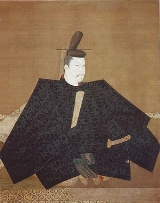
Minamoto no Yoritomo

Encyclopedia
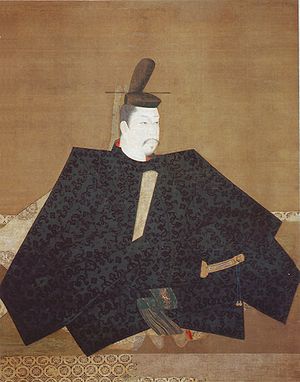
Shogun
A was one of the hereditary military dictators of Japan from 1192 to 1867. In this period, the shoguns, or their shikken regents , were the de facto rulers of Japan though they were nominally appointed by the emperor...
of the Kamakura Shogunate
Kamakura shogunate
The Kamakura shogunate was a military dictatorship in Japan headed by the shoguns from 1185 to 1333. It was based in Kamakura. The Kamakura period draws its name from the capital of the shogunate...
of Japan
Japan
Japan is an island nation in East Asia. Located in the Pacific Ocean, it lies to the east of the Sea of Japan, China, North Korea, South Korea and Russia, stretching from the Sea of Okhotsk in the north to the East China Sea and Taiwan in the south...
. He ruled from 1192 until 1199.
Early life and exile (1147–1180)
Yoritomo was the third son of Minamoto no YoshitomoMinamoto no Yoshitomo
was the head of the Minamoto clan and a general of the late Heian period of Japanese history. His son Minamoto no Yoritomo became shogun and founded the Kamakura Shogunate, the first shogunate in the history of Japan.-Hōgen Rebellion:...
, heir of the Minamoto (Seiwa Genji
Seiwa Genji
The ' were the most successful and powerful of the many branch families of the Japanese Minamoto clan. Many of the most famous Minamoto warriors, including Minamoto Yoshiie, also known as "Hachimantaro", or God of War, and Minamoto no Yoritomo, the founder of the Kamakura shogunate, were descended...
) clan, and his official wife, a daughter of Fujiwara no Suenori, who was a member of the illustrious Fujiwara clan. Yoritomo was born in Heian-kyō, then the capital of Japan and now known as Kyoto
Kyoto
is a city in the central part of the island of Honshū, Japan. It has a population close to 1.5 million. Formerly the imperial capital of Japan, it is now the capital of Kyoto Prefecture, as well as a major part of the Osaka-Kobe-Kyoto metropolitan area.-History:...
. At that time Yoritomo's grandfather Minamoto no Tameyoshi
Minamoto no Tameyoshi
was head of the Minamoto samurai clan during his lifetime, and grandson of Minamoto no Yoshiie; he led the Minamoto in the Hōgen Rebellion. Tameyoshi is also known as ....
, was the head of the Minamoto.
In 1156, factional divisions in the court erupted into open warfare within the capital itself. The cloistered
Cloistered rule
The Insei system , or cloistered rule, was a specific form of government in Japan during the Heian period. In this bifurcated system, an Emperor abdicated, but he retained power and influence. The emperors who withdrew to live in monasteries continued to act in ways which were intended to...
Emperor Toba
Emperor Toba
was the 74th emperor of Japan, according to the traditional order of succession.Toba's reign spanned the years from 1107 through 1123.- Genealogy :...
and his son Emperor Go-Shirakawa
Emperor Go-Shirakawa
Emperor Go-Shirakawa was the 77th emperor of Japan, according to the traditional order of succession...
sided with the son of Fujiwara regent Fujiwara no Tadazane
Fujiwara no Tadazane
was a Japanese noble and the grandson of Fujiwara no Morozane. He built a villa, Fukedono, north of the Byōdō-in Temple in 1114. He was the father of Fujiwara no Tadamichi....
, Fujiwara no Tadamichi
Fujiwara no Tadamichi
was the eldest son of the Japanese regent Fujiwara no Tadazane and a member of the politically powerful Fujiwara clan. He was the father of Fujiwara no Kanefusa and Jien.In the Hōgen Rebellion of 1156, Tadamichi sided with the Emperor Go-Shirakawa....
as well as Taira no Kiyomori
Taira no Kiyomori
was a general of the late Heian period of Japan. He established the first samurai-dominated administrative government in the history of Japan.After the death of his father Taira no Tadamori in 1153, Kiyomori assumed control of the Taira clan and ambitiously entered the political realm in which he...
(a member of the Taira clan), while Cloistered Emperor Sutoku
Emperor Sutoku
was the 75th emperor of Japan, according to the traditional order of succession.Sutoku's reign spanned the years from 1123 through 1142.-Genealogy:Before his ascension to the Chrysanthemum Throne, his personal name was Akihito ....
sided with Tadazane's younger son, Fujiwara no Yorinaga
Fujiwara no Yorinaga
, of the Fujiwara clan, held the position of Imperial Palace Minister of the Right.Born in 1120, Yorinaga ascended quickly through the political ranks achieving formidable office by the age of 17...
. This was known as the Hōgen Rebellion
Hogen Rebellion
The was a short civil war fought in order to resolve a dispute about Japanese Imperial succession. The dispute was also about the degree of control exercised by the Fujiwara clan who had become hereditary Imperial regents during the Heian period....
, or the 'Hogen Disturbance'.
Unfortunately the Seiwa Genji were split. The head of the clan, Tameyoshi, sided with Cloistered Emperor Sutoku while his son, Yoshitomo, sided with Cloistered Emperor Toba and Emperor Go-Shirakawa, as well as Kiyomori. In the end, the supporters of Emperor Go-Shirakawa won the civil war, thus ensuring victory for Yoshitomo and Kiyomori. Cloistered Emperor Sutoku was placed under house arrest, and Yorinaga was fatally wounded in battle. Tameyoshi was executed as well, even after numerous pleas from Yoshitomo. Nonetheless, Emperor Go-Shirakawa and Kiyomori were ruthless, and Yoshitomo found himself as the head of the Minamoto, while Yoritomo became the heir.
Since Yoritomo was descended from the imperial family on his father's side and the Fujiwara noble family on his mother's side, he received his first court title and was appointed an administrator. Nonetheless, in Kyoto, the Taira clan, now under the leadership of Kiyomori, and the Minamoto clan, under the leadership of Yoshitomo, began to factionalize again.
Kiyomori supported the Emperor Nijō
Emperor Nijo
Emperor Nijō was the 78th emperor of Japan, according to the traditional order of succession. His reign spaned the years from 1158 through 1165.- Genealogy :...
, who was the son of Go-Shirakawa. Kiyomori had the support of Fujiwara no Nobuyori
Fujiwara no Nobuyori
was one of the chief allies of Minamoto no Yoshitomo in the Heiji Rebellion of 1159. As a member of the Fujiwara clan, Nobuyori might have been in line to become regent, and he desired power, which he obtained for a short while following the Rebellion....
. Meanwhile, Yoshitomo supported the now cloistered Emperor Go-Shirakawa
Emperor Go-Shirakawa
Emperor Go-Shirakawa was the 77th emperor of Japan, according to the traditional order of succession...
and their old ally Fujiwara no Tadamichi
Fujiwara no Tadamichi
was the eldest son of the Japanese regent Fujiwara no Tadazane and a member of the politically powerful Fujiwara clan. He was the father of Fujiwara no Kanefusa and Jien.In the Hōgen Rebellion of 1156, Tadamichi sided with the Emperor Go-Shirakawa....
and the scholar-courtier Fujiwara no Michinori
Fujiwara no Michinori
, also known as ', an aristocratic Confucian scholar and monk, was one of the chief advisors to Emperor Nijō, and one of the chief allies of Taira no Kiyomori, particularly during the Heiji Rebellion of 1159....
. This was known as the Heiji Rebellion
Heiji Rebellion
The was a short civil war fought in order to resolve a dispute about political power. The Heiji no ran encompassed clashes between rival subjects of the cloistered Emperor Go-Shirakawa of Japan in 1159. It was preceded by the Hōgen Rebellion in 1156...
, or the 'Heiji Disturbance'. Nonetheless, the Minamoto were not well prepared, and the Taira took control of Kyoto.
In the aftermath, harsh terms were imposed on the Minamoto and their allies. Fujiwara no Michinori and Fujiwara no Tadamichi were executed, while the palace of Cloistered Emperor Go-Shirakawa was burned down by the Taira. Meanwhile, Yoshitomo fled the capital just as the Taira marched in 1160, but was betrayed and executed by a retainer in Owari
Owari Province
was an old province of Japan that is now the western half of present day Aichi Prefecture, including much of modern Nagoya. Its abbreviation is Bishū .-History:The province was created in 646....
. As for Yoritomo, the new head of the Minamoto, he was exiled to Hirugashima, an island in Izu province
Izu Province
was a province of Japan in the area of Shizuoka Prefecture. Izu bordered on Sagami and Suruga Provinces. Its abbreviated form name was .The mainland portion of Izu Province, comprising the Izu Peninsula is today the eastern portion of Shizuoka Prefecture and the Izu Islands are now part of...
, which at that time was under the rule of the Hōjō
Hojo clan
See the late Hōjō clan for the Hōjō clan of the Sengoku Period.The in the history of Japan was a family who controlled the hereditary title of shikken of the Kamakura Shogunate. In practice, the family had actual governmental power, many times dictatorial, rather than Kamakura shoguns, or the...
clan. Kiyomori and the Taira clan were now the undisputed leaders of Japan. Yoritomo was not executed by Kiyomori because of pleas from Kiyomori's stepmother Lady Ikenozenni. Yoritomo's half brother, Minamoto no Noriyori
Minamoto no Noriyori
was a late Heian period general, who fought alongside his brothers Minamoto no Yoritomo and Minamoto no Yoshitsune at a number of battles of the Genpei War. The sixth son of Minamoto no Yoshitomo, he was spared along with his brothers in 1160 by Taira no Kiyomori following Yoshitomo's death.He...
, was also exiled, while Minamoto no Yoshitsune
Minamoto no Yoshitsune
was a general of the Minamoto clan of Japan in the late Heian and early Kamakura period. Yoshitsune was the ninth son of Minamoto no Yoshitomo, and the third and final son and child that Yoshitomo would father with Tokiwa Gozen. Yoshitsune's older brother Minamoto no Yoritomo founded the Kamakura...
, another half-brother, was forced to enter a monastery. All other siblings were executed.
Yoritomo grew up with a life in exile. In 1179, he married into the Hōjō clan
Hojo clan
See the late Hōjō clan for the Hōjō clan of the Sengoku Period.The in the history of Japan was a family who controlled the hereditary title of shikken of the Kamakura Shogunate. In practice, the family had actual governmental power, many times dictatorial, rather than Kamakura shoguns, or the...
, led by Hōjō Tokimasa
Hojo Tokimasa
was the first Hōjō shikken of the Kamakura bakufu and head of the Hōjō clan. He was shikken from the death of Minamoto no Yoritomo in 1199 until his abdication in 1205.- Background: The Hōjō Clan :...
. He married Tokimasa's daughter, Hōjō Masako
Hojo Masako
was the eldest child of Hōjō Tokimasa by his wife Hōjō no Maki, the first shikken, or regent, of the Kamakura shogunate. She was the sister of Hōjō Yoshitoki, and was married to Minamoto no Yoritomo, the first shogun of the Kamakura period...
. Meanwhile, he was notified of events in Kyoto thanks to helpful friends. Soon enough, Yoritomo's passive exile was to be over.
Call to arms and the Genpei War (1180–1185)
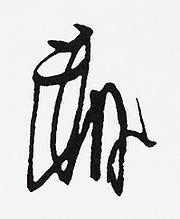
Prince Mochihito
' , also known as the Takakura Prince, and as Minamoto Mochimitsu, was a son of Emperor Go-Shirakawa. He is noted for his role in starting the Genpei War....
, a son of Cloistered Emperor Go-Shirakawa
Emperor Go-Shirakawa
Emperor Go-Shirakawa was the 77th emperor of Japan, according to the traditional order of succession...
, humiliated by the Taira because of the Taira-backed accession of the throne of his nephew, Emperor Antoku
Emperor Antoku
Emperor Antoku was the 81st emperor of Japan, according to the traditional order of succession. His reign spanned the years from 1180 through 1185. During this time, the imperial family was involved in a bitter struggle between warring clans...
(who was half Taira himself) made a national call to arms of the Minamoto clan all over Japan to rebel against the Taira. Yoritomo decided to take part in this, especially after things escalated between the Taira and Minamoto after the death of Minamoto no Yorimasa
Minamoto no Yorimasa
' was a prominent Japanese poet whose works appeared in various anthologies. He served eight different emperors in his long career, holding posts such as hyōgo no kami...
and Prince Mochihito
Prince Mochihito
' , also known as the Takakura Prince, and as Minamoto Mochimitsu, was a son of Emperor Go-Shirakawa. He is noted for his role in starting the Genpei War....
himself. Yoritomo set himself up as the rightful heir of the Minamoto clan, and, with financial backing of the Hōjō, his wife's family, he set up a capital at Kamakura
Kamakura, Kanagawa
is a city located in Kanagawa Prefecture, Japan, about south-south-west of Tokyo. It used to be also called .Although Kamakura proper is today rather small, it is often described in history books as a former de facto capital of Japan as the seat of the Shogunate and of the Regency during the...
in the east. Not all Minamoto thought of Yoritomo as rightful heir. His uncle, Minamoto no Yukiie
Minamoto no Yukiie
was the brother of Minamoto no Yoshitomo, and one of the commanders of the Minamoto forces in the Genpei War at the end of the Heian period of Japanese history....
, and his cousin Minamoto no Yoshinaka
Minamoto no Yoshinaka
was a general of the late Heian Period of Japanese history. A member of the Minamoto samurai clan, Minamoto no Yoritomo was his cousin and rival during the Genpei War between the Minamoto and the Taira clans....
conspired against him.
In 1181, Taira no Kiyomori died, and the Taira clan was now led by Taira no Munemori
Taira no Munemori
was heir to Taira no Kiyomori, and one of the Taira clan's chief commanders in the Genpei War.As his father Taira no Kiyomori lay on his deathbed, Kiyomori declared, among his last wishes, that all affairs of the clan be placed in Munemori's hands...
. Munemori took a much more aggressive policy against the Minamoto, and attacked Minamoto bases from Kyoto. Nonetheless, Yoritomo was well protected in Kamakura. His half-brothers, Minamoto no Yoshitsune
Minamoto no Yoshitsune
was a general of the Minamoto clan of Japan in the late Heian and early Kamakura period. Yoshitsune was the ninth son of Minamoto no Yoshitomo, and the third and final son and child that Yoshitomo would father with Tokiwa Gozen. Yoshitsune's older brother Minamoto no Yoritomo founded the Kamakura...
and Minamoto no Noriyori
Minamoto no Noriyori
was a late Heian period general, who fought alongside his brothers Minamoto no Yoritomo and Minamoto no Yoshitsune at a number of battles of the Genpei War. The sixth son of Minamoto no Yoshitomo, he was spared along with his brothers in 1160 by Taira no Kiyomori following Yoshitomo's death.He...
defeated the Taira in several key battles, but they could not stop Minamoto no Yoshinaka, Yoritomo's rival, from entering Kyoto
Kyoto
is a city in the central part of the island of Honshū, Japan. It has a population close to 1.5 million. Formerly the imperial capital of Japan, it is now the capital of Kyoto Prefecture, as well as a major part of the Osaka-Kobe-Kyoto metropolitan area.-History:...
in 1183 and chasing the Taira south. They took Emperor Antoku with them, so when the Minamoto entered the capital, they enthroned the half-brother of Antoku, Emperor Go-Toba
Emperor Go-Toba
was the 82nd emperor of Japan, according to the traditional order of succession. His reign spanned the years from 1183 through 1198....
, as the new emperor.
In 1180, Yoritomo was defeated at Ishibashiyama
Battle of Ishibashiyama
The ' was the first in which Minamoto Yoritomo, who was to become shogun less than a decade later, was commander of the Minamoto forces. In this, his first attempt to challenge the Taira, he was assisted by warriors from the Miura clan....
, his first major battle; but his early years as an insurgent chief were mostly spent in consolidating his power over the warrior aristocrats in the Kantō area, most of whom accepted his authority peaceably. From 1181 to 1184, a de facto truce with the Taira dominated court allowed Yoritomo the time to build an administration of his own, centered on his military headquarters in Kamakura. In the end he triumphed over his rival cousins, who sought to steal from him control of the clan, and over the Taira, who suffered a terrible defeat at the Battle of Dan-no-ura
Battle of Dan-no-ura
The ' was a major sea battle of the Genpei War, occurring at Dan-no-ura, in the Shimonoseki Strait off the southern tip of Honshū. On March 24, 1185, the Genji clan fleet, led by Minamoto no Yoshitsune, defeated the Heike clan fleet, during a half-day engagement.The Taira were outnumbered, but...
in 1185. Yoritomo thus established the supremacy of the warrior samurai
Samurai
is the term for the military nobility of pre-industrial Japan. According to translator William Scott Wilson: "In Chinese, the character 侍 was originally a verb meaning to wait upon or accompany a person in the upper ranks of society, and this is also true of the original term in Japanese, saburau...
caste
Caste
Caste is an elaborate and complex social system that combines elements of endogamy, occupation, culture, social class, tribal affiliation and political power. It should not be confused with race or social class, e.g. members of different castes in one society may belong to the same race, as in India...
and the first bakufu (shogunate) at Kamakura, beginning the feudal age in Japan which lasted until the mid-19th century. An essential component of this age was the idealized love affairs of shudo, which Yoritomo exemplified in his relation with Yoshinao, a young officer of the Imperial Guard.
Yoritomo's wife's family, the Hōjō
Hojo clan
See the late Hōjō clan for the Hōjō clan of the Sengoku Period.The in the history of Japan was a family who controlled the hereditary title of shikken of the Kamakura Shogunate. In practice, the family had actual governmental power, many times dictatorial, rather than Kamakura shoguns, or the...
, took control after his death at Kamakura, maintaining power over the shogunate until 1333, under the title of shikken
Shikken
The was the regent for the shogun in the Kamakura shogunate in Japan. The post was monopolized by the Hōjō clan, and this system only existed once in Japanese history, between 1203 and 1333...
(regent to the Shogun). One of his brothers-in-law was Ashikaga Yoshikane
Ashikaga Yoshikane
was a Japanese samurai military commander, feudal lord in the late Heian and early Kamakura period of Japan's history. He played an active part in the Jishō-Juei War and the later military campaign as a closely related person of the first Kamakura shogun Minamoto no Yoritomo, and made Ashikaga...
.
The gorintō
Gorinto
is the name of a Japanese type of Buddhist pagoda believed to have been first adopted by the Shingon and Tendai sects during the mid Heian period. It is used for memorial or funerary purposes and is therefore common in Buddhist temples and cemeteries. It is also called or , where the term sotoba...
(stone pagoda) traditionally believed to be his grave (see article Tomb of Minamoto no Yoritomo
Tomb of Minamoto no Yoritomo
The is a monument in Kamakura, Kanagawa, Japan, located some hundred meters north of the site where the palace called Ōkura Bakufu, seat of Minamoto no Yoritomo's government, once stood. Although there is no evidence his remains are actually there, it is commonly assumed to be the resting place...
) is still maintained today, adjacent to Shirahata Shrine, a short distance from the spot believed to be the site of the so-called Ōkura Bakufu
Okura Bakufu
(also called is the name of shogun Minamoto no Yoritomo's first government. It took its name from the location in Kamakura, Kanagawa prefecture, where Yoritomo's palace used to stand. Ōkura in Kamakura is defined as the area comprised between Tsurugaoka Hachiman-gū, the Asaina Pass, the Namerigawa...
, his shogunate's administrative/governmental offices.
Eras of Yoritomo's bakufu
The years in which Yoritomo was shogun are more specifically identified by more than one era name or nengō.- KenkyūKenkyuwas a after Bunji and before Shōji. This period spanned the years from April 1190 through April 1199. The reigning emperor was .-Change of era:* 1190 : The new era name was created to mark an event or a number of events...
(1190–1199) - ShōjiShoji (era)was a after Kenkyū and before Kennin. This period spanned the years from April 1199 through February 1201. The reigning emperor was .-Change of era:* 1199 : The new era name was created to mark an event or a number of events...
(1199–1201)
External links
- Ōmachi, by the Kamakura Citizen's Net, accessed on September 30, 2008