
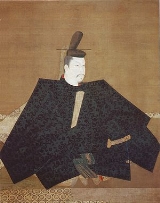
Shogun
is a military rank and historical title in
Japan. The rank is equivalent to "general," a high officer in an army. As a title, it is the short form of
sei-i taishogun . The
Imperial Court in Kyoto awarded this title first to the leaders of military expeditions against eastern people, and later to the heads of military governments at many times in the
history of Japan.
A shogun's office or administration is a shogunate or
bakufu . The latter literally means "an office in the tent" in
Japanese. The tent is symbolic of the role of the military in fighting wars in the field.
Encyclopedia
is a military rank and historical title in
Japan. The rank is equivalent to "general," a high officer in an army. As a title, it is the short form of
sei-i taishogun . The
Imperial Court in Kyoto awarded this title first to the leaders of military expeditions against eastern people, and later to the heads of military governments at many times in the
history of Japan.
A shogun's office or administration is a shogunate or
bakufu . The latter literally means "an office in the tent" in
Japanese. The tent is symbolic of the role of the military in fighting wars in the field.
The term
sei-i taishogun means "great general who subdues the eastern barbarians." "Eastern barbarian" is one of several ancient terms for various groups who live in eastern area and had not yet become subject to the central government. Among them were the aboriginal
Ainu people who once inhabited
Honshu in addition to
Hokkaido.
Minamoto no Yoritomo, the first shogun of the
Kamakura shogunate, seized considerable power from the aristocracy in Kyoto. He became the practical ruler of Japan, and received the title
sei-i taishogun. Thereafter, the heads of three successive shogunates received the same title. It continued in use until the Meiji Restoration.
Sei-i Taishogun of Heian Period of Japan
Conquest of the Ainu
Originally, the title of
Seii Taishogun was given to military commanders during the early
Heian Period for the duration of military campaigns against the Emishi who resisted the governance of the Imperial court based in
Kyoto. The most famous of these shogun was
Sakanoue no Tamuramaro who conquered the
Ainu in the name of
Emperor Kammu. Eventually, the title was abandoned in the later Heian period after the Ainu had been either subjugated or driven to
Hokkaido.
Genpei wars
In the later Heian, one more shogun was appointed.
Minamoto no Yoshinaka was named
sei-i taishogun during the
Genpei War only to be killed shortly thereafter by
Minamoto no Yoshitsune.
Sei-i Taishogun of Feudal Period Japan
Kamakura Shogunate
In the 1100s, the wars between the
Minamoto and Taira families came to a conclusion with the defeat of the Taira clan in the
Genpei War .
Minamoto no Yoritomo seized power from the emperor and established a feudal system of government based in
Kamakura in which the military, the
samurai, assumed political power while the
Emperors of Japan and the aristocracy in
Kyoto remained the figurehead
de jure rulers. In 1192, Yoritomo was awarded the title of
Seii Taishogun by the emperor and the political system he developed with a succession of shogun at the head became known as a shogunate. The Kamakura shogunate lasted for almost 150 years, from 1192 to 1333.
Kemmu Restoration
During the Kemmu Restoration, after the fall of the Kamakura shogunate in 1333, another short-lived shogun arose. Prince Moriyoshi , son of Emperor Go-Daigo, was awarded the title of
Seii Taishogun and put in charge of the military. However, Prince Moriyoshi was later put under house arrest and, in 1335, killed by Ashikaga Tadayoshi.
Muromachi and Edo Shogunates
Next, Ashikaga Takauji, like Yoritomo a descendant of the Minamoto princes, was awarded the title of
sei-i taishogun and established bakufu. The Ashikaga Shogunate lasted from 1338 to 1573.
Subsequently,
Tokugawa Ieyasu seized power and established a government at
Edo in 1600. He received the title
sei-i taishogun in 1603. The
Tokugawa shogunate lasted until 1868.
The so-called transitional shoguns, of 1568–1598, did not receive the title of
sei-i taishogun from the emperor and did not establish shogunates, but did, for a period, hold power over the emperor and most of Japan.
The title
sei-i taishogun was abolished during the Meiji Restoration in 1868, in which effective power was "restored" to the emperor and his appointees. See
Late Tokugawa shogunate.
List of sei-i taishogun
[i]
...
...
s
Shogunate
The term
bakufu originally meant the dwelling and household of a shogun, but in time it came to be generally used for the system of government of a feudal military dictatorship, exercised by the shogun, and this is the meaning that has been adopted into
English through the term "shogunate."
The
bakufu system was originally established under the
Kamakura shogunate by
Minamoto no Yoritomo. Although theoretically the state held ownership of all land of Japan, the system had some
feudal elements, with lesser territorial lords pledging their allegiance to greater ones.
Samurai were rewarded for their loyalty with land, which was in turn, on the liege lord's permission, handed down and divided among their sons. The hierarchy that held this system of government together was reinforced by close ties of loyalty between samurai and their subordinates.
Three primary shogunates were each centered around a family which seized power and received the title of shogun during that regime. One name of the shogunate stems from the location of the headquarters . Another name comes from the shogunal family .
...
or Muromachi Bakufu -
Muromachi periodSee also
are an ethnic group indigenous [i] to Hokkaido [i] and north of Honshu [i] in Northern ...