

Jewish Autonomism

Encyclopedia
Jewish Autonomism was a non-Zionist political movement
that emerged in Eastern Europe
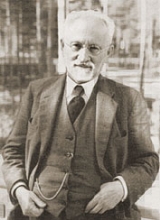
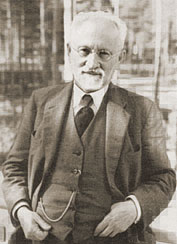
in the late 19th and early 20th century. One of its major proponents was a historian and activist Simon Dubnow
, who also called his ideology folkism.
 The Autonomists believed that the future survival of the Jews
as a nation
depends on their spiritual and cultural strength, in developing "spiritual nationhood" and in viability of Jewish diaspora
as long as Jewish communities maintain self-rule, and rejected assimilation
. Autonomists often stressed the vitality of modern Yiddish culture.
Various concepts of the Autonomism were adopted in the platforms of the Folkspartei
, the Sejmists and socialist Jewish parties such as the Bund
.
Some groups blended Autonomism with Zionism
: they favored Jewish self-rule in the diaspora until diaspora Jews make Aliyah
to their national homeland in Zion
.
The movement's beliefs were similar to those of the Austromarxists, who advocated national personal autonomy
within the multinational Austro-Hungarian empire, and cultural pluralists
in America, such as Randolph Bourne
and Horace Kallen
.
In 1941, Simon Dubnow was one of thousands of Jews murdered in the Rumbula massacre
. After the Holocaust
, the Autonomism practically disappeared from Jewish philosophy
.
It is unconnected to the contemporary political movement autonomism
.
Jewish political movements
Jewish political movements refer to the organized efforts of Jews to build their own political parties or otherwise represent their interest in politics outside of the Jewish community...
that emerged in Eastern Europe
Eastern Europe
Eastern Europe is the eastern part of Europe. The term has widely disparate geopolitical, geographical, cultural and socioeconomic readings, which makes it highly context-dependent and even volatile, and there are "almost as many definitions of Eastern Europe as there are scholars of the region"...
in the late 19th and early 20th century. One of its major proponents was a historian and activist Simon Dubnow
Simon Dubnow
Simon Dubnow was a Jewish historian, writer and activist...
, who also called his ideology folkism.
Jews
The Jews , also known as the Jewish people, are a nation and ethnoreligious group originating in the Israelites or Hebrews of the Ancient Near East. The Jewish ethnicity, nationality, and religion are strongly interrelated, as Judaism is the traditional faith of the Jewish nation...
as a nation
Nation
A nation may refer to a community of people who share a common language, culture, ethnicity, descent, and/or history. In this definition, a nation has no physical borders. However, it can also refer to people who share a common territory and government irrespective of their ethnic make-up...
depends on their spiritual and cultural strength, in developing "spiritual nationhood" and in viability of Jewish diaspora
Jewish diaspora
The Jewish diaspora is the English term used to describe the Galut גלות , or 'exile', of the Jews from the region of the Kingdom of Judah and Roman Iudaea and later emigration from wider Eretz Israel....
as long as Jewish communities maintain self-rule, and rejected assimilation
Cultural assimilation
Cultural assimilation is a socio-political response to demographic multi-ethnicity that supports or promotes the assimilation of ethnic minorities into the dominant culture. The term assimilation is often used with regard to immigrants and various ethnic groups who have settled in a new land. New...
. Autonomists often stressed the vitality of modern Yiddish culture.
Various concepts of the Autonomism were adopted in the platforms of the Folkspartei
Folkspartei
The Folkspartei was founded after the 1905 pogroms in the Russian Empire by Simon Dubnow and Israel Efrojkin. The party took part to several elections in Poland and Lithuania in the 1920s and 1930s and did not survive the Shoah.-Ideology:...
, the Sejmists and socialist Jewish parties such as the Bund
General Jewish Labor Union
The General Jewish Labour Bund of Lithuania, Poland and Russia , generally called The Bund or the Jewish Labour Bund, was a secular Jewish socialist party in the Russian Empire, active between 1897 and 1920. Remnants of the party remain active in the diaspora as well as in Israel...
.
Some groups blended Autonomism with Zionism
Zionism
Zionism is a Jewish political movement that, in its broadest sense, has supported the self-determination of the Jewish people in a sovereign Jewish national homeland. Since the establishment of the State of Israel, the Zionist movement continues primarily to advocate on behalf of the Jewish state...
: they favored Jewish self-rule in the diaspora until diaspora Jews make Aliyah
Aliyah
Aliyah is the immigration of Jews to the Land of Israel . It is a basic tenet of Zionist ideology. The opposite action, emigration from Israel, is referred to as yerida . The return to the Holy Land has been a Jewish aspiration since the Babylonian exile...
to their national homeland in Zion
Zion
Zion is a place name often used as a synonym for Jerusalem. The word is first found in Samuel II, 5:7 dating to c.630-540 BCE...
.
The movement's beliefs were similar to those of the Austromarxists, who advocated national personal autonomy
National personal autonomy
The Austromarxist principle of national personal autonomy , developed by Otto Bauer in his 1907 book Die Nationalitätenfrage und die Sozialdemokratie was seen by him a way of gathering the geographically divided members of the same nation, "organize nations not in territorial bodies but in simple...
within the multinational Austro-Hungarian empire, and cultural pluralists
Cultural pluralism
Cultural pluralism is a term used when smaller groups within a larger society maintain their unique cultural identities, and their values and practices are accepted by the wider culture. Cultural pluralism is often confused with Multiculturalism...
in America, such as Randolph Bourne
Randolph Bourne
Randolph Silliman Bourne was a progressive writer and "leftist intellectual" born in Bloomfield, New Jersey, and a graduate of Columbia University...
and Horace Kallen
Horace Kallen
-Biography:Born in the then German Bernstadt, Silesia to Jacob David Kallen and Esther Rebecca , an Orthodox rabbi and his wife, Kallen came to the United States as a child in 1887. He studied philosophy at Harvard University where he was a student of George Santayana, earning his B.A. in 1903...
.
In 1941, Simon Dubnow was one of thousands of Jews murdered in the Rumbula massacre
Rumbula massacre
The Rumbula massacre was the two-day killing of about 25,000 Jews in and on the way to Rumbula forest near Riga, Latvia, during the Holocaust. Save only the Babi Yar massacre in Ukraine, this was the biggest two-day Holocaust atrocity until the operation of the death camps...
. After the Holocaust
The Holocaust
The Holocaust , also known as the Shoah , was the genocide of approximately six million European Jews and millions of others during World War II, a programme of systematic state-sponsored murder by Nazi...
, the Autonomism practically disappeared from Jewish philosophy
Jewish philosophy
Jewish philosophy , includes all philosophy carried out by Jews, or, in relation to the religion of Judaism. Jewish philosophy, until modern Enlightenment and Emancipation, was pre-occupied with attempts to reconcile coherent new ideas into the tradition of Rabbinic Judaism; thus organizing...
.
It is unconnected to the contemporary political movement autonomism
Autonomism
Autonomism refers to a set of left-wing political and social movements and theories close to the socialist movement. As an identifiable theoretical system it first emerged in Italy in the 1960s from workerist communism...
.
See also
- Jewish political movementsJewish political movementsJewish political movements refer to the organized efforts of Jews to build their own political parties or otherwise represent their interest in politics outside of the Jewish community...
- TerritorialismTerritorialismTerritorialism, also known as Statism , was a Jewish political movement calling for creation of a sufficiently large and compact Jewish territory , not necessarily in the Land of Israel and not necessarily fully autonomous.-Development of territorialism:Before 1905 some Zionist leaders took...
- Chaim Zhitlovsky
- National personal autonomyNational personal autonomyThe Austromarxist principle of national personal autonomy , developed by Otto Bauer in his 1907 book Die Nationalitätenfrage und die Sozialdemokratie was seen by him a way of gathering the geographically divided members of the same nation, "organize nations not in territorial bodies but in simple...
External links
- Autonomism at JVL