

Jewish political movements

Encyclopedia
Jewish political movements refer to the organized efforts of Jews to build their own political parties
or otherwise represent their interest in politics outside of the Jewish community. From the time of the destruction of Jerusalem
by the Romans to the foundation of Israel
the Jewish people had no territory, and, until the 19th century they by-and-large were also denied equal rights in the countries in which they lived. Thus, until the 19th century effort for the emancipation of the Jews
, almost all Jewish political struggles were internal, and dealt primarily with either religious issues or issues of a particular Jewish community. (See Judaism and politics
.)
, made popular movements possible. As long as the Jews lived in segregated
communities, and as long as all avenues of social intercourse with their gentile
neighbors were closed to them, the rabbi
was the most influential member of the Jewish community. In addition to being a religious scholar and clergy, a rabbi also acted as a civil judge
in all cases in which both parties were Jews. Rabbis sometimes had other important administrative powers, together with the community elders. The rabbinate was the highest aim of many Jewish boys, and the study of the Torah (first five books of the Bible) and the Talmud was the means of obtaining that coveted position, or one of many other important communal distinctions. Haskalah followers advocated "coming out of the ghetto
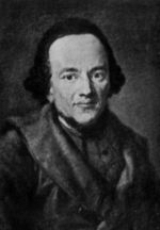
", not just physically but also mentally and spiritually. The example of Moses Mendelssohn
(1729–1786), a Prussian Jew and grandfather of the great composer Felix Mendelssohn, served to lead this movement. Mendelssohn's extraordinary success as a popular philosopher and man of letters revealed hitherto unsuspected possibilities of integration and acceptance of Jews among non-Jews.
The changes caused by the Haskalah movement coincided with rising revolutionary movements throughout Europe. Despite these movements, only France, Britain, and the Netherlands had granted the Jews in their countries equal rights with gentiles after the French Revolution
in 1796. Elsewhere in Europe, especially where Jews were most concentrated in Central and Eastern Europe, Jews were not granted equal rights. It was in the revolutionary atmosphere of the mid-19th century that the first true Jewish political movements would take place.
During the early stages of Jewish emancipation movements
, Jews were simply part of the general effort to achieve freedom and rights that drove popular uprisings like the Revolutions of 1848
. Jewish statesmen and intellectuals like Heinrich Heine
, Johann Jacoby
, Gabriel Riesser
, Berr Isaac Berr, and Lionel Nathan Rothschild were active with the general movement towards liberty and political freedom.
Still, in the face of persistent anti-semitic incidents like the Damascus Blood Libel
of 1840, and the failure of many states to emancipate the Jews, Jewish organizations started to form in order to push for the emancipation and protection of Jews. The Board of Deputies of British Jews
under Moses Montefiore
, the Central Consistory
of Paris, and the Alliance Israelite Universelle
all began working to assure the freedom of the Jews throughout the middle of the 19th century.
Frustration with the slow pace of Jewish acceptance into European society, and a revolutionary utopianism, led to a growing interest in proto-socialist
and communist movements, especially as early socialist leaders, like Saint-Simon
, preached the emancipation of the Jews. Moses Hess
played a role in introducing Karl Marx
(who was descended from a long line of rabbis) and Friedrich Engels
to historical materialism
. The Jewish Ferdinand Lassalle
, founded the first actual workers' party in Germany, the General German Workers' Association
(which ultimately merged with other parties to become the Social Democratic Party of Germany
) and made Jewish emancipation one of his goals.
The more intellectual socialist movements of the Jews in Western Europe never gathered steam as emancipation took hold. In Eastern Europe and Russia, however, the Bund the General Jewish Labor Union founded in 1897, became a key force in organizing Jews, and, at least initially, the major opponent of another Jewish political movement of the time, Zionism
. There were other Jewish socialist parties in Russia, like the (territorialist
) Zionist Socialist Workers Party
and the Jewish Socialist Workers Party
, which united their destinies in 1917 as the United Jewish Socialist Workers Party
. Another left-wing Russian Jewish party was the Jewish Social Democratic Labour Party (Poalei Zion)
.
. Zionism, or the idea of a restored national homeland and common identity for the Jews, had already started to take shape by the mid-19th century, with Jewish thinkers such as Moses Hess
whose 1862 work Rome and Jerusalem; The Last National Question argued for the Jews to settle in Palestine
as a means of settling the national question. Hess proposed a socialist state in which the Jews would become agrarianised through a process of "redemption of the soil" which would transform the Jewish community into a "true" nation, in that Jews would occupy the productive layers of society rather than being an intermediary non-productive merchant class, which is how he perceived Jews in Europe. Hess, along with later thinkers such as Nahum Syrkin and Ber Borochov
, is considered a founder of Socialist Zionism and Labour Zionism and one of the intellectual forebears of the kibbutz
movement. Others like Rabbi Zvi Kalischer viewed a return to the Jewish homeland as the fulfillment of biblical prophecy through natural means.
 As the 19th century wore on, the persecution of the Jews in Eastern Europe where emancipation had not occurred to the extent it did in Western Europe (or at all) increased. Starting with the state-sponsored massive anti-Jewish
pogroms following the assassination of Tsar Alexander II
and continuing with the Dreyfus Affair
in France
in 1894, Jews were profoundly shocked to see the continuing extent of anti-Semitism
from Russia to France, a country which they thought of as the home of enlightenment and liberty.
In reaction to the first, Judah Leib Pinsker published the pamphlet Auto-Emancipation
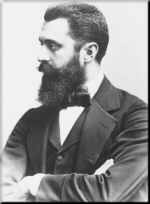
on January 1, 1882. The pamphlet became influential for the Political Zionism movement. The movement was to achieve momentum under the leadership of an Austrian-Jewish journalist, Theodor Herzl
, who published his pamphlet Der Judenstaat
("The Jewish State") in 1896. Prior to the Dreyfus Affair, Herzl had been an assimilationist, but after seeing how France treated its loyal Jewish subjects, he proposed building a separate Jewish state. In 1897 Herzl organized the First Zionist Congress
in Basel
, Switzerland
, which founded the World Zionist Organisation (WZO) and elected Herzl as its first President. After the state's establishment Zionism, in its various forms, would become the largest Jewish political movement, although more Jews would participate in the national politics of the countries in which they resided.
founded the Folkspartei
(Yiddishe Folkspartay) which had some intellectual audience in Russia, then, in independent Poland
and Lithuania
in the 1920-1930s where it was represented as well in the Parliaments (Sejm
, Seimas
) as in numerous municipal councils (incl. Warsaw
) till in the late 1930s. The party did not survive the Shoah, the Holocaust.
and not necessarily fully autonomous. Some territorialist leaders, such as Nachman Syrkin
, supported the Socialist
versions of Zionism
, while some others, such as Lucien Wolf
, actively opposed Zionism
and promoted anti-nationalist ideas. Isaac Nachman Steinberg
, one of the founders of the Freeland League, held anti-authoritarian socialist views, as well as his close friend Erich Fromm
, who supported Steinberg's territorialist ideas.
, rabbi Yehuda Ashlag
, Isaac Nachman Steinberg
and Gustav Landauer
, were religious or religiously inclined and often referred to the Torah, Talmud and other traditional Judaic sources, claiming that anarchist ideas are deeply rooted in the Jewish tradition. The Jewish anarchists believe that in the stateless, free and diverse anarchist society the Jews would have more opportunities to express their individual and cultural autonomy. Many Jewish anarchists, while promoting universal internationalist
values, had actively participated in the development of the Yiddish culture and Jewish community life.
There was some intersection between the Jewish anarchist, Folkist and Territorialist
movements. For example, Isaac Nachman Steinberg
, a renowned Territorialist leader, held anarchist views. Most Jewish anarchists supported anarcho-syndicalism
and communist anarchism, while a few were individualist anarchists. The small contemporary anarchist movement in Israel
is very active in peace and Palestinian solidarity actions.
, and played key roles in the birth of the labor movement as well as socialism
. While Diaspora Jews have also been represented in the conservative
side of the political spectrum, even politically conservative Jews have tended to support pluralism more consistently than many other elements of the political right
. Daniel J. Elazar connects this pluralist tendency to the fact that Jews are not expected to proselytize, and argues that whereas Christianity
and Islam
anticipate a single world-state, Judaism does not.http://www.jcpa.org/dje/articles2/jud-democ.htm This lack of a universalizing religion is combined with the fact that most Jews live as minorities in their countries, and that no central Jewish religious authority has existed for over 2,000 years. (See list of Jews in politics, which illustrates the diversity of Jewish political thought and of the roles Jews have played in politics.)
There are also a number of Jewish secular organizations at the local, national, and international levels. These organizations often play an important part in the Jewish community. Most of the largest groups, such as Hadassah
and the United Jewish Communities, have an elected leadership. No one secular group represents the entire Jewish community, and there is often significant internal debate among Jews about the stances these organizations take on affairs dealing with the Jewish community as a whole, such as antisemitism and Israeli policies. In the United States and Canada today, the mainly secular United Jewish Communities
(UJC), formerly known as the United Jewish Appeal
(UJA), represents over 150 Jewish Federations and 400 independent communities across North America. Every major American city has its local "Jewish Federation", and many have sophisticated community centers and provide services, mainly health care-related. They raise record sums of money for philanthropic
and humanitarian causes in North America and Israel. Other organizations such as the Anti-Defamation League
, American Jewish Congress
, American Jewish Committee
, American Israel Public Affairs Committee
, Zionist Organization of America, Americans for a safe Israel, B'nai B'rith
and Agudath Israel
represent different segments of the American Jewish community on a variety of issues.
Political party
A political party is a political organization that typically seeks to influence government policy, usually by nominating their own candidates and trying to seat them in political office. Parties participate in electoral campaigns, educational outreach or protest actions...
or otherwise represent their interest in politics outside of the Jewish community. From the time of the destruction of Jerusalem
Siege of Jerusalem (70)
The Siege of Jerusalem in the year 70 AD was the decisive event of the First Jewish-Roman War. The Roman army, led by the future Emperor Titus, with Tiberius Julius Alexander as his second-in-command, besieged and conquered the city of Jerusalem, which had been occupied by its Jewish defenders in...
by the Romans to the foundation of Israel
Israel
The State of Israel is a parliamentary republic located in the Middle East, along the eastern shore of the Mediterranean Sea...
the Jewish people had no territory, and, until the 19th century they by-and-large were also denied equal rights in the countries in which they lived. Thus, until the 19th century effort for the emancipation of the Jews
Jewish Emancipation
Jewish emancipation was the external and internal process of freeing the Jewish people of Europe, including recognition of their rights as equal citizens, and the formal granting of citizenship as individuals; it occurred gradually between the late 18th century and the early 20th century...
, almost all Jewish political struggles were internal, and dealt primarily with either religious issues or issues of a particular Jewish community. (See Judaism and politics
Judaism and politics
The relationship between Judaism and politics is a historically complex subject and a frequent source of disagreement among Jews.-Biblical Models:There are many models for political leadership in the Hebrew Bible...
.)
Birth of Jewish political movements
Since Jews were excluded as outsiders throughout Europe, they were mostly shut out of politics or any sort of participation in the wider political and social sphere of the nations in which they were involved until the Enlightenment, and its Jewish counterpart, HaskalahHaskalah
Haskalah , the Jewish Enlightenment, was a movement among European Jews in the 18th–19th centuries that advocated adopting enlightenment values, pressing for better integration into European society, and increasing education in secular studies, Hebrew language, and Jewish history...
, made popular movements possible. As long as the Jews lived in segregated
Religious segregation
Religious segregation is the separation of people according to their religion. The term has been applied to cases of religious-based segregation occurring as a social phenomenon, as well as to segregation arising from laws, whether explicit or implicit....
communities, and as long as all avenues of social intercourse with their gentile
Gentile
The term Gentile refers to non-Israelite peoples or nations in English translations of the Bible....
neighbors were closed to them, the rabbi
Rabbi
In Judaism, a rabbi is a teacher of Torah. This title derives from the Hebrew word רבי , meaning "My Master" , which is the way a student would address a master of Torah...
was the most influential member of the Jewish community. In addition to being a religious scholar and clergy, a rabbi also acted as a civil judge
Judge
A judge is a person who presides over court proceedings, either alone or as part of a panel of judges. The powers, functions, method of appointment, discipline, and training of judges vary widely across different jurisdictions. The judge is supposed to conduct the trial impartially and in an open...
in all cases in which both parties were Jews. Rabbis sometimes had other important administrative powers, together with the community elders. The rabbinate was the highest aim of many Jewish boys, and the study of the Torah (first five books of the Bible) and the Talmud was the means of obtaining that coveted position, or one of many other important communal distinctions. Haskalah followers advocated "coming out of the ghetto
Ghetto
A ghetto is a section of a city predominantly occupied by a group who live there, especially because of social, economic, or legal issues.The term was originally used in Venice to describe the area where Jews were compelled to live. The term now refers to an overcrowded urban area often associated...
", not just physically but also mentally and spiritually. The example of Moses Mendelssohn
Moses Mendelssohn
Moses Mendelssohn was a German Jewish philosopher to whose ideas the renaissance of European Jews, Haskalah is indebted...
(1729–1786), a Prussian Jew and grandfather of the great composer Felix Mendelssohn, served to lead this movement. Mendelssohn's extraordinary success as a popular philosopher and man of letters revealed hitherto unsuspected possibilities of integration and acceptance of Jews among non-Jews.
The changes caused by the Haskalah movement coincided with rising revolutionary movements throughout Europe. Despite these movements, only France, Britain, and the Netherlands had granted the Jews in their countries equal rights with gentiles after the French Revolution
French Revolution
The French Revolution , sometimes distinguished as the 'Great French Revolution' , was a period of radical social and political upheaval in France and Europe. The absolute monarchy that had ruled France for centuries collapsed in three years...
in 1796. Elsewhere in Europe, especially where Jews were most concentrated in Central and Eastern Europe, Jews were not granted equal rights. It was in the revolutionary atmosphere of the mid-19th century that the first true Jewish political movements would take place.
Emancipation movements
- See also: Jewish EmancipationJewish EmancipationJewish emancipation was the external and internal process of freeing the Jewish people of Europe, including recognition of their rights as equal citizens, and the formal granting of citizenship as individuals; it occurred gradually between the late 18th century and the early 20th century...
, HaskalahHaskalahHaskalah , the Jewish Enlightenment, was a movement among European Jews in the 18th–19th centuries that advocated adopting enlightenment values, pressing for better integration into European society, and increasing education in secular studies, Hebrew language, and Jewish history...
During the early stages of Jewish emancipation movements
Jewish Emancipation
Jewish emancipation was the external and internal process of freeing the Jewish people of Europe, including recognition of their rights as equal citizens, and the formal granting of citizenship as individuals; it occurred gradually between the late 18th century and the early 20th century...
, Jews were simply part of the general effort to achieve freedom and rights that drove popular uprisings like the Revolutions of 1848
Revolutions of 1848
The European Revolutions of 1848, known in some countries as the Spring of Nations, Springtime of the Peoples or the Year of Revolution, were a series of political upheavals throughout Europe in 1848. It was the first Europe-wide collapse of traditional authority, but within a year reactionary...
. Jewish statesmen and intellectuals like Heinrich Heine
Heinrich Heine
Christian Johann Heinrich Heine was one of the most significant German poets of the 19th century. He was also a journalist, essayist, and literary critic. He is best known outside Germany for his early lyric poetry, which was set to music in the form of Lieder by composers such as Robert Schumann...
, Johann Jacoby
Johann Jacoby
Johann Jacoby was a Left-wing Prussian Jewish politician.- Biography :The son of a merchant, Jacoby studied medicine and in 1830 started practicing in his native city, but soon became involved in political activities in a liberal interest, which involved him in prosecutions and made him well-known...
, Gabriel Riesser
Gabriel Riesser
Gabriel Riesser was a German politician and lawyer.-Life:Both of Riesser's grandfathers were rabbis; yet his father chose to work as a secretary at the Jewish law court of Altona before he finally became a merchant in Hamburg...
, Berr Isaac Berr, and Lionel Nathan Rothschild were active with the general movement towards liberty and political freedom.
Still, in the face of persistent anti-semitic incidents like the Damascus Blood Libel
Damascus affair
The Damascus affair was an 1840 incident in which the accusation of ritual murder was brought against members of the Jewish community of Damascus. Eight notable Jews of Damascus were falsely accused of murdering a Christian monk, imprisoned and tortured. Several of the imprisoned died of torture,...
of 1840, and the failure of many states to emancipate the Jews, Jewish organizations started to form in order to push for the emancipation and protection of Jews. The Board of Deputies of British Jews
Board of Deputies of British Jews
The Board of Deputies of British Jews is the main representative body of British Jews. Founded in 1760 as a joint committee of the Sephardi and Ashkenazi Jewish communities in London, it has since become a widely recognised forum for the views of the different sectors of the UK Jewish...
under Moses Montefiore
Moses Montefiore
Sir Moses Haim Montefiore, 1st Baronet, Kt was one of the most famous British Jews of the 19th century. Montefiore was a financier, banker, philanthropist and Sheriff of London...
, the Central Consistory
Central Consistory
Central Consistory is the institution set up by Napoleon I by means of the Imperial Decree of 17 March 1808 to administer Jewish worship in France....
of Paris, and the Alliance Israelite Universelle
Alliance Israélite Universelle
The Alliance Israélite Universelle is a Paris-based international Jewish organization founded in 1860 by the French statesman Adolphe Crémieux to safeguard the human rights of Jews around the world...
all began working to assure the freedom of the Jews throughout the middle of the 19th century.
Socialist and Labor movements
- See: Jewish leftJewish leftThe term "Jewish left" describes Jews who identify with or support left wing, occasionally liberal causes, consciously as Jews, either as individuals or through organizations. There is no one organization or movement which constitutes the "Jewish left," however...
Frustration with the slow pace of Jewish acceptance into European society, and a revolutionary utopianism, led to a growing interest in proto-socialist
Socialism
Socialism is an economic system characterized by social ownership of the means of production and cooperative management of the economy; or a political philosophy advocating such a system. "Social ownership" may refer to any one of, or a combination of, the following: cooperative enterprises,...
and communist movements, especially as early socialist leaders, like Saint-Simon
Claude Henri de Rouvroy, comte de Saint-Simon
Claude Henri de Rouvroy, comte de Saint-Simon, often referred to as Henri de Saint-Simon was a French early socialist theorist whose thought influenced the foundations of various 19th century philosophies; perhaps most notably Marxism, positivism and the discipline of sociology...
, preached the emancipation of the Jews. Moses Hess
Moses Hess
Moses Hess was a Jewish philosopher and socialist, and one of the founders of Labor Zionism.-Life:Hess was born in Bonn, which was under French rule at the time. In his French-language birth certificate, his name is given as "Moises"; he was named after his maternal grandfather...
played a role in introducing Karl Marx
Karl Marx
Karl Heinrich Marx was a German philosopher, economist, sociologist, historian, journalist, and revolutionary socialist. His ideas played a significant role in the development of social science and the socialist political movement...
(who was descended from a long line of rabbis) and Friedrich Engels
Friedrich Engels
Friedrich Engels was a German industrialist, social scientist, author, political theorist, philosopher, and father of Marxist theory, alongside Karl Marx. In 1845 he published The Condition of the Working Class in England, based on personal observations and research...
to historical materialism
Historical materialism
Historical materialism is a methodological approach to the study of society, economics, and history, first articulated by Karl Marx as "the materialist conception of history". Historical materialism looks for the causes of developments and changes in human society in the means by which humans...
. The Jewish Ferdinand Lassalle
Ferdinand Lassalle
Ferdinand Lassalle was a German-Jewish jurist and socialist political activist.-Early life:Ferdinand Lassalle was born on 11 April 1825 in Breslau , Silesia to a prosperous Jewish family descending from Upper Silesian Loslau...
, founded the first actual workers' party in Germany, the General German Workers' Association
General German Workers' Association
The General German Workers' Association, in German Allgemeiner Deutscher Arbeiterverein, ADAV) was founded on 23 May 1863 in Leipzig, Kingdom of Saxony by Ferdinand Lassalle and existed under this name until 1875, when it combined with August Bebel and Wilhelm Liebknecht's SDAP to form the...
(which ultimately merged with other parties to become the Social Democratic Party of Germany
Social Democratic Party of Germany
The Social Democratic Party of Germany is a social-democratic political party in Germany...
) and made Jewish emancipation one of his goals.
The more intellectual socialist movements of the Jews in Western Europe never gathered steam as emancipation took hold. In Eastern Europe and Russia, however, the Bund the General Jewish Labor Union founded in 1897, became a key force in organizing Jews, and, at least initially, the major opponent of another Jewish political movement of the time, Zionism
Zionism
Zionism is a Jewish political movement that, in its broadest sense, has supported the self-determination of the Jewish people in a sovereign Jewish national homeland. Since the establishment of the State of Israel, the Zionist movement continues primarily to advocate on behalf of the Jewish state...
. There were other Jewish socialist parties in Russia, like the (territorialist
Territorialism
Territorialism, also known as Statism , was a Jewish political movement calling for creation of a sufficiently large and compact Jewish territory , not necessarily in the Land of Israel and not necessarily fully autonomous.-Development of territorialism:Before 1905 some Zionist leaders took...
) Zionist Socialist Workers Party
Zionist Socialist Workers Party
Zionist Socialist Workers Party , often referred to simply as 'Zionist-Socialists' or 'S.S.' by their Russian initials, was a Jewish socialist territorialist political party in the Russian Empire and Poland, that emerged out of the Vozrozhdenie group in 1904. The party held its founding conference...
and the Jewish Socialist Workers Party
Jewish Socialist Workers Party
The Jewish Socialist Workers Party , often nicknamed Seymists, was a Jewish socialist political party in the Russian Empire. The party was founded in April 1906, emerging out of the Vozrozhdenie circles. The Vozrozhdenie was a non-Marxist tendency which was led by the nonmarxist thinker and...
, which united their destinies in 1917 as the United Jewish Socialist Workers Party
United Jewish Socialist Workers Party
United Jewish Socialist Workers Party was a political party in Poland and certain regions of the Russian Empire . Its followers were generally known simply for the first portion of the name Fareynikte - 'United'. Politically the party favored national personal autonomy for the Jewish community...
. Another left-wing Russian Jewish party was the Jewish Social Democratic Labour Party (Poalei Zion)
Jewish Social Democratic Labour Party (Poalei Zion)
The Jewish Social Democratic Labour Party was a Zionist socialist political party in the Russian Empire. The party was founded in 1906. It was part of the international Poalei Zion movement. The party was illegal until 1917....
.
Zionist movements
The aim of Zionism was to set up a secular state in the vicinity of the Biblical Land of IsraelLand of Israel
The Land of Israel is the Biblical name for the territory roughly corresponding to the area encompassed by the Southern Levant, also known as Canaan and Palestine, Promised Land and Holy Land. The belief that the area is a God-given homeland of the Jewish people is based on the narrative of the...
. Zionism, or the idea of a restored national homeland and common identity for the Jews, had already started to take shape by the mid-19th century, with Jewish thinkers such as Moses Hess
Moses Hess
Moses Hess was a Jewish philosopher and socialist, and one of the founders of Labor Zionism.-Life:Hess was born in Bonn, which was under French rule at the time. In his French-language birth certificate, his name is given as "Moises"; he was named after his maternal grandfather...
whose 1862 work Rome and Jerusalem; The Last National Question argued for the Jews to settle in Palestine
Palestine
Palestine is a conventional name, among others, used to describe the geographic region between the Mediterranean Sea and the Jordan River, and various adjoining lands....
as a means of settling the national question. Hess proposed a socialist state in which the Jews would become agrarianised through a process of "redemption of the soil" which would transform the Jewish community into a "true" nation, in that Jews would occupy the productive layers of society rather than being an intermediary non-productive merchant class, which is how he perceived Jews in Europe. Hess, along with later thinkers such as Nahum Syrkin and Ber Borochov
Ber Borochov
Dov Ber Borochov was a Marxist Zionist and one of the founders of the Labor Zionist movement as well as a pioneer in the study of Yiddish as a language....
, is considered a founder of Socialist Zionism and Labour Zionism and one of the intellectual forebears of the kibbutz
Kibbutz
A kibbutz is a collective community in Israel that was traditionally based on agriculture. Today, farming has been partly supplanted by other economic branches, including industrial plants and high-tech enterprises. Kibbutzim began as utopian communities, a combination of socialism and Zionism...
movement. Others like Rabbi Zvi Kalischer viewed a return to the Jewish homeland as the fulfillment of biblical prophecy through natural means.
Anti-Semitism
Antisemitism is suspicion of, hatred toward, or discrimination against Jews for reasons connected to their Jewish heritage. According to a 2005 U.S...
pogroms following the assassination of Tsar Alexander II
Russian history, 1855-1892
-Economic development:Russia's population growth rate from 1850 to 1910 was the fastest of all the major powers except for the United States. Between 1850 and 1900, Russia's population doubled, but it remained chiefly rural well into the twentieth century....
and continuing with the Dreyfus Affair
Dreyfus Affair
The Dreyfus affair was a political scandal that divided France in the 1890s and the early 1900s. It involved the conviction for treason in November 1894 of Captain Alfred Dreyfus, a young French artillery officer of Alsatian Jewish descent...
in France
France
The French Republic , The French Republic , The French Republic , (commonly known as France , is a unitary semi-presidential republic in Western Europe with several overseas territories and islands located on other continents and in the Indian, Pacific, and Atlantic oceans. Metropolitan France...
in 1894, Jews were profoundly shocked to see the continuing extent of anti-Semitism
Anti-Semitism
Antisemitism is suspicion of, hatred toward, or discrimination against Jews for reasons connected to their Jewish heritage. According to a 2005 U.S...
from Russia to France, a country which they thought of as the home of enlightenment and liberty.
In reaction to the first, Judah Leib Pinsker published the pamphlet Auto-Emancipation
Auto-Emancipation
right|thumb|upright|The book "Auto-Emancipation" by Pinsker, 1882Auto-Emancipation is an early Zionist pamphlet written in German by Russian-Polish Jewish doctor and activist Leo Pinsker in 1882....
on January 1, 1882. The pamphlet became influential for the Political Zionism movement. The movement was to achieve momentum under the leadership of an Austrian-Jewish journalist, Theodor Herzl
Theodor Herzl
Theodor Herzl , born Benjamin Ze’ev Herzl was an Ashkenazi Jew Austro-Hungarian journalist and the father of modern political Zionism and in effect the State of Israel.-Early life:...
, who published his pamphlet Der Judenstaat
Der Judenstaat
Der Judenstaat is a book written by Theodor Herzl and published in 1896 in Leipzig and Vienna by M. Breitenstein's Verlags-Buchhandlung...
("The Jewish State") in 1896. Prior to the Dreyfus Affair, Herzl had been an assimilationist, but after seeing how France treated its loyal Jewish subjects, he proposed building a separate Jewish state. In 1897 Herzl organized the First Zionist Congress
First Zionist Congress
The First Zionist Congress was the inaugural congress of the Zionist Organization held in Basel , Switzerland, from August 29 to August 31, 1897. It was convened and chaired by Theodor Herzl, the founder of the modern Zionism movement...
in Basel
Basel
Basel or Basle In the national languages of Switzerland the city is also known as Bâle , Basilea and Basilea is Switzerland's third most populous city with about 166,000 inhabitants. Located where the Swiss, French and German borders meet, Basel also has suburbs in France and Germany...
, Switzerland
Switzerland
Switzerland name of one of the Swiss cantons. ; ; ; or ), in its full name the Swiss Confederation , is a federal republic consisting of 26 cantons, with Bern as the seat of the federal authorities. The country is situated in Western Europe,Or Central Europe depending on the definition....
, which founded the World Zionist Organisation (WZO) and elected Herzl as its first President. After the state's establishment Zionism, in its various forms, would become the largest Jewish political movement, although more Jews would participate in the national politics of the countries in which they resided.
Folkists
In the aftermath of the 1905 pogroms in Russia, the historian Simon DubnowSimon Dubnow
Simon Dubnow was a Jewish historian, writer and activist...
founded the Folkspartei
Folkspartei
The Folkspartei was founded after the 1905 pogroms in the Russian Empire by Simon Dubnow and Israel Efrojkin. The party took part to several elections in Poland and Lithuania in the 1920s and 1930s and did not survive the Shoah.-Ideology:...
(Yiddishe Folkspartay) which had some intellectual audience in Russia, then, in independent Poland
Poland
Poland , officially the Republic of Poland , is a country in Central Europe bordered by Germany to the west; the Czech Republic and Slovakia to the south; Ukraine, Belarus and Lithuania to the east; and the Baltic Sea and Kaliningrad Oblast, a Russian exclave, to the north...
and Lithuania
Lithuania
Lithuania , officially the Republic of Lithuania is a country in Northern Europe, the biggest of the three Baltic states. It is situated along the southeastern shore of the Baltic Sea, whereby to the west lie Sweden and Denmark...
in the 1920-1930s where it was represented as well in the Parliaments (Sejm
Sejm
The Sejm is the lower house of the Polish parliament. The Sejm is made up of 460 deputies, or Poseł in Polish . It is elected by universal ballot and is presided over by a speaker called the Marshal of the Sejm ....
, Seimas
Seimas
The Seimas is the unicameral Lithuanian parliament. It has 141 members that are elected for a four-year term. About half of the members of this legislative body are elected in individual constituencies , and the other half are elected by nationwide vote according to proportional representation...
) as in numerous municipal councils (incl. Warsaw
Warsaw
Warsaw is the capital and largest city of Poland. It is located on the Vistula River, roughly from the Baltic Sea and from the Carpathian Mountains. Its population in 2010 was estimated at 1,716,855 residents with a greater metropolitan area of 2,631,902 residents, making Warsaw the 10th most...
) till in the late 1930s. The party did not survive the Shoah, the Holocaust.
Territorialists
The territorialists, who had split from the Zionists after the Seventh Zionist Congress in 1905, called for creation of a sufficiently large and compact Jewish territory (or territories), not necessarily in the Land of IsraelLand of Israel
The Land of Israel is the Biblical name for the territory roughly corresponding to the area encompassed by the Southern Levant, also known as Canaan and Palestine, Promised Land and Holy Land. The belief that the area is a God-given homeland of the Jewish people is based on the narrative of the...
and not necessarily fully autonomous. Some territorialist leaders, such as Nachman Syrkin
Nachman Syrkin
Nachman Syrkin was a political theorist, founder of Labour Zionism and a prolific writer in Hebrew, Yiddish, Russian, German and English language....
, supported the Socialist
Socialism
Socialism is an economic system characterized by social ownership of the means of production and cooperative management of the economy; or a political philosophy advocating such a system. "Social ownership" may refer to any one of, or a combination of, the following: cooperative enterprises,...
versions of Zionism
Zionism
Zionism is a Jewish political movement that, in its broadest sense, has supported the self-determination of the Jewish people in a sovereign Jewish national homeland. Since the establishment of the State of Israel, the Zionist movement continues primarily to advocate on behalf of the Jewish state...
, while some others, such as Lucien Wolf
Lucien Wolf
Lucien Wolf was an English Jewish journalist, historian, and advocate of Jewish rights.-Biography:He was the son of Edward Wolf, a London pipe manufacturer, and his wife Céline...
, actively opposed Zionism
Zionism
Zionism is a Jewish political movement that, in its broadest sense, has supported the self-determination of the Jewish people in a sovereign Jewish national homeland. Since the establishment of the State of Israel, the Zionist movement continues primarily to advocate on behalf of the Jewish state...
and promoted anti-nationalist ideas. Isaac Nachman Steinberg
Isaac Nachman Steinberg
Isaac Nachman Steinberg was a lawyer, revolutionary, politician, a leader of the Jewish Territorialist movement and writer in Soviet Russia and in exile.-Early life and first exile:...
, one of the founders of the Freeland League, held anti-authoritarian socialist views, as well as his close friend Erich Fromm
Erich Fromm
Erich Seligmann Fromm was a Jewish German-American social psychologist, psychoanalyst, sociologist, humanistic philosopher, and democratic socialist. He was associated with what became known as the Frankfurt School of critical theory.-Life:Erich Fromm was born on March 23, 1900, at Frankfurt am...
, who supported Steinberg's territorialist ideas.
Anarchists
While the Jews in general played an important role in the international anarchist movements, many Jewish anarchists actively promoted Yiddish language and culture, focused on specifically Jewish issues. While most Jewish anarchists were irreligious or even vehemently anti-religious, some Jewish anarchist and anti-authoritarian thinkers, such as Martin BuberMartin Buber
Martin Buber was an Austrian-born Jewish philosopher best known for his philosophy of dialogue, a form of religious existentialism centered on the distinction between the I-Thou relationship and the I-It relationship....
, rabbi Yehuda Ashlag
Yehuda Ashlag
Rabbi Yehuda Ashlag or Yehuda Leib Ha-Levi Ashlag also known as the Baal Ha-Sulam in reference to his magnum opus, was an orthodox rabbi and kabbalist born in Łódź, Congress Poland, Russian Empire, to a family of scholars connected to the Hasidic courts of Porisov and Belz...
, Isaac Nachman Steinberg
Isaac Nachman Steinberg
Isaac Nachman Steinberg was a lawyer, revolutionary, politician, a leader of the Jewish Territorialist movement and writer in Soviet Russia and in exile.-Early life and first exile:...
and Gustav Landauer
Gustav Landauer
Gustav Landauer was one of the leading theorists on anarchism in Germany in the end of the 19th and the beginning of the 20th century. He was an advocate of communist anarchism and an avowed pacifist. Landauer is also known for his study and translations of William Shakespeare's works into German...
, were religious or religiously inclined and often referred to the Torah, Talmud and other traditional Judaic sources, claiming that anarchist ideas are deeply rooted in the Jewish tradition. The Jewish anarchists believe that in the stateless, free and diverse anarchist society the Jews would have more opportunities to express their individual and cultural autonomy. Many Jewish anarchists, while promoting universal internationalist
Internationalist
Internationalist may refer to:* Internationalism , a movement to increase cooperation across national borders* Internationalist, socialists opposed to World War I* The Internationalist Review, an e-journal founded in Maastricht...
values, had actively participated in the development of the Yiddish culture and Jewish community life.
There was some intersection between the Jewish anarchist, Folkist and Territorialist
Territorialism
Territorialism, also known as Statism , was a Jewish political movement calling for creation of a sufficiently large and compact Jewish territory , not necessarily in the Land of Israel and not necessarily fully autonomous.-Development of territorialism:Before 1905 some Zionist leaders took...
movements. For example, Isaac Nachman Steinberg
Isaac Nachman Steinberg
Isaac Nachman Steinberg was a lawyer, revolutionary, politician, a leader of the Jewish Territorialist movement and writer in Soviet Russia and in exile.-Early life and first exile:...
, a renowned Territorialist leader, held anarchist views. Most Jewish anarchists supported anarcho-syndicalism
Anarcho-syndicalism
Anarcho-syndicalism is a branch of anarchism which focuses on the labour movement. The word syndicalism comes from the French word syndicat which means trade union , from the Latin word syndicus which in turn comes from the Greek word σύνδικος which means caretaker of an issue...
and communist anarchism, while a few were individualist anarchists. The small contemporary anarchist movement in Israel
Anarchism in Israel
Anarchism has been an undercurrent in the politics of Palestine and Israel for over a century.- Early Kibbutz movement :The anarchist ideology arrived in Palestine at the beginning of the 20th century, carried by a big wave of emigrants from Eastern Europe...
is very active in peace and Palestinian solidarity actions.
Modern Jewish political movements
Zionism continues to be the central trans-national political movement of most Jews, although it has split into a variety of branches and philosophies that span the political spectrum from left-wing to right-wing. Jews are also active in government in many of the countries in which they live, as well as in Jewish community organizations that often take political positions.Outside Israel
Over the past century, Jews in Europe and the Americas have traditionally tended towards the political leftLeft-wing politics
In politics, Left, left-wing and leftist generally refer to support for social change to create a more egalitarian society...
, and played key roles in the birth of the labor movement as well as socialism
Socialism
Socialism is an economic system characterized by social ownership of the means of production and cooperative management of the economy; or a political philosophy advocating such a system. "Social ownership" may refer to any one of, or a combination of, the following: cooperative enterprises,...
. While Diaspora Jews have also been represented in the conservative
Conservatism
Conservatism is a political and social philosophy that promotes the maintenance of traditional institutions and supports, at the most, minimal and gradual change in society. Some conservatives seek to preserve things as they are, emphasizing stability and continuity, while others oppose modernism...
side of the political spectrum, even politically conservative Jews have tended to support pluralism more consistently than many other elements of the political right
Right-wing politics
In politics, Right, right-wing and rightist generally refer to support for a hierarchical society justified on the basis of an appeal to natural law or tradition. To varying degrees, the Right rejects the egalitarian objectives of left-wing politics, claiming that the imposition of equality is...
. Daniel J. Elazar connects this pluralist tendency to the fact that Jews are not expected to proselytize, and argues that whereas Christianity
Christianity
Christianity is a monotheistic religion based on the life and teachings of Jesus as presented in canonical gospels and other New Testament writings...
and Islam
Islam
Islam . The most common are and . : Arabic pronunciation varies regionally. The first vowel ranges from ~~. The second vowel ranges from ~~~...
anticipate a single world-state, Judaism does not.http://www.jcpa.org/dje/articles2/jud-democ.htm This lack of a universalizing religion is combined with the fact that most Jews live as minorities in their countries, and that no central Jewish religious authority has existed for over 2,000 years. (See list of Jews in politics, which illustrates the diversity of Jewish political thought and of the roles Jews have played in politics.)
There are also a number of Jewish secular organizations at the local, national, and international levels. These organizations often play an important part in the Jewish community. Most of the largest groups, such as Hadassah
Hadassah
Hadassah, the Women's Zionist Organization of America is an American Jewish volunteer women's organization. Founded in 1912 by Henrietta Szold, it is one of the largest international Jewish organizations, with around...
and the United Jewish Communities, have an elected leadership. No one secular group represents the entire Jewish community, and there is often significant internal debate among Jews about the stances these organizations take on affairs dealing with the Jewish community as a whole, such as antisemitism and Israeli policies. In the United States and Canada today, the mainly secular United Jewish Communities
United Jewish Communities
The Jewish Federations of North America , is an American Jewish umbrella organization representing 157 Jewish Federations and the Network of Independent Communities, 400 smaller Jewish communities across North America. The JFNA was formed from the 1999 merger of the United Jewish Appeal, the...
(UJC), formerly known as the United Jewish Appeal
United Jewish Appeal
The United Jewish Appeal was a Jewish philanthropic umbrella organization that existed from its creation in 1949 until it was folded into the United Jewish Communities, which was formed from the 1999 merger of United Jewish Appeal , Council of Jewish Federations and United Israel Appeal, Inc.In...
(UJA), represents over 150 Jewish Federations and 400 independent communities across North America. Every major American city has its local "Jewish Federation", and many have sophisticated community centers and provide services, mainly health care-related. They raise record sums of money for philanthropic
Philanthropy
Philanthropy etymologically means "the love of humanity"—love in the sense of caring for, nourishing, developing, or enhancing; humanity in the sense of "what it is to be human," or "human potential." In modern practical terms, it is "private initiatives for public good, focusing on quality of...
and humanitarian causes in North America and Israel. Other organizations such as the Anti-Defamation League
Anti-Defamation League
The Anti-Defamation League is an international non-governmental organization based in the United States. Describing itself as "the nation's premier civil rights/human relations agency", the ADL states that it "fights anti-Semitism and all forms of bigotry, defends democratic ideals and protects...
, American Jewish Congress
American Jewish Congress
The American Jewish Congress describes itself as an association of Jewish Americans organized to defend Jewish interests at home and abroad through public policy advocacy, using diplomacy, legislation, and the courts....
, American Jewish Committee
American Jewish Committee
The American Jewish Committee was "founded in 1906 with the aim of rallying all sections of American Jewry to defend the rights of Jews all over the world...
, American Israel Public Affairs Committee
American Israel Public Affairs Committee
The American Israel Public Affairs Committee is a lobbying group that advocates pro-Israel policies to the Congress and Executive Branch of the United States...
, Zionist Organization of America, Americans for a safe Israel, B'nai B'rith
B'nai B'rith
B'nai B'rith International |Covenant]]" is the oldest continually operating Jewish service organization in the world. It was initially founded as the Independent Order of B'nai B'rith in New York City, on , 1843, by Henry Jones and 11 others....
and Agudath Israel
Agudath Israel
Agudath Israel can refer to any of several related organizations, including:*World Agudath Israel, an international movement*Agudath Israel of America, an American organization*Agudat Yisrael, an Israeli political party...
represent different segments of the American Jewish community on a variety of issues.
See also
- Judaism and politicsJudaism and politicsThe relationship between Judaism and politics is a historically complex subject and a frequent source of disagreement among Jews.-Biblical Models:There are many models for political leadership in the Hebrew Bible...
- Jewish leftJewish leftThe term "Jewish left" describes Jews who identify with or support left wing, occasionally liberal causes, consciously as Jews, either as individuals or through organizations. There is no one organization or movement which constitutes the "Jewish left," however...
- Jewish rightJewish rightThe term Jewish right refers to Jews who identify with or support right-wing or conservative causes. The Jewish right is not a monolithic designation. Its application ranges from advocacy of religious morals to conservative politics... - ZionismZionismZionism is a Jewish political movement that, in its broadest sense, has supported the self-determination of the Jewish people in a sovereign Jewish national homeland. Since the establishment of the State of Israel, the Zionist movement continues primarily to advocate on behalf of the Jewish state...
- CosmopolitanismCosmopolitanismCosmopolitanism is the ideology that all human ethnic groups belong to a single community based on a shared morality. This is contrasted with communitarian and particularistic theories, especially the ideas of patriotism and nationalism...
- Jewish QuestionJewish QuestionThe Jewish question encompasses the issues and resolutions surrounding the historically unequal civil, legal and national statuses between minority Ashkenazi Jews and non-Jews, particularly in Europe. The first issues discussed and debated by societies, politicians and writers in western and...
- Union OrganizerUnion organizerA union organizer is a specific type of trade union member or an appointed union official. A majority of unions appoint rather than elect their organizers....
External links
- Israel's Judaic Politics: Profiling the Predominantly Religious Jewish PartiesIslamOnline.net, retrieved on 19-03-2009.
- My Jewish Learning on Jewish Political Movements
- URJ Emancipation information
- From Bolshevism to Bush: Exploring the Political Trajectory of the Jewish People by Walter Leon, June 25, 2009