


International Year of Astronomy

Encyclopedia
Astronomy
Astronomy is a natural science that deals with the study of celestial objects and phenomena that originate outside the atmosphere of Earth...
that took place in 2009 to coincide with the 400th anniversary of the first recorded astronomical observations with a telescope
Telescope
A telescope is an instrument that aids in the observation of remote objects by collecting electromagnetic radiation . The first known practical telescopes were invented in the Netherlands at the beginning of the 1600s , using glass lenses...
by Galileo Galilei
Galileo Galilei
Galileo Galilei , was an Italian physicist, mathematician, astronomer, and philosopher who played a major role in the Scientific Revolution. His achievements include improvements to the telescope and consequent astronomical observations and support for Copernicanism...
and the publication of Johannes Kepler
Johannes Kepler
Johannes Kepler was a German mathematician, astronomer and astrologer. A key figure in the 17th century scientific revolution, he is best known for his eponymous laws of planetary motion, codified by later astronomers, based on his works Astronomia nova, Harmonices Mundi, and Epitome of Copernican...
's Astronomia nova
Astronomia nova
The Astronomia nova is a book, published in 1609, that contains the results of the astronomer Johannes Kepler's ten-year long investigation of the motion of Mars...
in the 17th century. The Year was declared by the 62nd General Assembly of the United Nations. A global scheme, laid out by the International Astronomical Union
International Astronomical Union
The International Astronomical Union IAU is a collection of professional astronomers, at the Ph.D. level and beyond, active in professional research and education in astronomy...
(IAU), was also endorsed by UNESCO
UNESCO
The United Nations Educational, Scientific and Cultural Organization is a specialized agency of the United Nations...
, the UN body responsible for educational, scientific, and cultural matters.
The IAU coordinated the International Year of Astronomy in 2009. This initiative was an opportunity for the citizens of Earth to gain a deeper insight into astronomy’s role in enriching all human cultures. Moreover, served as a platform for informing the public about the latest astronomical discoveries while emphasizing the essential role of astronomy in science education. IYA2009 was sponsored by Celestron
Celestron
Celestron is a company that manufactures and imports telescopes, binoculars, spotting scopes, microscopes, and accessories for their products.-Origins and History:...
and Thales Alenia Space
Thales Alenia Space
Thales Alenia Space is an aerospace company born after the Thales Group bought the participation of Alcatel in the two joint-ventures between Alcatel and Finmeccanica, Alcatel Alenia Space and Telespazio.-History:...
.
Significance of 1609
In 1609, Galileo GalileiGalileo Galilei
Galileo Galilei , was an Italian physicist, mathematician, astronomer, and philosopher who played a major role in the Scientific Revolution. His achievements include improvements to the telescope and consequent astronomical observations and support for Copernicanism...
first turned one of his telescopes to the night sky
Night sky
The term night sky refers to the sky as seen at night. The term is usually associated with astronomy, with reference to views of celestial bodies such as stars, the Moon, and planets that become visible on a clear night after the Sun has set. Natural light sources in a night sky include moonlight,...
and made astounding discoveries that changed mankind's conception of the world forever: mountains and craters on the Moon
Moon
The Moon is Earth's only known natural satellite,There are a number of near-Earth asteroids including 3753 Cruithne that are co-orbital with Earth: their orbits bring them close to Earth for periods of time but then alter in the long term . These are quasi-satellites and not true moons. For more...
, a plethora of star
Star
A star is a massive, luminous sphere of plasma held together by gravity. At the end of its lifetime, a star can also contain a proportion of degenerate matter. The nearest star to Earth is the Sun, which is the source of most of the energy on Earth...
s invisible to the naked eye, and moons around Jupiter
Jupiter
Jupiter is the fifth planet from the Sun and the largest planet within the Solar System. It is a gas giant with mass one-thousandth that of the Sun but is two and a half times the mass of all the other planets in our Solar System combined. Jupiter is classified as a gas giant along with Saturn,...
. Astronomical observatories around the world promised to reveal how planets and stars are formed, how galaxies assemble and evolve, and what the structure and shape of our Universe actually are.
In the same year, Johannes Kepler
Johannes Kepler
Johannes Kepler was a German mathematician, astronomer and astrologer. A key figure in the 17th century scientific revolution, he is best known for his eponymous laws of planetary motion, codified by later astronomers, based on his works Astronomia nova, Harmonices Mundi, and Epitome of Copernican...
published his work Astronomia nova
Astronomia nova
The Astronomia nova is a book, published in 1609, that contains the results of the astronomer Johannes Kepler's ten-year long investigation of the motion of Mars...
, in which he described the fundamental laws of planetary motions
Kepler's laws of planetary motion
In astronomy, Kepler's laws give a description of the motion of planets around the Sun.Kepler's laws are:#The orbit of every planet is an ellipse with the Sun at one of the two foci....
.
On 25 September 1608, Hans Lippershey
Hans Lippershey
Hans Lippershey , also known as Johann Lippershey or Lipperhey, was a German-Dutch lensmaker commonly associated with the invention of the telescope, although it is unclear if he was the first to build one.-Biography:...
, a young man from Middelburg
Middelburg
Middelburg is a municipality and a city in the south-western Netherlands and the capital of the province of Zeeland. It is situated in the Midden-Zeeland region. It has a population of about 48,000.- History of Middelburg :...
, travelled to the Hague, the then capital of the Netherlands
Netherlands
The Netherlands is a constituent country of the Kingdom of the Netherlands, located mainly in North-West Europe and with several islands in the Caribbean. Mainland Netherlands borders the North Sea to the north and west, Belgium to the south, and Germany to the east, and shares maritime borders...
, to demonstrate one of his inventions to the Dutch government: the telescope
Telescope
A telescope is an instrument that aids in the observation of remote objects by collecting electromagnetic radiation . The first known practical telescopes were invented in the Netherlands at the beginning of the 1600s , using glass lenses...
. Although Hans was not awarded the patent, Galileo heard of this story and decided to use the "Dutch perspective glass" and point it towards the heavens.
Vision
The vision of IYA2009 was to help people rediscover their place in the Universe through the sky, and thereby engage a personal sense of wonder and discovery. IYA2009 activities took place locally, nationally, regionally and internationally. National Nodes were formed in each country to prepare activities for 2009. These nodes established collaborations between professional and amateur astronomers, science centres and science communicators. More than 100 countries were involved, and well over 140 participated eventually. To help coordinate this huge global programme and to provide an important resource for the participating countries, the IAU established a central Secretariat and the IYA2009 website as the principal IYA2009 resource for public, professionals and media alike.Aims
AstronomyAstronomy
Astronomy is a natural science that deals with the study of celestial objects and phenomena that originate outside the atmosphere of Earth...
, perhaps the oldest science in history, has played an important role in most, if not all, cultures over the ages. The International Year of Astronomy 2009 (IYA2009) was intended to be a global celebration of astronomy and its contributions to society and culture, stimulating worldwide interest not only in astronomy, but in science in general, with a particular slant towards young people.
The IYA2009 marked the monumental leap forward that followed Galileo's first use of the telescope
Telescope
A telescope is an instrument that aids in the observation of remote objects by collecting electromagnetic radiation . The first known practical telescopes were invented in the Netherlands at the beginning of the 1600s , using glass lenses...
for astronomical observations, and portrays astronomy as a peaceful global scientific endeavour that unites amateur and professional astronomers in an international and multicultural family that works together to find answers to some of the most fundamental questions that humankind has ever asked. The aim of the Year was to stimulate worldwide interest in astronomy and science under the central theme "The Universe, Yours to Discover."
Several committees were formed to oversee the vast majority of IYA2009 activities ("sidewalk astronomy" events in planetarium
Planetarium
A planetarium is a theatre built primarily for presenting educational and entertaining shows about astronomy and the night sky, or for training in celestial navigation...
s and public observatories), which spun local, regional and national levels. These committees were collaborations between professional and amateur astronomers, science centres and science communicators. Individual countries were undertaking their own initiatives as well as assessing their own national needs, while the IAU
IAU
IAU may refer to:*International Astronomical Union*International American University*International American University College of Medicine*International Association of Universities*International Association of Ultrarunners...
acted as the event's coordinator and catalyst on a global scale. The IAU
IAU
IAU may refer to:*International Astronomical Union*International American University*International American University College of Medicine*International Association of Universities*International Association of Ultrarunners...
plan was to liaise with, and involve, as many as possible of the ongoing outreach and education efforts throughout the world, including those organized by amateur astronomers.
Goals
The major goals of IYA2009 were to:- Increase scientific awareness;
- Promote widespread access to new knowledge and observing experiences;
- Empower astronomical communities in developing countries;
- Support and improve formal and informal science education;
- Provide a modern image of science and scientists;
- Facilitate new networks and strengthen existing ones;
- Improve the gender-balanced representation of scientists at all levels and promote greater involvement by underrepresented minorities in scientific and engineering careers;
- Facilitate the preservation and protection of the world's cultural and natural heritage of dark skies in places such as urban oases, national parks and astronomical sites.
As part of the scheme, IYA2009 helped less-well-established organizations from the developing world to become involved with larger organizations and deliver their contributions, linked via a huge global network. This initiative also aimed at reaching economically disadvantaged children across the globe and enhancing their understanding of the world.
The Secretariat
The central hub of the IAU activities for the IYA2009 was the United Nations SecretariatUnited Nations Secretariat
The United Nations Secretariat is one of the five principal organs of the United Nations and it is headed by the United Nations Secretary-General, assisted by a staff of international civil servants worldwide. It provides studies, information, and facilities needed by United Nations bodies for...
. This was established to coordinate activities during the planning, execution and evaluation of the Year. The Secretariat was based in the European Southern Observatory
European Southern Observatory
The European Southern Observatory is an intergovernmental research organisation for astronomy, supported by fifteen countries...
headquarters in the town of Garching near Munich
Munich
Munich The city's motto is "" . Before 2006, it was "Weltstadt mit Herz" . Its native name, , is derived from the Old High German Munichen, meaning "by the monks' place". The city's name derives from the monks of the Benedictine order who founded the city; hence the monk depicted on the city's coat...
, Germany. The Secretariat was to liaise continuously with the National Nodes, Task Groups, Partners and Organizational Associates, the media and the general public to ensure the progress of the IYA2009 at all levels. The Secretariat and the website were the major coordination and resource centers for all the participating countries, but particularly for those developing countries that lack the national resources to mount major events alone.
Cornerstone projects
The International Year of Astronomy 2009 was supported by eleven Cornerstone projects. These are global programs of activities centered on specific themes and are some of the projects that helped to achieve IYA2009's main goals; whether it is the support and promotion of women in astronomy, the preservation of dark-sky sites around the world or educating and explaining the workings of the Universe to millions, the eleven Cornerstones were the key elements in the success of IYA2009.100 Hours of Astronomy
100 Hours of Astronomy (100HA) is a worldwide astronomy event that ran 2-5 April 2009 and was part of the scheduled global activities of the International Year of Astronomy 2009. The main goal of 100HA was to have as many people throughout the world as possible looking through a telescope just as Galileo did for the first time 400 years ago. The event included special webcasts, students and teachers activities, a schedule of events at science centers, planetariumPlanetarium
A planetarium is a theatre built primarily for presenting educational and entertaining shows about astronomy and the night sky, or for training in celestial navigation...
s and science museums as well as 24 hours of sidewalk astronomy, which allowed the opportunity for public observing sessions to as many people as possible.
Galileoscope
The Galileoscope was a worldwide astronomy event that ran 2-5 April 2009, where the program was to share a personal experience of practical astronomical observations with as many people as possible across the world. It was collaborating with the US IYA2009 National Node to develop a simple, accessible, easy-to-assemble and easy-to-use telescope that can be distributed by the millions. In theory, every participant in an IYA2009 event should be able to take home one of these little telescopes, enabling them to observe with an instrument similar to Galileo's one.Cosmic Diary
The Cosmic Diary, a worldwide astronomy event that ran 2-5 April, was not about the science of astronomy, but about what it is like to be an astronomer. Professionals were to blog in texts and images about their life, families, friends, hobbies and interests, as well as their work, latest research findings and the challenges they face. The bloggers represented a vibrant cross-section of working astronomers from all around the world. They wrote in many different languages, from five continents. They have also written feature article "explanations" about their specialist fields, which were highlighted in the website. NASA, ESA and ESO all had sub-blogs as part of the Cosmic Diary Cornerstone.The Portal to the Universe
The Portal to the Universe (PTTU) was a worldwide astronomy event that ran 2–5 April 2009, to provide a global, one-stop portal for online astronomy contents, serving as an index, aggregator and a social-networking site for astronomy content providers, laypeople, press, educators, decision-makers and scientists. PTTU was to feature news, image, event and video aggregation; a comprehensive directory of observatories, facilities, astronomical societies, amateur astronomy societies, space artists, science communication universities; and Web 2.0 collaborative tools, such as the ranking of different services according to popularity, to promote interaction within the astronomy multimedia community. In addition, a range of "widgets" (small applications) were to be developed to tap into existing "live data". Modern technology and the standardisation of metadata made it possible to tie all the suppliers of such information together with a single, semi-automatically updating portal.She Is an Astronomer
Promoting gender equality and empowering women is one of the United Nations Millennium Development Goals. She Is an Astronomer was a worldwide astronomy event that ran 2-5 April 2009, to promote gender equalityGender equality
Gender equality is the goal of the equality of the genders, stemming from a belief in the injustice of myriad forms of gender inequality.- Concept :...
in astronomy (and science in general), tackling bias issues by providing a web platform where information and links about gender balance and related resources are collected.
The aim of the project was to provide neutral, informative and accessible information to female professional and amateur astronomers, students, and those who are interested in the gender equality problem in science. Providing this information was intended to help increase the interest of young girls in studying and pursuing a career in astronomy.
Another objective of the project was to build and maintain an Internet-based, easy-to-handle forum and database, where people regardless of geographical location could read about the subject, ask questions and find answers. There was also to be the option to discuss astronomy-sector-specific problems, such as observing times and family duties.
Dark Skies Awareness
Dark Skies Awareness was a worldwide astronomy event that ran from 2 to 5 April 2009. The IAU collaborated with the U.S. National Optical Astronomy ObservatoryNational Optical Astronomy Observatory
The National Optical Astronomy Observatory is the United States national observatory for ground based nighttime ultraviolet-optical-infrared astronomy. The National Science Foundation funds NOAO to provide forefront astronomical research facilities for US astronomers...
(NOAO), representatives of the International Dark-Sky Association
International Dark-Sky Association
The International Dark-Sky Association is a U.S.-based non-profit organization incorporated in 1988 by founders Dr. David Crawford, a professional astronomer, and Dr. Timothy Hunter, a medical doctor/amateur astronomer...
(IDA), the Starlight Initiative, and other national and international partners in dark-sky and environmental education on several related themes.
The focus was on three main citizen-scientist programs to measure local levels of light pollution. These programs were to take the form of "star hunts" or "star counts", providing people with a fun and direct way to acquire heightened awareness about light pollution through firsthand observations of the night sky. Together, the three programs were to cover the entire International Year of Astronomy 2009, namely GLOBE at Night (in March), the Great World Wide Star Count (in October) and How Many Stars (January, February, April through September, November and December).
UNESCO and the IAU were working together to implement a research and education collaboration as part of UNESCO's thematic initiative, Astronomy and World Heritage as a worldwide astronomy event that also ran 2-5 April 2009. The main objective was to establish a link between science and culture on the basis of research aimed at acknowledging the cultural and scientific values of properties connected with astronomy. This programme provides an opportunity to identify properties related to astronomy located around the world, to preserve their memory and save them from progressive deterioration. Support from the international community is needed to implement this activity and to promote the recognition of astronomical knowledge through the nomination of sites that celebrate important achievements in science.
Galileo Teacher Training Program
The Galileo Teacher Training Program (GTTP): the International Year of Astronomy 2009 provided an opportunity to engage the formal education community in the excitement of astronomical discovery as a vehicle for improving the teaching of science in classrooms around the world. To help training teachers in effective astronomy communication and to sustain the legacy of IYA2009, the IAU – in collaboration with the National Nodes and leaders in the field such as the Global Hands-On Universe projectGlobal Hands-On Universe
In a paper published in 2007 by Dr. Carl Pennypacker, the Global Hands-On Universe is presented as an educational program that enables students to investigate the Universe while applying tools and concepts from science, math, and technology...
, the US National Optical Astronomy Observatory and the Astronomical Society of the Pacific
Astronomical Society of the Pacific
The Astronomical Society of the Pacific is a scientific and educational organization, founded in San Francisco on February 7, 1889. Its name derives from its origins on the Pacific Coast, but today it has members all over the country and the world...
– embarked on a unique global effort to empower teachers by developing the Galileo Teacher Training Program (GTTP).
The GTTP goal was to create a worldwide network of certified "Galileo Ambassadors" by 2012. These Ambassadors were to train "Galileo Master Teachers" in the effective use and transfer of astronomy education tools and resources into classroom science curricula. The Galileo Teachers were to be equipped to train other teachers in these methodologies, leveraging the work begun during IYA2009 in classrooms everywhere. Through workshops, online training tools and basic education kits, the products and techniques developed by this program could be adapted to reach locations with few resources of their own, as well as computer-connected areas that could take advantage of access to robotic optical and radio telescopes, webcams, astronomy exercises, cross-disciplinary resources, image processing and digital universes (web and desktop planetariums). Among GTTP partners, the Global Hands-On Universe project
Global Hands-On Universe
In a paper published in 2007 by Dr. Carl Pennypacker, the Global Hands-On Universe is presented as an educational program that enables students to investigate the Universe while applying tools and concepts from science, math, and technology...
was a leader.
Universe Awareness
Universe AwarenessUniverse Awareness
Universe Awareness or In 2004, Leiden University professor George K. Miley first began exploring the idea of setting up an astronomy programme to educate and inspire young children, especially those from underprivileged backgrounds...
(UNAWE) was a worldwide astronomy event that also ran during 2-5 April 2009, as an international program to introduce very young children in under-privileged environments to the scale and beauty of the Universe. Universe Awareness noted the multicultural origins of modern astronomy in an effort to broaden children's minds, awaken their curiosity in science and stimulate global citizenship and tolerance. Using the sky and children's natural fascination with it as common ground, UNAWE was to create an international awareness of their place in the Universe and their place on Earth.
From Earth to the Universe
The Cornerstone project From Earth to the Universe (FETTU) is a worldwide public sciencePublic science
Public science refers to a science outreach project that has been conducted outdoors or in another type of public or accessible space such as a public park, metro stop, library, university campus, etc. Similar to public art, there are typically aspects of collaboration, community support and...
event that began in June 2008, and still ongoing through 2011. This project has endeavored to bring astronomy images and their science to a wider audience in non-traditional informal learning
Informal learning
Informal learning is one of three forms of learning defined by the OECD. The other two are formal and non-formal learning. Informal learning occurs in a variety of places, such as at home, work, and through daily interactions and shared relationships among members of society. For many learners this...
venues. In placing these astronomy exhibitions in public parks, metro stations, art centers, hospitals, shopping malls and other accessible locations, it has been hoped that individuals who might normally ignore or even dislike astronomy, or science in general, will be engaged.
Developing Astronomy Globally
The Developing Astronomy Globally was a worldwide astronomy event that ran during 2-5 April 2009, as a Cornerstone project to acknowledge that astronomy needs to be developed in three key areas: professionally (universities and research); publicly (communication, media, and amateur groups) and educationally (schools and informal education structures). The focus was to be on regions that do not already have strong astronomical communities. The implementation was to be centred on training, development and networking in each of these three key areas.This Cornerstone was using the momentum of IYA2009 to help establish and enhance regional structures and networks that work on the development of astronomy around the world. These networks were to support the current and future development work of the IAU and other programmes, plus ensure that developing regions could benefit from IYA2009 and the work of the other Cornerstone projects. It was to also address the question of the contribution of astronomy to development.
Galilean Nights
The Galilean Nights was a worldwide astronomy event that also ran 2-5 April 2009, as a project to involve both amateur and professional astronomers around the globe, taking to the streets their telescopes and pointing them as Galileo did 400 years ago. The sources of interest were JupiterJupiter
Jupiter is the fifth planet from the Sun and the largest planet within the Solar System. It is a gas giant with mass one-thousandth that of the Sun but is two and a half times the mass of all the other planets in our Solar System combined. Jupiter is classified as a gas giant along with Saturn,...
and its moons, the Sun, our Moon and many others celestial marvels. The event was scheduled to take place on 22–24 October 2009. Astronomers were to share their knowledge and enthusiasm for space by encouraging as many people as possible to look through a telescope at planetary neighbours.
See also
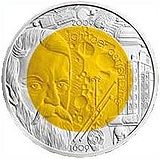
- International Year of Astronomy commemorative coin
- International Astronomical UnionInternational Astronomical UnionThe International Astronomical Union IAU is a collection of professional astronomers, at the Ph.D. level and beyond, active in professional research and education in astronomy...
(IAU) - History of the telescope
- 365 Days of Astronomy365 Days Of Astronomy365 Days of Astronomy is an educational podcast, inspired by the International Year of Astronomy, that has been published daily since 2009. The podcast episodes are written, recorded and produced by people all around the world....
- 400 Years of the Telescope400 Years of the Telescope400 Years of the Telescope: A Journey of Science, Technology and Thought is a 2009 American documentary film that was created to coincide with the International Year of Astronomy in 2009...
(documentary) - GalileoscopeGalileoscopeThe Galileoscope is a small , mass-produced refractor telescope, designed with the intention of increasing public interest in astronomy and science...
- Global Hands-On UniverseGlobal Hands-On UniverseIn a paper published in 2007 by Dr. Carl Pennypacker, the Global Hands-On Universe is presented as an educational program that enables students to investigate the Universe while applying tools and concepts from science, math, and technology...
- StarPeace ProjectStarPeace ProjectThe StarPeace Project was a global special project first organised in conjunction with the International Year of Astronomy in 2009. StarPeace project participants held public star parties near a border of their country with a neighboring country...
- The World At NightThe World At NightThe World At Night is an international project to produce and present a collection of high-quality photos, videos, and virtual reality images of the night sky taken at various natural, cultural, and historic locations worldwide....
(TWAN) - World Year of Physics 2005World Year of Physics 2005The year 2005 has been named the World Year of Physics in recognition of the 100th anniversary of Albert Einstein's "Miracle Year," in which he published four landmark papers, and the subsequent advances in the field of physics.-History:...
External links
of IYA2009 (includes all events and projects) of the International Astronomical UnionInternational Astronomical Union
The International Astronomical Union IAU is a collection of professional astronomers, at the Ph.D. level and beyond, active in professional research and education in astronomy...
(IAU)