

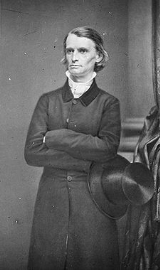
Henry A. Wise

Encyclopedia
Henry Alexander Wise was an American
politician and governor of Virginia
, as well as a general in the Confederate States Army
during the American Civil War
.
, to Major John Wise and his second wife Sarah Corbin Cropper, whose families had been long settled there. He was privately tutored until his twelfth year and then entered Margaret Academy, near Pungoteague in Accomack County. He graduated from Washington College (now Washington & Jefferson College
) in 1825. He was a member of the Union Literary Society at Washington College
. Wise was admitted to the bar
in 1828, and settled in Nashville
, Tennessee
, in the same year, but returned to Accomack County in 1830.
. Anne died in 1837, leaving Henry with four children: two sons and two daughters. A fifth child died with her in a fire.
Wise was married a second time in November 1840, to Sarah Sergeant, daughter of Whig
U.S. Congressman John Sergeant
and Margaretta Watmough of Philadelphia. In nineteen years of marriage with two wives, Wise fathered fourteen children, only seven of whom survived to adulthood. Sarah gave birth to at least five children. She and the last child died soon after its birth on October 14, 1850. Henry married a third time to Mary Elizabeth Lyons in 1853.
After serving as governor, Wise settled with Mary and his younger children in 1860 at Rolleston, an 884 acres (3.6 km²) plantation which he bought from his brother John Cropper Wise, who also continued to live there. It was located on the eastern branch of the Elizabeth River
near Norfolk, Virginia
. It had first been developed by William and Susannah Moseley, English immigrants who settled there in 1649. After the Civil War, Henry and Mary Wise lived in Richmond
, where he resumed his law career.
from 1833 to 1844. He was elected to Congress in 1832 as a Jacksonian Democrat
. On the question of the rechartering of the United States Bank
he broke with the Jackson administration, and became a Whig
, but was sustained by his constituents. After his first election in 1832 he fought a duel
with his competitor for the seat in Congress. He was reelected to Congress as a Whig in 1837, serving till 1841, and was reelected as a Tyler Democrat in 1843.
Wise was active in securing the election of John Tyler
as Vice President
in 1840. Tyler appointed Wise as United States minister to Brazil
from 1844 to 1847, where two of his children were born in Rio de Janeiro
. After his return, Wise identified with the Democratic Party.
In 1855, after a remarkable campaign, he was elected governor of Virginia over the Know Nothing
candidate. Wise supported the annexation of Texas
by the United States and Wise County, Texas
, was named in his honor. In the statewide election of 1855, Wise defeated Thomas S. Flournoy and subsequently served as the 33rd Governor of Virginia
from 1856 to 1860. Wise County, Virginia
, was named after him when it was established in 1856. One of his last official acts as Governor was to sign the death warrant of John Brown
.
As a member of the Virginia
secession convention of 1861
, Wise supported immediate secession
. On April 17, with delegates debating secession, Wise declared that he had ordered Virginia militiamen to seize Harpers Ferry Arsenal and Norfolk’s Gosport Naval Yards. Wise had forced the issue and Virginia seceded from the Union. He joined the Confederate army and was commissioned as a brigadier general.
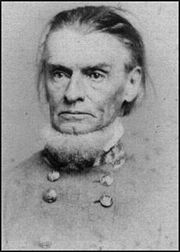 Wise served as a brigadier general in the Confederate Army
. He commanded the District of Roanoke Island
during the Battle of Roanoke Island
. His part in the decision to cede the island when faced with much greater Union forces drew the ire of some of the Confederate government leadership.
His forces were attached to the division of Maj. Gen. Theophilus H. Holmes
during the Seven Days Battles
. For the rest of 1862 and 1863, he held various commands in North Carolina and Virginia.
In 1864 Wise commanded a brigade in the Department of North Carolina & Southern Virginia. His brigade defended Petersburg and was credited with saving the city at the First Battle of Petersburg and to an extent at the Second Battle of Petersburg. Wise commanded a brigade in the Army of Northern Virginia
during the final stages of the Siege of Petersburg
. He was promoted to the rank of major general after the Battle of Sayler's Creek
. He was with Robert E. Lee
at Appomattox Court House
, where he fought bravely but urged Lee to surrender.
He was the brother-in-law of Union
Maj. Gen. George G. Meade.
, before he received pardon from the president. After Wise entered Confederate service, he and his family abandoned Rolleston in 1862 as Union troops were taking over Norfolk. Wise arranged then for residence for his family in Rocky Mount
, Franklin County, Virginia
.
As a result, Maj. Gen. Terry of the U.S. command in the Norfolk area did not permit Wise to reclaim the Rolleston property. In an exchange of letters published in the New York Times, Terry stated that under conditions of parole, Wise had claim only to the Rocky Mount property where he had been living when he went to war. The Freedmen's Bureau used Rolleston Hall and other plantations in the Norfolk area as schools for freedmen. Two hundred were said to be taking classes at Rolleston.
Along with working at his law career, Wise wrote a book based on his public service, entitled Seven Decades of the Union (1872). His two surviving sons were both active in state and Federal politics.
One of his sons, John Sergeant Wise, wrote a memoir entitled The End of an Era. John Wise was fourteen in the summer of 1860 and served in the Confederate Army late in the war. He wrote about his own memories of Rolleston and the war years, as well as about his father's role and their family members. Henry A. Wise's grandson Barton Haxall Wise wrote a biography of the former governor called The Life of Henry A. Wise of Virginia (New York, 1899).
His older son, Richard A. Wise, was a student at the College of William and Mary
when the war began in 1861. During the war he served with J. E. B. Stuart, and later as aide-de-camp to his father during the Battle of Roanoke Island. After the war, he earned his MD degree at the Medical College of Virginia in 1869. He served as professor of chemistry at William and Mary (1869-1878) and in 1871 helped reorganize a volunteer militia for the city of Williamsburg and James City County, Virginia, which he commanded. Known as the Wise Light Infantry, the unit continued at least through 1885, when it appeared during the inaugural festivities of President Grover Cleveland in Washington.
Wise later served in politics like his father: he was elected to the Virginia House of Delegates (1885-1887), served as clerk of the court of Williamsburg and James City County, 1888-1894, and was a member of the U. S. House of Representatives, April 26, 1898 to March 3, 1899 and again March 12, 1900 until his death on December 21, 1900.
Retrieved on 2008-02-13
Henry Alexander Wise (December 3, 1806 September 12, 1876) was an American
politician and governor of Virginia
, as well as a general in the Confederate States Army
during the American Civil War
.
, to Major John Wise and his second wife Sarah Corbin Cropper, whose families had been long settled there. He was privately tutored until his twelfth year and then entered Margaret Academy, near Pungoteague in Accomack County. He graduated from Washington College (now Washington & Jefferson College
) in 1825. He was a member of the Union Literary Society at Washington College
. Wise was admitted to the bar
in 1828, and settled in Nashville
, Tennessee
, in the same year, but returned to Accomack County in 1830.
. Anne died in 1837, leaving Henry with four children: two sons and two daughters. A fifth child died with her in a fire.
Wise was married a second time in November 1840, to Sarah Sergeant, daughter of Whig
U.S. Congressman John Sergeant
and Margaretta Watmough of Philadelphia. In nineteen years of marriage with two wives, Wise fathered fourteen children, only seven of whom survived to adulthood. Sarah gave birth to at least five children. She and the last child died soon after its birth on October 14, 1850. Henry married a third time to Mary Elizabeth Lyons in 1853.
After serving as governor, Wise settled with Mary and his younger children in 1860 at Rolleston, an 884 acres (3.6 km²) plantation which he bought from his brother John Cropper Wise, who also continued to live there. It was located on the eastern branch of the Elizabeth River
near Norfolk, Virginia
. It had first been developed by William and Susannah Moseley, English immigrants who settled there in 1649. After the Civil War, Henry and Mary Wise lived in Richmond
, where he resumed his law career.
from 1833 to 1844. He was elected to Congress in 1832 as a Jacksonian Democrat
. On the question of the rechartering of the United States Bank
he broke with the Jackson administration, and became a Whig
, but was sustained by his constituents. After his first election in 1832 he fought a duel
with his competitor for the seat in Congress. He was reelected to Congress as a Whig in 1837, serving till 1841, and was reelected as a Tyler Democrat in 1843.
Wise was active in securing the election of John Tyler
as Vice President
in 1840. Tyler appointed Wise as United States minister to Brazil
from 1844 to 1847, where two of his children were born in Rio de Janeiro
. After his return, Wise identified with the Democratic Party.
In 1855, after a remarkable campaign, he was elected governor of Virginia over the Know Nothing
candidate. Wise supported the annexation of Texas
by the United States and Wise County, Texas
, was named in his honor. In the statewide election of 1855, Wise defeated Thomas S. Flournoy and subsequently served as the 33rd Governor of Virginia
from 1856 to 1860. Wise County, Virginia
, was named after him when it was established in 1856. One of his last official acts as Governor was to sign the death warrant of John Brown
.
As a member of the Virginia
secession convention of 1861
, Wise supported immediate secession
. On April 17, with delegates debating secession, Wise declared that he had ordered Virginia militiamen to seize Harpers Ferry Arsenal and Norfolk’s Gosport Naval Yards. Wise had forced the issue and Virginia seceded from the Union. He joined the Confederate army and was commissioned as a brigadier general.
Wise served as a brigadier general in the Confederate Army
. He commanded the District of Roanoke Island
during the Battle of Roanoke Island
. His part in the decision to cede the island when faced with much greater Union forces drew the ire of some of the Confederate government leadership.
His forces were attached to the division of Maj. Gen. Theophilus H. Holmes
during the Seven Days Battles
. For the rest of 1862 and 1863, he held various commands in North Carolina and Virginia.
In 1864 Wise commanded a brigade in the Department of North Carolina & Southern Virginia. His brigade defended Petersburg and was credited with saving the city at the First Battle of Petersburg and to an extent at the Second Battle of Petersburg. Wise commanded a brigade in the Army of Northern Virginia
during the final stages of the Siege of Petersburg
. He was promoted to the rank of major general after the Battle of Sayler's Creek
. He was with Robert E. Lee
at Appomattox Court House
, where he fought bravely but urged Lee to surrender.
He was the brother-in-law of Union
Maj. Gen. George G. Meade.
, before he received pardon from the president. After Wise entered Confederate service, he and his family abandoned Rolleston in 1862 as Union troops were taking over Norfolk. Wise arranged then for residence for his family in Rocky Mount
, Franklin County, Virginia
.
As a result, Maj. Gen. Terry of the U.S. command in the Norfolk area did not permit Wise to reclaim the Rolleston property. In an exchange of letters published in the New York Times, Terry stated that under conditions of parole, Wise had claim only to the Rocky Mount property where he had been living when he went to war. The Freedmen's Bureau used Rolleston Hall and other plantations in the Norfolk area as schools for freedmen. Two hundred were said to be taking classes at Rolleston.
Along with working at his law career, Wise wrote a book based on his public service, entitled Seven Decades of the Union (1872). His two surviving sons were both active in state and Federal politics.
One of his sons, John Sergeant Wise, wrote a memoir entitled The End of an Era. John Wise was fourteen in the summer of 1860 and served in the Confederate Army late in the war. He wrote about his own memories of Rolleston and the war years, as well as about his father's role and their family members. Henry A. Wise's grandson Barton Haxall Wise wrote a biography of the former governor called The Life of Henry A. Wise of Virginia (New York, 1899).
His older son, Richard A. Wise, was a student at the College of William and Mary
when the war began in 1861. During the war he served with J. E. B. Stuart, and later as aide-de-camp to his father during the Battle of Roanoke Island. After the war, he earned his MD degree at the Medical College of Virginia in 1869. He served as professor of chemistry at William and Mary (1869-1878) and in 1871 helped reorganize a volunteer militia for the city of Williamsburg and James City County, Virginia, which he commanded. Known as the Wise Light Infantry, the unit continued at least through 1885, when it appeared during the inaugural festivities of President Grover Cleveland in Washington.
Wise later served in politics like his father: he was elected to the Virginia House of Delegates (1885-1887), served as clerk of the court of Williamsburg and James City County, 1888-1894, and was a member of the U. S. House of Representatives, April 26, 1898 to March 3, 1899 and again March 12, 1900 until his death on December 21, 1900.
Retrieved on 2008-02-13
Henry Alexander Wise (December 3, 1806 September 12, 1876) was an American
politician and governor of Virginia
, as well as a general in the Confederate States Army
during the American Civil War
.
, to Major John Wise and his second wife Sarah Corbin Cropper, whose families had been long settled there. He was privately tutored until his twelfth year and then entered Margaret Academy, near Pungoteague in Accomack County. He graduated from Washington College (now Washington & Jefferson College
) in 1825. He was a member of the Union Literary Society at Washington College
. Wise was admitted to the bar
in 1828, and settled in Nashville
, Tennessee
, in the same year, but returned to Accomack County in 1830.
. Anne died in 1837, leaving Henry with four children: two sons and two daughters. A fifth child died with her in a fire.
Wise was married a second time in November 1840, to Sarah Sergeant, daughter of Whig
U.S. Congressman John Sergeant
and Margaretta Watmough of Philadelphia. In nineteen years of marriage with two wives, Wise fathered fourteen children, only seven of whom survived to adulthood. Sarah gave birth to at least five children. She and the last child died soon after its birth on October 14, 1850. Henry married a third time to Mary Elizabeth Lyons in 1853.
After serving as governor, Wise settled with Mary and his younger children in 1860 at Rolleston, an 884 acres (3.6 km²) plantation which he bought from his brother John Cropper Wise, who also continued to live there. It was located on the eastern branch of the Elizabeth River
near Norfolk, Virginia
. It had first been developed by William and Susannah Moseley, English immigrants who settled there in 1649. After the Civil War, Henry and Mary Wise lived in Richmond
, where he resumed his law career.
from 1833 to 1844. He was elected to Congress in 1832 as a Jacksonian Democrat
. On the question of the rechartering of the United States Bank
he broke with the Jackson administration, and became a Whig
, but was sustained by his constituents. After his first election in 1832 he fought a duel
with his competitor for the seat in Congress. He was reelected to Congress as a Whig in 1837, serving till 1841, and was reelected as a Tyler Democrat in 1843.
Wise was active in securing the election of John Tyler
as Vice President
in 1840. Tyler appointed Wise as United States minister to Brazil
from 1844 to 1847, where two of his children were born in Rio de Janeiro
. After his return, Wise identified with the Democratic Party.
In 1855, after a remarkable campaign, he was elected governor of Virginia over the Know Nothing
candidate. Wise supported the annexation of Texas
by the United States and Wise County, Texas
, was named in his honor. In the statewide election of 1855, Wise defeated Thomas S. Flournoy and subsequently served as the 33rd Governor of Virginia
from 1856 to 1860. Wise County, Virginia
, was named after him when it was established in 1856. One of his last official acts as Governor was to sign the death warrant of John Brown
.
As a member of the Virginia
secession convention of 1861
, Wise supported immediate secession
. On April 17, with delegates debating secession, Wise declared that he had ordered Virginia militiamen to seize Harpers Ferry Arsenal and Norfolk’s Gosport Naval Yards. Wise had forced the issue and Virginia seceded from the Union. He joined the Confederate army and was commissioned as a brigadier general.
Wise served as a brigadier general in the Confederate Army
. He commanded the District of Roanoke Island
during the Battle of Roanoke Island
. His part in the decision to cede the island when faced with much greater Union forces drew the ire of some of the Confederate government leadership.
His forces were attached to the division of Maj. Gen. Theophilus H. Holmes
during the Seven Days Battles
. For the rest of 1862 and 1863, he held various commands in North Carolina and Virginia.
In 1864 Wise commanded a brigade in the Department of North Carolina & Southern Virginia. His brigade defended Petersburg and was credited with saving the city at the First Battle of Petersburg and to an extent at the Second Battle of Petersburg. Wise commanded a brigade in the Army of Northern Virginia
during the final stages of the Siege of Petersburg
. He was promoted to the rank of major general after the Battle of Sayler's Creek
. He was with Robert E. Lee
at Appomattox Court House
, where he fought bravely but urged Lee to surrender.
He was the brother-in-law of Union
Maj. Gen. George G. Meade.
, before he received pardon from the president. After Wise entered Confederate service, he and his family abandoned Rolleston in 1862 as Union troops were taking over Norfolk. Wise arranged then for residence for his family in Rocky Mount
, Franklin County, Virginia
.
As a result, Maj. Gen. Terry of the U.S. command in the Norfolk area did not permit Wise to reclaim the Rolleston property. In an exchange of letters published in the New York Times, Terry stated that under conditions of parole, Wise had claim only to the Rocky Mount property where he had been living when he went to war. The Freedmen's Bureau used Rolleston Hall and other plantations in the Norfolk area as schools for freedmen. Two hundred were said to be taking classes at Rolleston.
Along with working at his law career, Wise wrote a book based on his public service, entitled Seven Decades of the Union (1872). His two surviving sons were both active in state and Federal politics.
One of his sons, John Sergeant Wise, wrote a memoir entitled The End of an Era. John Wise was fourteen in the summer of 1860 and served in the Confederate Army late in the war. He wrote about his own memories of Rolleston and the war years, as well as about his father's role and their family members. Henry A. Wise's grandson Barton Haxall Wise wrote a biography of the former governor called The Life of Henry A. Wise of Virginia (New York, 1899).
His older son, Richard A. Wise, was a student at the College of William and Mary
when the war began in 1861. During the war he served with J. E. B. Stuart, and later as aide-de-camp to his father during the Battle of Roanoke Island. After the war, he earned his MD degree at the Medical College of Virginia in 1869. He served as professor of chemistry at William and Mary (1869-1878) and in 1871 helped reorganize a volunteer militia for the city of Williamsburg and James City County, Virginia, which he commanded. Known as the Wise Light Infantry, the unit continued at least through 1885, when it appeared during the inaugural festivities of President Grover Cleveland in Washington.
Wise later served in politics like his father: he was elected to the Virginia House of Delegates (1885-1887), served as clerk of the court of Williamsburg and James City County, 1888-1894, and was a member of the U. S. House of Representatives, April 26, 1898 to March 3, 1899 and again March 12, 1900 until his death on December 21, 1900.
Retrieved on 2008-02-13
United States
The United States of America is a federal constitutional republic comprising fifty states and a federal district...
politician and governor of Virginia
Virginia
The Commonwealth of Virginia , is a U.S. state on the Atlantic Coast of the Southern United States. Virginia is nicknamed the "Old Dominion" and sometimes the "Mother of Presidents" after the eight U.S. presidents born there...
, as well as a general in the Confederate States Army
Confederate States Army
The Confederate States Army was the army of the Confederate States of America while the Confederacy existed during the American Civil War. On February 8, 1861, delegates from the seven Deep South states which had already declared their secession from the United States of America adopted the...
during the American Civil War
American Civil War
The American Civil War was a civil war fought in the United States of America. In response to the election of Abraham Lincoln as President of the United States, 11 southern slave states declared their secession from the United States and formed the Confederate States of America ; the other 25...
.
Early life
Wise was born in Drummondtown, Accomack County, VirginiaAccomack County, Virginia
As of the census of 2010, there were 33,164 people, 15,299 households, and 10,388 families residing in the county. The population density was 84 people per square mile . There were 19,550 housing units at an average density of 43 per square mile...
, to Major John Wise and his second wife Sarah Corbin Cropper, whose families had been long settled there. He was privately tutored until his twelfth year and then entered Margaret Academy, near Pungoteague in Accomack County. He graduated from Washington College (now Washington & Jefferson College
Washington & Jefferson College
Washington & Jefferson College, also known as W & J College or W&J, is a private liberal arts college in Washington, Pennsylvania, in the United States, which is south of Pittsburgh...
) in 1825. He was a member of the Union Literary Society at Washington College
Washington & Jefferson College
Washington & Jefferson College, also known as W & J College or W&J, is a private liberal arts college in Washington, Pennsylvania, in the United States, which is south of Pittsburgh...
. Wise was admitted to the bar
Bar association
A bar association is a professional body of lawyers. Some bar associations are responsible for the regulation of the legal profession in their jurisdiction; others are professional organizations dedicated to serving their members; in many cases, they are both...
in 1828, and settled in Nashville
Nashville, Tennessee
Nashville is the capital of the U.S. state of Tennessee and the county seat of Davidson County. It is located on the Cumberland River in Davidson County, in the north-central part of the state. The city is a center for the health care, publishing, banking and transportation industries, and is home...
, Tennessee
Tennessee
Tennessee is a U.S. state located in the Southeastern United States. It has a population of 6,346,105, making it the nation's 17th-largest state by population, and covers , making it the 36th-largest by total land area...
, in the same year, but returned to Accomack County in 1830.
Marriage and family
Wise was married three times, first in 1828 to Anne Jennings, the daughter of Rev. Obadiah Jennings and Ann Wilson of Washington, PennsylvaniaWashington, Pennsylvania
Washington is a city in and the county seat of Washington County, Pennsylvania, United States, within the Pittsburgh Metro Area in the southwestern part of the state...
. Anne died in 1837, leaving Henry with four children: two sons and two daughters. A fifth child died with her in a fire.
Wise was married a second time in November 1840, to Sarah Sergeant, daughter of Whig
Whig Party (United States)
The Whig Party was a political party of the United States during the era of Jacksonian democracy. Considered integral to the Second Party System and operating from the early 1830s to the mid-1850s, the party was formed in opposition to the policies of President Andrew Jackson and his Democratic...
U.S. Congressman John Sergeant
John Sergeant (politician)
John Sergeant was an American politician who represented Pennsylvania in the House of Representatives. He was born in Philadelphia to Jonathan Dickinson Sergeant and Margaret Spencer...
and Margaretta Watmough of Philadelphia. In nineteen years of marriage with two wives, Wise fathered fourteen children, only seven of whom survived to adulthood. Sarah gave birth to at least five children. She and the last child died soon after its birth on October 14, 1850. Henry married a third time to Mary Elizabeth Lyons in 1853.
After serving as governor, Wise settled with Mary and his younger children in 1860 at Rolleston, an 884 acres (3.6 km²) plantation which he bought from his brother John Cropper Wise, who also continued to live there. It was located on the eastern branch of the Elizabeth River
Elizabeth River (Virginia)
The Elizabeth River is a tidal estuary forming an arm of Hampton Roads harbor at the southern end of Chesapeake Bay in southeast Virginia in the United States. It is located along the southern side of the mouth of the James River, between the cities of Portsmouth and Norfolk...
near Norfolk, Virginia
Norfolk, Virginia
Norfolk is an independent city in the Commonwealth of Virginia in the United States. With a population of 242,803 as of the 2010 Census, it is Virginia's second-largest city behind neighboring Virginia Beach....
. It had first been developed by William and Susannah Moseley, English immigrants who settled there in 1649. After the Civil War, Henry and Mary Wise lived in Richmond
Richmond, Virginia
Richmond is the capital of the Commonwealth of Virginia, in the United States. It is an independent city and not part of any county. Richmond is the center of the Richmond Metropolitan Statistical Area and the Greater Richmond area...
, where he resumed his law career.
Political career
Henry A. Wise served in the United States CongressUnited States Congress
The United States Congress is the bicameral legislature of the federal government of the United States, consisting of the Senate and the House of Representatives. The Congress meets in the United States Capitol in Washington, D.C....
from 1833 to 1844. He was elected to Congress in 1832 as a Jacksonian Democrat
Jacksonian democracy
Jacksonian democracy is the political movement toward greater democracy for the common man typified by American politician Andrew Jackson and his supporters. Jackson's policies followed the era of Jeffersonian democracy which dominated the previous political era. The Democratic-Republican Party of...
. On the question of the rechartering of the United States Bank
Second Bank of the United States
The Second Bank of the United States was chartered in 1816, five years after the First Bank of the United States lost its own charter. The Second Bank of the United States was initially headquartered in Carpenters' Hall, Philadelphia, the same as the First Bank, and had branches throughout the...
he broke with the Jackson administration, and became a Whig
Whig Party (United States)
The Whig Party was a political party of the United States during the era of Jacksonian democracy. Considered integral to the Second Party System and operating from the early 1830s to the mid-1850s, the party was formed in opposition to the policies of President Andrew Jackson and his Democratic...
, but was sustained by his constituents. After his first election in 1832 he fought a duel
Duel
A duel is an arranged engagement in combat between two individuals, with matched weapons in accordance with agreed-upon rules.Duels in this form were chiefly practised in Early Modern Europe, with precedents in the medieval code of chivalry, and continued into the modern period especially among...
with his competitor for the seat in Congress. He was reelected to Congress as a Whig in 1837, serving till 1841, and was reelected as a Tyler Democrat in 1843.
Wise was active in securing the election of John Tyler
John Tyler
John Tyler was the tenth President of the United States . A native of Virginia, Tyler served as a state legislator, governor, U.S. representative, and U.S. senator before being elected Vice President . He was the first to succeed to the office of President following the death of a predecessor...
as Vice President
Vice President of the United States
The Vice President of the United States is the holder of a public office created by the United States Constitution. The Vice President, together with the President of the United States, is indirectly elected by the people, through the Electoral College, to a four-year term...
in 1840. Tyler appointed Wise as United States minister to Brazil
Brazil
Brazil , officially the Federative Republic of Brazil , is the largest country in South America. It is the world's fifth largest country, both by geographical area and by population with over 192 million people...
from 1844 to 1847, where two of his children were born in Rio de Janeiro
Rio de Janeiro
Rio de Janeiro , commonly referred to simply as Rio, is the capital city of the State of Rio de Janeiro, the second largest city of Brazil, and the third largest metropolitan area and agglomeration in South America, boasting approximately 6.3 million people within the city proper, making it the 6th...
. After his return, Wise identified with the Democratic Party.
In 1855, after a remarkable campaign, he was elected governor of Virginia over the Know Nothing
Know Nothing
The Know Nothing was a movement by the nativist American political faction of the 1840s and 1850s. It was empowered by popular fears that the country was being overwhelmed by German and Irish Catholic immigrants, who were often regarded as hostile to Anglo-Saxon Protestant values and controlled by...
candidate. Wise supported the annexation of Texas
Texas
Texas is the second largest U.S. state by both area and population, and the largest state by area in the contiguous United States.The name, based on the Caddo word "Tejas" meaning "friends" or "allies", was applied by the Spanish to the Caddo themselves and to the region of their settlement in...
by the United States and Wise County, Texas
Wise County, Texas
As of the census of 2000, there were 48,793 people, 17,178 households, and 13,467 families residing in the county. The population density was 54 people per square mile . There were 19,242 housing units at an average density of 21 per square mile...
, was named in his honor. In the statewide election of 1855, Wise defeated Thomas S. Flournoy and subsequently served as the 33rd Governor of Virginia
Governor of Virginia
The governor of Virginia serves as the chief executive of the Commonwealth of Virginia for a four-year term. The position is currently held by Republican Bob McDonnell, who was inaugurated on January 16, 2010, as the 71st governor of Virginia....
from 1856 to 1860. Wise County, Virginia
Wise County, Virginia
Wise County is a county located in the U.S. state of Virginia. In 1856, the county was formed from land taken from Lee, Scott, and Russell Counties. It was named after Henry A. Wise, who was the Governor of Virginia at the time. As of 2010, the population was 41,452, making it the largest...
, was named after him when it was established in 1856. One of his last official acts as Governor was to sign the death warrant of John Brown
John Brown (abolitionist)
John Brown was an American revolutionary abolitionist, who in the 1850s advocated and practiced armed insurrection as a means to abolish slavery in the United States. He led the Pottawatomie Massacre during which five men were killed, in 1856 in Bleeding Kansas, and made his name in the...
.
As a member of the Virginia
Virginia
The Commonwealth of Virginia , is a U.S. state on the Atlantic Coast of the Southern United States. Virginia is nicknamed the "Old Dominion" and sometimes the "Mother of Presidents" after the eight U.S. presidents born there...
secession convention of 1861
Ordinance of Secession
The Ordinance of Secession was the document drafted and ratified in 1860 and 1861 by the states officially seceding from the United States of America...
, Wise supported immediate secession
Secession
Secession is the act of withdrawing from an organization, union, or especially a political entity. Threats of secession also can be a strategy for achieving more limited goals.-Secession theory:...
. On April 17, with delegates debating secession, Wise declared that he had ordered Virginia militiamen to seize Harpers Ferry Arsenal and Norfolk’s Gosport Naval Yards. Wise had forced the issue and Virginia seceded from the Union. He joined the Confederate army and was commissioned as a brigadier general.
Military career
Confederate States Army
The Confederate States Army was the army of the Confederate States of America while the Confederacy existed during the American Civil War. On February 8, 1861, delegates from the seven Deep South states which had already declared their secession from the United States of America adopted the...
. He commanded the District of Roanoke Island
Roanoke Island
Roanoke Island is an island in Dare County near the coast of North Carolina, United States. It was named after the historical Roanoke Carolina Algonquian people who inhabited the area in the 16th century at the time of English exploration....
during the Battle of Roanoke Island
Battle of Roanoke Island
The opening phase of what came to be called the Burnside Expedition, the Battle of Roanoke Island was an amphibious operation of the American Civil War, fought on February 7–8, 1862, in the North Carolina Sounds a short distance south of the Virginia border...
. His part in the decision to cede the island when faced with much greater Union forces drew the ire of some of the Confederate government leadership.
His forces were attached to the division of Maj. Gen. Theophilus H. Holmes
Theophilus H. Holmes
Theophilus Hunter Holmes was a career United States Army officer and a Confederate Lieutenant General in the American Civil War.-Early life and career:...
during the Seven Days Battles
Seven Days Battles
The Seven Days Battles was a series of six major battles over the seven days from June 25 to July 1, 1862, near Richmond, Virginia during the American Civil War. Confederate General Robert E. Lee drove the invading Union Army of the Potomac, commanded by Maj. Gen. George B. McClellan, away from...
. For the rest of 1862 and 1863, he held various commands in North Carolina and Virginia.
In 1864 Wise commanded a brigade in the Department of North Carolina & Southern Virginia. His brigade defended Petersburg and was credited with saving the city at the First Battle of Petersburg and to an extent at the Second Battle of Petersburg. Wise commanded a brigade in the Army of Northern Virginia
Army of Northern Virginia
The Army of Northern Virginia was the primary military force of the Confederate States of America in the Eastern Theater of the American Civil War, as well as the primary command structure of the Department of Northern Virginia. It was most often arrayed against the Union Army of the Potomac...
during the final stages of the Siege of Petersburg
Siege of Petersburg
The Richmond–Petersburg Campaign was a series of battles around Petersburg, Virginia, fought from June 9, 1864, to March 25, 1865, during the American Civil War...
. He was promoted to the rank of major general after the Battle of Sayler's Creek
Battle of Sayler's Creek
-External links:* * : Maps, histories, photos, and preservation news...
. He was with Robert E. Lee
Robert E. Lee
Robert Edward Lee was a career military officer who is best known for having commanded the Confederate Army of Northern Virginia in the American Civil War....
at Appomattox Court House
Appomattox Court House
The Appomattox Courthouse is the current courthouse in Appomattox, Virginia built in 1892. It is located in the middle of the state about three miles northwest of the Appomattox Court House National Historical Park, once known as Clover Hill - home of the original Old Appomattox Court House...
, where he fought bravely but urged Lee to surrender.
He was the brother-in-law of Union
Union (American Civil War)
During the American Civil War, the Union was a name used to refer to the federal government of the United States, which was supported by the twenty free states and five border slave states. It was opposed by 11 southern slave states that had declared a secession to join together to form the...
Maj. Gen. George G. Meade.
Postbellum activities
After the war Wise resumed his law practice in Richmond, and settled there for the rest of his life. In 1865 he was unable to reclaim Rolleston, his plantation outside NorfolkNorfolk
Norfolk is a low-lying county in the East of England. It has borders with Lincolnshire to the west, Cambridgeshire to the west and southwest and Suffolk to the south. Its northern and eastern boundaries are the North Sea coast and to the north-west the county is bordered by The Wash. The county...
, before he received pardon from the president. After Wise entered Confederate service, he and his family abandoned Rolleston in 1862 as Union troops were taking over Norfolk. Wise arranged then for residence for his family in Rocky Mount
Rocky Mount
Rocky Mount is the name of:*Rocky Mount, Alabama*Rocky Mount, Georgia*Rocky Mount, Missouri*Rocky Mount, North Carolina**Rocky Mount **Rocky Mount Athletic Complex**Rocky Mount High School**Rocky Mount Instruments...
, Franklin County, Virginia
Franklin County, Virginia
As of the census of 2000, there were 47,286 people, 18,963 households, and 13,918 families residing in the county. The population density was 68 people per square mile . There were 22,717 housing units at an average density of 33 per square mile...
.
As a result, Maj. Gen. Terry of the U.S. command in the Norfolk area did not permit Wise to reclaim the Rolleston property. In an exchange of letters published in the New York Times, Terry stated that under conditions of parole, Wise had claim only to the Rocky Mount property where he had been living when he went to war. The Freedmen's Bureau used Rolleston Hall and other plantations in the Norfolk area as schools for freedmen. Two hundred were said to be taking classes at Rolleston.
Along with working at his law career, Wise wrote a book based on his public service, entitled Seven Decades of the Union (1872). His two surviving sons were both active in state and Federal politics.
One of his sons, John Sergeant Wise, wrote a memoir entitled The End of an Era. John Wise was fourteen in the summer of 1860 and served in the Confederate Army late in the war. He wrote about his own memories of Rolleston and the war years, as well as about his father's role and their family members. Henry A. Wise's grandson Barton Haxall Wise wrote a biography of the former governor called The Life of Henry A. Wise of Virginia (New York, 1899).
His older son, Richard A. Wise, was a student at the College of William and Mary
College of William and Mary
The College of William & Mary in Virginia is a public research university located in Williamsburg, Virginia, United States...
when the war began in 1861. During the war he served with J. E. B. Stuart, and later as aide-de-camp to his father during the Battle of Roanoke Island. After the war, he earned his MD degree at the Medical College of Virginia in 1869. He served as professor of chemistry at William and Mary (1869-1878) and in 1871 helped reorganize a volunteer militia for the city of Williamsburg and James City County, Virginia, which he commanded. Known as the Wise Light Infantry, the unit continued at least through 1885, when it appeared during the inaugural festivities of President Grover Cleveland in Washington.
Wise later served in politics like his father: he was elected to the Virginia House of Delegates (1885-1887), served as clerk of the court of Williamsburg and James City County, 1888-1894, and was a member of the U. S. House of Representatives, April 26, 1898 to March 3, 1899 and again March 12, 1900 until his death on December 21, 1900.
External links
Retrieved on 2008-02-13
- Governor Wise, Ghotes of Virginia
- A Guide to the Executive Papers of Governor Henry A. Wise, 1856-1859 at Library of Virginia
- "Blame It On Rio" at Virginia Memory
Henry Alexander Wise (December 3, 1806 September 12, 1876) was an American
United States
The United States of America is a federal constitutional republic comprising fifty states and a federal district...
politician and governor of Virginia
Virginia
The Commonwealth of Virginia , is a U.S. state on the Atlantic Coast of the Southern United States. Virginia is nicknamed the "Old Dominion" and sometimes the "Mother of Presidents" after the eight U.S. presidents born there...
, as well as a general in the Confederate States Army
Confederate States Army
The Confederate States Army was the army of the Confederate States of America while the Confederacy existed during the American Civil War. On February 8, 1861, delegates from the seven Deep South states which had already declared their secession from the United States of America adopted the...
during the American Civil War
American Civil War
The American Civil War was a civil war fought in the United States of America. In response to the election of Abraham Lincoln as President of the United States, 11 southern slave states declared their secession from the United States and formed the Confederate States of America ; the other 25...
.
Early life
Wise was born in Drummondtown, Accomack County, VirginiaAccomack County, Virginia
As of the census of 2010, there were 33,164 people, 15,299 households, and 10,388 families residing in the county. The population density was 84 people per square mile . There were 19,550 housing units at an average density of 43 per square mile...
, to Major John Wise and his second wife Sarah Corbin Cropper, whose families had been long settled there. He was privately tutored until his twelfth year and then entered Margaret Academy, near Pungoteague in Accomack County. He graduated from Washington College (now Washington & Jefferson College
Washington & Jefferson College
Washington & Jefferson College, also known as W & J College or W&J, is a private liberal arts college in Washington, Pennsylvania, in the United States, which is south of Pittsburgh...
) in 1825. He was a member of the Union Literary Society at Washington College
Washington & Jefferson College
Washington & Jefferson College, also known as W & J College or W&J, is a private liberal arts college in Washington, Pennsylvania, in the United States, which is south of Pittsburgh...
. Wise was admitted to the bar
Bar association
A bar association is a professional body of lawyers. Some bar associations are responsible for the regulation of the legal profession in their jurisdiction; others are professional organizations dedicated to serving their members; in many cases, they are both...
in 1828, and settled in Nashville
Nashville, Tennessee
Nashville is the capital of the U.S. state of Tennessee and the county seat of Davidson County. It is located on the Cumberland River in Davidson County, in the north-central part of the state. The city is a center for the health care, publishing, banking and transportation industries, and is home...
, Tennessee
Tennessee
Tennessee is a U.S. state located in the Southeastern United States. It has a population of 6,346,105, making it the nation's 17th-largest state by population, and covers , making it the 36th-largest by total land area...
, in the same year, but returned to Accomack County in 1830.
Marriage and family
Wise was married three times, first in 1828 to Anne Jennings, the daughter of Rev. Obadiah Jennings and Ann Wilson of Washington, PennsylvaniaWashington, Pennsylvania
Washington is a city in and the county seat of Washington County, Pennsylvania, United States, within the Pittsburgh Metro Area in the southwestern part of the state...
. Anne died in 1837, leaving Henry with four children: two sons and two daughters. A fifth child died with her in a fire.
Wise was married a second time in November 1840, to Sarah Sergeant, daughter of Whig
Whig Party (United States)
The Whig Party was a political party of the United States during the era of Jacksonian democracy. Considered integral to the Second Party System and operating from the early 1830s to the mid-1850s, the party was formed in opposition to the policies of President Andrew Jackson and his Democratic...
U.S. Congressman John Sergeant
John Sergeant (politician)
John Sergeant was an American politician who represented Pennsylvania in the House of Representatives. He was born in Philadelphia to Jonathan Dickinson Sergeant and Margaret Spencer...
and Margaretta Watmough of Philadelphia. In nineteen years of marriage with two wives, Wise fathered fourteen children, only seven of whom survived to adulthood. Sarah gave birth to at least five children. She and the last child died soon after its birth on October 14, 1850. Henry married a third time to Mary Elizabeth Lyons in 1853.
After serving as governor, Wise settled with Mary and his younger children in 1860 at Rolleston, an 884 acres (3.6 km²) plantation which he bought from his brother John Cropper Wise, who also continued to live there. It was located on the eastern branch of the Elizabeth River
Elizabeth River (Virginia)
The Elizabeth River is a tidal estuary forming an arm of Hampton Roads harbor at the southern end of Chesapeake Bay in southeast Virginia in the United States. It is located along the southern side of the mouth of the James River, between the cities of Portsmouth and Norfolk...
near Norfolk, Virginia
Norfolk, Virginia
Norfolk is an independent city in the Commonwealth of Virginia in the United States. With a population of 242,803 as of the 2010 Census, it is Virginia's second-largest city behind neighboring Virginia Beach....
. It had first been developed by William and Susannah Moseley, English immigrants who settled there in 1649. After the Civil War, Henry and Mary Wise lived in Richmond
Richmond, Virginia
Richmond is the capital of the Commonwealth of Virginia, in the United States. It is an independent city and not part of any county. Richmond is the center of the Richmond Metropolitan Statistical Area and the Greater Richmond area...
, where he resumed his law career.
Political career
Henry A. Wise served in the United States CongressUnited States Congress
The United States Congress is the bicameral legislature of the federal government of the United States, consisting of the Senate and the House of Representatives. The Congress meets in the United States Capitol in Washington, D.C....
from 1833 to 1844. He was elected to Congress in 1832 as a Jacksonian Democrat
Jacksonian democracy
Jacksonian democracy is the political movement toward greater democracy for the common man typified by American politician Andrew Jackson and his supporters. Jackson's policies followed the era of Jeffersonian democracy which dominated the previous political era. The Democratic-Republican Party of...
. On the question of the rechartering of the United States Bank
Second Bank of the United States
The Second Bank of the United States was chartered in 1816, five years after the First Bank of the United States lost its own charter. The Second Bank of the United States was initially headquartered in Carpenters' Hall, Philadelphia, the same as the First Bank, and had branches throughout the...
he broke with the Jackson administration, and became a Whig
Whig Party (United States)
The Whig Party was a political party of the United States during the era of Jacksonian democracy. Considered integral to the Second Party System and operating from the early 1830s to the mid-1850s, the party was formed in opposition to the policies of President Andrew Jackson and his Democratic...
, but was sustained by his constituents. After his first election in 1832 he fought a duel
Duel
A duel is an arranged engagement in combat between two individuals, with matched weapons in accordance with agreed-upon rules.Duels in this form were chiefly practised in Early Modern Europe, with precedents in the medieval code of chivalry, and continued into the modern period especially among...
with his competitor for the seat in Congress. He was reelected to Congress as a Whig in 1837, serving till 1841, and was reelected as a Tyler Democrat in 1843.
Wise was active in securing the election of John Tyler
John Tyler
John Tyler was the tenth President of the United States . A native of Virginia, Tyler served as a state legislator, governor, U.S. representative, and U.S. senator before being elected Vice President . He was the first to succeed to the office of President following the death of a predecessor...
as Vice President
Vice President of the United States
The Vice President of the United States is the holder of a public office created by the United States Constitution. The Vice President, together with the President of the United States, is indirectly elected by the people, through the Electoral College, to a four-year term...
in 1840. Tyler appointed Wise as United States minister to Brazil
Brazil
Brazil , officially the Federative Republic of Brazil , is the largest country in South America. It is the world's fifth largest country, both by geographical area and by population with over 192 million people...
from 1844 to 1847, where two of his children were born in Rio de Janeiro
Rio de Janeiro
Rio de Janeiro , commonly referred to simply as Rio, is the capital city of the State of Rio de Janeiro, the second largest city of Brazil, and the third largest metropolitan area and agglomeration in South America, boasting approximately 6.3 million people within the city proper, making it the 6th...
. After his return, Wise identified with the Democratic Party.
In 1855, after a remarkable campaign, he was elected governor of Virginia over the Know Nothing
Know Nothing
The Know Nothing was a movement by the nativist American political faction of the 1840s and 1850s. It was empowered by popular fears that the country was being overwhelmed by German and Irish Catholic immigrants, who were often regarded as hostile to Anglo-Saxon Protestant values and controlled by...
candidate. Wise supported the annexation of Texas
Texas
Texas is the second largest U.S. state by both area and population, and the largest state by area in the contiguous United States.The name, based on the Caddo word "Tejas" meaning "friends" or "allies", was applied by the Spanish to the Caddo themselves and to the region of their settlement in...
by the United States and Wise County, Texas
Wise County, Texas
As of the census of 2000, there were 48,793 people, 17,178 households, and 13,467 families residing in the county. The population density was 54 people per square mile . There were 19,242 housing units at an average density of 21 per square mile...
, was named in his honor. In the statewide election of 1855, Wise defeated Thomas S. Flournoy and subsequently served as the 33rd Governor of Virginia
Governor of Virginia
The governor of Virginia serves as the chief executive of the Commonwealth of Virginia for a four-year term. The position is currently held by Republican Bob McDonnell, who was inaugurated on January 16, 2010, as the 71st governor of Virginia....
from 1856 to 1860. Wise County, Virginia
Wise County, Virginia
Wise County is a county located in the U.S. state of Virginia. In 1856, the county was formed from land taken from Lee, Scott, and Russell Counties. It was named after Henry A. Wise, who was the Governor of Virginia at the time. As of 2010, the population was 41,452, making it the largest...
, was named after him when it was established in 1856. One of his last official acts as Governor was to sign the death warrant of John Brown
John Brown (abolitionist)
John Brown was an American revolutionary abolitionist, who in the 1850s advocated and practiced armed insurrection as a means to abolish slavery in the United States. He led the Pottawatomie Massacre during which five men were killed, in 1856 in Bleeding Kansas, and made his name in the...
.
As a member of the Virginia
Virginia
The Commonwealth of Virginia , is a U.S. state on the Atlantic Coast of the Southern United States. Virginia is nicknamed the "Old Dominion" and sometimes the "Mother of Presidents" after the eight U.S. presidents born there...
secession convention of 1861
Ordinance of Secession
The Ordinance of Secession was the document drafted and ratified in 1860 and 1861 by the states officially seceding from the United States of America...
, Wise supported immediate secession
Secession
Secession is the act of withdrawing from an organization, union, or especially a political entity. Threats of secession also can be a strategy for achieving more limited goals.-Secession theory:...
. On April 17, with delegates debating secession, Wise declared that he had ordered Virginia militiamen to seize Harpers Ferry Arsenal and Norfolk’s Gosport Naval Yards. Wise had forced the issue and Virginia seceded from the Union. He joined the Confederate army and was commissioned as a brigadier general.
Military career
Confederate States Army
The Confederate States Army was the army of the Confederate States of America while the Confederacy existed during the American Civil War. On February 8, 1861, delegates from the seven Deep South states which had already declared their secession from the United States of America adopted the...
. He commanded the District of Roanoke Island
Roanoke Island
Roanoke Island is an island in Dare County near the coast of North Carolina, United States. It was named after the historical Roanoke Carolina Algonquian people who inhabited the area in the 16th century at the time of English exploration....
during the Battle of Roanoke Island
Battle of Roanoke Island
The opening phase of what came to be called the Burnside Expedition, the Battle of Roanoke Island was an amphibious operation of the American Civil War, fought on February 7–8, 1862, in the North Carolina Sounds a short distance south of the Virginia border...
. His part in the decision to cede the island when faced with much greater Union forces drew the ire of some of the Confederate government leadership.
His forces were attached to the division of Maj. Gen. Theophilus H. Holmes
Theophilus H. Holmes
Theophilus Hunter Holmes was a career United States Army officer and a Confederate Lieutenant General in the American Civil War.-Early life and career:...
during the Seven Days Battles
Seven Days Battles
The Seven Days Battles was a series of six major battles over the seven days from June 25 to July 1, 1862, near Richmond, Virginia during the American Civil War. Confederate General Robert E. Lee drove the invading Union Army of the Potomac, commanded by Maj. Gen. George B. McClellan, away from...
. For the rest of 1862 and 1863, he held various commands in North Carolina and Virginia.
In 1864 Wise commanded a brigade in the Department of North Carolina & Southern Virginia. His brigade defended Petersburg and was credited with saving the city at the First Battle of Petersburg and to an extent at the Second Battle of Petersburg. Wise commanded a brigade in the Army of Northern Virginia
Army of Northern Virginia
The Army of Northern Virginia was the primary military force of the Confederate States of America in the Eastern Theater of the American Civil War, as well as the primary command structure of the Department of Northern Virginia. It was most often arrayed against the Union Army of the Potomac...
during the final stages of the Siege of Petersburg
Siege of Petersburg
The Richmond–Petersburg Campaign was a series of battles around Petersburg, Virginia, fought from June 9, 1864, to March 25, 1865, during the American Civil War...
. He was promoted to the rank of major general after the Battle of Sayler's Creek
Battle of Sayler's Creek
-External links:* * : Maps, histories, photos, and preservation news...
. He was with Robert E. Lee
Robert E. Lee
Robert Edward Lee was a career military officer who is best known for having commanded the Confederate Army of Northern Virginia in the American Civil War....
at Appomattox Court House
Appomattox Court House
The Appomattox Courthouse is the current courthouse in Appomattox, Virginia built in 1892. It is located in the middle of the state about three miles northwest of the Appomattox Court House National Historical Park, once known as Clover Hill - home of the original Old Appomattox Court House...
, where he fought bravely but urged Lee to surrender.
He was the brother-in-law of Union
Union (American Civil War)
During the American Civil War, the Union was a name used to refer to the federal government of the United States, which was supported by the twenty free states and five border slave states. It was opposed by 11 southern slave states that had declared a secession to join together to form the...
Maj. Gen. George G. Meade.
Postbellum activities
After the war Wise resumed his law practice in Richmond, and settled there for the rest of his life. In 1865 he was unable to reclaim Rolleston, his plantation outside NorfolkNorfolk
Norfolk is a low-lying county in the East of England. It has borders with Lincolnshire to the west, Cambridgeshire to the west and southwest and Suffolk to the south. Its northern and eastern boundaries are the North Sea coast and to the north-west the county is bordered by The Wash. The county...
, before he received pardon from the president. After Wise entered Confederate service, he and his family abandoned Rolleston in 1862 as Union troops were taking over Norfolk. Wise arranged then for residence for his family in Rocky Mount
Rocky Mount
Rocky Mount is the name of:*Rocky Mount, Alabama*Rocky Mount, Georgia*Rocky Mount, Missouri*Rocky Mount, North Carolina**Rocky Mount **Rocky Mount Athletic Complex**Rocky Mount High School**Rocky Mount Instruments...
, Franklin County, Virginia
Franklin County, Virginia
As of the census of 2000, there were 47,286 people, 18,963 households, and 13,918 families residing in the county. The population density was 68 people per square mile . There were 22,717 housing units at an average density of 33 per square mile...
.
As a result, Maj. Gen. Terry of the U.S. command in the Norfolk area did not permit Wise to reclaim the Rolleston property. In an exchange of letters published in the New York Times, Terry stated that under conditions of parole, Wise had claim only to the Rocky Mount property where he had been living when he went to war. The Freedmen's Bureau used Rolleston Hall and other plantations in the Norfolk area as schools for freedmen. Two hundred were said to be taking classes at Rolleston.
Along with working at his law career, Wise wrote a book based on his public service, entitled Seven Decades of the Union (1872). His two surviving sons were both active in state and Federal politics.
One of his sons, John Sergeant Wise, wrote a memoir entitled The End of an Era. John Wise was fourteen in the summer of 1860 and served in the Confederate Army late in the war. He wrote about his own memories of Rolleston and the war years, as well as about his father's role and their family members. Henry A. Wise's grandson Barton Haxall Wise wrote a biography of the former governor called The Life of Henry A. Wise of Virginia (New York, 1899).
His older son, Richard A. Wise, was a student at the College of William and Mary
College of William and Mary
The College of William & Mary in Virginia is a public research university located in Williamsburg, Virginia, United States...
when the war began in 1861. During the war he served with J. E. B. Stuart, and later as aide-de-camp to his father during the Battle of Roanoke Island. After the war, he earned his MD degree at the Medical College of Virginia in 1869. He served as professor of chemistry at William and Mary (1869-1878) and in 1871 helped reorganize a volunteer militia for the city of Williamsburg and James City County, Virginia, which he commanded. Known as the Wise Light Infantry, the unit continued at least through 1885, when it appeared during the inaugural festivities of President Grover Cleveland in Washington.
Wise later served in politics like his father: he was elected to the Virginia House of Delegates (1885-1887), served as clerk of the court of Williamsburg and James City County, 1888-1894, and was a member of the U. S. House of Representatives, April 26, 1898 to March 3, 1899 and again March 12, 1900 until his death on December 21, 1900.
External links
Retrieved on 2008-02-13
- Governor Wise, Ghotes of Virginia
- A Guide to the Executive Papers of Governor Henry A. Wise, 1856-1859 at Library of Virginia
- "Blame It On Rio" at Virginia Memory
Henry Alexander Wise (December 3, 1806 September 12, 1876) was an American
United States
The United States of America is a federal constitutional republic comprising fifty states and a federal district...
politician and governor of Virginia
Virginia
The Commonwealth of Virginia , is a U.S. state on the Atlantic Coast of the Southern United States. Virginia is nicknamed the "Old Dominion" and sometimes the "Mother of Presidents" after the eight U.S. presidents born there...
, as well as a general in the Confederate States Army
Confederate States Army
The Confederate States Army was the army of the Confederate States of America while the Confederacy existed during the American Civil War. On February 8, 1861, delegates from the seven Deep South states which had already declared their secession from the United States of America adopted the...
during the American Civil War
American Civil War
The American Civil War was a civil war fought in the United States of America. In response to the election of Abraham Lincoln as President of the United States, 11 southern slave states declared their secession from the United States and formed the Confederate States of America ; the other 25...
.
Early life
Wise was born in Drummondtown, Accomack County, VirginiaAccomack County, Virginia
As of the census of 2010, there were 33,164 people, 15,299 households, and 10,388 families residing in the county. The population density was 84 people per square mile . There were 19,550 housing units at an average density of 43 per square mile...
, to Major John Wise and his second wife Sarah Corbin Cropper, whose families had been long settled there. He was privately tutored until his twelfth year and then entered Margaret Academy, near Pungoteague in Accomack County. He graduated from Washington College (now Washington & Jefferson College
Washington & Jefferson College
Washington & Jefferson College, also known as W & J College or W&J, is a private liberal arts college in Washington, Pennsylvania, in the United States, which is south of Pittsburgh...
) in 1825. He was a member of the Union Literary Society at Washington College
Washington & Jefferson College
Washington & Jefferson College, also known as W & J College or W&J, is a private liberal arts college in Washington, Pennsylvania, in the United States, which is south of Pittsburgh...
. Wise was admitted to the bar
Bar association
A bar association is a professional body of lawyers. Some bar associations are responsible for the regulation of the legal profession in their jurisdiction; others are professional organizations dedicated to serving their members; in many cases, they are both...
in 1828, and settled in Nashville
Nashville, Tennessee
Nashville is the capital of the U.S. state of Tennessee and the county seat of Davidson County. It is located on the Cumberland River in Davidson County, in the north-central part of the state. The city is a center for the health care, publishing, banking and transportation industries, and is home...
, Tennessee
Tennessee
Tennessee is a U.S. state located in the Southeastern United States. It has a population of 6,346,105, making it the nation's 17th-largest state by population, and covers , making it the 36th-largest by total land area...
, in the same year, but returned to Accomack County in 1830.
Marriage and family
Wise was married three times, first in 1828 to Anne Jennings, the daughter of Rev. Obadiah Jennings and Ann Wilson of Washington, PennsylvaniaWashington, Pennsylvania
Washington is a city in and the county seat of Washington County, Pennsylvania, United States, within the Pittsburgh Metro Area in the southwestern part of the state...
. Anne died in 1837, leaving Henry with four children: two sons and two daughters. A fifth child died with her in a fire.
Wise was married a second time in November 1840, to Sarah Sergeant, daughter of Whig
Whig Party (United States)
The Whig Party was a political party of the United States during the era of Jacksonian democracy. Considered integral to the Second Party System and operating from the early 1830s to the mid-1850s, the party was formed in opposition to the policies of President Andrew Jackson and his Democratic...
U.S. Congressman John Sergeant
John Sergeant (politician)
John Sergeant was an American politician who represented Pennsylvania in the House of Representatives. He was born in Philadelphia to Jonathan Dickinson Sergeant and Margaret Spencer...
and Margaretta Watmough of Philadelphia. In nineteen years of marriage with two wives, Wise fathered fourteen children, only seven of whom survived to adulthood. Sarah gave birth to at least five children. She and the last child died soon after its birth on October 14, 1850. Henry married a third time to Mary Elizabeth Lyons in 1853.
After serving as governor, Wise settled with Mary and his younger children in 1860 at Rolleston, an 884 acres (3.6 km²) plantation which he bought from his brother John Cropper Wise, who also continued to live there. It was located on the eastern branch of the Elizabeth River
Elizabeth River (Virginia)
The Elizabeth River is a tidal estuary forming an arm of Hampton Roads harbor at the southern end of Chesapeake Bay in southeast Virginia in the United States. It is located along the southern side of the mouth of the James River, between the cities of Portsmouth and Norfolk...
near Norfolk, Virginia
Norfolk, Virginia
Norfolk is an independent city in the Commonwealth of Virginia in the United States. With a population of 242,803 as of the 2010 Census, it is Virginia's second-largest city behind neighboring Virginia Beach....
. It had first been developed by William and Susannah Moseley, English immigrants who settled there in 1649. After the Civil War, Henry and Mary Wise lived in Richmond
Richmond, Virginia
Richmond is the capital of the Commonwealth of Virginia, in the United States. It is an independent city and not part of any county. Richmond is the center of the Richmond Metropolitan Statistical Area and the Greater Richmond area...
, where he resumed his law career.
Political career
Henry A. Wise served in the United States CongressUnited States Congress
The United States Congress is the bicameral legislature of the federal government of the United States, consisting of the Senate and the House of Representatives. The Congress meets in the United States Capitol in Washington, D.C....
from 1833 to 1844. He was elected to Congress in 1832 as a Jacksonian Democrat
Jacksonian democracy
Jacksonian democracy is the political movement toward greater democracy for the common man typified by American politician Andrew Jackson and his supporters. Jackson's policies followed the era of Jeffersonian democracy which dominated the previous political era. The Democratic-Republican Party of...
. On the question of the rechartering of the United States Bank
Second Bank of the United States
The Second Bank of the United States was chartered in 1816, five years after the First Bank of the United States lost its own charter. The Second Bank of the United States was initially headquartered in Carpenters' Hall, Philadelphia, the same as the First Bank, and had branches throughout the...
he broke with the Jackson administration, and became a Whig
Whig Party (United States)
The Whig Party was a political party of the United States during the era of Jacksonian democracy. Considered integral to the Second Party System and operating from the early 1830s to the mid-1850s, the party was formed in opposition to the policies of President Andrew Jackson and his Democratic...
, but was sustained by his constituents. After his first election in 1832 he fought a duel
Duel
A duel is an arranged engagement in combat between two individuals, with matched weapons in accordance with agreed-upon rules.Duels in this form were chiefly practised in Early Modern Europe, with precedents in the medieval code of chivalry, and continued into the modern period especially among...
with his competitor for the seat in Congress. He was reelected to Congress as a Whig in 1837, serving till 1841, and was reelected as a Tyler Democrat in 1843.
Wise was active in securing the election of John Tyler
John Tyler
John Tyler was the tenth President of the United States . A native of Virginia, Tyler served as a state legislator, governor, U.S. representative, and U.S. senator before being elected Vice President . He was the first to succeed to the office of President following the death of a predecessor...
as Vice President
Vice President of the United States
The Vice President of the United States is the holder of a public office created by the United States Constitution. The Vice President, together with the President of the United States, is indirectly elected by the people, through the Electoral College, to a four-year term...
in 1840. Tyler appointed Wise as United States minister to Brazil
Brazil
Brazil , officially the Federative Republic of Brazil , is the largest country in South America. It is the world's fifth largest country, both by geographical area and by population with over 192 million people...
from 1844 to 1847, where two of his children were born in Rio de Janeiro
Rio de Janeiro
Rio de Janeiro , commonly referred to simply as Rio, is the capital city of the State of Rio de Janeiro, the second largest city of Brazil, and the third largest metropolitan area and agglomeration in South America, boasting approximately 6.3 million people within the city proper, making it the 6th...
. After his return, Wise identified with the Democratic Party.
In 1855, after a remarkable campaign, he was elected governor of Virginia over the Know Nothing
Know Nothing
The Know Nothing was a movement by the nativist American political faction of the 1840s and 1850s. It was empowered by popular fears that the country was being overwhelmed by German and Irish Catholic immigrants, who were often regarded as hostile to Anglo-Saxon Protestant values and controlled by...
candidate. Wise supported the annexation of Texas
Texas
Texas is the second largest U.S. state by both area and population, and the largest state by area in the contiguous United States.The name, based on the Caddo word "Tejas" meaning "friends" or "allies", was applied by the Spanish to the Caddo themselves and to the region of their settlement in...
by the United States and Wise County, Texas
Wise County, Texas
As of the census of 2000, there were 48,793 people, 17,178 households, and 13,467 families residing in the county. The population density was 54 people per square mile . There were 19,242 housing units at an average density of 21 per square mile...
, was named in his honor. In the statewide election of 1855, Wise defeated Thomas S. Flournoy and subsequently served as the 33rd Governor of Virginia
Governor of Virginia
The governor of Virginia serves as the chief executive of the Commonwealth of Virginia for a four-year term. The position is currently held by Republican Bob McDonnell, who was inaugurated on January 16, 2010, as the 71st governor of Virginia....
from 1856 to 1860. Wise County, Virginia
Wise County, Virginia
Wise County is a county located in the U.S. state of Virginia. In 1856, the county was formed from land taken from Lee, Scott, and Russell Counties. It was named after Henry A. Wise, who was the Governor of Virginia at the time. As of 2010, the population was 41,452, making it the largest...
, was named after him when it was established in 1856. One of his last official acts as Governor was to sign the death warrant of John Brown
John Brown (abolitionist)
John Brown was an American revolutionary abolitionist, who in the 1850s advocated and practiced armed insurrection as a means to abolish slavery in the United States. He led the Pottawatomie Massacre during which five men were killed, in 1856 in Bleeding Kansas, and made his name in the...
.
As a member of the Virginia
Virginia
The Commonwealth of Virginia , is a U.S. state on the Atlantic Coast of the Southern United States. Virginia is nicknamed the "Old Dominion" and sometimes the "Mother of Presidents" after the eight U.S. presidents born there...
secession convention of 1861
Ordinance of Secession
The Ordinance of Secession was the document drafted and ratified in 1860 and 1861 by the states officially seceding from the United States of America...
, Wise supported immediate secession
Secession
Secession is the act of withdrawing from an organization, union, or especially a political entity. Threats of secession also can be a strategy for achieving more limited goals.-Secession theory:...
. On April 17, with delegates debating secession, Wise declared that he had ordered Virginia militiamen to seize Harpers Ferry Arsenal and Norfolk’s Gosport Naval Yards. Wise had forced the issue and Virginia seceded from the Union. He joined the Confederate army and was commissioned as a brigadier general.
Military career
Confederate States Army
The Confederate States Army was the army of the Confederate States of America while the Confederacy existed during the American Civil War. On February 8, 1861, delegates from the seven Deep South states which had already declared their secession from the United States of America adopted the...
. He commanded the District of Roanoke Island
Roanoke Island
Roanoke Island is an island in Dare County near the coast of North Carolina, United States. It was named after the historical Roanoke Carolina Algonquian people who inhabited the area in the 16th century at the time of English exploration....
during the Battle of Roanoke Island
Battle of Roanoke Island
The opening phase of what came to be called the Burnside Expedition, the Battle of Roanoke Island was an amphibious operation of the American Civil War, fought on February 7–8, 1862, in the North Carolina Sounds a short distance south of the Virginia border...
. His part in the decision to cede the island when faced with much greater Union forces drew the ire of some of the Confederate government leadership.
His forces were attached to the division of Maj. Gen. Theophilus H. Holmes
Theophilus H. Holmes
Theophilus Hunter Holmes was a career United States Army officer and a Confederate Lieutenant General in the American Civil War.-Early life and career:...
during the Seven Days Battles
Seven Days Battles
The Seven Days Battles was a series of six major battles over the seven days from June 25 to July 1, 1862, near Richmond, Virginia during the American Civil War. Confederate General Robert E. Lee drove the invading Union Army of the Potomac, commanded by Maj. Gen. George B. McClellan, away from...
. For the rest of 1862 and 1863, he held various commands in North Carolina and Virginia.
In 1864 Wise commanded a brigade in the Department of North Carolina & Southern Virginia. His brigade defended Petersburg and was credited with saving the city at the First Battle of Petersburg and to an extent at the Second Battle of Petersburg. Wise commanded a brigade in the Army of Northern Virginia
Army of Northern Virginia
The Army of Northern Virginia was the primary military force of the Confederate States of America in the Eastern Theater of the American Civil War, as well as the primary command structure of the Department of Northern Virginia. It was most often arrayed against the Union Army of the Potomac...
during the final stages of the Siege of Petersburg
Siege of Petersburg
The Richmond–Petersburg Campaign was a series of battles around Petersburg, Virginia, fought from June 9, 1864, to March 25, 1865, during the American Civil War...
. He was promoted to the rank of major general after the Battle of Sayler's Creek
Battle of Sayler's Creek
-External links:* * : Maps, histories, photos, and preservation news...
. He was with Robert E. Lee
Robert E. Lee
Robert Edward Lee was a career military officer who is best known for having commanded the Confederate Army of Northern Virginia in the American Civil War....
at Appomattox Court House
Appomattox Court House
The Appomattox Courthouse is the current courthouse in Appomattox, Virginia built in 1892. It is located in the middle of the state about three miles northwest of the Appomattox Court House National Historical Park, once known as Clover Hill - home of the original Old Appomattox Court House...
, where he fought bravely but urged Lee to surrender.
He was the brother-in-law of Union
Union (American Civil War)
During the American Civil War, the Union was a name used to refer to the federal government of the United States, which was supported by the twenty free states and five border slave states. It was opposed by 11 southern slave states that had declared a secession to join together to form the...
Maj. Gen. George G. Meade.
Postbellum activities
After the war Wise resumed his law practice in Richmond, and settled there for the rest of his life. In 1865 he was unable to reclaim Rolleston, his plantation outside NorfolkNorfolk
Norfolk is a low-lying county in the East of England. It has borders with Lincolnshire to the west, Cambridgeshire to the west and southwest and Suffolk to the south. Its northern and eastern boundaries are the North Sea coast and to the north-west the county is bordered by The Wash. The county...
, before he received pardon from the president. After Wise entered Confederate service, he and his family abandoned Rolleston in 1862 as Union troops were taking over Norfolk. Wise arranged then for residence for his family in Rocky Mount
Rocky Mount
Rocky Mount is the name of:*Rocky Mount, Alabama*Rocky Mount, Georgia*Rocky Mount, Missouri*Rocky Mount, North Carolina**Rocky Mount **Rocky Mount Athletic Complex**Rocky Mount High School**Rocky Mount Instruments...
, Franklin County, Virginia
Franklin County, Virginia
As of the census of 2000, there were 47,286 people, 18,963 households, and 13,918 families residing in the county. The population density was 68 people per square mile . There were 22,717 housing units at an average density of 33 per square mile...
.
As a result, Maj. Gen. Terry of the U.S. command in the Norfolk area did not permit Wise to reclaim the Rolleston property. In an exchange of letters published in the New York Times, Terry stated that under conditions of parole, Wise had claim only to the Rocky Mount property where he had been living when he went to war. The Freedmen's Bureau used Rolleston Hall and other plantations in the Norfolk area as schools for freedmen. Two hundred were said to be taking classes at Rolleston.
Along with working at his law career, Wise wrote a book based on his public service, entitled Seven Decades of the Union (1872). His two surviving sons were both active in state and Federal politics.
One of his sons, John Sergeant Wise, wrote a memoir entitled The End of an Era. John Wise was fourteen in the summer of 1860 and served in the Confederate Army late in the war. He wrote about his own memories of Rolleston and the war years, as well as about his father's role and their family members. Henry A. Wise's grandson Barton Haxall Wise wrote a biography of the former governor called The Life of Henry A. Wise of Virginia (New York, 1899).
His older son, Richard A. Wise, was a student at the College of William and Mary
College of William and Mary
The College of William & Mary in Virginia is a public research university located in Williamsburg, Virginia, United States...
when the war began in 1861. During the war he served with J. E. B. Stuart, and later as aide-de-camp to his father during the Battle of Roanoke Island. After the war, he earned his MD degree at the Medical College of Virginia in 1869. He served as professor of chemistry at William and Mary (1869-1878) and in 1871 helped reorganize a volunteer militia for the city of Williamsburg and James City County, Virginia, which he commanded. Known as the Wise Light Infantry, the unit continued at least through 1885, when it appeared during the inaugural festivities of President Grover Cleveland in Washington.
Wise later served in politics like his father: he was elected to the Virginia House of Delegates (1885-1887), served as clerk of the court of Williamsburg and James City County, 1888-1894, and was a member of the U. S. House of Representatives, April 26, 1898 to March 3, 1899 and again March 12, 1900 until his death on December 21, 1900.
External links
Retrieved on 2008-02-13