
All Topics  
Seven Days Battles

 
Seven Days Battles

   Email Print
   Bookmark   Link


Seven Days Battles


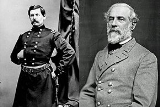
The Seven Days Battles was a series of six major battles over the seven days from June 25 to July 1, 1862, near Richmond, Virginia
Richmond, Virginia

Richmond is the Capital of the Commonwealth of Virginia, in the United States. Like all Virginia municipalities incorporated as cities, it is an independent city and not part of any county....
 during the American Civil War
American Civil War

The American Civil War , also known as the War Between the States and several Naming the American Civil War, was a civil war in the United States....
. Confederate
Confederate States Army

The Confederate States Army was a military organization whose primary mission was to provide the necessary forces and capabilities to support the National Security and defense of the Confederate States of America during its brief existence from 1861 to 1865....
 General Robert E. Lee
Robert E. Lee

Robert Edward Lee , was a career United States United States Army officer , an engineer, and among the most celebrated generals in American history....
 drove the invading Union
Union Army

The Union Army was the army that fought for the Union during the American Civil War. It was also known as the Federal Army, the U.S....
 Army of the Potomac
Army of the Potomac

The Army of the Potomac was the major Union Army in the Eastern Theater of the American Civil War of the American Civil War....
, commanded by Maj. Gen.
Major general (United States)

In the United States Army, United States Marine Corps, and United States Air Force, major general is a 2 star rank general officer rank, with the U.S....
 George B. McClellan
George B. McClellan

George Brinton McClellan was a Major general during the American Civil War. He organized the famous Army of the Potomac and served briefly as the general-in-chief of the Union Army....
, away from Richmond and into a retreat down the Virginia Peninsula
Virginia Peninsula

The Virginia Peninsula is a peninsula in southeast Virginia, bounded by the York River , James River , Hampton Roads and Chesapeake Bay.Hampton Roads is the common name for the metropolitan area that surrounds the body of water of the same name....
. The series of battles is sometimes known erroneously as the Seven Days Campaign, but it was actually the culmination of the Peninsula Campaign
Peninsula Campaign

The Peninsula Campaign of the American Civil War was a major Union operation launched in southeastern Virginia from March through July 1862, the first large-scale offensive in the Eastern Theater of the American Civil War....
, not a separate campaign in its own right.

The Seven Days began on June 25, 1862, with a Union attack in the minor Battle of Oak Grove
Battle of Oak Grove

The Battle of Oak Grove, also known as the Battle of French's Field or King?s School House, took place on June 25, 1862, in Henrico County, Virginia, the first of the Seven Days Battles of the American Civil War.Major General George B....
, but McClellan quickly lost the initiative as Lee began a series of attacks at Beaver Dam Creek
Battle of Beaver Dam Creek

The Battle of Beaver Dam Creek, also known as the Battle of Mechanicsville or Ellerson's Mill, took place on June 26, 1862, in Hanover County, Virginia, Virginia as the first major engagement of the Seven Days Battles of the American Civil War....
 (Mechanicsville) on June 26, Gaines' Mill
Battle of Gaines' Mill

The Battle of Gaines' Mill, also known as the First Battle of Cold Harbor or the Battle of Chickahominy River, took place on June 27, 1862, in Hanover County, Virginia, as the third of the Seven Days Battles of the American Civil War....
 on June 27, the minor actions at Garnett's and Golding's Farm
Battle of Garnett's & Golding's Farm

The Battle of Garnett's and Golding's Farms took place on June 27 and June 28, 1862, in Henrico County, Virginia, as part of the Seven Days Battles of the American Civil War....
 on June 27 and June 28, and the attack on the Union rear guard at Savage's Station
Battle of Savage's Station

The Battle of Savage's Station took place on June 29, 1862, in Henrico County, Virginia, as fourth of the Seven Days Battles of the American Civil War....
 on June 29.


Discussion
Ask a question about 'Seven Days Battles'
Start a new discussion about 'Seven Days Battles'
Answer questions from other users
Full Discussion Forum


Encyclopedia


The Seven Days Battles was a series of six major battles over the seven days from June 25 to July 1, 1862, near Richmond, Virginia
Richmond, Virginia

Richmond is the Capital of the Commonwealth of Virginia, in the United States. Like all Virginia municipalities incorporated as cities, it is an independent city and not part of any county....
 during the American Civil War
American Civil War

The American Civil War , also known as the War Between the States and several Naming the American Civil War, was a civil war in the United States....
. Confederate
Confederate States Army

The Confederate States Army was a military organization whose primary mission was to provide the necessary forces and capabilities to support the National Security and defense of the Confederate States of America during its brief existence from 1861 to 1865....
 General Robert E. Lee
Robert E. Lee

Robert Edward Lee , was a career United States United States Army officer , an engineer, and among the most celebrated generals in American history....
 drove the invading Union
Union Army

The Union Army was the army that fought for the Union during the American Civil War. It was also known as the Federal Army, the U.S....
 Army of the Potomac
Army of the Potomac

The Army of the Potomac was the major Union Army in the Eastern Theater of the American Civil War of the American Civil War....
, commanded by Maj. Gen.
Major general (United States)

In the United States Army, United States Marine Corps, and United States Air Force, major general is a 2 star rank general officer rank, with the U.S....
 George B. McClellan
George B. McClellan

George Brinton McClellan was a Major general during the American Civil War. He organized the famous Army of the Potomac and served briefly as the general-in-chief of the Union Army....
, away from Richmond and into a retreat down the Virginia Peninsula
Virginia Peninsula

The Virginia Peninsula is a peninsula in southeast Virginia, bounded by the York River , James River , Hampton Roads and Chesapeake Bay.Hampton Roads is the common name for the metropolitan area that surrounds the body of water of the same name....
. The series of battles is sometimes known erroneously as the Seven Days Campaign, but it was actually the culmination of the Peninsula Campaign
Peninsula Campaign

The Peninsula Campaign of the American Civil War was a major Union operation launched in southeastern Virginia from March through July 1862, the first large-scale offensive in the Eastern Theater of the American Civil War....
, not a separate campaign in its own right.

The Seven Days began on June 25, 1862, with a Union attack in the minor Battle of Oak Grove
Battle of Oak Grove

The Battle of Oak Grove, also known as the Battle of French's Field or King?s School House, took place on June 25, 1862, in Henrico County, Virginia, the first of the Seven Days Battles of the American Civil War.Major General George B....
, but McClellan quickly lost the initiative as Lee began a series of attacks at Beaver Dam Creek
Battle of Beaver Dam Creek

The Battle of Beaver Dam Creek, also known as the Battle of Mechanicsville or Ellerson's Mill, took place on June 26, 1862, in Hanover County, Virginia, Virginia as the first major engagement of the Seven Days Battles of the American Civil War....
 (Mechanicsville) on June 26, Gaines' Mill
Battle of Gaines' Mill

The Battle of Gaines' Mill, also known as the First Battle of Cold Harbor or the Battle of Chickahominy River, took place on June 27, 1862, in Hanover County, Virginia, as the third of the Seven Days Battles of the American Civil War....
 on June 27, the minor actions at Garnett's and Golding's Farm
Battle of Garnett's & Golding's Farm

The Battle of Garnett's and Golding's Farms took place on June 27 and June 28, 1862, in Henrico County, Virginia, as part of the Seven Days Battles of the American Civil War....
 on June 27 and June 28, and the attack on the Union rear guard at Savage's Station
Battle of Savage's Station

The Battle of Savage's Station took place on June 29, 1862, in Henrico County, Virginia, as fourth of the Seven Days Battles of the American Civil War....
 on June 29. McClellan's Army of the Potomac
Army of the Potomac

The Army of the Potomac was the major Union Army in the Eastern Theater of the American Civil War of the American Civil War....
 continued its retreat toward the safety of Harrison's Landing on the James River
James River (Virginia)

The James River in the U.S. state of Virginia is a long river, including its Jackson River source. It drains a Drainage basin comprising . The watershed includes about 4% open water and an area with a population of 2.5 million people ....
. Lee's final opportunity to intercept the Union Army was at the Battle of Glendale
Battle of Glendale

The Battle of Glendale, also known as the Battle of Frayser's Farm, Frazier's Farm, Nelson's Farm, Charles City Crossroads, New Market Road, or Riddell's Shop, took place on June 30, 1862, in Henrico County, Virginia, as the fifth of the Seven Days Battles of the American Civil War....
 on June 30, but poorly executed orders allowed his enemy to escape to a strong defensive position on Malvern Hill. At the Battle of Malvern Hill
Battle of Malvern Hill

The Battle of Malvern Hill, also known as the Battle of Poindexter's Farm, took place on July 1, 1862, in Henrico County, Virginia, was the sixth and last of the Seven Days Battles of the American Civil War....
 on July 1, Lee launched futile frontal assaults and suffered heavy casualties in the face of strong infantry and artillery defenses.

The Seven Days ended with McClellan's army in relative safety next to the James River, having suffered almost 16,000 casualties during the retreat. Lee's army, which had been on the offensive during the Seven Days, lost over 20,000. As Lee became convinced that McClellan would not resume his threat against Richmond, he moved north for the Northern Virginia Campaign
Northern Virginia Campaign

}|-||}The Northern Virginia Campaign, also known as the Second Bull Run Campaign or Second Manassas Campaign, was a series of battles fought in Virginia during August and September 1862 in the Eastern Theater of the American Civil War of the American Civil War....
 and the Maryland Campaign
Maryland Campaign

The Maryland Campaign, or the Antietam Campaign, of September 1862 is widely considered one of the major Turning Point of the American Civil War of the American Civil War....
.

Start of the Peninsula Campaign


The Peninsula Campaign was the unsuccessful attempt by McClellan to capture the Confederate
Confederate States of America

The Confederate States of America formed as the government set up from 1861 to 1865 by eleven Southern United States U.S. state of the United States of America that had declared their secession from the U.S....
 capital of Richmond and end the war. It started in March 1862, when McClellan landed his army at Fort Monroe
Fort Monroe

Fort Monroe is a Hampton, Virginia, military installation located at Old Point Comfort, which is on the tip of the Virginia Peninsula. Along with Fort Calhoun, later renamed Fort Wool, it guarded approach by sea of the navigational shipping channel between the Chesapeake Bay and the entrance to the harbor of Hampton Roads, which itself is fo...
 and moved northwest, up the Virginia Peninsula
Virginia Peninsula

The Virginia Peninsula is a peninsula in southeast Virginia, bounded by the York River , James River , Hampton Roads and Chesapeake Bay.Hampton Roads is the common name for the metropolitan area that surrounds the body of water of the same name....
 beginning in early April. Confederate Brig. Gen. John B. Magruder
John B. Magruder

John Bankhead Magruder was a career military officer who served in the armies of three nations. He was a United States Army officer in the Mexican-American War, a Confederate States Army General officer during the American Civil War, and a postbellum general in the Imperial Mexican Army....
's defensive position on the Warwick Line
Warwick Line

Warwick Line was a defensive works across the Virginia Peninsula maintained along the Warwick River by Confederate States of America General John B....
 caught McClellan by surprise. His hopes for a quick advance foiled, McClellan ordered his army to prepare for a siege of Yorktown
Battle of Yorktown (1862)

The Battle of Yorktown or Siege of Yorktown was fought from April 5 to May 4, 1862, as part of the Peninsula Campaign of the American Civil War....
. Just before the siege preparations were completed, the Confederates, now under the direct command of Johnston, began a withdrawal toward Richmond. The first heavy fighting of the campaign occurred in the Battle of Williamsburg
Battle of Williamsburg

The Battle of Williamsburg, also known as the Battle of Fort Magruder, took place on May 5, 1862, in York County, Virginia, James City County, Virginia, and Williamsburg, Virginia, as part of the Peninsula Campaign of the American Civil War....
 (May 5), in which the Union troops managed some tactical victories, but the Confederates continued their withdrawal. An amphibious flanking movement to Eltham's Landing
Battle of Eltham's Landing

}|-||}The Battle of Eltham's Landing, also known as the Battle of Barhamsville, or West Point, took place on May 7, 1862, in New Kent County, Virginia, as part of the Peninsula Campaign of the American Civil War....
 (May 7) was ineffective in cutting off the Confederate retreat. In the Battle of Drewry's Bluff
Battle of Drewry's Bluff

The Battle of Drewry?s Bluff, also known as the Battle of Fort Darling or Fort Drewry, took place on May 15, 1862, in Chesterfield County, Virginia, as part of the Peninsula Campaign of the American Civil War....
 (May 15), an attempt by the U.S. Navy to reach Richmond by way of the James River was repulsed.

As McClellan's army reached the outskirts of Richmond, a minor battle occurred at Hanover Court House (May 27), but it was followed by a surprise attack by Johnston at the Battle of Seven Pines
Battle of Seven Pines

The Battle of Seven Pines, also known as the Battle of Fair Oaks or Fair Oaks Station, took place on May 31 and June 1, 1862, in Henrico County, Virginia, as part of the Peninsula Campaign of the American Civil War....
 or Fair Oaks on May 31 and June 1. The battle was inconclusive, with heavy casualties, but it had lasting effects on the campaign. Johnston was wounded and replaced on June 1 by the more aggressive Robert E. Lee. Lee spent almost a month extending his defensive lines and organizing his Army of Northern Virginia
Army of Northern Virginia

The Army of Northern Virginia was the primary military force of the Confederate States of America in the Eastern Theater of the American Civil War of the American Civil War....
; McClellan accommodated this by sitting passively to his front, waiting for dry weather and roads, until the start of the Seven Days. Lee, who had developed a reputation for caution early in the war, knew he had no numerical superiority over McClellan, but he planned an offensive campaign that marked the aggressive nature by which he was characterized for the remainder of the war.

Opposing forces


The armies that fought in the Seven Days Battles comprised almost 200,000 men, which offered the potential for the largest battles of the war. However, the inexperience or caution of the generals involved usually prevented the appropriate concentration of forces and mass necessary for decisive tactical victories.

Union

Union corps commanders
File:Edwin Vose Sumner.png>
Brig. Gen.
Edwin V. Sumner
File:Samuel P. Heintzelman - Brady-Handy.jpg|
Brig. Gen.
Samuel P. Heintzelman

Samuel Peter Heintzelman was a United States Army General officer. He served in the Seminole War, the Mexican-American War, the Cortina Troubles, and the American Civil War, rising to the command of a corps....
File:Erasmus D. Keyes - Brady-Handy.jpg|
Brig. Gen.
Erasmus D. Keyes
Erasmus D. Keyes

Erasmus Darwin Keyes was a businessman, banker, and military general, noted for leading the IV Corps of the Union Army Army of the Potomac during the first half of the American Civil War....
File:Fitz John Porter.jpg|
Brig. Gen.
Fitz John Porter
Fitz John Porter

Fitz John Porter was a career United States Army officer and a Union Army General officer during the American Civil War. He is most known for his performance at the Second Battle of Bull Run and his subsequent Court-martial of Fitz John Porter....
File:William B. Franklin.jpg|
Brig. Gen.
William B. Franklin
William B. Franklin

William Buel Franklin was a career United States Army officer and a Union Army general in the American Civil War. He rose to the rank of a corps commander in the Army of the Potomac, fighting in several notable early battles in the Eastern Theater of the American Civil War....
McClellan's Army of the Potomac, with approximately 104,000 men, was organized largely as it had been at Seven Pines.
  • II Corps
    II Corps (ACW)

    There were five corps in the Union Army designated as II Corps during the American Civil War.* Army of the Cumberland, II Corps commanded by Thomas L....
    , Brig. Gen. Edwin V. Sumner commanding: divisions of Brig. Gens. Israel B. Richardson
    Israel B. Richardson

    Israel Bush Richardson was a United States Army officer during the Mexican-American War and American Civil War, where he was a Major general in the Union Army....
     and John Sedgwick
    John Sedgwick

    John Sedgwick was a teacher, a career military officer, and a Union Army general in the American Civil War. His death at the Battle of Spotsylvania Court House is often considered a well known tale of irony....
    .
  • III Corps
    III Corps (ACW)

    There were four formations in the Union Army designated as III Corps during the American Civil War.Three were short-lived:*Army of Virginia:...
    , Brig. Gen. Samuel P. Heintzelman
    Samuel P. Heintzelman

    Samuel Peter Heintzelman was a United States Army General officer. He served in the Seminole War, the Mexican-American War, the Cortina Troubles, and the American Civil War, rising to the command of a corps....
     commanding: divisions of Brig. Gens. Joseph Hooker
    Joseph Hooker

    Joseph Hooker was a career United States Army officer, fought in the Mexican-American War, and was a Major general in the Union Army during the American Civil War....
     and Philip Kearny
    Philip Kearny

    Philip Kearny, Jr., was a United States Army officer, notably in the Mexican-American War and American Civil War. He was killed in action in the 1862 Battle of Chantilly....
    .
  • IV Corps
    IV Corps (ACW)

    There were two corps of the Union Army called IV Corps during the American Civil War. They were separate units, one serving with the Army of the Potomac and the Department of Virginia in the Eastern Theater, 1862–1863, the other with the Army of the Cumberland in the Western Theater, 1863–1865....
    , Brig. Gen. Erasmus D. Keyes
    Erasmus D. Keyes

    Erasmus Darwin Keyes was a businessman, banker, and military general, noted for leading the IV Corps of the Union Army Army of the Potomac during the first half of the American Civil War....
     commanding: divisions of Brig. Gens. Darius N. Couch
    Darius N. Couch

    Darius Nash Couch was a United States Army officer, naturalist, and a Union Army Major general in the American Civil War. Couch rose to command a corps in the Army of the Potomac, and led division in both the Eastern Theater of the American Civil War and Western Theater of the American Civil War....
     and John J. Peck
    John J. Peck

    John James Peck was a United States soldier who fought in the Mexican-American War and American Civil War....
    .
  • V Corps
    V Corps (ACW)

    The V Corps was a unit of the Union Army Army of the Potomac during the American Civil War....
    , Brig. Gen. Fitz John Porter
    Fitz John Porter

    Fitz John Porter was a career United States Army officer and a Union Army General officer during the American Civil War. He is most known for his performance at the Second Battle of Bull Run and his subsequent Court-martial of Fitz John Porter....
     commanding: divisions of Brig. Gens. George W. Morell
    George W. Morell

    George Webb Morell was a civil engineer, lawyer, farmer, and a Union Army general in the American Civil War....
    , George Sykes
    George Sykes

    George Sykes was a career United States Army officer and a Union Army General officer during the American Civil War....
    , and George A. McCall
    George A. McCall

    George Archibald McCall was a United States Army officer who became a Brigadier general and prisoner of war during the American Civil War....
    .
  • VI Corps
    VI Corps (ACW)

    The VI Corps was a corps of the Union Army during the American Civil War....
    , Brig. Gen. William B. Franklin
    William B. Franklin

    William Buel Franklin was a career United States Army officer and a Union Army general in the American Civil War. He rose to the rank of a corps commander in the Army of the Potomac, fighting in several notable early battles in the Eastern Theater of the American Civil War....
     commanding: divisions of Brig. Gens. Henry W. Slocum and William F. "Baldy" Smith
    William Farrar Smith

    William Farrar Smith , was a civil engineer, a member of the police commission, and Union army General officer in the American Civil War....
    .
  • Reserve forces included the cavalry reserve under Brig. Gen. Philip St. George Cooke
    Philip St. George Cooke

    Philip St. George Cooke was a career United States Army cavalry officer who served as a Union army General officer in the American Civil War. He is noted for his authorship of an Army cavalry manual, and is sometimes called the "Father of the U.S....
     (Jeb Stuart's father-in-law) and the supply base at White House Landing under Brig. Gen. Silas Casey
    Silas Casey

    Silas Casey was a career United States Army officer who rose to the rank of Major general during the American Civil War....
    .


Confederate

Confederate commanders
File:Stonewall Jackson.jpg>
Maj. Gen.
Stonewall Jackson
Stonewall Jackson

Thomas Jonathan "Stonewall" Jackson was a Confederate States Army general during the American Civil War, and probably the most well-known Confederate commander after General Robert E....
File:Ap hill.jpg|
Maj. Gen.
A. P. Hill
A. P. Hill

Ambrose Powell Hill , was a Confederate States Army general in the American Civil War. He gained early fame as the commander of "Hill's Light Division," becoming one of Stonewall Jackson's ablest subordinates....
File:James Longstreet.jpg|
Maj. Gen.
James Longstreet
James Longstreet

James Longstreet was one of the foremost Confederate States Army General officers of the American Civil War and the principal subordinate to General Robert E....
File:John B. Magruder.jpg|
Maj. Gen.
John B. Magruder
John B. Magruder

John Bankhead Magruder was a career military officer who served in the armies of three nations. He was a United States Army officer in the Mexican-American War, a Confederate States Army General officer during the American Civil War, and a postbellum general in the Imperial Mexican Army....
File:Benjamin Huger.jpg|
Maj. Gen.
Benjamin Huger
File:THHolmes.jpg|
Maj. Gen.
Theophilus H. Holmes

Theophilus Hunter Holmes was a career United States Army officer and a Confederate States Army general in the American Civil War.Holmes was born in Clinton, North Carolina, North Carolina....
Lee's Army of Northern Virginia was larger than the one he inherited from Johnston, and, at about 92,000 men, the largest Confederate army assembled during the war.
  • Maj. Gen. Thomas J. "Stonewall" Jackson
    Stonewall Jackson

    Thomas Jonathan "Stonewall" Jackson was a Confederate States Army general during the American Civil War, and probably the most well-known Confederate commander after General Robert E....
    , having just arrived from his victories in the Valley Campaign
    Valley Campaign

    The Valley Campaign was Confederate States Army Major General Stonewall Jackson brilliant spring 1862 campaign through the Shenandoah Valley in Virginia during the American Civil War....
    , commanded a force consisting of his own division
    Division (military)

    A division is a large military unit or Formation usually consisting of between ten to thirty thousand soldiers. In most armies, a division is composed of several regiments or brigades, and in turn several divisions make up a corps....
     (now commanded by Brig. Gen. Charles S. Winder) and those of Maj. Gen. Richard S. Ewell
    Richard S. Ewell

    Richard Stoddert Ewell was a career United States Army officer and a Confederate States Army General officer during the American Civil War. He achieved fame as a senior commander under Stonewall Jackson and Robert E....
    , Brig. Gen. William H. C. Whiting
    William H. C. Whiting

    William Henry Chase Whiting was an United States Army Officer who resigned after 16 years of service in the Army Corps of Engineers to serve in the Confederate States Army during the American Civil War....
    , and Maj. Gen. D.H. Hill.
  • Maj. Gen. A.P. Hill's "Light Division" (which was so named because it traveled light and was able to maneuver and strike quickly) consisted of the brigades of Brig. Gens. Charles W. Field
    Charles W. Field

    Charles William Field was a career military officer, serving in the United States Army and then, during the American Civil War, in the Confederate States Army....
    , Maxcy Gregg
    Maxcy Gregg

    Maxcy Gregg was a lawyer, soldier in the United States Army during the Mexican-American War, and a Confederate States of America History of Confederate States Army Generals#brigadier general during the American Civil War who was killed at the Battle of Fredericksburg....
    , Joseph R. Anderson
    Joseph R. Anderson

    Joseph Reid Anderson was an United States civil engineer, industrialist, and soldier. During the American Civil War he served as a Confederate States of America General officer, and his Tredegar Iron Works was a major source of munitions and ordnance for the Confederate States Army....
    , Lawrence O'Bryan Branch
    Lawrence O'Bryan Branch

    Lawrence O'Bryan Branch was a North Carolina representative in the Congress of the United States and a Confederate brigadier general in the American Civil War, killed at the Battle of Antietam....
    , James J. Archer
    James J. Archer

    James Jay Archer was a lawyer and an officer in the United States Army during the Mexican-American War, and he later served as a General officer in the Confederate States Army during the American Civil War....
    , and William Dorsey Pender
    William Dorsey Pender

    William Dorsey Pender was one of the youngest, and most promising, General officers fighting for the Confederate States of America in the American Civil War....
    .
  • Maj. Gen. James Longstreet
    James Longstreet

    James Longstreet was one of the foremost Confederate States Army General officers of the American Civil War and the principal subordinate to General Robert E....
    's division consisted of the brigades of Brig. Gens. James L. Kemper
    James L. Kemper

    James Lawson Kemper was a lawyer, a Confederate States Army general in the American Civil War, and a governor of Virginia. He was the youngest of the brigade commanders, and the only non-professional military officer, in the division that led Pickett's Charge, in which he was wounded and captured but rescued....
    , Richard H. Anderson
    Richard H. Anderson

    Richard Heron Anderson was a career United States Army officer, fighting with distinction in the Mexican-American War. He also served as a Confederate States Army General officer during the American Civil War....
    , George E. Pickett, Cadmus M. Wilcox
    Cadmus M. Wilcox

    Cadmus Marcellus Wilcox was a career United States Army officer who served in the Mexican?American War and also was a Confederate States Army General officer during the American Civil War....
    , Roger A. Pryor, and Winfield Scott Featherston. Longstreet also had operational command over Hill's Light Division.
  • Maj. Gen. John B. Magruder
    John B. Magruder

    John Bankhead Magruder was a career military officer who served in the armies of three nations. He was a United States Army officer in the Mexican-American War, a Confederate States Army General officer during the American Civil War, and a postbellum general in the Imperial Mexican Army....
     commanded the divisions of Maj. Gen. Lafayette McLaws
    Lafayette McLaws

    Lafayette McLaws was a United States Army officer and a Confederate States Army General officer in the American Civil War....
    , Brig. Gen. David R. Jones
    David R. Jones

    David Rumph Jones was a Confederate States Army general in the American Civil War.BiographyJones was born in Orangeburg, South Carolina....
    , and Magruder's own division, commanded by Brig. Gen. Howell Cobb
    Howell Cobb

    Howell Cobb was an United States political figure. A Southern Democrat, Cobb was a five-term member of the United States House of Representatives and Speaker of the United States House of Representatives from 1849 to 1851....
    .
  • Maj. Gen. Benjamin Huger's division consisted of the brigades of Brig. Gens. William Mahone
    William Mahone

    William Mahone , of Southampton County, Virginia, was a civil engineer, teacher, soldier, railroad executive, and a member of the Virginia General Assembly and Congress of the United States....
    , Ambrose R. Wright
    Ambrose R. Wright

    Ambrose Ransom Wright was a lawyer, Georgia politician, and a Confederate States Army general in the American Civil War....
    , Lewis A. Armistead, and Robert Ransom, Jr.
    Robert Ransom, Jr.

    Robert Ransom, Jr. was a Major General in the Confederate States Army during the American Civil War. His brother Matt W. Ransom was also a Confederate general officer and United States Senate....
  • Maj. Gen. Theophilus H. Holmes
    Theophilus H. Holmes

    Theophilus Hunter Holmes was a career United States Army officer and a Confederate States Army general in the American Civil War.Holmes was born in Clinton, North Carolina, North Carolina....
    's division consisted of the brigades of Brig. Gens. Junius Daniel
    Junius Daniel

    Junius Daniel was a planter and career military officer, serving in the United States Army, then in the Confederate States Army during the American Civil War....
    , John G. Walker
    John George Walker

    John George Walker was a Confederate States Army general in the American Civil War....
    , Henry A. Wise
    Henry A. Wise

    Henry Alexander Wise was an United States statesman from Virginia....
    , and the cavalry brigade of Brig. Gen. J.E.B. Stuart
    J.E.B. Stuart

    James Ewell Brown "Jeb" Stuart was an American soldier from Virginia and a Confederate States Army general during the American Civil War. He was known to his friends as "Jeb", from the initials of his given names....
    .


Planning for offensives

Lee's initial attack plan, similar to Johnston's plan at Seven Pines, was complex and required expert coordination and execution by all of his subordinates, but Lee knew that he could not win in a battle of attrition or siege against the Union Army. It was developed at a meeting on June 23. The Union Army straddled the rain-swollen Chickahominy River
Chickahominy River

Chickahominy also known as "the Chick" is a river in the southeastern portion of the U.S. state of Virginia. The river rises about northwest of Richmond, Virginia and flows southeast and south to the James River ....
, with the bulk of the army, four corps, arrayed in a semicircular line south of the river. The remainder, the V Corps under Brig. Gen. Fitz John Porter
Fitz John Porter

Fitz John Porter was a career United States Army officer and a Union Army General officer during the American Civil War. He is most known for his performance at the Second Battle of Bull Run and his subsequent Court-martial of Fitz John Porter....
, was north of the river near Mechanicsville
Mechanicsville, Hanover County, Virginia

Mechanicsville is a census designated place in Hanover County, Virginia, Virginia,? United States. The population was 30,464 at the United States Census, 2000....
 in an L-shaped line facing north-south behind Beaver Dam Creek and southeast along the Chickahominy. Lee's plan was to cross the Chickahominy with the bulk of his army to attack the Union north flank, leaving only two divisions (under Maj. Gens. Benjamin Huger
Benjamin Huger

Benjamin Huger was a career United States Army ordnance officer and a Confederate States Army General officer in the American Civil War....
 and John B. Magruder
John B. Magruder

John Bankhead Magruder was a career military officer who served in the armies of three nations. He was a United States Army officer in the Mexican-American War, a Confederate States Army General officer during the American Civil War, and a postbellum general in the Imperial Mexican Army....
) to hold a line of entrenchments against McClellan's superior strength. This would concentrate about 65,500 troops to oppose 30,000, leaving only 25,000 to protect Richmond and to contain the other 60,000 men of the Union Army. The Confederate cavalry under Brig. Gen. J.E.B. Stuart
J.E.B. Stuart

James Ewell Brown "Jeb" Stuart was an American soldier from Virginia and a Confederate States Army general during the American Civil War. He was known to his friends as "Jeb", from the initials of his given names....
 had reconnoitered Porter's right flank (as part of a daring, although militarily pointless, circumnavigation of the entire Union Army from June 12 to June 15) and found it vulnerable.

Lee intended for Jackson to attack Porter's right flank early on the morning of June 26, and A.P. Hill would move from Meadow Bridge to Beaver Dam Creek, which flows into the Chickahominy, advancing on the Federal trenches. (Lee hoped that Porter would evacuate his trenches under pressure, obviating the need for a direct frontal assault.) Following this, Longstreet and D.H. Hill would pass through Mechanicsville and join the battle. Huger and Magruder would provide diversions on their fronts to distract McClellan as to Lee's real intentions. Lee hoped that Porter would be overwhelmed from two sides by the mass of 65,000 men, and the two leading Confederate divisions would move on Cold Harbor and cut McClellan's communications with White House Landing.

McClellan also planned an offensive. He had received intelligence that Lee was prepared to move and that the arrival of Maj. Gen. Thomas J. "Stonewall" Jackson's
Stonewall Jackson

Thomas Jonathan "Stonewall" Jackson was a Confederate States Army general during the American Civil War, and probably the most well-known Confederate commander after General Robert E....
 force from the Shenandoah Valley
Valley Campaign

The Valley Campaign was Confederate States Army Major General Stonewall Jackson brilliant spring 1862 campaign through the Shenandoah Valley in Virginia during the American Civil War....
 was imminent. (McClellan was aware of Jackson's presence at Ashland Station, but did nothing to reinforce Porter's vulnerable corps north of the river.) He decided to resume the offensive before Lee could. Anticipating Jackson's reinforcements marching from the north, he increased cavalry patrols on likely avenues of approach. He wanted to advance his siege artillery about a mile and a half closer to the city by taking the high ground on Nine Mile Road around Old Tavern. In preparation for that, he planned an attack on Oak Grove, south of Old Tavern and the Richmond and York River Railroad
Richmond and York River Railroad

Richmond and York River Railroad was completed between Richmond, Virginia and West Point, Virginia in 1861. The western terminus was adjacent to Richmond's Tobacco Row....
, which would position his men to attack Old Tavern from two directions.

The Seven Days

Seven Days June 26 27

Oak Grove

McClellan planned to advance to the west, along the axis of the Williamsburg Road, in the direction of Richmond. Between the two armies was a small, dense forest, 1,200 yards wide, bisected by the headwaters of White Oak Swamp. Two divisions of the III Corps were selected for the assault, commanded by Brig. Gens. Joseph Hooker
Joseph Hooker

Joseph Hooker was a career United States Army officer, fought in the Mexican-American War, and was a Major general in the Union Army during the American Civil War....
 and Philip Kearny
Philip Kearny

Philip Kearny, Jr., was a United States Army officer, notably in the Mexican-American War and American Civil War. He was killed in action in the 1862 Battle of Chantilly....
. Facing them was the division of Confederate Maj. Gen. Benjamin Huger
Benjamin Huger

Benjamin Huger was a career United States Army ordnance officer and a Confederate States Army General officer in the American Civil War....
.

Soon after 8 a.m., June 25, the Union brigade
Brigade

A brigade is a military unit that is typically composed of two to five regiments or battalions, depending on the era and nationality of a given army....
s of Brig. Gens. Daniel E. Sickles (the Excelsior Brigade
Excelsior Brigade

The Excelsior Brigade was a military unit in the Union Army during the American Civil War. Comprised primarily of infantry regiments raised in the state of New York primarily by former United States Congress Daniel Sickles, the brigade served in several of the Army of the Potomac's most important battles in the Eastern Theater of the American...
), Cuvier Grover, both of Hooker's division, and John C. Robinson
John C. Robinson

John Cleveland Robinson had a long and distinguished career in the United States Army, fighting in numerous wars and culminating his career as a Union Army Major general in the American Civil War....
 stepped off. Although Robinson and Grover made good progress on the left and in the center, Sickles's New Yorkers encountered difficulties moving through their abatis
Abatis

Abatis, abattis, or abbattis is a term in field fortification for an obstacle formed of the branches of trees laid in a row, with the sharpened tops directed outwards, towards the enemy....
, then through the upper portions of the swamp, and finally met stiff Confederate resistance, all of which threw the Federal line out of alignment. Huger took advantage of the confusion by launching a counterattack with the brigade of Brig. Gen. Ambrose R. Wright
Ambrose R. Wright

Ambrose Ransom Wright was a lawyer, Georgia politician, and a Confederate States Army general in the American Civil War....
 against Grover's brigade. At a crucial moment in the battle, the 25th North Carolina of Brig. Gen. Robert Ransom's brigade, in their first combat engagement, delivered a perfectly synchronized volley of rifle fire against Sickles's brigade, breaking up its delayed attack and sending the 71st New York into a panicked retreat, which Sickles described as "disgraceful confusion."

Heintzelman ordered reinforcements sent forward and also notified army commander McClellan, who was attempting to manage the battle by telegraph from 3 miles away. McClellan ordered his men to withdraw back to their entrenchments, mystifying his subordinates on the scene. Arriving at the front at 1 p.m., seeing that the situation was not as bad as he had feared, McClellan ordered his men forward to retake the ground for which they had already fought once that day. The fighting lasted until nightfall.

The minor battle was McClellan's only tactical offensive action against Richmond. His attack gained only 600 yards at a cost of over 1,000 casualties on both sides and was not strong enough to derail the offensive planned by Robert E. Lee, which already had been set in motion.

Beaver Dam Creek (Mechanicsville)

Lee's plan called for Jackson to begin the attack on Porter's north flank early on June 26. A.P. Hill's Light Division was to advance from Meadow Bridge when he heard Jackson's guns, clear the Union pickets from Mechanicsville, and then move to Beaver Dam Creek. D.H. Hill and Longstreet were to pass through Mechanicsville and support Jackson and A.P. Hill. South of the river, Magruder and Huger were to demonstrate to deceive the four Union corps on their front.

Lee's intricate plan went awry immediately. Jackson's men, fatigued from their recent campaign and lengthy march, ran at least four hours behind schedule. By 3 p.m., A.P. Hill grew impatient and began his attack without orders, a frontal assault with 11,000 men. Porter extended and strengthened his right flank and fell back to concentrate along Beaver Dam Creek and Ellerson's Mill. There, 14,000 well entrenched soldiers, aided by 32 guns in six batteries, repulsed repeated Confederate attacks with substantial casualties.

Jackson and his command arrived late in the afternoon and he ordered his troops to bivouac for the evening while a major battle was raging within earshot. His proximity to Porter's flank caused McClellan to order Porter to withdraw after dark behind Boatswain's Swamp, 5 miles to the east. McClellan was concerned that the Confederate buildup on his right flank threatened his supply line, the Richmond and York River Railroad
Richmond and York River Railroad

Richmond and York River Railroad was completed between Richmond, Virginia and West Point, Virginia in 1861. The western terminus was adjacent to Richmond's Tobacco Row....
 north of the Chickahominy, and he decided to shift his base of supply to the James River
James River (Virginia)

The James River in the U.S. state of Virginia is a long river, including its Jackson River source. It drains a Drainage basin comprising . The watershed includes about 4% open water and an area with a population of 2.5 million people ....
. He also believed that the diversions by Huger and Magruder south of the river meant that he was seriously outnumbered. (He reported to Washington that he faced 200,000 Confederates, but there were actually 85,000.) This was a strategic decision of grave import because it meant that, without the railroad to supply his army, he would be forced to abandon his siege of Richmond. A.P. Hill, now with Longstreet and D.H. Hill behind him, continued his attack, despite orders from Lee to hold his ground. His assault was beaten back with heavy casualties.

Overall, the battle was a Union tactical victory, in which the Confederates suffered heavy casualties and achieved none of their specific objectives due to the seriously flawed execution of Lee's plan. Instead of over 60,000 men crushing the enemy's flank, only five brigades, about 15,000 men, had seen action. Their losses were 1,484 versus Porter's 361. Despite the short-term Union success, however, it was the start of a strategic debacle. McClellan began to withdraw his army to the southeast and never regained the initiative.

Gaines' Mill

By the morning of June 27, the Union forces were concentrated into a semicircle with Porter collapsing his line into an east-west salient north of the river and the four corps south of the river remaining in their original positions. McClellan ordered Porter to hold Gaines' Mill at all costs so that the army could change its base of supply to the James River. Several of McClellan's subordinates urged him to attack the Magruder's division south of the river, but he feared the vast numbers of Confederates he believed to be before him and refused to capitalize on the overwhelming superiority he actually held on that front.

Lee continued his offensive on June 27, launching the largest Confederate attack of the war, about 57,000 men in six divisions. A.P. Hill resumed his attack across Beaver Dam Creek early in the morning, but found the line lightly defended. By early afternoon, he ran into strong opposition by Porter, deployed along Boatswain's Creek and the swampy terrain was a major obstacle against the attack. As Longstreet arrived to the south of A.P. Hill, he saw the difficulty of attacking over such terrain and delayed until Stonewall Jackson could attack on Hill's left.

For the second time in the Seven Days, however, Jackson was late. D.H. Hill attacked the Federal right and was held off by the division of Brig. Gen. George Sykes
George Sykes

George Sykes was a career United States Army officer and a Union Army General officer during the American Civil War....
; he backed off to await Jackson's arrival. Longstreet was ordered to conduct a diversionary attack to stabilize the lines until Jackson could arrive and attack from the north. In Longstreet's attack, Brig. Gen. George E. Pickett's brigade attempted a frontal assault and was beaten back under severe fire with heavy losses. Jackson finally reached D.H. Hill's position at 3 p.m. and began his assault at 4:30 p.m.

Porter's line was saved by Brig. Gen. Henry W. Slocum's division moving into position to bolster his defense. Shortly after dark, the Confederates mounted another attack, poorly coordinated, but this time collapsing the Federal line. Brig. Gen. John Bell Hood
John Bell Hood

John Bell Hood was a Confederate States Army general during the American Civil War. Hood had a reputation for bravery and aggressiveness that sometimes bordered on recklessness....
's Texas Brigade
Texas Brigade

The Texas Brigade, also often referred to as Hood's Brigade, was an infantry brigade in the Confederate States Army that distinguished itself for its fierce tenacity and fighting capability during the American Civil War....
 opened a gap in the line, as did Pickett's Brigade on its second attempt of the day. By 4 a.m. on June 28, Porter withdrew across the Chickahominy, burning the bridges behind him.

For the second day, Magruder was able to continue fooling McClellan south of the river by employing minor diversionary attacks. He was able to occupy 60,000 Federal troops while the heavier action occurred north of the river.

Gaines' Mill was the only clear-cut Confederate tactical victory of the Peninsula Campaign. Union casualties from the 34,214 engaged were 6,837 (894 killed, 3,107 wounded, and 2,836 captured or missing). Of the 57,018 Confederates engaged, losses totaled 7,993 (1,483 killed, 6,402 wounded, 108 missing or captured). Since the Confederate assault was conducted against only a small portion of the Union Army (the V Corps, one fifth of the army), the army emerged from the battle in relatively good shape overall. However, although McClellan had already planned to shift his supply base to the James River, his defeat unnerved him and he precipitously decided to abandon his advance on Richmond.

Union withdrawal

The night of June 27, McClellan ordered his entire army to withdraw to a secure base at Harrison's Landing on the James. His actions have puzzled military historians ever since. He was actually in a strong position, having withstood strong Confederate attacks, while having deployed only one of his five corps in battle. Porter had performed well against heavy odds. Furthermore, McClellan was aware that the War Department had created a new Army of Virginia
Army of Virginia

The Army of Virginia was organized as a major unit of the Union Army and operated briefly and unsuccessfully in 1862 in the American Civil War. It should not be confused with its principal opponent, the Confederate States Army Army of Northern Virginia, commanded by Robert E....
 and ordered it to be sent to the Peninsula to reinforce him. But Lee had unnerved him, and he surrendered the initiative. He sent a telegram to the Secretary of War that included the statement: "If I save this Army now I tell you plainly that I owe no thanks to you or any other persons in Washington—you have done your best to sacrifice this Army." (The military telegraph department chose to omit this sentence from the copy given to the Secretary.)

McClellan ordered Keyes's IV Corps to move west of Glendale and protect the army's withdrawal, and Porter was to move to the high ground at Malvern Hill to develop defensive positions. The supply trains were ordered to move south toward the river. McClellan departed for Harrison's Landing without specifying any exact routes of withdrawal and without designating a second-in-command. For the remainder of the Seven Days, he had no direct command of the battles. Gaines' Mill and the Union retreat across the Chickahominy was a psychological victory for the Confederacy, signaling that Richmond was out of danger.

Lee's cavalry reported that Union troops had abandoned their defense of the Richmond and York River Railroad
Richmond and York River Railroad

Richmond and York River Railroad was completed between Richmond, Virginia and West Point, Virginia in 1861. The western terminus was adjacent to Richmond's Tobacco Row....
 and the White House supply depot on the York River. That information, plus the sighting of large dust clouds south of the Chickahominy River, finally convinced Lee that McClellan was heading for the James. Until this time, Lee anticipated that McClellan would be withdrawing to the east to protect his supply line to the York River and positioned his forces to react to that, unable to act decisively while he awaited evidence of McClellan's intentions.

Garnett's & Golding's Farm

While Lee's main attack at Gaines' Mill was progressing on June 27, the Confederates south of the Chickahominy performed a reconnaissance in force to determine the location of McClellan's retreating army. Magruder ordered Brig. Gen. Robert A. Toombs's brigade forward to "feel the enemy." Toombs, a Georgia politician with a disdain for professional officers, instead launched a sharp attack at dusk against Baldy Smith's VI Corps division near Old Tavern at the farm of James M. Garnett. The attack was easily repulsed by the brigade of Brig. Gen. Winfield S. Hancock.

On June 28, Toombs again was ordered to conduct a reconnaissance, but turned it into an attack over the same ground, meeting the enemy at the farm of Simon Gouldin (also known as Golding). Toombs took it upon himself to order his fellow brigade commander, Brig. Gen. George T. Anderson
George T. Anderson

George Thomas Anderson was a general in the Confederate States Army during the American Civil War. Nicknamed "Tige," Anderson was noted as one of Robert E....
, to join the assault. Two of Anderson's regiments, the 7th and 8th Georgia, preceded Toombs's brigade into the assault and were subjected to a vigorous Federal counterattack by the 49th Pennsylvania and 43rd New York, losing 156 men.

These were the only attacks south of the Chickahominy River in conjunction with Gaines' Mill, but they helped to convince McClellan that he was being subjected to attacks from all directions, increasing his anxiety and his determination to get his army to safety at the James.

Savage's Station

On June 29, the bulk of McClellan's army concentrated around Savage's Station on the Richmond and York River Railroad, a Federal supply depot since just before Seven Pines, preparing for a difficult crossing through and around White Oak Swamp. It did so without centralized direction because McClellan had personally moved south of Malvern Hill after Gaines' Mill without leaving directions for corps movements during the retreat nor naming a second in command. Clouds of black smoke filled the air as the Union troops were ordered to burn anything they could not carry. Union morale plummeted, particularly so for those wounded, who realized that they were not being evacuated from Savage's Station with the rest of the Army.

Lee devised a complex plan to pursue and destroy McClellan's army. Longstreet's and A.P. Hill's divisions looped back toward Richmond and then southeast to the crossroads at Glendale, Holmes's division headed farther south, to the vicinity of Malvern Hill, and Magruder's division was ordered to move due east to attack the Federal rear guard. Stonewall Jackson, commanding three divisions, was to rebuild a bridge over the Chickahominy and head due south to Savage's Station, where he would link up with Magruder and deliver a strong blow that might cause the Union Army to turn around and fight during its retreat. McClellan's rear guard at Savage's Station consisted five divisions from Sumner's II Corps, Heintzelman's III Corps, and Franklin's VI Corps. McClellan considered his senior corps commander, Sumner, to be incompetent, so he appointed no one to command the rear guard.

Initial contact between the armies occurred at 9 a.m. on June 29, a four-regiment fight about 2 miles west of Savage's Station, lasting for about two hours before disengaging. Meanwhile, Jackson was not advancing as Lee had planned. He was taking time to rebuild bridges over the Chickahominy and he received a garbled order from Lee's chief of staff that made him believe he should stay north of the river and guard the crossings. These failures of the Confederate plan were being matched on the Union side, however. Heintzelman decided on his own that his corps was not needed to defend Savage's Station, so he decided to follow the rest of the army without informing his fellow generals.

Magruder was faced with the problem of attacking Sumner's 26,600 men with his own 14,000. He hesitated until 5 p.m., when he sent only two and a half brigades forward. Union artillery opened fire and pickets were sent forward to meet the assault. The two brigade front of Kershaw and Semmes began to push the narrow defensive line of one of Sedgwick's brigades. Sumner managed this part of the battle erratically, selecting regiments for combat from multiple brigades almost at random. By the time all of these units reached the front, the two sides were at rough parity—two brigades each. Although Magruder had been conservative about his attack, Sumner was even more so. Of the 26 regiments he had in his corps, only 10 were engaged at Savage's Station.

The fighting turned into a bloody stalemate as darkness fell and strong thunderstorms began to move in. The "Land Merrimack
CSS Virginia

CSS Virginia was a steam-powered Floating battery design ironclad warship of the Confederate States Navy during the American Civil War .She was one of the participants in the Battle of Hampton Roads in March, 1862 opposite the USS Monitor....
"—the first instance of an armored railroad battery to be used in combat—bombarded the Union front, with some of its shells reaching as far to the rear as the field hospital. The final action of the evening was as the Vermont Brigade, attempting to hold the flank south of the Williamsburg Road, charged into the woods and were met with murderous fire, suffering more casualties of any brigade on the field that day.

There were about 1,500 casualties on both sides, plus 2,500 previously wounded Union soldiers who were left to be captured when their field hospital was evacuated. Stonewall Jackson eventually crossed the river by about 2:30 a.m. on June 30, but it was too late to crush the Union Army, as Lee had hoped. General Lee reprimanded Magruder, but the fault for the lost opportunity must be shared equally with the poor staff work at Lee's own headquarters and a less than aggressive performance by Jackson.

Glendale (Frayser's Farm) and White Oak Swamp

Seven Days June 30
Seven Days July 1
Most elements of the Union Army had been able to cross White Oak Swamp Creek by noon on June 30. About one third of the army had reached the James River, but the remainder was still marching between White Oak Swamp and Glendale. After inspecting the line of march that morning, McClellan rode south and boarded the ironclad USS Galena
USS Galena (1862)

USS Galena, an ironclad screw propellor steamship, was one of the first three ironclads, each of a different design, built by the Union Navy during the American Civil War....
 on the James.

Lee ordered his army to converge on the retreating Union forces, bottlenecked on the inadequate road network. The Army of the Potomac, lacking overall command coherence, presented a discontinuous, ragged defensive line. Stonewall Jackson was ordered to press the Union rear guard at the White Oak Swamp crossing while the largest part of Lee's army, some 45,000 men, would attack the Army of the Potomac in mid-retreat at Glendale, about 2 miles southwest, splitting it in two. Huger's division would strike first after a three-mile march on the Charles City Road, supported by Longstreet and A.P. Hill, whose divisions were about 7 miles to the west, in a mass attack. Holmes was ordered to capture Malvern Hill.

The Confederate plan was once again marred by poor execution. Huger's men were slowed by felled trees obstructing the Charles City Road, spending hours chopping a new road through the thick woods. Huger failed to take any alternative route, and, fearing a counterattack, failed to participate in the battle. Magruder marched around aimlessly, unable to decide whether he should be aiding Longstreet or Holmes; by 4 p.m., Lee ordered Magruder to join Holmes on the River Road and attack Malvern Hill. Stonewall Jackson moved slowly and spent the entire day north of the creek, making only feeble efforts to cross and attack Franklin's VI Corps in the Battle of White Oak Swamp
Battle of White Oak Swamp

}|-||}The Battle of White Oak Swamp took place on June 30, 1862 in Henrico County, Virginia as part of the Seven Days Battles of the American Civil War....
, attempting to rebuild a destroyed bridge, although adequate fords were nearby, and engaging in a pointless artillery duel. Jackson's inaction allowed some units to be detached from Franklin's corps in late afternoon to reinforce the Union troops at Glendale. Holmes's relatively inexperienced troops made no progress against Porter at Turkey Bridge on Malvern Hill, even with the reinforcements from Magruder, and were repulsed by effective artillery fire and by Federal gunboats on the James.

At 2 p.m., as they waited for sounds of Huger's expected attack, Lee, Longstreet, and visiting Confederate President Jefferson Davis were conferring on horseback when they came under heavy artillery fire, wounding two men and killing three horses. A.P. Hill, the commander in that sector, ordered the president and senior generals to the rear. Longstreet attempted to silence the six batteries of Federal guns firing in his direction, but long-range artillery fire proved to be inadequate. He ordered Col. Micah Jenkins
Micah Jenkins

Micah Jenkins , was a Confederate States Army general in the American Civil War, mortally wounded by friendly fire at the Battle of the Wilderness....
 to charge the batteries, which brought on a general fight around 4 p.m.

Although belated and not initiated as planned, the assaults by the divisions of A.P. Hill and Longstreet, under Longstreet's overall command, turned out to be the only ones to follow Lee's order to attack the main Union concentration. Longstreet's 20,000 men were not reinforced by other Confederate divisions of Huger and Jackson, despite their concentration within a three-mile radius. They assaulted the disjointed Union line of 40,000 men, arranged in a two-mile arc north and south of the Glendale intersection, but the brunt of the fighting was centered on the position held by the Pennsylvania Reserves
Pennsylvania Reserves

The Pennsylvania Reserves was an infantry division in the Union Army during the American Civil War. Noted for its famous commanders and high casualties, it served in the Eastern Theater of the American Civil War, and fought in many important battles, including Battle of Antietam and Battle of Gettysburg....
 division of the V Corps, 6,000 men under Brig. Gen. George A. McCall
George A. McCall

George Archibald McCall was a United States Army officer who became a Brigadier general and prisoner of war during the American Civil War....
, just west of the Nelson Farm. (The farm was owned by R.H. Nelson, but its former owner was named Frayser and many of the locals referred to it as Frayser's, or Frazier's, Farm.)

Three Confederate brigades made the assault, but Longstreet ordered them forward in a piecemeal fashion, over several hours. Brig. Gen. James L. Kemper
James L. Kemper

James Lawson Kemper was a lawyer, a Confederate States Army general in the American Civil War, and a governor of Virginia. He was the youngest of the brigade commanders, and the only non-professional military officer, in the division that led Pickett's Charge, in which he was wounded and captured but rescued....
's Virginians charged through the thick woods first and emerged in front of five batteries of McCall's artillery. In their first combat experience, the brigade conducted a disorderly but enthusiastic assault, which carried them through the guns and broke through McCall's main line with Jenkins's support, followed up a few hours later by Brig. Gen. Cadmus M. Wilcox
Cadmus M. Wilcox

Cadmus Marcellus Wilcox was a career United States Army officer who served in the Mexican?American War and also was a Confederate States Army General officer during the American Civil War....
's Alabama
Alabama

Alabama is a state located in the Southern United States of the United States of America. It is bordered by Tennessee to the north, Georgia to the east, Florida and the Gulf of Mexico to the south, and Mississippi to the west....
ns. The Confederate brigades met stiff resistance in sometimes hand-to-hand combat.

On McCall's flanks, the divisions of Brig. Gen. Joseph Hooker
Joseph Hooker

Joseph Hooker was a career United States Army officer, fought in the Mexican-American War, and was a Major general in the Union Army during the American Civil War....
 (to the south) and Brig. Gens. Philip Kearny
Philip Kearny

Philip Kearny, Jr., was a United States Army officer, notably in the Mexican-American War and American Civil War. He was killed in action in the 1862 Battle of Chantilly....
 and Henry W. Slocum (to the north), held against repeated Confederate attacks. Brig. Gen. John Sedgwick
John Sedgwick

John Sedgwick was a teacher, a career military officer, and a Union Army general in the American Civil War. His death at the Battle of Spotsylvania Court House is often considered a well known tale of irony....
's division, which had units both in reserve and around White Oak Swamp, came up to fill a gap after a brutal counterattack. Heavy fighting continued until about 8:30 p.m. Longstreet committed virtually every brigade in the divisions under his command, while on the Union side they had been fed in individually to plug holes in the line as they occurred.

The battle was tactically inconclusive, although Lee failed to achieve his objective of preventing the Federal escape and crippling McClellan's army, if not destroying it. Union casualties were 3,797, Confederate about the same at 3,673, but more than 40% higher in killed and wounded. Although Jackson's wing of the army and Franklin's corps comprised tens of thousands of men, the action at White Oak Swamp included no infantry activity and was limited to primarily an artillery duel with few casualties.

Malvern Hill

The final battle of the Seven Days was the first in which the Union Army occupied favorable ground. Malvern Hill
Malvern Hill

Malvern Hill stands on the north bank of the James River in Henrico County, Virginia, United States, about eighteen miles southeast of Richmond, Virginia....
 offered good observation and artillery positions, having been prepared the previous day by Porter's V Corps. McClellan himself was not present on the battlefield, having preceded his army to Harrison's Landing on the James, and Porter was the most senior of the corps commanders. The slopes were cleared of timber, providing great visibility, and the open fields to the north could be swept by deadly fire from the 250 guns placed by Col. Henry J. Hunt, McClellan's chief of artillery. Beyond this space, the terrain was swampy and thickly wooded. Almost the entire Army of the Potomac occupied the hill and the line extended in a vast semicircle from Harrison's Landing on the extreme right to Brig. Gen. George W. Morell
George W. Morell

George Webb Morell was a civil engineer, lawyer, farmer, and a Union Army general in the American Civil War....
's division of Porter's corps on the extreme left, which occupied the geographically advantageous ground on the northwestern slopes of the hill.

Rather than flanking the position, Lee attacked it directly, hoping that his artillery would clear the way for a successful infantry assault. His plan was to attack the hill from the north on the Quaker Road, using the divisions of Stonewall Jackson, Richard S. Ewell
Richard S. Ewell

Richard Stoddert Ewell was a career United States Army officer and a Confederate States Army General officer during the American Civil War. He achieved fame as a senior commander under Stonewall Jackson and Robert E....
, D.H. Hill, and Brig. Gen. William H.C. Whiting. Magruder was ordered to follow Jackson and deploy to his right when he reached the battlefield. Huger's division was to follow as well, but Lee reserved the right to position him based on developments. The divisions of Longstreet and A.P. Hill, which had been the most heavily engaged in Glendale the previous day, were held in reserve.

Once again, Lee's complex plan was poorly executed. The approaching soldiers were delayed by severely muddy roads and poor maps. Jackson arrived at the swampy creek called Western Run and stopped abruptly. Magruder's guides mistakenly sent him on the Long Bridge Road to the southwest, away from the battlefield. Eventually the battle line was assembled with Huger's division (brigades of Brig. Gens. Ambrose R. Wright
Ambrose R. Wright

Ambrose Ransom Wright was a lawyer, Georgia politician, and a Confederate States Army general in the American Civil War....
 and Lewis A. Armistead) on the Confederate right and D.H. Hill's division (brigades of Brig. Gen. John Bell Hood
John Bell Hood

John Bell Hood was a Confederate States Army general during the American Civil War. Hood had a reputation for bravery and aggressiveness that sometimes bordered on recklessness....
 and Col. Evander M. Law
Evander M. Law

Evander McIvor Law was an author, teacher, and a Confederate States Army general in the American Civil War....
) on the Quaker Road to the left. They awaited the Confederate bombardment before attacking.

Unfortunately for Lee, Henry Hunt struck first, launching one of the greatest artillery barrages in the war from 1 p.m. to 2:30 p.m. The Union gunners had superior equipment and expertise and disabled most of the Confederate batteries. Despite the setback, Lee sent his infantry forward at 3:30 p.m. and Armistead's brigade made some progress through lines of Union sharpshooters. By 4 p.m., Magruder arrived and he was ordered forward to support Armistead. His attack was piecemeal and poorly organized. Meanwhile, D. H. Hill launched his division forward along the Quaker Road, past Willis Church. Across the entire line of battle, the Confederate troops reached only within 200 yards of the Union Center and were repulsed by nightfall with heavy losses.

Lee's army suffered 5,355 casualties (versus 3,214 Union) in this wasted effort, but continued to follow the Union army all the way to Harrison's Landing. On Evelington Heights, part of the property of Edmund Ruffin
Edmund Ruffin

Edmund Ruffin was born in Prince George County, Virginia. He was a descendant of William Randolph, the progenitor of the Randolph family. Ruffin was a farmer and slaveholder, a Confederate Army soldier, and an 1850s political activist....
, the Confederates had an opportunity to dominate the Union camps, making their position on the bank of the James potentially untenable; although the Confederate position would be subjected to Union naval gunfire, the heights were an exceptionally strong defensive position that would have been very difficult for the Union to capture with infantry. Cavalry commander Jeb Stuart reached the heights and began bombardment with a single cannon. This alerted the Federals to the potential danger and they captured the heights before any Confederate infantry could reach the scene.

Aftermath


The Seven Days Battles ended the Peninsula Campaign. The Army of the Potomac encamped around Berkeley Plantation, birthplace of William Henry Harrison
William Henry Harrison

William Henry Harrison was an Military history of the United States and Politics of the United States, the List of Presidents of the United States President of the United States, and the first president to die in office....
. The Union defensive position was a strong one that Lee did not consider attacking, withdrawing instead to the defenses of Richmond. With its back to the James River, the army was protected by Union gunboats, but suffered heavily from heat, humidity, and disease. In August, they were withdrawn by order of President Lincoln to reinforce the Army of Virginia in the Northern Virginia Campaign
Northern Virginia Campaign

}|-||}The Northern Virginia Campaign, also known as the Second Bull Run Campaign or Second Manassas Campaign, was a series of battles fought in Virginia during August and September 1862 in the Eastern Theater of the American Civil War of the American Civil War....
 and the Second Battle of Bull Run
Second Battle of Bull Run

The Second Battle of Bull Run, or, as it was called by the Confederate States of America, the Battle of Second Manassas, was fought August 28–30, 1862, as part of the American Civil War....
.

Both sides suffered heavy casualties. Lee's Army of Northern Virginia suffered about 20,000 casualties (3,494 killed, 15,758 wounded, and 952 captured or missing) out of a total of over 90,000 soldiers during the Seven Days. McClellan reported casualties of about 16,000 (1,734 killed, 8,062 wounded, and 6,053 captured or missing) out of a total of 105,445. Despite their victory, many Confederates were stunned by the losses.

The effects of the Seven Days Battles were widespread. After a successful start on the Peninsula that foretold an early end to the war, Northern morale was crushed by McClellan's retreat. Despite heavy casualties and clumsy tactical performances by Lee and his generals, Confederate morale skyrocketed, and Lee was emboldened to continue his aggressive strategy through Second Bull Run and the Maryland Campaign
Maryland Campaign

The Maryland Campaign, or the Antietam Campaign, of September 1862 is widely considered one of the major Turning Point of the American Civil War of the American Civil War....
. McClellan's previous position as general-in-chief of all the Union armies, vacant since March, was filled on July 23, 1862, by Maj. Gen. Henry W. Halleck, although McClellan did retain command of the Army of the Potomac. Lee reacted to the performances of his subordinates by a reorganization of his army and by forcing the reassignment of Holmes and Magruder out of Virginia.

Further reading

  • Martin, David G., The Peninsula Campaign March-July 1862, Combined Books, 1992, ISBN 978-0938289098.
  • Gallagher, Gary W., ed., The Richmond Campaign of 1862: The Peninsula & the Seven Days, University of North Carolina Press, 2000, ISBN 0-8078-2552-2.
  • Robertson, James I., Jr.
    James I. Robertson, Jr.

    Dr. James I. "Bud" Robertson, Jr., is a noted scholar on the American Civil War and is a professor at Virginia Tech. Born and raised in Danville, Virginia, Virginia, he earned his bachelor?s degree at Randolph-Macon College in 1955....
    , Stonewall Jackson: The Man, The Soldier, The Legend, MacMillan Publishing, 1997, ISBN 0-02-864685-1.
  • Webb, Alexander S.
    Alexander S. Webb

    Alexander Stewart Webb was a career United States Army officer and a Union Army general in the American Civil War who won the Medal of Honor for gallantry at the Battle of Gettysburg....
    , The Peninsula: McClellan's Campaign of 1862, Castle Books (reprint 2002), 1881, ISBN 0-7858-1575-9.
  • Wert, Jeffry D.
    Jeffry D. Wert

    Jeffry D. Wert is a history and author specializing in the American Civil War. He has written several books on the subject, which have been published in multiple languages and countries....
    , General James Longstreet: The Confederacy's Most Controversial Soldier: A Biography, Simon & Schuster, 1993, ISBN 0-671-70921-6.
  • Wheeler, Richard, Sword Over Richmond: An Eyewitness History of McClellan's Peninsula Campaign, Harper & Row Publishers, 1986, ISBN 0-0601-5529-9.


External links