

Fulbright Program

Encyclopedia
Grant (money)
Grants are funds disbursed by one party , often a Government Department, Corporation, Foundation or Trust, to a recipient, often a nonprofit entity, educational institution, business or an individual. In order to receive a grant, some form of "Grant Writing" often referred to as either a proposal...
for international educational exchange
United States Cultural Exchange Programs
United States cultural exchange programs, particularly those programs with ties to theBureau of Educational and Cultural Affairs of the United States Department of State, seek to develop cultural understanding between United States citizens and citizens of other countries...
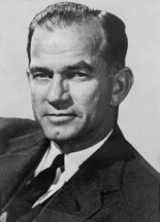
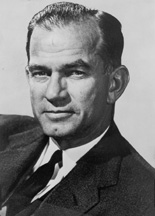
for students, scholars, teachers, professionals, scientists and artists, founded by United States Senator J. William Fulbright
J. William Fulbright
James William Fulbright was a United States Senator representing Arkansas from 1945 to 1975.Fulbright was a Southern Democrat and a staunch multilateralist who supported the creation of the United Nations and the longest serving chairman in the history of the Senate Foreign Relations Committee...
in 1946. Under the Fulbright Program, U.S. citizens are eligible to go abroad, and non-U.S. citizens are eligible to come to the United States. The first participating university in the United States was the George Washington University
George Washington University
The George Washington University is a private, coeducational comprehensive university located in Washington, D.C. in the United States...
, in Washington, DC.
The Fulbright Program is one of the most prestigious awards programs worldwide, operating in over 155 countries. Forty-three Fulbright alumni have won Nobel Prizes (including two in 2010, Peter A. Diamond and Ei-ichi Negishi
Ei-ichi Negishi
is a Japanese chemist who has spent most of his career at Purdue University, United States. He is best known for his discovery of the Negishi coupling. He was awarded the 2010 Nobel Prize in Chemistry "for palladium catalyzed cross couplings in organic synthesis" jointly with Richard F. Heck and...
) and seventy-eight have won Pulitzer Prizes. More Nobel laureates are former Fulbright recipients than any other award program.
The program was established to increase mutual understanding between the people of the United States
United States
The United States of America is a federal constitutional republic comprising fifty states and a federal district...
and other countries through the exchange of persons, knowledge, and skills.
The Fulbright Program provides 8,000 grants annually to undertake graduate study, advanced research, university lecturing, and classroom teaching. As of 2010, 300,000 persons - 114,000 from the United States and 188,000 from other countries - have participated in the program since it began.
In each of 50 countries, a bi-national Fulbright Commission administers and oversees the Fulbright Program. In countries without a Fulbright Commission but that have an active program, the Public Affairs Section of the U.S. Embassy oversees the Fulbright Program.
The U.S. Department of State's Bureau of Educational and Cultural Affairs
Bureau of Educational and Cultural Affairs
The Bureau of Educational and Cultural Affairs of the United States Department of State fosters mutual understanding between the people of the United States and the people of other countries around the world...
sponsors the Fulbright Program from an annual appropriation from the U.S. Congress. Additional direct and in-kind support comes from partner governments, foundations, corporations, and host institutions both in and outside the U.S.
History
In 1945, Senator J.William Fulbright proposed a bill to use the proceeds from selling surplus U.S. government war property to fund international exchange between the U.S. and other countries. With the crucial timing of the aftermath of the Second War and with the pressing establishment of the United Nations, the Fulbright Program was a solution in promoting peace and understanding through educational exchange. The bill devised a plan to forgo the debts foreign countries amassed during the war and in return for funding an international educational program. It was through the belief that this program would be an essential vehicle to promote peace and mutual understanding between individuals, institutions and future leaders wherever they may be.On August 1, 1946, President Harry S Truman signed the bill into law, and Congress created the Fulbright Program in what became the largest education exchange program in history.
Since it began, the program has operated on a bi-national basis; each country active in the Fulbright Program has entered into an agreement with the U.S. government. The first countries to sign agreements were China in 1947 and Burma, the Philippines and Greece in 1948.
Program
The Fulbright Program works two ways: U.S. citizens may receive funding to go to a foreign country (U.S. Student Program, U.S. Scholar Program, and Teacher Exchange Program) and non-U.S. citizens may come to the U.S. (Foreign Student Program, Visiting Scholar Program, Teacher Exchange Program).Candidates recommended for Fulbright grants have high academic achievement, a compelling project proposal and/or statement of purpose, demonstrated leadership potential, and flexibility and adaptability to interact successfully with the host community abroad.
Types of grant
Fulbright grants are offered in almost all academic disciplines except clinical medical research involving patient contact. Fulbright grantees' fields of study span the fine arts, humanities, social sciences, mathematics, natural and physical sciences, and professional and applied sciences.For students
- The Fulbright U.S. Student Program offers fellowships for U.S. graduating seniors, graduate students, young professionals and artists to study abroad for one academic year. The Program also includes an English Teaching Assistant component.
- The Fulbright Foreign Student Program enables graduate students, young professionals and artists from abroad to conduct research and study in the United States. Some scholarships are renewed after the initial year of study.
- The Fulbright Foreign Language Teaching Assistant Program provides opportunities for young English teachers from overseas to refine their teaching skills and broaden their knowledge of American culture and society while strengthening the instruction of foreign languages at colleges and universities in the United States.
- The International Fulbright Science and Technology Award, a component of the Fulbright Foreign Student Program, supports doctoral study at leading U.S. institutions in science, technology, engineering or related fields for outstanding foreign students.
- The Fulbright-mtvU Fellowships award up to 4 U.S. students the opportunity to study the power of music as a cultural force abroad. Fellows conduct research for one academic year on projects of their own design about a chosen musical aspect. They share their experiences during their Fulbright year via video reports, blogs and podcasts.
For scholars
- The Fulbright U.S. Scholar Program sends American faculty members, scholars and professionals abroad to lecture and/or conduct research for up to a year.
- The Fulbright Specialist Program sends U.S. faculty and professionals to serve as expert consultants on curriculum, faculty development, institutional planning, and related subjects at overseas academic institutions for a period of 2 to 6 weeks.
- The Fulbright Visiting Scholar Program and Fulbright Scholar-in-Residence Program bring foreign scholars to lecture and/or conduct post-doctoral research for up to a year at U.S. colleges and universities.
For teachers
- The Fulbright Teacher Exchange Program supports one-to-one exchanges of teachers from K-12 schools and a small number of post-secondary institutions.
- The Distinguished Fulbright Awards in Teaching Program sends teachers abroad for a semester to pursue individual projects, conduct research, and lead master classes or seminars.
For professionals
- The Hubert H. Humphrey Program brings outstanding mid-career professionals from the developing world and societies in transition to the United States for one year. Fellows participate in a non-degree program of academic study and gain professional experience.
- The Fulbright U.S. Scholar Program sends American scholars and professionals abroad to lecture and/or conduct research for up to a year.
- The Fulbright Specialist Program sends U.S. faculty and professionals to serve as expert consultants on curriculum, faculty development, institutional planning, and related subjects at overseas academic institutions for a period of 2 to 6 weeks.
- The Fulbright U.S. Student Program offers fellowships for U.S. graduating seniors, graduate students, young professionals and artists to study abroad for one academic year. The Program also includes an English Teaching Assistant component.
- The Fulbright Foreign Student Program enables graduate students, young professionals and artists from abroad to conduct research and study in the United States. Some scholarships are renewed after the initial year of study.
Fulbright-Hays Program
A portion of the Fulbright Program is a Congressional appropriation to the United States Department of Education for the Fulbright-Hays Program. These grants are awarded to individual U.S. K-14 pre-teachers, teachers and administrators, pre-doctoral students and post-doctoral faculty, as well as to U.S. institutions and organizations. Funding supports research and training efforts overseas, which focus on non-western foreign languages and area studies.Budgetary reductions have forced the Department of Education to cancel many Fulbright-Hays Programs for the fiscal year of 2011, pending final congressional action.
Administration
The program is coordinated by the Bureau of Educational and Cultural Affairs (ECA) of the U.S. Department of State under policy guidelines established by the Fulbright Foreign Scholarship Board (FSB), with the help of 50 bi-national Fulbright commissions, U.S. embassies, and cooperating organizations in the U.S.The U.S. Department of State
United States Department of State
The United States Department of State , is the United States federal executive department responsible for international relations of the United States, equivalent to the foreign ministries of other countries...
is responsible for managing, coordinating and overseeing the Fulbright program. Bureau of Educational and Cultural Affairs
Bureau of Educational and Cultural Affairs
The Bureau of Educational and Cultural Affairs of the United States Department of State fosters mutual understanding between the people of the United States and the people of other countries around the world...
is the bureau in the Department of State that has primary
responsibility for the administration of the program.
The Fulbright Foreign Scholarship Board is a twelve-member board of educational and public leaders appointed by the President of the United States that determines general policy and direction for the Fulbright Program and approves all candidates nominated for Fulbright Scholarships.
Bi-national Fulbright commissions and foundations, most of which are funded jointly by the U.S. and partner governments, develop priorities for the program, including the numbers and categories of grants. More specifically, they plan and implement educational exchanges, recruit and nominate candidates for fellowships; designate qualified local educational institutions to host Fulbrighters; fundraise; engage alumni; support incoming U.S. Fulbrighters; and, in many countries, operate an information service for the public on educational opportunities in the United States.
In a country active in the program without a Fulbright commission, the Public Affairs Section of the U.S. Embassy administers the Fulbright Program, including recruiting and nominating candidates for grants to the U.S., overseeing U.S. Fulbrighters on their grant in the country, and engaging alumni.
Established in 1919 in the aftermath of World War I, the Institute of International Education
Institute of International Education
Institute of International Education - is a non-profit organization promoting international exchange of education and training. It was established in 1919 and is based in the USA....
was created to catalyze educational exchange. In 1946, the U.S. Department of State invited IIE to administer the graduate student component and CIES to administer the faculty component of the Fulbright Program—IIE's largest program to date.
The Council for International Exchange of Scholars
Council for International Exchange of Scholars
For over 60 years, the Council for International Exchange of Scholars has helped administer the Fulbright Scholar Program, the U.S. government's flagship academic exchange effort, on behalf of the United States Department of State, Bureau of Educational and Cultural Affairs...
is a division of IIE that administers the Fulbright Scholar Program.
AMIDEAST
Amideast
AMIDEAST is a U.S. non-profit organization that works to strengthen mutual understanding and cooperation between Americans and the peoples of the Middle East and North Africa...
administers Fulbright Foreign Student grants for grantees from the Middle East and North Africa (except Israel).
LASPAU: Academic and Professional Programs for the Americas administers the Junior Faculty Development Program, a part of the Fulbright Foreign Student Program, for grantees from Central and South America and the Caribbean.
The Academy for Educational Development administers the Fulbright Classroom Teacher Exchange Program and the Distinguished Fulbright Awards in Teaching Program.
Participating countries
Currently the Fulbright Program operates in over 155 countries worldwide. Grant, application and contact information about the Fulbright Program varies by world region and country and by whether one is a U.S. citizen interested in going abroad or a non-U.S. citizen interested in coming to the United States.Related organizations
The Fulbright AssociationFulbright Association
The Fulbright Association is a U.S.-based membership organization of Fulbright Program alumni and supporters committed to fostering international awareness and understanding through:*Advocating increased worldwide support for Fulbright exchanges;...
is an organization independent of the Fulbright Program and not associated with the U.S. Department of State. The Fulbright Association was established on Feb. 27, 1977, as a private nonprofit, membership organization with over 9,000 members. The late Arthur Power Dudden was its founding president. He wanted alumni to educate members of the U.S. Congress and the public about the benefits of advancing increased mutual understanding between the people of the United States and those of other countries. In addition to the Fulbright Association in the U.S., independent Fulbright Alumni associations exist in over 75 countries around the world.
The Fulbright Academy
Fulbright Academy
-Purpose:The Fulbright Academy, also known as the Fulbright Academy of Science & Technology , is an international organization established in 2003 by alumni of the Fulbright Exchange Program and others interested in science and technology innovation.-Organisation:FAST is a virtual research...
is an organization independent of the Fulbright Program and not associated with the U.S. Department of State. A non-partisan, non-profit organization with members worldwide, the Fulbright Academy focuses on the professional advancement and collaboration needs among the 100,000+ Fulbright alumni in science, technology and related fields. The Fulbright Academy works with individual and institutional members, Fulbright alumni associations and other organizations interested in leveraging the unique knowledge and skills of Fulbright alumni.
Notable alumni
The following list is a selected group of notable Fulbright grant recipients:- Ralph AbrahamRalph AbrahamRalph H. Abraham is an American mathematician. He has been a member of the mathematics department at the University of California, Santa Cruz since 1968.- Life and work :...
, American mathematician - Cephas Yao AgbemenuCephas Yao AgbemenuArt Professor Cephas Yao Agbemenu, teaches at the Kenyatta University in Nairobi, Kenya. He is a sculptor and a traditional African wood carver who sees parallels between his carvings and life.-Biography:...
African Art Professor and Traditional African Wood Carver-Traveler - Debabrata BasuDebabrata BasuDebabrata Basu was a mathematical statistician who made fundamental contributions to the foundations of statistics. Basu invented simple examples that displayed some difficulties of likelihood-based statistics and frequentist statistics; Basu's paradoxes were especially important in the...
, the India-born mathematical-statistician, Florida State University - Raj AggarwalRaj AggarwalRaj Aggarwal is an author and contributor to the field of international business studies. Aggarwal was the Dean at the University of Akron College of Business Administration from 2006 until 2009. He was elected as a Fellow of the Academy of International Business. He has been a Fulbright Research...
, American business and finance professor, former dean of University of Akron College of Business Administration - Shamshad AkhtarShamshad AkhtarDr Shamshad Akhtar was appointed by the President Pervez Musharraf as the governor of the State Bank of Pakistan for three years in December 2005. She is the 14th governor of the State Bank and the first female to assume this position...
, Pakistani banker, former governor of the State Bank of Pakistan (2006–2009) - Arlene AldaArlene AldaArlene Alda is an American photographer, clarinetist and writer of children's books.-Literary works:Alda's most recent work as an author, Did You Say Pears? was published by Tundra Books in 2006. Previous books published by Tundra include "The Book of ZZZs" and Morning Glory Monday...
, American author, photographer, and musician - Karim AlrawiKarim AlrawiKarim Alrawi is a British/ Canadian/ Egyptian writer born in Alexandria, Egypt. His family emigrated to England then to Canada. Alrawi graduated from University College, University of London and the , England...
, Egyptian/ British author and playwright - Augusto Álvarez RodrichAugusto Álvarez RodrichAugusto Aníbal Álvarez Rodrich is a Peruvian economist and journalist in print, radio and television.He obtained a bachelor's degree in economics at the University of the Pacific before going on to obtain a master's degree in public administration at the John F. Kennedy School of Government at...
, Peruvian economist and journalist - Harold AmosHarold AmosHarold Amos was an American microbiologist and professor. He taught at Harvard Medical School for nearly fifty years and was the first African American department chair of the school. He also inspired hundreds of minorities to become medical doctors.Amos was born in Pennsauken, New Jersey. He...
, American microbiologist and professor - Francis AndersenFrancis AndersenFrancis Ian Andersen is an Australian scholar in the fields of biblical studies and Hebrew. Together with A. Dean Forbes, he pioneered the use of computers for the analysis of biblical Hebrew syntax...
, Australian Hebrew and biblical studies scholar - Nancy Andreasen, American neuroscientist, recipient of the National Medal of Science in 2000
- Richard Antoun, American professor of anthropology at Binghamton University, murdered by graduate student in 2009
- Sima AvramovicSima AvramovicProfessor Sima Avramović of the University of Belgrade's Law School is one of the foremost Serbian authorities on comparative law, legal history, law and religion, Roman law, and rhetoric....
, Serbian law professor and legal author - Craig Barrett, Former Chairman of the Board of Intel Corporation
- Gad BarzilaiGad BarzilaiGad Barzilai is a scholar of political science and law, famous for his work on the politics of law, human rights and communities. He is a professor of law, societies and justice, and international studies at University of Washington...
, Professor of International Studies, Law, and Political Science, University of Washington - Ed BishopEd BishopEd Bishop was an American film, television, stage and radio actor based in Britain.-Early life:Bishop served in the US Army from 8 October 1952 to 24 September 1954, working as a disc jockey with the Armed Forces Radio at St. Johns in Newfoundland...
, American Actor, Radio and Theatre Productions UFO TV Series - Melissa BlockMelissa BlockMelissa Block is an American radio host. She is one of the hosts of NPR's All Things Considered news program.-Biography:Block was recording an interview in Chengdu, China when the area was struck by a 7.9 magnitude earthquake. Her coverage of the earthquake earned NPR a George Foster Peabody...
, American radio host, co-host of All Things Considered on National Public Radio - Amar BoseAmar BoseAmar Gopal Bose is an Bengali American electrical engineer, sound engineer and billionaire entrepreneur. He is the founder and chairman of Bose Corporation...
, Chairman and founder of Bose Corporation - David G. BradleyDavid G. BradleyDavid G. Bradley is the owner of the Atlantic Media Company, which publishes several prominent news magazines and services including The Atlantic Monthly, National Journal, The Hotline and Government Executive...
, Owner of the Atlantic Media Company and founder of the Advisory Board Company and the Corporate Executive Board - Michael BryantMichael BryantMichael Bryant may refer to:*Michael Bryant , British stage and television actor*Michael Bryant , Canadian politician* Michael Bryant , English cricketer*Mike Bryant , musician...
, Canadian politician, former Attorney General of Ontario - Storm BullStorm BullStorm Bull was an American musician, composer and educator. He was Professor Emeritus at the College of Music, University of Colorado at Boulder and Head of the Division of Piano.-Background:...
, American musician, composer, and educator - Liam ByrneLiam ByrneLiam Dominic Byrne is a British Labour Party politician who has been the Member of Parliament for Birmingham Hodge Hill since 2004, and was the Chief Secretary to the Treasury from 2009 to 2010 before being appointed Shadow Secretary of State for Work and Pensions on 20 January 2011.-Early...
, British Labour politician - Steven CampbellSteven Campbell (artist)Steven Campbell was a painter from Scotland. He died in 2007.-Biography:Campbell was born in Glasgow and worked as an engineer before studying at Glasgow School of Art as a mature student, from 1978 to 1982...
, Scottish artist - Ron CastanRon CastanAaron Ronald Castan AM QC was a distinguished barrister and human rights advocate. He played a leading role in some of Australia's more important cases, such as the Gove land rights case, Koowarta v Bjelke-Petersen and the Franklin Dam case...
, Australian Constitutional law barrister - Włodzimierz Cimoszewicz, Former Prime Minister of the Republic of Poland
- A. D. ColemanA. D. Coleman-Career and recognition:Coleman was the first photo critic for the New York Times, authoring 120 articles during his tenure. He started writing in 1967 and has contributed to the Village Voice, New York Observer and numerous magazines, artist monographs and other publications worldwide...
, American photography critic and author - Nathan CollettNathan Collett-Overview:Collett's work focuses on those on the margins of society as well as on environmental issues. He has filmed across the world, including location footage in Somalia and South America. He works both in fictional films and on documentaries, with a specific focus on Kibera in Kenya, Africa's...
, filmmaker - Aaron CoplandAaron CoplandAaron Copland was an American composer, composition teacher, writer, and later in his career a conductor of his own and other American music. He was instrumental in forging a distinctly American style of composition, and is often referred to as "the Dean of American Composers"...
, American composer - Jose Dalisay, Jr.José Dalisay, Jr.Jose Y. Dalisay Jr. is a Filipino writer. He has won numerous awards and prizes for fiction, poetry, drama, nonfiction and screenplay, including 16 Palanca Awards.-Early life and education:Dalisay was born in Romblon in 1954...
, Filipino writer - Ivan DavisIvan DavisIvan Roy Davis, Jr. , is an American classical pianist.-The Early Years:Davis received his Bachelor of Music in 1952 from University of North Texas College of Music, and an Artist's Diploma, as a Fulbright Scholar, from the Santa Cecilia Academy in Rome...
, classical pianist - Barbara DebsBarbara Knowles DebsBarbara Knowles Debs is an art historian who was the president of Manhattanville College and in 1989 the interim director of the New-York Historical Society.-Biography:...
, Former president of Manhattanville College (1975–1985) - Richard Debs, American investment banker, founding president of Morgan Stanley International Inc.
- Daniel DennettDaniel DennettDaniel Clement Dennett is an American philosopher, writer and cognitive scientist whose research centers on the philosophy of mind, philosophy of science and philosophy of biology, particularly as those fields relate to evolutionary biology and cognitive science. He is currently the Co-director of...
, American philosopher, writer and cognitive scientist - Niels DiffrientNiels DiffrientNiels Diffrient is an American industrial designer. Diffrient focuses mainly on ergonomic seating, and his most recent and well known designs are the Freedom and Liberty chairs, manufactured by Humanscale.- Biography :...
, American industrial designer - William C. DowlingWilliam C. DowlingWilliam C. Dowling is University Distinguished Professor of English and American Literature at Rutgers University in New Brunswick, New Jersey, specializing in 18th-century English literature, literature of the early American Republic, and Literary Theory.-Biography:Born in Warner, New Hampshire,...
, scholar, author, social critic - John W. DowneyJohn W. DowneyJohn W. Downey was a contemporary classical composer, conductor, pianist and educator. His works have been performed extensively in Western and Eastern Europe, South America, Australia, Africa, the Middle East, Israel, Asia, Mexico and Canada, as well as throughout the United States.- Biography...
, contemporary classical composer - Peter DrysdalePeter DrysdalePeter David Drysdale AM is Emeritus Professor of Economics and Visiting Fellow in the Crawford School of Economics and Government in the College of Asia and the Pacific at The Australian National University. Until 2002, he was Executive Director of the Australia-Japan Research Centre .Drysdale is...
, economist, his work provided the intellectual foundations for the establishment of APEC - William DurdenWilliam DurdenWilliam G. Durden is the President of Dickinson College. He was a Fulbright scholar and a recipient of the Klingenstein Fellowship from Teacher's College, Columbia University....
, president of Dickinson College - Taghreed El-KhodaryTaghreed El-KhodaryTaghreed El-Khodary is a Palestinian journalist who is currently a visiting scholar in the Middle East Program at the Carnegie Endowment, where her research focuses on the future of Gaza. She is also a 2010 Heinrich Boell Fellow....
, journalist - Jan ErkertJan ErkertJan Erkert is a dance-maker, teacher, author and Head of the Department of Dance at the University of Illinois, Urbana-Champaign.1-Dance Company:...
, modern dance artist - Lee EvansLee Evans (athlete)Lee Edward Evans is a former American athlete, winner of two gold medals at the 1968 Summer Olympics....
, Olympic gold medalist - John T. FespermanJohn T. FespermanJohn T. Fesperman was an American conductor, organist and author of several books on organs....
, conductor and organist - Charles FigleyCharles FigleyCharles Figley is a university professor in the fields of psychology, family studies, social work, traumatology, and mental health. He is the Paul Henry Kurzweg, MD Distinguished Chair in Disaster Mental Health and Graduate School of Social Work Professor at Tulane University Charles Figley is a...
, president of the Green Cross academy of traumatology - Christian FilippellaChristian FilippellaChristian Filippella is a filmmaker living and working in Los Angeles, California, Rome, Italy and Belfast, Northern Ireland.Filippella began working as an independent filmmaker in Spain and Ireland...
, film director and writer - Andrea FittingAndrea FittingAndrea Fitting, Ph.D., is the first female director of Parkvale Bank, the sixth-largest bank headquartered in the Pittsburgh region and the 26th-largest public company in Pennsylvania. She is serving her fourth term in this capacity. Fitting is founder and CEO of Fitting Group, a branding agency...
, founder and CEO of Fitting Group, a challenger branding agency - Renée FlemingRenée FlemingRenée Fleming is an American soprano specializing in opera and lieder. Fleming has a full lyric soprano voice.Fleming has performed coloratura, lyric, and lighter spinto soprano repertoires. She has sung roles in Italian, German, French, Czech, and Russian, aside from her native English. She also...
, soprano - John Miles FoleyJohn Miles FoleyJohn Miles Foley Is a scholar of comparative oral tradition, medieval and Old English Literature , Ancient Greek and Serbian epic. He is the founder of the academic journal Oral Tradition and the at the University of Missouri, where he is Curators' Professor of Classical Studies and English and...
, scholar of comparative oral tradition - Carlo ForlivesiCarlo ForlivesiCarlo Forlivesi is an Italian composer, performer and researcher.Forlivesi was born in Faenza, Emilia-Romagna. He studied at Bologna Conservatory, Milan Conservatory and the Accademia Nazionale di Santa Cecilia of Rome...
, composer and researcher - John Hope FranklinJohn Hope FranklinJohn Hope Franklin was a United States historian and past president of Phi Beta Kappa, the Organization of American Historians, the American Historical Association, and the Southern Historical Association. Franklin is best known for his work From Slavery to Freedom, first published in 1947, and...
, James B. Duke professor emeritus of history at Duke University and recipient of the Presidential Medal of Freedom - Jonathan FranzenJonathan FranzenJonathan Franzen is an American novelist and essayist. His third novel, The Corrections , a sprawling, satirical family drama, drew widespread critical acclaim, earned Franzen a National Book Award, and was a finalist for the 2002 Pulitzer Prize for Fiction...
, novelist - András GerevichAndrás GerevichAndrás Gerevich poet, screenwriter and literary translator.-Life:Gerevich grew up in Budapest, Dublin and Vienna. He graduated with a major in English Language and Literature and a minor in Aesthetics at the Eotvos University of Budapest...
, poet and screenwriter - Riccardo GiacconiRiccardo GiacconiRiccardo Giacconi is an Italian/American Nobel Prize-winning astrophysicist who laid the foundations of X-ray astronomy. He is currently a professor at the Johns Hopkins University.- Biography :...
, physicist and 2002 Nobel Laureate - Gabrielle GiffordsGabrielle GiffordsGabrielle Dee "Gabby" Giffords is an American politician. A Democratic member of the United States House of Representatives, she has represented since 2007. She is the third woman in Arizona's history to be elected to the U.S. Congress...
, US Congresswoman - Austan GoolsbeeAustan GoolsbeeAustan Dean Goolsbee is an American economist, formerly serving as the Chairman of the Council of Economic Advisers and the youngest member of the cabinet of President Barack Obama. Goolsbee is from the University of Chicago where he is the Robert P...
, economist and Presidential advisor - Solomon W. GolombSolomon W. GolombSolomon Wolf Golomb is an American mathematician and engineer and a professor of electrical engineering at the University of Southern California, best known to the general public and fans of mathematical games as the inventor of polyominoes, the inspiration for the computer game Tetris...
, American mathematician; inventor of polyominoes, the inspiration for the computer game Tetris. - Milton GlaserMilton GlaserMilton Glaser is a graphic designer, best known for the I Love New York logo, his "Bob Dylan" poster, the "DC bullet" logo used by DC Comics from 1977 to 2005, and the "Brooklyn Brewery" logo. He also founded New York Magazine with Clay Felker in 1968.-Biography:Glaser was born into a Hungarian...
, graphic designer - Betty Jane Gorin-SmithBetty Jane Gorin-SmithBetty Jane Mitchell Gorin-Smith, known as Betty Jane Gorin-Smith , is an independent historian from Campbellsville in Taylor County in central Kentucky, best known for her book Morgan Is Coming!': Confederate Raiders in the Heartland of Kentucky, a study of Confederate General John Hunt Morgan's...
, Kentucky historian - George J. Graham, Jr.George J. Graham, Jr.George J. Graham, Jr., was a political theorist who trained generations of political scientists at Vanderbilt University. He taught at Vanderbilt for more than 40 years. He served as chair of the political science department from 1988-92, and served as an associate dean in the arts and sciences...
, political theorist - John GranvilleJohn GranvilleJohn M. Granville was an American diplomat who worked in South Sudan. On January 1, 2008, he was assassinated in a shooting in Khartoum, Sudan at the age of 33.-Career:...
, United States Agency for International Development diplomat assassinated in Sudan - Harold J. GrimmHarold J. GrimmProfessor Harold J. Grimm was an academic, historian and writer and an expert on the Reformation.Born in Saginaw in Michigan in 1901, Grimm gained his PhD at Ohio State University. Grimm's numerous posts as an educator included Professor of History at Capital University, the Ohio State University...
, Professor of History and an authority on the Protestant Reformation - Charles GwathmeyCharles GwathmeyCharles Gwathmey was an American architect. He was a principal at Gwathmey Siegel & Associates Architects, as well as one of the five architects identified as The New York Five in 1969...
, architect - Zahi HawassZahi HawassZahi Hawass is an Egyptian archaeologist, an Egyptologist, and former Minister of State for Antiquities Affairs. He has also worked at archaeological sites in the Nile Delta, the Western Desert, and the Upper Nile Valley....
, Secretary General, The Supreme Council of Antiquities; Egypt - Joseph HellerJoseph HellerJoseph Heller was a US satirical novelist, short story writer, and playwright. His best known work is Catch-22, a novel about US servicemen during World War II...
, author - Deborah HertzDeborah HertzDeborah Hertz, , is the Herman Wouk Chair in Modern Jewish Studies and Professor of History at the University of California, San Diego....
, Herman Wouk Chair in Modern Jewish Studies at the University of California, San Diego - Christof HeynsChristof HeynsChristof Heyns is a Professor of Human Rights Law, Co-director of the Institute for International and Comparative Law in Africa at the University of Pretoria and United Nations Special Rapporteur on extrajudicial, summary or arbitrary executions.-Education:...
, Professor of Human Rights, former Dean of the University of Pretoria Faculty of Law and United Nations Special Rapporteur on extrajudicial, summary or arbitrary executions - Urs Hölzle, Senior Vice President of Operations and Google Fellow at Google Inc.
- Hao HuangHao HuangHao Huang is a concert pianist and professor of music at Scripps College as well as being a polymath published scholar in general music, popular music, ethnomusicology, anthropology, American Studies and Humanities...
, pianist and professor of music and American Studies - Edgar HullEdgar HullEdgar Hull, Jr. , was a physician from Louisiana and in 1931 a founding faculty member of the Louisiana State University Medical Center in New Orleans. In 1966, he became the first Dean of the Louisiana State University School of Medicine at Shreveport...
, Louisiana physician - Greg HuntGreg HuntGregory Andrew Hunt , an Australian politician, has been a Liberal member of the Australian House of Representatives since November 2001, representing the Division of Flinders, Victoria....
, Australian Politician - Saeed JaffreySaeed JaffreySaeed Jaffrey OBE is an Indian-born British actor, who has done numerous British movies. He was born in Malerkotla, Punjab...
, actor and recipient of an OBE - Alex KahnAlex KahnAlex Kahn is an American visual and performance artist, best known for his creation of the large-scale puppet performance works that lead New York's Village Halloween Parade each year.-Pageant Puppetry and Processional Art:...
, pageant performance artist - Kusuma KarunaratneKusuma KarunaratneKusuma Karunaratne nee Ediriweera Jayasooriya is a Sri Lankan academic, university administrator, Professor and scholar of Sinhalese language and literature.-Personal life:...
, Sri Lankan academic, university administrator, professor and scholar of Sinhalese language and literature - Willliam KellyWilliam Kelly (artist)William Kelly is an American artist, humanist and human-rights advocate. He was born in Buffalo, New York and received his artistic training at the University of the Arts in Philadelphia and the National Gallery School in Melbourne, Victoria . He is also a Fulbright Fellow and former Dean of the...
American/Australian artist, humanist and human-rights advocate and former Dean (1975–1982) of the Victorian College of the ArtsVictorian College of the ArtsThe Faculty of the VCA and Music is a faculty of the University of Melbourne, in Victoria . VCAM is located near the Melbourne central business district, on two campuses, one - the Melbourne Conservatorium of Music - on the Parkville campus of the University of Melbourne, and the other - the...
, Australia.
- Shirley Strum KennyShirley Strum KennyShirley Strum Kenny is an English scholar and retired university president. Kenny was the fourth president of the State University of New York at Stony Brook from 1994 until the end of the 2008-2009 academic year. She was the first woman to hold that position...
, president of Stony Brook University - H.T. Kirby-Smith, author and poet
- Werner KrieglsteinWerner KrieglsteinWerner Josef Krieglstein, Ph.D. , a Fulbright Scholar and University of Chicago fellow, is an award winning and internationally recognized scholar, director and actor. Krieglstein is the founder of a neo-Nietzschean philosophical school called Transcendental Perspectivism...
, a German-American University of Chicago fellow, philosopher, author, and actor - S.M. Krishna, Former chief minister of Karnataka, India, and the current Foreign Minister of India
- Laila LalamiLaila LalamiLaila Lalami is a Moroccan American novelist and essayist.Lalami was born and raised in Rabat, Morocco, where she earned her B.A. in English from Université Mohammed V. In 1991, she received a British Council fellowship to study in England, and she went on to complete a M.A. in Linguistics at...
, author and essayist - Karen LaMonteKaren LaMonteKaren LaMonte is an American artist known for her life-size sculptures in ceramic, bronze and cast glass as well as her large scale monotype prints.-Background:...
, artist with works in the permanent collections of the Smithsonian American Art MuseumSmithsonian American Art MuseumThe Smithsonian American Art Museum is a museum in Washington, D.C. with an extensive collection of American art.Part of the Smithsonian Institution, the museum has a broad variety of American art that covers all regions and art movements found in the United States...
, the De Young Museum, and others. - Alexander Graf LambsdorffAlexander Graf LambsdorffAlexander Graf Lambsdorff is a German politician and Member of the European Parliament with the Free Democratic Party of Germany, part of the Alliance of Liberals and Democrats for Europe and sits on the European Parliament’s Committee on the Internal Market and Consumer Protection.Lambsdorff is a...
, Diplomat and Member of the European Parliament - Ben LernerBen LernerBenjamin S. Lerner is an American poet, novelist, and critic. He was awarded the Hayden Carruth prize for his cycle of fifty-two sonnets, . In 2004, Library Journal named it one of the year's twelve best books of poetry...
, poet - Jack LevineJack LevineJack Levine was an American Social Realist painter and printmaker best known for his satires on modern life, political corruption, and biblical narratives.-Biography:...
, American painter and printmaker - Daniel LibeskindDaniel LibeskindDaniel Libeskind, is an American architect, artist, and set designer of Polish-Jewish descent. Libeskind founded Studio Daniel Libeskind in 1989 with his wife, Nina, and is its principal design architect...
, Polish-born American architect - William S.W. LimWilliam S.W. LimWilliam S.W. Lim, born in Hong Kong in 1932, is an architect. He graduated from the Architectural Association School of Architecture in London and continued his graduate studies at Harvard University. Lim was a Fulbright Fellow in the Department of City and Regional Planning at Harvard University....
, Hong Kong architect and author - John LithgowJohn LithgowJohn Arthur Lithgow is an American actor, musician, and author. Presently, he is involved with a wide range of media projects, including stage, television, film, and radio...
, actor - Alvin LucierAlvin LucierAlvin Lucier is an American composer of experimental music and sound installations that explore acoustic phenomena and auditory perception. A long-time music professor at Wesleyan University, Lucier was a member of the influential Sonic Arts Union, which included Robert Ashley, David Behrman, and...
, composer of experimental music - Dolph LundgrenDolph LundgrenDolph Lundgren is a Swedish actor, director, and martial artist. He belongs to a generation of film actors who epitomise the movie action hero stereotype including Sylvester Stallone, Arnold Schwarzenegger, Bruce Willis, Chuck Norris, Steven Seagal and Jean-Claude Van Damme.A graduate in chemical...
, actor and director - Reinhard H Luthin, historian and author
- Robie MacauleyRobie MacauleyRobie Mayhew Macauley was an editor, novelist and critic whose literary career spanned over 50 years.-Early life:...
, novelist, editor and literary critic - G. S. MaddalaG. S. MaddalaGangadharrao Soundalyarao "G. S." Maddala was an Indian-American economist and mathematician, best known for his work in the field of econometrics....
, econometrician - Germain Marc'hadourGermain Marc'hadourGermain Marc'hadour was a professor of English at the Université Catholique de l'Ouest , an internationally recognized authority on the life and work of Thomas More and founder of the journal Moreana.-Life and career:...
, French literary historian - Walter E. MasseyWalter E. MasseyWalter Eugene Massey is an educator, physicist, and business executive. He is the current President of The School of the Art Institute of Chicago and the former Chairman of Bank of America, replacing Ken Lewis on April 29, 2009...
, physicist, former president of Morehouse College and Chairman (2009) of Bank of America. - Martin V. MelosiMartin V. MelosiMartin Victor Melosi is Hugh Roy and Lillie Cranz Cullen University Professor and the director of the Center for Public History at the University of Houston in Houston, Texas. His research specialty is environmental and urban history...
, environmental and urban historian, University of HoustonUniversity of HoustonThe University of Houston is a state research university, and is the flagship institution of the University of Houston System. Founded in 1927, it is Texas's third-largest university with nearly 40,000 students. Its campus spans 667 acres in southeast Houston, and was known as University of... - John MendelsohnJohn MendelsohnJohn Ned Mendelsohn is an American writer, journalist, musician and graphic designer, best known for his rock criticism in Rolling Stone. Critic Barney Hoskyns has called him "one of the funniest writers in English"....
, president of the University of Texas, M.D. Anderson Cancer Center - John Atta Mills, president of Ghana
- Anna MoffoAnna MoffoAnna Moffo was an Italian-American opera singer and one of the leading lyric-coloratura sopranos of her generation...
, operatic soprano - Jürgen MulertJürgen MulertJürgen Mulert was an economist, Fulbright Scholar, and Acting Director General of the German-American Fulbright Program.The "Mulert Memorial Award on Mutual Understanding" is granted annually in his honor....
, economist, founder of the German Fulbright Alumni Association - Loretta NapoleoniLoretta NapoleoniLoretta Napoleoni is an Italian economist, author, journalist and political analyst. She is an expert on the financing of terrorism and is well known internationally for having calculated the size of the terror economy.-Life and career:...
, economist, author, journalist and political analyst - Robert NeffsonRobert NeffsonRobert Neffson is an American painter currently known for his street scenes of various cities around the world, as well as his early still lifes and figure paintings.-Life:...
, artist - Donna NelsonDonna NelsonDr. Donna J. Nelson is a professor of chemistry at the University of Oklahoma. Nelson performs research into and teaches organic chemistry and has also conducted research into ethnic and gender diversity among highly-ranked science departments of research universities.-Education:Nelson was born in...
, chemistry professor and scientific workforce scholar - Marcus NispelMarcus NispelMarcus Nispel is a German–American feature film director and producer, and formerly a director of television commercials and music videos. Many of his films have been remakes, all of which have met with a negative critical reception....
, film director - Robert NozickRobert NozickRobert Nozick was an American political philosopher, most prominent in the 1970s and 1980s. He was a professor at Harvard University. He is best known for his book Anarchy, State, and Utopia , a right-libertarian answer to John Rawls's A Theory of Justice...
, American political philosopher - Hilda Ochoa-BrillembourgHilda Ochoa-BrillembourgHilda Ochoa-Brillembourg is a Venezuelan-born business woman and the current president and Chief Executive Officer of Strategic Investment Group which she founded in 1987...
, president and CEO of Strategic Investment Group - Bamidele A. OjoBamidele OjoBamidele A. Ojo is a professor of political science and international studies and teaches African politics, terrorism and political violence, geography and world issues, human rights, international law, terrorism and globalization at Fairleigh Dickinson University in Teaneck, New Jersey...
, professor of political science and international studies at Fairleigh Dickinson UniversityFairleigh Dickinson UniversityFairleigh Dickinson University is a private university founded as a junior college in 1942. It now has several campuses located in New Jersey, Canada, and the United Kingdom.-Description:... - Carlos OttCarlos OttCarlos Ott is a Uruguayan architect who resides in Canada. He became famous when he won the first prize in 1983 for the construction of the Opéra de la Bastille in Paris, which was inaugurated on July 14, 1989...
, Uruguayan architect - Naana Jane Opoku-AgyemangNaana Jane Opoku-AgyemangProfessor Naana Jane Opoku-Agyemang, is the Vice-Chancellor of University of Cape Coast, Ghana, and also the first female Vice-Chancellor of a state University in Ghana...
, First female vice chancellor of a Ghanaian university - Olara OtunnuOlara OtunnuDr.Olara A. Otunnu is a Lawyer and the President of the Uganda Peoples Congressand a Presidential Aspirant for the 2011 General elections in Uganda...
, Ugandan advocate for child rights, and Uganda Presidential Candidate in 2010 - Tarik O'ReganTarik O'ReganTarik O'Regan , full name Tarik Hamilton O'Regan , is a British composer, partly of Algerian extraction. His compositions number over 90 and are partially represented on 22 recordings which have been recognised with two GRAMMY nominations. He is also the recipient of two British Composer Awards...
, composer - Ron PadgettRon PadgettRon Padgett is an American poet, essayist, fiction writer, translator, and a member of the New York School. Bean Spasms, Padget's first collection of poems, was published in 1967 and written with Ted Berrigan...
, American poet and translator - Thomas R. PickeringThomas R. PickeringThomas Reeve "Tom" Pickering , is a retired United States ambassador. Among his many diplomatic appointments, he served as U.S. Ambassador to the United Nations from 1989 to 1992.-Early life:...
, former US under secretary of state for political affairs - Sebastian PiñeraSebastián PiñeraMiguel Juan Sebastián Piñera Echenique is a Chilean businessman and politician. He was elected President of Chile in January 2010, taking office in March 2010.- Education :...
, current president of Chile - Sylvia PlathSylvia PlathSylvia Plath was an American poet, novelist and short story writer. Born in Massachusetts, she studied at Smith College and Newnham College, Cambridge before receiving acclaim as a professional poet and writer...
, poet - Michael PyatokMichael PyatokMichael Pyatok is an Oakland-based architect widely known for his expertise in the development and design of low-income and affordable housing. He has been a Fulbright Scholar in Helsinki, Finland where he studied the housing policies of Scandinavia...
, architect, Professor of Architecture at the University of Washington in Seattle - Fazlur Rahman KhanFazlur KhanFazlur Rahman Khan was a Bangladeshi born architect and structural engineer. He is a central figure behind the "Second Chicago School" of architecture, and is regarded as the "Father of tubular design for high-rises"...
, structural engineerStructural engineerStructural engineers analyze, design, plan, and research structural components and structural systems to achieve design goals and ensure the safety and comfort of users or occupants... - Aneesh RamanAneesh RamanAneesh Raman currently works at the Department of Defense.Raman was previously Speechwriter to Treasury Secretary Timothy Geithner. Before joining the government, Raman was an award-winning CNN reporter and the network's first ever correspondent based in the Middle East responsible for region-wide...
, former CNN Middle East Correspondent - Som RanchanSom RanchanSom Prakash Ranchan is an Indian poet writing in English, a scholar, a literary critic, a revisionist of Indian culture, literary and secular personalities, and a novelist born in Lahore Cantt . He has often been described as a “Poet of Many Voices” with the note of mythical/mystical themes...
, Professor, author, and critic of Indian origin. - John RawlsJohn RawlsJohn Bordley Rawls was an American philosopher and a leading figure in moral and political philosophy. He held the James Bryant Conant University Professorship at Harvard University....
, Philosopher - David ReaganDavid ReaganDavid R. Reagan is a Christian Bible scholar who heads Lamb and Lion Ministries. David Reagan is also host of a weekly show on DayStar ....
, former director of Pepperdine University's Center for International Business, currently an evangelist and founder of Lamb and Lion Ministries - Stephan ReimertzStephan ReimertzStephan Reimertz is an art historian and novelist. He lives in Paris.- Life :Stephan Reimertz, 1962 born writer is the grandnephew of Nikolaus Groß. His grandfather was a democratic major and politician from Westphalia. His father was a mining engineer and met his mother, a Baltic German...
, writer and art historian - Michael A. RiceMichael A. RiceMichael Alan Rice, is an American professor of fisheries and aquaculture at the University of Rhode Island and former state representative from South Kingstown, Rhode Island...
, biologist and Rhode Island and state representative. - Oussama RomdhaniOussama Romdhani-Biography:Oussama Romdhani was born on December 15, 1956 in Metouia, Tunisia. He received a PhD in American Studies from Tunis University and was a Fullbright scholar at Georgetown University....
, former Tunisian Communications Minister - Michele van de RoerMichele van de roerMichèle Van de Roer is a contemporary French artist: a painter, designer, photographer, and engraver. She studied formally at the École d'Arts de Valence, Pratt Institute of Design in New York, and École Nationale Supérieure du Paysage in Versailles...
, contemporary French artist, painter, designer, and engraver - Brian RutenbergBrian RutenbergBrian Christopher Rutenberg , is an American abstract painter.Rutenberg received his BFA from the College of Charleston in 1987 and his MFA from the School of Visual Arts in New York City in 1989...
, American Abstract Artist - Stefan SagmeisterStefan SagmeisterStefan Sagmeister is a New York-based graphic designer and typographer. He has his own design firm—Sagmeister Inc.—in New York City. He has designed album covers for Lou Reed, OK Go, The Rolling Stones, David Byrne, Aerosmith and Pat Metheny.-Biography:Sagmeister studied graphic design at the...
, Graphic Designer and Typographer - Theodore J. St. AntoineTheodore J. St. AntoineTheodore J. St. Antoine is an American lawyer and legal scholar. He has served on the faculty of the University of Michigan Law School since 1965 and is currently the James E. and Sarah A. Degan Professor Emeritus of Law at the school. St. Antoine served as dean of the Law School from 1971 to...
, Dean of University of Michigan School of Law and expert in labor relations and collective bargaining - Nilofar SakhiNilofar SakhiNilofar Sakhi is an Afghan women's rights activist. She is the co-founder and executive director of Women Activities and Social Services Association , the first women's NGO in Herat, Afghanistan...
, women's rights activist in Afghanistan - Ross ScaifeRoss ScaifeAllen Ross Scaife was a Professor of Classics at the University of Kentucky.-Life:...
, Founder and co-editor of The Stoa: A Consortium for Electronic Publication in the Humanities and founding editor of Suda On Line - Benjamin Schwarz, literary editor and national editor, The Atlantic
- Ruth J. Simmons, president of Brown University
- Jane SmileyJane SmileyJane Smiley is a Pulitzer Prize-winning American novelist.-Biography:Born in Los Angeles, California, Smiley grew up in Webster Groves, Missouri, a suburb of St. Louis, and graduated from John Burroughs School. She obtained an A.B. at Vassar College, then earned an M.F.A. and Ph.D. from the...
, American author - Tom SmithTom Smith- Sports :* R. Thomas "Tom" Smith , American thoroughbred racehorse trainer of Seabiscuit* Tom Smith , Major League player* Tom Smith , Major League player...
, jazz musician, educator - Javier SolanaJavier SolanaFrancisco Javier Solana de Madariaga, KOGF is a Spanish physicist and Socialist politician. After serving in the Spanish government under Felipe González and Secretary General of NATO , he was appointed the European Union's High Representative for Common Foreign and Security Policy, Secretary...
, former Secretary General of NATO and former EU High Representative for the Common Foreign and Security Policy - Olen SteinhauerOlen SteinhauerOlen Steinhauer is an American novelist who authored The Tourist, a New York Times Best Seller.- Life :Steinhauer was born in Baltimore, Maryland, USA, and grew up in Virginia. He attended university at Lock Haven, Pennsylvania and The University of Texas, Austin...
, author - Ernesto VillalobosVillalobos BrothersThe Villalobos Brothers are a trio of virtuoso violinists, singer-songwriters, composers, arrangers, and multi-talented instrumentalists...
, Mexican composer and award-winning violinist - Joseph Stiglitz, Nobel prize winning economist
- Terence TaoTerence TaoTerence Chi-Shen Tao FRS is an Australian mathematician working primarily on harmonic analysis, partial differential equations, combinatorics, analytic number theory and representation theory...
, mathematician, recipient of the Fields Medal - Julie TaymorJulie TaymorJulie Taymor is an American director of theater, opera and film. Taymor's work has received many accolades from critics, and she has earned two Tony Awards out of four nominations, the Drama Desk Award for Outstanding Costume Design, an Emmy Award and an Academy Award nomination for Original Song...
, designer and director - Massimiliano VersaceMassimiliano VersaceMassimiliano Versace is a senior research scientist in the Neuromorphics Lab at Boston University in the Department of Cognitive and Neural Systems, where he founded and is currently the director of the Neuromorphics Lab. He is co-leading the Boston University neural modeling team working with...
, scientist and director of the Neuromorphics Lab at Boston University - Bernt WahlBernt WahlBernt Rainer Wahl is a mathematician, entrepreneur and author. He served as CEO Factle Corporation, CEO Datahunt, CEO Dynamic Software, and is part of the UC Berkeley Faculty. He teaches Engineering, where he serves as an Industry Fellow at the Center of Entrepreneurship and Technology...
, American mathematician, entrepreneur, author and Industry Fellow at U.C. Berkeley - Patricia WasleyPatricia WasleyPatricia Wasley, EdD, is the dean of the College of Education at the University of Washington since 2000. Wasley has conducted a variety of research on student voice, teacher education and whole-school reform...
, dean of the College of Education at the University of Washington and renowned education scholar - Ulrich WickertUlrich WickertUlrich Wickert is a German journalist. He is one of the best known broadcasters in Germany.As a result of his father's employment with NATO, Wickert grew up in Heidelberg and Paris. In the 1960s he studied law and political sciences at the University of Bonn...
, German journalist and TV presenter - Colin H Williams, Professor, School of Welsh, Cardiff University
- Jonathan Shapiro ("Zapiro")ZapiroJonathan Shapiro, born 1958 in Cape Town, is a South African cartoonist, famous as Zapiro, whose work appears in numerous South African publications and has been exhibited internationally on many occasions...
, South African cartoonist - Muhammad YunusMuhammad YunusMuhammad Yunus is a Bangladeshi economist and founder of the Grameen Bank, an institution that provides microcredit to help its clients establish creditworthiness and financial self-sufficiency. In 2006 Yunus and Grameen received the Nobel Peace Prize...
, Bangladeshi economist and founder of Grameen BankGrameen BankThe Grameen Bank is a microfinance organization and community development bank started in Bangladesh that makes small loans to the impoverished without requiring collateral...
, Nobel Prize winner
J. William Fulbright Prize for International Understanding
The J. William Fulbright Prize for International Understanding, established in 1993, is awarded by the Fulbright Association
Fulbright Association
The Fulbright Association is a U.S.-based membership organization of Fulbright Program alumni and supporters committed to fostering international awareness and understanding through:*Advocating increased worldwide support for Fulbright exchanges;...
to recognize individuals who have made extraordinary contributions toward bringing peoples, cultures, or nations to greater understanding of others.
Fulbright Prize laureates include:
- Nelson MandelaNelson MandelaNelson Rolihlahla Mandela served as President of South Africa from 1994 to 1999, and was the first South African president to be elected in a fully representative democratic election. Before his presidency, Mandela was an anti-apartheid activist, and the leader of Umkhonto we Sizwe, the armed wing...
(1993) - Jimmy CarterJimmy CarterJames Earl "Jimmy" Carter, Jr. is an American politician who served as the 39th President of the United States and was the recipient of the 2002 Nobel Peace Prize, the only U.S. President to have received the Prize after leaving office...
(1994) - Franz VranitzkyFranz VranitzkyFranz Vranitzky is an Austrian politician. A member of the Social Democratic Party of Austria , he was Chancellor of Austria from 1986 to 1997.-Early life and career:...
(1995) - Corazon AquinoCorazon AquinoMaria Corazon Sumulong Cojuangco-Aquino was the 11th President of the Philippines and the first woman to hold that office in Philippine history. She is best remembered for leading the 1986 People Power Revolution, which toppled Ferdinand Marcos and restored democracy in the Philippines...
(1996) - Václav HavelVáclav HavelVáclav Havel is a Czech playwright, essayist, poet, dissident and politician. He was the tenth and last President of Czechoslovakia and the first President of the Czech Republic . He has written over twenty plays and numerous non-fiction works, translated internationally...
(1997) - Patricio Aylwin Azócar (1998)
- Mary RobinsonMary RobinsonMary Therese Winifred Robinson served as the seventh, and first female, President of Ireland from 1990 to 1997, and the United Nations High Commissioner for Human Rights, from 1997 to 2002. She first rose to prominence as an academic, barrister, campaigner and member of the Irish Senate...
(1999) - Martti AhtisaariMartti AhtisaariMartti Oiva Kalevi Ahtisaari is a Finnish politician, the tenth President of Finland , Nobel Peace Prize laureate and United Nations diplomat and mediator, noted for his international peace work....
(2000) - Kofi AnnanKofi AnnanKofi Atta Annan is a Ghanaian diplomat who served as the seventh Secretary-General of the UN from 1 January 1997 to 31 December 2006...
(2001) - Sadako OgataSadako Ogata, is a Japanese academic, diplomat, author, administrator and professor emeritus at Sophia University.-Early life:Sadako Nakamura was born in 1927...
(2002) - Fernando Henrique CardosoFernando Henrique CardosoFernando Henrique Cardoso – also known by his initials FHC – was the 34th President of the Federative Republic of Brazil for two terms from January 1, 1995 to December 31, 2002. He is an accomplished sociologist, professor and politician...
(2003) - Colin PowellColin PowellColin Luther Powell is an American statesman and a retired four-star general in the United States Army. He was the 65th United States Secretary of State, serving under President George W. Bush from 2001 to 2005. He was the first African American to serve in that position. During his military...
(2004) - Bill ClintonBill ClintonWilliam Jefferson "Bill" Clinton is an American politician who served as the 42nd President of the United States from 1993 to 2001. Inaugurated at age 46, he was the third-youngest president. He took office at the end of the Cold War, and was the first president of the baby boomer generation...
(2006) - Desmond TutuDesmond TutuDesmond Mpilo Tutu is a South African activist and retired Anglican bishop who rose to worldwide fame during the 1980s as an opponent of apartheid...
(2008) - Bill and Melinda Gates Foundation (2010)
See also
- Belgian American Educational Foundation (BAEF)
- Chevening ScholarshipChevening ScholarshipChevening Scholarship is a prestigious and highly competitive scholarship scheme for international students who demonstrated leadership potential and a commitment to public service. The Chevening Scholarships are named after Chevening House in Kent, the official country residence of the Foreign...
- Chiang Ching-kuo FoundationChiang Ching-kuo FoundationThe Chiang Ching-kuo Foundation for International Scholarly Exchange is a private, non-profit organisation located in Taipei, Taiwan, that provides support for research grants on Chinese studies in the humanities and social sciences at overseas institutions. It was founded in 1989 and named...
- EducationUSAEducationUSAEducationUSA is a global network of more than 400 advising centers supported by the Bureau of Educational and Cultural Affairs at the U.S. Department of State...
- Erasmus ProgrammeErasmus ProgrammeThe Erasmus Programme , a.k.a. Erasmus Project is a European Union student exchange programme established in 1987...
- German Academic Exchange ServiceGerman Academic Exchange ServiceThe German Academic Exchange Service or DAAD is the largest German support organisation in the field of international academic co-operation....
(Deutscher Akademischer Austauschdienst) - Goodwill ScholarshipsGoodwill ScholarshipsGoodwill Scholarships are college-level scholarships created and fully funded starting in 2003 by two private citizens in Prince William County, Virginia, to aid international students who study at the Northern Virginia Community College ....
- Harkness FellowshipHarkness FellowshipThe Harkness Fellowships are a programme run by the Commonwealth Fund of New York City. They were established to reciprocate the Rhodes Scholarships and enable Fellows from several countries to spend time studying in the United States...
- ITT International Fellowship ProgramITT International Fellowship ProgramThe ITT International Fellowship Program was a program of grants promoting international educational student exchanges, similar to the Fulbright Program, sponsored by the International Telephone & Telegraph Corporation...
- Monbukagakusho ScholarshipMonbukagakusho Scholarshipis a prestigious scholarship offered by the Monbu-kagaku-shō.To date, some 65,000 students from approximately 160 countries and regions around the world have studied in Japan under the Japanese Government Scholarship program established in 1954...
- United States Cultural Exchange ProgramsUnited States Cultural Exchange ProgramsUnited States cultural exchange programs, particularly those programs with ties to theBureau of Educational and Cultural Affairs of the United States Department of State, seek to develop cultural understanding between United States citizens and citizens of other countries...
External links
- U.S. Department of State Fulbright Website – Information clearing house for the entire Fulbright Program from the program's sponsor
- The Unofficial Guide to Fulbright Scholarships – Compiled from interviews with dozens of Fulbright alumni, this guide is designed to help Fulbright applicants develop stronger projects and proposals, and help Fulbright grantees get the most out of their time abroad.
- Fulbright-Hays information from the U.S. Department of Education
- Fulbright Student Program Homepage – Fulbright grants for graduating seniors, recent college graduates, young professionals and artists
- Fulbright Scholar Program – Council for International Exchange of Scholars's website with information about Fulbright grants for university and college faculty, administrators and professionals
- Fulbright Teacher Exchange Programs - Website for K-12 Teacher Exchange
- Fulbright scholarship how to - Fulbright scholarship application guide and experiences
- The J. William Fulbright Prize for International Understanding