
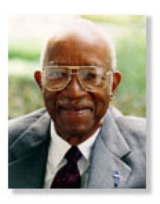
John Hope Franklin was a
United StatesThe United States of America is a federal constitutional republic comprising fifty states and a federal district...
historian and past president of Phi Beta Kappa, the
Organization of American HistoriansThe Organization of American Historians , formerly known as the Mississippi Valley Historical Association, is the largest professional society dedicated to the teaching and study of American history. OAH's members in the U.S...
, the
American Historical AssociationThe American Historical Association is the oldest and largest society of historians and professors of history in the United States. Founded in 1884, the association promotes historical studies, the teaching of history, and the preservation of and access to historical materials...
, and the
Southern Historical AssociationThe Southern Historical Association is an organization of historians focusing on the history of the Southern United States . It was organized on November 2, 1934...
. Franklin is best known for his work
From Slavery to Freedom, first published in 1947, and continually updated. More than three million copies have been sold. In 1995, he was awarded the
Presidential Medal of FreedomThe Presidential Medal of Freedom is an award bestowed by the President of the United States and is—along with thecomparable Congressional Gold Medal bestowed by an act of U.S. Congress—the highest civilian award in the United States...
, the nation's highest civilian honor.
Early life
Franklin was born in
Rentiesville, OklahomaRentiesville is a town in McIntosh County, Oklahoma, United States. The population was 102 at the 2000 census.-Geography:Rentiesville is located at ....
and named after
John HopeJohn Hope , born in Augusta, Georgia, was an African-American educator and political activist. He was the son of James Hope, a white Scottish merchant, born in Langholm, Scotland in 1805. Arriving in New York City in 1817, he was a successful grocer in Manhattan before moving south to Augusta in...
. He graduated from Booker T. Washington High School in
Tulsa, OklahomaTulsa is the second-largest city in the state of Oklahoma and 46th-largest city in the United States. With a population of 391,906 as of the 2010 census, it is the principal municipality of the Tulsa Metropolitan Area, a region with 937,478 residents in the MSA and 988,454 in the CSA. Tulsa's...
. He graduated from
Fisk UniversityFisk University is an historically black university founded in 1866 in Nashville, Tennessee, U.S. The world-famous Fisk Jubilee Singers started as a group of students who performed to earn enough money to save the school at a critical time of financial shortages. They toured to raise funds to...
in 1935 and gained a
doctorateA doctorate is an academic degree or professional degree that in most countries refers to a class of degrees which qualify the holder to teach in a specific field, A doctorate is an academic degree or professional degree that in most countries refers to a class of degrees which qualify the holder...
in history in 1941 from
Harvard UniversityHarvard University is a private Ivy League university located in Cambridge, Massachusetts, United States, established in 1636 by the Massachusetts legislature. Harvard is the oldest institution of higher learning in the United States and the first corporation chartered in the country...
.
Marriage and family
Franklin met and courted Aurelia Whittington at Fisk. They married on June 11, 1940 at her parents' home in
Goldsboro, North CarolinaGoldsboro is a city in Wayne County, North Carolina, United States. The population was 37,597 at the 2008 census estimate. It is the principal city of and is included in the Goldsboro, North Carolina Metropolitan Statistical Area. The nearby town of Waynesboro was founded in 1787 and Goldsboro was...
. Their only child, John Whittington Franklin, was born August 24, 1952. Aurelia was a librarian. Their marriage lasted 59 years, until January 27, 1999, when she succumbed to a long illness.
Career
"My challenge," Franklin said, "was to weave into the fabric of American history enough of the presence of blacks so that the story of the United States could be told adequately and fairly."
In his autobiography, Franklin described a series of formative incidents where he confronted racism while seeking to volunteer his services at the beginning of the Second World War. He attempted to respond to the Navy's search for qualified clerical workers, but after he presented his extensive qualifications, the Navy recruiter told him that he was the wrong color for the position. He was similarly unsuccessful in finding a position with a War Department historical project. When he went to have a blood test as required for the
draftConscription is the compulsory enlistment of people in some sort of national service, most often military service. Conscription dates back to antiquity and continues in some countries to the present day under various names...
, the doctor initially refused to allow him into his office. Afterward, Franklin took steps to avoid the draft, on the basis that the country did not respect him or have an interest in his well-being, because of his color.
In the early 1950s, Franklin served on the
NAACP Legal Defense FundThe NAACP Legal Defense and Educational Fund, Inc. is a leading United States civil rights organization and law firm based in New York City....
team led by
Thurgood MarshallThurgood Marshall was an Associate Justice of the United States Supreme Court, serving from October 1967 until October 1991...
, which helped develop the sociological case for
Brown v. Board of EducationBrown v. Board of Education of Topeka, 347 U.S. 483 , was a landmark decision of the United States Supreme Court that declared state laws establishing separate public schools for black and white students unconstitutional. The decision overturned the Plessy v. Ferguson decision of 1896 which...
. This led to the 1954 United States Supreme Court decision ending the legal
segregationRacial segregation is the separation of humans into racial groups in daily life. It may apply to activities such as eating in a restaurant, drinking from a water fountain, using a public toilet, attending school, going to the movies, or in the rental or purchase of a home...
of black and white children in public schools.
Professor and researcher
Franklin's teaching career began at Fisk University. During WWII, he taught at St. Augustine's College and North Carolina College.
From 1947 to 1956, he taught at
Howard UniversityHoward University is a federally chartered, non-profit, private, coeducational, nonsectarian, historically black university located in Washington, D.C., United States...
. In 1956, Franklin was selected to chair the history department at
Brooklyn CollegeBrooklyn College is a senior college of the City University of New York, located in Brooklyn, New York, United States.Established in 1930 by the New York City Board of Higher Education, the College had its beginnings as the Downtown Brooklyn branches of Hunter College and the City College of New...
, the first person of color to head a major history department. Franklin served there until 1964, when he was recruited by the
University of ChicagoThe University of Chicago is a private research university in Chicago, Illinois, USA. It was founded by the American Baptist Education Society with a donation from oil magnate and philanthropist John D. Rockefeller and incorporated in 1890...
. He spent 1962 as a visiting professor at the
University of CambridgeThe University of Cambridge is a public research university located in Cambridge, United Kingdom. It is the second-oldest university in both the United Kingdom and the English-speaking world , and the seventh-oldest globally...
, holding the
Professorship of American History and InstitutionsThe Pitt Professorship of American History and Institutions was established on 5 February 1944 from a sum of £44,000 received from the Syndics of the Cambridge University Press in 1943 and augmented by a further £5,000 in 1946...
.
David Levering LewisDavid Levering Lewis is the Julius Silver University Professor and Professor of History at New York University. He is twice winner of the Pulitzer Prize for Biography or Autobiography, for part one and part two of his biography of W. E. B. Du Bois...
, who has won the
Pulitzer PrizeThe Pulitzer Prize is a U.S. award for achievements in newspaper and online journalism, literature and musical composition. It was established by American publisher Joseph Pulitzer and is administered by Columbia University in New York City...
for history, said that while he was deciding to become a historian, news came that Franklin, his mentor, had been named departmental chairman at Brooklyn College.
"Now that certainly is a distinction. It had never happened before that a person of color had chaired a major history department. That meant a lot to me. If I had doubt about (the) viability of a career in history, that example certainly helped put to rest such concerns."
In researching his prize-winning biographies of W. E. B. Du Bois, Lewis said he became aware of Franklin's
"courage during that period in the 1950s when Du Bois became an un-person, when many progressives were tarred and feathered with the brush of subversion. John Hope Franklin was a rock; he was loyal to his friends. In the case of W. E. B. Du Bois, Franklin spoke out in his defense, not (about) Du Bois's communism, but of the right of an intellectual to express ideas that were not popular. I find that admirable. It was a high risk to take and we may be heading again into a period when the free concourse of ideas in the academy will have a price put upon it. In the final years of an active teaching career, I will have John Hope Franklin's example of high scholarship, great courage and civic activism."
From 1964 through 1968, Franklin was a professor of history at the
University of ChicagoThe University of Chicago is a private research university in Chicago, Illinois, USA. It was founded by the American Baptist Education Society with a donation from oil magnate and philanthropist John D. Rockefeller and incorporated in 1890...
, and chair of the department from 1967 to 1970. He was named to the endowed position of John Matthews Manly Distinguished Service Professor, which he held from 1969 to 1982. He was appointed to the Fulbright Board of Foreign Scholarships, 1962–69, and was its chair from 1966 to 1969.
In 1976, the
National Endowment for the HumanitiesThe National Endowment for the Humanities is an independent federal agency of the United States established by the National Foundation on the Arts and the Humanities Act of 1965 dedicated to supporting research, education, preservation, and public programs in the humanities. The NEH is located at...
selected Franklin for the
Jefferson LectureThe Jefferson Lecture in the Humanities is an honorary lecture series established in 1972 by the National Endowment for the Humanities . According to the NEH, the Lecture is "the highest honor the federal government confers for distinguished intellectual achievement in the humanities."-History of...
, the U.S. federal government's highest honor for achievement in the
humanitiesThe humanities are academic disciplines that study the human condition, using methods that are primarily analytical, critical, or speculative, as distinguished from the mainly empirical approaches of the natural sciences....
. Franklin's three-part lecture became the basis for his book
Racial Equality in America.
Franklin was appointed to the U.S. Delegation to the
UNESCOThe United Nations Educational, Scientific and Cultural Organization is a specialized agency of the United Nations...
General Conference,
BelgradeBelgrade is the capital and largest city of Serbia. It is located at the confluence of the Sava and Danube rivers, where the Pannonian Plain meets the Balkans. According to official results of Census 2011, the city has a population of 1,639,121. It is one of the 15 largest cities in Europe...
(1980).
In 1983, Franklin was appointed the
James B. Duke ProfessorAt Duke University, the title of James B. Duke Professor is given to a small number of the faculty with extraordinary records of achievement. At some universities, titles like "Distinguished Professor," "Institute Professor," or "Regents Professor" are counterparts of this title.- Some current...
of History at
Duke UniversityDuke University is a private research university located in Durham, North Carolina, United States. Founded by Methodists and Quakers in the present day town of Trinity in 1838, the school moved to Durham in 1892. In 1924, tobacco industrialist James B...
. In 1985, he took emeritus status. Franklin was also Professor of Legal History at the Duke University Law School from 1985-92.
Later life
In 2005, at the age of 90, Franklin published and lectured on his new autobiography,
Mirror to America: The Autobiography of John Hope Franklin. In 2006, he received the John W. Kluge Prize and as the recipient lectured on the successes and failures of race relations in America in
Where do We Go from Here?
In 2008, Franklin endorsed presidential candidate
Barack ObamaBarack Hussein Obama II is the 44th and current President of the United States. He is the first African American to hold the office. Obama previously served as a United States Senator from Illinois, from January 2005 until he resigned following his victory in the 2008 presidential election.Born in...
.
Franklin died at Duke University Medical Center on the morning of March 25, 2009.
Honors
In 1991, Franklin's students honored him with a
festschriftIn academia, a Festschrift , is a book honoring a respected person, especially an academic, and presented during his or her lifetime. The term, borrowed from German, could be translated as celebration publication or celebratory writing...
The Facts of Reconstruction: Essays in Honor of John Hope Franklin (edited by Eric Anderson & Alfred A. Moss, Jr. Baton Rouge: Louisiana State University Press, c1991).
Franklin served as president of the
American Historical AssociationThe American Historical Association is the oldest and largest society of historians and professors of history in the United States. Founded in 1884, the association promotes historical studies, the teaching of history, and the preservation of and access to historical materials...
(1979), the American Studies Association (1967), the Southern Historical Association (1970), and the
Organization of American HistoriansThe Organization of American Historians , formerly known as the Mississippi Valley Historical Association, is the largest professional society dedicated to the teaching and study of American history. OAH's members in the U.S...
(1975). He was a member of the board of trustees at
Fisk UniversityFisk University is an historically black university founded in 1866 in Nashville, Tennessee, U.S. The world-famous Fisk Jubilee Singers started as a group of students who performed to earn enough money to save the school at a critical time of financial shortages. They toured to raise funds to...
, the
Chicago Public LibraryThe Chicago Public Library is the public library system that serves the City of Chicago in Illinois. It consists of 79 branches, including a central library, two regional libraries, and branches distributed throughout the city....
, and the
Chicago Symphony OrchestraThe Chicago Symphony Orchestra is an American orchestra based in Chicago, Illinois. It is one of the five American orchestras commonly referred to as the "Big Five". Founded in 1891, the Symphony makes its home at Orchestra Hall in Chicago and plays a summer season at the Ravinia Festival...
Association.
Frankin was elected as a foundation member of Fisk's new chapter of Phi Beta Kappa in 1953, when Fisk became the first
historically black collegeHistorically black colleges and universities are institutions of higher education in the United States that were established before 1964 with the intention of serving the black community....
to have a chapter of the honor society. In 1973-76, he served as President of the United Chapters of Phi Beta Kappa.
Additionally, Franklin was appointed to serve on national commissions, including the
National Council on the HumanitiesThe National Endowment for the Humanities is an independent federal agency of the United States established by the National Foundation on the Arts and the Humanities Act of 1965 dedicated to supporting research, education, preservation, and public programs in the humanities. The NEH is located at...
, the President's Advisory Commission on Ambassadorial Appointments, and
One America: The President's Initiative on RaceOn June 14, 1997, U.S. President William Jefferson Clinton announced One America in the 21st Century: The President's Initiative on Race. This initiative, established with , was a critical element in President Clinton's effort to prepare his country to embrace diversity...
.
Franklin was a member of
Alpha Phi AlphaAlpha Phi Alpha is the first Inter-Collegiate Black Greek Letter fraternity. It was founded on December 4, 1906 at Cornell University in Ithaca, New York. Its founders are known as the "Seven Jewels". Alpha Phi Alpha developed a model that was used by the many Black Greek Letter Organizations ...
fraternity. He was an early beneficiary of the fraternity's Foundation Publishers, which provides financial support and fellowship for writers addressing African-American issues.
The John Hope Franklin Research Center for African and African American History and Culture resides at the Duke University Rare Book, Manuscript, and Special Collections Library and contains his personal and professional papers. The archive is one of three academic units named after Franklin at Duke. The others are the John Hope Franklin Center for Interdisciplinary and International Studies, which opened in February 2001 and the
Franklin Humanities InstituteThe Franklin Humanities Institute is an interdisciplinary humanities center house within the John Hope Franklin Center at Duke University dedicated to supporting humanities, arts, and social science research and teaching. The institute's mission is to encourage humanistic inquiry throughout Duke...
. Franklin had previously rejected Duke's offer to name a center for African-American Studies after him, saying that he was a historian of America and the world, too.
In 1994, the Society of American Historians (founded by Allan Nevins and other historians to encourage literary distinction in the writing of history) awarded Franklin its Bruce Catton Prize for Lifetime Achievement.
In 1995, Franklin was awarded the Presidential Medal of Freedom, the nation's highest civilian honor.
In 1997, Franklin was selected to receive the
Peggy V. Helmerich Distinguished Author AwardThe Peggy V. Helmerich Distinguished Author Award is an American literary prize awarded by the Tulsa Library Trust in Tulsa, Oklahoma. It is bestowed annually upon an "internationally acclaimed" author who has "written a distinguished body of work and made a major contribution to the field of...
, a career
literary awardA literary award is an award presented to an author who has written a particularly lauded piece or body of work. There are awards for forms of writing ranging from poetry to novels. Many awards are also dedicated to a certain genre of fiction or non-fiction writing . There are also awards...
given annually by the Tulsa Library Trust. Franklin was the first (and so far only) native Oklahoman to receive the award. During his visit to Tulsa to accept the award, Franklin made several appearances to speak about his childhood experiences with
racial segregationRacial segregation is the separation of humans into racial groups in daily life. It may apply to activities such as eating in a restaurant, drinking from a water fountain, using a public toilet, attending school, going to the movies, or in the rental or purchase of a home...
, as well as his father's experiences as a lawyer in the aftermath of the 1921
Tulsa race riotThe Tulsa race riot was a large-scale racially motivated conflict, May 31 - June 1st 1921, between the white and black communities of Tulsa, Oklahoma, in which the wealthiest African-American community in the United States, the Greenwood District also known as 'The Negro Wall St' was burned to the...
.
In 2002, scholar
Molefi Kete AsanteMolefi Kete Asante is an African-American scholar, historian, and philosopher. He is a leading figure in the fields of African American studies, African Studies and Communication Studies...
included Franklin on his list of
100 Greatest African Americans100 Greatest African Americans is a biographical dictionary of the one hundred historically greatest African Americans , as assessed by Molefi Kete Asante in 2002.-Criteria:...
.
On May 20, 2006, Franklin was awarded the honorary degree of Doctor of Humane Letters at
Lafayette CollegeLafayette College is a private coeducational liberal arts and engineering college located in Easton, Pennsylvania, USA. The school, founded in 1826 by James Madison Porter,son of General Andrew Porter of Norristown and citizens of Easton, first began holding classes in 1832...
's 171st Commencement Exercises.
On November 15, 2006, John Hope Franklin was announced as the third recipient of the
John W. Kluge PrizeThe John W. Kluge Prize for the Study of Humanity is awarded for lifetime achievement in the humanistic and social sciences to celebrate the importance of the Intellectual Arts for the public interest.-Overview:...
for lifetime achievement in the study of humanity. He shared the prize with
Yu Ying-shihYu Ying-shih is a Chinese American historian known for his mastery of sources for Chinese history and philosophy, his ability to synthesize them on a wide range of topics, and for his advocacy for a new Confucianism...
.
Partial bibliography
- The Free Negro in North Carolina, 1790–1860, Chapel Hill: University of North Carolina Press
The University of North Carolina Press , founded in 1922, is a university press that is part of the University of North Carolina....
, 1943, 1995.
- The Diary of James T. Ayers, Civil War recruiter ed., with introd., by John Franklin. Springfield; State of Illinois, 1947.
- From Slavery to Freedom: A History of African Americans, 1st ed. New York: A.A. Knopf, 1947. Last update with Alfred Moss, 8th ed. McGraw-Hill Education, 2000, ISBN 0-07-112058-0
- The Militant South, 1800-1861. Cambridge: Belknap Press of Harvard University Press
Harvard University Press is a publishing house established on January 13, 1913, as a division of Harvard University, and focused on academic publishing. In 2005, it published 220 new titles. It is a member of the Association of American University Presses. Its current director is William P...
, 1956; 1st Illinois pbk. Urbana: University of Illinois Press, 2002.
- Reconstruction: after the Civil War. Chicago: University of Chicago Press
The University of Chicago Press is the largest university press in the United States. It is operated by the University of Chicago and publishes a wide variety of academic titles, including The Chicago Manual of Style, dozens of academic journals, including Critical Inquiry, and a wide array of...
, 1961.
- The Emancipation Proclamation. 1st ed. Garden City, N.Y.: Doubleday, 1963; 2nd ed. Washington, DC: National Archives and Records Administration, 1993.
- Land of the free; a history of the United States, by John W. Caughey, John Hope Franklin and Ernest R. May. Educational advisers: Richard M. Clowes and Alfred T. Clark, Jr. Rev. New York: Benziger Bros., 1966.
- The Negro in Twentieth Century America: A Reader on the Struggle for Civil Rights, by John Hope Franklin & Isidore Starr. New York: Vintage Books
Vintage Books is a publishing imprint founded in 1954 by Alfred A. Knopf. Its publishing list includes world literature, fiction, and non-fiction...
, 1967.
- Color and race. Boston: Houghton Mifflin, 1968.
- The Historian and Public Policy, by John Hope Franklin. Chicago: University of Chicago, Center for Policy Study, c1974.
- Racial Equality in America, by John Hope Franklin. Chicago: University of Chicago Press, c1976.
- A Southern Odyssey: Travelers in the Antebellum North. by John Hope Franklin. Baton Rouge: Louisiana State University Press, c1976.
- Black Leaders of the Twentieth Century, edited by John Hope Franklin and August Meier. Urbana: University of Illinois Press
The University of Illinois Press , is a major American university press and part of the University of Illinois system. Founded in 1918, the press publishes some 120 new books each year, plus 33 scholarly journals, and several electronic projects...
, c1982.
- George Washington Williams: a Biography, Chicago: University of Chicago Press, 1985; Reprint, Durham, N.C.: Duke University Press, 1998.
- Race and History: Selected Essays 1938-1988, Baton Rouge: Louisiana State University Press, c1989.
- The Facts of Reconstruction: Essays in Honor of John Hope Franklin, edited by Eric Anderson & Alfred A. Moss, Jr. Baton Rouge: Louisiana State University Press, c1991.
- The Color Line: Legacy for the Twenty-first Century, John Hope Franklin. Columbia: University of Missouri Press, c1993.
- Racial Equality in America, by John Hope Franklin. Columbia: University of Missouri Press, 1993.
- My Life and an Era: the Autobiography of Buck Colbert Franklin, edited by John Hope Franklin and John Whittington Franklin. Baton Rouge: Louisiana State University Press, c1997, 2000.
- Runaway Slaves: Rebels on the Plantation, John Hope Franklin, Loren Schweninger. New York: Oxford University Press, 1999.
- Mirror to America. The Autobiography of John Hope Franklin. Farrar, Straus & Giroux, 2005, ISBN 0-374-29944-7
External links
- An excerpted portion of an oral history interview with Franklin from StoryCorps
StoryCorps is an American non-profit organization whose mission is to record, preserve, and share the stories of Americans from all backgrounds and beliefs. StoryCorps grew out of Sound Portraits Productions as a project founded in 2003 by radio producer David Isay...
, broadcast on NPRNPR, formerly National Public Radio, is a privately and publicly funded non-profit membership media organization that serves as a national syndicator to a network of 900 public radio stations in the United States. NPR was created in 1970, following congressional passage of the Public Broadcasting...
March 27, 2009
- John Hope Franklin, 3-hour interview, CSPAN
- Oral History Interview with John Hope Franklin from Oral Histories of the American South
- John Hope Franklin, The History Makers biography
- Tavis Smiley interviews Franklin, first broadcast February 15, 2006
- Charlie Rose interviews Franklin
- John Hope Franklin's oral history video excerpts at The National Visionary Leadership Project
- UNC-TV Webcast interview with John Hope Franklin
- APM-The Story (with Dick Gordon) interview with John Hope Franklin 2/7/07
- John Hope Franklin Center for Interdisciplinary and International Studies
- John Hope Franklin Humanities Institute
- John Hope Franklin Collection of African and African American Documentation, Duke University Libraries
- Tar Heel of the Year, 1998: John Hope Franklin, News & Observer
The News & Observer is the regional daily newspaper of the Research Triangle area of the U.S. State of North Carolina. The N&O, as it is popularly called, is based in Raleigh and also covers Durham, Cary, and Chapel Hill. The paper also has substantial readership in most of the state east of...
- Historian Helped Blaze a Civil Rights Path, Wil Haygood, The Washington Post, March 26, 2009
- Encyclopedia of Oklahoma History and Culture - Franklin, John Hope