
All Topics  
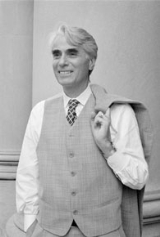
Robert Nozick


   Email Print
   Bookmark   Link


Robert Nozick


Robert Nozick (November 16, 1938 – January 23, 2002) was an American
United States

The United States of America is a Federal government constitutional republic comprising U.S. state and a federal district. The country is situated mostly in central North America, where its Contiguous United States and Washington, D.C., the Capital districts and territories, lie between the Pacific Ocean and Atlantic Oceans, Borders of the U...
 philosopher and Pellegrino University Professor
Joseph Pellegrino University Professor

The position of Joseph Pellegrino University Professor is one of 18 University Professorships at Harvard University. The current Pellegrino University Professor at Harvard University is Peter L....
 at Harvard University
Harvard University

Harvard University is a private university in Cambridge, Massachusetts, Massachusetts, United States, and a member of the Ivy League. Founded in 1636 by the colonial Massachusetts legislature, Harvard is the Colonial Colleges institution of higher learning in the United States....
. He was educated at Columbia
Columbia University

Columbia University in the City of New York , is a private university in the United States and a member of the Ivy League. Columbia's main campus lies in the Morningside Heights, Manhattan neighborhood in the borough of Manhattan, in New York City....
 (A.B. 1959, summa cum laude), where he studied with Sydney Morgenbesser, at Princeton
Princeton University

Princeton University is a private university university located in Princeton, New Jersey, New Jersey, United States. The school is one of the eight universities of the Ivy League and has the largest per-student Financial endowment in the world....
 (Ph.D.
Ph.D.

Ph.D. or PHD may stand for:* Doctor of Philosophy, an academic degree* Ph.D. , a 1980s British group* Piled Higher and Deeper, a web comic strip...
 1963), and Oxford as a Fulbright Scholar. He was a prominent American political philosopher
Political philosophy

Political philosophy is the study of questions about the city, government, politics, liberty, justice, property, rights, law and the enforcement of a legal code by authority: what they are, why they are needed, what makes a The purpose of government, what rights and freedoms it should protect and why, what form it should take and why, what t...
 in the 1970s and 1980s. He did additional but less influential work in such subjects as decision theory
Decision theory

Decision theory in mathematics and statistics is concerned with identifying the values, uncertainty and other issues relevant in a given decision making and the resulting optimal decision....
 and epistemology
Epistemology

Epistemology or theory of knowledge is the branch of philosophy concerned with the nature and scope of knowledge. It addresses the questions:...
.


Discussion
Ask a question about 'Robert Nozick'
Start a new discussion about 'Robert Nozick'
Answer questions from other users
Full Discussion Forum


Quotations


From each as they choose, to each as they are chosen.

Individuals have rights and there are things no person or group may do to them (without violating their rights).

There is no social entity with a good that undergoes some sacrifice for its own good. There are only individual people, different individual people, with their own individual lives. Using one of these people for the benefit of others, uses him and benefits the others. Nothing more.


Encyclopedia


Robert Nozick (November 16, 1938 – January 23, 2002) was an American
United States

The United States of America is a Federal government constitutional republic comprising U.S. state and a federal district. The country is situated mostly in central North America, where its Contiguous United States and Washington, D.C., the Capital districts and territories, lie between the Pacific Ocean and Atlantic Oceans, Borders of the U...
 philosopher and Pellegrino University Professor
Joseph Pellegrino University Professor

The position of Joseph Pellegrino University Professor is one of 18 University Professorships at Harvard University. The current Pellegrino University Professor at Harvard University is Peter L....
 at Harvard University
Harvard University

Harvard University is a private university in Cambridge, Massachusetts, Massachusetts, United States, and a member of the Ivy League. Founded in 1636 by the colonial Massachusetts legislature, Harvard is the Colonial Colleges institution of higher learning in the United States....
. He was educated at Columbia
Columbia University

Columbia University in the City of New York , is a private university in the United States and a member of the Ivy League. Columbia's main campus lies in the Morningside Heights, Manhattan neighborhood in the borough of Manhattan, in New York City....
 (A.B. 1959, summa cum laude), where he studied with Sydney Morgenbesser, at Princeton
Princeton University

Princeton University is a private university university located in Princeton, New Jersey, New Jersey, United States. The school is one of the eight universities of the Ivy League and has the largest per-student Financial endowment in the world....
 (Ph.D.
Ph.D.

Ph.D. or PHD may stand for:* Doctor of Philosophy, an academic degree* Ph.D. , a 1980s British group* Piled Higher and Deeper, a web comic strip...
 1963), and Oxford as a Fulbright Scholar. He was a prominent American political philosopher
Political philosophy

Political philosophy is the study of questions about the city, government, politics, liberty, justice, property, rights, law and the enforcement of a legal code by authority: what they are, why they are needed, what makes a The purpose of government, what rights and freedoms it should protect and why, what form it should take and why, what t...
 in the 1970s and 1980s. He did additional but less influential work in such subjects as decision theory
Decision theory

Decision theory in mathematics and statistics is concerned with identifying the values, uncertainty and other issues relevant in a given decision making and the resulting optimal decision....
 and epistemology
Epistemology

Epistemology or theory of knowledge is the branch of philosophy concerned with the nature and scope of knowledge. It addresses the questions:...
. His Anarchy, State, and Utopia
Anarchy, State, and Utopia

Anarchy, State, and Utopia is a work of political philosophy written by Robert Nozick in 1974. This libertarian book was the winner of the 1975 National Book Award....
 (1974) was a libertarian answer to John Rawls
John Rawls

John Rawls was an United States philosopher and a leading figure in moral and political philosophy.Rawls received the Schock Prize for Logic and Philosophy and the National Humanities Medal in 1999, the latter presented by U.S....
's A Theory of Justice
A Theory of Justice

A Theory of Justice is a widely-read book of political philosophy and ethics by John Rawls. It was originally published in 1971 and revised in both 1975 and 1999....
, published in 1971. He was born in Brooklyn
Brooklyn

Brooklyn is one of the five Borough of New York City, located at the western end of Long Island. An independent city until its consolidation with New York in 1898, Brooklyn is New York City's most populous borough, with 2.5 million residents, and second largest in area....
, the son of a Jewish entrepreneur from Russia
Russia

Russia , or the Russian Federation , is a list of countries spanning more than one continent country extending over much of northern Eurasia....
, and married the American poet Gjertrud Schnackenberg
Gjertrud Schnackenberg

Gjertrud Schnackenberg is an award-winning United States poet.She was born to Lutheran parents of Norwegian descent in Tacoma, Washington. As a child, Gjertrud was particularly close with her father, and her close relationship with him during her early years had a profound impact on her....
. Nozick died in 2002 after a prolonged struggle with cancer
Cancer

Cancer is a class of diseases in which a group of cell display uncontrolled growth , invasion , and sometimes metastasis . These three malignant properties of cancers differentiate them from benign tumors, which are self-limited, do not invade or metastasize....
. His remains are interred at Mount Auburn Cemetery
Mount Auburn Cemetery

Founded in 1831 as "America's first garden cemetery", or the first "rural cemetery", Mount Auburn Cemetery is an Elysium where, traditionally, chaste classical monuments were set in rolling landscaped terrain....
 in Cambridge, Massachusetts
Cambridge, Massachusetts

Cambridge is a city in the Greater Boston area of Massachusetts, United States. It was named in honor of the University of Cambridge in England....
.

Philosophical achievements


Politics

Nozick's Anarchy, State, and Utopia
Anarchy, State, and Utopia

Anarchy, State, and Utopia is a work of political philosophy written by Robert Nozick in 1974. This libertarian book was the winner of the 1975 National Book Award....
 (1974), which received a National Book Award
National Book Award

The National Book Awards are among the most eminent literary prizes in the United States. Started in 1950, the awards are presented annually to American authors for literature published in the prior year, as well as lifetime achievement awards including the "Medal of Distinguished Contribution to American Letters" and the "Literarian Award"....
, argues among other things that a distribution of goods is just if brought about by free exchange among consenting adults and from a just starting position, even if large inequalities subsequently emerge from the process. Nozick appealed to the Kantian
Immanuel Kant

Immanuel Kant was an 18th-century German Philosophy from the Kingdom of Prussia city of K?nigsberg . He is regarded as one of the most influential thinkers of modern Europe and of the late Age of Enlightenment....
 idea that people should be treated as ends (what he termed 'separateness of persons'), not merely as a means to some other end. Nozick here challenges the basis of John Rawls's conclusion, in A Theory of Justice
A Theory of Justice

A Theory of Justice is a widely-read book of political philosophy and ethics by John Rawls. It was originally published in 1971 and revised in both 1975 and 1999....
, that just inequalities in distribution must benefit the least well-off.

Anarchy, State and Utopia built on Lockean natural rights theory, primarily sourced from Second Treatise of Government, and sought to make Locke relevant in the 20th century. Nozick handled Locke's theory better than perhaps any other modern philosopher and suggested, again as a critique of utilitarianism, that the sacrosanctity of life made property rights non-negotiable. This principle has served as a foundation for many libertarian pitches into modern politics, but also remains an unresolved issue for libertarians who claim to base their principles on utilitarianism.

Nozick retreated from some of the views he expressed in Anarchy, State, and Utopia in one of his later books, The Examined Life
The Examined Life

The Examined Life is a collection of philosophical meditations written by Robert Nozick and published in 1989.Having pursued philosophy in an argumentative mode in Anarchy, State, and Utopia, and in an explanatory mode in Philosophical Explanations, his mode in The Examined Life is holistic....
, calling those views "seriously inadequate." In a 2001 interview, however, he clarified his position: "What I was really saying in The Examined Life was that I was no longer as hardcore a libertarian as I had been before. But the rumors of my deviation from libertarianism were much exaggerated."

Epistemology

In Philosophical Explanations
Philosophical explanations

Philosophical Explanations is a wide-ranging metaphysical, epistemological, and ethical treatise written by Robert Nozick and published in 1981....
 (1981), which received the Phi Beta Kappa Society's , Nozick provided novel accounts of knowledge
Knowledge

Knowledge is defined in the Oxford English Dictionary as expertise, and skills acquired by a person through experience or education; the theoretical or practical understanding of a subject, what is known in a particular field or in total; facts and information or awareness or familiarity gained by experience of a fact or situation....
, free will
Free will

The question of free will is whether, and in what sense, rational agents exercise control over their actions and decisions. Addressing this question requires understanding the relationship between freedom and Causality, and determining whether the laws of nature are causally deterministic....
, personal identity, the nature of value
Value (personal and cultural)

A personal and cultural value is a relative ethic value, an assumption upon which implementation can be extrapolated. A value system is a set of consistent value and measures....
, and the meaning of life. He also put forward an epistemological system which attempted to deal with both Edmund Gettier
Edmund Gettier

Edmund L. Gettier III is an United States philosopher and Professor Emeritus at the University of Massachusetts Amherst; he may owe his reputation to a single three-page paper published in 1963 called "Is Justified True Belief Knowledge?"...
-style problems and those posed by skepticism. This highly influential argument eschewed justification as a necessary requirement for knowledge.

Nozick's Four Conditions for S's knowing of p were:

(1) p is true

(2) S believes p using method M

(3) If it were the case that not-p, then S would not, using M, believe p

(4) If it were the case that p, then S would, using M, believe p

Nozick's third and fourth conditions are counterfactuals. Nozick calls his theory the 'tracking theory' of knowledge. Nozick believes that the counterfactual conditionals bring out an important aspect of our intuitive grasp of knowledge: For any given fact, the believer's method must reliably track the truth despite varying relevant conditions. In this way, Nozick's theory is similar to reliabilism
Reliabilism

Reliabilism, a category of theories in the philosophy discipline of epistemology, has been advanced both as a theory of knowledge and of epistemic justification ....
.

The Examined Life

The Examined Life (1989), pitched to a broader public, explores love, death, faith, reality, and the meaning of life. The Nature of Rationality
The nature of rationality

The Nature of Rationality is an exploration of practical rationality written by Robert Nozick and published in 1993. It views human rationality as an evolutionary adaptation....
 (1993) presents a theory of practical reason
Practical reason

In philosophy, practical reason is the use of reason to decide how to philosophy of action. This contrasts with theoretical reason , which is the use of reason to decide what to believe....
 that attempts to embellish notoriously spartan classical decision theory
Decision theory

Decision theory in mathematics and statistics is concerned with identifying the values, uncertainty and other issues relevant in a given decision making and the resulting optimal decision....
. Socratic Puzzles
Socratic Puzzles

Socratic Puzzles is a collection of essays by libertarian philosopher Robert Nozick. It was published in 1997 by Harvard University Press....
 (1997) is a collection of papers that range in topic from Ayn Rand
Ayn Rand

Ayn Rand , was a Russian-American novelist, philosopher, playwright, and screenwriter. She is known for her best-selling novels and for developing a philosophical system called Objectivism ....
 and Austrian economics to animal rights
Animal rights

Animal rights, also known as animal liberation, is the idea that the most basic interests of animals should be afforded the same consideration as the similar interests of human beings....
, while his last production, Invariances
Invariances

Invariances, published in 2001 by Harvard University Press, was Robert Nozick's last book before his death in 2002....
 (2001) applies insights from physics
Physics

Physics is the natural science which examines basic concepts such as energy, force, and spacetime and all that derives from these, such as mass, charge, matter and its Motion ....
 and biology
Biology

Biology is a branch of the natural sciences concerned with the study of living organisms and their interaction with each other and their environment ....
 to questions of objectivity
Objectivity (philosophy)

For other uses of "objectivity", see Objectivity Objectivity is both an important and very difficult concept to pin down in philosophy. While there is no universally accepted articulation of objectivity, a proposition is generally considered to be objectively true when its truth conditions are "mind-independent"—that is, not the r...
 in such areas as the nature of necessity
Necessity

In U.S. criminal law, necessity may be either a possible Justification or an exculpation for breaking the law. The corresponding defense in Britain is called "lawful excuse." Defendants seeking to rely on this defense argue that they should not be held liable for their action as a crime because their conduct was necessary to prevent s...
 and moral value.

Criticisms of utilitarianism

He created the thought experiment of the "utility monster
Utility monster

The utility monster is a thought experiment in the study of ethics. It was created by philosopher Robert Nozick in 1974 as a criticism of utilitarianism....
" in order to show that average utilitarianism could lead to a situation where the needs of the vast majority were sacrificed for one individual.

Unusual method

Nozick was notable for his curious exploratory style and methodological ecumenism
Ecumenism

Ecumenism now mainly refers to initiatives aimed at greater religious unity or cooperation.In its broadest sense, this unity or cooperation may refer to a worldwide religious unity; by the advocation of a greater sense of shared spirituality across the three Abrahamic faiths of Judaism, Christianity and Islam....
. Often content to raise tantalizing philosophical possibilities and then leave judgment to the reader, Nozick was also notable for drawing from literature outside of philosophy (e.g., economics
Economics

File:Ballard Farmers' Market - vegetables.jpgEconomics is the Social sciences that studies the Production theory basics, Distribution , and Consumption of Good and Service ....
, physics
Physics

Physics is the natural science which examines basic concepts such as energy, force, and spacetime and all that derives from these, such as mass, charge, matter and its Motion ....
, evolutionary biology
Evolutionary biology

Evolutionary biology is a sub-field of biology concerned with the origin of species from a common descent and descent of species, as well as their evolution, multiplication and diversity over time....
).

Slavery

Robert Nozick argued that a consistently libertarian society would allow and regard as valid consensual/non-coercive enslavement contracts, rejecting the notion of inalienable rights. He wrote in Anarchy, State and Utopia:
"The comparable question about an individual is whether a free system will allow him to sell himself into slavery. I believe that it would."


Writings

  • Invariances: The Structure of the Objective World
    Invariances

    Invariances, published in 2001 by Harvard University Press, was Robert Nozick's last book before his death in 2002....
     (2001/2003) ISBN 0-674-01245-3
  • Socratic Puzzles
    Socratic Puzzles

    Socratic Puzzles is a collection of essays by libertarian philosopher Robert Nozick. It was published in 1997 by Harvard University Press....
     (1997) ISBN 0-674-81653-6
  • The Nature of Rationality
    The nature of rationality

    The Nature of Rationality is an exploration of practical rationality written by Robert Nozick and published in 1993. It views human rationality as an evolutionary adaptation....
     (1993/1995) ISBN 0-691-02096-5
  • The Examined Life
    The Examined Life

    The Examined Life is a collection of philosophical meditations written by Robert Nozick and published in 1989.Having pursued philosophy in an argumentative mode in Anarchy, State, and Utopia, and in an explanatory mode in Philosophical Explanations, his mode in The Examined Life is holistic....
     (1989) ISBN 0-671-72501-7
  • Philosophical Explanations
    Philosophical explanations

    Philosophical Explanations is a wide-ranging metaphysical, epistemological, and ethical treatise written by Robert Nozick and published in 1981....
     (1981) ISBN 0-19-824672-2
  • Anarchy, State, and Utopia
    Anarchy, State, and Utopia

    Anarchy, State, and Utopia is a work of political philosophy written by Robert Nozick in 1974. This libertarian book was the winner of the 1975 National Book Award....
     (1974) ISBN 0-631-19780-X


See also

  • Liberalism
    Liberalism

    Liberalism is a broad class of political philosophy that considers individualism liberty and equality to be the most important political goals....
  • Contributions to liberal theory
    Contributions to liberal theory

    This is a partial list of individual contributions to Liberalism on a worldwide scale. These individuals are strongly associated philosophers of the Enlightenment....
  • Libertarianism
    Libertarianism

    Libertarianism is a term used by a political spectrum of Political philosophy which seek to promote individual liberty and seek to minimize or abolish the state....
  • Minarchism
    Minarchism

    In civics, minarchism refers to a belief that the only proper role of the state is to protect individuals from aggression. Minarchists contend the state as a necessary evil, but should have only a minimal role in protecting the life, liberty, and property of each individual....


External links

  • From the Harvard Gazette
  • by Edward Feser
  • by R. N. Johnson
  • by Jonathan Wolff
  • by S. L. Hurley
  • by R.J. Kilcullen
  • by Robert Nozick
  • directory category
  • by Roderick T. Long