


Best of all possible worlds

Encyclopedia
Polymath
A polymath is a person whose expertise spans a significant number of different subject areas. In less formal terms, a polymath may simply be someone who is very knowledgeable...
Gottfried Leibniz
Gottfried Leibniz
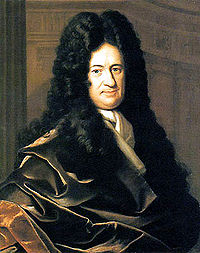
Gottfried Wilhelm Leibniz was a German philosopher and mathematician. He wrote in different languages, primarily in Latin , French and German ....
in his 1710 work Essais de Théodicée sur la bonté de Dieu, la liberté de l'homme et l'origine du mal
Théodicée
Essais de Théodicée sur la bonté de Dieu, la liberté de l'homme et l'origine du mal , more simply known as Théodicée, is a book of philosophy by the famed polymath Gottfried Leibniz...
(Essays on the Goodness of God, the Freedom of Man and the Origin of Evil). The claim that the actual world is the best of all possible worlds is the central argument in Leibniz's theodicy
Theodicy
Theodicy is a theological and philosophical study which attempts to prove God's intrinsic or foundational nature of omnibenevolence , omniscience , and omnipotence . Theodicy is usually concerned with the God of the Abrahamic religions Judaism, Christianity, and Islam, due to the relevant...
, or his attempt to solve the problem of evil
Problem of evil
In the philosophy of religion, the problem of evil is the question of how to explain evil if there exists a deity that is omnibenevolent, omnipotent, and omniscient . Some philosophers have claimed that the existences of such a god and of evil are logically incompatible or unlikely...
.
The problem of evil
Among his many philosophical interests and concerns, Leibniz took on this question of theodicy: If GodGod
God is the English name given to a singular being in theistic and deistic religions who is either the sole deity in monotheism, or a single deity in polytheism....
is omnibenevolent
Omnibenevolence
Omnibenevolence is defined by the Oxford English Dictionary as "unlimited or infinite benevolence". It is often held to be impossible, or at least improbable, for a deity to exhibit such property along side omniscience and omnipotence as a result of the problem of evil...
, omnipotent
Omnipotence
Omnipotence is unlimited power. Monotheistic religions generally attribute omnipotence to only the deity of whichever faith is being addressed...
and omniscient
Omniscience
Omniscience omniscient point-of-view in writing) is the capacity to know everything infinitely, or at least everything that can be known about a character including thoughts, feelings, life and the universe, etc. In Latin, omnis means "all" and sciens means "knowing"...
, how do we account for the suffering and injustice that exist in the world? Historically, attempts to answer the question have been made using various arguments, for example, by explaining away evil or reconciling evil with good.
Free will versus determinism
For Leibniz, an additional central concern is the matter of reconciling human freedom (indeed, God's own freedom) with the determinismDeterminism
Determinism is the general philosophical thesis that states that for everything that happens there are conditions such that, given them, nothing else could happen. There are many versions of this thesis. Each of them rests upon various alleged connections, and interdependencies of things and...
inherent in his own theory of the universe. Leibniz' solution casts God as a kind of "optimizer" of the collection of all original possibilities: Since He is good and omnipotent, and since He chose this world out of all possibilities, this world must be good—in fact, this world is the best of all possible worlds
Possible Worlds
Possible Worlds may refer to:* Possible worlds, a concept in philosophy* Possible Worlds , by John Mighton** Possible Worlds , by Robert Lepage, based on the Mighton play* Possible Worlds , by Peter Porter...
.
On the one hand, this view might help us rationalize some of what we experience: Imagine that all the world is made of good and evil. The best possible world would have the most good and the least evil. Courage is better than no courage. It might be observed, then, that without evil to challenge us, there can be no courage. Since evil brings out the best aspects of humanity, evil is regarded as necessary. So in creating this world God made some evil to make the best of all possible worlds. On the other hand, the theory explains evil not by denying it or even rationalizing it—but simply by declaring it to be part of the optimum combination of elements that comprise the best possible Godly choice. Leibniz thus does not claim that the world is overall very good, but that because of the necessary interconnections of goods and evils, God, though omnipotent, could not improve it in one way without making it worse in some other way.
Giovanni Gentile
Giovanni Gentile
Giovanni Gentile was an Italian neo-Hegelian Idealist philosopher, a peer of Benedetto Croce. He described himself as 'the philosopher of Fascism', and ghostwrote A Doctrine of Fascism for Benito Mussolini. He also devised his own system of philosophy, Actual Idealism.- Life and thought :Giovanni...
, in his work The General Theory of Mind as Pure Act, claimed that if God had created everything to fall into line with the most favorable possible condition, it would suppose that all of reality is pre-realized and determined in the mind of God. Therefore the apparent free will displayed by both God, by his necessity of being bound by what is the most good, and humanity in their limitations derived from God to be inline with the most good, are not free wills at all but entirely determinate. Thus ultimately relegated to blind naturalistic processes entrapping both God and humanity to necessity, robbing both of any true freely creative will.
Criticism
Critics of Leibniz's postulate argue that the world contains an amount of suffering too great to justify optimism. While Leibniz argued that suffering is good because it incites human will, critics argue that the degree of suffering is too severe to justify belief that God has created the "best of all possible worlds". Leibniz also addresses this concern by considering what God desires to occur (his antecedent will) and what God allows to occur (his consequent will). Others, such as the Christian philosopher Alvin PlantingaAlvin Plantinga
Alvin Carl Plantinga is an American analytic philosopher and the emeritus John A. O'Brien Professor of Philosophy at the University of Notre Dame. He is known for his work in philosophy of religion, epistemology, metaphysics, and Christian apologetics...
criticized Leibniz theodicy by arguing that probably there is not such a thing as the best of all possible worlds, since one can always conceive a better world, such as a world with one more morally righteous person.
Voltaire
Voltaire
François-Marie Arouet , better known by the pen name Voltaire , was a French Enlightenment writer, historian and philosopher famous for his wit and for his advocacy of civil liberties, including freedom of religion, free trade and separation of church and state...
satirized Leibniz's idea in the novel Candide
Candide
Candide, ou l'Optimisme is a French satire first published in 1759 by Voltaire, a philosopher of the Age of Enlightenment. The novella has been widely translated, with English versions titled Candide: or, All for the Best ; Candide: or, The Optimist ; and Candide: or, Optimism...
through the character of Dr. Pangloss, who often uses the phrase "best of all possible worlds" and remains humorously optimistic
Optimism
The Oxford English Dictionary defines optimism as having "hopefulness and confidence about the future or successful outcome of something; a tendency to take a favourable or hopeful view." The word is originally derived from the Latin optimum, meaning "best." Being optimistic, in the typical sense...
even after enduring numerous hardships.
See also
- Divine simplicityDivine simplicityIn theology, the doctrine of divine simplicity says that God is without parts. The general idea of divine simplicity can be stated in this way: the being of God is identical to the "attributes" of God. In other words, such characteristics as omnipresence, goodness, truth, eternity, etc...
- Is-ought problemIs-ought problemThe is–ought problem in meta-ethics as articulated by Scottish philosopher and historian, David Hume , is that many writers make claims about what ought to be on the basis of statements about what is...
- Principle of sufficient reasonPrinciple of sufficient reasonThe principle of sufficient reason states that anything that happens does so for a reason: no state of affairs can obtain, and no statement can be true unless there is sufficient reason why it should not be otherwise...
- Summum bonumSummum bonumSummum bonum is an expression used in philosophy, particularly in medieval philosophy and in the philosophy of Immanuel Kant, to describe the ultimate importance, the singular and most ultimate end which human beings ought to pursue. The summum bonum is generally thought of as being an end in...
External links
- Project Gutenberg provides an online English translation of the Theodicy.
- Leibniz's solution to the problem of evil