


Adhesion

Encyclopedia

Molecule
A molecule is an electrically neutral group of at least two atoms held together by covalent chemical bonds. Molecules are distinguished from ions by their electrical charge...
that can potentially bring them in close contact. By contrast, cohesion
Cohesion (chemistry)
Cohesion or cohesive attraction or cohesive force is the action or property of like molecules sticking together, being mutually attractive...
takes place between similar molecules.
Adhesion is the tendency of dissimilar particles and/or surfaces to cling to one another (cohesion refers to the tendency of similar or identical particles/surfaces to cling to one another). The forces that cause adhesion and cohesion can be divided into several types. The intermolecular forces responsible for the function of various kinds of stickers and sticky tape fall into the categories of chemical adhesion, dispersive adhesion, and diffusive adhesion. In addition to the cumulative magnitudes of these intermolecular forces, there are certain emergent mechanical effects that will also be discussed at the end of the article.
Surface energy
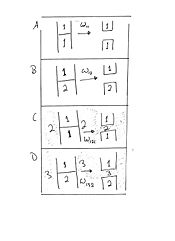
Surface energy
Surface energy quantifies the disruption of intermolecular bonds that occur when a surface is created. In the physics of solids, surfaces must be intrinsically less energetically favorable than the bulk of a material, otherwise there would be a driving force for surfaces to be created, removing...
is conventionally defined as the work that is required to build a unit area of a particular surface. Another way to view the surface energy is to relate it to the work required to cleave a bulk sample, creating two surfaces. If the new surfaces are identical, the surface energy γ of each surface is equal to half the work of cleavage, W: γ = (1/2)W11.
If the surfaces are unequal, the Young-Dupré equation applies:
W12 = γ1 + γ2 – γ12, where γ1 and γ2 are the surface energies of the two new surfaces, and γ12 is the interfacial tension.
This methodology can also be used to discuss cleavage
Cleavage
Cleavage may refer to:*Cleavage , partial exposure of the separation between a woman's breasts.**Cleavage enhancement, methods of making a person's breast cleavage look more substantial than it really is....
that happens in another medium: γ12 = (1/2)W121 = (1/2)W212. These two energy quantities refer to the energy that is needed to cleave one species into two pieces while it is contained in a medium of the other species. Likewise for a three species system: γ13 + γ23 – γ12 = W12 + W33 – W13 – W23 = W132, where W132 is the energy of cleaving species 1 from species 2 in a medium of species 3.
A basic understanding of the terminology of cleavage energy, surface energy, and surface tension
Surface tension
Surface tension is a property of the surface of a liquid that allows it to resist an external force. It is revealed, for example, in floating of some objects on the surface of water, even though they are denser than water, and in the ability of some insects to run on the water surface...
is very helpful for understanding the physical state and the events that happen at a given surface, but as discussed below, the theory of these variables also yields some interesting effects that concern the practicality of adhesive surfaces in relation to their surroundings.
Mechanisms of adhesion
Five mechanisms of adhesion have been proposed to explain why one material sticks to another:Mechanical adhesion
Adhesive materials fill the voids or pores of the surfaces and hold surfaces together by interlocking. Sewing forms a large scale mechanical bond, velcroVelcro
Velcro is the brand name of the first commercially marketed fabric hook-and-loop fastener, invented in 1948 by the Swiss electrical engineer George de Mestral...
forms one on a medium scale, and some textile adhesives form one at a small scale.
Chemical adhesion
Two materials may form a compoundChemical compound
A chemical compound is a pure chemical substance consisting of two or more different chemical elements that can be separated into simpler substances by chemical reactions. Chemical compounds have a unique and defined chemical structure; they consist of a fixed ratio of atoms that are held together...
at the join. The strongest joins are where atoms of the two materials swap or share electrons (known as ionic bonding or covalent bonding, respectively). A weaker bond is formed if a Hydrogen
Hydrogen
Hydrogen is the chemical element with atomic number 1. It is represented by the symbol H. With an average atomic weight of , hydrogen is the lightest and most abundant chemical element, constituting roughly 75% of the Universe's chemical elemental mass. Stars in the main sequence are mainly...
atom in one molecule is attracted to an atom of nitrogen
Nitrogen
Nitrogen is a chemical element that has the symbol N, atomic number of 7 and atomic mass 14.00674 u. Elemental nitrogen is a colorless, odorless, tasteless, and mostly inert diatomic gas at standard conditions, constituting 78.08% by volume of Earth's atmosphere...
, oxygen
Oxygen
Oxygen is the element with atomic number 8 and represented by the symbol O. Its name derives from the Greek roots ὀξύς and -γενής , because at the time of naming, it was mistakenly thought that all acids required oxygen in their composition...
, or fluorine
Fluorine
Fluorine is the chemical element with atomic number 9, represented by the symbol F. It is the lightest element of the halogen column of the periodic table and has a single stable isotope, fluorine-19. At standard pressure and temperature, fluorine is a pale yellow gas composed of diatomic...
in another molecule, a phenomenon called hydrogen bonding.
Chemical adhesion occurs when the surface atoms of two separate surfaces form ionic
Ionic bond
An ionic bond is a type of chemical bond formed through an electrostatic attraction between two oppositely charged ions. Ionic bonds are formed between a cation, which is usually a metal, and an anion, which is usually a nonmetal. Pure ionic bonding cannot exist: all ionic compounds have some...
, covalent
Covalent bond
A covalent bond is a form of chemical bonding that is characterized by the sharing of pairs of electrons between atoms. The stable balance of attractive and repulsive forces between atoms when they share electrons is known as covalent bonding....
, or hydrogen bond
Hydrogen bond
A hydrogen bond is the attractive interaction of a hydrogen atom with an electronegative atom, such as nitrogen, oxygen or fluorine, that comes from another molecule or chemical group. The hydrogen must be covalently bonded to another electronegative atom to create the bond...
s. The engineering principle behind chemical adhesion in this sense is fairly straight forward: if surface molecules can bond, then the surfaces will be bonded together by a network of these bonds. It bears mentioning that these attractive ionic and covalent forces are effective over only very small distances – less than a nanometer. This means in general not only that surfaces with the potential for chemical bonding need to be brought very close together, but also that these bonds are fairly brittle, since the surfaces then need to be kept close together.
Dispersive adhesion
In dispersive adhesion, also known as physisorptionPhysisorption
Physisorption, also called physical adsorption, is a process in which the electronic structure of the atom or molecule is barely perturbed upon adsorption...
, two materials are held together by van der Waals force
Van der Waals force
In physical chemistry, the van der Waals force , named after Dutch scientist Johannes Diderik van der Waals, is the sum of the attractive or repulsive forces between molecules other than those due to covalent bonds or to the electrostatic interaction of ions with one another or with neutral...
s: the attraction between two molecules, each of which has a region of slight positive and negative charge. In the simple case, such molecules are therefore polar with respect to average charge density, although in larger or more complex molecules, there may be multiple "poles" or regions of greater positive or negative charge. These positive and negative poles may be a permanent property of a molecule (Keesom forces) or a transient effect which can occur in any molecule, as the random movement of electrons within the molecules may result in a temporary concentration of electrons in one region (London forces).


Contact angle
The contact angle is the angle at which a liquid/vapor interface meets a solid surface. The contact angle is specific for any given system and is determined by the interactions across the three interfaces. Most often the concept is illustrated with a small liquid droplet resting on a flat...
is used to quantify adhesiveness. In the cases where the contact angle is low, more adhesion is present. This is due to a larger surface area between the liquid and solid and results in higher surface energy. The work of adhesion explains the interactive force between the liquid and solid phases and the Young-Dupre equation is used to calculate the work of adhesion. The contact angle of the three-phase system is a function not only of dispersive adhesion (interaction between the molecules in the liquid and the molecules in the solid) but also cohesion (interaction between the liquid molecules themselves). Strong adhesion and weak cohesion results in a high degree of wetting
Wetting
Wetting is the ability of a liquid to maintain contact with a solid surface, resulting from intermolecular interactions when the two are brought together. The degree of wetting is determined by a force balance between adhesive and cohesive forces.Wetting is important in the bonding or adherence of...
, a lyophilic condition with low measured contact angles. Conversely, weak adhesion and strong cohesion results in lyophobic conditions with high measured contact angles and poor wetting.
London dispersion forces are particularly useful for the function of adhesive devices, because they don't require either surface to have any permanent polarity
Polarity
In physics, polarity is a description of an attribute, typically a binary attribute , or a vector . For example:* An electric charge has a polarity of either positive or negative....
. They were described in the 1930s by Fritz London
Fritz London
Fritz Wolfgang London was a German theoretical physicist. His fundamental contributions to the theories of chemical bonding and of intermolecular forces are today considered classic and are discussed in standard textbooks of physical chemistry.With his brother Heinz, he made a significant...
, and have been observed by many researchers. Dispersive force
London dispersion force
London dispersion forces is a type of force acting between atoms and molecules. They are part of the van der Waals forces...
s are a consequence of statistical quantum mechanics
Quantum mechanics
Quantum mechanics, also known as quantum physics or quantum theory, is a branch of physics providing a mathematical description of much of the dual particle-like and wave-like behavior and interactions of energy and matter. It departs from classical mechanics primarily at the atomic and subatomic...
. London theorized that attractive forces between molecules that cannot be explained by ionic or covalent interaction can be caused by polar moments within molecules. Multipoles could account for attraction between molecules having permanent multipole moments that participate in electrostatic interaction. However, experimental data showed that many of the compounds observed to experience van der Waals forces had no multipoles at all. London suggested that momentary dipoles are induced purely by virtue of molecules being in proximity to one another. By solving the quantum mechanical system of two electrons as harmonic oscillator
Harmonic oscillator
In classical mechanics, a harmonic oscillator is a system that, when displaced from its equilibrium position, experiences a restoring force, F, proportional to the displacement, x: \vec F = -k \vec x \, where k is a positive constant....
s at some finite distance from one another, being displaced about their respective rest positions and interacting with each others fields, London showed that the energy of this system is given by:

While the first term is simply the zero-point energy
Zero-point energy
Zero-point energy is the lowest possible energy that a quantum mechanical physical system may have; it is the energy of its ground state. All quantum mechanical systems undergo fluctuations even in their ground state and have an associated zero-point energy, a consequence of their wave-like nature...
, the negative second term describes an attractive force between neighboring oscillators. The same argument can also be extended to a large number of coupled oscillators, and thus skirts issues that would negate the large scale attractive effects of permanent dipoles; cancelling through symmetry, in particular.
The additive nature of the dispersion effect has another useful consequence. Consider a single such dispersive dipole
Dipole
In physics, there are several kinds of dipoles:*An electric dipole is a separation of positive and negative charges. The simplest example of this is a pair of electric charges of equal magnitude but opposite sign, separated by some distance. A permanent electric dipole is called an electret.*A...
, referred to as the origin dipole. Since any origin dipole is inherently oriented so as to be attracted to the adjacent dipoles it induces, while the other, more distant dipoles are not correlated with the original dipole by any phase relation (thus on average contributing nothing), there is a net attractive force in a bulk of such particles. When considering identical particles, this is called cohesive force.
When discussing adhesion, this theory needs to be converted into terms relating to surfaces. If there is a net attractive energy of cohesion in a bulk of similar molecules, then cleaving this bulk to produce two surfaces will yield surfaces with a dispersive surface energy, since the form of the energy remain the same. This theory provides a basis for the existence of van der Waals forces at the surface, which exist between any molecules having electrons. These forces are easily observed through the spontaneous jumping of smooth surfaces into contact
Contact mechanics
Contact mechanics is the study of the deformation of solids that touch each other at one or more points. The physical and mathematical formulation of the subject is built upon the mechanics of materials and continuum mechanics and focuses on computations involving elastic, viscoelastic, and plastic...
. Smooth surfaces of mica, gold, various polymers and solid gelatin solutions do not stay apart when their separating becomes small enough – on the order of 1–10 nm. The equation describing these attractions was predicted in the 1930s by De Boer and Hamaker:
 ,
,where P is the force (negative for attraction), z is the separation distance, and A is a material-specific constant called the Hamaker constant
Hamaker Constant
The Hamaker constant A can be defined for a Van der Waals body-body interaction:A=\pi^2\times C \times \rho_1 \times \rho_2where \rho_1 and \rho_2 are the number of atoms per unit volume in two interacting bodies and C is the coefficient in the particle-particle pair interaction.The Hamaker...
.
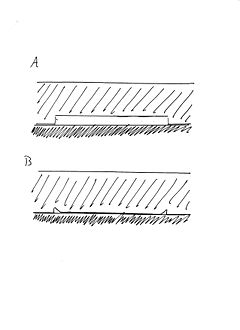
Polydimethylsiloxane
Polydimethylsiloxane belongs to a group of polymeric organosilicon compounds that are commonly referred to as silicones. PDMS is the most widely used silicon-based organic polymer, and is particularly known for its unusual rheological properties. PDMS is optically clear, and, in general, is...
(PDMS) stamp is made with small periodic post structures. The surface with the posts is placed face down on a smooth surface, such that the surface area in between each post is elevated above the smooth surface, like a roof supported by columns. Because of these attractive dispersive forces between the PDMS and the smooth substrate, the elevated surface – or “roof” – collapses down onto the substrate without any external force aside from the van der Waals attraction. Simple smooth polymer
Polymer
A polymer is a large molecule composed of repeating structural units. These subunits are typically connected by covalent chemical bonds...
surfaces – without any microstructure
Microstructure
Microstructure is defined as the structure of a prepared surface or thin foil of material as revealed by a microscope above 25× magnification...
s – are commonly used for these dispersive adhesive properties. Decal
Decal
A decal or transfer is a plastic, cloth, paper or ceramic substrate that has printed on it a pattern or image that can be moved to another surface upon contact, usually with the aid of heat or water. The word is short for decalcomania...
s and stickers that adhere to glass without using any chemical adhesives are fairly common as toys and decorations and useful as removable labels because they do not rapidly lose their adhesive properties, as do sticky tapes that use adhesive chemical compounds.
It is important to note that these forces also act over very small distances – 99% of the work necessary to break van der Waals bonds is done once surfaces are pulled more than a nanometer apart. As a result of this limited motion in both the van der Waals and ionic/covalent bonding situations, practical effectiveness of adhesion due to either or both of these interactions leaves much to be desired. Once a crack is initiated, it propagates easily along the interface because of the brittle
Brittle
A material is brittle if, when subjected to stress, it breaks without significant deformation . Brittle materials absorb relatively little energy prior to fracture, even those of high strength. Breaking is often accompanied by a snapping sound. Brittle materials include most ceramics and glasses ...
nature of the interfacial bonds.
As an additional consequence, increasing surface area often does little to enhance the strength of the adhesion in this situation. This follows from the aforementioned crack failure – the stress at the interface is not uniformly distributed, but rather concentrated at the area of failure.
Electrostatic adhesion
Some conducting materials may pass electrons to form a difference in electrical charge at the join. This results in a structure similar to a capacitorCapacitor
A capacitor is a passive two-terminal electrical component used to store energy in an electric field. The forms of practical capacitors vary widely, but all contain at least two electrical conductors separated by a dielectric ; for example, one common construction consists of metal foils separated...
and creates an attractive electrostatic force between the materials.
Diffusive adhesion
Some materials may merge at the joint by diffusionAtomic diffusion
Atomic diffusion is a diffusion process whereby the random thermally-activated movement of atoms in a solid results in the net transport of atoms. For example, helium atoms inside a balloon can diffuse through the wall of the balloon and escape, resulting in the balloon slowly deflating. Other air...
. This may occur when the molecules of both materials are mobile and soluble in each other. This would be particularly effective with polymer chains where one end of the molecule diffuses into the other material. It is also the mechanism involved in sintering
Sintering
Sintering is a method used to create objects from powders. It is based on atomic diffusion. Diffusion occurs in any material above absolute zero, but it occurs much faster at higher temperatures. In most sintering processes, the powdered material is held in a mold and then heated to a temperature...
. When metal
Metal
A metal , is an element, compound, or alloy that is a good conductor of both electricity and heat. Metals are usually malleable and shiny, that is they reflect most of incident light...
or ceramic
Ceramic
A ceramic is an inorganic, nonmetallic solid prepared by the action of heat and subsequent cooling. Ceramic materials may have a crystalline or partly crystalline structure, or may be amorphous...
powders are pressed together and heated, atoms diffuse from one particle to the next. This joins the particles into one.
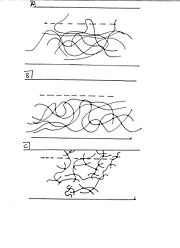
Another circumstance under which diffusive bonding occurs is “scission”. Chain scission is the cutting up of polymer chains, resulting in a higher concentration of distal tails. The heightened concentration of these chain ends gives rise to a heightened concentration of polymer tails extending across the interface. Scission is easily achieved by ultraviolet
Ultraviolet
Ultraviolet light is electromagnetic radiation with a wavelength shorter than that of visible light, but longer than X-rays, in the range 10 nm to 400 nm, and energies from 3 eV to 124 eV...
irradiation in the presence of oxygen gas, which suggests that adhesive devices employing diffusive bonding actually benefit from prolonged exposure to heat/light and air. The longer such a device is exposed to these conditions, the more tails are scissed and branch out across the interface.
Once across the interface, the tails and loops form whatever bonds are favorable. In the case of polymer-on-polymer surfaces, this means more van der Waals forces. While these may be brittle, they are quite strong when a large network of these bonds is formed. The outermost layer of each surface plays a crucial role in the adhesive properties of such interfaces, as even a tiny amount of interdigitation – as little as one or two tails of 1.25 angstrom length – can increase the van der Waals bonds by an order of magnitude.
Strength
The strength of the adhesion between two materials depends on which of the above mechanisms occur between the two materials, and the surface area over which the two materials contact. Materials that wet against each other tend to have a larger contact area than those that do not. Wetting depends on the surface energy of the materials.Low surface energy materials such as polyethylene
Polyethylene
Polyethylene or polythene is the most widely used plastic, with an annual production of approximately 80 million metric tons...
, polypropylene
Polypropylene
Polypropylene , also known as polypropene, is a thermoplastic polymer used in a wide variety of applications including packaging, textiles , stationery, plastic parts and reusable containers of various types, laboratory equipment, loudspeakers, automotive components, and polymer banknotes...
, polytetrafluoroethylene
Polytetrafluoroethylene
Polytetrafluoroethylene is a synthetic fluoropolymer of tetrafluoroethylene that finds numerous applications. PTFE is most well known by the DuPont brand name Teflon....
and polyoxymethylene
Polyoxymethylene
Polyoxymethylene , also known as acetal, polyacetal, and polyformaldehyde, is an engineering thermoplastic used in precision parts that require high stiffness, low friction and excellent dimensional stability....
are difficult to bond without special surface preparation.
Other effects
In concert with the primary surface forces described above, there are several circumstantial effects in play. While the forces themselves each contribute to the magnitude of the adhesion between the surfaces, the following play a crucial role in the overall strength and reliability of an adhesive device.Stringing
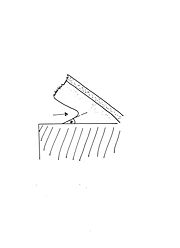
Stress concentration
A stress concentration is a location in an object where stress is concentrated. An object is strongest when force is evenly distributed over its area, so a reduction in area, e.g. caused by a crack, results in a localized increase in stress...
at the point of failure mentioned earlier. Since the stress is now spread out over some area, the stress at any given point has less of a chance of overwhelming the total adhesive force between the surfaces. If failure does occur at an interface containing a viscoelastic adhesive agent, and a crack does propagate, it happens by a gradual process called “fingering”, rather than a rapid, brittle fracture.
Stringing can apply to both the diffusive bonding regime and the chemical bonding regime. The strings of molecules bridging across the gap would either be the molecules that had earlier diffused across the interface or the viscoelastic adhesive, provided that there was a significant volume of it at the interface.
Microstructures
Technologically advanced adhesive devices sometimes make use of microstructures on surfaces, such as the periodic posts described above. These are biomimetic technologies inspired by the adhesive abilities of the feet of various arthropodArthropod
An arthropod is an invertebrate animal having an exoskeleton , a segmented body, and jointed appendages. Arthropods are members of the phylum Arthropoda , and include the insects, arachnids, crustaceans, and others...
s and vertebrate
Vertebrate
Vertebrates are animals that are members of the subphylum Vertebrata . Vertebrates are the largest group of chordates, with currently about 58,000 species described. Vertebrates include the jawless fishes, bony fishes, sharks and rays, amphibians, reptiles, mammals, and birds...
s (most notably, gecko
Gecko
Geckos are lizards belonging to the infraorder Gekkota, found in warm climates throughout the world. They range from 1.6 cm to 60 cm....
s). By intermixing periodic breaks into smooth, adhesive surfaces, the interface acquires valuable crack-arresting properties. Because crack initiation requires much greater stress than does crack propagation, surfaces like these are much harder to separate, as a new crack has to be restarted every time the next individual microstructure is reached.
Hysteresis
HysteresisHysteresis
Hysteresis is the dependence of a system not just on its current environment but also on its past. This dependence arises because the system can be in more than one internal state. To predict its future evolution, either its internal state or its history must be known. If a given input alternately...
, in this case, refers to the restructuring of the adhesive interface over some period of time, with the result being that the work needed to separate two surfaces is greater than the work that was gained by bringing them together (W > γ1 + γ2). For the most part, this is a phenomenon associated with diffusive bonding. The more time is given for a pair of surfaces exhibiting diffusive bonding to restructure, the more diffusion will occur, the stronger the adhesion will become. The aforementioned reaction of certain polymer-on-polymer surfaces to ultraviolet radiation and oxygen gas is an instance of hysteresis, but it will also happen over time without those factors.
In addition to being able to observe hysteresis by determining if W > γ1 + γ2 is true, one can also find evidence of it by performing “stop-start” measurements. In these experiments, two surfaces slide against one another continuously and occasionally stopped for some measured amount of time. Results from experiments on polymer-on-polymer surfaces show that if the stopping time is short enough, resumption of smooth sliding is easy. If, however, the stopping time exceeds some limit, there is an initial increase of resistance to motion, indicating that the stopping time was sufficient for the surfaces to restructure.
Wettability and adsorption
Some atmospheric effects on the functionality of adhesive devices can be characterized by following the theory of surface energy and interfacial tension. It is known that γ12 = (1/2)W121 = (1/2)W212. If γ12 is high, then each species finds it favorable to cohere while in contact with a foreign species, rather than dissociate and mix with the other. If this is true, then it follows that when the interfacial tension is high, the force of adhesion is weak, since each species does not find it favorable to bond to the other. The interfacial tension of a liquid and a solid is directly related to the liquids wettability (relative to the solid), and thus one can extrapolate that cohesion increases in non-wetting liquids and decreases in wetting liquids. One example that verifies this is polydimethyl siloxane rubber, which has a work of self-adhesion of 43.6 mJ/m2 in air, 74 mJ/m2 in water (a nonwetting liquid) and 6 mJ/m2 in methanol (a wetting liquid).This argument can be extended to the idea that when a surface is in a medium with which binding is favorable, it will be less likely to adhere to another surface, since the medium is taking up the potential sites on the surface that would otherwise be available to adhere to another surface. Naturally this applies very strongly to wetting liquids, but also to gas molecules that could adsorb onto the surface in question, thereby occupying potential adhesion sites. This last point is actually fairly intuitive: Leaving an adhesive exposed to air too long gets it dirty, and its adhesive strength will decrease. This is observed in the experiment: when mica
Mica
The mica group of sheet silicate minerals includes several closely related materials having highly perfect basal cleavage. All are monoclinic, with a tendency towards pseudohexagonal crystals, and are similar in chemical composition...
is cleaved in air, its cleavage energy, W121 or Wmica/air/mica, is smaller than the cleavage energy in vacuum, Wmica/vac/mica, by a factor of 13.
See also
- AdhesiveAdhesiveAn adhesive, or glue, is a mixture in a liquid or semi-liquid state that adheres or bonds items together. Adhesives may come from either natural or synthetic sources. The types of materials that can be bonded are vast but they are especially useful for bonding thin materials...
- Adhesive bondingAdhesive bondingAdhesive bonding describes a wafer bonding technique with applying an intermediate layer to connect substrates of different materials. These produced connections can be soluble or insoluble. The commercially available adhesive can be organic or inorganic and is deposited on one or both substrate...
- Bacterial adhesin
- Capillary actionCapillary actionCapillary action, or capilarity, is the ability of a liquid to flow against gravity where liquid spontanously rise in a narrow space such as between the hair of a paint-brush, in a thin tube, or in porous material such as paper or in some non-porous material such as liquified carbon fiber, or in a...
- Cell adhesionCell adhesionCellular adhesion is the binding of a cell to a surface, extracellular matrix or another cell using cell adhesion molecules such as selectins, integrins, and cadherins. Correct cellular adhesion is essential in maintaining multicellular structure...
- Contact mechanicsContact mechanicsContact mechanics is the study of the deformation of solids that touch each other at one or more points. The physical and mathematical formulation of the subject is built upon the mechanics of materials and continuum mechanics and focuses on computations involving elastic, viscoelastic, and plastic...
- Fracture mechanicsFracture mechanicsFracture mechanics is the field of mechanics concerned with the study of the propagation of cracks in materials. It uses methods of analytical solid mechanics to calculate the driving force on a crack and those of experimental solid mechanics to characterize the material's resistance to fracture.In...
- GallingGallingGalling usually refers to the adhesive wear and transfer of material between metallic surfaces in relative converging contact during sheet metal forming and other industrial operations....
- MeniscusMeniscusThe meniscus is the curve in the upper surface of a liquid close to the surface of the container or another object, caused by surface tension. It can be either convex or concave. A convex meniscus occurs when the molecules have a stronger attraction to each other than to the material of the...
- Rail adhesionRail adhesionThe term adhesion railway or adhesion traction describes the most common type of railway, where power is applied by driving some or all of the wheels of the locomotive. Thus, it relies on the friction between a steel wheel and a steel rail. Note that steam locomotives of old were driven only by...
- Synthetic setaeSynthetic setaeSynthetic setae emulate the setae found on the toes of a gecko and scientific research in this area is driven towards the development of dry adhesives. Geckos have no difficulty mastering vertical walls and are apparently capable of adhering themselves to just about any surface...
Further reading
- John Comyn, Adhesion Science, Royal Society of Chemistry Paperbacks, 1997
- A.J. Kinloch, Adhesion and Adhesives: Science and Technology, Chapman and Hall, 1987