

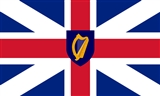
The Protectorate

Encyclopedia
In British history
, the Protectorate was the period 1653–1659 during which the Commonwealth of England
was governed by a Lord Protector
.
had been forcibly dissolved in April 1653 by soldiers led by Oliver Cromwell
, prompted by the perceived ineffectiveness of its rule and its refusal to dissolve itself.
Although the replacement, the Barebones Parliament
(July–December 1653), was nominated by Cromwell and the leaders of the army, it proved just as difficult to control and was in addition a subject of popular ridicule.
put forward a new constitution known as the Instrument of Government, closely modelled on the Heads of Proposals
. It made Cromwell Lord Protector for life to undertake “the chief magistracy and the administration of government”. He had the power to call and dissolve Parliaments but obliged under the Instrument to seek the majority vote of the Council of State. However, Cromwell's power was also buttressed by his continuing popularity among the army, which he had built up during the civil wars, and which he subsequently prudently guarded. Cromwell was sworn in as Lord Protector on 15 December 1653.
met on 3 September 1654, and after some initial gestures approving appointments previously made by Cromwell, began to work on a moderate programme of constitutional reform. Rather than opposing Parliament’s bill, Cromwell dissolved them on 22 January 1655. After a royalist uprising led by Sir John Penruddock
, Cromwell (influenced by Lambert) divided England into military districts ruled by Army Major Generals
who answered only to him. The fifteen major generals and deputy major generals—called "godly governors"—were central not only to national security, but Cromwell's moral crusade. The generals not only supervised militia forces and security commissions, but collected taxes and ensured support for the government in the English and Welsh provinces. Commissioners for securing the peace of the commonwealth were appointed to work with them in every county. While a few of these commissioners were career politicians, most were zealous puritans who welcomed the major-generals with open arms and embraced their work with enthusiasm. However, the major-generals lasted less than a year. Many feared they threatened their reform efforts and authority. Their position was further harmed by a tax proposal by Major General John Desborough to provide financial backing for their work, which the second Protectorate parliament
—instated in September 1656—voted down for fear of a permanent military state. Ultimately, however, Cromwell's failure to support his men, sacrificing them to his opponents, caused their demise. Their activities between November 1655 and September 1656 had, however, reopened the wounds of the 1640s and deepened antipathies to the regime.
which had broken out in 1652, against the Dutch Republic
, was eventually won by Admiral Robert Blake
in 1654. The Lord Protector became aware of the contribution the Jewish community made to the economic success of Holland, now England's leading commercial rival. It was this — allied to Cromwell’s toleration of private worship of non-puritans — that led to his encouraging Jews to return to England
, 350 years after their banishment by Edward I
, in the hope that they would help speed up the recovery of the country after the disruption of the Civil Wars.
again”. The reference is to Joshua
's curse upon any man who would rebuild Jericho and to its fulfillment in Hiel the Bethelite, who according to 1st Kings 16:34 "laid the foundation thereof in Abiram his firstborn, and set up the gates thereof in his youngest son Segub."
Instead, Cromwell was ceremonially re-installed as Lord Protector
(with greater powers than had previously been granted him under this title) at Westminster Hall, sitting upon King Edward's Chair
which was specially moved from Westminster Abbey
for the occasion. The event in part echoed a coronation
, utilizing many of its symbols and regalia, such as a purple ermine-lined robe, a sword of justice and a sceptre
(but not a crown or an orb). But, most notably, the office of Lord Protector was still not to become hereditary, though Cromwell was now able to nominate his own successor. Cromwell's new rights and powers were laid out in the Humble Petition and Advice
, a legislative instrument which replaced the Instrument of Government. Cromwell himself, however, was at pains to minimize his role, describing himself as a constable or watchman. However, Cromwell "had never gained the willing consent of the nation" and the Protectorate relied on armed force.
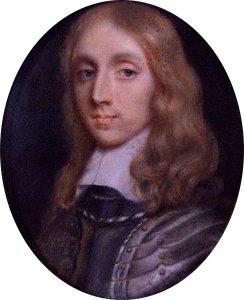 After Oliver's death in September 1658, his third son Richard Cromwell
succeeded as Lord Protector. The impression of strength and durability of the Protectorate when Richard succeeded proved deceptive; a lack of unity would destroy the Protectorate.
Richard sought to expand the basis for the Protectorate beyond the army to civilians. He summoned a Parliament in 1659. However, the republicans "condemned Oliver's rule as a period of tyranny and economic depression", and engaged in "endless obstruction and filibustering" and attacked the 'quasi-monarchal' aspects of the Protectorate.
Three things undermined the Protectorate: the "anxieties of the army, the irresponsibility of the Parliament and the rashness of Richard Cromwell"; what ultimately prevented the retention of the Protectorate was the opposition of the "junior officers" and "many of the common soldiers".
Richard had proved he was unable to manage the Parliament nor control the army. On 7 May a Committee of Safety was formed on the authority of the Rump Parliament
, displacing the Protector's Council of State, and was in turn replaced by a new Council of State on 19 May 1659. "Richard was never formally deposed or arrested, but allowed to fade away. The Protectorate was treated as having been from the first a mere usurpation".
in May 1660, largely through the initiative of General George Monck.
History of the British Isles
The history of the British Isles has witnessed intermittent periods of competition and cooperation between the people that occupy the various parts of Great Britain, Ireland, and the smaller adjacent islands, which together make up the British Isles, as well as with France, Germany, the Low...
, the Protectorate was the period 1653–1659 during which the Commonwealth of England
Commonwealth of England
The Commonwealth of England was the republic which ruled first England, and then Ireland and Scotland from 1649 to 1660. Between 1653–1659 it was known as the Commonwealth of England, Scotland and Ireland...
was governed by a Lord Protector
Lord Protector
Lord Protector is a title used in British constitutional law for certain heads of state at different periods of history. It is also a particular title for the British Heads of State in respect to the established church...
.
Background
Prior to the Protectorate, England (and subsequently Scotland and Ireland) had been ruled directly by Parliament since it had declared England to be a Commonwealth in 1649. The Rump ParliamentRump Parliament
The Rump Parliament is the name of the English Parliament after Colonel Pride purged the Long Parliament on 6 December 1648 of those members hostile to the Grandees' intention to try King Charles I for high treason....
had been forcibly dissolved in April 1653 by soldiers led by Oliver Cromwell
Oliver Cromwell
Oliver Cromwell was an English military and political leader who overthrew the English monarchy and temporarily turned England into a republican Commonwealth, and served as Lord Protector of England, Scotland, and Ireland....
, prompted by the perceived ineffectiveness of its rule and its refusal to dissolve itself.
Although the replacement, the Barebones Parliament
Barebones Parliament
Barebone's Parliament, also known as the Little Parliament, the Nominated Assembly and the Parliament of Saints, came into being on 4 July 1653, and was the last attempt of the English Commonwealth to find a stable political form before the installation of Oliver Cromwell as Lord Protector...
(July–December 1653), was nominated by Cromwell and the leaders of the army, it proved just as difficult to control and was in addition a subject of popular ridicule.
First Protectorate
After the dissolution of the Barebones Parliament, John LambertJohn Lambert (general)
John Lambert was an English Parliamentary general and politician. He fought during the English Civil War and then in Oliver Cromwell's Scottish campaign , becoming thereafter active in civilian politics until his dismissal by Cromwell in 1657...
put forward a new constitution known as the Instrument of Government, closely modelled on the Heads of Proposals
Heads of Proposals
The Heads Of Proposals was a set of propositions intended to be a basis for a constitutional settlement after King Charles I was defeated in the first English Civil War...
. It made Cromwell Lord Protector for life to undertake “the chief magistracy and the administration of government”. He had the power to call and dissolve Parliaments but obliged under the Instrument to seek the majority vote of the Council of State. However, Cromwell's power was also buttressed by his continuing popularity among the army, which he had built up during the civil wars, and which he subsequently prudently guarded. Cromwell was sworn in as Lord Protector on 15 December 1653.
Rule of the Major-Generals
The first Protectorate parliamentFirst Protectorate Parliament
The First Protectorate Parliament was summoned by the Lord Protector Oliver Cromwell under the terms of the Instrument of Government. It sat for one term from 3 September 1654 until 22 January 1655 with William Lenthall as the Speaker of the House....
met on 3 September 1654, and after some initial gestures approving appointments previously made by Cromwell, began to work on a moderate programme of constitutional reform. Rather than opposing Parliament’s bill, Cromwell dissolved them on 22 January 1655. After a royalist uprising led by Sir John Penruddock
John Penruddock
Colonel John Penruddock , of Compton Chamberlayne, was an English Cavalier during the English Civil War and the English Interregnum. He is remembered as the leader of the Penruddock uprising in 1655....
, Cromwell (influenced by Lambert) divided England into military districts ruled by Army Major Generals
Rule of the Major-Generals
The Rule of the Major-Generals from August 1655 – January 1657, was a period of direct military government during Oliver Cromwell's Protectorate.England was divided into 10 regions each governed by a Major-General who answered to the Lord Protector....
who answered only to him. The fifteen major generals and deputy major generals—called "godly governors"—were central not only to national security, but Cromwell's moral crusade. The generals not only supervised militia forces and security commissions, but collected taxes and ensured support for the government in the English and Welsh provinces. Commissioners for securing the peace of the commonwealth were appointed to work with them in every county. While a few of these commissioners were career politicians, most were zealous puritans who welcomed the major-generals with open arms and embraced their work with enthusiasm. However, the major-generals lasted less than a year. Many feared they threatened their reform efforts and authority. Their position was further harmed by a tax proposal by Major General John Desborough to provide financial backing for their work, which the second Protectorate parliament
Second Protectorate Parliament
The Second Protectorate Parliament in England sat for two sessions from 17 September 1656 until 4 February 1658, with Thomas Widdrington as the Speaker of the House of Commons...
—instated in September 1656—voted down for fear of a permanent military state. Ultimately, however, Cromwell's failure to support his men, sacrificing them to his opponents, caused their demise. Their activities between November 1655 and September 1656 had, however, reopened the wounds of the 1640s and deepened antipathies to the regime.
Foreign policy
During this period Oliver Cromwell also faced challenges in foreign policy. The First Anglo-Dutch WarFirst Anglo-Dutch War
The First Anglo–Dutch War was the first of the four Anglo–Dutch Wars. It was fought entirely at sea between the navies of the Commonwealth of England and the United Provinces of the Netherlands. Caused by disputes over trade, the war began with English attacks on Dutch merchant shipping, but...
which had broken out in 1652, against the Dutch Republic
Dutch Republic
The Dutch Republic — officially known as the Republic of the Seven United Netherlands , the Republic of the United Netherlands, or the Republic of the Seven United Provinces — was a republic in Europe existing from 1581 to 1795, preceding the Batavian Republic and ultimately...
, was eventually won by Admiral Robert Blake
Robert Blake (admiral)
Robert Blake was one of the most important military commanders of the Commonwealth of England and one of the most famous English admirals of the 17th century. Blake is recognised as the chief founder of England's naval supremacy, a dominance subsequently inherited by the British Royal Navy into...
in 1654. The Lord Protector became aware of the contribution the Jewish community made to the economic success of Holland, now England's leading commercial rival. It was this — allied to Cromwell’s toleration of private worship of non-puritans — that led to his encouraging Jews to return to England
Resettlement of the Jews in England
The resettlement of the Jews in England was a historic commercial policy dealing with Jews in England in the 17th century, and forms a prominent part of the history of the Jews in England.-Background:...
, 350 years after their banishment by Edward I
Edward I of England
Edward I , also known as Edward Longshanks and the Hammer of the Scots, was King of England from 1272 to 1307. The first son of Henry III, Edward was involved early in the political intrigues of his father's reign, which included an outright rebellion by the English barons...
, in the hope that they would help speed up the recovery of the country after the disruption of the Civil Wars.
Oliver Cromwell's role
In 1657, Oliver Cromwell was offered the crown by Parliament as part of a revised constitutional settlement, presenting him with a dilemma, since he had been instrumental in abolishing the monarchy. Cromwell agonized for six weeks over the offer. He was attracted by the prospect of stability it held out, but in a speech on 13 April 1657 he made clear that God's providence had spoken against the office of king: “I would not seek to set up that which Providence hath destroyed and laid in the dust, and I would not build JerichoJericho
Jericho ; is a city located near the Jordan River in the West Bank of the Palestinian territories. It is the capital of the Jericho Governorate and has a population of more than 20,000. Situated well below sea level on an east-west route north of the Dead Sea, Jericho is the lowest permanently...
again”. The reference is to Joshua
Joshua
Joshua , is a minor figure in the Torah, being one of the spies for Israel and in few passages as Moses's assistant. He turns to be the central character in the Hebrew Bible's Book of Joshua...
's curse upon any man who would rebuild Jericho and to its fulfillment in Hiel the Bethelite, who according to 1st Kings 16:34 "laid the foundation thereof in Abiram his firstborn, and set up the gates thereof in his youngest son Segub."
Instead, Cromwell was ceremonially re-installed as Lord Protector
Lord Protector
Lord Protector is a title used in British constitutional law for certain heads of state at different periods of history. It is also a particular title for the British Heads of State in respect to the established church...
(with greater powers than had previously been granted him under this title) at Westminster Hall, sitting upon King Edward's Chair
King Edward's Chair
King Edward's Chair, sometimes known as St Edward's Chair or The Coronation Chair, is the throne on which the British monarch sits for the coronation. It was commissioned in 1296 by King Edward I to contain the coronation stone of Scotland — known as the Stone of Scone — which he had captured from...
which was specially moved from Westminster Abbey
Westminster Abbey
The Collegiate Church of St Peter at Westminster, popularly known as Westminster Abbey, is a large, mainly Gothic church, in the City of Westminster, London, United Kingdom, located just to the west of the Palace of Westminster. It is the traditional place of coronation and burial site for English,...
for the occasion. The event in part echoed a coronation
Coronation
A coronation is a ceremony marking the formal investiture of a monarch and/or their consort with regal power, usually involving the placement of a crown upon their head and the presentation of other items of regalia...
, utilizing many of its symbols and regalia, such as a purple ermine-lined robe, a sword of justice and a sceptre
Sceptre
A sceptre is a symbolic ornamental rod or wand borne in the hand by a ruling monarch as an item of royal or imperial insignia.-Antiquity:...
(but not a crown or an orb). But, most notably, the office of Lord Protector was still not to become hereditary, though Cromwell was now able to nominate his own successor. Cromwell's new rights and powers were laid out in the Humble Petition and Advice
Humble Petition and Advice
The Humble Petition and Advice was the second, and last, codified constitution of England after the Instrument of Government.On 23 February 1657, during the sitting of the Second Protectorate Parliament, Sir Christopher Packe, a Member of Parliament and former Lord Mayor of London The Humble...
, a legislative instrument which replaced the Instrument of Government. Cromwell himself, however, was at pains to minimize his role, describing himself as a constable or watchman. However, Cromwell "had never gained the willing consent of the nation" and the Protectorate relied on armed force.
Second Protectorate
Richard Cromwell
At the same time, the officers of the New Model Army became increasingly wary about the government's commitment to the military cause. The fact that Richard Cromwell lacked military credentials grated with men who had fought on the battlefields of the English Civil War to secure their nation's...
succeeded as Lord Protector. The impression of strength and durability of the Protectorate when Richard succeeded proved deceptive; a lack of unity would destroy the Protectorate.
Richard sought to expand the basis for the Protectorate beyond the army to civilians. He summoned a Parliament in 1659. However, the republicans "condemned Oliver's rule as a period of tyranny and economic depression", and engaged in "endless obstruction and filibustering" and attacked the 'quasi-monarchal' aspects of the Protectorate.
Three things undermined the Protectorate: the "anxieties of the army, the irresponsibility of the Parliament and the rashness of Richard Cromwell"; what ultimately prevented the retention of the Protectorate was the opposition of the "junior officers" and "many of the common soldiers".
Richard had proved he was unable to manage the Parliament nor control the army. On 7 May a Committee of Safety was formed on the authority of the Rump Parliament
Rump Parliament
The Rump Parliament is the name of the English Parliament after Colonel Pride purged the Long Parliament on 6 December 1648 of those members hostile to the Grandees' intention to try King Charles I for high treason....
, displacing the Protector's Council of State, and was in turn replaced by a new Council of State on 19 May 1659. "Richard was never formally deposed or arrested, but allowed to fade away. The Protectorate was treated as having been from the first a mere usurpation".
Aftermath: Second Commonwealth and the Restoration
After a chaotic short revival of the Commonwealth of England, the monarchy was restoredEnglish Restoration
The Restoration of the English monarchy began in 1660 when the English, Scottish and Irish monarchies were all restored under Charles II after the Interregnum that followed the Wars of the Three Kingdoms...
in May 1660, largely through the initiative of General George Monck.