


Smile

Encyclopedia

Facial expression
A facial expression one or more motions or positions of the muscles in the skin. These movements convey the emotional state of the individual to observers. Facial expressions are a form of nonverbal communication. They are a primary means of conveying social information among humans, but also occur...
formed by flexing the muscle
Muscle
Muscle is a contractile tissue of animals and is derived from the mesodermal layer of embryonic germ cells. Muscle cells contain contractile filaments that move past each other and change the size of the cell. They are classified as skeletal, cardiac, or smooth muscles. Their function is to...
s near both ends of the mouth
Mouth
The mouth is the first portion of the alimentary canal that receives food andsaliva. The oral mucosa is the mucous membrane epithelium lining the inside of the mouth....
. The smile can also be found around the eyes
Human eye
The human eye is an organ which reacts to light for several purposes. As a conscious sense organ, the eye allows vision. Rod and cone cells in the retina allow conscious light perception and vision including color differentiation and the perception of depth...
(See 'Duchenne Smiling' below). Among human
Human
Humans are the only living species in the Homo genus...
s, it is an expression denoting pleasure
Pleasure
Pleasure describes the broad class of mental states that humans and other animals experience as positive, enjoyable, or worth seeking. It includes more specific mental states such as happiness, entertainment, enjoyment, ecstasy, and euphoria...
, joy, happiness
Happiness
Happiness is a mental state of well-being characterized by positive emotions ranging from contentment to intense joy. A variety of biological, psychological, religious, and philosophical approaches have striven to define happiness and identify its sources....
, or amusement
Amusement
Amusement is the state of experiencing humorous and entertaining events or situations, and is associated with enjoyment, happiness, laughter and pleasure...
, but can also be an involuntary expression of anxiety
Anxiety
Anxiety is a psychological and physiological state characterized by somatic, emotional, cognitive, and behavioral components. The root meaning of the word anxiety is 'to vex or trouble'; in either presence or absence of psychological stress, anxiety can create feelings of fear, worry, uneasiness,...
, in which case it is known as a grimace. Smiling is something that is understood by everyone despite culture, race, or religion; it is internationally known. Cross-cultural studies have shown that smiling is a means of communicating emotions throughout the world. But there are large differences between different cultures. A smile can also be spontaneous or artificial.
Social behavior

Laughter
In social contexts, smiling is related to laughterLaughter
Laughing is a reaction to certain stimuli, fundamentally stress, which serves as an emotional balancing mechanism. Traditionally, it is considered a visual expression of happiness, or an inward feeling of joy. It may ensue from hearing a joke, being tickled, or other stimuli...
. In this situation, two kinds of smiling are analyzed:
- Smiling is a pre-laughing device and is a common pattern for paving the way to laughter;
- Smiling can be used as a response to laughter in the previous turn. Smiling and laughter have different functions in the order of sequence in social situations.
Sex appeal
Smiling is a signaling system that evolved from a need to communicate information of many different forms. One of these is advertisement of sexual interest. Female smiles are appealing to males, increasing physical attractiveness and enhancing sex appeal. However, recent research indicates a man's smile may or may not be most effective in attracting women, and that facial expressions such as pride or even shame might be more effective.Cultural differences
While most often, smiling is perceived as a positive emotion, there are many countries that perceive smiling as a negative expression and consider it unwelcoming. Too much smiling can be viewed as a sign of shallowness or dishonestyDishonesty
Dishonesty is a word which, in common usage, may be defined as the act or to act without honesty. It is used to describe a lack of probity, cheating, lying or being deliberately deceptive or a lack in integrity, knavishness, perfidiosity, corruption or treacherousness...
. The Japanese may smile when they are confused or angry. In other parts of Asia, people may smile when they are embarrassed. Some people may smile at others to indicate a friendly greeting. A smile may be reserved for close friends and family members. Many people in Russia
Russia
Russia or , officially known as both Russia and the Russian Federation , is a country in northern Eurasia. It is a federal semi-presidential republic, comprising 83 federal subjects...
consider smiling at strangers in public to be unusual and even suspicious behavior. Yet many Americans smile freely at strangers in public places (although this is less common in big cities). Some Russians believe that Americans smile in the wrong places; some Americans believe that Russians don't smile enough. In Southeast Asian
Asia
Asia is the world's largest and most populous continent, located primarily in the eastern and northern hemispheres. It covers 8.7% of the Earth's total surface area and with approximately 3.879 billion people, it hosts 60% of the world's current human population...
cultures, a smile is frequently used to cover emotional pain or embarrassment
Embarrassment
Embarrassment is an emotional state of intense discomfort with oneself, experienced upon having a socially unacceptable act or condition witnessed by or revealed to others. Usually some amount of loss of honour or dignity is involved, but how much and the type depends on the embarrassing situation...
. Vietnamese people
Vietnamese people
The Vietnamese people are an ethnic group originating from present-day northern Vietnam and southern China. They are the majority ethnic group of Vietnam, comprising 86% of the population as of the 1999 census, and are officially known as Kinh to distinguish them from other ethnic groups in Vietnam...
may tell the sad story of how they had to leave their country but end the story with a smile.
Dimples

Dimple
A dimple is a small natural indentation in the flesh on a part of the human body, most notably in the cheek or on the chin.-More about dimples:...
are visible indentations of the epidermis, caused by underlying flesh, which form on some people's cheeks, especially when they smile. Dimples are genetically inherited and are a dominant trait. A rarer form is the single dimple, which occurs on one side of the face only. Anatomically, dimples may be caused by variations in the structure of the facial muscle known as zygomaticus major
Zygomaticus major muscle
The Zygomatic major is a muscle of the human body. It is a muscle of facial expression which draws the angle of the mouth superiorly and posteriorly . Like all muscles of facial expression, the zygomatic major is innervated by the facial nerve...
. Specifically, the presence of a double or bifid zygomaticus major muscle may explain the formation of cheek dimples. This bifid variation of the muscle originates as a single structure from the zygomatic bone
Zygomatic bone
The zygomatic bone is a paired bone of the human skull. It articulates with the maxilla, the temporal bone, the sphenoid bone and the frontal bone. The zygomatic is homologous to the jugal bone of other tetrapods...
. As it travels anteriorly, it then divides with a superior bundle that inserts in the typical position above the corner of the mouth. An inferior bundle inserts below the corner of the mouth.
Real smiles vs. fake smiles
A smile does indeed have great power and great social rewards. However, it has been proven that an authentic smile is much more effective than a counterfeit smile. A smile is an outward sign of perceived self-confidence and internal satisfaction. It seems to have a favorable influence upon others and makes one likeable and more approachable.Duchenne smiling
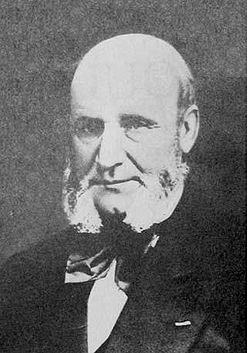
Physiology
Physiology is the science of the function of living systems. This includes how organisms, organ systems, organs, cells, and bio-molecules carry out the chemical or physical functions that exist in a living system. The highest honor awarded in physiology is the Nobel Prize in Physiology or...
of facial expressions in the mid-19th century, Duchenne identified two distinct types of smiles. A Duchenne smile involves contraction of both the zygomatic major muscle
Zygomaticus major muscle
The Zygomatic major is a muscle of the human body. It is a muscle of facial expression which draws the angle of the mouth superiorly and posteriorly . Like all muscles of facial expression, the zygomatic major is innervated by the facial nerve...
(which raises the corners of the mouth) and the orbicularis oculi muscle
Orbicularis oculi muscle
The orbicularis oculi is a muscle in the face that closes the eyelids. It arises from the nasal part of the frontal bone, from the frontal process of the maxilla in front of the lacrimal groove, and from the anterior surface and borders of a short fibrous band, the medial palpebral ligament.From...
(which raises the cheeks and forms crow's feet around the eyes). A non-Duchenne smile involves only the zygomatic major muscle. “Research with adults initially indicated that joy was indexed by generic smiling, any smiling involving the raising of the lip corners by the zygomatic major…. More recent research suggests that smiling in which the muscle around the eye contracts, raising the cheeks high (Duchenne smiling), is uniquely associated with positive emotion.”
Pan-Am smile
The Pan-Am smile, also known as the "Botox smile", is the name given to a "fake smile", in which only the zygomatic major muscle is voluntarily contracted to show politeness. It is named after the airline Pan American World AirwaysPan American World Airways
Pan American World Airways, commonly known as Pan Am, was the principal and largest international air carrier in the United States from 1927 until its collapse on December 4, 1991...
, whose flight attendants would always flash every jet-setter the same, perfunctory smile.
Hidden emotions within smiling
Happiness is most often the motivating cause of a smile. However, there are many exceptions, especially among animalAnimal
Animals are a major group of multicellular, eukaryotic organisms of the kingdom Animalia or Metazoa. Their body plan eventually becomes fixed as they develop, although some undergo a process of metamorphosis later on in their life. Most animals are motile, meaning they can move spontaneously and...
s. The exposure of teeth, which may bear a resemblance to a smile, is often used as a threat or warning display
Threat display
Threat display is a type of display behaviour aiming at intimidation of a potential enemy. It may be directed at a rival of the same species , or at a potential threat from a different species....
—known as a snarl
Snarl
A snarl is a facial expression, where the upper lip is raised, and the nostrils widen, generally indicating hate, anger or pain. In addition to humans, other mammals including monkeys and dogs snarl, often to warn others of their potential bite. In humans, snarling uses the levator labii...
—or a sign of submission
Submission
Submission is the acknowledgement of the legitimacy of the power of one's superior or superiors.Submission may also refer to:* Submission/Submitter , an Islamic organisation...
. For chimpanzees, it can also be a sign of fear
Fear
Fear is a distressing negative sensation induced by a perceived threat. It is a basic survival mechanism occurring in response to a specific stimulus, such as pain or the threat of danger...
. The study of smiles is a part of gelotology
Gelotology
Gelotology is the study of laughter and its effects on the body, from a psychological and physiological perspective. Its proponents often advocate induction of laughter on therapeutic grounds in complementary medicine. The field of study was pioneered by William F...
, psychology
Psychology
Psychology is the study of the mind and behavior. Its immediate goal is to understand individuals and groups by both establishing general principles and researching specific cases. For many, the ultimate goal of psychology is to benefit society...
, and linguistics
Linguistics
Linguistics is the scientific study of human language. Linguistics can be broadly broken into three categories or subfields of study: language form, language meaning, and language in context....
, comprising various theories of affect
Affect (psychology)
Affect refers to the experience of feeling or emotion. Affect is a key part of the process of an organism's interaction with stimuli. The word also refers sometimes to affect display, which is "a facial, vocal, or gestural behavior that serves as an indicator of affect" .The affective domain...
, humor, and laughter
Laughter
Laughing is a reaction to certain stimuli, fundamentally stress, which serves as an emotional balancing mechanism. Traditionally, it is considered a visual expression of happiness, or an inward feeling of joy. It may ensue from hearing a joke, being tickled, or other stimuli...
. Smiling can also be interpreted as nervousness in an animal - humans also smile as a result of nervousness and even embarrassment. In one study, created to investigate the correspondence between perceived meanings of smiles and their morphological and dynamic characteristics, it was found that “perceived embarrassed/nervous smiles had greater amplitude, longer duration…related to those perceived as polite.” Work by John Gottman
John Gottman
John Mordecai Gottman is a Ph.D. psychologist known for his work on marital stability and relationship analysis through scientific direct observations published in peer-reviewed literature...
has shown that smiling and other such expressions of positive emotions are important to shaping relationships with others; researchers could predict the quality of marriages many years into the future based on the number of such interactions (see also agreeableness
Agreeableness
Agreeableness is a tendency to be pleasant and accommodating in social situations. In contemporary personality psychology, agreeableness is one of the five major dimensions of personality structure, reflecting individual differences in concern for cooperation and social harmony. People who score...
).
See also
- Facial expressionFacial expressionA facial expression one or more motions or positions of the muscles in the skin. These movements convey the emotional state of the individual to observers. Facial expressions are a form of nonverbal communication. They are a primary means of conveying social information among humans, but also occur...
- FrownFrownA frown is a facial expression in which the eyebrows are brought together, and the forehead is wrinkled, usually indicating displeasure, sadness or worry, or less often confusion or concentration....
- Greetings
- Impression managementImpression managementIn sociology and social psychology, impression management is a goal-directed conscious or unconscious process in which people attempt to influence the perceptions of other people about a person, object or event; they do so by regulating and controlling information in social interaction...
- LaughterLaughterLaughing is a reaction to certain stimuli, fundamentally stress, which serves as an emotional balancing mechanism. Traditionally, it is considered a visual expression of happiness, or an inward feeling of joy. It may ensue from hearing a joke, being tickled, or other stimuli...
- Nonverbal communicationNonverbal communicationNonverbal communication is usually understood as the process of communication through sending and receiving wordless messages. Messages can be communicated through gestures and touch , by body language or posture, by facial expression and eye contact...
- Superficial smile
- HappinessHappinessHappiness is a mental state of well-being characterized by positive emotions ranging from contentment to intense joy. A variety of biological, psychological, religious, and philosophical approaches have striven to define happiness and identify its sources....
Further reading
- Conniff, R. (2007). What's behind a smile? Smithsonian Magazine, 38,46-53.
- Miller, Professor George A., et al. Overview for "smile." Retrieved 12 December 2003 from this page.
- Ottenheimer, H.J. (2006). The anthropology of language: An introduction to linguistic anthropology. Belmont, CA: Thomson Wadsworh.
- Ekman, P., Davidson, R.J., & Friesen, W.V. (1990). The Duchenne smile: Emotional expression and brain psysiology II. Journal of Personality and Social Psychology, 58, 342-353. Cited in: Russell and Fernandez-Dols, eds. (1997).
- Russell and Fernandez-Dols, eds. (1997). The Psychology of Facial Expression. Cambridge. ISBN 0521587964.
- Messinger, D. & Fogel, A. (2007). The interactive development of social smiling. In Robert Kail (ed.), Advances in Child Development and Behavior, 35, 327-366. Oxford: Elsevier. Retrieved 25 June 2010 from http://www.psy.miami.edu/faculty/dmessinger/c_c/rsrcs/rdgs/emot/Messinger.Fogel.Smiling.Advances2007.pdf