


Rosh Hashanah

Encyclopedia
Rosh Hashanah (literally "head of the year"), is the Jewish
New Year
. It is the first of the High Holy Days
or Yamim Nora'im
("Days of Awe") which occur in the autumn. Rosh Hashanah is celebrated on the first two days of Tishrei
, the seventh month of the Hebrew calendar
It is described in the Torah as יום תרועה (Yom Teru'ah, a day of sounding [the Shofar]).Rosh Hashanah customs include sounding the shofar
and eating symbolic foods such as apples dipped in honey.
. refers to the festival of the first day of the seventh month as "Zikhron Teru'ah" ("a memorial with the blowing of horns"), it is also referred to in the same part of Leviticus as 'שַׁבַּת שַׁבָּתוֹן' or penultimate Sabbath or meditative rest day, and a "holy day to G-D". These same words are commonly used in the Psalms to refer to the annointed days. calls the festival Yom Teru'ah, ("Day [of] blowing [the horn]") and symbolizes a number of subjects, such as the Binding of Isaac
and the animal sacrifice
s that were to be performed. (In there is a general reference to the time of Yom Kippur as the "beginning of the year",
The Hebrew Rosh Ha-Shanah is etymologically related to the Arabic Ras as-Sanah, the name chosen by Muslim lawmakers for the Islamic New Year, reflecting the common Semitic ancestry of both languages and traditions. Pre-Islamic mid-eastern cultures, besides the Jews, did not use this unique name, e.g., Egypt, Persia or Babylon.
Rosh Hashanah marks the start of a new year in the Hebrew calendar (one of four "new year" observances that define various legal "years" for different purposes as explained in the Mishnah and Talmud
). It is the new year for people, animals, and legal contracts. The Mishnah
also sets this day aside as the new year for calculating calendar years and sabbatical (shmita) and jubilee
(yovel) years. Jews
believe Rosh Hashanah represents either figuratively or literally the creation of the World, or Universe. However, according to Rabbi Eleazar ben Shammua Rosh Hashanah commemorates the creation of man.
that three books of account are opened on Rosh Hashanah, wherein the fate of the wicked, the righteous, and those of an intermediate class are recorded. The names of the righteous are immediately inscribed in the book of life, and they are sealed "to live." The middle class are allowed a respite of ten days till Yom Kippur, to repent and become righteous; the wicked are "blotted out of the book of the living."
The Mishnah
contains the first known reference to Rosh Hashanah as the "day of judgment." In the Talmud tractate on Rosh Hashanah
it states that three books of account are opened on Rosh Hashanah, wherein the fate of the wicked, the righteous, and those of an intermediate class are recorded. The names of the righteous are immediately inscribed in the book of life, and they are sealed "to live." The intermediate class are allowed a respite of ten days, until Yom Kippur, to reflect, repent and become righteous; the wicked are "blotted out of the book of the living forever."
In Jewish liturgy
Rosh Hashanah is described as "the day of judgment" (Yom ha-Din) and "the day of remembrance" (Yom ha-Zikkaron). Some midrash
ic descriptions depict God
as sitting upon a throne
, while books containing the deeds of all humanity are opened for review, and each person passing in front of Him for evaluation of his or her deeds. The Talmud provides three central ideas behind the day:
"The Holy One said, 'on Rosh Hashanah recite before Me [verses of] Sovereignty, Remembrance, and Shofar blasts (malchuyot, zichronot, shofrot): Sovereignty so that you should make Me your King; Remembrance so that your remembrance should rise up before Me. And through what? Through the Shofar.' (Rosh Hashanah 16a, 34b)" This is reflected in the prayers composed by the classical rabbinic sages for Rosh Hashanah found in all machzorim where the theme of the prayers is the strongest theme is the "coronation" of God as King of the universe in preparation for the acceptance of judgments that will follow on that day, symbolized as "written" into a Divine book of judgments, that then hang in the balance for ten days waiting for all to repent, then they will be "sealed" on Yom Kippur
. The assumption is that everyone was sealed for life and therefore the next festival is Sukkot
(Tabernacles) that is referred to as "the time of our joy" (z'man simchateinu).
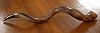 Laws on the form and use of the shofar
and laws related to the religious services during the festival of Rosh Hashanah are described in Rabbinic literature
such as the Mishnah
that formed the basis of the tractate "Rosh HaShanah"
in both the Babylonian Talmud
and the Jerusalem Talmud
. This also contains the most important rules concerning the calendar year.
The shofar is blown in long, short and staccato blasts that follow a set sequence:
(Pesach). In terms of the Gregorian calendar
, the earliest date on which Rosh Hashanah can fall is September 5, as happened in 1899 and will happen again in 2013. The latest date that Rosh Hashanah can occur relative to the Gregorian dates is October 5, as happened in 1967 and will happen again in 2043. After 2089, the differences between the Hebrew calendar and the Gregorian calendar will result in Rosh Hashanah falling no earlier than September 6.
Rosh Hashanah will occur on the following days of the Gregorian calendar:
Although the Jewish calendar is based on the lunar cycle, so that the first day of each month originally began with the first sighting of a new moon, since the fourth century it has been arranged so that Rosh Hashanah never falls on a Wednesday, Friday, or Sunday.
The Torah defines Rosh Hashanah as a one day celebration, and since days in the Hebrew calendar begin at sundown, the beginning of Rosh Hashanah is at sundown at the end of 29 Elul
. The rules of the Hebrew calendar are designed such that the first day of Rosh Hashanah will never occur on the first, fourth, or sixth day of the Jewish week
(i.e., Sunday, Wednesday, or Friday). Since the time of the destruction of the Second Temple of Jerusalem in 70 CE and the time of Rabban Yohanan ben Zakkai, normative
Jewish law appears to be that Rosh Hashanah is to be celebrated for two days, due to the difficulty of determining the date of the new moon
. Nonetheless, there is some evidence that Rosh Hashanah was celebrated on a single day in Israel as late as the thirteenth century CE
. Orthodox
and Conservative Judaism
now generally observe Rosh Hashanah for the first two days of Tishrei
, even in Israel
where all other Jewish holidays dated from the new moon last only one day. The two days of Rosh Hashanah are said to constitute "Yoma Arichtah" (Aramaic: "one long day"). In Reform Judaism
, some communities only observe the first day of Rosh Hashanah, while others observe two days. Karaite Jews
, who do not recognize Rabbinic Jewish oral law and rely on their own understanding of the Torah, observe only one day on the first of Tishrei, since the second day is not mentioned in the Written Torah.
, during which Jews are supposed to begin a self-examination and repentance, a process that culminates in the ten days of the Yamim Nora'im known as beginning with Rosh Hashanah and ending with the holiday of Yom Kippur
.
The shofar is traditionally blown each morning for the entire month of Elul
, the month preceding Rosh Hashanah. The sound of the shofar is intended to awaken the listeners from their "slumbers" and alert them to the coming judgment. The shofar is not blown on Shabbat
.
In the period leading up to the Yamim Nora'im (Hebrew
, "days of awe") penitential prayers, called selichot
, are recited.
, since days of the Hebrew calendar begin at sundown. Some communities perform Hatar'at nedarim (a nullification of vows) after the morning prayer services during the morning on the 29th of the Hebrew month of Elul
, which ends at sundown, when Erev Rosh Hashanah commences. The mood becomes festive but serious in anticipation of the new year and the synagogue services. Many Orthodox men immerse in a mikveh in honor of the coming day.
tim, are added to the regular services. A special prayer book, the mahzor
], is used on Rosh Hashanah and Yom Kippur (plural mahzorim). A number of additions are made to the regular service, most notably an extended repetition of the Amidah
prayer for both Shacharit
and Mussaf
. The Shofar is blown during Mussaf at several intervals. (In many synagogues, even little children come and hear the Shofar being blown.) Biblical verses are recited at each point. According to the Mishnah
, 10 verses (each) are said regarding kinship, remembrance, and the shofar itself, each accompanied by the blowing of the shofar. A variety of piyyut
im, medieval penitential prayers, are recited regarding themes of repentance. The Alenu prayer is recited during the repetition of the Mussaf Amidah
.
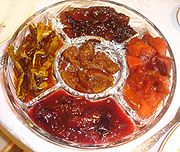 Rosh Hashanah meals usually include apple
s and honey
, to symbolize a sweet new year. Other foods with a symbolic meaning may be served, depending on local minhag
("custom"), such as the head of a fish (to symbolize the "head" of the year).
The Sephardi and Mizrahi communities hold a "Rosh Hashanah seder" during which blessings are recited over a variety of symbolic dishes. The blessings start with the phrase "Yehi ratzon," meaning "May it be thy will." In many cases, the name of the food in Hebrew or Aramaic represents a play on words or pun. The Yehi Ratson platter may include apples (dipped in honey, baked or cooked as a compote called mansanada); dates; pomegranates; black eyed peas; pumpkin-filled pastries called rodanchas; leek fritters called keftedes de prasa; beets; and a whole fish with the head intact. It is also common to eat stuffed vegetables called legumbres yaprakes.
Some of the symbolic foods eaten are dates, black-eyed peas
, leek
, spinach
and gourd
, all of which are mentioned in the Talmud
. Pomegranate
s are used in many traditions, to symbolize being fruitful like the pomegranate with its many seeds. The use of apples and honey, symbolizing a sweet year, is a late medieval Ashkenazi addition, though it is now almost universally accepted. Typically, round challah
bread is served, to symbolize the cycle of the year. Gefilte fish
and Lekach
are commonly served by Ashkenazic Jews on this holiday. On the second night, new fruits are served to warrant inclusion of the shehecheyanu
blessing.
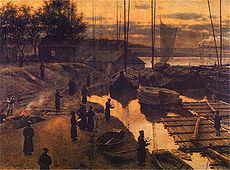 The ritual of tashlikh
is performed on the afternoon of the first day of Rosh Hashanah. Prayers are recited near natural flowing water, and one's sins are symbolically cast into the water. Many also have the custom to throw bread or pebbles into the water, to symbolize the "casting off" of sins. In some communities, if the first day of Rosh Hashanah occurs on Shabbat, tashlikh is postponed until the second day. The traditional service for tashlikh is recited individually and includes the prayer "Who is like unto you, O God...And You will cast all their sins into the depths of the sea", and Biblical passages including ("They will not injure nor destroy in all My holy mountain, for the earth shall be as full of the knowledge of the Lord as the waters cover the sea") and , 121 and 130, as well as personal prayers. Though once considered a solemn individual tradition, it has become an increasingly social ceremony practised in groups.
Judaism
Judaism ) is the "religion, philosophy, and way of life" of the Jewish people...
New Year
New Year
The New Year is the day that marks the time of the beginning of a new calendar year, and is the day on which the year count of the specific calendar used is incremented. For many cultures, the event is celebrated in some manner....
. It is the first of the High Holy Days
High Holy Days
The High Holidays or High Holy Days, in Judaism, more properly known as the Yamim Noraim , may mean:#strictly, the holidays of Rosh Hashanah and Yom Kippur ;...
or Yamim Nora'im
("Days of Awe") which occur in the autumn. Rosh Hashanah is celebrated on the first two days of Tishrei
Tishrei
Tishrei or Tishri , Tiberian: ; from Akkadian "Beginning", from "To begin") is the first month of the civil year and the seventh month of the ecclesiastical year in the Hebrew calendar. The name of the month is Babylonian. It is an autumn month of 30 days...
, the seventh month of the Hebrew calendar
Hebrew calendar
The Hebrew calendar , or Jewish calendar, is a lunisolar calendar used today predominantly for Jewish religious observances. It determines the dates for Jewish holidays and the appropriate public reading of Torah portions, yahrzeits , and daily Psalm reading, among many ceremonial uses...
It is described in the Torah as יום תרועה (Yom Teru'ah, a day of sounding [the Shofar]).Rosh Hashanah customs include sounding the shofar
Shofar
A shofar is a horn, traditionally that of a ram, used for Jewish religious purposes. Shofar-blowing is incorporated in synagogue services on Rosh Hashanah and Yom Kippur.Shofar come in a variety of sizes.- Bible and rabbinic literature :...
and eating symbolic foods such as apples dipped in honey.
Etymology
The term "Rosh Hashanah" does not appear in the TorahTorah
Torah- A scroll containing the first five books of the BibleThe Torah , is name given by Jews to the first five books of the bible—Genesis , Exodus , Leviticus , Numbers and Deuteronomy Torah- A scroll containing the first five books of the BibleThe Torah , is name given by Jews to the first five...
. refers to the festival of the first day of the seventh month as "Zikhron Teru'ah" ("a memorial with the blowing of horns"), it is also referred to in the same part of Leviticus as 'שַׁבַּת שַׁבָּתוֹן' or penultimate Sabbath or meditative rest day, and a "holy day to G-D". These same words are commonly used in the Psalms to refer to the annointed days. calls the festival Yom Teru'ah, ("Day [of] blowing [the horn]") and symbolizes a number of subjects, such as the Binding of Isaac
Binding of Isaac
The Binding of Isaac Akedah or Akeidat Yitzchak in Hebrew and Dhabih in Arabic, is a story from the Hebrew Bible in which God asks Abraham to sacrifice his son, Isaac, on Mount Moriah...
and the animal sacrifice
Korban
The term offering as found in the Hebrew Bible in relation to the worship of Ancient Israel is mainly represented by the Hebrew noun korban whether for an animal or other offering...
s that were to be performed. (In there is a general reference to the time of Yom Kippur as the "beginning of the year",
The Hebrew Rosh Ha-Shanah is etymologically related to the Arabic Ras as-Sanah, the name chosen by Muslim lawmakers for the Islamic New Year, reflecting the common Semitic ancestry of both languages and traditions. Pre-Islamic mid-eastern cultures, besides the Jews, did not use this unique name, e.g., Egypt, Persia or Babylon.
Rosh Hashanah marks the start of a new year in the Hebrew calendar (one of four "new year" observances that define various legal "years" for different purposes as explained in the Mishnah and Talmud
Rosh Hashanah (Talmud)
Rosh Hashanah is the name of a text of Jewish law originating in the Mishnah which formed the basis of tractates in both the Babylonian Talmud and the Jerusalem Talmud of the same name. It is the eighth tractate of the order Moed...
). It is the new year for people, animals, and legal contracts. The Mishnah
Rosh Hashanah (Talmud)
Rosh Hashanah is the name of a text of Jewish law originating in the Mishnah which formed the basis of tractates in both the Babylonian Talmud and the Jerusalem Talmud of the same name. It is the eighth tractate of the order Moed...
also sets this day aside as the new year for calculating calendar years and sabbatical (shmita) and jubilee
Jubilee (Biblical)
The Jubilee year is the year at the end of seven cycles of Sabbatical years , and according to Biblical regulations had a special impact on the ownership and management of land in the territory of the kingdoms of Israel and of Judah; there is some debate whether it was the 49th year The Jubilee...
(yovel) years. Jews
Jews
The Jews , also known as the Jewish people, are a nation and ethnoreligious group originating in the Israelites or Hebrews of the Ancient Near East. The Jewish ethnicity, nationality, and religion are strongly interrelated, as Judaism is the traditional faith of the Jewish nation...
believe Rosh Hashanah represents either figuratively or literally the creation of the World, or Universe. However, according to Rabbi Eleazar ben Shammua Rosh Hashanah commemorates the creation of man.
Religious significance
In Jewish thought, Rosh Hashanah is the most important judgment day, on which all the inhabitants of the world pass for judgment before the Creator. The Talmud states, in tractate on Rosh HashanahRosh Hashanah (Talmud)
Rosh Hashanah is the name of a text of Jewish law originating in the Mishnah which formed the basis of tractates in both the Babylonian Talmud and the Jerusalem Talmud of the same name. It is the eighth tractate of the order Moed...
that three books of account are opened on Rosh Hashanah, wherein the fate of the wicked, the righteous, and those of an intermediate class are recorded. The names of the righteous are immediately inscribed in the book of life, and they are sealed "to live." The middle class are allowed a respite of ten days till Yom Kippur, to repent and become righteous; the wicked are "blotted out of the book of the living."
The Mishnah
Mishnah
The Mishnah or Mishna is the first major written redaction of the Jewish oral traditions called the "Oral Torah". It is also the first major work of Rabbinic Judaism. It was redacted c...
contains the first known reference to Rosh Hashanah as the "day of judgment." In the Talmud tractate on Rosh Hashanah
Rosh Hashanah (Talmud)
Rosh Hashanah is the name of a text of Jewish law originating in the Mishnah which formed the basis of tractates in both the Babylonian Talmud and the Jerusalem Talmud of the same name. It is the eighth tractate of the order Moed...
it states that three books of account are opened on Rosh Hashanah, wherein the fate of the wicked, the righteous, and those of an intermediate class are recorded. The names of the righteous are immediately inscribed in the book of life, and they are sealed "to live." The intermediate class are allowed a respite of ten days, until Yom Kippur, to reflect, repent and become righteous; the wicked are "blotted out of the book of the living forever."
In Jewish liturgy
Jewish liturgy
Jewish liturgy refers specifically to following the Torah in all of its rites and ceremonies, whether in the home or in the Synagogue. The main purposes of following the carefully laid out observances is to maintain uniformity, and to avoid improper and unacceptable practices at variance with those...
Rosh Hashanah is described as "the day of judgment" (Yom ha-Din) and "the day of remembrance" (Yom ha-Zikkaron). Some midrash
Midrash
The Hebrew term Midrash is a homiletic method of biblical exegesis. The term also refers to the whole compilation of homiletic teachings on the Bible....
ic descriptions depict God
Names of God in Judaism
In Judaism, the name of God is more than a distinguishing title; it represents the Jewish conception of the divine nature, and of the relationship of God to the Jewish people and to the world. To demonstrate the sacredness of the names of God, and as a means of showing respect and reverence for...
as sitting upon a throne
Throne
A throne is the official chair or seat upon which a monarch is seated on state or ceremonial occasions. "Throne" in an abstract sense can also refer to the monarchy or the Crown itself, an instance of metonymy, and is also used in many expressions such as "the power behind the...
, while books containing the deeds of all humanity are opened for review, and each person passing in front of Him for evaluation of his or her deeds. The Talmud provides three central ideas behind the day:
"The Holy One said, 'on Rosh Hashanah recite before Me [verses of] Sovereignty, Remembrance, and Shofar blasts (malchuyot, zichronot, shofrot): Sovereignty so that you should make Me your King; Remembrance so that your remembrance should rise up before Me. And through what? Through the Shofar.' (Rosh Hashanah 16a, 34b)" This is reflected in the prayers composed by the classical rabbinic sages for Rosh Hashanah found in all machzorim where the theme of the prayers is the strongest theme is the "coronation" of God as King of the universe in preparation for the acceptance of judgments that will follow on that day, symbolized as "written" into a Divine book of judgments, that then hang in the balance for ten days waiting for all to repent, then they will be "sealed" on Yom Kippur
Yom Kippur
Yom Kippur , also known as Day of Atonement, is the holiest and most solemn day of the year for the Jews. Its central themes are atonement and repentance. Jews traditionally observe this holy day with a 25-hour period of fasting and intensive prayer, often spending most of the day in synagogue...
. The assumption is that everyone was sealed for life and therefore the next festival is Sukkot
Sukkot
Sukkot is a Biblical holiday celebrated on the 15th day of the month of Tishrei . It is one of the three biblically mandated festivals Shalosh regalim on which Hebrews were commanded to make a pilgrimage to the Temple in Jerusalem.The holiday lasts seven days...
(Tabernacles) that is referred to as "the time of our joy" (z'man simchateinu).
Shofar blowing
Shofar
A shofar is a horn, traditionally that of a ram, used for Jewish religious purposes. Shofar-blowing is incorporated in synagogue services on Rosh Hashanah and Yom Kippur.Shofar come in a variety of sizes.- Bible and rabbinic literature :...
and laws related to the religious services during the festival of Rosh Hashanah are described in Rabbinic literature
Rabbinic literature
Rabbinic literature, in its broadest sense, can mean the entire spectrum of rabbinic writings throughout Jewish history. However, the term often refers specifically to literature from the Talmudic era, as opposed to medieval and modern rabbinic writing, and thus corresponds with the Hebrew term...
such as the Mishnah
Mishnah
The Mishnah or Mishna is the first major written redaction of the Jewish oral traditions called the "Oral Torah". It is also the first major work of Rabbinic Judaism. It was redacted c...
that formed the basis of the tractate "Rosh HaShanah"
Rosh Hashanah (Talmud)
Rosh Hashanah is the name of a text of Jewish law originating in the Mishnah which formed the basis of tractates in both the Babylonian Talmud and the Jerusalem Talmud of the same name. It is the eighth tractate of the order Moed...
in both the Babylonian Talmud
Talmud
The Talmud is a central text of mainstream Judaism. It takes the form of a record of rabbinic discussions pertaining to Jewish law, ethics, philosophy, customs and history....
and the Jerusalem Talmud
Jerusalem Talmud
The Jerusalem Talmud, talmud meaning "instruction", "learning", , is a collection of Rabbinic notes on the 2nd-century Mishnah which was compiled in the Land of Israel during the 4th-5th century. The voluminous text is also known as the Palestinian Talmud or Talmud de-Eretz Yisrael...
. This also contains the most important rules concerning the calendar year.
The shofar is blown in long, short and staccato blasts that follow a set sequence:
- Teki'ah (long sound) Numbers 10:3
- Shevarim (3 broken sounds) Numbers 10:5
- Teru'ah (9 short sounds) Numbers 10:9
- Teki'ah Gedolah (very long sound) Exodus 19:16,19
- Shevarim Teru'ah (3 broken sounds followed by 9 short sounds)
Duration and timing
Rosh Hashanah occurs 163 days after the first day of PassoverPassover
Passover is a Jewish holiday and festival. It commemorates the story of the Exodus, in which the ancient Israelites were freed from slavery in Egypt...
(Pesach). In terms of the Gregorian calendar
Gregorian calendar
The Gregorian calendar, also known as the Western calendar, or Christian calendar, is the internationally accepted civil calendar. It was introduced by Pope Gregory XIII, after whom the calendar was named, by a decree signed on 24 February 1582, a papal bull known by its opening words Inter...
, the earliest date on which Rosh Hashanah can fall is September 5, as happened in 1899 and will happen again in 2013. The latest date that Rosh Hashanah can occur relative to the Gregorian dates is October 5, as happened in 1967 and will happen again in 2043. After 2089, the differences between the Hebrew calendar and the Gregorian calendar will result in Rosh Hashanah falling no earlier than September 6.
Rosh Hashanah will occur on the following days of the Gregorian calendar:
- Current Jewish Year 5772: sunset September 28, 2011 - nightfall September 30, 2011
- Coming Jewish Year 5773: sunset September 16, 2012 - nightfall September 18, 2012
Although the Jewish calendar is based on the lunar cycle, so that the first day of each month originally began with the first sighting of a new moon, since the fourth century it has been arranged so that Rosh Hashanah never falls on a Wednesday, Friday, or Sunday.
The Torah defines Rosh Hashanah as a one day celebration, and since days in the Hebrew calendar begin at sundown, the beginning of Rosh Hashanah is at sundown at the end of 29 Elul
Elul
Elul is the twelfth month of the Jewish civil year and the sixth month of the ecclesiastical year on the Hebrew calendar. It is a summer month of 29 days...
. The rules of the Hebrew calendar are designed such that the first day of Rosh Hashanah will never occur on the first, fourth, or sixth day of the Jewish week
Hebrew calendar
The Hebrew calendar , or Jewish calendar, is a lunisolar calendar used today predominantly for Jewish religious observances. It determines the dates for Jewish holidays and the appropriate public reading of Torah portions, yahrzeits , and daily Psalm reading, among many ceremonial uses...
(i.e., Sunday, Wednesday, or Friday). Since the time of the destruction of the Second Temple of Jerusalem in 70 CE and the time of Rabban Yohanan ben Zakkai, normative
Norm (sociology)
Social norms are the accepted behaviors within a society or group. This sociological and social psychological term has been defined as "the rules that a group uses for appropriate and inappropriate values, beliefs, attitudes and behaviors. These rules may be explicit or implicit...
Jewish law appears to be that Rosh Hashanah is to be celebrated for two days, due to the difficulty of determining the date of the new moon
New moon
In astronomical terminology, the new moon is the lunar phase that occurs when the Moon, in its monthly orbital motion around Earth, lies between Earth and the Sun, and is therefore in conjunction with the Sun as seen from Earth...
. Nonetheless, there is some evidence that Rosh Hashanah was celebrated on a single day in Israel as late as the thirteenth century CE
Common Era
Common Era ,abbreviated as CE, is an alternative designation for the calendar era originally introduced by Dionysius Exiguus in the 6th century, traditionally identified with Anno Domini .Dates before the year 1 CE are indicated by the usage of BCE, short for Before the Common Era Common Era...
. Orthodox
Orthodox Judaism
Orthodox Judaism , is the approach to Judaism which adheres to the traditional interpretation and application of the laws and ethics of the Torah as legislated in the Talmudic texts by the Sanhedrin and subsequently developed and applied by the later authorities known as the Gaonim, Rishonim, and...
and Conservative Judaism
Conservative Judaism
Conservative Judaism is a modern stream of Judaism that arose out of intellectual currents in Germany in the mid-19th century and took institutional form in the United States in the early 1900s.Conservative Judaism has its roots in the school of thought known as Positive-Historical Judaism,...
now generally observe Rosh Hashanah for the first two days of Tishrei
Tishrei
Tishrei or Tishri , Tiberian: ; from Akkadian "Beginning", from "To begin") is the first month of the civil year and the seventh month of the ecclesiastical year in the Hebrew calendar. The name of the month is Babylonian. It is an autumn month of 30 days...
, even in Israel
Israel
The State of Israel is a parliamentary republic located in the Middle East, along the eastern shore of the Mediterranean Sea...
where all other Jewish holidays dated from the new moon last only one day. The two days of Rosh Hashanah are said to constitute "Yoma Arichtah" (Aramaic: "one long day"). In Reform Judaism
Reform Judaism
Reform Judaism refers to various beliefs, practices and organizations associated with the Reform Jewish movement in North America, the United Kingdom and elsewhere. In general, it maintains that Judaism and Jewish traditions should be modernized and should be compatible with participation in the...
, some communities only observe the first day of Rosh Hashanah, while others observe two days. Karaite Jews
Karaite Judaism
Karaite Judaism or Karaism is a Jewish movement characterized by the recognition of the Tanakh alone as its supreme legal authority in Halakhah, as well as in theology...
, who do not recognize Rabbinic Jewish oral law and rely on their own understanding of the Torah, observe only one day on the first of Tishrei, since the second day is not mentioned in the Written Torah.
Pre-Rosh Hashanah customs
The Yamim Nora'im are preceded by the month of ElulElul
Elul is the twelfth month of the Jewish civil year and the sixth month of the ecclesiastical year on the Hebrew calendar. It is a summer month of 29 days...
, during which Jews are supposed to begin a self-examination and repentance, a process that culminates in the ten days of the Yamim Nora'im known as beginning with Rosh Hashanah and ending with the holiday of Yom Kippur
Yom Kippur
Yom Kippur , also known as Day of Atonement, is the holiest and most solemn day of the year for the Jews. Its central themes are atonement and repentance. Jews traditionally observe this holy day with a 25-hour period of fasting and intensive prayer, often spending most of the day in synagogue...
.
The shofar is traditionally blown each morning for the entire month of Elul
Elul
Elul is the twelfth month of the Jewish civil year and the sixth month of the ecclesiastical year on the Hebrew calendar. It is a summer month of 29 days...
, the month preceding Rosh Hashanah. The sound of the shofar is intended to awaken the listeners from their "slumbers" and alert them to the coming judgment. The shofar is not blown on Shabbat
Shabbat
Shabbat is the seventh day of the Jewish week and a day of rest in Judaism. Shabbat is observed from a few minutes before sunset on Friday evening until a few minutes after when one would expect to be able to see three stars in the sky on Saturday night. The exact times, therefore, differ from...
.
In the period leading up to the Yamim Nora'im (Hebrew
Hebrew language
Hebrew is a Semitic language of the Afroasiatic language family. Culturally, is it considered by Jews and other religious groups as the language of the Jewish people, though other Jewish languages had originated among diaspora Jews, and the Hebrew language is also used by non-Jewish groups, such...
, "days of awe") penitential prayers, called selichot
Selichot
Selichot or slichot are Jewish penitential poems and prayers, especially those said in the period leading up to the High Holidays, and on Fast Days...
, are recited.
Rosh Hashanah eve
The evening before Rosh Hashanah day is known as Erev Rosh Hashanah ("Rosh Hashanah eve"). As with Rosh Hashanah day, it falls on the 1st day of the Hebrew month of TishreiTishrei
Tishrei or Tishri , Tiberian: ; from Akkadian "Beginning", from "To begin") is the first month of the civil year and the seventh month of the ecclesiastical year in the Hebrew calendar. The name of the month is Babylonian. It is an autumn month of 30 days...
, since days of the Hebrew calendar begin at sundown. Some communities perform Hatar'at nedarim (a nullification of vows) after the morning prayer services during the morning on the 29th of the Hebrew month of Elul
Elul
Elul is the twelfth month of the Jewish civil year and the sixth month of the ecclesiastical year on the Hebrew calendar. It is a summer month of 29 days...
, which ends at sundown, when Erev Rosh Hashanah commences. The mood becomes festive but serious in anticipation of the new year and the synagogue services. Many Orthodox men immerse in a mikveh in honor of the coming day.
Rosh Hashanah prayer service
On Rosh Hashanah day, religious poems, called piyyutPiyyut
A piyyut or piyut is a Jewish liturgical poem, usually designated to be sung, chanted, or recited during religious services. Piyyutim have been written since Temple times...
tim, are added to the regular services. A special prayer book, the mahzor
Mahzor
The mahzor is the prayer book used by Jews on the High Holidays of Rosh Hashanah and Yom Kippur. Many Jews also make use of specialized mahzorim on the three "pilgrimage festivals" of Passover, Shavuot, and Sukkot...
], is used on Rosh Hashanah and Yom Kippur (plural mahzorim). A number of additions are made to the regular service, most notably an extended repetition of the Amidah
Amidah
The Amidah , also called the Shmoneh Esreh , is the central prayer of the Jewish liturgy. This prayer, among others, is found in the siddur, the traditional Jewish prayer book...
prayer for both Shacharit
Shacharit
Shacharit is the the daily morning Tefillah of the Jewish people, one of the three times there is prayer each day.Shacharit is said to have been established by the patriarch Abraham when he prayed in the morning...
and Mussaf
Mussaf
Mussaf is an additional service that is recited on Shabbat, Yom Tov, Chol Hamoed, and Rosh Chodesh. The service, which is traditionally combined with the Shacharit in synagogues, is considered to be additional to the regular services of Shacharit, Mincha, and Maariv.During the days of the Holy...
. The Shofar is blown during Mussaf at several intervals. (In many synagogues, even little children come and hear the Shofar being blown.) Biblical verses are recited at each point. According to the Mishnah
Mishnah
The Mishnah or Mishna is the first major written redaction of the Jewish oral traditions called the "Oral Torah". It is also the first major work of Rabbinic Judaism. It was redacted c...
, 10 verses (each) are said regarding kinship, remembrance, and the shofar itself, each accompanied by the blowing of the shofar. A variety of piyyut
Piyyut
A piyyut or piyut is a Jewish liturgical poem, usually designated to be sung, chanted, or recited during religious services. Piyyutim have been written since Temple times...
im, medieval penitential prayers, are recited regarding themes of repentance. The Alenu prayer is recited during the repetition of the Mussaf Amidah
Amidah
The Amidah , also called the Shmoneh Esreh , is the central prayer of the Jewish liturgy. This prayer, among others, is found in the siddur, the traditional Jewish prayer book...
.
Symbolic foods
Apple
The apple is the pomaceous fruit of the apple tree, species Malus domestica in the rose family . It is one of the most widely cultivated tree fruits, and the most widely known of the many members of genus Malus that are used by humans. Apple grow on small, deciduous trees that blossom in the spring...
s and honey
Honey
Honey is a sweet food made by bees using nectar from flowers. The variety produced by honey bees is the one most commonly referred to and is the type of honey collected by beekeepers and consumed by humans...
, to symbolize a sweet new year. Other foods with a symbolic meaning may be served, depending on local minhag
Minhag
Minhag is an accepted tradition or group of traditions in Judaism. A related concept, Nusach , refers to the traditional order and form of the prayers...
("custom"), such as the head of a fish (to symbolize the "head" of the year).
The Sephardi and Mizrahi communities hold a "Rosh Hashanah seder" during which blessings are recited over a variety of symbolic dishes. The blessings start with the phrase "Yehi ratzon," meaning "May it be thy will." In many cases, the name of the food in Hebrew or Aramaic represents a play on words or pun. The Yehi Ratson platter may include apples (dipped in honey, baked or cooked as a compote called mansanada); dates; pomegranates; black eyed peas; pumpkin-filled pastries called rodanchas; leek fritters called keftedes de prasa; beets; and a whole fish with the head intact. It is also common to eat stuffed vegetables called legumbres yaprakes.
Some of the symbolic foods eaten are dates, black-eyed peas
Black-eyed pea
The black-eyed pea, also called black-eyed bean and chawalie or lobia in various languages in India and Pakistan, is a subspecies of the cowpea, grown around the world for its medium-sized, edible bean. The bean mutates easily, giving rise to a number of varieties. The common commercial one is...
, leek
Leek
The leek, Allium ampeloprasum var. porrum , also sometimes known as Allium porrum, is a vegetable which belongs, along with the onion and garlic, to family Amaryllidaceae, subfamily Allioideae...
, spinach
Spinach
Spinach is an edible flowering plant in the family of Amaranthaceae. It is native to central and southwestern Asia. It is an annual plant , which grows to a height of up to 30 cm. Spinach may survive over winter in temperate regions...
and gourd
Gourd
A gourd is a plant of the family Cucurbitaceae. Gourd is occasionally used to describe crops like cucumbers, squash, luffas, and melons. The term 'gourd' however, can more specifically, refer to the plants of the two Cucurbitaceae genera Lagenaria and Cucurbita or also to their hollow dried out shell...
, all of which are mentioned in the Talmud
Talmud
The Talmud is a central text of mainstream Judaism. It takes the form of a record of rabbinic discussions pertaining to Jewish law, ethics, philosophy, customs and history....
. Pomegranate
Pomegranate
The pomegranate , Punica granatum, is a fruit-bearing deciduous shrub or small tree growing between five and eight meters tall.Native to the area of modern day Iran, the pomegranate has been cultivated in the Caucasus since ancient times. From there it spread to Asian areas such as the Caucasus as...
s are used in many traditions, to symbolize being fruitful like the pomegranate with its many seeds. The use of apples and honey, symbolizing a sweet year, is a late medieval Ashkenazi addition, though it is now almost universally accepted. Typically, round challah
Challah
Challah also khale ,, berches , barkis , bergis , chałka , vánočka , zopf and kitke , is a special braided bread eaten on...
bread is served, to symbolize the cycle of the year. Gefilte fish
Gefilte fish
Gefilte fish is a poached fish mince stuffed into the fish skin.More common since the Second World War are the Polish patties similar to quenelles or fish balls made from a mixture of ground deboned fish, mostly carp or pike...
and Lekach
Lekach
Lekach or Jewish honey cake is a honey-sweetened cake, one of many symbolically significant foods traditionally eaten by Ashkenazi Jews at the holiday of Rosh Hashana, in hopes of ensuring a sweet New Year.Recipes vary widely...
are commonly served by Ashkenazic Jews on this holiday. On the second night, new fruits are served to warrant inclusion of the shehecheyanu
Shehecheyanu
The Shehecheyanu blessing is a common Jewish prayer said to celebrate special occasions. It is said to be thankful for new and unusual experiences. The blessing has been recited by Jews for nearly 2000 years...
blessing.
Tashlikh
Tashlikh
Tashlikh is a long-standing Jewish practice usually performed on the afternoon of Rosh Hashanah, the Jewish New Year, however it can be said up until Hoshana Rabbah...
is performed on the afternoon of the first day of Rosh Hashanah. Prayers are recited near natural flowing water, and one's sins are symbolically cast into the water. Many also have the custom to throw bread or pebbles into the water, to symbolize the "casting off" of sins. In some communities, if the first day of Rosh Hashanah occurs on Shabbat, tashlikh is postponed until the second day. The traditional service for tashlikh is recited individually and includes the prayer "Who is like unto you, O God...And You will cast all their sins into the depths of the sea", and Biblical passages including ("They will not injure nor destroy in all My holy mountain, for the earth shall be as full of the knowledge of the Lord as the waters cover the sea") and , 121 and 130, as well as personal prayers. Though once considered a solemn individual tradition, it has become an increasingly social ceremony practised in groups.
Traditional greetings
- On the first night of Rosh Hashanah after the evening prayer, it is the Ashkenazi and HasidicHasidic JudaismHasidic Judaism or Hasidism, from the Hebrew —Ḥasidut in Sephardi, Chasidus in Ashkenazi, meaning "piety" , is a branch of Orthodox Judaism that promotes spirituality and joy through the popularisation and internalisation of Jewish mysticism as the fundamental aspects of the Jewish faith...
custom to wish Le'shana Tova Tikoteiv Vetichoteim (Le'Alter LeChaim Tovim U'Leshalom) which is Hebrew for "May you (immediately) be inscribed and sealed for a Good Year (and for a Good and Peaceful Life)" - Shana Tova (ʃaˈna toˈva) is the traditional greeting on Rosh Hashanah which in Hebrew means "A Good Year." (שנה טובה)
- Shana Tova Umetukah is Hebrew for "A Good and Sweet Year." (שנה טובה ומתוקה)
- Ketiva ve-chatima tovah which translates as "May You Be Written and Sealed for a Good Year." (כתיבה וחתימה טובה)
- The formal Sephardic greeting is Tizku leshanim rabbot ("may you merit many years"), to which the answer is ne'imot ve-tovot ("pleasant and good ones"). Less formally, people wish each other "many years" in the local language.
See also
- Jewish holidayJewish holidayJewish holidays are days observed by Jews as holy or secular commemorations of important events in Jewish history. In Hebrew, Jewish holidays and festivals, depending on their nature, may be called yom tov or chag or ta'anit...
s - TeiglachTeiglachTeiglach, also spelled taiglach or teglach are small, knotted pastries boiled in a honeyed syrup. They are a traditional Ashkenazi Jewish treat for Rosh Hashana, Sukkot, Simchat Torah, and Purim.-History:...
- Rosh Hashana kibbutz
- Christian observances of Jewish holidays: Feast of Trumpets
External links
- Rosh Hashana Prayers For Sephardic Jews
- A Guide to the Rosh HaShanah Services
- Rosh HaShanah: The Merit of Self Control
- Patheos - Head, Hands, Heart, and Feet - A Trip Through the High Holy Days
- From Our Collections: Marking the New Year - Online exhibition from Yad Vashem on the celebration of Rosh Hashanah and Yom Kippur before, during, and after the Holocaust
- Rosh Hashana online tour - from the collection of The Jewish Museum (New York)Jewish Museum (New York)The Jewish Museum of New York, an art museum and repository of cultural artifacts, is the leading Jewish museum in the United States. With over 26,000 objects, it contains the largest collection of art and Jewish culture outside of museums in Israel. The museum is housed at 1109 Fifth Avenue, in...