

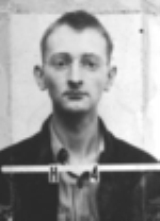
Owen Chamberlain

Encyclopedia
Owen Chamberlain was an American
physicist
, and Nobel laureate in physics
for his discovery, with collaborator Emilio Segrè, of antiproton
s, a sub-atomic antiparticle
.
, Chamberlain graduated from Germantown Friends School
in Philadelphia in 1937. He studied physics at Dartmouth College
, where he was a member of Theta Chi
Fraternity, and at the University of California, Berkeley
. He remained in school until the start of World War II
, and joined the Manhattan Project
in 1942, where he worked with Segrè, both at Berkeley and in Los Alamos
, New Mexico
. He married Beatrice Babette Copper (d. 1988) in 1943, with whom he had four children.
In 1946, after the war, Chamberlain continued with his doctoral studies at the University of Chicago
under legendary physicist Enrico Fermi
. Fermi acted as an important guide and mentor for Chamberlain, encouraging him to leave behind the more prestigious theoretical physics
for experimental physics
, for which Chamberlain had a particular aptitude. Chamberlain officially received his Ph.D.
from the University of Chicago in 1949.
In 1948, having completed his experimental work, Chamberlain returned to Berkeley as a member of its faculty, where he, Segrè, and other physicists investigated proton-proton scattering. In 1955, a series of proton scattering experiments led to the discovery of the anti-proton, a particle exactly like a proton except negatively charged. Chamberlain's later research work included the time projection chamber
(TPC), and work at the Stanford Linear Accelerator Center
(SLAC).
Chamberlain was also politically active on issues of peace and social justice, and outspoken against the Vietnam War
. He was a member of Scientists for Sakharov, Orlov, and Shcharansky, three physicists of the former Soviet Union
imprisoned for their political beliefs. In the 1980s, he helped found the nuclear freeze movement.
Chamberlain was diagnosed with Parkinson's disease
in 1985, and retired from teaching in 1989. He died of complications from the disease on February 28, 2006, in Berkeley at the age of 85.
United States
The United States of America is a federal constitutional republic comprising fifty states and a federal district...
physicist
Physicist
A physicist is a scientist who studies or practices physics. Physicists study a wide range of physical phenomena in many branches of physics spanning all length scales: from sub-atomic particles of which all ordinary matter is made to the behavior of the material Universe as a whole...
, and Nobel laureate in physics
Nobel Prize in Physics
The Nobel Prize in Physics is awarded once a year by the Royal Swedish Academy of Sciences. It is one of the five Nobel Prizes established by the will of Alfred Nobel in 1895 and awarded since 1901; the others are the Nobel Prize in Chemistry, Nobel Prize in Literature, Nobel Peace Prize, and...
for his discovery, with collaborator Emilio Segrè, of antiproton
Antiproton
The antiproton is the antiparticle of the proton. Antiprotons are stable, but they are typically short-lived since any collision with a proton will cause both particles to be annihilated in a burst of energy....
s, a sub-atomic antiparticle
Antiparticle
Corresponding to most kinds of particles, there is an associated antiparticle with the same mass and opposite electric charge. For example, the antiparticle of the electron is the positively charged antielectron, or positron, which is produced naturally in certain types of radioactive decay.The...
.
Biography
Born in San Francisco, CaliforniaSan Francisco, California
San Francisco , officially the City and County of San Francisco, is the financial, cultural, and transportation center of the San Francisco Bay Area, a region of 7.15 million people which includes San Jose and Oakland...
, Chamberlain graduated from Germantown Friends School
Germantown Friends School
Germantown Friends School is a coeducational K-12 school in the Germantown neighborhood of Philadelphia, Pennsylvania in the United States under the supervision of Germantown Monthly Meeting of the Religious Society of Friends . It is governed by a School Committee whose members are drawn mainly...
in Philadelphia in 1937. He studied physics at Dartmouth College
Dartmouth College
Dartmouth College is a private, Ivy League university in Hanover, New Hampshire, United States. The institution comprises a liberal arts college, Dartmouth Medical School, Thayer School of Engineering, and the Tuck School of Business, as well as 19 graduate programs in the arts and sciences...
, where he was a member of Theta Chi
Theta Chi
Theta Chi Fraternity is an international college fraternity. It was founded on April 10, 1856 as the Theta Chi Society, at Norwich University, Norwich, Vermont, U.S., and was the 21st of the 71 North-American Interfraternity Conference men's fraternities.-Founding and early years at Norwich:Theta...
Fraternity, and at the University of California, Berkeley
University of California, Berkeley
The University of California, Berkeley , is a teaching and research university established in 1868 and located in Berkeley, California, USA...
. He remained in school until the start of World War II
World War II
World War II, or the Second World War , was a global conflict lasting from 1939 to 1945, involving most of the world's nations—including all of the great powers—eventually forming two opposing military alliances: the Allies and the Axis...
, and joined the Manhattan Project
Manhattan Project
The Manhattan Project was a research and development program, led by the United States with participation from the United Kingdom and Canada, that produced the first atomic bomb during World War II. From 1942 to 1946, the project was under the direction of Major General Leslie Groves of the US Army...
in 1942, where he worked with Segrè, both at Berkeley and in Los Alamos
Los Alamos, New Mexico
Los Alamos is a townsite and census-designated place in Los Alamos County, New Mexico, United States, built upon four mesas of the Pajarito Plateau and the adjoining White Rock Canyon. The population of the CDP was 12,019 at the 2010 Census. The townsite or "the hill" is one part of town while...
, New Mexico
New Mexico
New Mexico is a state located in the southwest and western regions of the United States. New Mexico is also usually considered one of the Mountain States. With a population density of 16 per square mile, New Mexico is the sixth-most sparsely inhabited U.S...
. He married Beatrice Babette Copper (d. 1988) in 1943, with whom he had four children.
In 1946, after the war, Chamberlain continued with his doctoral studies at the University of Chicago
University of Chicago
The University of Chicago is a private research university in Chicago, Illinois, USA. It was founded by the American Baptist Education Society with a donation from oil magnate and philanthropist John D. Rockefeller and incorporated in 1890...
under legendary physicist Enrico Fermi
Enrico Fermi
Enrico Fermi was an Italian-born, naturalized American physicist particularly known for his work on the development of the first nuclear reactor, Chicago Pile-1, and for his contributions to the development of quantum theory, nuclear and particle physics, and statistical mechanics...
. Fermi acted as an important guide and mentor for Chamberlain, encouraging him to leave behind the more prestigious theoretical physics
Theoretical physics
Theoretical physics is a branch of physics which employs mathematical models and abstractions of physics to rationalize, explain and predict natural phenomena...
for experimental physics
Experimental physics
Within the field of physics, experimental physics is the category of disciplines and sub-disciplines concerned with the observation of physical phenomena in order to gather data about the universe...
, for which Chamberlain had a particular aptitude. Chamberlain officially received his Ph.D.
Ph.D.
A Ph.D. is a Doctor of Philosophy, an academic degree.Ph.D. may also refer to:* Ph.D. , a 1980s British group*Piled Higher and Deeper, a web comic strip*PhD: Phantasy Degree, a Korean comic series* PhD Docbook renderer, an XML renderer...
from the University of Chicago in 1949.
In 1948, having completed his experimental work, Chamberlain returned to Berkeley as a member of its faculty, where he, Segrè, and other physicists investigated proton-proton scattering. In 1955, a series of proton scattering experiments led to the discovery of the anti-proton, a particle exactly like a proton except negatively charged. Chamberlain's later research work included the time projection chamber
Time projection chamber
In physics, a time projection chamber is a particle detector invented by David R. Nygren, an American physicist, at Lawrence Berkeley Laboratory in the late 1970s...
(TPC), and work at the Stanford Linear Accelerator Center
Stanford Linear Accelerator Center
The SLAC National Accelerator Laboratory, originally named Stanford Linear Accelerator Center, is a United States Department of Energy National Laboratory operated by Stanford University under the programmatic direction of the U.S...
(SLAC).
Chamberlain was also politically active on issues of peace and social justice, and outspoken against the Vietnam War
Vietnam War
The Vietnam War was a Cold War-era military conflict that occurred in Vietnam, Laos, and Cambodia from 1 November 1955 to the fall of Saigon on 30 April 1975. This war followed the First Indochina War and was fought between North Vietnam, supported by its communist allies, and the government of...
. He was a member of Scientists for Sakharov, Orlov, and Shcharansky, three physicists of the former Soviet Union
Soviet Union
The Soviet Union , officially the Union of Soviet Socialist Republics , was a constitutionally socialist state that existed in Eurasia between 1922 and 1991....
imprisoned for their political beliefs. In the 1980s, he helped found the nuclear freeze movement.
Chamberlain was diagnosed with Parkinson's disease
Parkinson's disease
Parkinson's disease is a degenerative disorder of the central nervous system...
in 1985, and retired from teaching in 1989. He died of complications from the disease on February 28, 2006, in Berkeley at the age of 85.