

Oda clan

Encyclopedia
Japan
Japan is an island nation in East Asia. Located in the Pacific Ocean, it lies to the east of the Sea of Japan, China, North Korea, South Korea and Russia, stretching from the Sea of Okhotsk in the north to the East China Sea and Taiwan in the south...
ese daimyo
Daimyo
is a generic term referring to the powerful territorial lords in pre-modern Japan who ruled most of the country from their vast, hereditary land holdings...
who were to become an important political force in the unification of Japan in the mid-16th century. Though they had the climax of their fame under Oda Nobunaga
Oda Nobunaga
was the initiator of the unification of Japan under the shogunate in the late 16th century, which ruled Japan until the Meiji Restoration in 1868. He was also a major daimyo during the Sengoku period of Japanese history. His opus was continued, completed and finalized by his successors Toyotomi...
and fell from the spotlight soon after, several branches of the family would continue on as daimyo houses until the Meiji Restoration
Meiji Restoration
The , also known as the Meiji Ishin, Revolution, Reform or Renewal, was a chain of events that restored imperial rule to Japan in 1868...
.
Origins
The Oda family in the time of Nobunaga claimed descent from the Taira clanTaira clan
The was a major Japanese clan of samurai in historical Japan.In reference to Japanese history, along with Minamoto, Taira was a hereditary clan name bestowed by the emperors of the Heian Period to certain ex-members of the imperial family when they became subjects...
, by Taira no Chikazane
Taira no Chikazane
was a Japanese warrior of the medieval era. He was the great-grandson of Taira no Kiyomori and grandson of Taira no Shigemori.Oda Nobunaga claimed descent from him.-References:#. Horst Graebner, Society for Japanese Arts. Accessed March 11, 2008.#...
, a grandson of Taira no Shigemori
Taira no Shigemori
was the eldest son of the Taira clan patriarch, Taira no Kiyomori. He took part in the Hōgen and Heiji rebellions. He died of illness in 1179....
(1138–1179).
Taira no Chikazane established himself at Oda (Echizen Province
Echizen Province
was an old province of Japan, which is today the northern part of Fukui Prefecture. It was sometimes called , with Etchū and Echigo Provinces.Echizen is famous for washi . A text dated AD 774 mentions the washi made in this area. Echizen-produced Washi is still the most commonly sold traditional...
) and took its name. His descendants, great vassals of the (Seiwa Genji
Seiwa Genji
The ' were the most successful and powerful of the many branch families of the Japanese Minamoto clan. Many of the most famous Minamoto warriors, including Minamoto Yoshiie, also known as "Hachimantaro", or God of War, and Minamoto no Yoritomo, the founder of the Kamakura shogunate, were descended...
) Shiba clan
Shiba clan
The was a Japanese clan claiming descent from the Minamoto clan of the Heian era that held influence and territory in the provinces of Echizen province and Owari province to which they were governors during the Sengoku era. However, they were unable to make a transition to Sengoku-daimyo and lost...
, shugo
Shugo
was a title, commonly translated as "Governor," given to certain officials in feudal Japan. They were each appointed by the shogun to oversee one or more of the provinces of Japan...
(governors) of Echizen, Owari
Owari Province
was an old province of Japan that is now the western half of present day Aichi Prefecture, including much of modern Nagoya. Its abbreviation is Bishū .-History:The province was created in 646....
and other provinces
Provinces of Japan
Before the modern prefecture system was established, the land of Japan was divided into tens of kuni , usually known in English as provinces. Each province was divided into gun ....
, followed the latter to Owari Province and received Inuyama Castle
Inuyama Castle
is located in the city of Inuyama, Aichi Prefecture, Japan. The castle overlooks the Kiso River, which serves as the border between Aichi and Gifu prefectures. Inuyama Castle is one of the 12 Japanese castles still in existence which were built before the Edo period....
in 1435. This castle was built towards 1435, by Shiba Yoshitake who entrusted its safety to the Oda family. The Oda had been shugo-dai
Shugo
was a title, commonly translated as "Governor," given to certain officials in feudal Japan. They were each appointed by the shogun to oversee one or more of the provinces of Japan...
(vice-governor) for several generations.
Independence
In 1452, after the death of Shiba Yoshitake the vassals of the ShibaShiba clan
The was a Japanese clan claiming descent from the Minamoto clan of the Heian era that held influence and territory in the provinces of Echizen province and Owari province to which they were governors during the Sengoku era. However, they were unable to make a transition to Sengoku-daimyo and lost...
, like the Oda in Owari Province and the Asakura clan
Asakura clan
The ' are descendants of Prince Kusakabe , son of Emperor Temmu .The family was a line of daimyō which, along with the Azai clan, opposed Oda Nobunaga in the late 16th century...
in Echizen Province, refused the succession of Shiba Yoshitoshi (1430–1490) and supported Shiba Yoshikado (died ca. 1480), and began to divide the large domains of their suzerains among themselves, and had become gradually independent in the domains which had been confided to them. In 1475, the Oda had occupied the greater portion of Owari Province
Owari Province
was an old province of Japan that is now the western half of present day Aichi Prefecture, including much of modern Nagoya. Its abbreviation is Bishū .-History:The province was created in 646....
, but the Shiba would continue to try to regain authority until Shiba Yoshikane (1540–1600), who had to leave Owari.
The other famous castle of the Oda is Kiyosu Castle
Kiyosu Castle
is a castle that acted as a base of operations for Oda Nobunaga during the latter half of the Sengoku period of feudal Japan. It is located in the city of Kiyosu, Aichi Prefecture, Japan....
, built between 1394 and 1427 by Shiba Yoshishige who entrusted the castle to the Oda clan, and named Oda Toshisada vice-governor of the province. Toshisada had four sons. The fourth son, Nobusada, who lived in Katsubata Castle, was the father of Nobuhide and the grandfather of Oda Nobunaga
Oda Nobunaga
was the initiator of the unification of Japan under the shogunate in the late 16th century, which ruled Japan until the Meiji Restoration in 1868. He was also a major daimyo during the Sengoku period of Japanese history. His opus was continued, completed and finalized by his successors Toyotomi...
.
Nobunaga's reign
Nobuhide took Nagoya Castle in 1525 (it was given to Nobunaga in 1542), and built Furuwatari Castle. Oda NobutomoOda Nobutomo
was a Japanese warlord during the Sengoku period. He was head of the Iwakura Oda faction of the Oda clan, and ruled the four southern districts of Owari Province as shugodai...
held Kiyosu Castle, but he was besieged and killed in 1555 by his nephew Oda Nobunaga
Oda Nobunaga
was the initiator of the unification of Japan under the shogunate in the late 16th century, which ruled Japan until the Meiji Restoration in 1868. He was also a major daimyo during the Sengoku period of Japanese history. His opus was continued, completed and finalized by his successors Toyotomi...
who operated from Nagoya Castle. This led to the family being divided into several branches, until the branch led by Oda Nobunaga
Oda Nobunaga
was the initiator of the unification of Japan under the shogunate in the late 16th century, which ruled Japan until the Meiji Restoration in 1868. He was also a major daimyo during the Sengoku period of Japanese history. His opus was continued, completed and finalized by his successors Toyotomi...
eclipsed the others and unified its control over Owari.
Then turning to neighboring rivals, it one by one achieved dominance over the Imagawa
Imagawa clan
The was a Japanese clan that claimed descent from Emperor Seiwa . It was a branch of the Minamoto clan by the Ashikaga clan.-Origins:Ashikaga Kuniuji, grandson of Ashikaga Yoshiuji, established himself in the 13th century at Imagawa and took its name.Imagawa Norikuni received from his cousin the...
, Takeda, Azai, Asakura
Asakura clan
The ' are descendants of Prince Kusakabe , son of Emperor Temmu .The family was a line of daimyō which, along with the Azai clan, opposed Oda Nobunaga in the late 16th century...
and other clans, until Nobunaga held control over central Japan. However, Nobunaga's plans for national domination were thwarted when he fell victim to the treachery of his vassal Akechi Mitsuhide
Akechi Mitsuhide
, nicknamed Jūbei or called from his clan name and title, was a samurai who lived during the Sengoku period of Feudal Japan.Mitsuhide was a general under daimyo Oda Nobunaga, although he became infamous for his betrayal in 1582, which led to Nobunaga's death at Honno-ji...
who killed him at the Incident at Honnō-ji in the summer of 1582. The Oda remained titular overlords of central Japan for a short time, before being eclipsed by the family of one of Nobunaga's chief generals, Hashiba Hideyoshi.
Edo period
Though the Oda were effectively eclipsed by Toyotomi HideyoshiToyotomi Hideyoshi
was a daimyo warrior, general and politician of the Sengoku period. He unified the political factions of Japan. He succeeded his former liege lord, Oda Nobunaga, and brought an end to the Sengoku period. The period of his rule is often called the Momoyama period, named after Hideyoshi's castle...
following Nobunaga's death, it is not often known that the Oda continued to be a presence in Japanese politics. One branch of the family became hatamoto retainers to the Tokugawa shōgun, while other branches became minor daimyo lords. As of the end of the Edo era, these included Tendo han (also known as Takahata han; Dewa Province
Dewa Province
is an old province of Japan, comprising modern-day Yamagata Prefecture and Akita Prefecture, except for the city of Kazuno and the town of Kosaka. It was sometimes called .-Historical record:...
, 20,000 koku), Yanagimoto han
Yanagimoto Domain
The ' was a Japanese domain of the Edo period. Its headquarters were located in what is now Tenri, Nara.-List of lords:*Oda clan, 1615-1871 #Naonaga#Nagatane#Hidekazu#Hidechika#Shigezumi #Hideyuki#Nobukata#Hidekata...
(Yamato Province
Yamato Province
was a province of Japan, located in Kinai, corresponding to present-day Nara Prefecture in Honshū. It was also called . At first, the name was written with one different character , and for about ten years after 737, this was revised to use more desirable characters . The final revision was made in...
, 10,000 koku), Kaiju han (also known as Shibamura han; Yamato Province, 10,000 koku), and Kaibara han (Tanba Province, 20,000 koku).
During the reign of the daimyo Nobutoshi, the Oda of Tendo Domain
Tendo Domain
' was a Japanese feudal domain of the Edo period, located in Dewa Province. Tendō was a tozama domain.Tendō was the site of a castle built in 1360 by Shiba Yorinao. In the 16th century, it was part of the territory controlled by the Satomi clan...
were signatories to the pact that created the Ōuetsu Reppan Dōmei
Ouetsu Reppan Domei
-External links:**...
.
Descendants
Living descendants of the Oda Clan are currently in southern and south-western Japan, as well as Taiwan, The Philippines, South Korea, USA, Canada and the United Kingdom, mostly retained their Japanese descend through Japanese/Chinese/Taiwanese/Filipino line.Notable figures
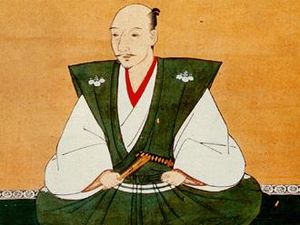
- Oda Chikazane (ca. 12th century)
- Oda NobuhideOda Nobuhidewas a warlord and magistrate of lower Owari Province during the Sengoku period of Japan. His father was Oda Nobusada and Nobuhide was the father of Oda Nobunaga.-Ruling the clan:...
(1510–1551) - Oda NobuhiroOda Nobuhirowas the eldest son of Oda Nobuhide. After Nobuhiro's father took Anjo Castle in Mikawa Province in 1540, the castle was given to Nobuhiro. During 1549, Nobuhiro was trapped by the Imagawa clan, but was saved when the Oda clan handed over one of their hostages—Matsudaira Takechiyo, later known...
(died 1574) - Oda NobunagaOda Nobunagawas the initiator of the unification of Japan under the shogunate in the late 16th century, which ruled Japan until the Meiji Restoration in 1868. He was also a major daimyo during the Sengoku period of Japanese history. His opus was continued, completed and finalized by his successors Toyotomi...
(1534–1582) - Oda NobuyukiOda Nobuyukiwas the son of Oda Nobuhide, and younger brother of Oda Nobunaga in the earlier years of the Sengoku period of the 16th century of Japan.Nobuyuki conspired against his brother Nobunaga with the Hayashi and Shibata families. Nobuyuki's Suemori Castle was reduced by Ikeda Nobuteru. Though Hayashi and...
(1536–1557) - Oda NobukaneOda Nobukanewas a Japanese samurai, the younger brother of the supremely famous warlord, Oda Nobunaga following the Sengoku period of the 16th century. Following the year of 1568, Nobukane was destined to be adopted into the Nagao. Nobukane afterwards shaved his head following the year of 1594 and enjoyed his...
(1548–1614) - Oda NagamasuOda Nagamasuwas a Japanese daimyo who lived from the late Sengoku period through the early Edo period. Also known as Urakusai , he was a brother of Oda Nobunaga. Nagamasu converted to Christianity in 1588 and took the baptismal name of John....
(1548–1622) - Oda NobuharuOda Nobuharuwas a Japanese samurai of the Sengoku period, who served the Oda clan. Nobuharu was the younger brother of Oda Nobunaga. Nobunaga granted him Nobu Castle and its surroundings as a private fief...
(1549–1570) - Oda NobutsumiOda Nobutsumiwas a Japanese Ninja and member of the main Oda clan of Owari Province during the Sengoku and Azuchi-Momoyama periods. Nobusumi was the son of Oda Nobuyuki, thus making the famed Oda Nobunaga his uncle...
(1555–1583) - Oda NobutadaOda Nobutadawas the eldest son of Oda Nobunaga, and a samurai who fought in many battles during the Sengoku period. He commanded armies under his father in battles against Matsunaga Hisahide and against the Takeda clan....
(1557–1582) - Oda NobutakaOda Nobutakawas a samurai and member of Oda clan. He was adopted as the head of Kanbe clan that ruled the middle region of Ise Province and was also called Kanbe Nobutaka ....
(1558–1583) - Oda NobukatsuOda Nobukatsuwas a Japanese samurai of the Azuchi-Momoyama period. He was the second son of Oda Nobunaga. He survived the decline of the Oda clan from political prominence, becoming a daimyo in the early Edo period.-Kitabatake clan:...
(1558–1630) - Oda HidekatsuOda Hidekatsuwas a Japanese samurai who was the fourth son of the famed feudal warlord Oda Nobunaga and was adopted by Toyotomi Hideyoshi at a young age. His original name was ....
(1567–1593) - Oda KatsunagaOda Katsunagawas a Japanese samurai of the Sengoku period through early Azuchi-Momoyama Period, who was the fifth son of Oda Nobunaga. Though he was a potential heir for Oda family headship, Katsunaga was ordered to be taken in by his aunt at Iwamura Castle at an exceedingly young age...
(1568–1582) - Oda Hideo/Hidekatsu (1573–1610)
- Oda HidenobuOda Hidenobuwas the son of Oda Nobutada and lived during the Azuchi-Momoyama period in the late-16th century. His other name was Sanpōshi .-Succession dispute:...
(1580–1605) - Oda NobutoshiOda NobutoshiViscount was a daimyo of the tozama feudal domain of Tendō, in Dewa province, northern Japan. He was a direct descendant of the famed Oda Nobunaga, through Nobunaga's son Oda Nobukatsu. He had the ceremonial court titles of junsammi and Hyōbu-taifu.-Biography:Nobutoshi was born at Tendō Domain's...
(1853–1901) - Oda EiichiroEiichiro Odais a Japanese manga artist, best known as the creator of One Piece.-Early life:As a child, Oda was inspired by Akira Toriyama's works and aspired to become a manga artist. He recalls that his interest in pirates was probably sparked by the popular TV animation series titled Vicky the Viking...
(born 1975) - Oda NobunariNobunari Odais a Japanese figure skater. He is the 2006 Four Continents Champion, the 2009–2010 and 2010–2011 Grand Prix Final silver medalist, the 2005 World Junior Champion and the 2008 Japanese National Champion.- Personal life :...
(born 1987)
Senior retainer families
- Shibata clanShibata clanThe Shibata clan a Japanese clan that had originated during the Heian period of Japan. The Shibata clan of Echigo province were notably related to that of the Shibata clan of Owari province. The Shibata clan of Echigo were descended from Sasaki Moritsuna, a supporter of Minamoto no Yoritomo and a...
- Niwa clanNiwa clanThe ' was a Japanese samurai clan which rose to prominence in the Sengoku period. Its members claimed descent from the medieval Kodama family. Famous clan members included Oda Nobunaga's senior retainer Niwa Nagahide, as well as Nagahide's 19th century descendants Niwa Nagatomi, Niwa Nagakuni, and...
- Hashiba clanToyotomi clanOriginating in Owari Province, the served as retainers to the Oda clan throughout 16th-century Japan's Sengoku period. -Unity and Conflict:The most influential figure within the Toyotomi was Toyotomi Hideyoshi, one of the three "unifiers of Japan." Oda Nobunaga was another primary unifier and the...
- Akechi clanAkechi clanThe is a branch of the Toki clan, which is descended from the Seiwa Genji. The Akechi clan thrived around the later part of the Sengoku period of the 16th century. The Akechi became the head , soryo of the Toki after the Toki fell to the Saitō clan in 1540. The Akechi denied to be under Saito ...
- Sakuma clan
- Fuwa clanFuwa clanThe was a Japanese clan which claimed descent from the Fujiwara. In the Sengoku era, its family members served as retainers to the Oda clan....
- Hayashi clanHayashi clan (Owari)The was a Japanese samurai clan which served as retainers to the Oda clan; one famous figure, Hayashi Hidesada, was a senior retainer of Oda Nobunaga. The family originated in the village of Oki Village in the Kasugai District of Owari Province...
- Hirate clan
- Maeda clanMaeda clanThe was a branch of the Sugawara clan who descended from Sugawara no Kiyotomo and Sugawara no Michizane in the eighth and ninth centuries. It was one of the most powerful samurai families in Japan and they were second only to the Tokugawa clan in rice production and fief size...
- Sassa clan
- Takigawa clan
- Tokugawa clanTokugawa clanThe was a powerful daimyo family of Japan. They nominally descended from Emperor Seiwa and were a branch of the Minamoto clan by the Nitta clan. However, the early history of this clan remains a mystery.-History:...
Nobunaga's notable retainers
In Owari Province- Hirate MasahideHirate Masahidewas a Japanese samurai who served the Oda clan for two generations. His original name was .Masahide first served Oda Nobuhide.He was talented not only as a samurai but also in various arts like sado and waka, and this helped him to act as a skilled diplomat, dealing with Ashikaga shogunate and...
- Hayashi HidesadaHayashi Hidesadawas a Japanese samurai and retainer of Oda clan, who lived during the Sengoku period. He was also known as . His tsūshō was , and his court title was Sado no Kami.-Biography:...
- Naitō Shōsuke
- Sakuma NobumoriSakuma Nobumoriwas a retainer for the Oda clan. Nobumori's banishment by Oda Nobunaga to Mount Koyasan has widely been regarded as symbolic of Nobunaga's ruthlessness against even his longest-serving retainers, highlighting the leader's shortcomings as a military commander....
- Murai SadakatsuMurai Sadakatsuwas a Japanese samurai of the Sengoku period through early Azuchi-Momoyama period, who served the Oda clan. He was active in the Oda clan's administration in Kyoto.Sadakatsu died in 1582, during the Incident at Honnō-ji.-References:...
- Hasegawa Hidekazu
- Niwa NagahideNiwa Nagahide, also known as Gorōzaemon , was a Japanese samurai of the Sengoku through Azuchi-Momoyama periods of the 16th century. He served as a retainer to the Oda clan, and was eventually a daimyo in his own right....
- Shibata KatsuieShibata Katsuieor was a Japanese military commander during the Sengoku Period who served Oda Nobunaga.-Biography:Katsuie was born in the Shibata family, a branch of the Shiba clan . Note the differences between , , and the .Katsuie was the retainer of Oda Nobukatsu...
- Kawajiri HidetakaKawajiri Hidetakawas a Japanese samurai of the Sengoku period, who served the Oda clan....
- Sakai MasahisaSakai Masahisawas a Japanese samurai of the Sengoku Period, who most notably served the Oda clan. He was born in Mino Province, and first served the Saitō clan. After the fall of the Saitō, he was taken on as a retainer by Oda Nobunaga. He was particularly active during the time of Oda Nobunaga's entry into Kyoto...
- Harada NaomasaHarada Naomasawas a samurai retainer of the Oda clan. He was also called and was referred by the title of . Initially he had the family name of , but on 1575 received the name of a respected clan, Harada which he took as his own....
- Mori YoshinariMori Yoshinariwas a Japanese samurai of the Sengoku period and the head of the Mori family, who served the Saitō clan. The Saitō were the lords of the Mino province. When the Saitō clan were overthrown by the Oda clan Yoshinari and his family became retainers of Oda Nobunaga....
- Takigawa KazumasuTakigawa Kazumasu, also known as Sakonshōgen , was a samurai retainer to Oda Nobunaga, and later Toyotomi Hideyoshi, during Japan's Sengoku period. His biological son, Toshimasu, was adopted by Maeda Toshihisa and later served Nobunaga alongside Kazumasu and Toshimasu's adopted uncle, Maeda Toshiie.Originally from...
- Mizuno NobumotoMizuno Nobumotowas a daimyo of Japan's Sengoku period. A son of Mizuno Tadamasa, and brother of Mizuno Tadashige, he was the lord of Kariya Castle.Nobumoto sided with Oda Nobuhide in 1542, having switched his allegiance from the Imagawa family, but soon changing sides once more, to serve under the Matsudaira...
- Toyotomi HideyoshiToyotomi Hideyoshiwas a daimyo warrior, general and politician of the Sengoku period. He unified the political factions of Japan. He succeeded his former liege lord, Oda Nobunaga, and brought an end to the Sengoku period. The period of his rule is often called the Momoyama period, named after Hideyoshi's castle...
- Hori HidemasaHori Hidemasa, also known as Hori Kyūtarō , was a samurai retainer of Oda Nobunaga and Toyotomi Hideyoshi during Japan's Sengoku period. He was one of Hideyoshi's greatest generals, and commanded his forces in several of his most major battles....
- Sassa NarimasaSassa Narimasa, also known as Kura-no-suke , was a Japanese samurai of the Sengoku through Azuchi-Momoyama period. He became a retainer of Oda Nobunaga in 1550 and was granted Etchū Province as a reward for helping Shibata Katsuie fight the Uesugi clan. After Nobunaga's death, in 1584 he joined Tokugawa Ieyasu...
- Maeda ToshiieMaeda Toshiiewas one of the leading generals of Oda Nobunaga following the Sengoku period of the 16th century extending to the Azuchi-Momoyama period. His father was Maeda Toshimasa. He was the fourth of seven brothers. His childhood name was "Inuchiyo" . His preferred weapon was a yari and he was known as...
- Sakuma MorimasaSakuma Morimasawas the son of Sakuma Moritsugu, cousin of Sakuma Nobumori, a prominent Oda retainer to Oda Nobuhide and Oda Nobunaga. He was a retainer of Shibata Katsuie and one of his top generals in many of his campaigns...
- Yamauchi Katsutoyo
- Yanada Masatsuna
- Hachisuka MasakatsuHachisuka Masakatsu, also Hachisuka Koroku , was a daimyo and retainer of Toyotomi Hideyoshi during the Azuchi-Momoyama period of Japanese history. He was the son of Hachisuka Masatoshi....
- Ōta Gyūichi
- Iio Sadamune
- Ikeda TsuneokiIkeda Tsuneoki, also known as Ikeda Nobuteru , was a daimyo and military commander during the Sengoku period and Azuchi-Momoyama period of the 16th century of Japan. He was a retainer of the famous warlords Oda Nobunaga and Toyotomi Hideyoshi. His father was Ikeda Toshitsune, who served Oda Nobuhide...
Others
- Takenaka HanbeiTakenaka Shigeharu, who was also known as Hanbei , was a Japanese samurai during the Sengoku period of the 16th century. He initially served the Saitō clan of Mino province, but later plotted an uprising and took over the Saitō clan's castle at Mount Inaba. Toyotomi Hideyoshi was so impressed by this tactic that he...
- Kuroda Yoshitaka
- Akechi MitsuhideAkechi Mitsuhide, nicknamed Jūbei or called from his clan name and title, was a samurai who lived during the Sengoku period of Feudal Japan.Mitsuhide was a general under daimyo Oda Nobunaga, although he became infamous for his betrayal in 1582, which led to Nobunaga's death at Honno-ji...
- Ujiie Bokuzen
- Inaba Yoshimichi
- Andō MorinariAndo Morinari, also known as ' was renowned for being part of the ' under the Saitō clan during the Sengoku period of Feudal Japan. He served as a head retainer under Saitō Dōsan after Dōsan overthrew Toki Yorinari and became daimyō of Mino Province...
- Matsunaga HisahideMatsunaga HisahideMatsunaga Hisahide was a daimyo of Japan following the Sengoku period of the 16th century.A companion of Miyoshi Chokei, he was a retainer of Miyoshi Masanaga from the 1540s. He directed the conquest of the province of Yamato in the 1560s and by 1564 had built a sufficient power-base to be...
- Kuki YoshitakaKuki Yoshitaka' was a naval commander during Japan's Sengoku Period, under Oda Nobunaga, and later, Toyotomi Hideyoshi.In the 1570s, Kuki allied himself with Oda Nobunaga, and commanded his fleet, supporting land-based attacks on the Ikkō-ikki. In 1574, his aided ensured a victory for Nobunaga in his third...
- Kani SaizōKani Saizo, also known as Kani Yoshinaga , was a Japanese samurai of the late Sengoku era through early Edo era, who served various lords before coming into the service of the Tokugawa clan. Saizō was originally a vassal of the Saitō in Mino province. When Saitō Tatsuoki was defeated by Oda Nobunaga, Saizō...
- Sakuma NobumoriSakuma Nobumoriwas a retainer for the Oda clan. Nobumori's banishment by Oda Nobunaga to Mount Koyasan has widely been regarded as symbolic of Nobunaga's ruthlessness against even his longest-serving retainers, highlighting the leader's shortcomings as a military commander....
- Kanamori NagachikaKanamori Nagachikawas a Japanese samurai who lived from the Sengoku period into the early Edo period. He was the first ruler of the Kanamori clan and served as a retainer of the Oda, Toyotomi, and Tokugawa clans. Later in his life, he also became a daimyo....
- Gamō KatahideGamo Katahidewas a Japanese daimyo of the Sengoku period through Azuchi-Momoyama Periods. Katahide, the eldest son of Gamō Sadahide, was a retainer of the Oda clan. His son, Gamō Ujisato, became daimyo of the Aizu Domain....
- Gamō UjisatoGamo Ujisatowas a Japanese daimyo of the Sengoku and Azuchi-Momoyama periods. The heir and son of Gamō Katahide, lord of Hino Castle in Ōmi Province, he later held Matsusaka and finally Aizuwakamatsu Castle in Mutsu Province...
- Mori RanmaruMori Ranmaru, born Mori Nagasada , was the son of Mori Yoshinari, and had 5 brothers in total, from the province of Mino. He was a member of the Mori Clan, descendants of the Seiwa Genji....
- Asakura KageakiraAsakura Kageakirawas a retainer beneath the clan of Oda throughout the latter Sengoku Period of Feudal Japan....
- Fuwa MitsuharuFuwa Mitsuharuwas a Japanese samurai of the Sengoku through Azuchi-Momoyama period. Originally a retainer of Saitō Dōsan, Mitsuharu went on to serve Oda Nobunaga, receiving a landholding in Echizen Province.-Notes:...
- Araki MurashigeAraki Murashigewas a retainer of Oda Nobunaga, and daimyō of Itami Castle during the late Sengoku period of the 16th century in Japanese history, in what is now Itami city in Hyōgo Prefecture....
- Hirate Kiyohide
- Hosokawa FujitakaHosokawa Fujitakawas a Japanese daimyo of the Sengoku period. Also known as '. Fujitaka was a prominent retainer of the last Ashikaga shoguns. When he joined the Oda, Oda Nobunaga rewarded him with the fief of Tango. His son, Hosokawa Tadaoki, went on to become one of the Oda clan's senior generals.After the...
- Ikeda Nobuteru
- Ikoma IenagaIkoma Ienagawas a Japanese samurai of the Sengoku period through early Edo period, who served the Oda clan. He was the brother of Kitsuno, Oda Nobunaga's concubine.-References:*http://kazusanosukede.gozaru.jp/busyou/toujyoujinbutu-i.htm...
- Maeda Gen'i
- Tokugawa IeyasuTokugawa Ieyasuwas the founder and first shogun of the Tokugawa shogunate of Japan , which ruled from the Battle of Sekigahara in 1600 until the Meiji Restoration in 1868. Ieyasu seized power in 1600, received appointment as shogun in 1603, abdicated from office in 1605, but...
Others (cont.)
- Murai SadakatsuMurai Sadakatsuwas a Japanese samurai of the Sengoku period through early Azuchi-Momoyama period, who served the Oda clan. He was active in the Oda clan's administration in Kyoto.Sadakatsu died in 1582, during the Incident at Honnō-ji.-References:...
- Nakagawa KiyohideNakagawa KiyohideNakagawa Kiyohide was a daimyo in Azuchi-Momoyama period.His childhood name was Nakagawa Toranosuke...
- Takayama Ukon
- Tsutsui JunkeiTsutsui Junkeison of Tsusui Junshō, and a Daimyo of the province of Yamato.Very early on, Junkei had his castle taken away by Matsunaga Hisahide, one of the most powerful warriors of the region in feudal Japan at that time. Later by joining forces of Oda Nobunaga, Junkei defeated Hisahide at Mount Shigi in 1577...
- Wada KoremasaWada Koremasawas a retainer beneath the clan of Oda throughout the latter Sengoku Period of Feudal Japan. Koremasa was the son of Wada Koresuke and directly supported the Ashikaga Shogunate by the time at which he was of eligible age, becoming a primary supporter to Ashikaga Yoshiaki following the murder of...
- Yamouchi Kazutoyo
- Asano NagamasaAsano Nagamasawas the brother-in-law of Toyotomi Hideyoshi and one of his chief advisors. Asano also fought for Hideyoshi in a number of campaigns during the Sengoku period of the 16th century of Japan....
- Hachisuka Hikoemon
- Ishida MitsunariIshida MitsunariIshida Mitsunari was a samurai who led the Western army in the Battle of Sekigahara following the Azuchi-Momoyama period of the 17th century. Also known by his court title, Jibunoshō...
- Murai Nagato
- Tsutsui JunkeiTsutsui Junkeison of Tsusui Junshō, and a Daimyo of the province of Yamato.Very early on, Junkei had his castle taken away by Matsunaga Hisahide, one of the most powerful warriors of the region in feudal Japan at that time. Later by joining forces of Oda Nobunaga, Junkei defeated Hisahide at Mount Shigi in 1577...
- Kuroda KanbeiKuroda Kanbei, other name Kuroda Kanbei , was a Japanese daimyo of the late Sengoku through early Edo periods. Renowned as a man of great ambition, he was a chief strategist under Toyotomi Hideyoshi.-Early Life:...
- Yamanuchi Katsutoyo
- Horio MosukeHorio MosukeHorio Mosuke was an officer and retainer of the Toyotomi clan. After wrestling a wild boar at a young age, he was taken into Toyotomi Hideyoshi's service for the deed. At the Battle of Shizugatake in 1583, he killed Saito Toshikazu after a failed attempt by him to scroll past Hideyoshi's lines....
- Kitabatake Toshikatsu
- Maeno Suemon
- Tōdō TakatoraTodo Takatorawas a Japanese daimyo of the Azuchi-Momoyama period through Edo period. He rose from relatively humble origins as an ashigaru to become a daimyo...
- Akada Shigeyoshi
- Akada Shigetaka
- Aochi ShigetsunaAochi Shigetsunawas a retainer beneath the clan of Oda throughout the latter Sengoku Period of Feudal Japan. Shigetsuna was the legitimate second son of Gamō Sadahide and was later adopted by Aochi Nagatsuna, a daimyo who held residence in the Kurita District of Omi province. Around the year of 1569 Shigetsuna...
- Atagi NobuyasuAtagi Nobuyasuwas a Japanese samurai of the Sengoku period. He was the nephew of Miyoshi Chōkei.-References:*This article was compiled using corresponding content on the Japanese Wikipedia....
- Chō TsuratatsuCho Tsuratatsuwas a Japanese samurai of the late Sengoku period to early Edo period, who served the Hatakeyama clan, Oda clan, and then the Maeda clan of the Kaga Domain.-Biography:...
Others (cont.)
- Endo Taneshige
- Fukutomi Hidekatsu
- Goto Takaharu
- Hachiya YoritakaHachiya Yoritakawas a Japanese samurai of the Sengoku period who served the Oda clan....
- Hatakeyama Sadamasa
- Hayashi Shinjiro
- Hirate Norihide
- Horiuchi Ujiyoshi
- Ikai Nobusada
- Inaba Masashige
- Kaganoi ShigemochiKaganoi Shigemochiwas a Japanese samurai of the Azuchi-Momoyama period, who served the Oda clan. He ruled Kaganoi Castle. During the Battle of Komaki and Nagakute, Shigemochi fought under his father Shigemune, who was attached to the forces of Oda Nobukatsu...
- Kanemitsu Masayoshi
- Katō YoshiakiKato Yoshiakiwas a Japanese daimyo of the late Sengoku Period to early Edo Period who served as lord of the Aizu Domain. A retainer of Toyotomi Hideyoshi, he fought in the battle of Shizugatake in 1583, and soon became known as one of the shichi-hon-yari , or Seven Spears of Shizugatake, Hideyoshi's seven most...
- Kawajiri HidetakaKawajiri Hidetakawas a Japanese samurai of the Sengoku period, who served the Oda clan....
- Kotsokuri Tomomasa
- Kyogoku TakatsuguKyōgoku Takatsuguwas a daimyo of Omi Province and Wakasa Province during the late-Sengoku Period of Japan's history.Takatsugu is recognized as the founder of the modern Kyōgoku clan. His forebears had been powerful since the 13th century, but their fortunes had waned after the Ōnin War...
- Maeba YoshitsuguMaeba Yoshitsuguwas a retainer beneath the clan of Asakura throughout the late Sengoku period of Feudal Japan. He was also known as Katsurada Nagatoshi ....
- Maeda Toshiharu
- Maeno NagayasuMaeno Nagayasuwas a Japanese samurai of the 16th century. Also known as Shōemon , he served Toyotomi Hideyoshi.-References:*, samurai-archives.com...
- Mikumo Shigemochi
Clan castles
Castles of Residence- Nagoya CastleNagoya Castleis a Japanese castle located in Nagoya, central Japan. During the Edo period, Nagoya Castle was the center of one of the most important castle towns in Japan—Nagoya-juku— and it included the most important stops along the Minoji, which linked the Tōkaidō with the Nakasendō.-History:In...
- Kiyosu CastleKiyosu Castleis a castle that acted as a base of operations for Oda Nobunaga during the latter half of the Sengoku period of feudal Japan. It is located in the city of Kiyosu, Aichi Prefecture, Japan....
- Komakiyama Castle
- Gifu CastleGifu Castleis a castle located in the city of Gifu, Gifu Prefecture, Japan. Along with Mount Kinka and the Nagara River, it is one of the main symbols of the city.-History:Gifu Castle was first built by the Nikaidō clan between 1201 and 1204 during the Kamakura Period....
- Azuchi CastleAzuchi Castle' was one of the primary castles of Oda Nobunaga. It was built from 1576 to 1579, on the shores of Lake Biwa, in Ōmi Province. Nobunaga intentionally built it close enough to Kyoto that he could watch over and guard the approaches to the capital, but, being outside the city, his fortress would be...
Minor Castles
- Narumi Castle
- Tsu Castle
- Iwamura CastleIwamura Castlewas located in the southeastern area of Mino Province in Japan. Its ruins can be found in the modern-day town of Iwamura in Ena District, Gifu Prefecture.-History:...
- Nagahama CastleNagahama Castleis a hirashiro located in Nagahama, Shiga Prefecture, Japan.-History:Nagahama Castle was built in 1575-1576 by Hashiba Hideyoshi in the village then called Kunitomo, renaming the area Nagahama. Previously, he had ruled from Odani Castle, though found this hard to do as it was a yamashiro...
.jpg)