

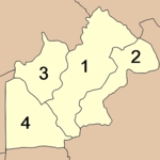
Nakhon Nayok Province

Encyclopedia
Nakhon Nayok is one of the central provinces
(changwat) of Thailand
. Neighboring provinces are (from north clockwise) Saraburi
, Nakhon Ratchasima
, Prachinburi
, Chachoengsao
and Pathum Thani.
Nakhon Nayok is renowned for its refreshing waterfalls and abundant varieties of fruits.
word Nagara (Devanagari
: नगर) meaning city
, and the word Nayok is sometimes described to be derive from Sanskrit Nāyaka (Devanagari
: नायक) meaning leader or captain. However in this connection, na means "[tax of] rice field" and yok means "exempted". Hence the name of the province literally means City of Tax-Free.
, the southern prolongation of the Dong Phaya Yen mountain range
, with the highest elevation the 1292 meter high Yod Khao Kiew. Most of that area is covered by the Khao Yai National Park
. The central part of the province however is a rather flat river plain formed by the Nakhon Nayok River
. The southern part of the province has relatively unfertile acidic soil.
The main river of the province is the Nakhon Nayok River. It joins the Prachinburi River at Pak Nam Yothaka in Amphoe Ban Sang
, Prachinburi province, which then becomes the Bang Pa Kong River
.
Wang Takhrai is a botanical garden belonging to the Chumphot - Phanthip Foundation. Located at the Wang Takhrai waterfall it is a popular place for tourists to visit. Several other waterfalls within the province are well-known as touristical targets - Nangrong and the nine-leveled Sarika waterfall are located within the Khao Yai NP, and also the Lan Rak (or Tat Hin Kong) waterfall.
 The city of Nakhon Nayok dates back to the Dvaravati
kingdom, probably founded in the 11th century. Ruins from this time are visible at Mueang Boran Dong Lakhon south of the modern city. Originally named Mueang
Lablae, the name Nakhon Nayok was assigned to it in 1350, when it became a garrison town of the Ayutthaya kingdom
protecting the eastern boundary.
January 1, 1943 the government downgraded Nakhon Nayok Province and combined it with Prachinburi Province
, except Ban Na district
which became part of Saraburi Province
. On May 9, 1946 the province was re-established.
seal shows an elephant holding an ear of rice with its trunk. This symbolizes the fertile rice fields as well as the forests with numerous elephants. In the background two piles of straw, trees and clouds symbolize the natural beauty of the province.
Provincial flower and tree is the Silk-Cotton Tree (Cochlospermum religiosum).
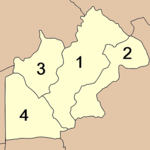 The province is subdivided into 4 districts (Amphoe
). The districts are further subdivided into 41 subdistricts (tambon
) and 403 villages (muban
).
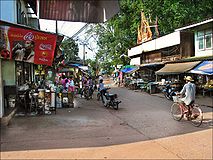 San Lak Mueang (City Pillar Shrine) (ศาลหลักเมือง) at one time it was a shrine housing a 1-metre wooden column topped with a carving in the form of a lotus bud, situated near the Old City Wall. Later the shrine was rebuilt into an elegant four-cornered pavilion. Nowadays, City Pillar Shrine is the most revered shrine of the townspeople.
Chulachomklao Royal Military Academy (โรงเรียนนายร้อยพระจุลจอมเกล้า) It is a training centre for the Thai military cadet. There are several interesting attractions in the Academy compound, which can be accessed by car.
Attractions in the Chulachomkloa Royal Military Academy include:
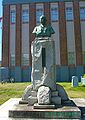
King Rama V Monument (พระบรมราชานุเสาวรีย์พระบาทสมเด็จพระจุลจอมเกล้าเจ้าอยู่หัว) It was built in honour of and reverence to His Majesty King Chulalongkorn (King Rama V) who was the founder of the Chulachomklao Royal Military Academy.
Circular Pavilion (ศาลาวงกลม), historically, under the command of Field Marshal Crown Prince Pitsanulok Prachanat, the circular pavilion was built as a recreation area for the military cadet. It enshrines a sculpture of King Rama V.
100 Year Royal Military Academy Museum (อาคารพิพิธภัณฑ์โรงเรียนนายร้อย จปร. 100 ปี) exhibits biographies of the graduates who performed public services and also displays history of wars, weapons that were used in wars in the past, various uniforms of soldiers of all forces as well as a wax sculpture of King Rama V.
Shrine of Chao Pho Khun Dan (ศาลเจ้าพ่อขุนด่าน) is a revered shrine of the Thais. Historically, Khun Dan was a commander in Nakhon Nayok during the Ayutthaya period. His heroic deed was the expulsion of the Khmer rebels in the year 1587, during the reign of King Naresuan Maharat.
Phra Phutthachai or Wat Phra Chai (พระพุทธฉายหรือวัดพระฉาย) was formerly named “Wat Khao Cha-ngok”. In the year of 1942, the Army’s Map Department built a marble quarry at the foot of the hill and restored and enhanced the Buddha images. Phra Phutthachai is sacred to the townspeople.
Luang Pho Sian Nakhon (หลวงพ่อเศียรนคร) the revered Buddha image of the townspeople is enshrined at Bunnak Rakkitaram temple (Wat Tam). It is assumed that this sacred Buddha image dates back to Phra Ruang Era of the Sukhothai period.
Lord Buddha’s Footprint Replica at Khao Nang Buat (รอยพระพุทธบาทจำลองเขานางบวช), housed in a square structure with four arches and a pyramidal roof (mondop) on top of Nang Buat hill. The festivity to worship the Lord Buddha’s Footprint Replica at Khao Nang Buat is held annually in the middle of the fifth month of the lunar calendar.
Ban Dong Lakhon Archeological Site (แหล่งโบราณคดีบ้านดงละคร) It is the site of the location of the old town during the Khmer period. Artefacts discovered in this are include; an elaborate gold head of a Buddha image about the size of a fingertip, crab and elephant ring-stamps, bronze ring, glass beads, rock beads, and bronze ear-rings.
37th Quartermaster Infantry of Japanese Military Memorial (อนุสรณ์สถานกองพลทหารญี่ปุ่นที่37) The Friend of Asian Alliance War Association built the memorial in 1992 to honour the 7,920 Thai soldiers who were recruited into the Japanese 37th Quartermaster Infantry that died in the war.
Namtok Sarika (น้ำตกสาริกา) is the most famous waterfall of Nakhon Nayok. The waterfall cascades down in 9 levels, of which the top level is 200 metres up. Each level (of 9 levels) of the falls has a large basin, which could hold a large amount of water in the rainy season, but it is dried up in dry season. Nearby, there is “Sarika Cave” where the revered monk “Luang Pu Man” resided on his religious missions from 1917-1920.
Lan Rak Falls or Tat Hin Kong Falls (น้ำตกลานรักหรือน้ำตกตาดหินกอง) The attractive waterfall originates from a small stream passing through a large rocky formation at the end, then flowing strongly through the large rocky formation at the foot of a small hill.
Wang Takhrai (วังตะไคร้) is filled with huge, shady trees and has a small stream running through. There are also a variety of beautiful species of ornamental flowers and plants.
Nang Rong Falls or Namtok Nang Rong (น้ำตกนางรอง) The waterfall originates from a source on a high mountain in Khao Yai National Park. It cascades down several levels onto rock formations, flowing through verdant forests
Huai Prue Reservoir (อ่างเก็บน้ำห้วยปรือ) This is a small reservoir by volume but has a large water surface. The reservoir is filled all year round and surrounded by an unpaved road.
Sai Thong Reservoir (อ่างเก็บน้ำทรายทอง) This small reservoir offers a natural mountainous landscape. The small waterfall runs all throughout the year.
OUT-OF CITY ATTRACTIONS
Amphoe Ban Na
Namtok Ka-ang (น้ำตกกะอาง) The water cascades through gaps between large rocks. Nearby, there is an Agriculture Transplanting station of the Forestry Department. In the vicinity is a small hill that enshrines the Buddha image in an attitude of subduing Mara.
Namtok Wang Muang (น้ำตกวังม่วง) The waterfall features cascades through lines upon lines of big boulders and falling to a basin.
Thudongkhasathan Thawon Nimit (ธุดงคสถานถาวรนิมิตร) is a meditation centre of monks, novices, nuns, and the general public. There are hundreds of shelters for monks, nuns, and general public to practice the Buddhist perceptions.
Namtok Heo Narok (น้ำตกเหวนรก) This is a 3-tiered large waterfall with its first tier at 60 metres high. During the rainy season, there is such a lot of water that the flow is frightening and will drop straight down at 90 degrees to a lower chasm.
Chao Pho Ongkharak Shrine (ศาลเจ้าพ่อองครักษ์) In front of the shrine in the middle of the Nakhon Nayok river, there is a sacred whirlpool, of which the water taken is used in royal ceremonies. When the present king, King Bhumibol Adulyadej ascended to the throne, water from this whirlpool was used during the ceremony.
Ornamental Plants and Floral Centre (ศูนย์ไม้ดอกไม้ประดับ) On this road, especially at the intersection of khlong 15, there are various plant nurseries that grow a large variety of ornamental plants and flora which are sold to every corner of the country.
Mountain Bikes (จักรยานเสือภูเขา) is another activity as popular as canoeing. This activity can be taken up all year round.
Khao Yai-Nakhon Nayok Jungle Treks (ท่องไพรเขาใหญ่-นครนายก) is usually held during December to June. The trekking aims to promote the study of nature and ecology, as well as creating good understanding in natural resources and environmental conservation.
Khao Yai National Park, the first national park of Thailand was declared a national park on September 18, 1962. It covers areas of four provinces: Nakhon Nayok, Nakhon Ratchasima, Prachin Buri, and Saraburi. The park occupies an area of 2,168 square kilometers and consists of virgin forest, tropical forest, streams, waterfalls, wildlife, and a variety of plants. The most suitable visiting time is during the Thai winter, from October to February when it is cold at night until the next morning. The highest point is Khao Rom Peak, which is 1,351 metres above sea level.
Dala (ดอกดาหลา) is a flower of Etlingera or Jack Jr. Rosemary. Along Highway Number 3049 as well as the route to Wang Ri Resort, a number of Dala orchards can be found. For your own try at flower cutting and a direct purchase of flowers from the orchards is possible at Suan Dala Saeng Thong. The Dala’s blooming season is from November to May.
Marble Products (ผลิตภัณฑ์หินอ่อน): A marble quarry is located near Nakhon Nayok hospital, Amphoe Mueang, and at the intersection to Chulachomklao Royal Military Academy.
Bamboo Products (ผลิตภัณฑ์จากไม้ไผ่) Bamboo products are produced in Tambon Sarika, Amphoe Mueang. Products include a miniature sail boat, a peacock, and human faces.
Brooms (ไม้กวาด) Manufactured in Tambon Sarika, Amphoe Mueang, Tambon Na Hin Lat, Tambon Khok Kruat, Tambon Nong Saeng, Amphoe Pak Phli. The brooms are made with indigenous grass and the broomstick is made from a piece of wood from a tree of the Apocynaceae family or made of bamboo. It can be found throughout the province.
Doormats made from scrap cloth (พรมทอจากเศษผ้า) are produced in Tambon Khao Phoem, Amphoe Ban Na. The scrap cloth, also made into bed covers, are sold in various sizes at furniture stalls of Ban Na market and Amphoe Mueang.
Khanom Pia (ขนมเปี๊ยะ) is made at Amphoe Ban Na. It was so good that it received the “Shell Chuan Chim” mark, a guarantee of a good taste
Sugared Banana Chips (Kluai Chap) (กล้วยฉาบ) and sugared sweet potato and sugared taro chips are produced in Tambon Sarika, Amphoe Mueang.
Preserved Fruits (ผลไม้แช่อิ่ม) such as star apples, tamarinds, mangos, santol, and lime. They are sold at the Ban Yai intersection, Amphoe Mueang or Dong Chok Di Housewife Association at Ban Dong, Tambon Sarika, Amphoe Mueang. The supply of fruits comes from fruit orchards of the members; some of the cultivated fruits are sold fresh while others are converted into various products.
Sweet Plum Mango and Nakhon Nayok Products Fair (งานวันมะปรางหวานและของดีนครนายก) takes place annually during February–April in front of the City Hall. It is held to promote Ma-prang (sweet plum mangoes), and other agricultural products and handicrafts
Thai Merit Making (Sat Thai) & Long boat Racing Festival (งานประเพณีสารทไทยและแข่งเรือยาวประเพณี) is annually held in October along Khlong 29 at Wat Thawiphon Rangsan, Amphoe Ongkharak. The fair showcases a variety of long boats racing, making Krayasat contest (Krayasat is a sticky paste made from rice, bean, sesame, and sugar, usually eaten during Sat Thai Festival), merit making on Sat Thai day, and local entertainment at night.
Ongkharak Ornamental Plants and Flowers Fair (งานมหกรรมไม้ดอกไม้ประดับองครักษ์) is annually held in April at Khlong 15, Tambon Bang Pla Kot, Amphoe Ongkharak. The contests of ornamental plants and flowers, mini-garden arrangement contests, and an academic exhibition regarding plants and flowers are also held.
Provinces of Thailand
Thailand is divided into 76 provinces , which are geographically grouped into 6 regions. The capital Bangkok is not a province but a special administrative area and is included as the 77th province since it is administered at the same level as the other 76 provinces. The name of the provinces are...
(changwat) of Thailand
Thailand
Thailand , officially the Kingdom of Thailand , formerly known as Siam , is a country located at the centre of the Indochina peninsula and Southeast Asia. It is bordered to the north by Burma and Laos, to the east by Laos and Cambodia, to the south by the Gulf of Thailand and Malaysia, and to the...
. Neighboring provinces are (from north clockwise) Saraburi
Saraburi Province
Saraburi is one of the central provinces of Thailand. Neighboring provinces are Lopburi, Nakhon Ratchasima, Nakhon Nayok, Pathum Thani and Ayutthaya. Saraburi has been an important town since ancient times...
, Nakhon Ratchasima
Nakhon Ratchasima Province
Nakhon Ratchasima or , often shortened to Korat or Khorat , is one of the north-eastern provinces of Thailand...
, Prachinburi
Prachinburi Province
Prachin Buri is a province of Thailand. Neighboring provinces are Nakhon Ratchasima, Sa Kaeo, Chachoengsao and Nakhon Nayok.-Geography:...
, Chachoengsao
Chachoengsao Province
Chachoengsao is a province of Thailand. Neighboring provinces are Prachin Buri, Sa Kaeo, Chanthaburi, Chon Buri, Samut Prakan, Bangkok, Pathum Thani and Nakhon Nayok. It also has a short coast to the Gulf of Thailand.-History:Chachoengsao or Paet Rio is a province in the Central region...
and Pathum Thani.
Nakhon Nayok is renowned for its refreshing waterfalls and abundant varieties of fruits.
Etymology
The word Nakhon originates from the SanskritSanskrit
Sanskrit , is a historical Indo-Aryan language and the primary liturgical language of Hinduism, Jainism and Buddhism.Buddhism: besides Pali, see Buddhist Hybrid Sanskrit Today, it is listed as one of the 22 scheduled languages of India and is an official language of the state of Uttarakhand...
word Nagara (Devanagari
Devanagari
Devanagari |deva]]" and "nāgarī" ), also called Nagari , is an abugida alphabet of India and Nepal...
: नगर) meaning city
City
A city is a relatively large and permanent settlement. Although there is no agreement on how a city is distinguished from a town within general English language meanings, many cities have a particular administrative, legal, or historical status based on local law.For example, in the U.S...
, and the word Nayok is sometimes described to be derive from Sanskrit Nāyaka (Devanagari
Devanagari
Devanagari |deva]]" and "nāgarī" ), also called Nagari , is an abugida alphabet of India and Nepal...
: नायक) meaning leader or captain. However in this connection, na means "[tax of] rice field" and yok means "exempted". Hence the name of the province literally means City of Tax-Free.
Geography
The northern part of the province is located in the Sankambeng RangeSankambeng Range
The Sankamphaeng Range, also Sankambeng Range or Sungumpang Range is one of the mountain ranges separating Eastern Thailand from the northeast or Isan.-Description:This mountain chain runs in a WNW-ESE direction...
, the southern prolongation of the Dong Phaya Yen mountain range
Dong Phaya Yen mountains
Dong Phaya Yen is a mountain range in central Thailand.-Description:Dong Phaya Yen is the southeastern extension of the Phetchabun mountains, dividing the Chao Phraya river valley of Central Thailand and the Khorat Plateau of the northeast...
, with the highest elevation the 1292 meter high Yod Khao Kiew. Most of that area is covered by the Khao Yai National Park
Khao Yai National Park
Khao Yai National Park is a national park in Thailand.-Description:Khao Yai National Park is situated in the Sankamphaeng Mountain Range, the southern prolongation of the Dong Phaya Yen Mountains, at the southwestern boundary of the Khorat Plateau....
. The central part of the province however is a rather flat river plain formed by the Nakhon Nayok River
Nakhon Nayok River
The Nakhon Nayok River originates in the Khao Yai National park. It flows heading to Southwest, passes the districts Mueang Nakhon Nayok, Ban Na and Ongkharak of Nakhon Nayok Province. It then joins the Prachin Buri River to become the Bang Pakong River in Ban Sang district, Prachinburi Province...
. The southern part of the province has relatively unfertile acidic soil.
The main river of the province is the Nakhon Nayok River. It joins the Prachinburi River at Pak Nam Yothaka in Amphoe Ban Sang
Amphoe Ban Sang
Ban Sang is the westernmost district of Prachinburi Province, central Thailand.-History:In the past the area of he district was dense forest with many wild elephants. Laotians from Vientiane moved to settle their village in the area, which they named Ban Chang...
, Prachinburi province, which then becomes the Bang Pa Kong River
Bang Pa Kong River
The Bang Pakong is a river in east Thailand. The river originates at the confluence of the Nakhon Nayok River and the Prachinburi River at Pak Nam Yothaka in Amphoe Ban Sang, Prachinburi Province. It empties into the Gulf of Thailand in the northeastern tip of the Bay of Bangkok. The watershed of...
.
Wang Takhrai is a botanical garden belonging to the Chumphot - Phanthip Foundation. Located at the Wang Takhrai waterfall it is a popular place for tourists to visit. Several other waterfalls within the province are well-known as touristical targets - Nangrong and the nine-leveled Sarika waterfall are located within the Khao Yai NP, and also the Lan Rak (or Tat Hin Kong) waterfall.
History
Dvaravati
The Dvaravati period lasted from the 6th to the 13th centuries. Dvaravati refers to both a culture and a disparate conglomerate of principalities.- History :...
kingdom, probably founded in the 11th century. Ruins from this time are visible at Mueang Boran Dong Lakhon south of the modern city. Originally named Mueang
Mueang
Mueang were historical semi-independent city-states or principalities in present-day Thailand, Laos, parts of northern Vietnam and the Shan State of Myanmar. Smaller Mueang were subordinate to more powerful neighboring Mueang, which in turn were subordinate to the central king, as described in...
Lablae, the name Nakhon Nayok was assigned to it in 1350, when it became a garrison town of the Ayutthaya kingdom
Ayutthaya kingdom
Ayutthaya was a Siamese kingdom that existed from 1350 to 1767. Ayutthaya was friendly towards foreign traders, including the Chinese, Vietnamese , Indians, Japanese and Persians, and later the Portuguese, Spanish, Dutch and French, permitting them to set up villages outside the walls of the...
protecting the eastern boundary.
January 1, 1943 the government downgraded Nakhon Nayok Province and combined it with Prachinburi Province
Prachinburi Province
Prachin Buri is a province of Thailand. Neighboring provinces are Nakhon Ratchasima, Sa Kaeo, Chachoengsao and Nakhon Nayok.-Geography:...
, except Ban Na district
Amphoe Ban Na
Ban Na is a district in the western part of Nakhon Nayok Province, central Thailand.-History:In the Ayutthaya era, people in a village of Tambon Pa Kha were elephant catchers , catching wild elephants to use as war elephants....
which became part of Saraburi Province
Saraburi Province
Saraburi is one of the central provinces of Thailand. Neighboring provinces are Lopburi, Nakhon Ratchasima, Nakhon Nayok, Pathum Thani and Ayutthaya. Saraburi has been an important town since ancient times...
. On May 9, 1946 the province was re-established.
Symbols
The provincialSeals of The Provinces of Thailand
-Present-day provinces of Thailand:This list includes all the seals of the Provinces of Thailand. It also includes the special administrative area of the capital, Bangkok.-Former Provinces:-External links:*...
seal shows an elephant holding an ear of rice with its trunk. This symbolizes the fertile rice fields as well as the forests with numerous elephants. In the background two piles of straw, trees and clouds symbolize the natural beauty of the province.
Provincial flower and tree is the Silk-Cotton Tree (Cochlospermum religiosum).
Administrative divisions
Amphoe
An amphoe is the second level administrative subdivision of Thailand. Usually translated as district, amphoe make up the provinces, and are analogous to a county seat...
). The districts are further subdivided into 41 subdistricts (tambon
Tambon
Tambon is a local government unit in Thailand. Below district and province , they form the third administrative subdivision level. As of the 2009 there are 7255 tambon, not including the 169 khwaeng of Bangkok, which are set at the same administrative level, thus every district contains 8-10 tambon...
) and 403 villages (muban
Muban
Muban is the lowest administrative subdivision of Thailand. Usually translated as village, they are the subdivision of tambon. As of 2008, there are 74944 administrative villages in Thailand. As of the 1990 census, the average village consisted of 144 households or 746 persons.A muban does not...
).
|
|
Sights
Chulachomklao Royal Military Academy (โรงเรียนนายร้อยพระจุลจอมเกล้า) It is a training centre for the Thai military cadet. There are several interesting attractions in the Academy compound, which can be accessed by car.
Attractions in the Chulachomkloa Royal Military Academy include:
King Rama V Monument (พระบรมราชานุเสาวรีย์พระบาทสมเด็จพระจุลจอมเกล้าเจ้าอยู่หัว) It was built in honour of and reverence to His Majesty King Chulalongkorn (King Rama V) who was the founder of the Chulachomklao Royal Military Academy.
Circular Pavilion (ศาลาวงกลม), historically, under the command of Field Marshal Crown Prince Pitsanulok Prachanat, the circular pavilion was built as a recreation area for the military cadet. It enshrines a sculpture of King Rama V.
100 Year Royal Military Academy Museum (อาคารพิพิธภัณฑ์โรงเรียนนายร้อย จปร. 100 ปี) exhibits biographies of the graduates who performed public services and also displays history of wars, weapons that were used in wars in the past, various uniforms of soldiers of all forces as well as a wax sculpture of King Rama V.
Shrine of Chao Pho Khun Dan (ศาลเจ้าพ่อขุนด่าน) is a revered shrine of the Thais. Historically, Khun Dan was a commander in Nakhon Nayok during the Ayutthaya period. His heroic deed was the expulsion of the Khmer rebels in the year 1587, during the reign of King Naresuan Maharat.
Phra Phutthachai or Wat Phra Chai (พระพุทธฉายหรือวัดพระฉาย) was formerly named “Wat Khao Cha-ngok”. In the year of 1942, the Army’s Map Department built a marble quarry at the foot of the hill and restored and enhanced the Buddha images. Phra Phutthachai is sacred to the townspeople.
Luang Pho Sian Nakhon (หลวงพ่อเศียรนคร) the revered Buddha image of the townspeople is enshrined at Bunnak Rakkitaram temple (Wat Tam). It is assumed that this sacred Buddha image dates back to Phra Ruang Era of the Sukhothai period.
Lord Buddha’s Footprint Replica at Khao Nang Buat (รอยพระพุทธบาทจำลองเขานางบวช), housed in a square structure with four arches and a pyramidal roof (mondop) on top of Nang Buat hill. The festivity to worship the Lord Buddha’s Footprint Replica at Khao Nang Buat is held annually in the middle of the fifth month of the lunar calendar.
Ban Dong Lakhon Archeological Site (แหล่งโบราณคดีบ้านดงละคร) It is the site of the location of the old town during the Khmer period. Artefacts discovered in this are include; an elaborate gold head of a Buddha image about the size of a fingertip, crab and elephant ring-stamps, bronze ring, glass beads, rock beads, and bronze ear-rings.
37th Quartermaster Infantry of Japanese Military Memorial (อนุสรณ์สถานกองพลทหารญี่ปุ่นที่37) The Friend of Asian Alliance War Association built the memorial in 1992 to honour the 7,920 Thai soldiers who were recruited into the Japanese 37th Quartermaster Infantry that died in the war.
Namtok Sarika (น้ำตกสาริกา) is the most famous waterfall of Nakhon Nayok. The waterfall cascades down in 9 levels, of which the top level is 200 metres up. Each level (of 9 levels) of the falls has a large basin, which could hold a large amount of water in the rainy season, but it is dried up in dry season. Nearby, there is “Sarika Cave” where the revered monk “Luang Pu Man” resided on his religious missions from 1917-1920.
Lan Rak Falls or Tat Hin Kong Falls (น้ำตกลานรักหรือน้ำตกตาดหินกอง) The attractive waterfall originates from a small stream passing through a large rocky formation at the end, then flowing strongly through the large rocky formation at the foot of a small hill.
Wang Takhrai (วังตะไคร้) is filled with huge, shady trees and has a small stream running through. There are also a variety of beautiful species of ornamental flowers and plants.
Nang Rong Falls or Namtok Nang Rong (น้ำตกนางรอง) The waterfall originates from a source on a high mountain in Khao Yai National Park. It cascades down several levels onto rock formations, flowing through verdant forests
Huai Prue Reservoir (อ่างเก็บน้ำห้วยปรือ) This is a small reservoir by volume but has a large water surface. The reservoir is filled all year round and surrounded by an unpaved road.
Sai Thong Reservoir (อ่างเก็บน้ำทรายทอง) This small reservoir offers a natural mountainous landscape. The small waterfall runs all throughout the year.
OUT-OF CITY ATTRACTIONS
Amphoe Ban Na
Namtok Ka-ang (น้ำตกกะอาง) The water cascades through gaps between large rocks. Nearby, there is an Agriculture Transplanting station of the Forestry Department. In the vicinity is a small hill that enshrines the Buddha image in an attitude of subduing Mara.
Namtok Wang Muang (น้ำตกวังม่วง) The waterfall features cascades through lines upon lines of big boulders and falling to a basin.
Thudongkhasathan Thawon Nimit (ธุดงคสถานถาวรนิมิตร) is a meditation centre of monks, novices, nuns, and the general public. There are hundreds of shelters for monks, nuns, and general public to practice the Buddhist perceptions.
Namtok Heo Narok (น้ำตกเหวนรก) This is a 3-tiered large waterfall with its first tier at 60 metres high. During the rainy season, there is such a lot of water that the flow is frightening and will drop straight down at 90 degrees to a lower chasm.
Chao Pho Ongkharak Shrine (ศาลเจ้าพ่อองครักษ์) In front of the shrine in the middle of the Nakhon Nayok river, there is a sacred whirlpool, of which the water taken is used in royal ceremonies. When the present king, King Bhumibol Adulyadej ascended to the throne, water from this whirlpool was used during the ceremony.
Ornamental Plants and Floral Centre (ศูนย์ไม้ดอกไม้ประดับ) On this road, especially at the intersection of khlong 15, there are various plant nurseries that grow a large variety of ornamental plants and flora which are sold to every corner of the country.
Activities
Canoeing in Nakhon Nayok River (ล่องแคนูในลำน้ำนครนายก) is fast becoming a popular sport that has made Nakhon Nayok famous. The best time of year for canoeing is during the months of June to OctoberMountain Bikes (จักรยานเสือภูเขา) is another activity as popular as canoeing. This activity can be taken up all year round.
Khao Yai-Nakhon Nayok Jungle Treks (ท่องไพรเขาใหญ่-นครนายก) is usually held during December to June. The trekking aims to promote the study of nature and ecology, as well as creating good understanding in natural resources and environmental conservation.
Khao Yai National Park, the first national park of Thailand was declared a national park on September 18, 1962. It covers areas of four provinces: Nakhon Nayok, Nakhon Ratchasima, Prachin Buri, and Saraburi. The park occupies an area of 2,168 square kilometers and consists of virgin forest, tropical forest, streams, waterfalls, wildlife, and a variety of plants. The most suitable visiting time is during the Thai winter, from October to February when it is cold at night until the next morning. The highest point is Khao Rom Peak, which is 1,351 metres above sea level.
Local Products
Sweet Plum Mango (Ma-prang, มะปราง) is the most well known fruit of Nakhon Nayok (it is a sweet fruit and is similar to “Ma-yong-chit” - a fruit of sour taste). The harvesting season of Ma-prang is during February to March. They are grown in a number of orchards located on Nakhon Nayok-Namtok Sarika routeDala (ดอกดาหลา) is a flower of Etlingera or Jack Jr. Rosemary. Along Highway Number 3049 as well as the route to Wang Ri Resort, a number of Dala orchards can be found. For your own try at flower cutting and a direct purchase of flowers from the orchards is possible at Suan Dala Saeng Thong. The Dala’s blooming season is from November to May.
Marble Products (ผลิตภัณฑ์หินอ่อน): A marble quarry is located near Nakhon Nayok hospital, Amphoe Mueang, and at the intersection to Chulachomklao Royal Military Academy.
Bamboo Products (ผลิตภัณฑ์จากไม้ไผ่) Bamboo products are produced in Tambon Sarika, Amphoe Mueang. Products include a miniature sail boat, a peacock, and human faces.
Brooms (ไม้กวาด) Manufactured in Tambon Sarika, Amphoe Mueang, Tambon Na Hin Lat, Tambon Khok Kruat, Tambon Nong Saeng, Amphoe Pak Phli. The brooms are made with indigenous grass and the broomstick is made from a piece of wood from a tree of the Apocynaceae family or made of bamboo. It can be found throughout the province.
Doormats made from scrap cloth (พรมทอจากเศษผ้า) are produced in Tambon Khao Phoem, Amphoe Ban Na. The scrap cloth, also made into bed covers, are sold in various sizes at furniture stalls of Ban Na market and Amphoe Mueang.
Khanom Pia (ขนมเปี๊ยะ) is made at Amphoe Ban Na. It was so good that it received the “Shell Chuan Chim” mark, a guarantee of a good taste
Sugared Banana Chips (Kluai Chap) (กล้วยฉาบ) and sugared sweet potato and sugared taro chips are produced in Tambon Sarika, Amphoe Mueang.
Preserved Fruits (ผลไม้แช่อิ่ม) such as star apples, tamarinds, mangos, santol, and lime. They are sold at the Ban Yai intersection, Amphoe Mueang or Dong Chok Di Housewife Association at Ban Dong, Tambon Sarika, Amphoe Mueang. The supply of fruits comes from fruit orchards of the members; some of the cultivated fruits are sold fresh while others are converted into various products.
Festivals
Tak Bat Thewo Rohana Fair (งานประเพณีตักบาตรเทโวโรหนะ), a festivity where offerings are made to monks. The festivity is held annually on the 1st day of the waning moon of the 11th month of the lunar calendar or the end of the Buddhist lent. During the festivity, 109 monks descend from Wat Khao Nang Buat to accept offerings from the townspeople.Sweet Plum Mango and Nakhon Nayok Products Fair (งานวันมะปรางหวานและของดีนครนายก) takes place annually during February–April in front of the City Hall. It is held to promote Ma-prang (sweet plum mangoes), and other agricultural products and handicrafts
Thai Merit Making (Sat Thai) & Long boat Racing Festival (งานประเพณีสารทไทยและแข่งเรือยาวประเพณี) is annually held in October along Khlong 29 at Wat Thawiphon Rangsan, Amphoe Ongkharak. The fair showcases a variety of long boats racing, making Krayasat contest (Krayasat is a sticky paste made from rice, bean, sesame, and sugar, usually eaten during Sat Thai Festival), merit making on Sat Thai day, and local entertainment at night.
Ongkharak Ornamental Plants and Flowers Fair (งานมหกรรมไม้ดอกไม้ประดับองครักษ์) is annually held in April at Khlong 15, Tambon Bang Pla Kot, Amphoe Ongkharak. The contests of ornamental plants and flowers, mini-garden arrangement contests, and an academic exhibition regarding plants and flowers are also held.