

Human bonding

Encyclopedia
Human bonding is the process of development of a close, interpersonal relationship
. It most commonly takes place between family members or friends, but can also develop among groups such as sporting teams and whenever people spend time together. Bonding is a mutual, interactive process, and is different from simple liking
.
Bonding typically refers to the process of attachment
that develops between romantic partners, close friends, or parents and children. This bond is characterized by emotions such as affection
and trust. Any two people who spend time together may form a bond. Male bonding
refers to the establishment of relationships between men through shared activities that often exclude females. The term female bonding
is less frequently used, but refers to the formation of close personal relationships between women.
word band, which refers to something that binds, ties, or restrains. In early usage, a bondman, bondwoman, or bondservant was a feudal serf that was obligated to work for his or her lord without pay (in modern usage, a bondsman is a person who provides bonds or surety
for someone).
argued that love
directs the bonds of human society. In his Symposium
, Eryximachus, one of the narrators in the dialog, states that love goes far beyond simple attraction to human beauty. He states that it occurs throughout the animal and plant kingdoms
, as well as throughout the universe
. Love directs everything that occurs, in the realm of the gods as well as that of humans (186a–b).
Eryximachus reasons that when various opposing elements such as wet and dry are "animated by the proper species of Love, they are in harmony with one another ... But when the sort of Love that is crude and impulsive controls the seasons, he brings death and destruction" (188a). Because it is love that guides the relations between these sets of opposites throughout existence, in every case it is the higher form of love that brings harmony and cleaves toward the good, whereas the impulsive vulgar love creates disharmony.
Plato concludes that the highest form of love is the greatest. When love "is directed, in temperance and justice, towards the good, whether in heaven or on earth: happiness and good fortune, the bonds of human society, concord with the gods above—all these are among his gifts" (188d).
In the 1660s, the Dutch philosopher Spinoza wrote, in his Ethics of Human Bondage or the Strength of the Emotions, that the term bondage relates to the human infirmity in moderating and checking the emotions. That is, according to Spinoza, "when a man is prey to his emotions, he is not his own master, but lies at the mercy of fortune."
In 1809 Johann Wolfgang von Goethe
, in his classic novella Elective Affinities
, wrote of the "marriage tie," and by analogy shows how strong marriage unions are similar in character to that by which the particles of quicksilver
find a unity together through the process of chemical affinity
. Humans in passionate relationships, according to Goethe, are analogous to reactive substances in a chemical equation
.
and evolutionary psychology
. Pair bonding, usually of a fairly short duration, occurs in a variety of primate species. Some scientists speculate that prolonged bonds developed in humans along with increased sharing of food.
, a certain percentage of couples may go through what is called a limerent reaction, in which one or both of the pair may experience a state of passion mixed with continuous intrusive thinking, fear of rejection, and hope. Hence, with all human romantic relationships, one of three varieties of bonds may form, defined over a set duration of time, in relation to the experience or non-experience of limerence:
The constitution of these bonds may vary over the course of the relationship, in ways that may either increase or decrease the intensity of the limerence
. The basis and interesting characteristic of this delineation made by Tennov, is that based on her research and interviews with over 500 people, all human bonded relationships can be divided into three varieties being defined by the amount of limerence or non-limerence each partner contributes to the relationship.
In 1958, British developmental psychologist John Bowlby
published the ground-breaking paper "the Nature of the Child's Tie to his Mother," in which the precursory concepts of "attachment theory
" were developed. This included the development of the concept of the affectional bond, sometimes referred to as the emotional bond, which is based on the universal tendency for humans to attach, i.e. to seek closeness to another person and to feel secure when that person is present. Attachment theory has some of its origins in the observation of and experiments with animals, but is also based on observations of children who had missed typical experiences of adult care. Much of the early research on attachment in humans was done by John Bowlby and his associates. Bowlby proposed that babies have an inbuilt need from birth to make emotional attachments, i.e. bonds, because this increases the chances of survival by ensuring that they receive the care they need. Bowlby did not describe mutuality in attachment. He stated that attachment by mother was a pathological inversion and described only behaviors of the infant. Ainsworth attempted to follow this amazing tunnel vision, but found she could not avoid eye-to-eye contact with infant and mother. She was not successful in the use of infant gaze because she did not differentiate frightened hyper-alert states from affectionate interaction. Many developmental specialists elaborated Bowlby's ethological observations. However, neither Bowlby's proximity seeking (not possible for human infants prior to walking) nor subsequent descriptions of caregiver–infant mutuality with emotional availability and synchrony with emotional modulation include the enduring motivation of attachment into adult life. The enduring motivation is the desire to control a pleasantly surprising transformation that is the route of belief in effectiveness by humans. This motivation accounts for curiosity and intellectual growth of language, mathematics and logic, all of which have an emotional base of security.
during lactation
increases parasympathetic activity, thus reducing anxiety
and theoretically fostering bonding. It is generally understood that maternal oxytocin circulation can predispose some mammals to show caregiving behavior in response to young of their species.
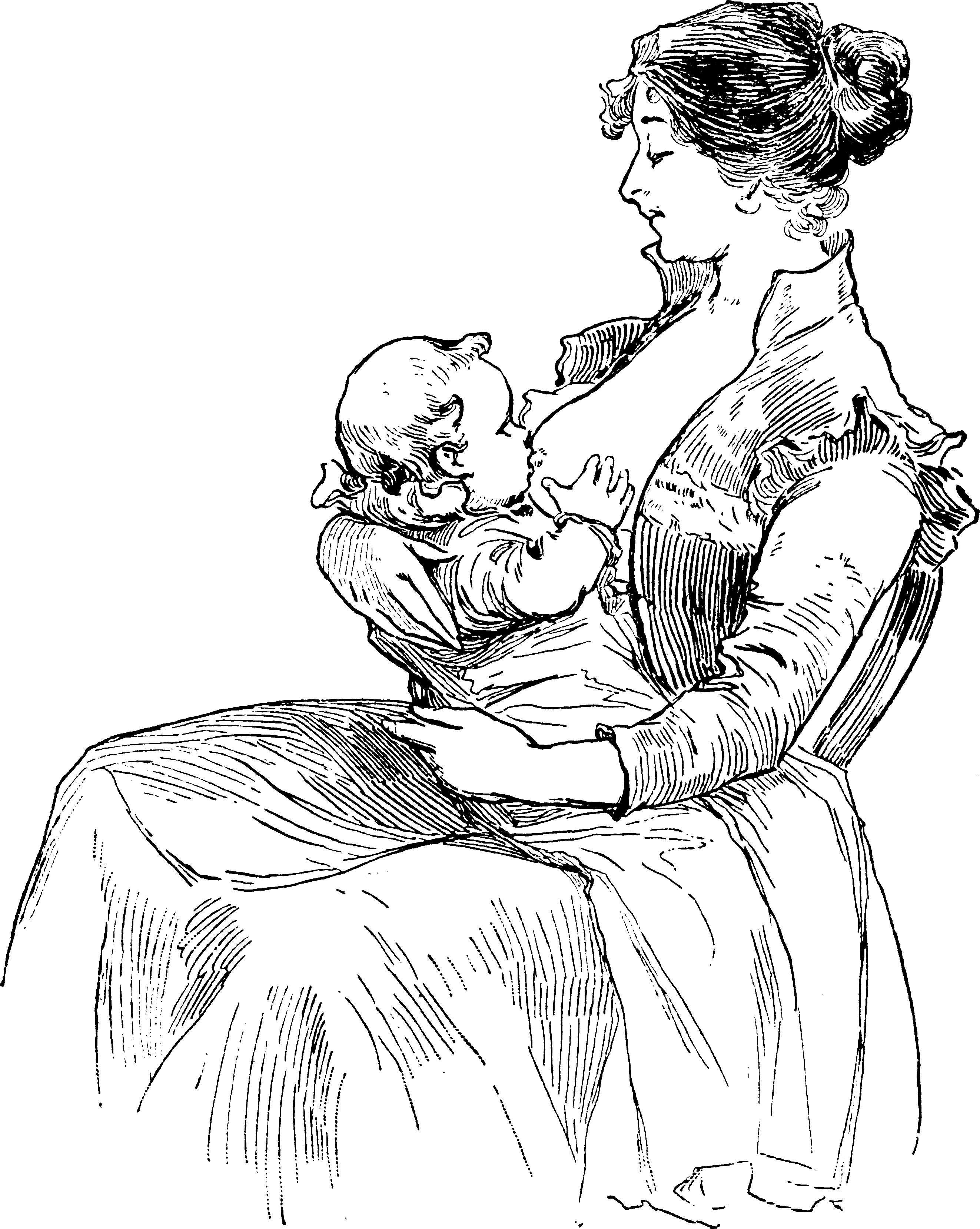
Breastfeeding
has been reported to foster the early post-partum maternal bond, via touch, response, and mutual gazing. Extensive claims for the effect of breastfeeding were made in the 1930s by Margaret Ribble, a champion of "infant rights," but were challenged by others. The claimed effect is not universal, and bottle-feeding mothers are generally appropriately concerned with their babies. It is difficult to determine the extent of causality due to a number of confounding variables, such as the varied reasons families choose different feeding methods. Many believe that early bonding ideally increases response and sensitivity to the child's needs, bolstering the quality of the mother–baby relationship—however, many exceptions can be found of highly successful mother–baby bonds, even though early breastfeeding did not occur, such as with premature infants who may lack the necessary sucking strength to successfully breastfeed.
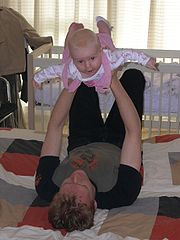
In contrast to the maternal bond, paternal bonds tend to vary over the span of a child's development in terms of both strength and stability. In fact, many children now grow up in fatherless households and do not experience a paternal bond at all. In general, paternal bonding is more dominant later in a child's life after language develops. Fathers may be more influential in play interactions as opposed to nurturance interactions. Father–child bonds also tend to develop with respect to topics such as political views or money, whereas mother–child bonds tend to develop in relation to topics such as religious views or general outlooks on life.
In 2003, a researcher from Northwestern University in Illinois found that progesterone
, a hormone more usually associated with pregnancy and maternal bonding, may also control the way men react towards their children. Specifically, they found that a lack of progesterone reduced aggressive behavior in male mice and stimulated them to act in a fatherly way towards their offspring.
 The human–animal bond can be defined as a connection between people and animals, domestic or wild; be it a cat as a pet or birds outside one's window. Research into the nature and merit of the human–animal bond began in the late 18th century when, in York, England, the Society of Friends established The Retreat
to provide humane treatment for the mentally ill. By having patients care for the many farm animals on the estate, society officials theorized that the combination of animal contact plus productive work would facilitate the patients' rehabilitation. In the 1870s in Paris, a French surgeon had patients with neurological disorders ride horses. The patients were found to have improved their motor control and balance and were less likely to suffer bouts of depression.
In the 19th century, in Bielefeld, Germany, epileptic patients were given the prescription to spend time each day taking care of cats and dogs. The contact with the animals was found to reduce the occurrence of seizures. In 1980, a team of scientists at the University of Pennsylvania
found that human to animal contact was found to reduce the physiological characteristics of stress; specifically, lowered levels of blood pressure, heart rate, respiratory rate, anxiety, and tension were all found to correlate positively with human–pet bonding.
Historically, animals were domesticated for functional use; for example, dogs for herding and tracking, and cats for killing mice or rats. Today, in Western societies, their function is primarily bonding. For example, current studies show that 60–80% of dogs sleep with their owners at night in the bedroom, either in or on the bed. Moreover, in the past the majority of cats were kept outside (barn cats) whereas today most cats are kept indoors (housecats) and considered part of the family. Currently, in the US, for example, 1.2 billion animals are kept as pets, primarily for bonding purposes. In addition, as of 1995 there were over 30 research institutions looking into the potential benefits of the human–animal bond.
s oxytocin
and vasopressin
are involved in the bonding process, and in other forms of prosocial and reproductive behavior. Both chemicals facilitate pair bonding and maternal behavior in experiments on laboratory animals. In humans, there is evidence that oxytocin and vasopressin are released during labor
and breastfeeding
, and that these events are associated with maternal bonding. According to one model, social isolation leads to stress, which is associated with activity in the hypothalamic-pituitary-adrenal axis
and the release of cortisol
. Positive social interaction is associated with increased oxytocin. This leads to bonding, which is also associated with higher levels of oxytocin and vasopressin, and reduced stress and stress-related hormones.
Oxytocin is associated with higher levels of trust in laboratory studies on humans. It has been called the "cuddle chemical" for its role in facilitating trust and attachment. In the reward centers of the limbic system
, the neurotransmitter
dopamine
may interact with oxytocin and further increase the likelihood of bonding. One team of researchers has argued that oxytocin only plays a secondary role in affiliation, and that endogenous opiates
play the central role. According to this model, affiliation is a function of the brain systems underlying reward and memory formation.
Because the vast majority of this research has been done on animals—and the majority of that on rodents—these findings must be taken with caution when applied to humans. One of the few studies that looked at the influence of hormones on human bonding compared participants who had recently fallen in love with a control group. There were no differences for most of the hormones measured, including LH
, estradiol
, progesterone
, DHEAS, and androstenedione
. Testosterone
and FSH
were lower in men who had recently fallen in love, and there was also a difference in blood cortisol
for both sexes, with higher levels in the group that was in love. These differences disappeared after 12–28 months and may reflect the temporary stress and arousal of a new relationship.
became enamored of the concepts underlying the classic chemistry lecture in which "weak" hydrogen bond
s hold huge numbers of water molecules together, which themselves are held together by "strong" covalent bond
s. This model was the stimulus behind his famous 1973 paper The Strength of Weak Ties, which is now considered a classic paper in sociology
.
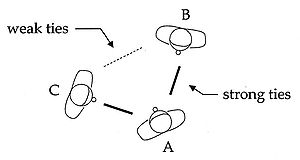 Weak social bonds are believed to be responsible for the majority of the embeddedness and structure of social networks in society
as well as the transmission of information
through these networks. Specifically, more novel information flows to individuals through weak than through strong ties. Because our close friends tend to move in the same circles that we do, the information they receive overlaps considerably with what we already know. Acquaintances, by contrast, know people that we do not, and thus receive more novel information.
When a person to which one has become bonded is lost, a grief
response may occur. Grief is the process of accepting the loss and adjusting to the changed situation. Grief may take longer than the initial development of the bond. The grief process varies with culture.
Interpersonal relationship
An interpersonal relationship is an association between two or more people that may range from fleeting to enduring. This association may be based on limerence, love, solidarity, regular business interactions, or some other type of social commitment. Interpersonal relationships are formed in the...
. It most commonly takes place between family members or friends, but can also develop among groups such as sporting teams and whenever people spend time together. Bonding is a mutual, interactive process, and is different from simple liking
Reciprocal liking
Reciprocal liking is a psychological term to describe the phenomenon of people tending to better like those people who like them. It reflects the notion that people feel better about themselves knowing that they are likable and enjoy the company of those who give them positive feelings...
.
Bonding typically refers to the process of attachment
Attachment theory
Attachment theory describes the dynamics of long-term relationships between humans. Its most important tenet is that an infant needs to develop a relationship with at least one primary caregiver for social and emotional development to occur normally. Attachment theory is an interdisciplinary study...
that develops between romantic partners, close friends, or parents and children. This bond is characterized by emotions such as affection
Affection
Affection or fondness is a "disposition or rare state of mind or body" that is often associated with a feeling or type of love. It has given rise to a number of branches of philosophy and psychology concerning: emotion ; disease; influence; state of being ; and state of mind...
and trust. Any two people who spend time together may form a bond. Male bonding
Male bonding
Male bonding is a term that is used in ethology, social science, and in general usage to describe patterns of friendship and/or cooperation in men...
refers to the establishment of relationships between men through shared activities that often exclude females. The term female bonding
Female bonding
Female bonding is the formation of a close personal relationship between women. Female bonding is a term that is used in ethology, social science, and in general usage to describe patterns of friendship, attachment, and cooperation in women; or in the case of ethology, associations between females...
is less frequently used, but refers to the formation of close personal relationships between women.
Etymology
The term comes from the 12th century, Middle EnglishMiddle English
Middle English is the stage in the history of the English language during the High and Late Middle Ages, or roughly during the four centuries between the late 11th and the late 15th century....
word band, which refers to something that binds, ties, or restrains. In early usage, a bondman, bondwoman, or bondservant was a feudal serf that was obligated to work for his or her lord without pay (in modern usage, a bondsman is a person who provides bonds or surety
Surety
A surety or guarantee, in finance, is a promise by one party to assume responsibility for the debt obligation of a borrower if that borrower defaults...
for someone).
Early views
In the 4th century BC, the Greek philosopher PlatoPlato
Plato , was a Classical Greek philosopher, mathematician, student of Socrates, writer of philosophical dialogues, and founder of the Academy in Athens, the first institution of higher learning in the Western world. Along with his mentor, Socrates, and his student, Aristotle, Plato helped to lay the...
argued that love
Love
Love is an emotion of strong affection and personal attachment. In philosophical context, love is a virtue representing all of human kindness, compassion, and affection. Love is central to many religions, as in the Christian phrase, "God is love" or Agape in the Canonical gospels...
directs the bonds of human society. In his Symposium
Symposium (Plato)
The Symposium is a philosophical text by Plato dated c. 385–380 BCE. It concerns itself at one level with the genesis, purpose and nature of love....
, Eryximachus, one of the narrators in the dialog, states that love goes far beyond simple attraction to human beauty. He states that it occurs throughout the animal and plant kingdoms
Kingdom (biology)
In biology, kingdom is a taxonomic rank, which is either the highest rank or in the more recent three-domain system, the rank below domain. Kingdoms are divided into smaller groups called phyla or divisions in botany...
, as well as throughout the universe
Universe
The Universe is commonly defined as the totality of everything that exists, including all matter and energy, the planets, stars, galaxies, and the contents of intergalactic space. Definitions and usage vary and similar terms include the cosmos, the world and nature...
. Love directs everything that occurs, in the realm of the gods as well as that of humans (186a–b).
Eryximachus reasons that when various opposing elements such as wet and dry are "animated by the proper species of Love, they are in harmony with one another ... But when the sort of Love that is crude and impulsive controls the seasons, he brings death and destruction" (188a). Because it is love that guides the relations between these sets of opposites throughout existence, in every case it is the higher form of love that brings harmony and cleaves toward the good, whereas the impulsive vulgar love creates disharmony.
Plato concludes that the highest form of love is the greatest. When love "is directed, in temperance and justice, towards the good, whether in heaven or on earth: happiness and good fortune, the bonds of human society, concord with the gods above—all these are among his gifts" (188d).
In the 1660s, the Dutch philosopher Spinoza wrote, in his Ethics of Human Bondage or the Strength of the Emotions, that the term bondage relates to the human infirmity in moderating and checking the emotions. That is, according to Spinoza, "when a man is prey to his emotions, he is not his own master, but lies at the mercy of fortune."
In 1809 Johann Wolfgang von Goethe
Johann Wolfgang von Goethe
Johann Wolfgang von Goethe was a German writer, pictorial artist, biologist, theoretical physicist, and polymath. He is considered the supreme genius of modern German literature. His works span the fields of poetry, drama, prose, philosophy, and science. His Faust has been called the greatest long...
, in his classic novella Elective Affinities
Elective Affinities
Elective Affinities , also translated under the title Kindred by Choice, is the third novel by Johann Wolfgang von Goethe, published in 1809. The title is taken from a scientific term once used to describe the tendency of chemical species to combine with certain substances or species in preference...
, wrote of the "marriage tie," and by analogy shows how strong marriage unions are similar in character to that by which the particles of quicksilver
Mercury (element)
Mercury is a chemical element with the symbol Hg and atomic number 80. It is also known as quicksilver or hydrargyrum...
find a unity together through the process of chemical affinity
Chemical affinity
In chemical physics and physical chemistry, chemical affinity is the electronic property by which dissimilar chemical species are capable of forming chemical compounds...
. Humans in passionate relationships, according to Goethe, are analogous to reactive substances in a chemical equation
Chemical equation
A chemical equation is the symbolic representation of a chemical reaction where the reactant entities are given on the left hand side and the product entities on the right hand side. The coefficients next to the symbols and formulae of entities are the absolute values of the stoichiometric numbers...
.
Pair bonding
The term pair bond originated in 1940 in reference to mated pairs of birds. It is a generic term signifying a monogamous or relatively monogamous relationship in either humans or animals. The term is commonly used in sociobiologySociobiology
Sociobiology is a field of scientific study which is based on the assumption that social behavior has resulted from evolution and attempts to explain and examine social behavior within that context. Often considered a branch of biology and sociology, it also draws from ethology, anthropology,...
and evolutionary psychology
Evolutionary psychology
Evolutionary psychology is an approach in the social and natural sciences that examines psychological traits such as memory, perception, and language from a modern evolutionary perspective. It seeks to identify which human psychological traits are evolved adaptations, that is, the functional...
. Pair bonding, usually of a fairly short duration, occurs in a variety of primate species. Some scientists speculate that prolonged bonds developed in humans along with increased sharing of food.
Limerent bond
According to limerence theory, posited in 1979 by psychologist Dorothy TennovDorothy Tennov
Dorothy Tennov was an American psychologist who, in her 1979 book Love and Limerence – the Experience of Being in Love introduced the term "limerence"...
, a certain percentage of couples may go through what is called a limerent reaction, in which one or both of the pair may experience a state of passion mixed with continuous intrusive thinking, fear of rejection, and hope. Hence, with all human romantic relationships, one of three varieties of bonds may form, defined over a set duration of time, in relation to the experience or non-experience of limerence:
- Affectional bond: define relationships in which neither partner is limerent.
- Limerent–Nonlimerent bond: define relationships in which one partner is limerent.
- Limerent–Limerent bond: define relationships in which both partners are limerent.
The constitution of these bonds may vary over the course of the relationship, in ways that may either increase or decrease the intensity of the limerence
Limerence
Limerence is a term coined c. 1977 by the psychologist Dorothy Tennov to describe an involuntary state of mind which seems to result from a romantic attraction to another person combined with an overwhelming, obsessive need to have one's feelings reciprocated...
. The basis and interesting characteristic of this delineation made by Tennov, is that based on her research and interviews with over 500 people, all human bonded relationships can be divided into three varieties being defined by the amount of limerence or non-limerence each partner contributes to the relationship.
Attachment
In 1958, British developmental psychologist John Bowlby
John Bowlby
Edward John Mostyn "John" Bowlby was a British psychologist, psychiatrist and psychoanalyst, notable for his interest in child development and for his pioneering work in attachment theory.- Family background :...
published the ground-breaking paper "the Nature of the Child's Tie to his Mother," in which the precursory concepts of "attachment theory
Attachment theory
Attachment theory describes the dynamics of long-term relationships between humans. Its most important tenet is that an infant needs to develop a relationship with at least one primary caregiver for social and emotional development to occur normally. Attachment theory is an interdisciplinary study...
" were developed. This included the development of the concept of the affectional bond, sometimes referred to as the emotional bond, which is based on the universal tendency for humans to attach, i.e. to seek closeness to another person and to feel secure when that person is present. Attachment theory has some of its origins in the observation of and experiments with animals, but is also based on observations of children who had missed typical experiences of adult care. Much of the early research on attachment in humans was done by John Bowlby and his associates. Bowlby proposed that babies have an inbuilt need from birth to make emotional attachments, i.e. bonds, because this increases the chances of survival by ensuring that they receive the care they need. Bowlby did not describe mutuality in attachment. He stated that attachment by mother was a pathological inversion and described only behaviors of the infant. Ainsworth attempted to follow this amazing tunnel vision, but found she could not avoid eye-to-eye contact with infant and mother. She was not successful in the use of infant gaze because she did not differentiate frightened hyper-alert states from affectionate interaction. Many developmental specialists elaborated Bowlby's ethological observations. However, neither Bowlby's proximity seeking (not possible for human infants prior to walking) nor subsequent descriptions of caregiver–infant mutuality with emotional availability and synchrony with emotional modulation include the enduring motivation of attachment into adult life. The enduring motivation is the desire to control a pleasantly surprising transformation that is the route of belief in effectiveness by humans. This motivation accounts for curiosity and intellectual growth of language, mathematics and logic, all of which have an emotional base of security.
Maternal bonding
Of all human bonds, the maternal bond (mother–infant relationship) is one of the strongest. The maternal bond begins to develop during pregnancy; following pregnancy, the production of oxytocinOxytocin
Oxytocin is a mammalian hormone that acts primarily as a neuromodulator in the brain.Oxytocin is best known for its roles in sexual reproduction, in particular during and after childbirth...
during lactation
Lactation
Lactation describes the secretion of milk from the mammary glands and the period of time that a mother lactates to feed her young. The process occurs in all female mammals, however it predates mammals. In humans the process of feeding milk is called breastfeeding or nursing...
increases parasympathetic activity, thus reducing anxiety
Anxiety
Anxiety is a psychological and physiological state characterized by somatic, emotional, cognitive, and behavioral components. The root meaning of the word anxiety is 'to vex or trouble'; in either presence or absence of psychological stress, anxiety can create feelings of fear, worry, uneasiness,...
and theoretically fostering bonding. It is generally understood that maternal oxytocin circulation can predispose some mammals to show caregiving behavior in response to young of their species.
Breastfeeding
Breastfeeding
Breastfeeding is the feeding of an infant or young child with breast milk directly from female human breasts rather than from a baby bottle or other container. Babies have a sucking reflex that enables them to suck and swallow milk. It is recommended that mothers breastfeed for six months or...
has been reported to foster the early post-partum maternal bond, via touch, response, and mutual gazing. Extensive claims for the effect of breastfeeding were made in the 1930s by Margaret Ribble, a champion of "infant rights," but were challenged by others. The claimed effect is not universal, and bottle-feeding mothers are generally appropriately concerned with their babies. It is difficult to determine the extent of causality due to a number of confounding variables, such as the varied reasons families choose different feeding methods. Many believe that early bonding ideally increases response and sensitivity to the child's needs, bolstering the quality of the mother–baby relationship—however, many exceptions can be found of highly successful mother–baby bonds, even though early breastfeeding did not occur, such as with premature infants who may lack the necessary sucking strength to successfully breastfeed.
Paternal bonding
In contrast to the maternal bond, paternal bonds tend to vary over the span of a child's development in terms of both strength and stability. In fact, many children now grow up in fatherless households and do not experience a paternal bond at all. In general, paternal bonding is more dominant later in a child's life after language develops. Fathers may be more influential in play interactions as opposed to nurturance interactions. Father–child bonds also tend to develop with respect to topics such as political views or money, whereas mother–child bonds tend to develop in relation to topics such as religious views or general outlooks on life.
In 2003, a researcher from Northwestern University in Illinois found that progesterone
Progesterone
Progesterone also known as P4 is a C-21 steroid hormone involved in the female menstrual cycle, pregnancy and embryogenesis of humans and other species...
, a hormone more usually associated with pregnancy and maternal bonding, may also control the way men react towards their children. Specifically, they found that a lack of progesterone reduced aggressive behavior in male mice and stimulated them to act in a fatherly way towards their offspring.
Human–animal bonding
The Retreat
The Retreat, commonly known as the York Retreat, is a place in England for the treatment of people with mental health needs. Located in Lamel Hill in York, it operates as a not for profit charitable organisation....
to provide humane treatment for the mentally ill. By having patients care for the many farm animals on the estate, society officials theorized that the combination of animal contact plus productive work would facilitate the patients' rehabilitation. In the 1870s in Paris, a French surgeon had patients with neurological disorders ride horses. The patients were found to have improved their motor control and balance and were less likely to suffer bouts of depression.
In the 19th century, in Bielefeld, Germany, epileptic patients were given the prescription to spend time each day taking care of cats and dogs. The contact with the animals was found to reduce the occurrence of seizures. In 1980, a team of scientists at the University of Pennsylvania
University of Pennsylvania
The University of Pennsylvania is a private, Ivy League university located in Philadelphia, Pennsylvania, United States. Penn is the fourth-oldest institution of higher education in the United States,Penn is the fourth-oldest using the founding dates claimed by each institution...
found that human to animal contact was found to reduce the physiological characteristics of stress; specifically, lowered levels of blood pressure, heart rate, respiratory rate, anxiety, and tension were all found to correlate positively with human–pet bonding.
Historically, animals were domesticated for functional use; for example, dogs for herding and tracking, and cats for killing mice or rats. Today, in Western societies, their function is primarily bonding. For example, current studies show that 60–80% of dogs sleep with their owners at night in the bedroom, either in or on the bed. Moreover, in the past the majority of cats were kept outside (barn cats) whereas today most cats are kept indoors (housecats) and considered part of the family. Currently, in the US, for example, 1.2 billion animals are kept as pets, primarily for bonding purposes. In addition, as of 1995 there were over 30 research institutions looking into the potential benefits of the human–animal bond.
Neurobiology
There is evidence in a variety of species that the hormoneHormone
A hormone is a chemical released by a cell or a gland in one part of the body that sends out messages that affect cells in other parts of the organism. Only a small amount of hormone is required to alter cell metabolism. In essence, it is a chemical messenger that transports a signal from one...
s oxytocin
Oxytocin
Oxytocin is a mammalian hormone that acts primarily as a neuromodulator in the brain.Oxytocin is best known for its roles in sexual reproduction, in particular during and after childbirth...
and vasopressin
Vasopressin
Arginine vasopressin , also known as vasopressin, argipressin or antidiuretic hormone , is a neurohypophysial hormone found in most mammals, including humans. Vasopressin is a peptide hormone that controls the reabsorption of molecules in the tubules of the kidneys by affecting the tissue's...
are involved in the bonding process, and in other forms of prosocial and reproductive behavior. Both chemicals facilitate pair bonding and maternal behavior in experiments on laboratory animals. In humans, there is evidence that oxytocin and vasopressin are released during labor
Childbirth
Childbirth is the culmination of a human pregnancy or gestation period with the birth of one or more newborn infants from a woman's uterus...
and breastfeeding
Breastfeeding
Breastfeeding is the feeding of an infant or young child with breast milk directly from female human breasts rather than from a baby bottle or other container. Babies have a sucking reflex that enables them to suck and swallow milk. It is recommended that mothers breastfeed for six months or...
, and that these events are associated with maternal bonding. According to one model, social isolation leads to stress, which is associated with activity in the hypothalamic-pituitary-adrenal axis
Hypothalamic-pituitary-adrenal axis
The hypothalamic-pituitary-adrenal axis , also known as thelimbic-hypothalamic-pituitary-adrenal axis and, occasionally, as the hypothalamic-pituitary-adrenal-gonadotropic axis, is a complex set of direct influences and feedback interactions among the hypothalamus, the pituitary gland ,...
and the release of cortisol
Cortisol
Cortisol is a steroid hormone, more specifically a glucocorticoid, produced by the adrenal gland. It is released in response to stress and a low level of blood glucocorticoids. Its primary functions are to increase blood sugar through gluconeogenesis; suppress the immune system; and aid in fat,...
. Positive social interaction is associated with increased oxytocin. This leads to bonding, which is also associated with higher levels of oxytocin and vasopressin, and reduced stress and stress-related hormones.
Oxytocin is associated with higher levels of trust in laboratory studies on humans. It has been called the "cuddle chemical" for its role in facilitating trust and attachment. In the reward centers of the limbic system
Limbic system
The limbic system is a set of brain structures including the hippocampus, amygdala, anterior thalamic nuclei, septum, limbic cortex and fornix, which seemingly support a variety of functions including emotion, behavior, long term memory, and olfaction. The term "limbic" comes from the Latin...
, the neurotransmitter
Neurotransmitter
Neurotransmitters are endogenous chemicals that transmit signals from a neuron to a target cell across a synapse. Neurotransmitters are packaged into synaptic vesicles clustered beneath the membrane on the presynaptic side of a synapse, and are released into the synaptic cleft, where they bind to...
dopamine
Dopamine
Dopamine is a catecholamine neurotransmitter present in a wide variety of animals, including both vertebrates and invertebrates. In the brain, this substituted phenethylamine functions as a neurotransmitter, activating the five known types of dopamine receptors—D1, D2, D3, D4, and D5—and their...
may interact with oxytocin and further increase the likelihood of bonding. One team of researchers has argued that oxytocin only plays a secondary role in affiliation, and that endogenous opiates
Endorphin
Endorphins are endogenous opioid peptides that function as neurotransmitters. They are produced by the pituitary gland and the hypothalamus in vertebrates during exercise, excitement, pain, consumption of spicy food, love and orgasm, and they resemble the opiates in their abilities to produce...
play the central role. According to this model, affiliation is a function of the brain systems underlying reward and memory formation.
Because the vast majority of this research has been done on animals—and the majority of that on rodents—these findings must be taken with caution when applied to humans. One of the few studies that looked at the influence of hormones on human bonding compared participants who had recently fallen in love with a control group. There were no differences for most of the hormones measured, including LH
LH
LH, Lh, or lh may stand for:*Laurel and Hardy*Leasehold *Left-handed or left hand*Letterhead, the heading at the top of a sheet of letter paper*lh, a digraph for many languages...
, estradiol
Estradiol
Estradiol is a sex hormone. Estradiol is abbreviated E2 as it has 2 hydroxyl groups in its molecular structure. Estrone has 1 and estriol has 3 . Estradiol is about 10 times as potent as estrone and about 80 times as potent as estriol in its estrogenic effect...
, progesterone
Progesterone
Progesterone also known as P4 is a C-21 steroid hormone involved in the female menstrual cycle, pregnancy and embryogenesis of humans and other species...
, DHEAS, and androstenedione
Androstenedione
Androstenedione is a 19-carbon steroid hormone produced in the adrenal glands and the gonads as an intermediate step in the biochemical pathway that produces the androgen testosterone and the estrogens estrone and estradiol.-Synthesis:Androstenedione is the common precursor of male and female sex...
. Testosterone
Testosterone
Testosterone is a steroid hormone from the androgen group and is found in mammals, reptiles, birds, and other vertebrates. In mammals, testosterone is primarily secreted in the testes of males and the ovaries of females, although small amounts are also secreted by the adrenal glands...
and FSH
Follicle-stimulating hormone
Follicle-stimulating hormone is a hormone found in humans and other animals. It is synthesized and secreted by gonadotrophs of the anterior pituitary gland. FSH regulates the development, growth, pubertal maturation, and reproductive processes of the body. FSH and Luteinizing hormone act...
were lower in men who had recently fallen in love, and there was also a difference in blood cortisol
Cortisol
Cortisol is a steroid hormone, more specifically a glucocorticoid, produced by the adrenal gland. It is released in response to stress and a low level of blood glucocorticoids. Its primary functions are to increase blood sugar through gluconeogenesis; suppress the immune system; and aid in fat,...
for both sexes, with higher levels in the group that was in love. These differences disappeared after 12–28 months and may reflect the temporary stress and arousal of a new relationship.
Weak ties
In 1962, while a freshman history major at Harvard, Mark GranovetterMark Granovetter
Professor Mark Granovetter is an American sociologist at Stanford University who has created theories in modern sociology since the 1970s. He is best known for his work in social network theory and in economic sociology, particularly his theory on the spread of information in social networks known...
became enamored of the concepts underlying the classic chemistry lecture in which "weak" hydrogen bond
Hydrogen bond
A hydrogen bond is the attractive interaction of a hydrogen atom with an electronegative atom, such as nitrogen, oxygen or fluorine, that comes from another molecule or chemical group. The hydrogen must be covalently bonded to another electronegative atom to create the bond...
s hold huge numbers of water molecules together, which themselves are held together by "strong" covalent bond
Covalent bond
A covalent bond is a form of chemical bonding that is characterized by the sharing of pairs of electrons between atoms. The stable balance of attractive and repulsive forces between atoms when they share electrons is known as covalent bonding....
s. This model was the stimulus behind his famous 1973 paper The Strength of Weak Ties, which is now considered a classic paper in sociology
Sociology
Sociology is the study of society. It is a social science—a term with which it is sometimes synonymous—which uses various methods of empirical investigation and critical analysis to develop a body of knowledge about human social activity...
.
Society
A society, or a human society, is a group of people related to each other through persistent relations, or a large social grouping sharing the same geographical or virtual territory, subject to the same political authority and dominant cultural expectations...
as well as the transmission of information
Information
Information in its most restricted technical sense is a message or collection of messages that consists of an ordered sequence of symbols, or it is the meaning that can be interpreted from such a message or collection of messages. Information can be recorded or transmitted. It can be recorded as...
through these networks. Specifically, more novel information flows to individuals through weak than through strong ties. Because our close friends tend to move in the same circles that we do, the information they receive overlaps considerably with what we already know. Acquaintances, by contrast, know people that we do not, and thus receive more novel information.
Debonding and loss
In 1976, sociologist Diane Vaughan proposed an "uncoupling theory," where, during the dynamics of relationship breakup, there exists a "turning point," only noted in hindsight, followed by a transition period in which one partner unconsciously knows the relationship is going to end, but holds on to it for an extended period, sometimes for a number of years.When a person to which one has become bonded is lost, a grief
Grief
Grief is a multi-faceted response to loss, particularly to the loss of someone or something to which a bond was formed. Although conventionally focused on the emotional response to loss, it also has physical, cognitive, behavioral, social, and philosophical dimensions...
response may occur. Grief is the process of accepting the loss and adjusting to the changed situation. Grief may take longer than the initial development of the bond. The grief process varies with culture.
See also
Books
- Miller, W.B. & Rodgers, J.L. (2001). The Ontogeny of Human Bonding Systems: Evolutionary Origins, Neural Bases, and Psychological Manifestations. New York: Springer. ISBN 0-7923-7478-9
Articles
- Ben-Amos, I.K. (1997). "Human Bonding: Parents and Their Offspring in Early Modern England." Discussion Papers in Economic and Social History – Oxford University.
- Brown, S.L. & Brown, R.M. (2006). Selective investment theory: Recasting the functional significance of close relationships. Psychological Inquiry, 17, 1–29. – a theoretical proposal that "human social bonds evolved as overarching, emotion regulating mechanisms designed to promote reliable, high-cost altruism among individuals who depend on one another for survival and reproduction" (From the abstract)
- Immerman, R.S. & Mackey, W.C. (2003). Perspectives on Human Attachment (Pair Bonding): Eve's unique legacy of canine analogue Evolutionary Psychology, 1, 138–154. ISSN 1474-7049
- Thorne, L. (2006). "Of Human Bonding" – Condo Dwellers Find Cool Ways to Connect With the Neighbors, Express (Washingtonpost.com), Mon., (Aug. 07)
- Author (2006). "Falling in Love: Insights into Human Bonding." Wellcome Trust, Aug. 25
Relationships
- Chemical Bonding and Love – HowStuffWorks.com
- Researchers Map the Sexual Network of an Entire High School – Research News, Ohio State University
- The Neurobiology of Social Bonds – British Society for Neuroendocrinology
Baby bonding
- Bonding With Your Baby source: kidshealth.org
- Bonding Period – Parent/Infant Bonding
- Bonding Matters – the Chemistry of Attachment
Adoption bonding
- Adoption bonding – Adoptive Families Magazine
- Bonding and Attachment – Encyclopedia of Adoption (use cautiously with section on "attachment disorderAttachment disorderAttachment disorder is a broad term intended to describe disorders of mood, behavior, and social relationships arising from a failure to form normal attachments to primary care giving figures in early childhood, resulting in problematic social expectations and behaviors...
s") - AICAN – Australian Intercountry Adoption Network
Human–animal bonding
- Parrot–Human Bonding – Progressive Steps in the Bonding Process
- Feline–Human Bond source: About.com
- Equine Bonding Concepts