

Harden-Eulenburg Affair

Encyclopedia
The Harden-Eulenburg affair, often simply Eulenburg affair, was the controversy surrounding a series of courts-martial and five civil trials regarding accusations of homosexual conduct, and accompanying libel trials, among prominent members of Kaiser Wilhelm II's cabinet and entourage during 1907-1909.
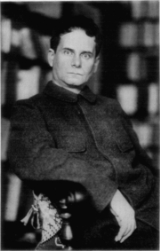
The affair centred on journalist
Maximilian Harden
's accusations of homosexual conduct between Philipp, Prince of Eulenburg-Hertefeld, and General Kuno, Graf von Moltke. Accusations and counter-accusations quickly multiplied, and the phrase "Liebenberg Round Table" came to be used for the homosexual circle around the Kaiser.
The affair received wide publicity and is often considered the biggest domestic scandal of the German
Second Empire
. It led to one of the first major public discussions of homosexuality in Germany, comparable to the trial of Oscar Wilde
in the United Kingdom
.
. One evening after dinner, chief of the Military Secretariat Dietrich, Graf von Hülsen-Häseler
, was performing a pas seul dressed in a woman's ballet tutu
when his heart failed and he died. Ottokar von Czernin, also in attendance, remarked, "In Wilhelm II, I saw a man who, for the first time in his life, with horror-stricken eyes, looked upon the world as it really was." Despite the Emperor's fears, the incident, with its implications of homosexuality at high levels, seemed successfully hushed up.
's foreign policies found the potential scandal too useful to ignore. Wilhelm II had dismissed "Iron" Chancellor Otto von Bismarck
and his Realpolitik
system of treaties and agreements in 1890, replacing Bismarck's clear rule with a muddle and his foreign policies with a confrontational, expansionist
Weltpolitik
that was marked by a great build-up of the German Navy
meant to challenge Britain. Eulenburg, who was a strong German imperialist, had some doubts about Wilhelm's navalism and became the most prominent member of Wilhelm II's entourage being promoted from being a member of the diplomatic corps to an ambassador
. Like many others, Bismarck noticed that the nature of the relationship between Wilhelm II and Eulenburg could "not be confided to paper," but he, as those many others, felt that even these activities in the private sphere were not to be exposed to the public.
Harden, imperialist head of the periodical Die Zukunft
, felt the same, waiting until 1902 only to personally threaten to expose Eulenburg unless he retired from his ambassadorship in Vienna
; Eulenburg did so, withdrawing from public life until 1906. Harden reaffirmed his threat after Germany at the Algeciras Conference
of 1906 recognized Morocco
as being within the French sphere of influence, in what was for Germany a major foreign policy fiasco, and Eulenburg responded by moving to Switzerland
.
Between 1906 and 1907, six military officers committed suicide after blackmail
, while in the preceding three years, around twenty officers were convicted by courts-martial, all for their homosexual acts. A Gardes du Corps officer was charged with homosexuality, embarrassing because the elite Corps was commanded by Lieutenant General
Wilhelm Graf von Hohenau
, blood relative to the kaiser. Worse than these sexual scandals, in Harden's eyes, was Eulenburg's decision to return to Germany and be admitted to the Order of the Black Eagle
; he did not change his mind when Friedrich Heinrich, Prince of Prussia
, declined to be admitted to the Order of Saint John because of his own homosexual proclivities.
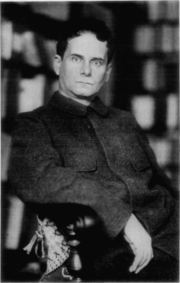 Harden outed
Eulenburg on April 27, 1907, confirming the identity he previously had parodied as "the Harpist" (Eulenburg), along with "Sweetie" General Kuno Graf von Moltke
, in 1906. Wilhelm II, informed of the growing story, responded by requiring the resignation of three of fifteen prominent aristocrats, Hohenau, Lynar, and Moltke, listed as homosexual by the Berlin vice squad; however, the actual list, not shown to Wilhelm II, contained several hundred names.
Moltke's lawyer attempted to file criminal libel against Harden, but was dismissed and civil libel was suggested. Eulenburg denied any culpability and presented a self-accusation of violating the applicable Paragraph 175
to his district attorney who, as hoped and expected, cleared Eulenburg of all charges in July. Meanwhile Georg von Hülsen, manager of the Royal Theatre, von Stückradt, the crown prince's equerry, and Bernhard Prince von Bülow, imperial chancellor, were accused of or revealed as having homosexual tendencies or engaging in homosexual activities.
Testifying against Moltke were his former wife of nine years, Lili von Elbe, a soldier named Bollhardt, and Dr. Magnus Hirschfeld
. Elbe described the lack of conjugal relations, happening only on the first and second night of their marriage, Moltke's overly close friendship with Eulenburg, and her ignorance of homosexuality. Bollhardt described attending champagne-filled parties at Lynar's villa at which he saw both Hohenau and Moltke. Hirschfeld, based on von Elbe's comments and his courtroom observation of Moltke, testified that Moltke most certainly had a feminine side and was homosexual even if he had never committed sodomy. On October 29th, the court found Moltke homosexual and Harden innocent.
However, the trial was voided on procedural grounds, and the state prosecutor decided to allow a criminal libel trial.
Adolf Brand
, founder of the first homosexual periodical, Der Eigene
(The Special), had printed a pamphlet
which described how Bülow had been blackmailed for his sexuality and had kissed and embraced Scheefer at male gatherings hosted by Eulenburg, and thus was morally obliged to publicly oppose Paragraph 175. Brand was found guilty of libel and charged with 18 months in prison.
Elbe, through a diagnosis of classical hysteria
, and Hirschfeld, by retracting his earlier testimony, were discredited and Harden was convicted of libel and sentenced to four months imprisonment.
Now motivated by political goals, morals, and vengeance, Harden set out to prove Eulenburg's homosexuality by having Anton Städele publish an article claiming Harden took hush money
from Eulenburg. Harden then sued his accomplice for libel, Städele was found guilty and charged a hundred mark fine, repaid by Harden. During the trial, however, Georg Riedel and Jacob Ernst testified to having sexual relations with Eulenburg. Eulenburg was charged with perjury
and brought to trial on May 7, 1908. Two weeks later Harden's conviction was overturned and a second trial begun.
After the first of 41 witnesses, including Ernst and ten witnesses who described watching Eulenburg through a keyhole in 1887, the trial was delayed because of Eulenburg's ill health. It was moved to his hospital bed but delayed again, indefinitely.
_sett_1900_a_costantinopoli_-_atelier_walsleben_breslau.jpg) April, 1908.
April, 1908.
With little press, Harden was again convicted and fined six hundred marks plus the forty thousand marks of court costs, while Moltke was rehabilitated in the public eye.
The Eulenburg affair is an example of prejudice
, specifically dislike of homosexuality
, being used as a means to attain certain political goals. As Eulenburg's wife later commented, "They are striking at my husband, but their target is the kaiser."
Harden later told Hirschfeld that the Affair was the greatest political mistake of his life, like many later observers, attributing the Affair as the root cause of World War I
and the fall of the Second Reich, inevitable without Eulenburg's moderating influence.
The affair centred on journalist
Journalist
A journalist collects and distributes news and other information. A journalist's work is referred to as journalism.A reporter is a type of journalist who researchs, writes, and reports on information to be presented in mass media, including print media , electronic media , and digital media A...
Maximilian Harden
Maximilian Harden
Maximilian Harden was an influential German journalist and editor.- Biography :...
's accusations of homosexual conduct between Philipp, Prince of Eulenburg-Hertefeld, and General Kuno, Graf von Moltke. Accusations and counter-accusations quickly multiplied, and the phrase "Liebenberg Round Table" came to be used for the homosexual circle around the Kaiser.
The affair received wide publicity and is often considered the biggest domestic scandal of the German
Germany
Germany , officially the Federal Republic of Germany , is a federal parliamentary republic in Europe. The country consists of 16 states while the capital and largest city is Berlin. Germany covers an area of 357,021 km2 and has a largely temperate seasonal climate...
Second Empire
German Empire
The German Empire refers to Germany during the "Second Reich" period from the unification of Germany and proclamation of Wilhelm I as German Emperor on 18 January 1871, to 1918, when it became a federal republic after defeat in World War I and the abdication of the Emperor, Wilhelm II.The German...
. It led to one of the first major public discussions of homosexuality in Germany, comparable to the trial of Oscar Wilde
Oscar Wilde
Oscar Fingal O'Flahertie Wills Wilde was an Irish writer and poet. After writing in different forms throughout the 1880s, he became one of London's most popular playwrights in the early 1890s...
in the United Kingdom
United Kingdom
The United Kingdom of Great Britain and Northern IrelandIn the United Kingdom and Dependencies, other languages have been officially recognised as legitimate autochthonous languages under the European Charter for Regional or Minority Languages...
.
Initial incident
The incident which provoked the affair followed on the heels of a public relations gaffe by Wilhelm II. Briefly, in November 1908, Wilhelm II began a vacation at an aristocrat's estate in the Black ForestBlack Forest
The Black Forest is a wooded mountain range in Baden-Württemberg, southwestern Germany. It is bordered by the Rhine valley to the west and south. The highest peak is the Feldberg with an elevation of 1,493 metres ....
. One evening after dinner, chief of the Military Secretariat Dietrich, Graf von Hülsen-Häseler
Dietrich von Hülsen-Haeseler
Dietrich Graf von Hülsen-Haeseler was an infantry general of the German Empire....
, was performing a pas seul dressed in a woman's ballet tutu
Ballet tutu
A tutu is a skirt worn as a costume in a ballet performance, often with attached bodice. It might be single layer, hanging down, or multiple layers starched and jutting out.There are several types of ballet tutu:...
when his heart failed and he died. Ottokar von Czernin, also in attendance, remarked, "In Wilhelm II, I saw a man who, for the first time in his life, with horror-stricken eyes, looked upon the world as it really was." Despite the Emperor's fears, the incident, with its implications of homosexuality at high levels, seemed successfully hushed up.
Causes
However, opponents of GermanyGermany
Germany , officially the Federal Republic of Germany , is a federal parliamentary republic in Europe. The country consists of 16 states while the capital and largest city is Berlin. Germany covers an area of 357,021 km2 and has a largely temperate seasonal climate...
's foreign policies found the potential scandal too useful to ignore. Wilhelm II had dismissed "Iron" Chancellor Otto von Bismarck
Otto von Bismarck
Otto Eduard Leopold, Prince of Bismarck, Duke of Lauenburg , simply known as Otto von Bismarck, was a Prussian-German statesman whose actions unified Germany, made it a major player in world affairs, and created a balance of power that kept Europe at peace after 1871.As Minister President of...
and his Realpolitik
Realpolitik
Realpolitik refers to politics or diplomacy based primarily on power and on practical and material factors and considerations, rather than ideological notions or moralistic or ethical premises...
system of treaties and agreements in 1890, replacing Bismarck's clear rule with a muddle and his foreign policies with a confrontational, expansionist
Expansionism
In general, expansionism consists of expansionist policies of governments and states. While some have linked the term to promoting economic growth , more commonly expansionism refers to the doctrine of a state expanding its territorial base usually, though not necessarily, by means of military...
Weltpolitik
Weltpolitik
The "Weltpolitik" strategy was adopted by Germany in the late 19th century, replacing the earlier "Realpolitik" approach.The start of this policy was signaled in 1897 with then Foreign Minister Bernhard von Bülow stating that Germany now pursued such a policy...
that was marked by a great build-up of the German Navy
German Navy
The German Navy is the navy of Germany and is part of the unified Bundeswehr .The German Navy traces its roots back to the Imperial Fleet of the revolutionary era of 1848 – 52 and more directly to the Prussian Navy, which later evolved into the Northern German Federal Navy...
meant to challenge Britain. Eulenburg, who was a strong German imperialist, had some doubts about Wilhelm's navalism and became the most prominent member of Wilhelm II's entourage being promoted from being a member of the diplomatic corps to an ambassador
Ambassador
An ambassador is the highest ranking diplomat who represents a nation and is usually accredited to a foreign sovereign or government, or to an international organization....
. Like many others, Bismarck noticed that the nature of the relationship between Wilhelm II and Eulenburg could "not be confided to paper," but he, as those many others, felt that even these activities in the private sphere were not to be exposed to the public.
Harden, imperialist head of the periodical Die Zukunft
Die Zukunft
Die Zukunft was a German social-democratic weekly founded and edited by Maximilian Harden. It published allegations of homosexuality of Philip, Prince of Eulenburg, leading to the Harden–Eulenburg Affair in Wilhelmine Germany.Die Zukunft was also the name of an exile German language paper, both...
, felt the same, waiting until 1902 only to personally threaten to expose Eulenburg unless he retired from his ambassadorship in Vienna
Vienna
Vienna is the capital and largest city of the Republic of Austria and one of the nine states of Austria. Vienna is Austria's primary city, with a population of about 1.723 million , and is by far the largest city in Austria, as well as its cultural, economic, and political centre...
; Eulenburg did so, withdrawing from public life until 1906. Harden reaffirmed his threat after Germany at the Algeciras Conference
Algeciras Conference
The Algeciras Conference of 1906 took place in Algeciras, Spain, and lasted from January 16 to April 7. The purpose of the conference was to find a solution to the First Moroccan Crisis between France and Germany, which arose as Germany attempted to prevent France from establishing a protectorate...
of 1906 recognized Morocco
Morocco
Morocco , officially the Kingdom of Morocco , is a country located in North Africa. It has a population of more than 32 million and an area of 710,850 km², and also primarily administers the disputed region of the Western Sahara...
as being within the French sphere of influence, in what was for Germany a major foreign policy fiasco, and Eulenburg responded by moving to Switzerland
Switzerland
Switzerland name of one of the Swiss cantons. ; ; ; or ), in its full name the Swiss Confederation , is a federal republic consisting of 26 cantons, with Bern as the seat of the federal authorities. The country is situated in Western Europe,Or Central Europe depending on the definition....
.
Between 1906 and 1907, six military officers committed suicide after blackmail
Blackmail
In common usage, blackmail is a crime involving threats to reveal substantially true or false information about a person to the public, a family member, or associates unless a demand is met. It may be defined as coercion involving threats of physical harm, threat of criminal prosecution, or threats...
, while in the preceding three years, around twenty officers were convicted by courts-martial, all for their homosexual acts. A Gardes du Corps officer was charged with homosexuality, embarrassing because the elite Corps was commanded by Lieutenant General
Lieutenant General
Lieutenant General is a military rank used in many countries. The rank traces its origins to the Middle Ages where the title of Lieutenant General was held by the second in command on the battlefield, who was normally subordinate to a Captain General....
Wilhelm Graf von Hohenau
Wilhelm Graf von Hohenau
Wilhelm Graf von Hohenau was a German Graf and horse rider who competed in the 1912 Summer Olympics.He won the bronze medal in the equestrian team jumping event....
, blood relative to the kaiser. Worse than these sexual scandals, in Harden's eyes, was Eulenburg's decision to return to Germany and be admitted to the Order of the Black Eagle
Order of the Black Eagle
The Order of the Black Eagle was the highest order of chivalry in the Kingdom of Prussia. The order was founded on 17 January 1701 by Elector Friedrich III of Brandenburg . In his Dutch exile after WWI, deposed Emperor Wilhelm II continued to award the order to his family...
; he did not change his mind when Friedrich Heinrich, Prince of Prussia
Prussia
Prussia was a German kingdom and historic state originating out of the Duchy of Prussia and the Margraviate of Brandenburg. For centuries, the House of Hohenzollern ruled Prussia, successfully expanding its size by way of an unusually well-organized and effective army. Prussia shaped the history...
, declined to be admitted to the Order of Saint John because of his own homosexual proclivities.
Outing
Outing
Outing is the act of disclosing a gay, lesbian, bisexual or transgender person's true sexual orientation or gender identity without that person's consent. Outing gives rise to issues of privacy, choice, hypocrisy, and harm in addition to sparking debate on what constitutes common good in efforts...
Eulenburg on April 27, 1907, confirming the identity he previously had parodied as "the Harpist" (Eulenburg), along with "Sweetie" General Kuno Graf von Moltke
Kuno Graf von Moltke
Lieutenant General Kuno Graf von Moltke , adjutant to Kaiser Wilhelm II and military commander of Berlin, was a principal in the homosexual scandal known as the Harden-Eulenburg Affair that rocked the Kaiser's entourage. Moltke was forced to leave the military service....
, in 1906. Wilhelm II, informed of the growing story, responded by requiring the resignation of three of fifteen prominent aristocrats, Hohenau, Lynar, and Moltke, listed as homosexual by the Berlin vice squad; however, the actual list, not shown to Wilhelm II, contained several hundred names.
Moltke's lawyer attempted to file criminal libel against Harden, but was dismissed and civil libel was suggested. Eulenburg denied any culpability and presented a self-accusation of violating the applicable Paragraph 175
Paragraph 175
Paragraph 175 was a provision of the German Criminal Code from 15 May 1871 to 10 March 1994. It made homosexual acts between males a crime, and in early revisions the provision also criminalized bestiality. All in all, around 140,000 men were convicted under the law.The statute was amended several...
to his district attorney who, as hoped and expected, cleared Eulenburg of all charges in July. Meanwhile Georg von Hülsen, manager of the Royal Theatre, von Stückradt, the crown prince's equerry, and Bernhard Prince von Bülow, imperial chancellor, were accused of or revealed as having homosexual tendencies or engaging in homosexual activities.
Moltke v. Harden
This trial was held from October 23rd to 29, 1907.Testifying against Moltke were his former wife of nine years, Lili von Elbe, a soldier named Bollhardt, and Dr. Magnus Hirschfeld
Magnus Hirschfeld
Magnus Hirschfeld was a German physician and sexologist. An outspoken advocate for sexual minorities, Hirschfeld founded the Scientific Humanitarian Committee, which Dustin Goltz called "the first advocacy for homosexual and transgender rights."-Early life:Hirschfeld was born in Kolberg in a...
. Elbe described the lack of conjugal relations, happening only on the first and second night of their marriage, Moltke's overly close friendship with Eulenburg, and her ignorance of homosexuality. Bollhardt described attending champagne-filled parties at Lynar's villa at which he saw both Hohenau and Moltke. Hirschfeld, based on von Elbe's comments and his courtroom observation of Moltke, testified that Moltke most certainly had a feminine side and was homosexual even if he had never committed sodomy. On October 29th, the court found Moltke homosexual and Harden innocent.
However, the trial was voided on procedural grounds, and the state prosecutor decided to allow a criminal libel trial.
Bülow v. Brand
November 6, 1907.Adolf Brand
Adolf Brand
Adolf Brand was a German writer, individualist anarchist and pioneering campaigner for the acceptance of male bisexuality and homosexuality.-Biography:...
, founder of the first homosexual periodical, Der Eigene
Der Eigene
Der Eigene was the first gay journal in the world, published from 1896 to 1932 by Adolf Brand in Berlin. Brand contributed many poems and articles himself...
(The Special), had printed a pamphlet
Pamphlet
A pamphlet is an unbound booklet . It may consist of a single sheet of paper that is printed on both sides and folded in half, in thirds, or in fourths , or it may consist of a few pages that are folded in half and saddle stapled at the crease to make a simple book...
which described how Bülow had been blackmailed for his sexuality and had kissed and embraced Scheefer at male gatherings hosted by Eulenburg, and thus was morally obliged to publicly oppose Paragraph 175. Brand was found guilty of libel and charged with 18 months in prison.
Harden v. Moltke
December 18-25, 1907.Elbe, through a diagnosis of classical hysteria
Hysteria
Hysteria, in its colloquial use, describes unmanageable emotional excesses. People who are "hysterical" often lose self-control due to an overwhelming fear that may be caused by multiple events in one's past that involved some sort of severe conflict; the fear can be centered on a body part, or,...
, and Hirschfeld, by retracting his earlier testimony, were discredited and Harden was convicted of libel and sentenced to four months imprisonment.
Harden v. Städele
April 21, 1908.Now motivated by political goals, morals, and vengeance, Harden set out to prove Eulenburg's homosexuality by having Anton Städele publish an article claiming Harden took hush money
Hush money
Hush money is an informal term for financial incentives or rewards offered in exchange for not divulging information.Hush Money may also refer to:* Hush Money , a 1921 silent film directed by Charles Maigne...
from Eulenburg. Harden then sued his accomplice for libel, Städele was found guilty and charged a hundred mark fine, repaid by Harden. During the trial, however, Georg Riedel and Jacob Ernst testified to having sexual relations with Eulenburg. Eulenburg was charged with perjury
Perjury
Perjury, also known as forswearing, is the willful act of swearing a false oath or affirmation to tell the truth, whether spoken or in writing, concerning matters material to a judicial proceeding. That is, the witness falsely promises to tell the truth about matters which affect the outcome of the...
and brought to trial on May 7, 1908. Two weeks later Harden's conviction was overturned and a second trial begun.
Eulenburg
June 29, 1908.After the first of 41 witnesses, including Ernst and ten witnesses who described watching Eulenburg through a keyhole in 1887, the trial was delayed because of Eulenburg's ill health. It was moved to his hospital bed but delayed again, indefinitely.
Moltke v. Harden
With little press, Harden was again convicted and fined six hundred marks plus the forty thousand marks of court costs, while Moltke was rehabilitated in the public eye.
Effects
The stress of the trials caused most participants to fall ill during 1908.The Eulenburg affair is an example of prejudice
Prejudice
Prejudice is making a judgment or assumption about someone or something before having enough knowledge to be able to do so with guaranteed accuracy, or "judging a book by its cover"...
, specifically dislike of homosexuality
Homophobia
Homophobia is a term used to refer to a range of negative attitudes and feelings towards lesbian, gay and in some cases bisexual, transgender people and behavior, although these are usually covered under other terms such as biphobia and transphobia. Definitions refer to irrational fear, with the...
, being used as a means to attain certain political goals. As Eulenburg's wife later commented, "They are striking at my husband, but their target is the kaiser."
Harden later told Hirschfeld that the Affair was the greatest political mistake of his life, like many later observers, attributing the Affair as the root cause of World War I
World War I
World War I , which was predominantly called the World War or the Great War from its occurrence until 1939, and the First World War or World War I thereafter, was a major war centred in Europe that began on 28 July 1914 and lasted until 11 November 1918...
and the fall of the Second Reich, inevitable without Eulenburg's moderating influence.
Further reading
- Dynes, Wayne R. (ed.) Encyclopedia of Homosexuality. New York and London, Garland Publishing, 1990
- Johansson, Warren & Percy, William A. Outing: Shattering the Conspiracy of Silence. Harrington Park Press, 1994.